Agreement with Altima to Produce Cheap & Clean Hydrogen in Alberta & British-Colombia

St-Georges Eco-Mining Corp. (CSE:SX)(OTCQB:SXOOF)(FSE:85G1) is pleased to announce that its subsidiary H2SX and Altima Resources Limited (TSX-V: ARH) have entered into an agreement via a binding term sheet to move forward with the production of cheap and clean hydrogen (ccH2(TM)) in Canada.

Altima has expressed its intention to use H2SX’s hydrogen production (ccH2) and nano-carbon technology for the conversion of natural gas originating from gas & condensate wells in Alberta and British Columbia, Canada. H2SX will partner and will work on an exclusive basis with Altima in British Columbia and Alberta in the natural gas domain and for projects and companies that have traditional natural gas production of 65 MMcf/d or less.

In accordance with the provisions of the Terms (ccH2) Altima will issue to H2SX 6,000,000 common shares upon the completion of milestones as set out in the performance shares schedule (the “Performance Shares”) below:

  • 2,000,000 shares to be issued upon delivery of a preliminary technological engineering report.
  • 2,000,000 shares to be issued upon receipt of a detailed engineering report tailored to Altima’s initial project.
  • 2,000,000 shares upon the delivery of a Preliminary Economical Assessment or a Prefeasibility Study.

These shares will be subject to such further restrictions on resale as may apply under applicable securities laws. The close of the issuance of shares is subject to further review and acceptance by the TSX Venture Exchange.

In addition to the issuance of Performance Shares, Altima has committed to the construction of a hydrogen processing facility utilizing the patented technology. Altima will fund and be co-operator of the hydrogen production plant(s) in relation to the gas wells it currently operates and in the future. One hundred percent of all capital expenditures will be reimbursed to Altima prior to any profit sharing between the joint venture parties.

Altima will be responsible to provide and manage the natural gas input into the joint venture operations and all infrastructures and logistics associated with it and will receive credits for the sale of hydrocarbons to the green hydrogen operation through this producing joint venture.

H2SX and its partner will be entitled to receive a 5% NRR for which a long form royalty agreement (the “Royalty Agreement”) will be executed and will be an integral part of the Joint Venture Agreement between the parties; A formal management structure for the anticipated joint venture will be put in place between the parties.

“We look forward to working with H2SX in moving this exciting zero greenhouse gas (CO2) emission hydrogen production technology, into commercialization and for other prospective green tech opportunities that could benefit from utilizing low-cost green hydrogen,” said Joe DeVries, President & CEO of Altima Resources.

“Alberta and British Columbia are strategic locations for H2SX. They will benefit from our low-cost, zero greenhouse gas (CO2) emission hydrogen production technology just as we will benefit from the low costs of their natural gas. A perfect synergy between Altima and us for the benefit of all. The production of cheap and clean hydrogen will spark a multitude of other opportunities such as the production of methanol, ammonia, or fertilizers (urea) with a very low environmental footprint. We can only be excited to start this collaboration with Altima as soon as possible,” said Sabin Boily, CEO of H2SX.

ON BEHALF OF THE BOARD OF DIRECTORS
“Frank Dumas”
FRANK DUMAS
Director & COO

About St-Georges Eco-Mining Corp.
St-Georges develops new technologies to solve some of the most common environmental problems in the mining sector, including maximizing metal recovery and full circle EV battery recycling. The Company explores for nickel & PGEs on the Julie Nickel Project and the Manicougan Palladium Project on Quebec’s North Shore and has multiple exploration projects in Iceland, including the Thor Gold Project. Headquartered in Montreal, St-Georges’ stock is listed on the CSE under the symbol SX and trades on the Frankfurt Stock Exchange under the symbol 85G1 and on the OTCQB Venture Market for early stage and developing U.S. and international companies under the symbol SXOOF. Companies are current in their reporting and undergo an annual verification and management certification process. Investors can find Real-Time quotes and market information for the company on www.otcmarkets.com

The Canadian Securities Exchange (CSE) has not reviewed and does not accept responsibility for the adequacy or the accuracy of the contents of this release.

SOURCE: St-Georges Eco-Mining Corp.
Korindo Transfers Urban Forest Management to Bogor Regency Government

After three years of planting and maintenance under Korindo Foundation’s care, Pakansari Stadium’s urban forest (or Pakansari City Forest) was finally handed over to the Bogor Regency Government at the beginning of February 2023.

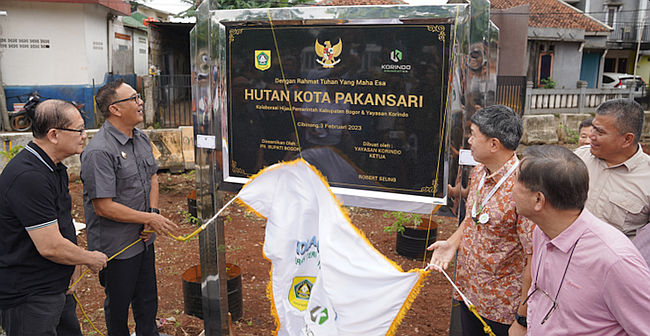
Rows of Eucalyptus deglupta trees green the areas of Pakansari City Forest in Cibinong, Bogor Regency (West Java, Indonesia) [Image: Korindo]
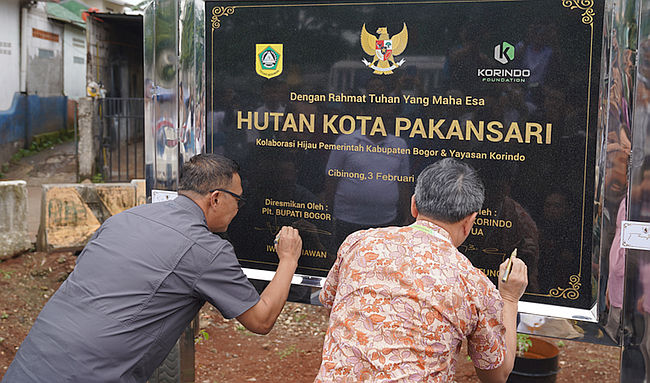
Chairman of Korindo Foundation Robert Seung and Bogor acting regent Iwan Setiawan signed the handover plaque. [Image: Korindo]

Korindo Foundation Chairman Robert Seung performed the handing-over ceremony with Bogor’s acting regent Iwan Setiawan, the handover fulfilling the region’s dream of owning a lush urban forest. Pakansari City Forest is, in fact, the first wooded area to be established in Bogor Regency.

“Through the Green Collaboration program, Korindo Group and Foundation are committed to supporting government efforts that keep our country’s natural environment and our beloved Earth sustainable,” said Robert Seung in his opening speech.

This green space was actually a part of the regency government’s masterplan, but for several reasons, its construction was put on hold. The project only saw the light in November 2019, when Korindo Foundation agreed to help out with the development.

And that’s how the commitment to revitalize the land outside Pakansari Stadium began. Starting with 1,294 Eucalyptus deglupta saplings, the Foundation kept planting until a total of 1,800 trees were reached, adorning a two-hectare area that’s sectioned into six planting zones.

For the next step, tree and land maintenance, local residents were given a chance to participate. Together with the Foundation, they conducted regular plant care that involved cutting weeds, cleaning up fallen branches, and pulling tangled weeds.

“After three years, I think we can all see how these seeds we planted have very much thrived and grown so large, making this place greener and much more pleasant to the eye. And from this forest, we can enjoy cleaner and fresher air,” said Robert Seung.

About Korindo
Korindo Group (Korindo) was established in 1969, and consists of companies engaged in the field of natural resources, industrial paper manufacturing, heavy industry, logistics, finance, and property. As one of the major corporate groups in Indonesia, Korindo has contributed significantly to the nation’s development in various ways. Visit https://www.korindonews.com, and watch the video www.korindo.co.id/group-profile/.

Through Korindo Foundation, we have a responsibility for building sustainable communities in various fields through our Corporate Social Contribution (CSC) programs. Our CSC activities focus on strategic, systematic and sustainable programs through 5 main program pillars, namely Education, Health, Economics, Environment, and Infrastructure. Learn more at https://korindofoundation.com.

Korindo Group Initiates First Rest Area with Bioconversion Facility in Indonesia

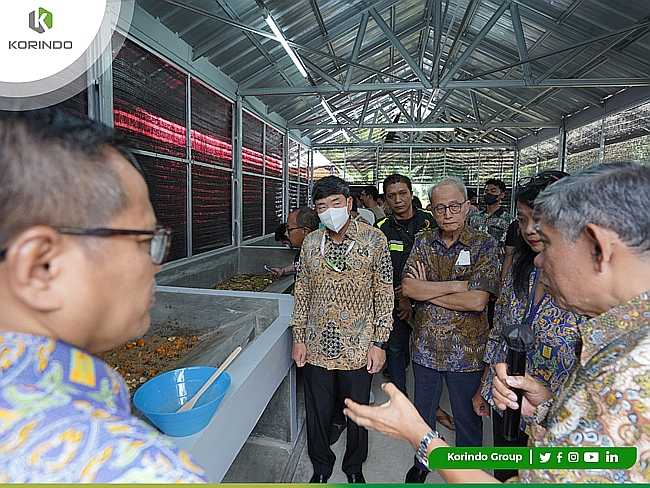
A bioconversion waste processing facility, which uses the black soldier fly (Hermetia illucens) as its biological agent, has opened at Cibubur Rest Area, Jakarta. The rest area is managed by Korindo Group subsidiary PT Bimaruna Marga Jaya and is the first in Indonesia to own a waste processing center. The center is designed to tackle daily waste issues in the Rest Area, by temporarily storing and preparing organic waste for recycling.

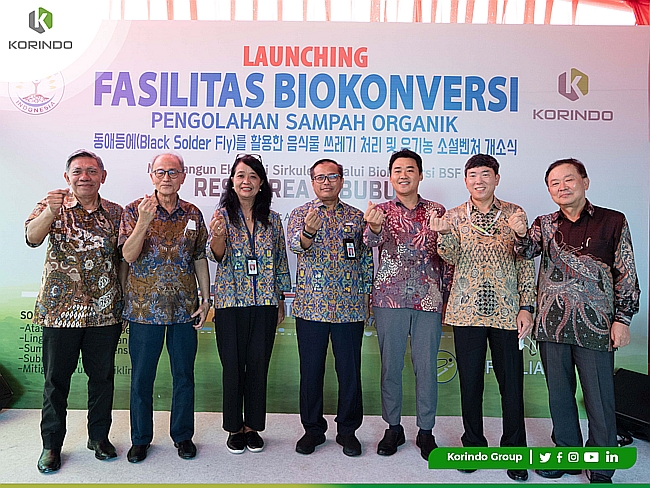
The ceremony served to introduce black soldier fly-based bioconversion technology, which is expected to resolve waste management challenges at other rest areas and public establishments. [Image: Korindo]

The Korindo Foundation and Forest For Life Indonesia Foundation (FFLI), together with the Public Works and Housing Ministry of Indonesia, launched the facility on Wednesday (Feb 1). With the stakeholders attending, the ceremony served to introduce black soldier fly-based bioconversion technology, which is expected to resolve waste management challenges at other rest stops and public establishments.

Made under the partnership of Korindo Foundation and FFLI Foundation, the plant can handle up to 1 ton of living waste per day. Cibubur Rest Area was picked as the project location, given its position as a waste source that needs urgent solutions. This conversion technique is also applicable to different types of waste sources like traditional markets, industrial zones, offices, and residential areas.

“Other than being environmentally beneficial, this facility can offer new economic opportunities. Profits gained from this project will be channeled into community and environmental empowerment programs,” explained Robert Seung, chairman of Korindo Foundation. He wished the plant would reach the success of its predecessor, a similar plant with a 4 ton per day waste processing capacity in Lombok, West Nusa Tenggara.

That project was funded by the Korindo Foundation in 2017, with the FFLI teaming up with the local government to monitor its operation until today, one of Lombok’s waste disposal prototypes. “These facilities won’t be able to run properly without our collaboration with FFLI and support from the local government. That being the case, from the depths of our hearts, we want to thank all parties for the great teamwork,” Robert said.

He went on to say that through the Foundation, businesses under Korindo Group had truly participated in efforts to bring back the balance in Indonesia’s natural environment.”Korindo Foundation has directly taken part in environmental preservation projects like Pakansari and Pondok Rajeg city forests and conservation activities in Papua. Through these breakthroughs, we strive to contribute to the local community and the environment,”

Head of FFLI Dr. Hadi Pasaribu said the plant did not only create a clean, healthy environment to be in and work out waste issues right at its source; it also provided protein, fat, and chitin, restored soil fertility, and played a role in mitigating climate change effects. “The more bioconversion plants we build, the bigger the benefits will be for our environment,” he said.

Black soldier flies enthusiast Prof. Agus Pakpahan shared a similar sentiment. He pushed for additional bioconversion plants to be built, so waste wouldn’t have to be brought into the landfill. This approach established a clean and healthy environment, provided benefits for nature, and created a circular economy.

Pakpahan revealed that around 60%-70% of landfill waste was organic, meaning that settling the issue upstream would simplify the entire waste management process. In his statement, he also touched on local people’s waste dumping behavior, saying, “Each and every one of us should be able to take care of our own waste,” said Pakpahan.

Bioconversion with black soldier flies is a biological approach to manmade environmental problems that bases itself on the notion that nature is created in harmony and balance. The technology offers a way out of excessive living waste. It is relatively safe for the surrounding area and community. Of all 800 fly species on earth, the black soldier fly stands out for its non-pathogenic nature and the absence of disease agents.

In this method, black soldier fly larvae decomposes organic waste generated from human activities. After that, the insects can be used as fish or chicken feed for their high amino acids and protein content. In the end, this process forms a circular economy that creates new economic prospects.

About Korindo
Korindo Group (Korindo) was established in 1969, and consists of companies engaged in the field of natural
resources, industrial paper manufacturing, heavy industry, logistics, finance, and property. As one of the major
corporate groups in Indonesia, Korindo has contributed significantly to the nation’s development in various ways.
Visit https://www.korindonews.com, and watch the video www.korindo.co.id/group-profile/.

Through Korindo Foundation, we have a responsibility for building sustainable communities in various fields through our Corporate Social Contribution (CSC) programs. Our CSC activities focus on strategic, systematic and sustainable programs through 5 main program pillars, namely Education, Health, Economics, Environment, and Infrastructure. Learn more at https://korindofoundation.com.

Abraclean Launches Singapore’s First Recycled Glass Abrasive Plant

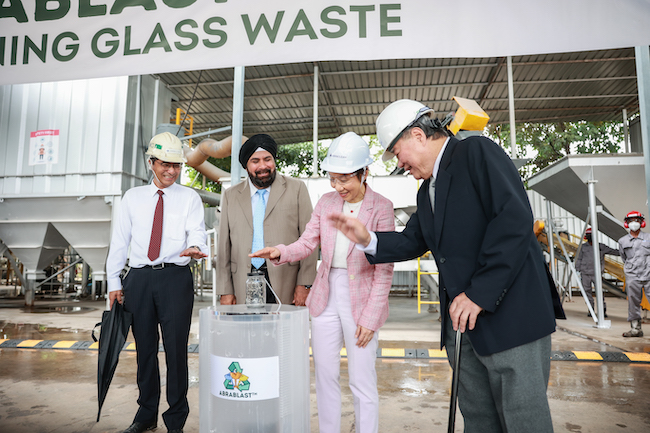
Minister for Sustainability and the Environment, Ms Grace Fu, inaugurated ABRABLAST Singapore’s first recycled glass abrasive manufacturing plant in Abraclean (Asia Pacific) Pte Ltd at 46 Pioneer Sector 2, Singapore 628396. Present for the launch were Gurmit Singh, Chairman- Abraclean and Colonel (Ret) Lau Kee Siong- Director.

From (L) Xiang Xiang, MD-Abraclean Asia Pacific Pvt LTd, Gurmit Singh, Chairman, Abrablast, Minister Grace Fu and KS Lau, Director, Abraclean at the launch of Abrablast

ABRABLAST is a proprietary and a registered trademark in Singapore. Abraclean holds a General Waste Disposal Facility licence issued by the National Environment Agency (NEA), to receive, store, process or treat glass waste. The facility is licensed with a design capacity of 50 tonnes per day. We are a “Social Enterprise” moving towards building a Circular Economy.

Gurmit Singh, Chairman, Abraclean quips, “Sustainability is not just a vertical but also a horizontal layer that cuts across various industries. We are supporting Singapore’s circular economy to ensure we recycle the glass and put it to use without harming Gaia (earth). We advocate for Singapore’s Zero Waste Masterplan and believe this move will benefit the country such as contributing to raise recycling glass waste. We can process 40 tonnes daily, approximately 1,000 tonnes a month and 12,000 tonnes per year. This represents, about 16% of glass waste generated in Singapore. By recycling glass in this way, we will save on energy and reduce the carbon footprint. With a zero waste solution we further aspire to lower the landfill burden.”

About Abraclean (Asia Pacific) Pte Ltd

Incepted in the year 2017, Abraclean is a one stop solution company for Blasting and Coating Services. We partner with International Brands of Protective coatings to meet the standards of industry. The company has considerable experience in blasting and coating, corrosion protection by providing proper surface preparation and utilizing various coatings. ABRABLAST represents our first step towards zero waste.

Bloomingdale PR Pte Ltd
Ganesh Somwanshi
+65 9779 1286
ganesh@bloomingdalepr.com

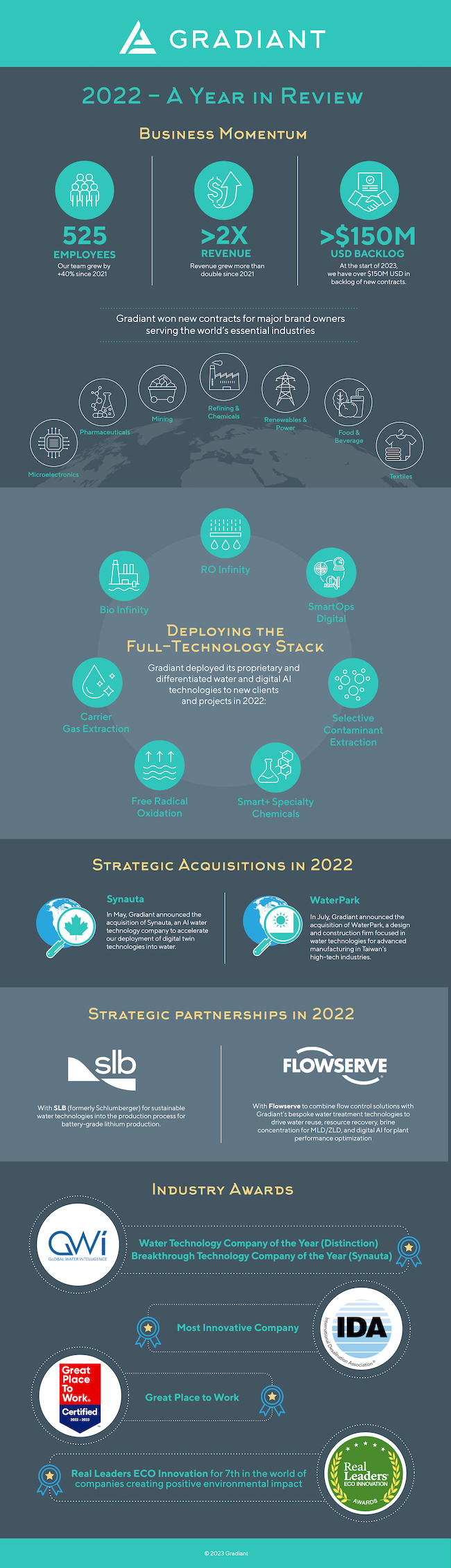
Gradiant 2022: A Watershed Year in Review

Prakash Govindan, COO and Co-Founder of Gradiant, a global solutions provider for advanced water and wastewater treatment, reflects upon the key highlights of the company in 2022.

“Despite the challenges faced in the global markets with COVID-19, inflation, and supply chain risks, 2022 was a breakout year for Gradiant,” Prakash remarks. “The consistent success is credited to the company’s proprietary technologies and integrated solutions that address a broad range of end-use applications for the world’s essential industries. Gradiant is serving a growing list of the top brands and manufacturers in the world with its mission-critical solutions for advanced manufacturing. We remain true to our roots as a technology company by continuing to rapidly translate R&D innovations into commercial solutions.”

Gradiant’s 2022 revenues have more than doubled from the prior year and is expected to double again in 2023 given the backlog of over $150 million USD in systems, service, and design-build-operate projects.

“We announced strategic acquisitions of WaterPark and Synauta this year. WaterPark is a Taiwan-based design and construction firm focused on water technologies for advanced manufacturing. The acquisition strengthens Gradiant’s portfolio of technologies and applications expertise in biological wastewater and unlocks Gradiant’s full range of solutions and global resources to WaterPark’s advanced industrial clients in semiconductor and microelectronics manufacturing.”

The May 2022 acquisition of Synauta, an artificial intelligence water technology company, accelerates Gradiant’s deployment of digital twin technology in water. Industrial clients are increasingly adopting machine learning AI for their water operations to address challenges of sustainability and cost pressures, business continuity, and regulatory compliance. Digital water is the area of greatest innovation potential in the global water industry, and Synauta bolsters Gradiant’s position as a technology leader in this space.

In September, Gradiant announced the appointment of Govind Alagappan as President. “Govind joins us from leadership roles at Evoqua and SUEZ Water technologies and brings us deep knowledge in sales & operational excellence in a global business. He has the perfect mix of skills and experience to lead Gradiant to the next level of transformative business growth.”

Gradiant announced a strategic partnership with SLB to deliver the sustainable production of battery-grade lithium compounds. “Our technologies will enable high levels of lithium concentration in a fraction of the time required by incumbent and competing methods, while also reducing carbon and water footprints and capital costs.”

The industry recognized Gradiant’s impact with a series of awards in 2022, including Global Water Intelligence’s”Water Technology Company of the Year” distinction and “Breakthrough Technology Company of the Year” for Synauta, as well as the International Desalination Association award for “Most Innovative Company“, and “A Great Place to Work” honors for Gradiant.

“Gradiant looks to 2023 for growth into new applications and geographies, and deep penetration into strategic markets. The company will expand capabilities and access-to-markets through strategic partnerships and acquisitions. Gradiant will continue to deploy its full technology stack to bring together industry-leading water treatment solutions with the power of AI to sustainably solve the world’s most important water challenges.”

About Gradiant

Gradiant is a global solutions provider for advanced water and wastewater treatment. With a full suite of differentiated and proprietary end-to-end solutions, powered by the top minds in water, Gradiant serves its clients’ mission-critical operations in the world’s essential industries. Gradiant was founded at the Massachusetts Institute of Technology (MIT) and is uniquely positioned to address the world’s increasing challenges created by industrialization, population growth, and water stress. Today, with over 525 employees, Gradiant operates from its global headquarters in Boston, regional headquarters and Global Innovation Center in Singapore, and offices across twelve countries. For more information, please visit www.gradiant.com.

Corporate Contact
Felix Wang
Gradiant, VP of Marketing
fwang@gradiant.com

Indonesia Palm Oil in Indian Market: Sustainable and Reliable

Over the past two years global vegetable oil markets have been upended by supply chain disruptions from COVID and the Russia-Ukraine conflict.

However, as commodity markets begin to settle into a ‘new normal’, it is apparent that the fundamentals of the market are returning. There are three key factors that will impact the market for suppliers and purchasers. They are: sustainability and certification; growth of the Indian market; and government policies that will facilitate trade between India and Indonesia.

Sustainability has been a driving force of the debate around palm oil in Western markets. However, that debate has been narrow, and focused almost entirely on deforestation. But properly understood, and for developing countries and emerging economies such as India and Indonesia, sustainability is broader in scope, encompassing social and economic concerns. These are encapsulated in the UN Sustainable Development Goals.

For producing and exporting countries, oil palm harvesting aligns with many of the SDGs, including providing stable food supply, employment, poverty reduction, and improved health outcomes.

At the same time, importing countries enjoy the benefit of a vegetable oil that is affordable, and contributes to reducing hunger and ensuring low-cost food at a time when global prices are high.

There is an additional facet to sustainability: sustainability certification. Indonesian Sustainable Palm Oil (ISPO) is Indonesia’s mandatory certification system. It’s an assurance for purchasers that palm oil has been produced according to Indonesia’s laws and regulations. This includes: adherence to Indonesia’s laws on forests and deforestation, which have seen a drop in deforestation rates to their lowest on record; adherence to international norms on labour, including minimum pay and conditions, and prohibitions on child and slave labour; and support for local communities.

Unlike voluntary certification systems, ISPO is mandatory for all oil palm growers, whether smallholders or large plantation owners. It gives a greater assurance to Indian purchasers that all Indonesian palm oil is sustainable and supports sustainable development.

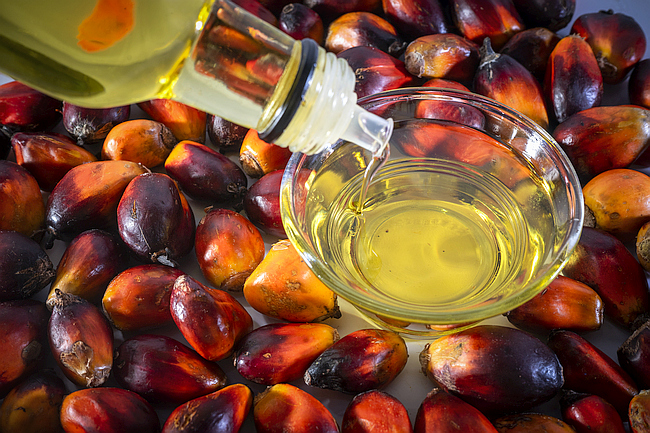
This is particularly significant as the Indian market for vegetable oil – and palm oil – grows. India imports around 60% of all its vegetable oil. These imports are split across palm oil (60%), and soybean oil and sunflower (40%). India is already the world’s largest importer of palm oil, representing 18% of the global palm oil trade.

Why are imports so high? As population has increased, agricultural production has not been able to keep up, particularly when crops like palm are incredibly productive.

Simply put: India is the largest market for palm.

Despite this, per capita consumption of vegetable oil in India is relatively low, which is the case with many developing countries. The Indian market for vegetable oil is going to increase in size alongside consumption more broadly. According to the OECD FAO Agricultural Outlook, India’s vegetable oil consumption will grow 2.3 per cent per annum over the next decade, compared with flat consumption in the US and EU.

India’s projected growth is significant in that it is the largest projected source of growth for global vegetable market.

This continues a growth trajectory that has taken place over the past decade. The growth in demand is positively correlated to increasing incomes, urbanisation and an associated dietary shift towards processed foods.

The Indian palm oil market itself is qualitatively different from many other markets. India generally imports crude palm oil and refines it in India, for sale as cooking oil. Unlike other large markets such as the EU, there is not a major biodiesel market in India; it is used almost entirely for cooking. A market such as the EU will use palm oil for manufactured food products. This adds to the price sensitive nature of the Indian market, where a significant percentage of household income is spent on cooking oil. A significant change in price will have an impact on household budgets. This is unlike the EU, where consumers will have little problem absorbing a small increase in the price of packaged food that uses palm oil.

The downstream processing that takes place in India is relatively small compared to the EU, but it nonetheless provides significant economic benefits in terms of value add.

One of the key issues facing India in the global political environment is reliability of supply. Indonesia’s exports were subject to significant disruptions earlier in the year 2022, as price spikes caused chaos in Indonesia’s domestic markets, eventually resulting in an export ban of some products from Indonesia.

However, Indonesia has undertaken policy changes to ensure exports are predictable and easily facilitated.

The effect of the policies that were present earlier in the year 2022 had eased off; this was exacerbated by changing domestic policies as the Indonesian government sought to balance the need for exports with maintaining low domestic prices for everyday consumers. The export ban, in place at mid of year 2022, assisted in stabilising domestic prices, but created a negative perception in export markets.

Now, the export levy that previously existed on palm oil has been reduced to zero and will remain that way into the short term at least. The country’s domestic market obligation (DMO), which requires traders to put 30 per cent of their production into the domestic market, will be in place for the time being. It is, however, predictable. Any changes that will be made in the near future will likely benefit Indian importers. (BPDPKS)

— Copyright (c) Antara 2023. All rights reserved.

Spritzer Ecopark Transformed to Colourful Spring Overnight

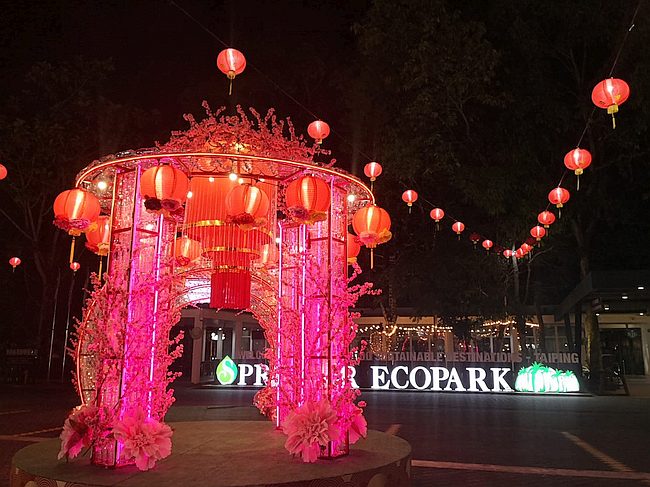
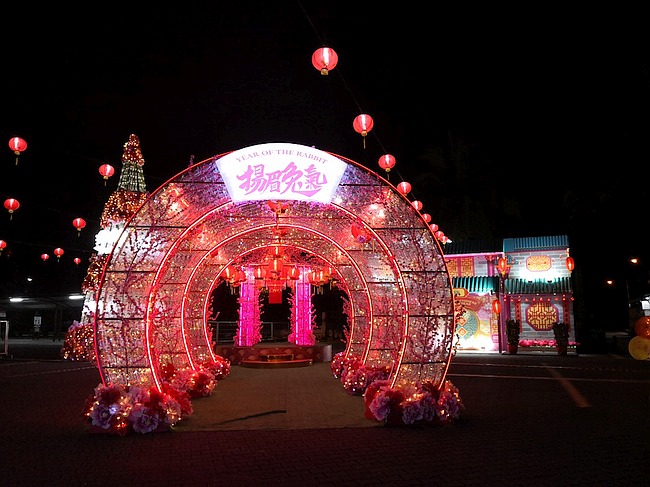
Say goodbye to the snowy white winter wonderland and hello to the colourful florals of spring as SPRITZER ushers the Year of the Rabbit by transforming Spritzer EcoPark through their creative use of Spritzer bottles repurposed to welcome the lunar new year traditions with a modern flare.

Be greeted by a striking 28-foot tree partially created from thousands of recycled Spritzer bottles while walking through a garden of eye-popping playful pink and radiant red peonies signalling the coming of spring from now to 5 February, including New Year Day itself on 22 January. Ring in the Year of the Rabbit celebrations with Spritzer as a traditional lion dance will be held on 26 January to bring good luck and fortune for the auspicious new year.

Capture those Instagram-able moments as you step back in time at a traditional Chinese ancient house, stroll into a gorgeous tunnel ringed by flowers also partly created from Spritzer bottles, visit a domed house decorated with exquisite opulent ornaments and stop by the beautiful gazebo – perfect for photo opportunities for a lifetime.

All are welcome and admission is free. Visitors who spend at least RM10 at the souvenir shop and water shop will receive Spritzer angpow packets. Remember to keep the receipts as Spritzer water products purchased will let you enter “The SYOK Goes On With Spritzer” online contest for a chance to win RM100,000 of gold bars and other SYOK prizes.

In line with the Company’s values, Spritzer encourages recycling and repurposing. The Company continuously strives to incorporate sustainability into every aspect of its operations, from bottles, labels and its people. Join Spritzer by incorporating recycling into your 2023 and beyond.

Spritzer hopes to continue welcoming everyone in a safe manner. Please plan your time and have a fun-filled experience at Spritzer EcoPark this coming Year of the Rabbit!

Spritzer Bhd: [Bursa: SPRITZER; 7103] [RIC: SPTZ:KL] [BB: SPZ:MK] [OTC: SPZRF], https://www.spritzer.com.my

Green Power Energy’s 20 MW Taungdaw Gwin Build-Own-Operate Solar Plant Commissioned in Myanmar

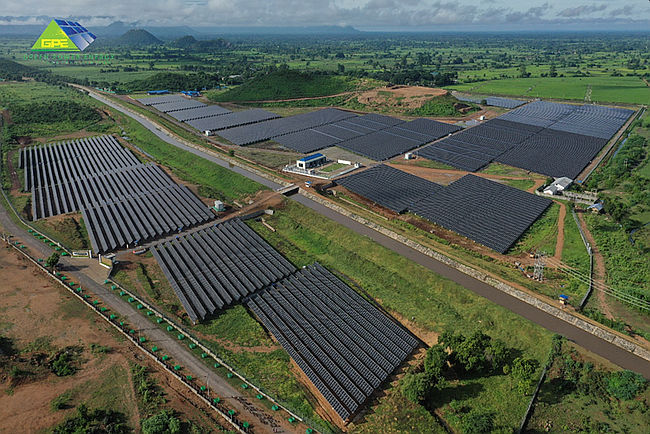
Myanmar’s latest solar energy plant, the 20 megawatt (MW) build-own-operate (BOO) Taungdaw Gwin project, has been officially opened, adding a new chapter to the country’s sustainability and electrification efforts, its developer announced today.

The 20-megawatt Taungdaw Gwin mega-scale solar PV project will contribute to Myanmar’s sustainability and electrification efforts. [Image: GPE]

The project was developed by Green Power Energy Company Limited (GPE), a subsidiary of Gold Energy Company Limited (GE), a leading renewable energy developer in Myanmar.

Taungdaw Gwin is the second mega-scale solar project to be completed by the GE group. Clean Power Energy Limited, another GE subsidiary, completed the 30 MW Thapyay Wa project in Mandalay district in December 2021.

With the official opening of the Taungdaw Gwin project, GE’s solar energy capacity stands at 50 MW. GE also operates the 120 MW Thaukyegat (2) Hydropower Project (TYG), commissioned in 2013.

Located on an 80.9-hectare site southeast of Kyaukse, Myit Thar Township, the Taungdaw Gwin project utilizes a solar tracking system so as to maximize photovoltaic (PV) energy captured by 45,980 solar panels. The project is expected to generate 25.1 MW of direct current or 22.9 MW of alternating current per year.

The Taungdaw Gwin project began transmission to the National Grid on 17 November 2022. The energy output is directly linked to the Taungdaw Gwin substation and is connected to the national grid via a 69.6 km 33-kV transmission line built by GPE.

In line with its commitment to give back to the community, the GPE team conducted an in-depth Environmental and Social Impact Assessment before construction. This enabled an understanding of the impact on nearby communities and the environment and helped to facilitate construction in a responsible and sustainable manner.

Through engaging with local community leaders to understand the needs of the residents surrounding Taungdaw Gwin, the GPE team constructed and installed two overpasses measuring 20.1 metres long by 4.5 metres wide. These and other efforts have improved socio-economic benefits to the community in this otherwise harsh area which had faced challenges of accessibility during the development phase of this important project.

U Zaw Win, Managing Director of GPE, said: “We are proud of the successful completion of the Taungdaw Gwin solar facility. We look forward to a sustainable energy source for the future of Myanmar.

“As a partner in nation-building, GPE is deeply committed to infrastructure development and sustainability in Myanmar. This and other renewable energy projects we are involved in will increase the contribution of renewable energy to the national grid while advancing the country’s national electrification goals.”

About Green Power Energy (GPE)
Green Power Energy Company Limited (GPE), a subsidiary of Gold Energy Company Limited (GE), is a renewable energy developer. GPE completed the Taungdaw Gwin solar PV facility, which was officially opened in December 2022. Despite the challenges of the pandemic, GPE completed the project earlier than scheduled.

The solar energy is connected to the Taungdaw Gwin substation, part of the national grid, via a 69.6 km 33-kV transmission line built by GPE. As GPE continues to build upon its track record and execution capabilities, it remains committed to contributing to Myanmar’s clean energy sector in the coming years. Visit https://gpenergymm.com/.

SMI Vantage Appoints Well-Known Business Personality: CSR, ESG and Organisational Development Expert Leong Lai Yee to the Board

SMI Vantage Limited, an investment and management company listed on the mainboard of the SGX, today announced it has appointed Ms. Leong Lai Yee, Edna as an Independent and Non-Executive Director to the Board, effective 1 January 2023. She replaces Wee Sung Leng who is stepping down having served over nine years on the SMI Board, as part of the Board renewal process.

Ms Leong is currently the Deputy Director and Head, Communications, Partnerships & Fund Development of RSVP Singapore The Organisation of Senior Volunteers. RSVP is an Institution of Public Character and the National Centre of Excellence for Senior Volunteerism under the patronage of Mdm Halimah Yacob, President of the Republic of Singapore.

Ms Leong’s extensive experience in marketing, investment, banking and consulting includes stints in some of the world’s largest financial institutions. Following her passion for a more equitable and caring society, she has in recent years, been more involved in heading non-for-profit NGOs (non-governmental organisations) and social enterprises.

Commenting on Ms Leong’s appointment, Mark Bedingham, President and Chief Executive Office said, “I am delighted to welcome Edna to our Board at the start of this new year. Besides her proven entrepreneurial talent, she brings with her valuable and deep experience in the areas of corporate social responsibility, corporate governance and organisational development. She has worked tirelessly over the years towards the goal of a more equitable and caring society and will help SMI develop a pathway to a more inclusive approach to its corporate responsibilities and a fresh approach to ESG related matters.”

Ms Leong replied, “I am excited to be appointed to the Board of SMI Vantage and look forward to assisting SMI Vantage with its many new projects and businesses and being part of the company’s next chapter in its business journey I would like to see the Company be a responsible and strong corporate citizen that is able to give back to society. Being personally involved with various social enterprises over the years, I am passionate about bringing more “heart” to all we do. I will work closely with Mark, the Board, and the rest of the leadership team to capitalise on the many opportunities ahead and usher in SMI Vantage’s next chapter of growth and success.”

The Company would also like to take this opportunity to thank Wee Sung Leng for his valuable contribution and advice to the Board during his extensive service with SMI.

About SMI Vantage

SMI Vantage Limited is an investment and management company focused on capitalising on strong trends in the new economy including technology-based SaaS services and other high-tech platforms. Listed on the Main Board of the Singapore Stock Exchange, SMI Vantage Limited has a highly capable and experienced management team with a proven track record in building strong business partnerships and alliances. https://www.smivantage.com/

For media queries, please reach out to:
Waterbrooks Consultants Pte Ltd
Wayne Koo – wayne.koo@waterbrooks.com.sg +65 9338-8166
Derek Yeo – derek@waterbrooks.com.sg +65 9791-4707

Proud Investor Relations partner:
https://www.waterbrooks.com.sg/ and https://www.shareinvestorholdings.com/

Olympus Named to Dow Jones Sustainability World Index for Two Consecutive Years

Olympus Corporation (Olympus), a global medtech company committed to making people’s lives healthier, safer and more fulfilling, announced that it has been selected for inclusion in the 2022 Dow Jones Sustainability World Index (DJSI World) and the 2022 Dow Jones Sustainability Asia Pacific Index (DJSI Asia Pacific), both among the most globally recognized corporate sustainability indices. Olympus has been named to the DJSI World for two consecutive years and DJSI Asia Pacific for four.

The Dow Jones Sustainability Indices (DJSI) are corporate sustainability evaluation indices for environmental, social, and governance (ESG) investment. Jointly developed by S&P Dow Jones Indices and RobecoSAM, the DJSI track the financial performances of leading companies according to ESG criteria. These indices are updated annually to include companies with excellent corporate sustainability practices.

In 2022, 332 companies were selected as DJSI World members from approximately 3,500 companies worldwide in 61 industry sectors, and 156 companies were selected as DJSI Asia Pacific members from approximately 600 companies assessed in the region. Olympus is one of only 8 out of 64 companies to have been included in the DJSI World Health Care Equipment & Supplies sector. The company’s scores on Access to Healthcare, Talent Attraction & Retention, Tax Strategy, Environmental Policy & Management Systems were of particular note, being not only highly rated, but having also been improved over last year’s scores. In addition to the DJSI World and Asia Pacific, Olympus was also named to the FTSE4Good Index Series and FTSE Blossom Japan Index.

Stefan Kaufmann; Director, Executive Officer, and Chief Administrative Officer of Olympus, stated: “It is a great honor for Olympus to again be selected for the DJSI World and Asia Pacific. In order to realize Our Purpose of Making people’s lives healthier, safer and more fulfilling, we have taken various initiatives to contribute to society, positioning ESG as one of the most important strategic pillars in our Corporate Strategy. We are proud to be included in the DJSI World and Asia Pacific for consecutive years as evidence of our continuous evolution as well as our high reputation in ESG from stakeholders. We will further accelerate our efforts to realize a sustainable society.”

Based on Our Purpose, Olympus believes that the sustainability of a company will be recognized primarily by meeting the demands and expectations of society and fulfilling responsibilities through dialogue with all stakeholders. The company will continue to contribute to creating a sustainable society by actively engaging in activities that incorporate ESG perspectives to fulfill its corporate social responsibilities on a global scale.

For more information on Olympus’ ESG initiatives, please refer to its Integrated Report 2022[1] and the Sustainability page on its website[2].

[1] https://www.olympus-global.com/ir/data/integratedreport/2022.html?page=ir
[2] https://www.olympus-global.com/csr/

About Olympus
Olympus is passionate about creating customer-driven solutions for the medical, life sciences, and industrial equipment industries. For more than 100 years, Olympus has focused on making people’s lives healthier, safer and more fulfilling by helping to detect, prevent, and treat disease; furthering scientific research; and ensuring public safety. Olympus is headquartered in Tokyo, Japan, with more than 30,000 employees worldwide in nearly 40 countries and regions. For more information, visit www.olympus-global.com and follow our global Twitter account: @Olympus_Corp ( https://twitter.com/olympus_corp ).

Media contact:
Mieko Yamada
Global-Public_Relations@olympus.com

Olympus Corp [TYO: 7733] [ADR: OCPNY] [GDR: OLYS] https://www.olympus-global.com