Techmer PM Joins Formerra’s Portfolio in North America

Formerra will distribute Techmer PM color masterbatches, high-performance additives, and pre-colored compounds across the U.S., Canada, and Mexico.

Formerra, a leader in performance materials distribution, today announced the addition of Techmer PM color masterbatches, high-performance additives, and pre-colored compounds to its expansive portfolio of materials. With this partnership, Formerra advances its application-specific lineup, aligning its material portfolio to customers’ evolving needs across North America.

A U.S.-based plastics compounder, Techmer PM specializes in value-added color and additive masterbatches and engineered compounds for high-performance plastics and fibers. These products are used in various industries such as medical, automotive, packaging, and consumer goods applications. Techmer PM has consistently invested in its optical and color capabilities, including the recent acquisition of OptiColor Inc. and Colors for Plastics.

“Techmer PM’s commitment to innovation and technical excellence aligns perfectly with Formerra’s mission to deliver best-in-class materials and responsive service,” said Cathy Dodd, CEO at Formerra. “Backed by our expert technical guidance, this partnership lets us provide customers with a portfolio of masterbatches and pre-colored compounds that drives performance and sustainability.”

Mike Ellison, VP, Product Management, adds, “The extensive pre-colored compound, additive, and color masterbatch offerings from Techmer PM cover processing, aesthetic, bio-based, regulatory, and performance needs.”

Highlights of the distributed Techmer PM products include:

  • Regulated Medical Color Systems: ISO 10993-tested palettes with regulatory statements; proven in PPSU, PA, PP, and ABS.
  • Aesthetic Effects & Laser Functionality: Full spectrum from metallics and color-shifting to photochromic and Techsplatter, a proprietary visual effect; full laser additive line covers multiple needs.
  • Circularity & Sustainable Material Solutions: PLA/alt-resin colors, HiTerra® rPET Revive to repair PET, NIR-sortable blacks (APR “preferred” in HDPE), and more.
  • Processing, Performance & Protection Additives: Techsperse™ proprietary dispersion technology, UV/heat stabilization, FR systems with halogen-free options, tracer technologies, antimicrobial packages, purge technologies.

“Formerra’s deep expertise in applications, requirements, and materials makes them an ideal partner to expand our market reach,” said Craig Foster, CEO at Techmer PM. “By combining our strengths, we’ll help customers accelerate their speed to market with the assurance of proven technologies.”

Key Details:

  • Formerra will distribute Techmer PM’s pre-colored compounds, colorants, additives, and masterbatches across North America.
  • Techmer PM brings a deep portfolio of color and additive masterbatches: Medical/regulatory-ready palettes, aesthetic effects (including Techsplatter), sustainability solutions (HiTerra® rPET Revive, NIR-sortable blacks), and performance/processing additives (TechSperse™, FR/UV systems).
  • The partnership pairs Formerra’s technical support and supply reliability with Techmer PM’s specialized materials and color/additive expertise to help customers launch better products faster.

About Formerra
Formerra is a preeminent distributor of engineered materials, connecting the world’s leading polymer producers with thousands of OEMs and brand owners across healthcare, consumer, industrial, and mobility markets. Powered by technical and commercial expertise, it brings a distinctive combination of portfolio depth, supply chain strength, industry knowledge, service, leading e-commerce capabilities, and ingenuity. The experienced Formerra team helps customers across multiple industries to design, select, process, and develop products in new and better ways – driving improved performance, productivity, reliability, and sustainability. To learn more, visit www.formerra.com.

About Techmer PM
Techmer PM is a leading designer and producer of engineered materials and polymer solutions such as concentrated color or additive masterbatches that provide specific performance and/or functional requirements. The company collaborates with plastics processors, fabricators, designers, specifiers, and brand owners to enhance product function and appearance in numerous end-use markets. Founded in 1981, the company operates plants across North America and has extensive expertise across resin technologies and with virtually every plastic- and fiber-related process, including additive manufacturing, blown film, nonwovens, and injection molding. For more information, visit www.techmerpm.com.
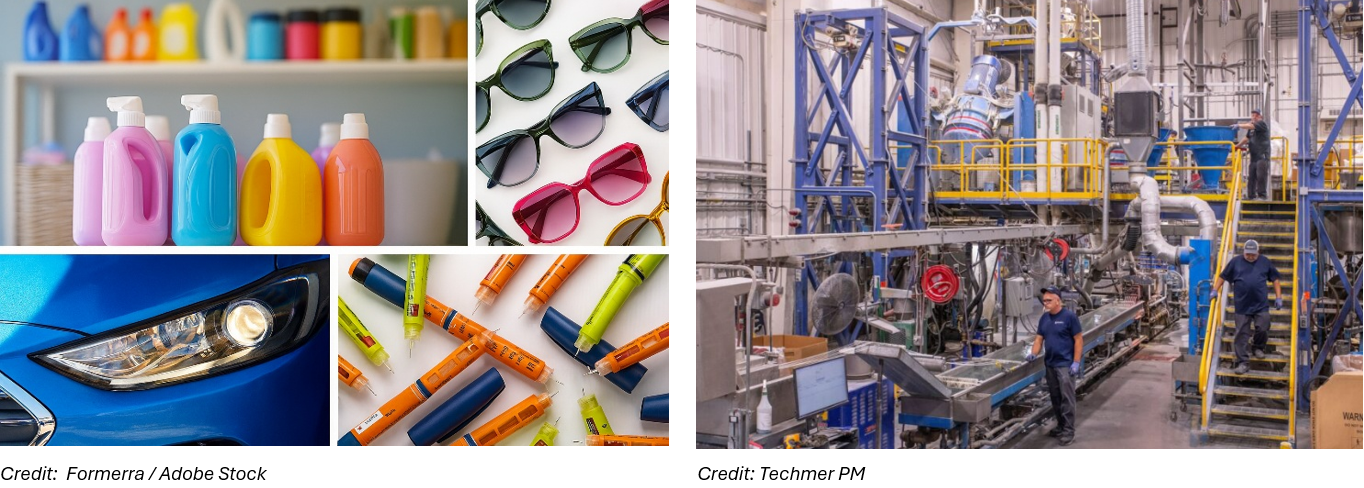
Formerra has been named distributor for Techmer PM pre-colored compounds, colorants, and additives for a wide range of applications (left). Techmer PM production facility in Clinton, TN (right).

Media contacts
Jackie Morris
Marketing Communications Manager, Formerra
jackie.morris@formerra.com
+1 630-972-3144

Jill Warren
Marketing Communications Manager, Techmer PM
jwarren@techmerpm.com
+1 865-210-4078

SOURCE: Formerra

IMPC Commits Rp250 billion (USD 15 million) to Build ASEAN’s Leading Polymer Training Center, Partnering with SKZ-German Plastics Center

PT Impack Pratama Industri Tbk (IMPC) is making one of its most ambitious moves, pledging an investment of nearly Rp250 billion (USD ~15 million) by 2026 to establish the Impack Polymer Science Institute (IPSI). This capital commitment is more than a milestone for IMPC, it is a bold investment in Indonesia’s future workforce and economic progress.IMPC Commits Rp250 billion (USD 15 million) to Build ASEAN's Leading Polymer Training CenterIMPC Commits Rp250B (US$15M) to Build ASEAN’s Leading Polymer Training Center.

IPSI is envisioned to become ASEAN’s most respected polymer/plastics learning hub, serving industry players, students, and professionals interested in the polymer industry. Its initial purpose is clear and urgent: to close Indonesia’s skills gap, reduce unemployment, enhance workforce quality, and accelerate innovation.

At the core of ISPI’s credibility is its partnership with SKZ – German Plastics Center (SKZ – Das Kunststoff Zentrum), one of Germany’s and the world’s most influential plastics institutes. With over 60 years of experience shaping global standards, SKZ now extends its expertise to Indonesia through IPSI.

Through an intensive ‘Train the Trainer’ program, IPSI’s lead instructors will be mentored directly by SKZ’s experts with both strong academic backgrounds and industrial experience. This gives IPSI an immediate competitive edge, launching not as a local training center, but as an internationally recognized education hub.

“In a time of rapid industrial change, technological innovations, and global economic uncertainty, building a stronger talent pool is no longer optional, it’s essential,” said Haryanto Tjiptodihardjo, the President Director of IMPC. “By investing in IPSI, we are opening access to world-class training, empowering people to secure better jobs, earn higher incomes, and build a more resilient future as their skills grow.

“And this is exactly what ‘Doing Well by Doing Good’ means to us, creating long-term added value for the business by doing the greater good, such as uplifting the income of people and communities. Our investment of approximately Rp250 billion (roughly USD15 million) into IPSI, covering world-class polymer training and state-of-the-art facility development, stands as a clear testament to that commitment,” continued Haryanto.

“For us at SKZ, it is a great honour and recognition to be part of this commitment. The IPSI concept is well thought out, designed to meet people’s needs, and is set to be a success. With our international ‘Train the Trainer’ programme, we are making an important contribution to this,” added Matthias Ruff, the Head of Sales Training & Research, Procuration at SKZ.

Beyond IPSI, IMPC is also allocating Rp150 billion (USD ~9 million) for R&D over the next five years through its Impack Research and Innovation Center (IRIC), strengthening innovation across its building products and processing technologies. With these strategic investments and partnership, IMPC is not just leading the polymer industry, it is defining its future, creating enduring value for its stakeholders and for Indonesia.

About SKZ – KFE gGmbh

Founded in 1961, SKZ – Das Kunststoff-Zentrum (The German Plastics Center) is Europe’s and the world’s leading authority in polymer technology, recognized worldwide for its expertise in quality testing, certification, and industry-focused education. With over 60 years of experience, 13.000 participants, and more than 600 training and knowledge-transfer programs conducted annually, SKZ plays a pivotal role in advancing global plastics competency. Its research efforts focus on practical, market-driven innovation and continuous improvement of production technologies. https://www.skz.de/en 

About PT Impack Pratama Industri Tbk

The Company was founded in 1981 and listed on the Indonesian Stock Exchange on December 17, 2014 under the code “IMPC.” The Company’s main business activity is the production and distribution of building materials and plastic goods. The Company has a wide range of products classified into three segments namely roofing, façade, and materials. To date, the Company still holds the position as the market leader for its main products that the Company markets under the popular brands of SolarTuff, TwinLite, and Alderon. https://www.impack-pratama.com.

For further information, please contact:
Lenggana Linggawati
Corporate Secretary
PT Impack Pratama Industri Tbk
Email: corporate.secretary@impack-pratama.com 

Machine learning used to optimise polymer production

By identifying the ideal manufacturing conditions, machine learning reduces the need for expensive and time-consuming experimentation.

Polymers, such as plastics, are essential in many aspects of life and industry, from packaging and cars to medical devices and optic fibres. Their value comes from diverse properties that are largely determined by their monomers – the single chemical units – that make up a polymer. Unfortunately, it can be challenging to control the chemical behaviour of monomers during manufacture to achieve a desired outcome.

The flow synthesis reactor with two bottles containing a monomer, initiator and solvent mixed using a micromixer. The synthesis is controlled with AI-based design of experimental conditions such as the temperature and a flow rate.

Now, a team of researchers led by Professor Mikiya Fujii of the Nara Institute of Science and Technology in Japan have used machine learning to mathematically model the polymerization process and reduce the need for time-consuming and expensive experimentation. Their results have been published in the journal Science and Technology of Advanced Materials: Methods.

Machine learning algorithms need data, so the researchers designed a polymerization process that would quickly and efficiently generate experimental data to feed into the mathematical model. The target molecule was a styrene-methyl methacrylate co-polymer, which was made by mixing styrene and methyl methacrylate monomers, both already dissolved in a solvent with an added initiator substance, then heating them in a water bath.

The team also used a method called flow synthesis, in which the two monomer solutions are mixed and heated in a constant flow. This allows for better mixing, more efficient heating, and more precise control of heating time and flow rate, which makes it ideal for use with machine learning.

The modelling evaluated the effect of five key variables in the polymerization process: the concentration of the initiator, the ratio of solvent to monomer, the proportion of styrene, the temperature of the reaction, and the time spent in the water bath. The goal was to have an end product with as close to 50% styrene as possible.

Once enough experimental data was available, the machine learning process took only five cycles of calculation to achieve the ideal proportion of styrene to methyl methacrylate. The results showed that the key was a lower temperature and longer time in the water bath, as well as lowering the relative concentration of the monomer in the solvent. The researchers were surprised to discover that the solvent concentration was just as important as the proportion of monomers going into the mix.

“Our results demonstrate that machine learning not only can explicitly reveal what humans may have implicitly taken for granted but can also provide new insights that weren’t recognized before,” Professor Mikiya Fujii says. “The use of machine learning in chemistry could open the door for smarter, greener manufacturing processes with reduced waste and energy consumption.”

Further information
Mikiya Fujii
Nara Institute of Science and Technology
Email: fujii.mikiya@ms.naist.jp 

Paper: https://doi.org/10.1080/27660400.2024.2425178

About Science and Technology of Advanced Materials: Methods (STAM-M)

STAM Methods is an open access sister journal of Science and Technology of Advanced Materials (STAM), and focuses on emergent methods and tools for improving and/or accelerating materials developments, such as methodology, apparatus, instrumentation, modeling, high-through put data collection, materials/process informatics, databases, and programming. https://www.tandfonline.com/STAM-M 

Dr Yasufumi Nakamichi
STAM Publishing Director
Email: NAKAMICHI.Yasufumi@nims.go.jp 

Press release distributed by Asia Research News for Science and Technology of Advanced Materials.

Machine learning can predict the mechanical properties of polymers

Polymers such as polypropylene are fundamental materials in the modern world, found in everything from computers to cars. Because of their ubiquity, it’s vital that materials scientists know exactly how each newly developed polymer will perform under different preparation conditions. Thanks to a new study, which was published in Science and Technology of Advanced Materials, scientists can now use machine learning to determine what to expect from a new polymer.

Machine learning predicts the material properties of new polymers with high accuracy, providing a nondestructive alternative to conventional polymer testing methods.

Predicting the mechanical properties of new polymers, such as their tensile strength or flexibility, usually involves putting them through destructive and costly physical tests. However, a team of researchers from Japan, led by Dr. Ryo Tamura, Dr. Kenji Nagata, and Dr. Takashi Nakanishi from the National Institute for Materials Science in Tsukuba, showed that machine learning can predict the material properties of polymers. They developed the method on a group of polymers called homo-polypropylenes, using X-ray diffraction patterns of the polymers under different preparation conditions to provide detailed information about their complex structure and features.

“Machine learning can be applied to data from existing materials to predict the properties of unknown materials,” Drs. Tamura, Nagata, and Nakanishi explain. “However, to achieve accurate predictions, it’s essential to use descriptors that correctly represent the features of these materials.”

Thermoplastic crystalline polymers, such as polypropylene, have a particularly complex structure that is further altered during the process of molding them into the shape of the end product. It was, therefore, important for the team to adequately capture the details of the polymers’ structure with X-ray diffraction and to ensure that the machine learning algorithm could identify the most important descriptors in that data.

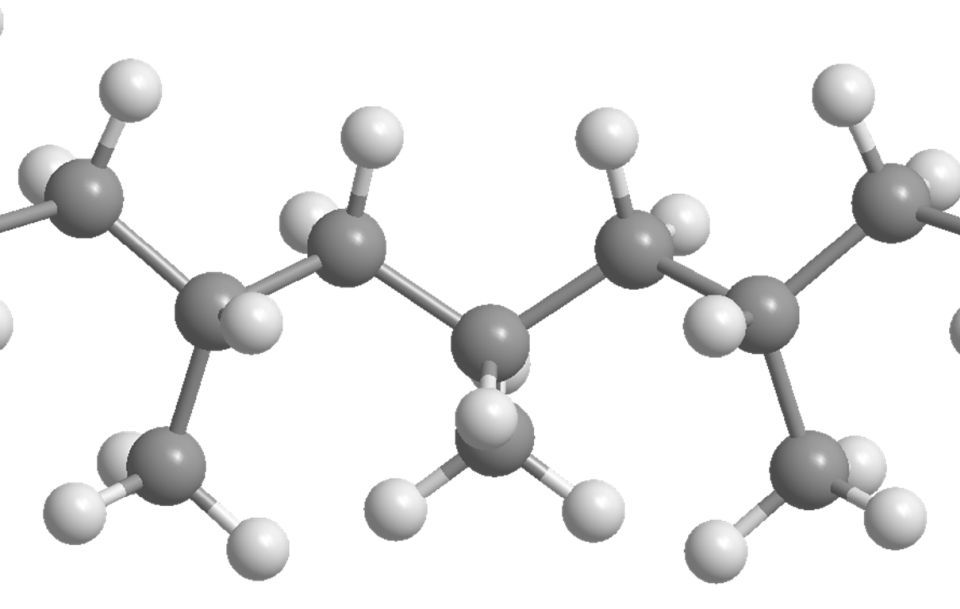
The new method accurately captured the structural changes of commonly used plastic Polypropylene during the molding process into the end product.

To that end, they analysed two datasets using a tool called Bayesian spectral deconvolution, which can extract patterns from complex data. The first dataset was X-ray diffraction data from 15 types of homo-polypropylenes subjected to a range of temperatures, and the second was data from four types of homo-polypropylenes that underwent injection molding. The mechanical properties analysed included stiffness, elasticity, the temperature at which the material starts to deform, and how much it would stretch before breaking.

The team found that the machine learning analysis accurately linked features in the X-ray diffraction imagery with specific material properties of the polymers. Some of the mechanical properties were easier to predict from the X-ray diffraction data, while others, such as the stretching break point, were more challenging.

“We believe our study, which describes the procedure used to provide a highly accurate machine learning prediction model using only the X-ray diffraction results of polymer materials, will offer a nondestructive alternative to conventional polymer testing methods,” the NIMS researchers say.

The team also suggested that their Bayesian spectral deconvolution approach could be applied to other data, such as X-ray photoelectron spectroscopy, and used to understand the properties of other materials, both inorganic and organic.

“It could become a test case for future data-driven approaches to polymer design and science,” the NIMS team says.

Further information
Ryo Tamura
National Institute for Materials Science (NIMS)
tamura.ryo@nims.go.jp

Kenji Nagata
National Institute for Materials Science (NIMS)
nagata.kenji@nims.go.jp

Takashi Nakanishi
National Institute for Materials Science (NIMS)
nakanishi.takashi@nims.go.jp

Paper: https://doi.org/10.1080/14686996.2024.2388016

About Science and Technology of Advanced Materials (STAM)

Open access journal STAM publishes outstanding research articles across all aspects of materials science, including functional and structural materials, theoretical analyses, and properties of materials. https://www.tandfonline.com/STAM 

Dr Yasufumi Nakamichi
STAM Publishing Director
Email: NAKAMICHI.Yasufumi@nims.go.jp

Press release distributed by Asia Research News for Science and Technology of Advanced Materials.

Global New Material International (GNMI) Signs Agreement to Acquire Merck’s Surface Solutions Business

Unleashing Growth Synergy and Expanding Global Footprint

Global New Material International Holdings Limited (GNMI, Hong Kong HKG: 6616), announced today that it has entered into an agreement (Agreement) with Merck KGaA, (Merck) to acquire Merck’s global surface solutions business (Surface Solutions) for EUR 665,000,000 (equivalent to approximately RMB 5,187,000,000 or HKD 5,586,000,000), in cash. The transaction is expected to close (Closing) in the course of 2025, subject to regulatory approvals and satisfaction of certain customary closing conditions.

GNMI and Surface Solutions are highly complementary from a product portfolio, expertise and geographic footprint perspective. The proposed combination will strengthen the position of the business post-closing and enable an even more customer-centric go to market approach. The acquisition is anticipated to further broaden the global capabilities of GNMI and enhance product excellence.

Ertian Su, Chairman of Global New Material International, said: “I am excited to announce our acquisition of  Merck Surface Solutions , and look forward to a seamless integration upon post-closing. The acquisition will be a landmark moment for GNMI as the newly combined team will bring the best of both worlds, with a combined set of capabilities, expertise, talent, geographic and sales network. As one team, we will jointly offer innovation and product excellence to our customers and partners, uplift the industry standards, and achieve an unwavering position in the global marketplace. I truly believe that integrating with Surface Solutions will be a key catalyst for our business and our industry, enabling GNMI to achieve new heights of success.”

Mr. Su added, “I am fully committed to embarking on this new journey with Surface Solutions. The combination of our businesses not only unlocks an infinite number of opportunities for GNMI and our industry, but it will be full of opportunities for personal and career development for all employees as well. An integration team consisting of representatives of both GNMI and Surface Solutions will jointly develop plans for combining our expertise, resources and activities to ensure smooth integration, and to maximize the growth synergies between the two companies.”

“GNMI and our Surface Solutions business will join forces and combine their strengths to form an even stronger team, delivering excellence in the pigments industry,” said Belén Garijo, Chair of the Executive Board and CEO of Merck.

Kai Beckmann, Member of the Executive Board of Merck and CEO Electronics, said: “The combination of Surface Solutions and GNMI will strengthen the competitiveness of the business, thus providing better prospects for employees and customers.”

GNMI, spearheaded by its brand Chesir and CQV, has deep expertise in research and development, production, and sales of synthetic mica, pearlescent materials, and new energy materials. With main production capacities in China and Korea, GNMI holds a leading position in the mid-to-high market, supplying highly-functional cutting-edge materials to multinational customers worldwide in various sectors such as automobiles, cosmetics, electronic goods, personal cares, plastics, printings, foods, and pharmaceuticals. In particular, CQV is a pioneer in effect pigments in Korea and beyond, and will continue to play a critical role in expanding GNMI’s global footprint along with the addition of Surface Solutions.

Merck Surface Solutions is specialized in solutions used in coating, cosmetic and industrial applications. Surface Solutions holds a strong position in the high-quality markets, especially in the global automotive and cosmetics markets.

Upon closing, the production facilities of Surface Solutions in Gernsheim (Germany), Onahama (Japan), and Savannah, Georgia (United States) will become regional hubs of the enlarged business with continued operations. Simultaneously, 1,200 global employees of Surface Solutions will be retained. There is also a comprehensive job guarantee program for the Gernsheim and Darmstadt sites as well as a site guarantee for Gernsheim in place until at least 2032.

Merck Surface Solutions  and GNMI remain separate and independent companies until the transaction closes.

For further information please also visit www.global-surface-partner.com

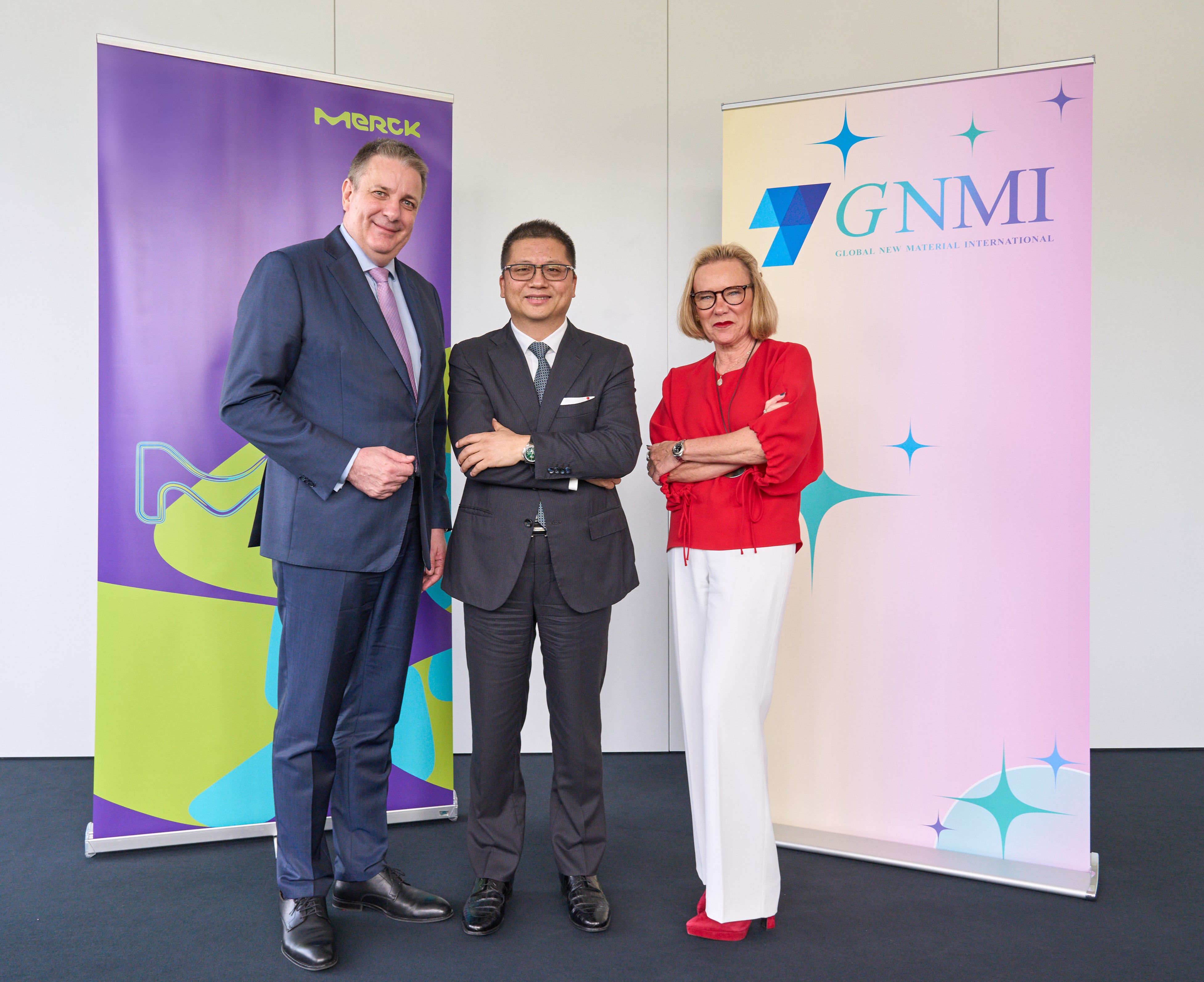
Ertian Su, Chairman of Global New Material International (Center),Belén Garijo, Chair of the Executive Board and CEO of Merck (Right) and Kai Beckmann, Member of the Executive Board of Merck and CEO Electronics (Left), met in Darmstadt, Germany, in regards to GNMI’s acquisition of Surface Solutions.

About Global New Material International
Global New Material International Holdings Limited (GNMI, Hong Kong stock code: 06616) is one of the largest pearlescent pigment producers. Spearheaded by its brand Chesir and CQV, it has deep expertise in research and development, production, and sales of pearlescent materials, synthetic mica, and new energy materials. With approximately 800 employees and main production capacities in China and Korea, GNMI holds a leading position in the mid-to-high market, supplying highly-functional cutting-edge materials to multinational customers worldwide in various sectors such as automobiles, cosmetics, electronic goods, personal cares, plastics, printings, foods, and pharmaceuticals.

About Merck
Merck, a leading science and technology company, operates across life science, healthcare and electronics. Around 63,000 employees work to make a positive difference to millions of people’s lives every day by creating more joyful and sustainable ways to live. From providing products and services that accelerate drug development and manufacturing as well as discovering unique ways to treat the most challenging diseases to enabling the intelligence of devices – the company is everywhere. In 2023, Merck generated sales of € 21 billion in 65 countries.

Scientific exploration and responsible entrepreneurship have been key to Merck’s technological and scientific advances. This is how Merck has thrived since its founding in 1668. The founding family remains the majority owner of the publicly listed company. Merck holds the global rights to the Merck name and brand. The only exceptions are the United States and Canada, where the business sectors of Merck operate as MilliporeSigma in life science, EMD Serono in healthcare, and EMD Electronics in electronics.

Media Contacts
Hong Kong:
Jeremy Leung
Jeremy.Leung2@fticonsulting.com
+852 63246092
Cindy Chu
Cindy.Chu@fticonsulting.com
+852 91272840
global-surface-partner@fticonsulting.com

Quarters Academy Partners with Spectrum International University College for Professional Development

Enhancing Market-Driven Professional Training Programmes for Continuous Learning and Career Advancement

Quarters Academy Sdn. Bhd. (“Quarters Academy”) is pleased to announce the signing of a Partnership Agreement (“Partnership”) with Spectrum International University College (“SIUC”), a well-renowned academic institution managed by Spectrum Holdings (M) Sdn. Bhd. (“Spectrum Holdings”). This partnership aims to enhance the quality and accessibility of professional training programmes by combining Quarters Academy’s innovative training methodologies and extensive industry network with SIUC’s academic expertise and infrastructure.

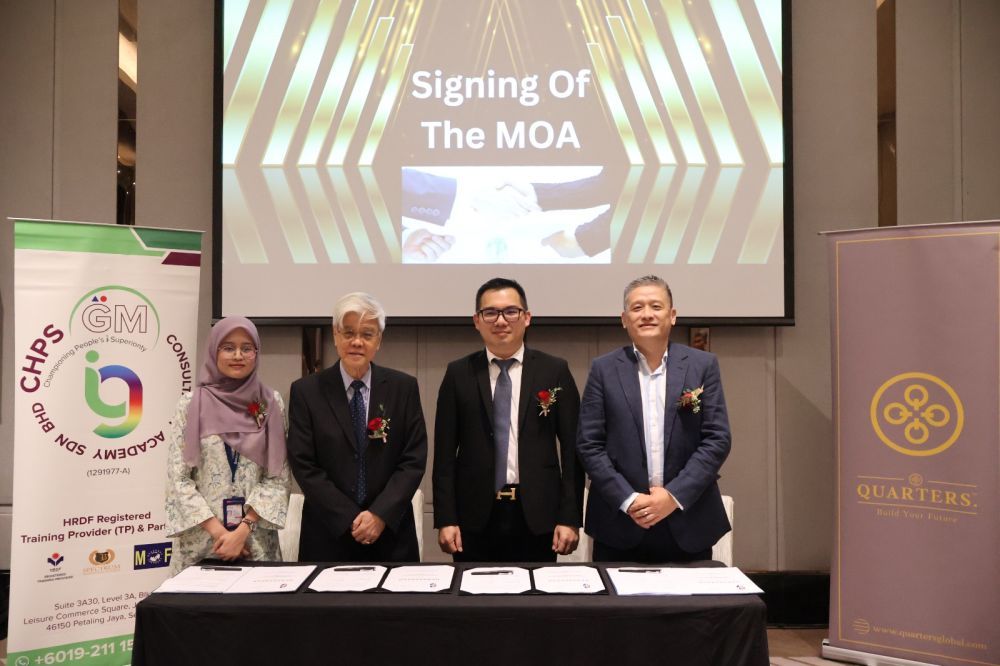
Puan Duratul Ain Bt Zabor, Director of Continuous Development of Spectrum International University College (SIUC); Emeritus Professor Dr Mak Chai, Vice-Chancellor and Chief Executive Officer of Spectrum International University College (SIUC); Mr. Luis Tee, Director of Quarters Academy Sdn Bhd; Mr. Steve Chen, Director of Quarters Academy Sdn Bhd [L-R]

The collaboration will create a framework for delivering market-driven courses that cater to the evolving needs of professionals in various fields. It emphasises the commitment of both Quarters Academy and SIUC to fostering continuous professional development (CPD). Quarters Academy will develop, recruit participants, and manage the delivery of professional training programmes, while SIUC will ensure the quality, compliance, and certification of these programmes.

Mr. Luis Tee, Director of Quarters Academy, said, “We are excited to partner with SIUC to provide innovative and high-quality professional training programmes. This collaboration reflects our commitment to equip individuals with the skills needed to thrive in today’s dynamic work environment.”

At the event, Quarters Academy and SIUC introduced the Professional Certificate in Trust & Fiduciary Advisory, a comprehensive course designed to educate students about trust and fiduciary laws, regulations, and advisory practices in Malaysia. The curriculum covers essential topics such as the history and creation of trusts, types of trusts, estate planning, fiduciary duties, taxation, and Islamic trusts.

Mr. Siva Sunasundram, Executive Director of SIUC, commented, “Collaborating with Quarters Academy aligns perfectly with our vision of providing inclusive and top-tier educational opportunities. We are confident that this partnership will greatly benefit our students and the broader community.”

Also at the event was CHPS GM Consultancy & Academic Sdn. Bhd. (“CHPS GM”). CHPS GM is a renowned provider of wellness and lifestyle programmes focused on human capital management and preventive healthcare. Through strategic partnerships with local and international associates, including SIUC, CHPS GM delivers high-quality consultancy and training services that address the evolving needs of today’s workforce.

Dr. Ben Prakasan, Founder and Managing Director of CHPS GM, added, “This partnership underscores our dedication to fostering professional growth and delivering value-added solutions in human capital development. Together with SIUC, we aim to raise the bar in educational excellence and industry relevance.”

Media contact:
Mandy Tan
Swan Consultancy
m.tan@swanconsultancy.biz 

GPD Companies, Inc. Names Kurt Schuering as President and Chief Executive Officer

Paul Tayler to Retire and Remain on Board of Directors

GPD Companies, Inc. (GPD), an affiliate of One Rock Capital Partners, LLC (One Rock), today announced the appointment of Kurt Schuering as President and CEO, effective June 24, 2024. Paul Tayler will retire from his role as President and CEO and remain on GPD’s Board of Directors.

Schuering brings nearly 30 years of experience in the plastics industry and a proven track record of success, making him the ideal candidate to lead GPD into its next phase of growth and innovation. Schuering has served in several key leadership roles, including: President of PolyOne Distribution (now named Formerra), Vice President of Commercial Excellence at PolyOne, General Manager – Automotive at SABIC/GE Plastics, and most recently Vice President of Shaw Development, LLC.

Commenting on his appointment, Schuering said, “I am excited to lead GPD and build upon the strong foundation established by Paul and the team. I look forward to working closely with our employees, suppliers, and customers to drive sustainable value and deliver exceptional results.”

Reflecting on his retirement, Tayler remarked, “It has been an incredible journey leading GPD, and I am immensely proud of what we have achieved together. I am confident the organization is well positioned for continued success under Kurt’s leadership.”

“We thank Paul for his dedication to GPD and look forward to his continued contributions as a director. We are also thrilled to welcome Kurt as GPD’s new President and CEO and are confident that his deep industry expertise in plastics distribution and his strategic vision will enable GPD to thrive in the years ahead,” said Tony Lee, Managing Partner of One Rock.

About GPD Companies, Inc.
GPD Companies, Inc. is a leading group of global value-added distributors formed by One Rock. Its operational entities currently include Nexeo Plastics and Distrupol. For more information, visit www.gpdcompanies.com.

About Nexeo Plastics
Nexeo Plastics is a leading global thermoplastics resin distributor for over 50 years, representing quality products from world-class suppliers and serving a diverse customer base across North America, Latin America, Europe, Middle East, Africa and Asia. From material selection assistance to identifying supply chain and inventory solutions, we go beyond traditional logistics to provide value-added services across many industries, including automotive, healthcare, packaging, wire and cable, and more. For more information, visit: www.nexeoplastics.com.

About Distrupol

Headquartered in Surrey, England, with broad geographic reach across Europe, Distrupol has provided value-added sales and application development of thermoplastic resins for over 60 years. Through its decades-long relationships with world-class supply partners, the company offers a robust array of superior performance products and solutions that meet the needs of diverse end users from leading and emerging industries, such as the consumer, medical, automotive, and electrical sectors, among others. Distrupol caters to over 1,300 customers across 17 countries with a portfolio of over 4,000 grades of high-quality polymers, including sustainably derived solutions that reduce environmental impact. For more information, visit www.distrupol.com.

About One Rock
One Rock makes investments in companies with potential for growth and operational improvement using a rigorous approach that utilizes highly experienced Operating Partners to identify, acquire, and enhance businesses in select industries. The involvement of these Operating Partners is designed to afford One Rock the ability to conduct due diligence and consummate acquisitions and investments in all types of situations, regardless of complexity. One Rock works collaboratively with company management and its Operating Partners to develop a comprehensive business plan focused on growing the enterprise and its profitability to enhance long-term value. For more information, visit www.onerock.com.

Media Contact:
GPD Companies, Inc.
Marianne Gooch
(832) 407-0706

Contact Information
Marianne Gooch
(832) 407-0706

SOURCE: GPD Companies, Inc.

PowerUP Asia 2024 Opens Tomorrow

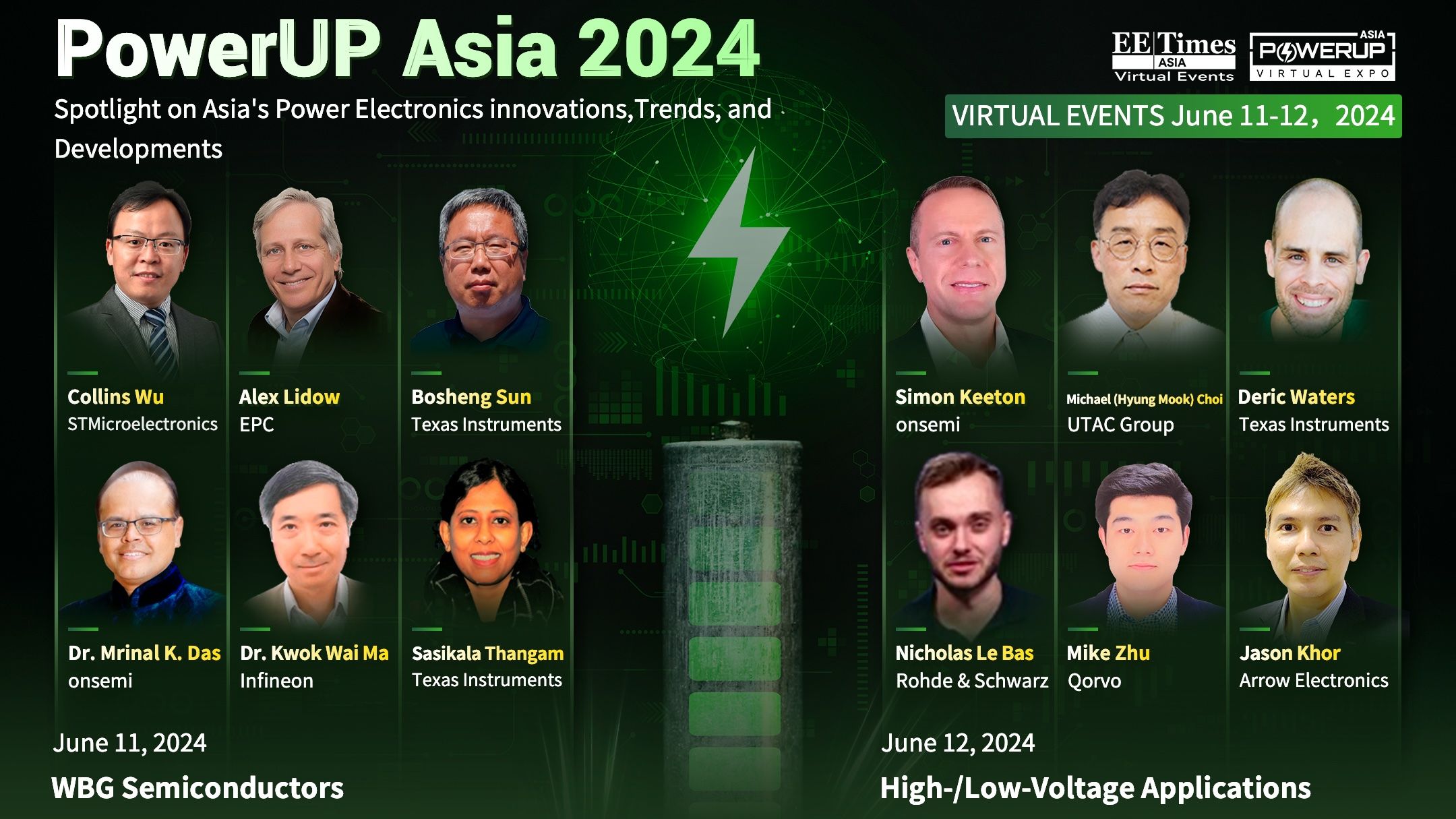
PowerUP Asia 2024, a two-day virtual conference focused on power semiconductor technologies and industry developments in Asia, opens tomorrow, June 11.

Organized by AspenCore, publisher of EETimes AsiaEETimes India, and EDN Asia, PowerUP Asia builds on the success of the inaugural event last year and features keynotes and discussions on some of the latest power electronics trends, including wide-band gap (WBG) devices such as gallium nitride (GaN) and silicon carbide (SiC), power ICs, packaging, test and measurement, and related technologies.

Speaker lineup this year includes the following:

  • Collins Wu, Regional Vice President, Power & Discrete Marketing APeC Region, STMicroelectronics: Enabling High Performance Industrial and Automotive Solution with WBG
  • Alex Lidow, CEO & Co-founder of Efficient Power Conversion, Efficient Power Conversion (EPC): Why GaN for Untethered Robotics
  • Dr. Mrinal K. Das, Senior Director of Technical Marketing, onsemi: Market Dynamics of Automotive SiC Revolution for Electrification
  • Dr. Kwok Wai Ma, Senior Principal Engineer, Industrial and Consumer Power, Infineon Technologies Asia Pacific: Recent Advance and Outlook in SiC and GaN Technologies, For a Greener Future
  • Simon Keeton, Group President, Power Solutions Group, onsemi: A Pathway to Sustainable Energy: Optimized Energy Harvesting and Efficient Grid Integration
  • Michael (Hyung Mook) Choi, Vice President of Power Business, UTAC Group: Enhancing Power Semiconductor Packages for High-Performance Computing Processors
  • Bosheng Sun, Systems Engineer, Texas Instruments Inc.: A Totem-pole Bridgeless PFC with Extreme Low Ithd, Re-rush Current Control, High Power Density and Integrated E-meter Function
  • Nicholas Le Bas, Oscilloscope Product Manager and Application Engineer, Rohde & Schwarz: Measurements of Currents and High Voltages with Oscilloscopes
  • Mike Zhu, Sr. Product Applications Engineer, Qorvo Inc.: Qorvo SiC FETs Excel in ZVS Soft-switching Applications
  • Sasikala Thangam, Applications Engineer, Texas Instruments Inc.: Choosing Suitable Gate Driver Protection Approach for High Power Systems
  • Deric Waters, Systems Engineer and Distinguished Member of Technical Staff (DMTS), Texas Instruments Inc.: Power System Implications of the New USB Power Delivery 3.2
  • Jason Khor, Senior Manager, Engineering, Arrow Electronics: Optimizing Power Architectures and Designs for Next-generation Low- and High-power Applications

Panel Discussion

WBG devices have been seeing increasing adoption over the past few years, especially as manufacturers put power efficiency on top of their agenda amid the increasing trend towards decarbonization, in line with the global “net zero” goal.

As electronics and semiconductor technologies advance, businesses are creating a wide range of products that offer advantages in a number of applications for the industrial, automotive, and consumer industries, among others.

At PowerUP Asia 2024, a panel of industry experts from some of the leading companies will discuss the challenges that designers currently face, the obstacles that still need to be removed for widespread adoption of WBG devices, the latest innovations that are fueling further growth of the GaN and SiC market, and the future of the WBG industry.

With the theme The Role of GaN and SiC Technologies Towards Drive for More-Efficient Power Electronics, the panel discussion will feature the following experts:

  • Collins Wu, Regional Vice President, Power & Discrete Marketing APeC Region, STMicroelectronics
  • Alex Lidow, CEO & Co-founder of Efficient Power Conversion, Efficient Power Conversion (EPC)
  • Dr. Mrinal K. Das, Senior Director of Technical Marketing, onsemi

For more information or to register, visit https://ve.eetasia.com/powerup2024.

About AspenCore

AspenCore is a unique collection of brands and products that have set the standard in meeting the demands of today’s engineers.

We reach over 15 million technologists, designers, engineers, and managers. We connect this electronics community to reliable news, authoritative analysis, industry trends, and daily information on new technology.

Our brands include EE Times, Electronic Products, EPSNews, ESM China, IoT Times, Power Electronics News, EDN, EEWeb, Electro Schematics, Elektroda.pl, Embedded.com, Planet Analog, and more.

For more information, visit https://aspencore.com.

Contact Person
Celia Shih
Marketing Manager
Taiwan/ASEAN Marketing and Circulation Department
T: +886 227591366 Ext. 103/222
E: celia.shih@aspencore.com

PowerUP Asia 2024: Leading Power Semiconductor Companies to Discuss Challenges, Trends, and Latest Innovations

Leading power semiconductor companies including STMicroelectronics (ST)Texas Instruments Inc. (TI)Efficient Power Conversion Corp. (EPC)onsemiInfineon Technologies Asia Pacific Pte Ltd, and NXP Semiconductors will be discussing the latest power semiconductor development trends and innovations, and how these are helping the drive toward greener electronics, at the upcoming PowerUP Asia 2024 virtual conference.

PowerUP Asia, organized by AspenCore, publisher of EETimes AsiaEETimes India, and EDN Asia, is a two-day virtual conference and exhibition focusing on power semiconductor technologies, including wide-bandgap (WBG) devices such as gallium nitride (GaN) and silicon carbide (SiC), low- and high-voltage power semiconductors, and related technologies, as electronics manufacturers worldwide set their sights on power efficiency, carbon reduction, and greener energy.

With the theme Power Semiconductor Innovations Toward Green Goals, Decarbonization and Sustainability, PowerUP Asia, to be held from June 11–12, will feature keynotes, technical presentations, and a panel discussion, discussing the latest developments in power semiconductor and engineering, and how the industry can explore ways to accelerate the pathway to net-zero carbon emissions.

The virtual conference will also feature technical experts from UTAC GroupRohde & SchwarzQorvo Inc., and Arrow Electronics.

Who Should Attend

Engineers, researchers, and industry professionals should attend the PowerUP Asian 2024 virtual expo and conference.

Engineers specializing in power electronics, semiconductor technologies, like GaN and SiC, and renewable energy systems will find immense value. Professionals in power management, converters and those exploring advancements in e-mobility and smart-grid infrastructure will gain significant insights.

Furthermore, those interested in gaining hands-on experience with state-of-the-art technologies within this field should attend. Those who possess a genuine enthusiasm for transforming energy efficiency, diminishing carbon footprints, and promoting the worldwide transition to renewable energy sources will find this conference to be of value.

For more information or to register, visit https://ve.eetasia.com/powerup2024.

About AspenCore

AspenCore is a unique collection of brands and products that have set the standard in meeting the demands of today’s engineers.

We reach over 15 million technologists, designers, engineers, and managers. We connect this electronics community to reliable news, authoritative analysis, industry trends, and daily information on new technology.

Our brands include EE Times, Electronic Products, EPSNews, ESM China, IoT Times, Power Electronics News, EDN, EEWeb, Electro Schematics, Elektroda.pl, Embedded.com, Planet Analog, and more.

For more information, visit https://aspencore.com.

Contact Person:
Celia Shih
Marketing Manager
Taiwan/ASEAN Marketing and Circulation Department
T: +886 227591366 Ext. 103/222
E: celia.shih@aspencore.com

Kirigami hydrogels rise from cellulose film

New options for making finely structured soft, flexible and expandable materials called hydrogels have been developed by researchers at Tokyo University of Agriculture and Technology (TUAT). Their work extends the emerging field of ‘kirigami hydrogels’, in which patterns are cut into a thin film allowing it to later swell into complex hydrogel structures. The research is published in the journal Science and Technology of Advanced Materials.

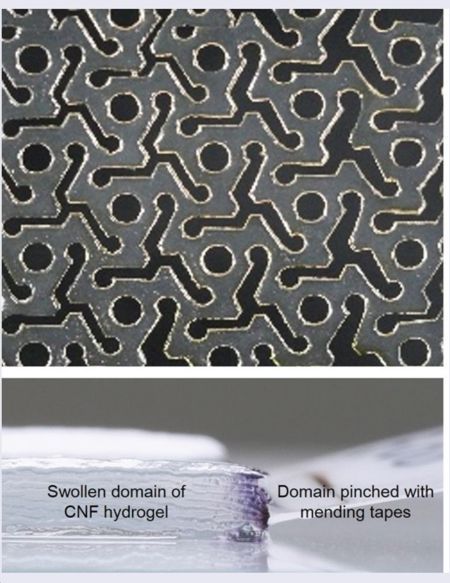
A Kirigami pattern of the hydrogel (top) and the hydrogel swollen from dry state (bottom).

Hydrogels have a network of water-attracting (hydrophilic) molecules, allowing their structure to swell substantially when exposed to water that becomes incorporated within the molecular network. Researchers Daisuke Nakagawa and Itsuo Hanasaki worked with an initially dry film composed of nanofibers of cellulose, the natural material that forms much of the structure of plant cell walls.

They used laser processing to cut structures into the film before water was added allowing the film to swell. The particular design of the Kirigami pattern works in such a way that the width increases when stretched in the longitudinal direction, which is called the auxetic property. This auxetic property emerges provided that the thickness grows sufficiently when the original thin film is wet.

“As Kirigami literally means the cut design of papers, it was originally intended for thin sheet structures. On the other hand, our two-dimensional auxetic mechanism manifests when the thickness of the sheet is sufficient, and this three dimensionality of the hydrogel structure emerges by swelling when it is used. It is convenient to store it in the dry state before use, rather than keeping the same water content level of the hydrogel.” says Hanasaki. “Furthermore, the auxeticity is maintained during the cyclic loading that causes the adaptive deformation of the hydrogel to reach another structural state. It will be important for the design of intelligent materials.”

Potential applications for the adaptive hydrogels include soft components of robotic technologies, allowing them to respond flexibly when interacting with objects they are manipulating, for example. They might also be incorporated into soft switches and sensor components. Hydrogels are also being explored for medical applications, including tissue engineering, wound dressings, drug delivery systems and materials that can adapt flexibly to movement and growth. The advance in kirigami hydrogels achieved by the TUAT team significantly extends the options for future hydrogel applications.

“Keeping the designed characteristics while showing adaptivity to the environmental condition is advantageous for the development of multifunctionality,” Hanasaki concludes.

Further information
Itsuo Hanasaki
Tokyo University of Agriculture and Technology
Email: hanasaki@cc.tuat.ac.jp

Paper: https://doi.org/10.1080/14686996.2024.2331959

About Science and Technology of Advanced Materials (STAM)

Open access journal STAM publishes outstanding research articles across all aspects of materials science, including functional and structural materials, theoretical analyses, and properties of materials. https://www.tandfonline.com/STAM 

Dr Yasufumi Nakamichi
STAM Publishing Director
Email: NAKAMICHI.Yasufumi@nims.go.jp 

Press release distributed by Asia Research News for Science and Technology of Advanced Materials.