
Progress towards potassium-ion batteries

Potassium-ion batteries could have a higher energy density than sodium-ion batteries. This is important for large-scale energy storage such as for renewable energy.

In a review published in Science and Technology of Advanced Materials, researchers have surveyed the battery technologies that will be vital for a sustainable green transition. Eunho Lim and colleagues at Korea’s Dongguk University discuss recent advances and challenges, and point towards the research needed to develop an alternative to lithium-ion batteries.

Although lithium-ion batteries have been invaluable in the electronics revolution—powering laptops, smartphones, electronic vehicles, and much more—their expanding use faces a critical challenge. Lithium is not a common resource. Increasing demand has turned it into a high-value, strategic resource, and the green transition is expected to increase demand further still.

One alternative is to develop battery technologies based around a more common material. Sodium-ion batteries are an option, and the technology is nearly ready for commercialization. But potassium-ion batteries would be even better, since they could have a higher energy density, which is especially important for large-scale energy storage, such as for renewable energy.

“Potassium-ion batteries are emerging as a viable alternative due to the abundance and cost-effectiveness of potassium, but realizing their potential requires the development of advanced anode materials tailored to the unique properties of potassium ions,” explains Lim.

Professor Lim’s review addresses the research needed to realize the potential of potassium-ion batteries. The paper systematically examines the strengths and weaknesses of different anode materials and the electrochemical mechanisms each would rely on. The paper also outlines strategies that could overcome the weaknesses of each approach, as well as the trade-offs between performance and stability. One important point that emerges is the interaction of electrochemical parameters and physical structures in determining the potassium-ion batteries’ capacity and longevity. Based on this overview, the team highlights paths for future research to advance potassium-ion battery technology.

Lim plans to build on this groundwork, aiming to design new materials that can deliver the promise of potassium-ion batteries while working around their limitations. “My research will focus on the development of cost-effective, high-performance, and safe anode materials for potassium-ion batteries,” he says. He also plans to use advanced characterization techniques to investigate some of the fundamental phenomena that happen in the battery materials. “Understanding these mechanisms will be crucial for optimizing material design and electrode architecture.”

“Ultimately,” he says, “my goal is to contribute to the commercialization of potassium-ion batteries by developing materials that can rival or exceed the performance of current lithium-ion battery  anodes.”

Further information
Eunho Lim
Dongguk University, Republic of Korea
eunholim@dgu.ac.kr

Paper: https://doi.org/10.1080/14686996.2025.2518746

About Science and Technology of Advanced Materials (STAM)

Open access journal STAM publishes outstanding research articles across all aspects of materials science, including functional and structural materials, theoretical analyses, and properties of materials. https://www.tandfonline.com/STAM 

Dr. Kazuya Saito
STAM Publishing Director
Email: SAITO.Kazuya@nims.go.jp

Press release distributed by Asia Research News for Science and Technology of Advanced Materials.
New method to blend functions for soft electronics

Soft electronics are an exciting and innovative class of technology that brings together bendable, stretchable semiconducting materials for applications in areas ranging from fashion to healthcare.  Researchers have recently developed a new technique to adjust the properties of liquids that could be used to create soft electronics.

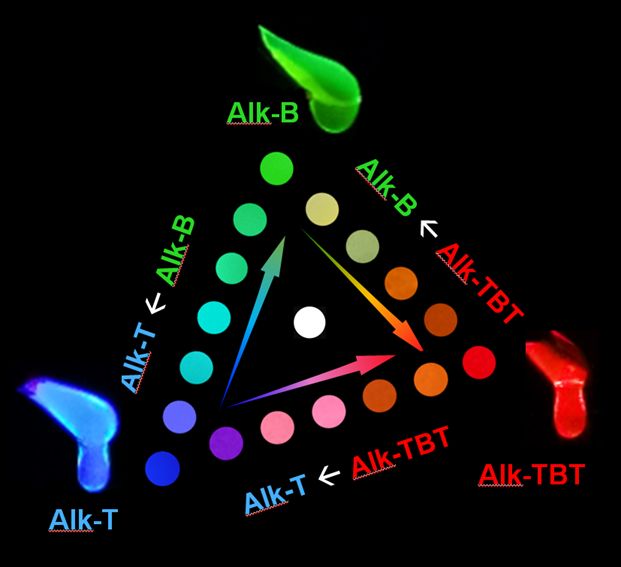
Researchers successfully blended various combinations and proportions of three solvent-free alkyl-π room-temperature liquids that fluoresced red, green, or blue light, with no color variation within the material showing that the alkyl-π liquids had merged evenly. Credit: Image is reproducible by CC-BY license. Please credit the STAM Journal.

Room-temperature alkylated-π molecular liquids (known as alkyl-π liquids) are an exciting new material that holds great promise for soft electronics. However, one challenge with these fascinating liquids lies in fine-tuning their physical, chemical, and electronic properties – including their ability to interact with light – to achieve the desired functionality.

A new study, led by researchers from the National Institute of Materials Science (NIMS) in Tsukuba, Japan, has explored a strategy for blending together alkyl-π liquids to merge their functions homogeneously. The researchers used photoluminescent color tuning to demonstrate how well the process has worked. Their findings have been published in the journal Science and Technology of Advanced Materials.

Previous efforts to control the properties of alkyl-π liquids have taken one of two approaches. The first involves incorporating small amounts of other molecules, such as dyes, into the liquid. “When modulating function by adding solid dopants, the dopant molecules have poor solubility, leading to insoluble aggregates and inconsistencies in properties such as luminescent color,” says Dr. Takashi Nakanishi of the Research Center for Materials Nanoarchitectonics at NIMS.

The second approach involves chemically modifying the alkyl-π liquids. While this can achieve a uniform result, designing and synthesising entirely new molecules is difficult and less time- and cost-effective.

In the new study, researchers synthesised three solvent-free alkyl-π room-temperature liquids that fluoresced red, green, or blue light, and then they blended the liquids together in varying proportions. They successfully created a range of homogeneous liquid blends of colors with no color variation within the material, showing that the alkyl-π liquids had merged evenly.

The team also assessed how well the two liquids had mixed by changing the temperature and studying how the flow of the mixed liquids changed over time at different temperatures. This approach further confirmed that the liquids were successfully blended together.

“The liquid–liquid blending method implemented in this study for alkyl-π liquids facilitates the production of low-volatility, ink-like materials that exhibit a diverse spectrum of uniform luminescent colors, devoid of any color unevenness,” Dr. Nakanishi says. “This means it will be possible to apply or coat the desired function with simple operations such as painting, sandwiching, or soaking the liquid materials wherever needed.”

The research opens the path to blending alkyl-π liquids to vary other functions, such as photoconductivity, charge retention, or gas sensing.

Further information
Takashi Nakanishi
National Institute for Materials Science (NIMS)
nakanishi.takashi@nims.go.jp

Paper: https://doi.org/10.1080/14686996.2025.2515007

About Science and Technology of Advanced Materials (STAM)

Open access journal STAM publishes outstanding research articles across all aspects of materials science, including functional and structural materials, theoretical analyses, and properties of materials. https://www.tandfonline.com/STAM 

Dr. Kazuya Saito
STAM Publishing Director
Email: SAITO.Kazuya@nims.go.jp

Press release distributed by Asia Research News for Science and Technology of Advanced Materials.
New Database of Materials Accelerates Electronics Innovation

In a collaboration between Murata Manufacturing Co., Ltd., and the National Institute for Materials Science (NIMS), researchers have built a comprehensive new database of dielectric material properties curated from thousands of scientific papers. The study, published in Science and Technology of Advanced Materials: Methods, also offers insights that could accelerate the development of next-generation electronic materials and energy storage technologies. 

Large-scale dielectric materials database built with the open database project
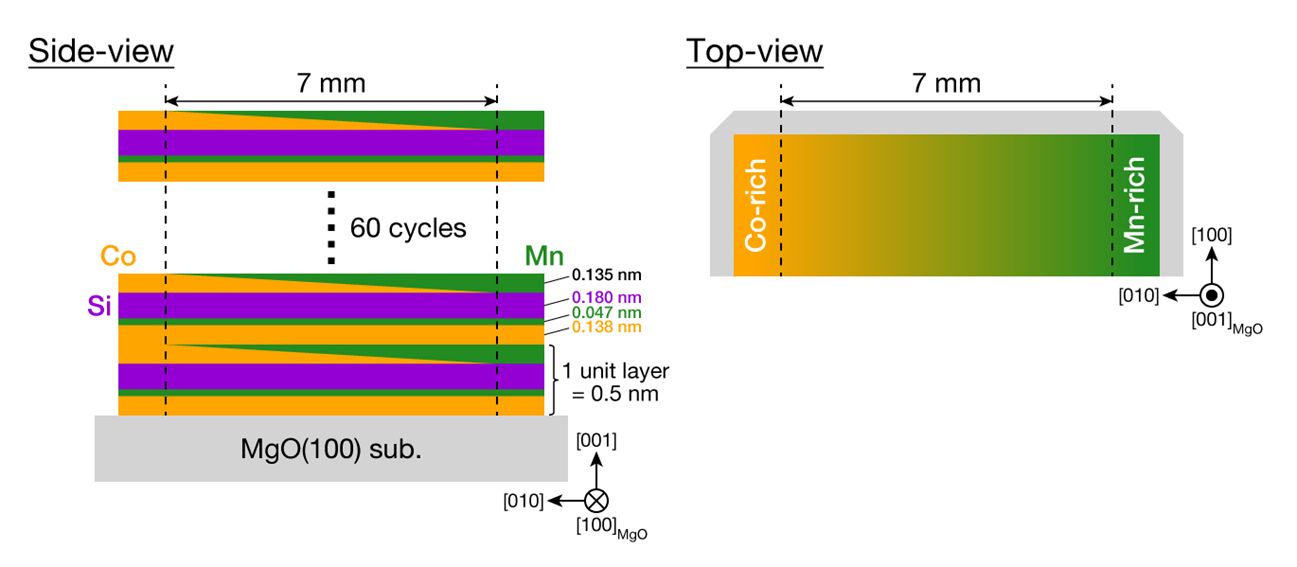
Large-scale dielectric materials database built with the open database project “Starrydata” and generation of a materials map using machine learning-based data visualization.

AI-driven materials discovery has great potential to accelerate innovation, but it relies on large and diverse datasets. The lack of such data remains a major bottleneck in the field. To address this challenge, researchers used the Starrydata2 web system to collect experimental data on over 20,000 material samples from more than 5,000 publications. The NIMS team has developed a standardized approach to extract data from graphs, including temperature-dependent properties, which are often omitted in other databases. “What makes our work unique is the meticulous process of manually tracing graphs and correcting inconsistencies in original research papers to create a clean, high-quality dataset,” the researchers said.

The database focuses on a specific class of materials necessary for electronics and is the largest ever reported, significantly surpassing previous collections. With this wealth of information, the team used machine learning (ML) to predict the properties of materials and how they would behave electronically.

Although the ML models were effective, they initially worked as “black boxes” — the researchers couldn’t see why the models made their predictions. To understand the context for predictions, the team created visual maps of the data, making complex information easier to interpret. They used clustering algorithms to automatically group similar materials. This analysis helped them spot patterns in how a material’s composition affects its properties. The team was also able to categorize the materials into distinct groups, including seven important ferroelectric families, providing a global landscape of the entire compositional space. 

The team took a closer look at ABO3 Perovskites, a family of materials which are essential components in everyday electronic devices and energy storage technologies, such as smartphones, computers, and solar cells. Their visualizations showed a simple link between the basic structure of the material and its dielectric permittivity, which coincides with previous academic knowledge.

This work advances our understanding of dielectric materials and moves research beyond traditional trial-and-error approaches. “By curating the largest dataset as ever and combining various machine-learning methods, we succeeded in visualizing the landscape of the entire compositional space in unprecedented detail,” the team explained.

The NIMS team plans to make the dataset publicly available next year, allowing scientists worldwide to leverage it for new discoveries. Future work may involve expanding data collection to include manufacturing methods and processing conditions, allowing for more comprehensive predictions that would link production processes to material properties. 

“We hope that this foundational work will inspire similar data collection initiatives and new approaches to materials discovery, ultimately leading to smarter materials development pathways that benefit society through improved electronic technologies,” the researchers concluded. 

Further information
Tomoki Murata
Murata Manufacturing Co., Ltd.
Email: tomoki.murata258@murata.com

Yukari Katsura
National Institute for Materials Science
Email: KATSURA.Yukari@nims.go.jp

Paper: https://doi.org/10.1080/27660400.2025.2485018

About Science and Technology of Advanced Materials: Methods (STAM-M)

STAM Methods is an open access sister journal of Science and Technology of Advanced Materials (STAM), and focuses on emergent methods and tools for improving and/or accelerating materials developments, such as methodology, apparatus, instrumentation, modeling, high-through put data collection, materials/process informatics, databases, and programming. https://www.tandfonline.com/STAM-M

Dr Kazuya Saito
STAM Methods Publishing Director
Email: SAITO.Kazuya@nims.go.jp

Press release distributed by Asia Research News for Science and Technology of Advanced Materials.

High-brilliance radiation quickly finds the best composition for half-metal alloys

Half-metals are unique magnetic compounds that have been attracting interest in the developments of mass-storage technologies. Some of the materials in the family of Heusler alloys were predicted to have a half-metallic nature, but their half-metallic electronic structure varies with their composition ratio and atomic ordered structure.

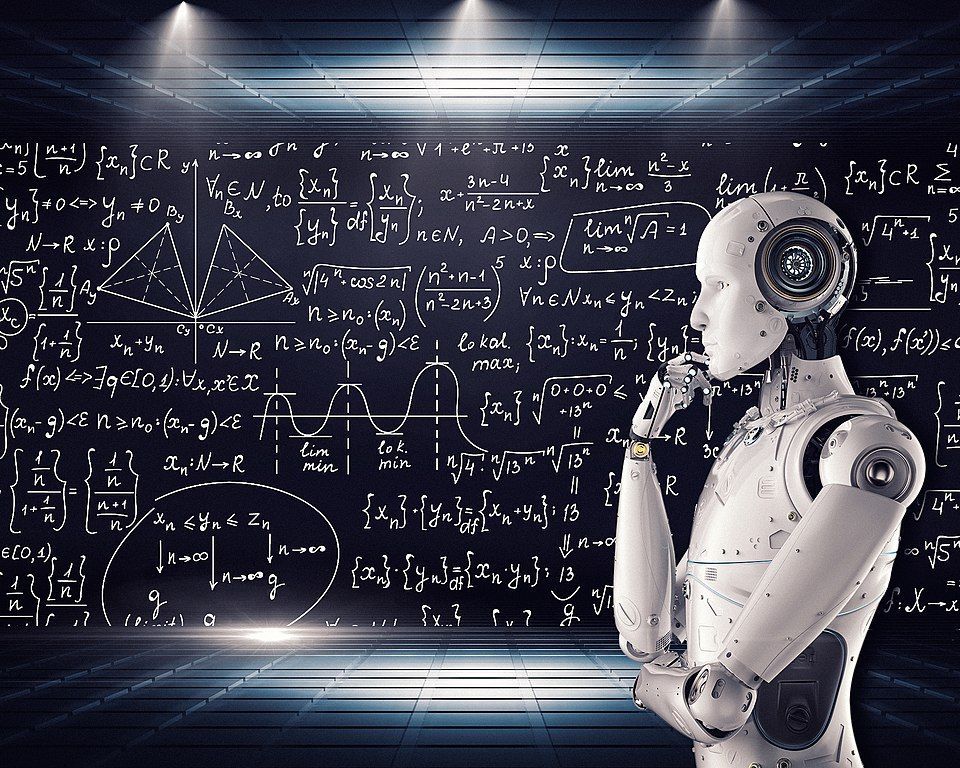
The composition-spread thin film of Co75–xMnxSi25 on substrates from the side (left) and top (right). The composition x changes continuously along the film. Copyright: Yuya Sakuraba

One property, spin polarization, is fundamental to the material’s half-metallic properties. Spin polarization ratio is a physical property that indicates how polarized the number of electrons with spin in the up and down directions is. Because spin polarization is influenced by the elemental composition of the Heusler alloy, it’s important to characterise and optimise the atomic composition of Heusler alloys to achieve the highest spin polarization. But current methods for determining the spin polarization of half-metals are either time-consuming or only provide an indirect measure.

Now, a team of researchers from Japan, led by Professor Yuya Sakuraba of the National Institute for Materials Science in Tsukuba, have developed a method to quickly determine the spin polarization of Heusler alloys, using high-brilliance synchrotron radiation. With this approach, they were able to rapidly identify the ideal composition of elements to achieve the highest spin polarisation. Their findings have been published in the journal Science and Technology of Advanced Materials.

The Heusler alloy in question was a mix of cobalt, manganese and silicon. The research team created composition-spread thin films of the alloy, varying the proportion of manganese from 10 to 40 percent along the length of the sample.

They then bombarded the film with extremely bright radiation at the NanoTerasu synchrotron facility which opened in April 2024. This bombardment revealed that the ideal composition to maximise spin polarization in the alloy was for manganese to make up 27 percent of the alloy’s atomic weight.

This experiment marked the first successful application of photoelectron spectroscopy at NanoTerasu facility. The experiment was done in a single day – much faster than existing methods of determining the spin polarization.

“The findings address a critical challenge in materials science by drastically reducing the time required to evaluate and optimize spin polarization in half-metallic materials,” Professor Sakuraba says.

This study paves the way for wider application of the technique not just to half-metallic materials but a variety of other magnetic and spintronic materials. “The rapid, efficient method presented in this study could significantly impact the development of next-generation technologies, such as high-capacity hard disk drives and advanced spintronic devices,” says Professor Sakuraba.

Further information
Yuya Sakuraba
National Institute for Materials Science (NIMS)
SAKURABA.Yuya@nims.go.jp

Paper: https://doi.org/10.1080/14686996.2024.2439781

About Science and Technology of Advanced Materials (STAM)

Open access journal STAM publishes outstanding research articles across all aspects of materials science, including functional and structural materials, theoretical analyses, and properties of materials. https://www.tandfonline.com/STAM

Dr Yasufumi Nakamichi
STAM Publishing Director
Email: NAKAMICHI.Yasufumi@nims.go.jp

Press release distributed by Asia Research News for Science and Technology of Advanced Materials.
Machine learning used to optimise polymer production

By identifying the ideal manufacturing conditions, machine learning reduces the need for expensive and time-consuming experimentation.

Polymers, such as plastics, are essential in many aspects of life and industry, from packaging and cars to medical devices and optic fibres. Their value comes from diverse properties that are largely determined by their monomers – the single chemical units – that make up a polymer. Unfortunately, it can be challenging to control the chemical behaviour of monomers during manufacture to achieve a desired outcome.

The flow synthesis reactor with two bottles containing a monomer, initiator and solvent mixed using a micromixer. The synthesis is controlled with AI-based design of experimental conditions such as the temperature and a flow rate.

Now, a team of researchers led by Professor Mikiya Fujii of the Nara Institute of Science and Technology in Japan have used machine learning to mathematically model the polymerization process and reduce the need for time-consuming and expensive experimentation. Their results have been published in the journal Science and Technology of Advanced Materials: Methods.

Machine learning algorithms need data, so the researchers designed a polymerization process that would quickly and efficiently generate experimental data to feed into the mathematical model. The target molecule was a styrene-methyl methacrylate co-polymer, which was made by mixing styrene and methyl methacrylate monomers, both already dissolved in a solvent with an added initiator substance, then heating them in a water bath.

The team also used a method called flow synthesis, in which the two monomer solutions are mixed and heated in a constant flow. This allows for better mixing, more efficient heating, and more precise control of heating time and flow rate, which makes it ideal for use with machine learning.

The modelling evaluated the effect of five key variables in the polymerization process: the concentration of the initiator, the ratio of solvent to monomer, the proportion of styrene, the temperature of the reaction, and the time spent in the water bath. The goal was to have an end product with as close to 50% styrene as possible.

Once enough experimental data was available, the machine learning process took only five cycles of calculation to achieve the ideal proportion of styrene to methyl methacrylate. The results showed that the key was a lower temperature and longer time in the water bath, as well as lowering the relative concentration of the monomer in the solvent. The researchers were surprised to discover that the solvent concentration was just as important as the proportion of monomers going into the mix.

“Our results demonstrate that machine learning not only can explicitly reveal what humans may have implicitly taken for granted but can also provide new insights that weren’t recognized before,” Professor Mikiya Fujii says. “The use of machine learning in chemistry could open the door for smarter, greener manufacturing processes with reduced waste and energy consumption.”

Further information
Mikiya Fujii
Nara Institute of Science and Technology
Email: fujii.mikiya@ms.naist.jp 

Paper: https://doi.org/10.1080/27660400.2024.2425178

About Science and Technology of Advanced Materials: Methods (STAM-M)

STAM Methods is an open access sister journal of Science and Technology of Advanced Materials (STAM), and focuses on emergent methods and tools for improving and/or accelerating materials developments, such as methodology, apparatus, instrumentation, modeling, high-through put data collection, materials/process informatics, databases, and programming. https://www.tandfonline.com/STAM-M 

Dr Yasufumi Nakamichi
STAM Publishing Director
Email: NAKAMICHI.Yasufumi@nims.go.jp 

Press release distributed by Asia Research News for Science and Technology of Advanced Materials.
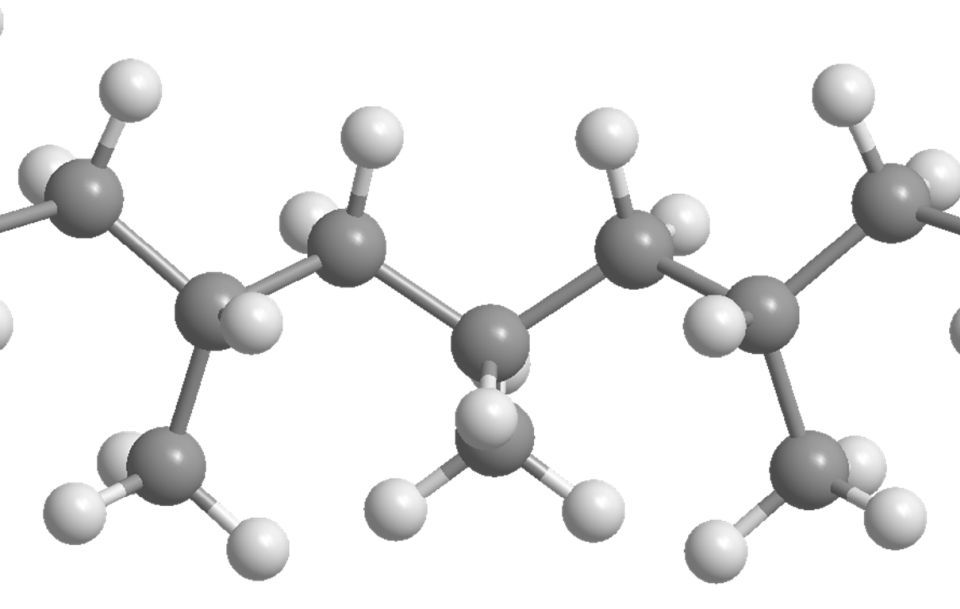
Machine learning can predict the mechanical properties of polymers

Polymers such as polypropylene are fundamental materials in the modern world, found in everything from computers to cars. Because of their ubiquity, it’s vital that materials scientists know exactly how each newly developed polymer will perform under different preparation conditions. Thanks to a new study, which was published in Science and Technology of Advanced Materials, scientists can now use machine learning to determine what to expect from a new polymer.

Machine learning predicts the material properties of new polymers with high accuracy, providing a nondestructive alternative to conventional polymer testing methods.

Predicting the mechanical properties of new polymers, such as their tensile strength or flexibility, usually involves putting them through destructive and costly physical tests. However, a team of researchers from Japan, led by Dr. Ryo Tamura, Dr. Kenji Nagata, and Dr. Takashi Nakanishi from the National Institute for Materials Science in Tsukuba, showed that machine learning can predict the material properties of polymers. They developed the method on a group of polymers called homo-polypropylenes, using X-ray diffraction patterns of the polymers under different preparation conditions to provide detailed information about their complex structure and features.

“Machine learning can be applied to data from existing materials to predict the properties of unknown materials,” Drs. Tamura, Nagata, and Nakanishi explain. “However, to achieve accurate predictions, it’s essential to use descriptors that correctly represent the features of these materials.”

Thermoplastic crystalline polymers, such as polypropylene, have a particularly complex structure that is further altered during the process of molding them into the shape of the end product. It was, therefore, important for the team to adequately capture the details of the polymers’ structure with X-ray diffraction and to ensure that the machine learning algorithm could identify the most important descriptors in that data.

The new method accurately captured the structural changes of commonly used plastic Polypropylene during the molding process into the end product.

To that end, they analysed two datasets using a tool called Bayesian spectral deconvolution, which can extract patterns from complex data. The first dataset was X-ray diffraction data from 15 types of homo-polypropylenes subjected to a range of temperatures, and the second was data from four types of homo-polypropylenes that underwent injection molding. The mechanical properties analysed included stiffness, elasticity, the temperature at which the material starts to deform, and how much it would stretch before breaking.

The team found that the machine learning analysis accurately linked features in the X-ray diffraction imagery with specific material properties of the polymers. Some of the mechanical properties were easier to predict from the X-ray diffraction data, while others, such as the stretching break point, were more challenging.

“We believe our study, which describes the procedure used to provide a highly accurate machine learning prediction model using only the X-ray diffraction results of polymer materials, will offer a nondestructive alternative to conventional polymer testing methods,” the NIMS researchers say.

The team also suggested that their Bayesian spectral deconvolution approach could be applied to other data, such as X-ray photoelectron spectroscopy, and used to understand the properties of other materials, both inorganic and organic.

“It could become a test case for future data-driven approaches to polymer design and science,” the NIMS team says.

Further information
Ryo Tamura
National Institute for Materials Science (NIMS)
tamura.ryo@nims.go.jp

Kenji Nagata
National Institute for Materials Science (NIMS)
nagata.kenji@nims.go.jp

Takashi Nakanishi
National Institute for Materials Science (NIMS)
nakanishi.takashi@nims.go.jp

Paper: https://doi.org/10.1080/14686996.2024.2388016

About Science and Technology of Advanced Materials (STAM)

Open access journal STAM publishes outstanding research articles across all aspects of materials science, including functional and structural materials, theoretical analyses, and properties of materials. https://www.tandfonline.com/STAM 

Dr Yasufumi Nakamichi
STAM Publishing Director
Email: NAKAMICHI.Yasufumi@nims.go.jp

Press release distributed by Asia Research News for Science and Technology of Advanced Materials.
Dual-action therapy shows promise against aggressive oral cancer

A new treatment combining tiny iron particles and nitric oxide gas shows promise in targeting oral cancer cells for destruction.

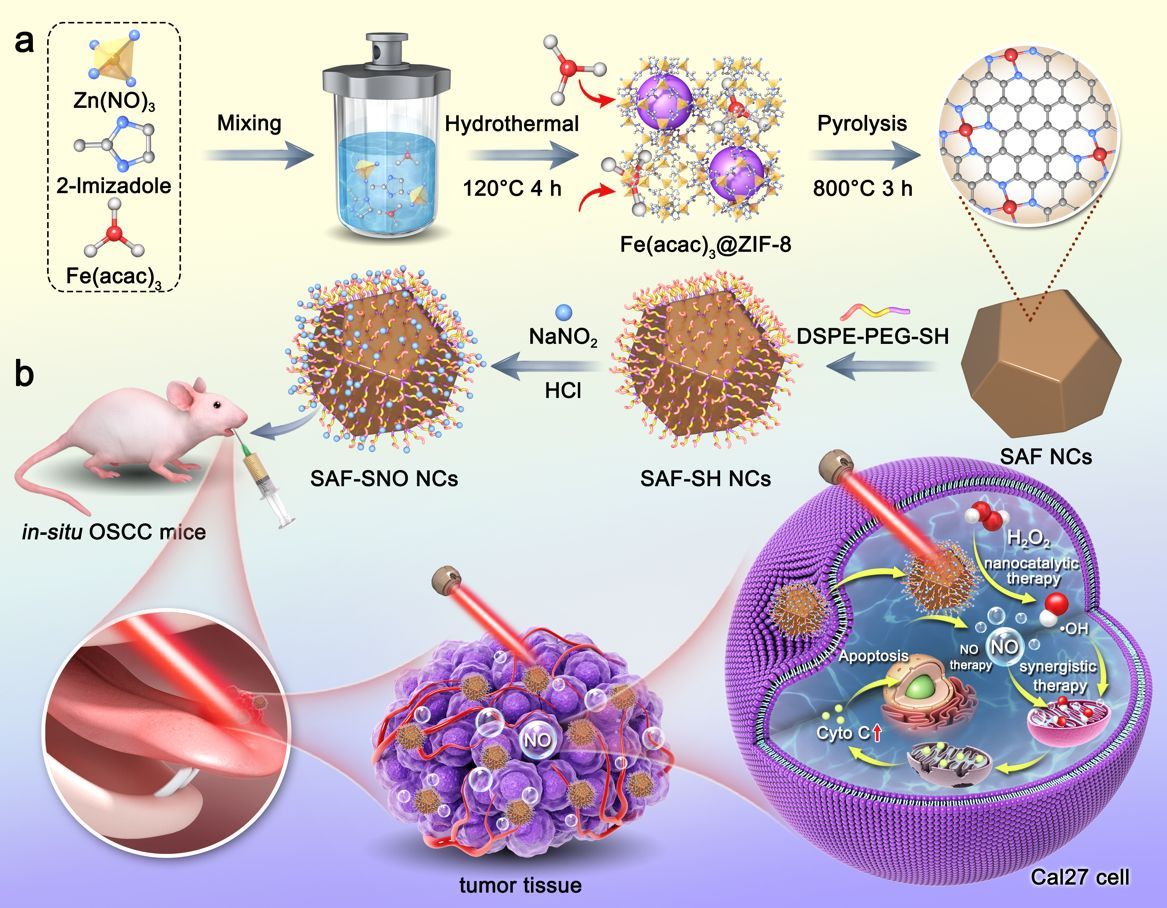
In a new study, scientists at Shanghai Jiaotong University School of Medicine found a promising new way to treat a type of oral cancer known as oral squamous cell carcinoma. The method specifically targets the cancer cells through a combination of nitric oxide gas therapy and nanocatalytic therapy, killing them more effectively and with fewer side effects. The study was published in Science and Technology of Advanced Materials.

Illustration of nitric oxide-releasing iron atoms being created and used to treat oral squamous cell carcinoma.

Oral squamous cell carcinoma is a very aggressive cancer that tends to spread quickly and to reappear after treatment. Traditional treatments, such as surgery, chemotherapy, and radiation, often have serious side effects, including trouble speaking or eating and painful conditions like mouth sores and dry mouth. Researchers are trying to develop better treatments that wouldn’t have such harsh side effects. One approach relies partly on nanocatalysts, tiny particles measuring 1 to 100 nanometers in size which are used to accelerate chemical reactions.

“We created tiny iron particles composed of individual iron atoms, designed to interact with hydrogen peroxide—a substance found in elevated levels inside tumor cells,” explains Professor Ping Xiong, who led the study. “These atoms use a chemical process called the Fenton reaction, where the iron atoms act as catalysts to convert hydrogen peroxide into highly toxic hydroxyl radicals.”

Hydroxyl radicals are extremely reactive and cause intense oxidative stress by damaging cellular components such as DNA and proteins. The iron particles also carried molecules that released nitric oxide gas when activated by near-infrared laser light. The nitric oxide gas amplified the effect of the hydroxyls by triggering apoptosis, a controlled form of cell death crucial for removing damaged cells.

In animal model experiments, a single dose of treatment combined with a laser pulse was found to suppress tumors by around 85.5%, suggesting that the treatment is very effective. “This treatment is highly specific to cancer cells, reducing damage to healthy tissues and minimizing side effects, which makes it both more efficient and better tolerated by the body,” says Yuting Xie, one of the study’s authors.

One major difficulty was ensuring that the infrared laser targeted only the tumor, especially in hard-to-reach areas like the sides and bottom of the tongue. The team is exploring ways to improve the precision of the laser treatment to avoid inadvertent damage to the surrounding healthy tissues, which could result in unwanted side effects. One approach being investigated involves developing nanocatalysts that would be administered through an intravenous injection, which could enhance the targeting by interacting with the laser in a more controlled manner.

The researchers are also working on strategies to prevent the cancer from spreading or returning after treatment. By further refining these technologies, they hope to create a more effective and targeted treatment option for this invasive cancer.

Further information
Ping Xiong
Shanghai Jiaotong University School of Medicine
Email:  xiongp@shsmu.edu.cn

Paper: https://doi.org/10.1080/14686996.2024.2368452

About Science and Technology of Advanced Materials (STAM)
Open access journal STAM publishes outstanding research articles across all aspects of materials science, including functional and structural materials, theoretical analyses, and properties of materials. https://www.tandfonline.com/STAM 

Dr Yasufumi Nakamichi
STAM Publishing Director
Email: NAKAMICHI.Yasufumi@nims.go.jp 

Press release distributed by Asia Research News for Science and Technology of Advanced Materials.
A new spin on materials analysis

Researchers Koichiro Yaji and Shunsuke Tsuda at the National Institute for Materials Science in Japan have developed an improved type of microscope that can visualize key aspects of electron spin states in materials. The quantum mechanical property of electrons called spin is more complex than the spin of objects in our everyday world but is related to it as a measure of an electron’s angular momentum. The spin states of electrons can have a significant impact on the electronic and magnetic behavior of the materials they are part of.

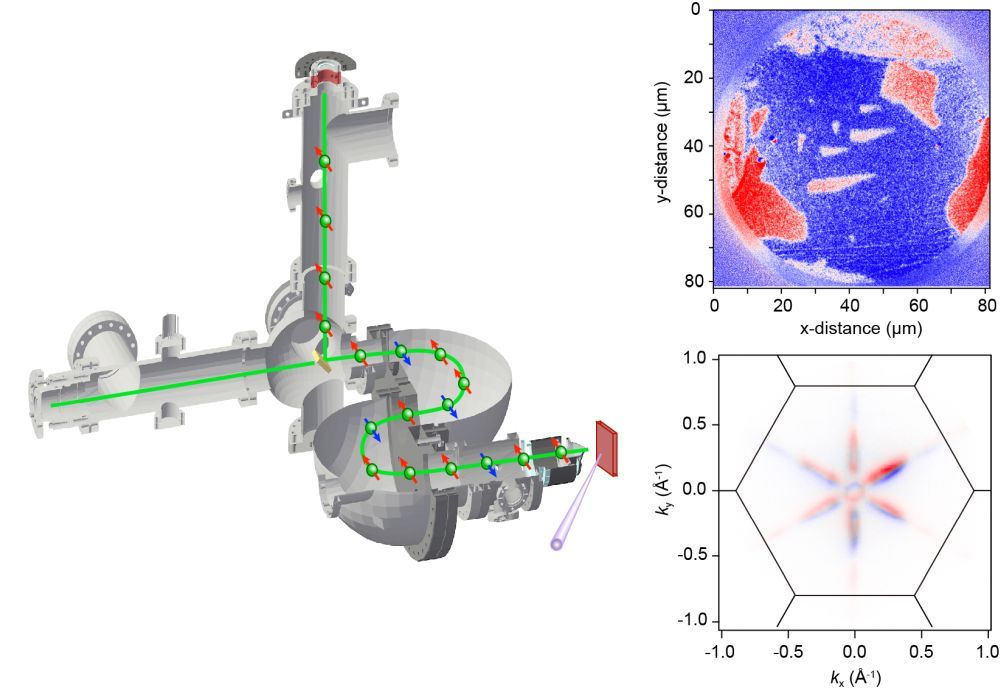
Schematic diagram of the iSPEM and the images it can obtain

The technology developed by Yaji and Tsuda is known as imaging-type spin-resolved photoemission microscopy (iSPEM). It uses the interaction of light with the electrons in a material to detect the relative alignment of the electron spins. It is particularly focused on electron spin polarization – the extent to which electron spins are collectively aligned in a specific direction.

The team’s iSPEM machine consists of three interconnected ultra-high vacuum chambers for preparing and analyzing the sample. Electrons are emitted from the sample by absorbing light energy, accelerated through the apparatus, and then analyzed by interaction with a spin filter crystal. The results are displayed as images which experts can use to glean the necessary information about the electron spin states in the sample.

“Compared to conventional machines, our iSPEM machine drastically improves the data acquisition efficiency by ten-thousand times, with a more than ten-times improvement in spatial resolution, ” says Yaji. “This offers tremendous opportunities for characterizing the electronic structure of microscopic materials and devices at previously inaccessible levels in the sub-micrometer region.”

This advance could promote improvements in using electron spin states in information processing and other electronic devices, as part of the fast-developing field know as spintronics. In spintronics applications, the spin state of electrons is utilized to store and process information, in addition to the traditional use of electric charge.

“This could lead to more energy-efficient and faster electronic devices, including quantum computers” says Yaji. Applying the subtleties of quantum mechanical behavior to computing is at the forefront of efforts to take computing powers to another level, but until now most advances have been restricted to arcane demonstrations rather than practical applications. Mastering the understanding, control and visualization of electron spin could be a significant step forward.

“We now plan to use our machine to investigate the possibilities for developing a new generation of electron spin-based devices, because it will let us look into the properties of tiny and structurally complex samples previously hidden from view,” Yaji concludes.

Further information
Name: Koichiro Yaji
National Institute for Materials Science
Email: yaji.koichiro@nims.go.jp 

Paper: https://doi.org/10.1080/27660400.2024.2328206

About Science and Technology of Advanced Materials: Methods (STAM-M)

STAM Methods is an open access sister journal of Science and Technology of Advanced Materials (STAM), and focuses on emergent methods and tools for improving and/or accelerating materials developments, such as methodology, apparatus, instrumentation, modeling, high-through put data collection, materials/process informatics, databases, and programming. https://www.tandfonline.com/STAM-M 

Dr Yasufumi Nakamichi
STAM Publishing Director
Email: NAKAMICHI.Yasufumi@nims.go.jp 

Press release distributed by Asia Research News for Science and Technology of Advanced Materials.
Kirigami hydrogels rise from cellulose film

New options for making finely structured soft, flexible and expandable materials called hydrogels have been developed by researchers at Tokyo University of Agriculture and Technology (TUAT). Their work extends the emerging field of ‘kirigami hydrogels’, in which patterns are cut into a thin film allowing it to later swell into complex hydrogel structures. The research is published in the journal Science and Technology of Advanced Materials.

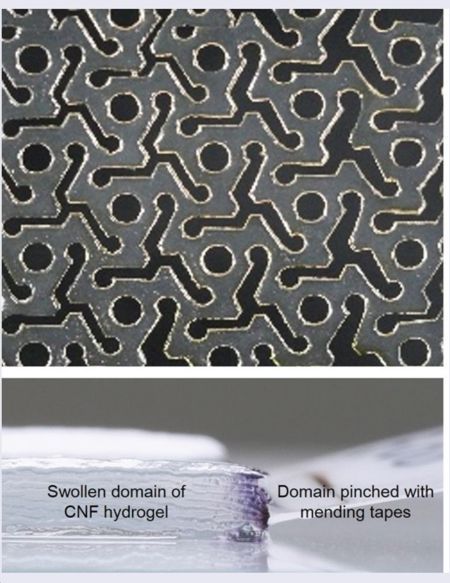
A Kirigami pattern of the hydrogel (top) and the hydrogel swollen from dry state (bottom).

Hydrogels have a network of water-attracting (hydrophilic) molecules, allowing their structure to swell substantially when exposed to water that becomes incorporated within the molecular network. Researchers Daisuke Nakagawa and Itsuo Hanasaki worked with an initially dry film composed of nanofibers of cellulose, the natural material that forms much of the structure of plant cell walls.

They used laser processing to cut structures into the film before water was added allowing the film to swell. The particular design of the Kirigami pattern works in such a way that the width increases when stretched in the longitudinal direction, which is called the auxetic property. This auxetic property emerges provided that the thickness grows sufficiently when the original thin film is wet.

“As Kirigami literally means the cut design of papers, it was originally intended for thin sheet structures. On the other hand, our two-dimensional auxetic mechanism manifests when the thickness of the sheet is sufficient, and this three dimensionality of the hydrogel structure emerges by swelling when it is used. It is convenient to store it in the dry state before use, rather than keeping the same water content level of the hydrogel.” says Hanasaki. “Furthermore, the auxeticity is maintained during the cyclic loading that causes the adaptive deformation of the hydrogel to reach another structural state. It will be important for the design of intelligent materials.”

Potential applications for the adaptive hydrogels include soft components of robotic technologies, allowing them to respond flexibly when interacting with objects they are manipulating, for example. They might also be incorporated into soft switches and sensor components. Hydrogels are also being explored for medical applications, including tissue engineering, wound dressings, drug delivery systems and materials that can adapt flexibly to movement and growth. The advance in kirigami hydrogels achieved by the TUAT team significantly extends the options for future hydrogel applications.

“Keeping the designed characteristics while showing adaptivity to the environmental condition is advantageous for the development of multifunctionality,” Hanasaki concludes.

Further information
Itsuo Hanasaki
Tokyo University of Agriculture and Technology
Email: hanasaki@cc.tuat.ac.jp

Paper: https://doi.org/10.1080/14686996.2024.2331959

About Science and Technology of Advanced Materials (STAM)

Open access journal STAM publishes outstanding research articles across all aspects of materials science, including functional and structural materials, theoretical analyses, and properties of materials. https://www.tandfonline.com/STAM 

Dr Yasufumi Nakamichi
STAM Publishing Director
Email: NAKAMICHI.Yasufumi@nims.go.jp 

Press release distributed by Asia Research News for Science and Technology of Advanced Materials.
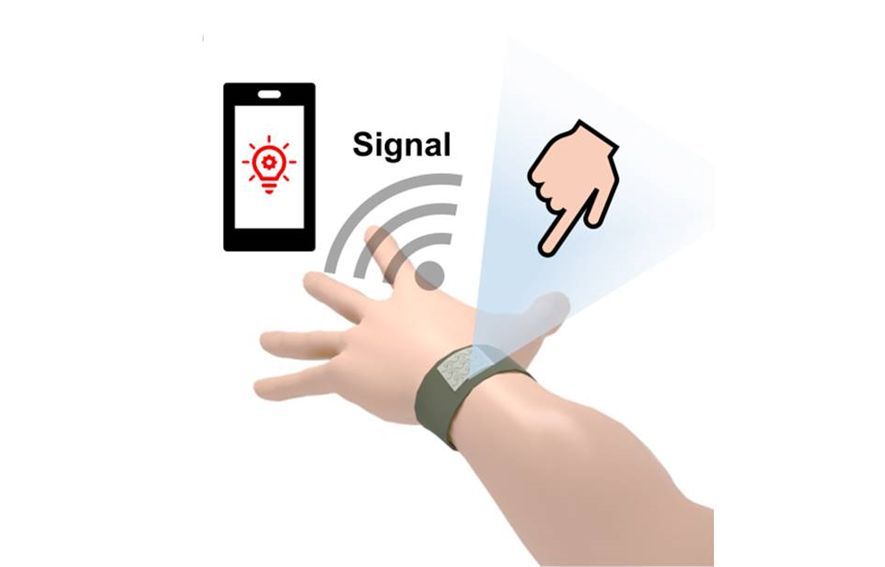
Sensing structure without touching

  • Touch sensors that don’t even need direct contact offer new sensitivity for robotic 3D structure recognition and wireless transmission of data

A radical new type of touch sensor for robotics and other bio-mimicking (bionic) applications is so sensitive it works even without direct contact between the sensor and the objects being detected. It senses interference in the electric field between an object and the sensor, at up to 100 millimetres from the object. The researchers at Qingdao University in China, with collaborators elsewhere in China and South Korea, describe their innovation in the journal Science and Technology of Advanced Materials.

Electronic skins have become a crucial element in bionic robots, allowing them to detect and react to external stimuli promptly. This can allow robotic systems to analyse an object’s shape, and, if required, also to pick it up and manipulate it.

The sensors in most current systems rely on direct touch causing a physical deformation of a contact layer, leading to changes in electrical capacitance. Unfortunately, the uniformity of the response to different regions limits the sensitivity and overall abilities of such systems.

“To bring greater sensitivity and versatility we have developed new composite films with surprising and very useful electrical properties,” says Xinlin Li of the Qingdao University team.

The most surprising aspect came when the researchers combined two materials with a high dielectric constant – a measure of their response to electric fields. This composite had an unexpectedly low dielectric constant, a counter-intuitive result which is ideally suited to making a sensor that is more sensitive to electric fields.

The composite consists of small amounts of graphitic carbon nitride added to polydimethylsiloxane. It can be made and processed by a specific 3D printing method, called dispensing printing, that offers fine control over the structure and pattern of the printed high-viscous ink. The team used this to make a grid that could sense objects while between 5 and 100 millimeters away from the object’s surface. They tested the grid’s capabilities by using the researchers’ fingers as the objects being detected, as they approached close to the grid but without actually making contact.

“The performance was outstanding, in terms of sensitivity, speed of response and robust stability through many cycles of use,” says Li. “This opens new possibilities in the field of wearable objects and electronic skin.” She adds that it is suitable for making the physically flexible sensors needed for wearable technologies. These could be applied for medical monitoring, or more general uses in the fast developing ‘internet of things’(IoT), involving remote control of a wide variety of appliances.

Incorporating the sensing grid into a printed circuit board allowed the data it collects to be transmitted over the 4G networks widely used by mobile phones.

The team now plan to refine the technology with a view to develop its suitability for mass production. They also want to explore further possibilities beyond merely detecting shape and movement.

For example, different units in the sensor array have the ability to respond sequentially, which provides the possibility of realizing human-computer interaction, such as gesture recognition. The performance of the sensors in the contact and non-contact system also reflects its potential in human motion detection, such as obstacle avoidance and gait monitoring, which could be applied in intelligent medical care.

Further information
Xinlin Li
Qingdao University
Email: xinlin0618@163.com

Paper: https://doi.org/10.1080/14686996.2024.2311635

About Science and Technology of Advanced Materials (STAM)
Open access journal STAM publishes outstanding research articles across all aspects of materials science, including functional and structural materials, theoretical analyses, and properties of materials. https://www.tandfonline.com/STAM 

Dr Yasufumi Nakamichi
STAM Publishing Director
Email: NAKAMICHI.Yasufumi@nims.go.jp 

Photos & Graphics

Caption: 3D finger recognition and data transmission to a mobile phone.
3D finger recognition and data transmission to a mobile phone.

Press release distributed by Asia Research News for Science and Technology of Advanced Materials.