Better memristors for brain-like computing

Scientists are getting better at making neurone-like junctions for computers that mimic the human brain’s random information processing, storage and recall. Fei Zhuge of the Chinese Academy of Sciences and colleagues reviewed the latest developments in the design of these ‘memristors’ for the journal Science and Technology of Advanced Materials.

Researchers are developing computer hardware for artificial intelligence that allows for more random and simultaneous information transfer and storage, much like the human brain.

Computers apply artificial intelligence programs to recall previously learned information and make predictions. These programs are extremely energy- and time-intensive: typically, vast volumes of data must be transferred between separate memory and processing units. To solve this issue, researchers have been developing computer hardware that allows for more random and simultaneous information transfer and storage, much like the human brain.

Electronic circuits in these ‘neuromorphic’ computers include memristors that resemble the junctions between neurones called synapses. Energy flows through material from one electrode to another, much like a neurone firing a signal across the synapse to the next neurone. Scientists are now finding ways to better tune this intermediate material so the information flow is more stable and reliable.

“Oxides are the most widely used materials in memristors,” says Zhuge. “But oxide memristors have unsatisfactory stability and reliability. Oxide-based hybrid structures can effectively improve this.”

Memristors are usually made of an oxide-based material sandwiched between two electrodes. Researchers are getting better results when they combine two or more layers of different oxide-based materials between the electrodes. When an electrical current flows through the network, it induces ions to drift within the layers. The ions’ movements ultimately change the memristor’s resistance, which is necessary to send or stop a signal through the junction.

Memristors can be tuned further by changing the compounds used for electrodes or by adjusting the intermediate oxide-based materials. Zhuge and his team are currently developing optoelectronic neuromorphic computers based on optically-controlled oxide memristors. Compared to electronic memristors, photonic ones are expected to have higher operating speeds and lower energy consumption. They could be used to construct next generation artificial visual systems with high computing efficiency.

Further information
Fei Zhuge
Chinese Academy of Sciences
Email: zhugefei@nimte.ac.cn

About Science and Technology of Advanced Materials Journal (STAM)
Open access journal STAM publishes outstanding research articles across all aspects of materials science, including functional and structural materials, theoretical analyses, and properties of materials.

Dr. Yoshikazu Shinohara
STAM Publishing Director
Email: SHINOHARA.Yoshikazu@nims.go.jp

Press release distributed by ResearchSEA for Science and Technology of Advanced Materials.

Dye-based device sees the invisible

Devices that can see shortwave infrared light, which is invisible to the naked eye, could soon become cheaper and more accessible to a broader consumer base.

Scientists in Europe have designed an organic dye-based device that can see light waves in the shortwave infrared (SWIR) range. The device is easy to make using cheap materials, and is stable at high temperatures.

The findings, published in the journal Science and Technology of Advanced Materials, could lead to more widespread use of inexpensive consumer SWIR imaging and sensing devices.

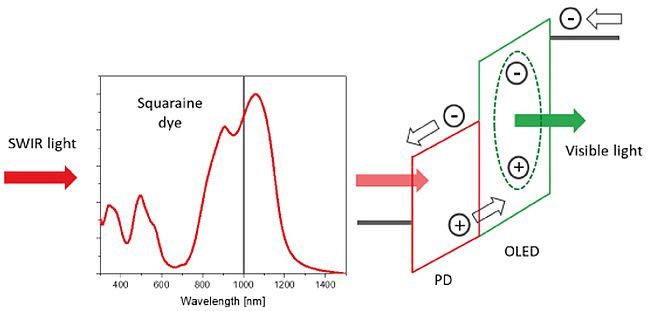
In the upconversion device, shortwave infrared (SWIR) light with wavelengths beyond 1,000 nm is absorbed by the squaraine dye in the photodetector (PD), producing electrical charges. Charges flow into the organic light-emitting diode (OLED), where they recombine under the emission of visible light. This way, SWIR light, which cannot be detected by the human eye, is converted into visible light.

The human eye can only detect a very narrow segment of the electromagnetic spectrum, from around 400 to 700 nanometers. The SWIR region, on the other hand, extends from 1,000 to 2,500 nanometers. Specially designed cameras can take images of objects that reflect waves in the SWIR region. They are used for improving night vision, in airborne remote sensing, and deep tissue imaging. The cameras also help assess the composition and quality of silicon wafers, building structures and even food produce.

“These cameras are typically difficult to manufacture and are quite expensive, as they are made of inorganic semiconductor photodiode arrays interconnected with read-out integrated circuitry,” says Roland Hany of the Swiss Federal Laboratories for Materials Science and Technology.

Hany worked with colleagues in Switzerland and Italy to design an organic dye-based ‘SWIR upconversion device’ that efficiently converts shortwave infrared light to visible light.

The device uses organic (materials made with carbon) components: a squaraine dye-coated flexible substrate combined with a fluorescent organic light-emitting diode (OLED). When the dye absorbs SWIR waves, an electric current is generated and directly converted into a visible image by the OLED.

The team had to play with the molecular composition of several squaraine dyes to get them to absorb specific wavelengths. Ultimately, they synthesized squaraine dyes that absorb SWIR light beyond 1,200 nanometers and remained stable up to 200 degrees Celsius. The finished dye-based device performed stably for several weeks under normal laboratory conditions.

“All-organic upconverters could lead to applications that can’t be realized with current technology. For example, invisible night vision devices can be directly integrated into car windscreens without affecting the visual field,” explains Hany.

The team is now working on shifting the dye’s absorption further into the SWIR range. They are also using machine learning techniques to find new dye molecules capable of sensing SWIR waves. Finally, the team aims to improve device stability and sensitivity.

Further information
Roland Hany
Empa, Swiss Federal Laboratories for Materials Science and Technology
Email: roland.hany@empa.ch

About Science and Technology of Advanced Materials Journal
Open access journal STAM publishes outstanding research articles across all aspects of materials science, including functional and structural materials, theoretical analyses, and properties of materials.

Dr. Yoshikazu Shinohara
STAM Publishing Director
Email: SHINOHARA.Yoshikazu@nims.go.jp

Press release distributed by ResearchSEA for Science and Technology of Advanced Materials.
Putting a spin on Heusler alloys

A review on the latest research of the various types of Heusler alloys summarizes the field’s main achievements up to 2020.

A study published in the journal Science and Technology of Advanced Materials summarizes the major achievements made to-date in Heusler alloy research. “Our review article can serve as an ideal reference for researchers in magnetic materials,” says Atsufumi Hirohata of the University of York, UK, who specializes in spintronics.

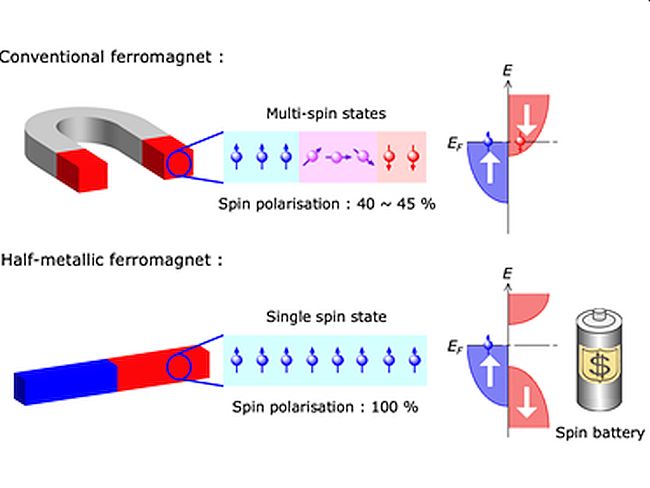
Spin ‘batteries’ use electron spins, instead of their charge, to power spintronic devices.

Spintronics, also known as spin electronics, is a field of applied physics that studies the use of electron spins, instead of their charge, to carry information in solid-state devices, with reduction in power consumption and improvements in memory and processing capabilities.

A category of materials showing great promise in this area is Heusler alloys: materials formed of one or two parts metal X, one part metal Y, and one part metal Z, each coming from a distinct part of the periodic table of elements. The interesting thing about these alloys is that individually, the metals are not magnetic, but when combined, they become magnetic.

A major advantage of Heusler alloys for spintronic devices is the ability to control their unique electrical and magnetic properties, which result directly from electron spins, by making changes to their crystalline structures. But this requires very high temperatures, which researchers want to reduce.

Over the last few decades, scientists have been working on approaches to grow Heusler alloy films at room temperature on special substrates with crystal lattices that are similar to the alloy’s. The interaction between the two lattices can lead to the development of half-metallicity in the Heusler alloy, where only electrons spinning in one orientation are conducted through the material whereas those spinning in another are not.

Researchers need to be able to measure the properties of materials in order to conduct their investigations. The atomic structure of Heusler alloys can be directly observed by X-ray diffraction and indirectly measured through examining the relationship between the material’s resistance to an electric current and temperature changes. Other techniques are also available for measuring their magnetic properties.

Hirohata and his colleagues are currently working on fabricating a metallic magnetic junction made of Heusler alloy films. These junctions are made from two ferromagnets separated by a thin insulator. When the insulating layer is thin enough, electrons are able to tunnel from one ferromagnet to the other. There is low resistance to electron movement as long as an external magnetic field is applied, but as soon as it is removed, the material becomes highly resistant to electron movement. “These devices are expected to replace currently used memory cells and magnetic sensors,” says Hirohata. The team hopes to develop metallic magnetic junctions with much larger magnetoresistance than the current record at room temperature, realising a next-generation memory for a sustainable society.

Research paper: https://www.tandfonline.com/doi/full/10.1080/14686996.2020.1812364

Further information
Atsufumi Hirohata
University of York
Email: atsufumi.hirohata@york.ac.uk

About Science and Technology of Advanced Materials Journal
Open access journal STAM publishes outstanding research articles across all aspects of materials science, including functional and structural materials, theoretical analyses, and properties of materials.

Chikashi Nishimura
STAM Publishing Director
Email: NISHIMURA.Chikashi@nims.go.jp

Press release distributed by ResearchSEA for Science and Technology of Advanced Materials.
Size matters: Bimodal imaging receives nanoparticle enhancement

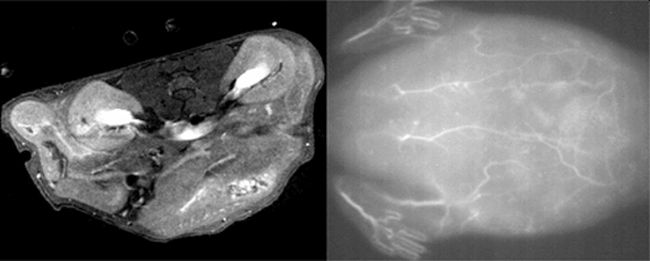
Scientists have found a way to control the size of special nanoparticles to optimize their use for both magnetic resonance and near-infrared imaging. Their approach could help surgeons use the same nanoparticles to visualize tumours just before and then during surgery using the two different imaging techniques. Their findings were published in the journal Science and Technology of Advanced Materials.

“Magnetic resonance imaging is routinely used in pre-operative diagnosis, while surgeons have started using near-infrared fluorescence imaging during surgical procedures,” says nanobiotechnologist Kyohei Okubo of Tokyo University of Science. “Our nanoparticle probes could provide a bimodality that will be clinically appealing to medical device researchers and doctors.”

Ceramic nanoparticles made with the rare earth metals ytterbium (Yb) and erbium (Er) have demonstrated low toxicity and prolonged near-infrared luminescence, showing promise as a contrast agent in MRI scans and a fluorescing agent for near-infrared fluorescence imaging. Images of blood vessels and organs in live bodies can be obtained with the two imaging techniques by further modifying the nanoparticle surfaces with polyethylene glycol (PEG)-based polymers. But to improve image resolution, scientists need to have more control over nanoparticle size during the fabrication process.

Okubo and his colleagues used a step-by-step fabrication process that starts with mixing rare earth oxides in water and trifluoracetic acid. The mixture is heated to form a solid. Then it is dissolved in solution, oleic acid is added and gas is removed. So-called rare-earth-doped ceramic nanoparticles form when this solution is cooled.

A few more steps lead to the coating of the nanoparticle surfaces with PEG. The scientists found they could slow the growth rate of the nanoparticles by increasing their concentration before the coating process. This allowed them to form nanoparticles 15 and 45 nanometres in diameter.

The team conducted a series of tests to examine the properties of their nanoparticles. They found that they could be used for obtaining high-quality images of blood vessels in live mice using MRI and near-infrared fluorescence imaging techniques. Further tests showed the nanoparticles exhibited minimal toxicity on mouse fibroblast cells when used in low concentrations. They also have a short half-life, meaning they would be cleared relatively quickly from the body, making them safe for clinical use.

The team next aims to investigate how different distributions of paramagnetic ions on the nanoparticles affect their magnetic properties. They also aim to study whether modifications made to the nanoparticles could make them applicable for use in light-based ‘photodynamic’ therapies for treating skin cancers and acne, for example.

Further information
Kyohei Okubo
Tokyo University of Science
Email: kyohei.okubo@rs.tus.ac.jp

About Science and Technology of Advanced Materials Journal

Open access journal STAM publishes outstanding research articles across all aspects of materials science, including functional and structural materials, theoretical analyses, and properties of materials.

Chikashi Nishimura
STAM Publishing Director
Email: NISHIMURA.Chikashi@nims.go.jp

Press release distributed by ResearchSEA for Science and Technology of Advanced Materials.
Materials coloured like a peacock

Materials inspired by the colour changes in a peacock’s feather could lead to anti-counterfeit and sensing applications.

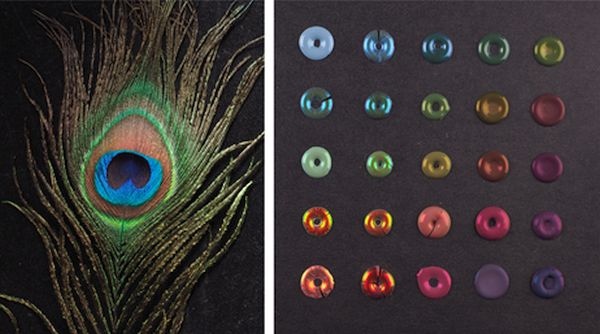
Melanin-like compounds can be precisely designed and arranged to colour materials using a mechanism similar to that found in a peacock’s feathers. Chemist Michinari Kohri of Chiba University in Japan reviewed the latest research on these ‘melanin-mimetic materials’ and their potential applications for the journal Science and Technology of Advanced Materials.

Scientists are developing materials inspired by the structural colours in a peacock’s feathers. (Credit: Takashi Tsujino)
Melanin and melanin-like compounds absorb some of the light that is scattered from the microstructures within materials. Scientists are finding ways to control this phenomenon to give a variety of iridescent and non-iridescent colours. (Credit: Michinari Kohri)

Melanin is a dark pigment that gives hair and skin its colour. It is also essential for the bright colours we see in some organisms. When light interacts with the structures of feathers, wings and shells of many organisms, like peacocks, butterflies and jewel beetles, it is scattered, appearing white. But when melanin is interspersed within these structures, some of the scattered light is absorbed, producing various colours. Scientists are looking for ways to mimic these so-called ‘structural colour’ changes of living organisms in synthetic materials.

“Vivid structural colours can be obtained by constructing microstructures containing a light-absorbing black material made of natural or artificial melanin,” says Kohri. “Research in this area is progressing rapidly worldwide.”

A leading contender is a compound called polydopamine. It is made of a material naturally found in the body, so it is biocompatible. It is also dark, so it absorbs light like melanin. Scientists found they could control polydopamine’s iridescence – how much the colour changes as the angle of light hitting it shifts, similar to a peacock’s feather. They achieved this by altering the particle size or by adding compounds that react to a magnetic field.

Scientists are also investigating particles formed of a polystyrene core and a polydopamine shell. Changing the diameter of the inner core, for example, leads to different colours. Making the polydopamine shell thicker causes the particles to be less closely packed, leading to non-iridescent structural colour, which remains the same regardless of the light angle.

Scientists have also toyed with controlling colour and angle-dependence by changing the shapes of polystyrene/polydopamine particles, making them hollow on the inside, and adding multiple coatings to the external shell.

Polydopamine particles are showing potential for a variety of applications. For example, they can be used as inks to dye fabrics or in cosmetics. They could help prove a product is real versus counterfeit by shifting colour with strong light, wetting, or temperature changes. Finally, scientists have found that adding these particles to rubber causes it to change colour when stretched or relaxed, which could be useful for sensing local stress and strain in bridges.

Further information
Michinari Kohri
Chiba University
Email: kohri@faculty.chiba-u.jp

About Science and Technology of Advanced Materials Journal
Open access journal STAM publishes outstanding research articles across all aspects of materials science, including functional and structural materials, theoretical analyses, and properties of materials.

Chikashi Nishimura
STAM Publishing Director
NISHIMURA.Chikashi@nims.go.jp

Press release distributed by ResearchSEA for Science and Technology of Advanced Materials.

Micropillar compression for finding heat-tolerant alloys

Accurate measurements of crystalline deformation should help engineer stronger components for more energy-efficient turbines.

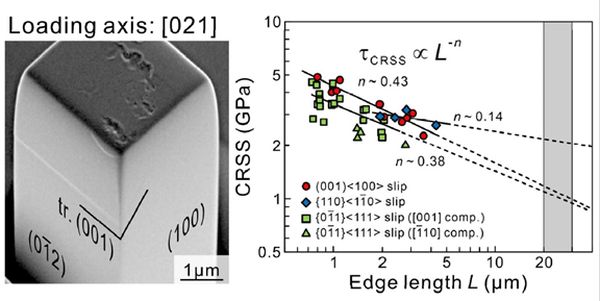
Metals containing niobium silicide are promising materials that can withstand high temperatures and improve efficiency of gas turbines in power plants and aircraft. But it has been difficult to accurately determine their mechanical properties due to their complex crystal structures. Now, scientists at Kyoto University in Japan have measured what happens at the micro-level when pressure is applied on tiny samples of these materials. The approach, published in the journal Science and Technology of Advanced Materials, could help scientists obtain the accurate measurements needed to understand the atomic-level behaviour of complex crystals to develop more heat-tolerant components in gas turbines.

The scientists measured the plastic deformation that happened when a tiny probe exerted force on the micropillar specimens with various loading axis orientations.

“Our results demonstrate the cutting edge of research into plastic deformation behaviour in crystalline materials,” says Kyosuke Kishida, the study’s corresponding author.

Plastic deformation describes the distortion that occurs at the atomic level when a sustained force is applied to a crystal. It is difficult to measure in complex crystals. Kishida and his colleagues have been using a new approach to systematically measure plastic deformation in crystals showing promise for use in high temperature gas turbines.

In this study, they measured plastic deformation in a niobium silicide called alpha-Nb5Si3. Tiny ‘micropillars’ of these crystals were exposed to very small amounts of stress using a machine with a flat-punch indenter at its end. The stress was applied to different faces of the sample to determine where and how plastic deformation occurs within the crystal. By using scanning electron microscopy on the samples before and after the test, they were able to detect the planes and directions in which deformation occurred. This was followed by simulation studies based on theoretical calculations to further understand what was happening at the atomic level. Finally, the team compared the results with those of a boron-containing molybdenum silicide (Mo5SiB2) they had previously examined.

“We found that instantaneous failure occurs rather easily in alpha-Nb5Si3, which is in marked contrast to Mo5SiB2,” says Kishida.

This could mean alpha-Nb5Si3 is at a disadvantage compared to Mo5SiB2 for use as a strengthening component in metal-based alloys. Kishida and his team think, however, that this material’s inherent brittleness could be improved by adding other alloying elements.

The team plans to use the approach to study mechanical properties of other crystalline materials with complex structures.

Further information
Professor Kyosuke Kishida
Kyoto University
kishida.kyosuke.6w@kyoto-u.ac.jp

Paper: https://www.tandfonline.com/doi/full/10.1080/14686996.2020.1855065

About Science and Technology of Advanced Materials Journal
Open access journal STAM publishes outstanding research articles across all aspects of materials science, including functional and structural materials, theoretical analyses, and properties of materials.

Further information
Dr. Chikashi Nishimura
STAM Publishing Director
NISHIMURA.Chikashi@nims.go.jp
National Institute for Materials Science

Press release distributed by ResearchSEA for Science and Technology of Advanced Materials.

Using AI to predict new materials with desired properties

An artificial intelligence approach extracts how an aluminum alloy’s contents and manufacturing process are related to specific mechanical properties.

Scientists in Japan have developed a machine learning approach that can predict the elements and manufacturing processes needed to obtain an aluminum alloy with specific, desired mechanical properties. The approach, published in the journal Science and Technology of Advanced Materials, could facilitate the discovery of new materials.

Aluminum alloys are lightweight, energy-saving materials which are used for various purposes, from welding materials for buildings to bicycle frames. (Credit: Jozef Polc via123rf)

Aluminum alloys are lightweight, energy-saving materials made predominantly from aluminum, but also contain other elements, such as magnesium, manganese, silicon, zinc and copper. The combination of elements and manufacturing process determines how resilient the alloys are to various stresses. For example, 5000 series aluminum alloys contain magnesium and several other elements and are used as a welding material in buildings, cars, and pressurized vessels. 7000 series aluminum alloys contain zinc, and usually magnesium and copper, and are most commonly used in bicycle frames.

Experimenting with various combinations of elements and manufacturing processes to fabricate aluminum alloys is time-consuming and expensive. To overcome this, Ryo Tamura and colleagues at Japan’s National Institute for Materials Science and Toyota Motor Corporation developed a materials informatics technique that feeds known data from aluminum alloy databases into a machine learning model. This trains the model to understand relationships between alloys’ mechanical properties and the different elements they are made of, as well as the type of heat treatment applied during manufacturing. Once the model is provided enough data, it can then predict what is required to manufacture a new alloy with specific mechanical properties. All this without the need for input or supervision from a human.

The model found, for example, 5000 series aluminum alloys that are highly resistant to stress and deformation can be made by increasing the manganese and magnesium content and reducing the aluminum content. “This sort of information could be useful for developing new materials, including alloys, that meet the needs of industry,” says Tamura.

The model employs a statistical method, called Markov chain Monte Carlo, which uses algorithms to obtain information and then represent the results in graphs that facilitate the visualization of how the different variables relate. The machine learning approach can be made more reliable by inputting a larger dataset during the training process.

Further information
Ryo Tamura
National Institute for Materials Science
tamura.ryo@nims.go.jp

Paper: https://doi.org/10.1080/14686996.2020.1791676

About Science and Technology of Advanced Materials Journal

Open access journal STAM publishes outstanding research articles across all aspects of materials science, including functional and structural materials, theoretical analyses, and properties of materials.

Chikashi Nishimura
STAM Publishing Director
NISHIMURA.Chikashi@nims.go.jp

Press release distributed by ResearchSEA for Science and Technology of Advanced Materials.
Let the robot swarms begin!

Scientists are looking for ways to make millions of molecule-sized robots swarm together so they can perform multiple tasks simultaneously.

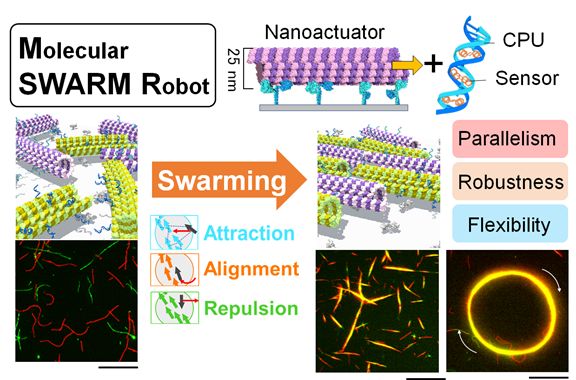
Scientists have devised a new method of using DNA to control molecular robots. Molecules swarm like a flock of birds, showing different patterns of movement when this method is applied. (Copyright: Hokkaido University)

Multi-disciplinary research has led to the innovative fabrication of molecule-sized robots. Scientists are now advancing their efforts to make these robots interact and work together in the millions, explains a review in the journal Science and Technology of Advanced Materials.
“Molecular robots are expected to greatly contribute to the emergence of a new dimension in chemical synthesis, molecular manufacturing, and artificial intelligence,” writes Hokkaido University physical chemist Dr. Akira Kakugo and his colleagues in their review.

Rapid progress has been made in recent years to build these tiny machines, thanks to supramolecular chemists, chemical and biomolecular engineers, and nanotechnologies, among others, working closely together. But one area that still needs improvement is controlling the movements of swarms of molecular robots, so they can perform multiple tasks simultaneously.

Towards this end, researchers have made molecular robots with three key components: microtubules, single-stranded DNA, and a light-sensing chemical compound. The microtubules act as the molecular robot’s motor, converting chemical energy into mechanical work. The DNA strands act as the information processor due to its incredible ability to store data and perform multiple functions simultaneously. The chemical compound, azobenzene derivative, is able to sense light, acting as the molecular robot’s on/off switch.

Scientists have made huge moving ‘swarms’ of these molecular robots by utilizing DNA’s ability to transmit and receive information to coordinate interactions between individual robots. See the video below.

Scientists have successfully controlled the shape of those swarms by tuning the length and rigidity of the microtubules. Relatively stiff robots swarm in uni-directional, linear bundles, while more flexible ones form rotating, ring-shaped swarms.

A continuing challenge, though, is making separate groups of robots swarm at the same time, but in different patterns. This is needed to perform multiple tasks simultaneously. One group of scientists achieved this by designing one DNA signal for rigid robots, sending them into a unidirectional bundle-shaped swarm, and another DNA signal for flexible robots, which simultaneously rotated together in a ring-shaped swarm.

Light-sensing azobenzene has also been used to turn swarms off and on. DNA translates information from azobenzene when it senses ultraviolet light, turning a swarm off. When the azobenzene senses visible light, the swarm is switched back to on state.

“Robot sizes have been scaled down from centimeters to nanometers, and the number of robots participating in a swarm has increased from 1,000 to millions,” write the researchers. Further optimization is still necessary, however, to improve the processing, storing and transmitting of information. Also, issues related to energy efficiency and reusability, in addition to improving the lifetime of molecular robots, still need to be addressed.

Further information

Akira Kakugo
Hokkaido University
kakugo@sci.hokudai.ac.jp
Paper: https://doi.org/10.1080/14686996.2020.1761761

About Science and Technology of Advanced Materials Journal

Open access journal STAM publishes outstanding research articles across all aspects of materials science, including functional and structural materials, theoretical analyses, and properties of materials.

Chikashi Nishimura
STAM Publishing Director
NISHIMURA.Chikashi@nims.go.jp
Image and caption:

A molecular robot, which is typically between 100 nanometers to 100 micrometers long, requires an actuator, processor and sensor to function properly. By fine-tuning their mutual interactions, millions of robots can move together in swarms that are much bigger in size than a single robot, offering several advantages. Scale bar: 20 μm. (Copyright: Akira Kakugo)

Press release distributed by ResearchSEA for Science and Technology of Advanced Materials.

Gaining more control over fuel cell membranes

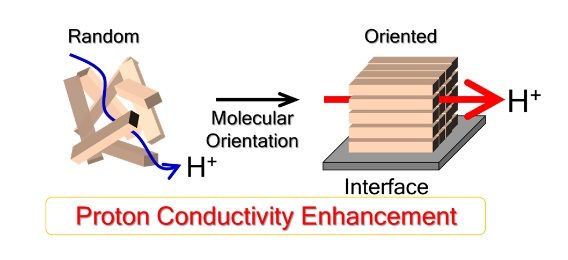
Molecular orientation enhances proton conduction in proton-conductive polymers. (Copyright: Yuki Nagao)

More organization at the molecular level could improve the efficiency of membranes used in the hydrogen fuel cells that provide energy to electric cars and other industrial applications, according to a review published in the journal Science and Technology of Advanced Materials.

Hydrogen fuel cells are the energy-producing components of electric cars. To work, they need to be able to split hydrogen molecules into positively charged protons and negatively charged electrons. A particular type of membrane – a proton-conducting polymer membrane – is used for this purpose. It only allows protons to pass through it, while the electrons get circuited around the membranes to create the desired electric current. Protons are then transported along a thin ‘ionomer’ film and then into an electrochemical catalyst where electrons and protons rejoin.

Research has shown that proton transport through the thicker proton-conducting polymer membranes is better than it is in the thinner ionomer ones.

This second part of the proton transport process must be studied to improve fuel cell performance, says materials scientist Yuki Nagao of the Japan Advanced Institute of Science and Technology, who has been researching proton-conducting films for many years.

Using state-of-the-art technologies, he and others have been looking into the molecular structures of ionomer films and have been finding that the more organized they are internally, the better they conduct protons.

Some ionomer films commonly used in hydrogen fuel cells are made with perfluorinated sulfonic acid. The films can be placed on surfaces made from substances such as silicon oxide, magnesium oxide, or sputtered platinum or gold. Nagao has found that proton conductivity in these films depends on the type of surface and may affect fuel cell performance.

Molecules in another type of film, made from alkyl sulfonated polyimide, become more organized with water uptake. This property is the result of the material’s ability to enter a liquid crystal phase when solvent is added.”

“Developing a better understanding of these properties and their impacts on proton conduction will be important for clarifying proton conduction mechanisms,” explains Nagao.

Further research is needed to understand how to control molecular organization through the application of external magnetic fields, by employing their liquid crystal properties, or by developing hydrogen bond networks between polymer chains within the thin films. This could help lead to a variety of applications using highly proton-conductive polymer thin films.

Further information
Yuki Nagao
Japan Advanced Institute of Science and Technology
ynagao@jaist.ac.jp

Paper
https://doi.org/10.1080/14686996.2020.1722740

About Science and Technology of Advanced Materials Journal
Open access journal STAM publishes outstanding research articles across all aspects of materials science, including functional and structural materials, theoretical analyses, and properties of materials.

Shunichi Hishita
STAM Publishing Director
HISHITA.Shunichi@nims.go.jp

Press release distributed by ResearchSEA for Science and Technology of Advanced Materials.