Digital Realty and BW Digital Partner to Support Expansion of Cross-Border Connectivity Between Singapore and Batam

Digital Realty, the largest global provider of cloud-and carrier-neutral data centre, colocation, and interconnection solutions, today announced a partnership with BW Digital to strengthen cross-border DC-to-DC connectivity between Singapore and Indonesia.
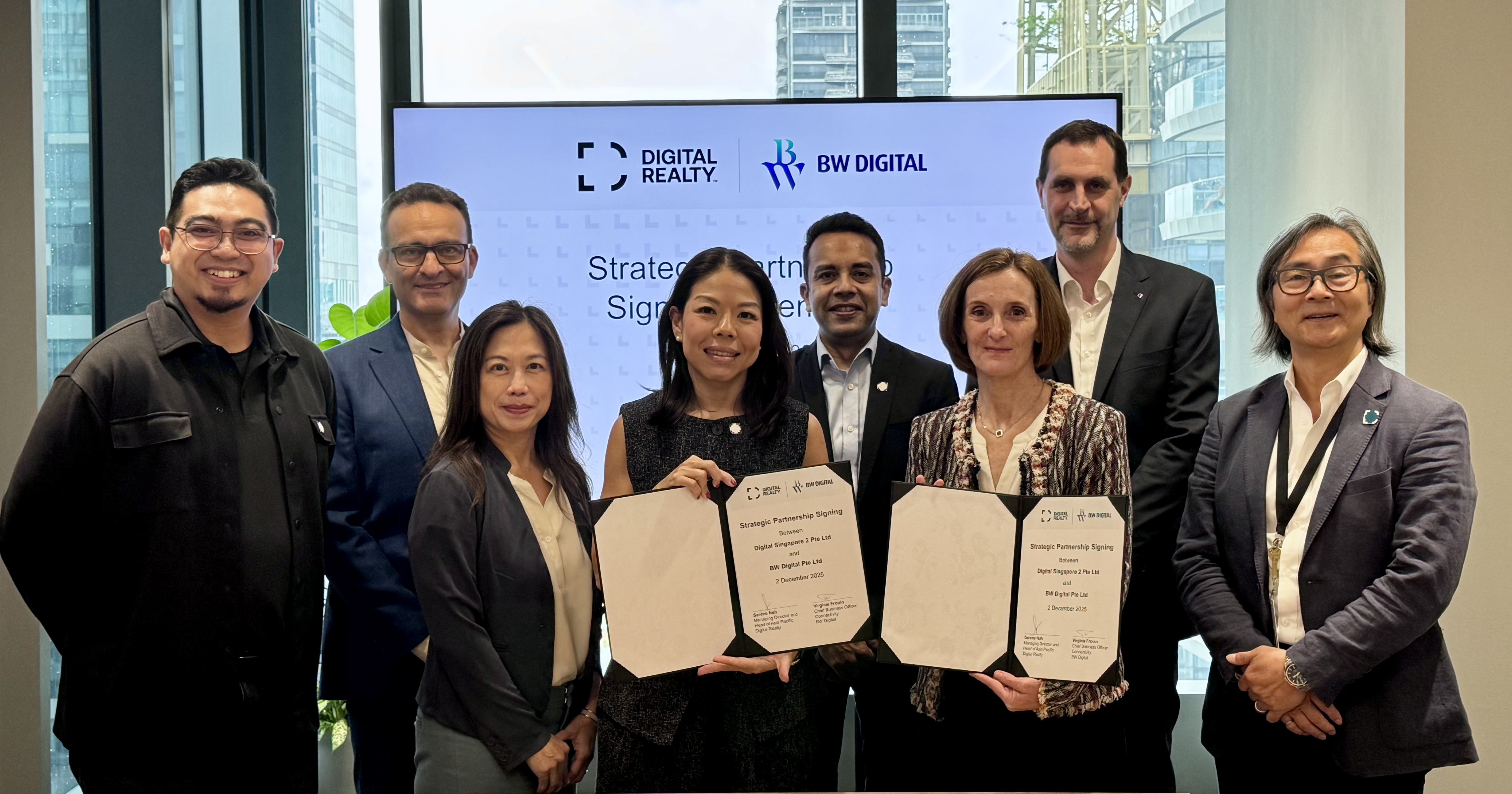


(Left to Right: Johnny Sek, Commercial Sales Manager, Digital Realty; Hamid Maani, Chief Sales Officer, BW Digital; Jo Jo Kwong, Director, Strategy & Business Development, Digital Realty; Serene Nah, Managing Director & Head of Asia Pacific, Digital Realty; Govind Choudhary, General Manager, SEA & India, Digital Realty; Virginie Frouin, Chief Business Office, Connectivity, BW Digital; Florent Blot, Chief Business Officer, Datacenter & Value Added Services, BW Digital; Robert Ho, Director, Market Development, Digital Realty)

Under the agreement, the companies will jointly support the rollout of BW Digital’s Nongsa Changi Cable System (NCC), a new submarine system designed to connect Batam in Indonesia with Singapore, also overseeing its integration with Digital Realty’s SIN12 data centre on the Island State.

The undertaking is expected to provide access to vital cloud and connectivity hubs, particularly for enterprises expanding across Southeast Asia, strengthening cross-border connectivity, storage and compute, and supporting Singapore’s accelerating AI and digital transformation demands. This is strengthened by SIN12’s ability to support high-performance workloads at scale, giving enterprises confidence as they expand between Singapore and Batam.

Southeast Asia’s AI-Driven Infrastructure

By landing NCC in SIN12, BW Digital and Digital Realty hope to deliver faster, more reliable, and more sustainable data exchange between Singapore and Batam, which is emerging as a strategic hub for hyperscale and AI infrastructure.

As the first submarine cable to land directly in Nongsa Digital Park, NCC is expected to offer unprecedented resilience to Batam. It is designed to deliver more than 1.6 petabits per second (Pb/s) of new capacity and provide seamless DC-to-DC connectivity with less than 2 milliseconds (ms) latency to Singapore.

The collaboration is designed to integrate submarine cable landing facilities with Digital Realty’s global data centre platform, hoping to enable high-performance subsea connectivity, storage and interconnection within SIN12 and Artificial Intelligence/Machine Learning (AI/ML) computing enablement via PlatformDIGITAL.

Furthermore, BW Digital’s customers may also be able to expand their connectivity ecosystems and scale AI workloads by establishing interconnections directly within SIN12, while reaping cost efficiencies by enabling seamless cross connects to other providers already hosted in the facility.    

BW Digital’s in-progress NDP-1 data centre in Batam will further support Digital Realty’s customers with access to colocation and cloud connectivity options in Singapore+ (or SIJORI, the Singapore-Johor-Riau Growth Triangle), one of the region’s fastest-growing digital hubs.

This ‘AI Factory’ NDP1 data centre, with a capacity of 144MW and liquid cooling capabilities, is designed to feature direct on-ramps to BW Digital’s subsea cable landing station for low-latency and resilient links to regional markets.

At a signing ceremony in Singapore today, Serene Nah, Managing Director and Head of Asia Pacific, Digital Realty, said: “Subsea networks are central to Southeast Asia’s digital economy, and Singapore continues to serve as a critical gateway for regional data exchange. By integrating BW Digital’s Nongsa–Changi system into SIN12, we are working to deliver faster and more resilient connectivity to support customers as they scale next-generation workloads. This collaboration reinforces our commitment to strengthening the interconnection foundation that powers the region’s digital growth”.

Virginie Frouin, chief business officer, BW Digital said: “This partnership represents a major milestone for BW Digital, aligning with our mission to support digital transformation by bridging the gap between submarine cable infrastructure and land-based digital platforms in a way that is efficient, secure, and future-ready.”

“We are hoping to enable AI workloads, provide reliable, secure connectivity between Singapore and Batam, support for rising demand in cross-border data exchange, and ongoing collaboration with Digital Realty to empower customers with greater interconnection flexibility”.

About Digital Realty

Digital Realty brings companies and data together by delivering the full spectrum of data center, colocation and interconnection solutions. PlatformDIGITAL®, the company’s global data center platform, provides customers with a secure data meeting place and a proven Pervasive Datacenter Architecture (PDx®) solution methodology for powering innovation, from cloud and digital transformation to emerging technologies like artificial intelligence (AI), and efficiently managing Data Gravity challenges. Digital Realty gives its customers access to the connected data communities that matter to them with a global data center footprint of 300+ facilities in 50+ metros across 25+ countries on six continents. To learn more about Digital Realty, please visit digitalrealty.com or follow us on LinkedIn and X.

About BW Digital

Headquartered in Singapore and part of BW GroupBW Digital develops, builds and operates digital infrastructure in high-potential markets.

Our vision is to create a sustainable digital ecosystem for cloud and AI workloads by combining data centres, connectivity and renewable energy.

Our main assets include the 15,000km Hawaiki submarine cable connecting Australia, New Zealand and the US since 2018, and the BW Digital Campus at Nongsa Digital Park, comprising the 144MW NDP1 data centre, the NCC submarine cable between Singapore and Batam and the Citra Connect terrestrial fibre network.

Media Contacts
David Binning
Brand Comms Bureau (On behalf of BW Digital)
David.binning@bcbureau.com.au

Safe Harbor Statement

This press release contains forward-looking statements which are based on current expectations, forecasts and assumptions that involve risks and uncertainties that could cause actual outcomes and results to differ materially, including statements related to the APAC market, development plans in APAC, the company’s strategy, expected growth in digital transformation, and customer demand.  For a list and description of such risks and uncertainties, see the reports and other filings by the company with the U.S. Securities and Exchange Commission.  The company disclaims any intention or obligation to update or revise any forward-looking statements, whether as a result of new information, future events or otherwise.

HashKey Passes HKEX Hearing: From Asia’s Compliance Pioneer to a Global Institutional Gateway for Digital Assets

HashKey Holdings Limited (referred to as HashKey) formally passed the HKEX hearing to become the leading digital asset company to undergo IPO in the Hong Kong capital market. This is a significant milestone for HashKey’s compliance-focused development from day one but also represents a pioneer for Asia’s digital asset industry entry into the mainstream capital markets.

Amid a global trend towards regulatory maturity and rapid institutional adoption for digital assets, the Hong Kong-based HashKey has grown from a regional compliance-focused exchange into a global gateway between traditional finance and the Web3 ecosystem. The company has also become a valuable bridge connecting financial infrastructures across multiple regions.

I. Building Asia’s Leading Digital Asset Ecosystem with Three Core Pillars
HashKey’s disclosure of its prospectus has three core pillars: transaction facilitation, on-chain services and asset management services. Together, it forms an integrated business ecosystem covering the entire digital asset lifecycle putting the company in a leading position in Asia.

1. Transaction Facilitation: Asia’s Leading Onshore Digital Asset Platform
According to analytics research firm Frost & Sullivan, HashKey holds a market share exceeding 75% in the local Hong Kong market based on 2024 trading volume. This leading position is a testament to the company’s long-term investment in compliance, stringent governance, and institutional-grade security standards. The cohesiveness is crucial in a highly regulated onshore market.

2. On-Chain Services: leading among global competitors
The company leads in Asia and ranks in top eight globally for on-chain businesses such as node operations, staking, and infrastructure support. HashKey  participates in the transaction side of the ecosystem and also engage deeply in the entire on-chain ecosystem.

3. Asset Management: becoming a leading platform in Asia
Leveraging an established trust and risk control system, HashKey’s asset management business maintains steady growth and also creates synergy with its transaction facilitation and on-chain services. It has become a platform with comprehensive capabilities.

II. Compliance Becomes A Decisive Competitive Edge Under Maturing Global Regulatory Frameworks
As regulatory frameworks for digital assets become clearer for governments globally, the “Wild West” era of the industry is long gone. In the current cycle, compliance capability and regulatory adaptation have become the backbone for survival and expansion.

The current trend is for companies to adopt a regulatory-native approach like what HashKey has done to gain market attention and favorability.

The prospectus indicates that HashKey has already obtained 13 licenses and registrations across different jurisdictions and has completed security and internal control certifications under international standards including SOC 1 Type 2, SOC 2 Type 2, ISO27001, and ISO27701. The company’s record of no major security incidents, loss of customer funds, and on-chain slashing reflects the maturity of its governance system and risk framework.

As a leading gateway within Asia’s digital asset domain, HashKey has built a strategic position with solid institutional foundation for the growing integration between global capital, on-chain ecosystems, and traditional finance in the coming decade.

III. Linking the East and West: Asia’s Leading Gateway In Digital Assets Industry Is Shaping It’s Global Role
From a long-term perspective, HashKey’s IPO is a starting point rather than the finish line. In recent years, the company has been actively expanding into offshore markets along with the continuous development of its onshore exchange business. This is a trend as the industry enters a phase of institutionalization.

With growing institutional demand, traditional financial institutions need compliant gateways while on-chain ecosystems need mature infrastructure support.  Capital flows will need to establish new channels of connections between East and West.

HashKey’s multi-jurisdictional license portfolio, mature risk management system, and transparent governance structure allow traditional institutions to enter the Web3 ecosystem within a controlled regulatory framework. HashKey’s capability as an institutional gateway is further amplified with the launch of its CaaS (Crypto-as-a-Service) platform, which makes it a vital bridge connecting on-chain service with real-world finance.

As Asia’s most mature international financial center, Hong Kong has a compatibility advantage because its regulatory system is on par with other leading global financial systems. HashKey’s IPO in Hong Kong will allow the company to simultaneously serve as the gateway for Western institutions entering the Asian digital asset markets and Asian capitals aiming for global allocation. As regional regulations increasingly align, the value of HashKey’s function as a gateway for digital assets in Asia is rapidly amplified.

It is a reflection of the digital asset industry advancing into a new stage led by institutions and infrastructure. In this cycle, transformation is encouraged by institutions capable of connecting traditional finance, on-chain ecosystems, and cross-regional markets. Hence, HashKey has positioned itself precisely to assume this role.

Global Tech Pioneers CZ and Co-Founder of Shazam to Headline FinTech Forward 2025 in Bahrain

FinTech Forward 2025 (FF25), the region’s premier strategic financial technology event, today announced that two globally renowned innovators will headline this year’s edition as title speakers: Changpeng Zhao (CZ), former CEO of Binance and Dhiraj Mukherjee, Cofounder of Shazam. Their participation reflects the flagship event’s growing role as a global stage for innovation, convening leaders who have transformed industries and reshaped how millions around the world engage with technology and financial services.

Zhao, widely recognised as CZ, is the founder and former CEO of Binance, the world’s largest cryptocurrency exchange by trading volume. Under his leadership, Binance grew to serve more than 235 million users across 180 countries, offering access to over 350 digital assets. From its founding in 2017 to becoming a global leader in less than a decade, Binance’s journey highlights both the scale and speed of transformation in financial technology. His insights will provide unique relevance to FF25’s exploration of the future of money, markets, and global financial innovation.

Mukherjee co-founded Shazam, the revolutionary app that revolutionised how people discover and connect with music. Launched in 2002, Shazam was among the first mobile applications to harness artificial intelligence at scale, ultimately achieving more than two billion downloads worldwide. The company was acquired by Apple in 2018. Mukherjee is now widely recognised as a thought leader on responsible innovation and the future of digital ecosystems. His career highlights the power of technology to shape human experiences, making his perspective particularly valuable to FF25’s conversations on creativity, disruption, and impact.

Their presence further strengthens the event’s ability to convene diverse perspectives on the forces shaping the future of finance. Both will be speaking at fireside chats, CZ in a session titled “Crypto in transition: legitimacy, trust and the future of modern finance”, and Dhiraj’s fireside chat is set to tackle how to strategically plan for the long-term success and achieve durable, sustainable impact.

Taking place on the 8th and 9th of October 2025 at Exhibition World Bahrain (EWB), FF25 is hosted by Bahrain Economic Development Board (Bahrain EDB), leveraging the Kingdom’s position as a regional financial hub and gateway to the USD 2.15 trillion GCC market. Bahrain is recognised for its agile and forward-looking regulatory framework, pioneering initiatives in areas such as open banking, digital assets, and cloud adoption. Combined with a highly skilled bilingual workforce and advanced tech infrastructure, the Kingdom has become a launchpad for fintechs and international firms expanding into the Middle East.

By welcoming visionaries such as CZ and Dhiraj Mukherjee, FinTech Forward 2025 reaffirms its status as the Middle East’s leading fintech forum and highlights Bahrain’s unique role as a hub for global business and a catalyst for the future of finance. For more information about FinTech Forward 2025 and to register, please click here.

For more information, please contact:
Abdulelah Abdulla
Communications Department
Economic Development Board
Phone: +973-39798919
E-mail: internationalmedia@bahrainedb.com

SOURCE: Bahrain Economic Development Board

Asia Unicorn Forum Releases 2024 Report: China, India, Israel Top Asian Unicorn Rankings

The Asia Unicorn Forum (AUF), a future-shaping organisation dedicated to advancing technological innovation and sustainable growth among Asia’s unicorn companies, had published its 2024 Asia Unicorn Development Report in May 2025.

The report identifies China, India, and Israel as Asia’s top three nations by unicorn count, with China holding a commanding lead.

“While unicorns have long been a focus in investment circles, we now recognise them as a distinct economic phenomenon,” said Mr Liu Yanlong (刘彦龙), Executive Chairman of AUF, emphasising the report’s groundbreaking approach and methodology.

“For the first time, we define unicorns as part of a standalone unicorn economy. Unlike other reports, we analysed 59 metrics across six categories—entrepreneurship, business model innovation, technological edge, capital strength, and more—to uncover the unique drivers of Asian unicorns.

“We’ve identified a replicable strategic pattern: the Creating Neo-Market Strategy (CNM). Unicorns aren’t just great companies; they pioneer entirely new market categories and become transformative forces.”

Key Findings

1. Landscape for Unicorns

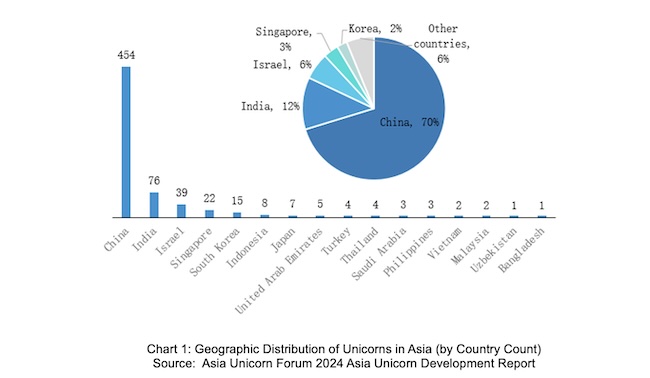
– Asia is home to 646 unicorns (startups valued at more than US$1.0 billion) with a combined valuation of US$2.4 trillion (average US$37.0 billion per company), spanning 16 countries and 11 industries.

– China dominates with 454 unicorns (70% of Asia’s total), followed by India (12%) and Israel. Only five countries — China, India, Israel, Singapore, and South Korea — have over 10 unicorns each (see Chart 1).

2. 2024 Asia Top 100 Unicorns

– China claims 75 spots, India 11, and Israel 6, collectively representing 92% of the list.

3. Valuation Insights

– Total Valuation: China’s unicorns account for US$1.74 trillion (73% of Asia’s total), while India’s total is US$281.8 billion (12%).

– Average Valuation: China, Singapore, the UAE, and Vietnam exceed Asia’s average of US$37 billion (see Chart 2).

4. Industry Breakdown:

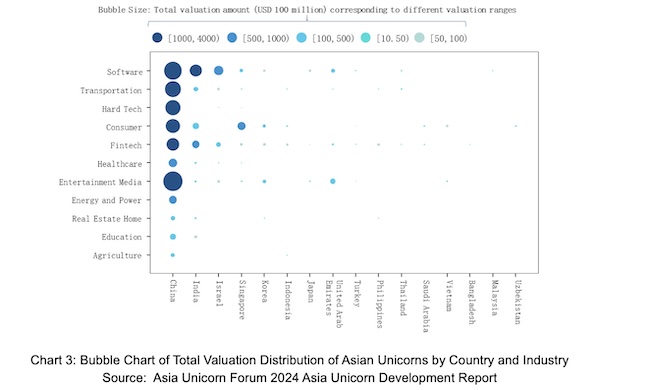
– China’s unicorns lead in software, transportation, key and core technology, consumer, fintech, and media/entertainment, each surpassing US$100 billion in total valuation. India’s software sector is its sole industry crossing this threshold.

– Israel (software) and Singapore (consumer) show notable valuations (see Chart 3).

5. Emerging Unicorns:

– 73 new unicorns emerged in 2024, including 10 companies that achieved unicorn status within one year—far outpacing the traditional 10-year trajectory. Eight of these are Chinese companies.

6. Business Models:

– Platform-based (43%) and technology-driven (42%) models dominate Asia’s unicorn ecosystem.

Future Trends

 – Tech Convergence: IT and biotech will increasingly merge, with growth extending into new energy and advanced materials.

– Regionalisation: Amid global fragmentation, Asian unicorns will face intensified regional competition and collaboration.

– AI & Energy: Unicorns in these sectors are poised to surge, reshaping Asia’s energy landscape.

Report Availability

The 300-page 2024 Asia Unicorn Development Report offers in-depth analysis of success patterns and regional drivers. For details, visit AUF’s official WeChat channel (Asia Unicorn AUF) or email auf@auforum.org.

Charts Referenced

1. Chart 1: Geographic Distribution of Unicorns in Asia (by Country Count)

2. Chart 2: Total and Average Valuation of Asian Unicorns by Country


3. Chart 3: Bubble Chart of Total Valuation Distribution by Country and Industry

For media and any queries, please contact:
AUF Secretariat
Email: auf@auforum.org

How Do AI Workflow Automations Work?

A 2022 survey from Vanson Bourne revealed that around 91%1 of respondents saw increased demand for automation from business teams. As AI technology evolves, that demand will only grow. AI automations can help organizations work smarter at every level. But how exactly do these workflows function? This article unpacks what AI workflow automation is and how it works behind the scenes.

What is AI workflow automation?
AI workflow automation is the use of artificial intelligence to automate complex, multi-step tasks that typically require human decision-making. While rule-based automation may rely on rigid instructions, AI automation adapts to data patterns. It learns over time and can flexibly handle unstructured input like emails, documents, or customer requests.

AI workflow tools can understand, decide, and act based on context. These tools can help streamline processes and reduce manual effort while improving speed and accuracy.

How do AI workflows function?
AI workflows function by connecting a series of intelligent tasks or steps to complete a goal from start to finish. The specific tasks can vary depending on the use case. Some workflows may be entirely automated, while some may require human input. Let’s take a closer look at some core components that power AI workflows.

Machine learning (ML)
Machine learning models can make predictions, identify problems, or find patterns. Machine learning has many uses in a workflow including classifying documents or prioritizing tasks. ML acts as the “decision engine”, helping automate steps that would otherwise require manual analysis or classification.

Natural language processing (NLP)
NLP allows AI systems to understand and interpret human language for seamless communication. It’s a crucial component in workflows that involve text, speech, or communication. For example, NLP can automatically extract key data from emails or summarize meeting notes. This enables organizations to automate content-heavy tasks without sacrificing understanding or context.

Automation triggers
AI workflows are usually event-driven. A trigger might be a form submission, a task status update, or an incoming message. Once initiated, the AI workflow executes a sequence of tasks based on logic, conditions, and model predictions. These triggers help organizations respond faster, reduce delays, and eliminate manual intervention.

Predictive algorithms
Predictive AI models help forecast future outcomes based on past behavior. These algorithms can be used to detect workflow bottlenecks or even predict them based on past occurrences. Effective predictive models require good data and smart integration. When done right, they can help businesses make smarter, data-informed decisions with minimal human input.

Benefits of AI workflows
Here are some of the advantages that AI workflows offer.

  • Increased efficiency: Automations can take on repetitive and time-consuming tasks. This frees up teams to focus on more strategic work.
  • Scalability: AI workflows can process large volumes of data or requests without extra headcount. They make it easier to scale services or operations.
  • Improved accuracy: Trained models and rule-based logic may help reduce the risk of human error.
  • Faster decision-making: AI workflows can analyze data and trigger decisions in real time. This may enable businesses to respond to problems or opportunities faster.

From streamlining internal operations to powering real-time customer experiences, AI workflow automation is helping businesses scale their operations at a reduced cost. AI workflows offer a powerful path toward enhanced efficiency.

[1] Vanson Bourne – Case studies Salesforce Business Demand for Automation. June 2022. https://www.vansonbourne.com/case-studies/business-demand-for-automation/

CONTACT:
Sonakshi Murze
Manager
sonakshi.murze@iquanti.com

SOURCE: iQuanti

FWD Group marks 12th anniversary with 12 community grants

FWD Group Holdings Limited (FWD Group or FWD) today marked its 12th anniversary by announcing 12 charitable grants dedicated to supporting local communities across Asia.

Since its founding in 2013, FWD has grown from its beginnings in Hong Kong SAR, Macau SAR, and Thailand to now span 10 markets across Asia, including Cambodia, Indonesia, Japan, Malaysia, the Philippines, Singapore, Vietnam.

The 12 grants are focused on supporting non-government organisations (NGOs) with initiatives spanning financial literacy, social entrepreneurship, career readiness, and health and wellbeing in communities.

Huynh Thanh Phong, Group Chief Executive Officer and Executive Director of FWD Group, said, “Celebrating our 12th anniversary as a newly listed company makes this milestone especially meaningful. The life insurance business is a deeply personal one, with FWD now touching the lives of 30 million people and their families across Asia. With caring as one of our core values at FWD, giving back in tangible and impactful ways to the wider community is a big part of our vision of changing the way people feel about insurance.”

Earlier this year, FWD extended its regional partnership with JA (Junior Achievement) Worldwide – a youth-focused charity and Nobel Peace Prize 2025 nominee – to reach 40,000 more students across Asia by the end of 2027 with its award-winning financial literacy programme. In the next phase, the programme aims to integrate new tools to strengthen financial literacy, mental wellness, and resilience – while involving more teachers and families in the process.

The 12 NGO grants include:
– Cambodia: Partnering with Cambodia Children’s Fund to launch the “Let’s Save Debate,” a university-level initiative promoting financial literacy through debate and research.

– Hong Kong SAR: Expanding the JA SparktheDream programme with Junior Achievement Hong Kong and introducing the JA SparktheDream Wellness Workshop that blends financial education with social and emotional learning to engage primary school students.

Supporting WISE (Women In Sports Empowered Hong Kong Limited) with its programme to empower teenage girls through sports for mental wellbeing and self-confidence.

– Indonesia: Supporting InnovateHer Academy 3.0 with KUMPUL.ID to equip female entrepreneurs with business skills, mentorship, and investment readiness skills.

Launching a new financial education programme with Prestasi Junior Indonesia on the back of the best practices from the JA SparktheDream programme. The new programme will equip 30 school teachers with the skills and knowledge to deliver engaging and effective financial literacy lessons.

– Japan: Partnering with the National Welfare Beauty and Barber Training Association to provide medical wigs and support for cancer patients during Breast Cancer Awareness month.

– Malaysia: Launching the Bijak Ibu Jaga Anak & Kewangan (B.I.J.A.K.) programme with GivingHub to provide 200 low-income families with health and financial literacy educational workshops as well as 200 health screenings and consultations.

– Philippines: Collaborating with Junior Achievement Philippines on JA Forward Your Success to support graduating college students with financial literacy and career planning.

– Singapore: Supporting Club Rainbow (Singapore) in helping children with chronic illnesses and their families by joining Ride & Ralk for Rainbows 2025, along with a visit to Mandai Wildlife Reserve for children and youths with rare genetic and neurological disorders.

– Thailand: Sponsoring seven hospitality scholarships via Pimali Foundation for disadvantaged youth, helping them build sustainable careers.

Expanding the JA SparktheDream programme with Junior Achievement Thailand by training 30 teachers in financial literacy to deepen their financial management skills and better support students.

– Vietnam: Supporting Be A Finnovator with the Startup Vietnam Foundation on a training and debate competition for university students to build financial leadership, critical thinking, and responsible money habits.

About FWD Group
FWD Group is a pan-Asian life and health insurance business that serves approximately 30 million customers across 10 markets, including BRI Life in Indonesia. FWD’s customer-led and tech-enabled approach aims to deliver innovative propositions, easy-to-understand products and a simpler insurance experience. Established in 2013, the company operates in some of the fastest-growing insurance markets in the world with a vision of changing the way people feel about insurance. FWD Group is listed on the Main Board of The Stock Exchange of Hong Kong Limited under the stock code 1828. For more information, please visit www.fwd.com

For media inquiries, please contact: groupcommunications@fwd.com

FWD Group completes build-out of high-net-worth hub in Asia

– FWD Private serves the global high-end insurance market with diversified asset allocation, wealth management and legacy planning

– Newly indexed universal life product also introduced in Bermuda and Singapore; among the first wave of offerings in Hong Kong

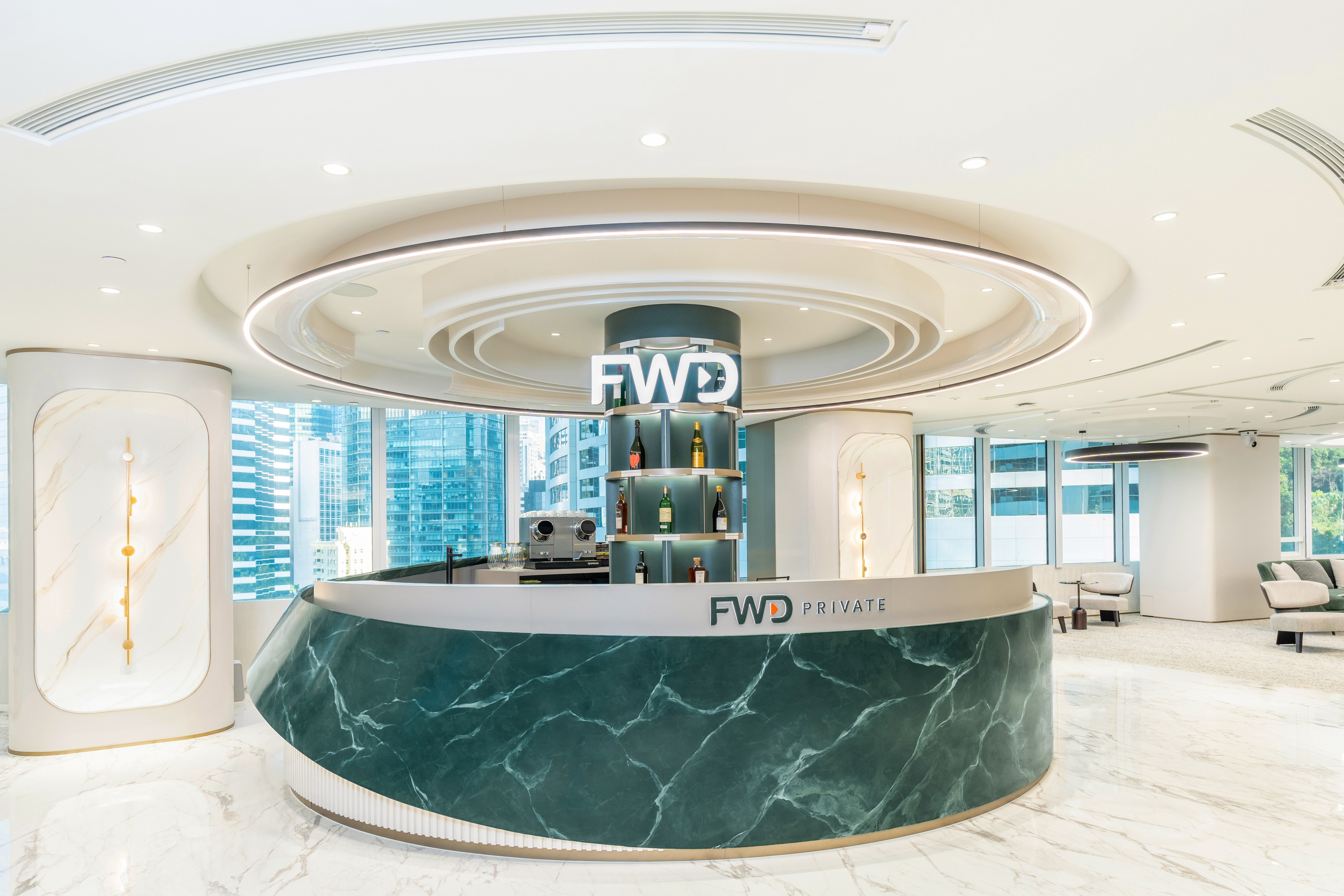
FWD Group Holdings Ltd (FWD; 1828.HK) today announced, under its exclusive ‘FWD Private’ brand, the completion of a high-net-worth (HNW) hub in Asia and the full deployment of a new FWD Private Lounge in Hong Kong.

Leveraging FWD Group’s strong network, FWD’s HNW business operates out of three jurisdictions: Hong Kong, Singapore and Bermuda, with both onshore and offshore insurance solutions for HNW and ultra HNW customers worldwide.

FWD Private, established in 2023, offers comprehensive legacy planning solutions and services for HNW and ultra HNW individuals. The FWD Private Lounge, located in the prime commercial district in Hong Kong, is inspired by the tourbillon – a symbol of time and precision.

Ken LauManaging Director of Greater China and Hong Kong Chief Executive Officer, FWD, said, “The completion of the HNW hub reflects our long-term vision and reinforces FWD’s position as a trusted partner in wealth and legacy planning across Asia and beyond. Building on our strong foundation in Hong Kong, and our ability now to service other markets including Southeast Asia and the Middle East, we’re well-positioned to navigate diverse markets and tailor solutions that empower customers and their families to truly celebrate living.”

In Bermuda and Singapore, FWD Private recently launched Imperial Fortune – an indexed universal life (IUL) product that combines uncapped index returns with a minimum guaranteed point to point return of 2.3% per annum. FWD Hong Kong also launched its own IUL product, which was among the first wave of offerings in the market, in response to recent regulatory guidance from the Insurance Authority and Hong Kong Monetary Authority.

Shelyne Shum, Chief Partnership Distribution Officer who leads the strategic partnership business for FWD in Hong Kong and for FWD Private, said, “Through FWD Private, we’ve built a compelling proposition anchored in time-to-market agility, product and service innovation, and exceptional client experience. The FWD Private Lounge is designed for preferred partners to host exclusive engagements and deliver a refined, personalised experience to our customers.”

FWD Private’s products are primarily distributed via international brokers across Hong Kong, Singapore, Dubai and Switzerland, who provide personalised services and innovative wealth planning solutions to HNW and ultra HNW customers worldwide. FWD Private operates in Bermuda under FWD Life Insurance Company (Bermuda) Limited. A Singapore branch was established in 2024.

About FWD GroupFWD Group is a pan-Asian life and health insurance business that serves approximately 30 million customers across 10 markets, including BRI Life in Indonesia. FWD’s customer-led and tech-enabled approach aims to deliver innovative propositions, easy-to-understand products and a simpler insurance experience. Established in 2013, the company operates in some of the fastest-growing insurance markets in the world with a vision of changing the way people feel about insurance. FWD Group is listed on the Main Board of The Stock Exchange of Hong Kong Limited under the stock code 1828.

For more information, please visit www.fwd.com

About FWD PrivateFWD Private is a new horizon in legacy planning for high-net-worth individuals.

Dedicated to the growth, preservation and protection of wealth, FWD Private brings an innovative approach and fresh perspective to its customised solutions in wealth planning, giving customers an unparalleled experience.

With its hub in Asia, FWD Private’s cultural understanding ensures that the challenges of managing customers’ wealth is navigated with meticulous attention to detail, supported by digital infrastructure that provides the flexibility and dynamism that customers desire.

As a distinct yet integrated part of the overall FWD Group, FWD Private benefits from FWD Group’s financial strength, stability and investments in digital innovation.

For more information, please visit www.fwdprivate.com

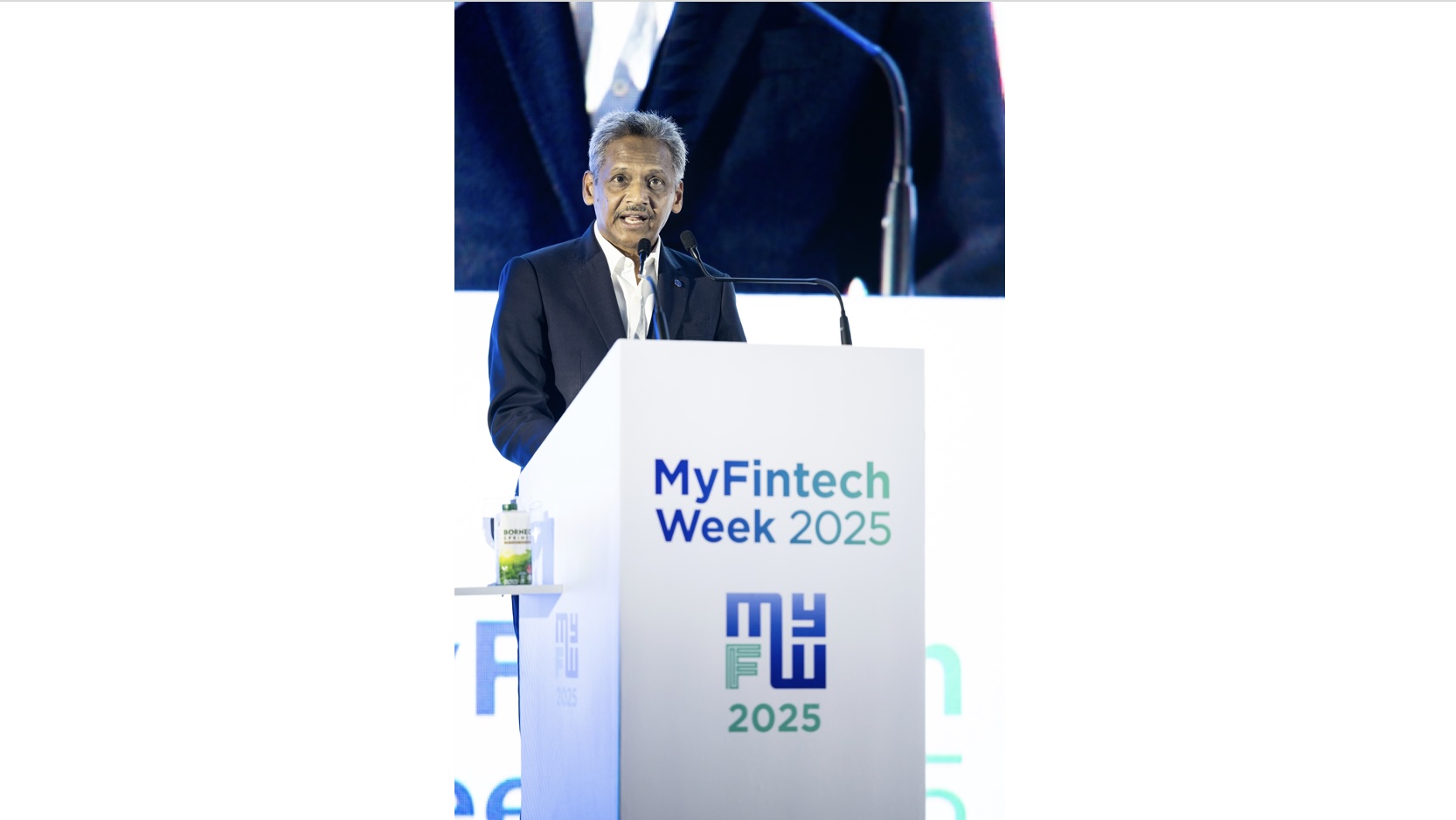
MyFintech Week 2025 Highlights Transformative Forces in Finance

MyFW 2025 spotlights the forces reshaping the financial sector – digitalisation, sustainability and demographic shifts. Emerging technologies such as generative AI and blockchain are transforming business models and redefining consumer expectations. Malaysia’s commitment to achieving net-zero emissions is also driving demand for innovative financial solutions. In addition, the challenges posed by an ageing population stress the need for inclusive policies in long-term welfare, healthcare and social protection.


Reflecting these realities, MyFW 2025 is structured around three thematic tracks. From closed-door dialogues to expert-led masterclasses and in-depth focus sessions, these themes form the week’s conversations:

  1. ‘Finance for the Future’ focuses on building a digitally enabled and forward-looking financial system;
  2. ‘Finance for Change’ supports sustainability and social impact; and
  3. ‘Finance for a Resilient Ecosystem’ aims to strengthen financial system resilience.

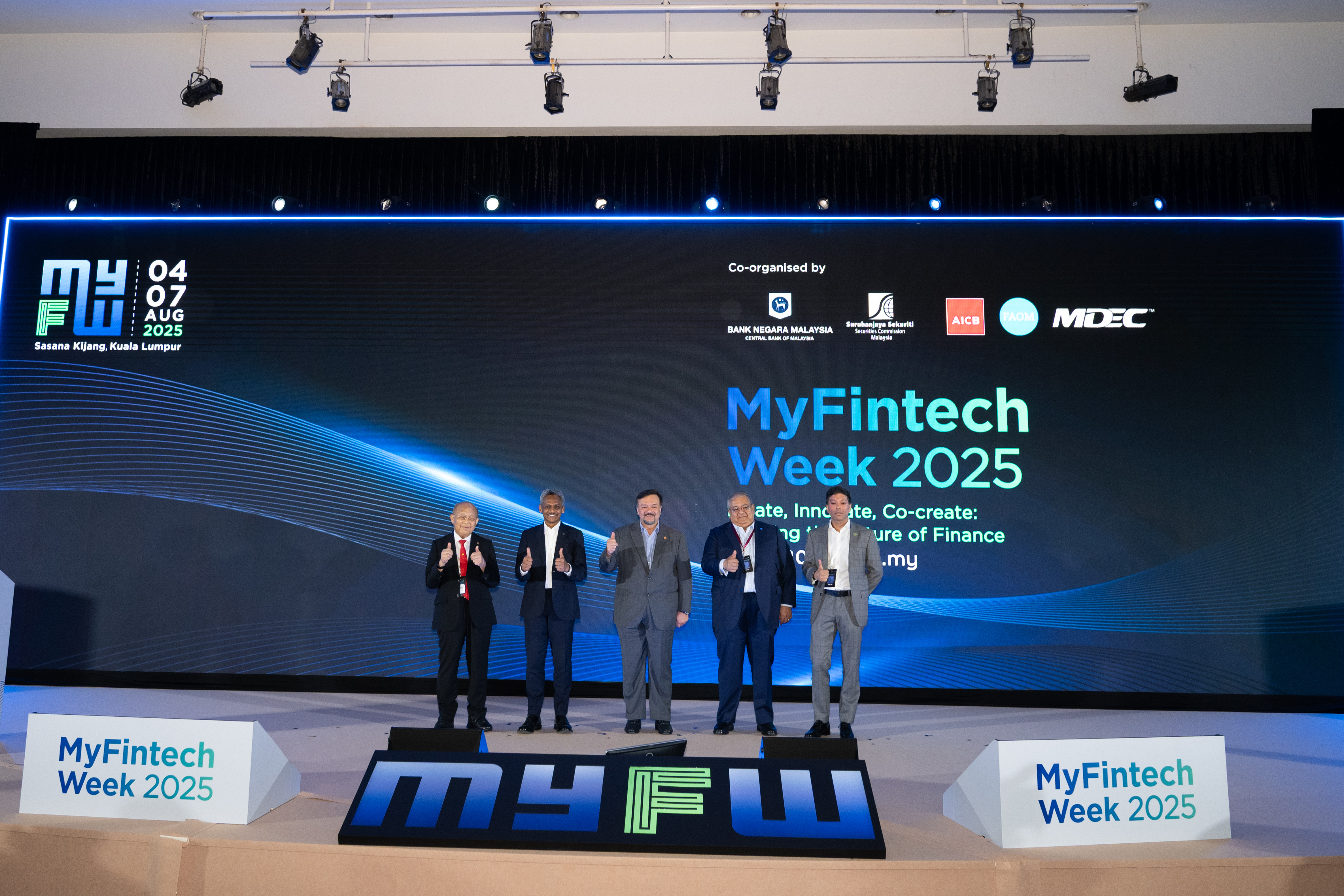
Held from 4 to 7 August 2025 at Sasana Kijang and AICB Centre of Excellence, MyFW 2025 is co-organised by Bank Negara Malaysia (BNM), Securities Commission Malaysia (SC), Asian Institute of Chartered Bankers (AICB), Fintech Association of Malaysia (FAOM) and Malaysia Digital Economy Corporation (MDEC). The event brings together regulators, financial institutions, digital banks, fintech innovators, technology providers, policymakers, investors and academia for bold conversations, practical insights and regional alignment.

The event was officiated by Yang Berhormat Datuk Seri Amir Hamzah Azizan, Minister of Finance II. “The financial sector must play a more active role in shaping outcomes that matter to society in the years ahead, supporting these new growth areas, broader entrepreneurship and innovation, as well as fostering economic resilience and social mobility,” he said during his Special Address.

The event started with a series of high-level keynotes exploring innovation, inclusion and regulatory clarity. In his opening remarks, BNM Governor Dato’ Sri Abdul Rasheed Ghaffour outlined the importance of collaboration in shaping the future of finance, which requires a whole-of-ecosystem solution. “The future we are building demands that policymakers, regulators, technologists, investors and innovators sit at the same table,” he said.

Former central banker and Chairman of George Town Institute of Open and Advanced Studies Tan Sri Andrew Sheng, in his keynote themed “Unlocking Tomorrow: Transformative Innovations in Financial Services”, explored how pivotal technologies, including cloud computing, AI and open data are rapidly transforming the financial landscape. Douglas Feagins, President of Ant International explored the mobile interoperability between different countries and how AI is redefining cross-border transactions and user experiences in digital payments, in his keynote on “Beyond Borders: Mobile Payment in AI Era”.

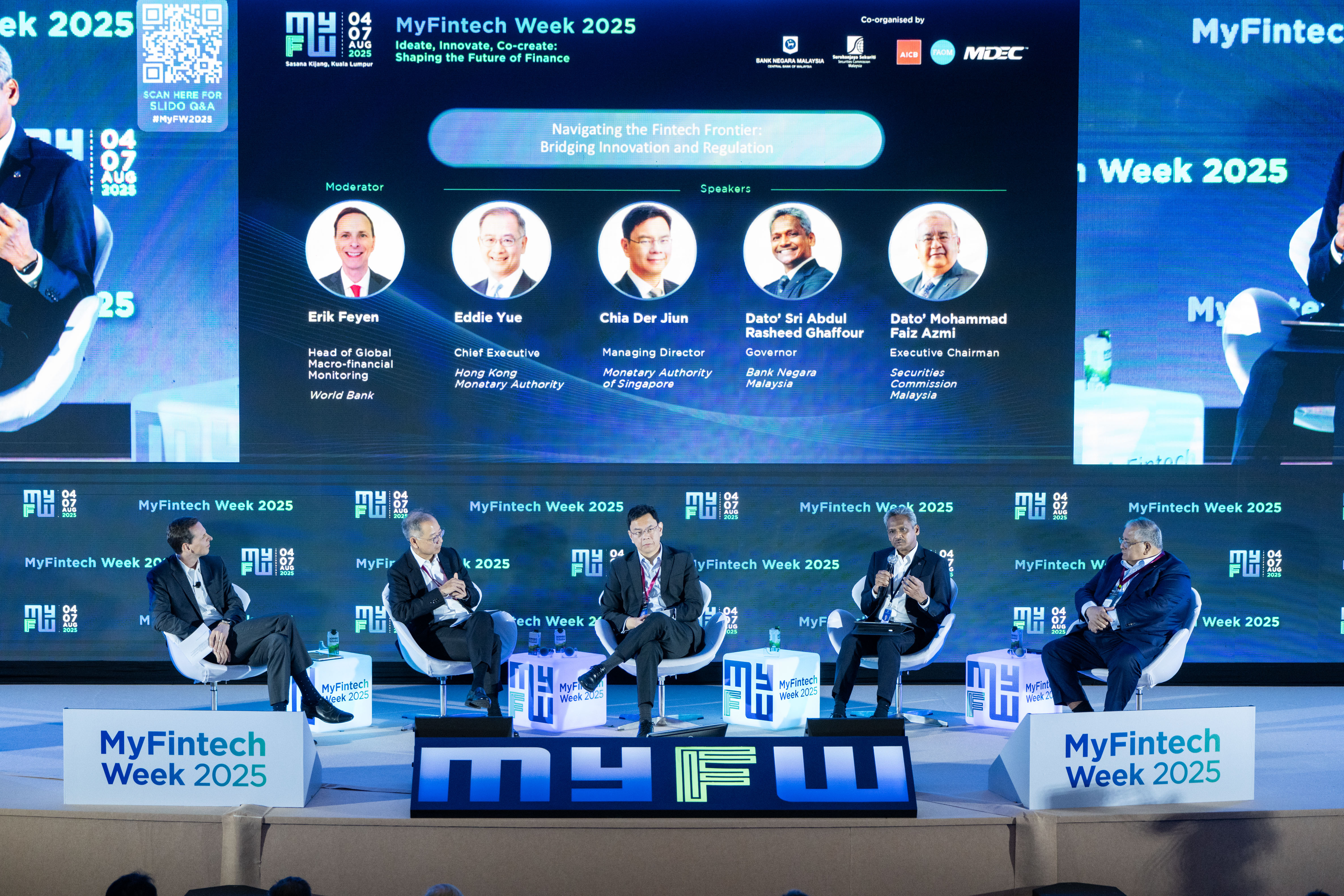
The flagship panel session, “Navigating the Fintech Frontier: Bridging Innovation and Regulation”, gathered central bank governors and financial regulators from across the region. Moderated by Erik Feyen, Head of Global Macro-financial Monitoring at the World Bank, the panel featured Dato’ Sri Abdul Rasheed Ghaffour, Dato’ Mohammad Faiz Azmi, Executive Chairman of SC, Eddie Yue, Chief Executive of the Hong Kong Monetary Authority, and Chia Der Jiun, Managing Director of the Monetary Authority of Singapore. The discussion focused on balancing innovation with consumer trust and the growing need for cross-border collaboration to ensure coherent, future-ready policy frameworks.

“Regulatory clarity is essential for fostering responsible innovation, but equally important is the ability to stay agile. Our experience with crypto asset regulation highlights the need for an iterative approach to address fast-paced innovation and market evolution,” Dato’ Faiz said.

“We are advancing the next iteration of our approach to digital assets to build a stronger regulated market, boosting competitiveness, resilience, and investor protection. Through regulatory support and ecosystem partnership, we are also facilitating blockchain use cases like bond tokenisation to broaden retail access and democratise wealth creation.”

The conference features an exciting lineup of sessions on topics including open finance, digital assets and sustainable finance. Participants can also look forward to focused sessions delivered by key partners and industry experts, which will provide in-depth exploration of issues, such as asset tokenisation, generative AI and cybersecurity resilience.

About MyFintech Week

MyFintech Week (MyFW) is Malaysia’s flagship finance and innovation event co-organised by Bank Negara Malaysia, Securities Commission Malaysia, Asian Institute of Chartered Bankers (AICB), Malaysia Digital Economy Corporation (MDEC) and Fintech Association of Malaysia. The event brings together leaders, policymakers and innovators to shape the future of finance and serves as a launchpad for collaboration and progress toward a more inclusive, innovative and resilient financial ecosystem.

For media enquiries (The appointed PR agency of MyFW 2025):
Nazira Yusof, Client Executive
PRecious Communications
+6 011 6230 3806
nazira@preciouscomms.com

Ongoing Share Buybacks Demonstrate Confidence, Shoucheng Holdings Boosts Market Expectations with Concrete Action

Shoucheng Holdings Limited (HKG: 0697) recently announced via the Hong Kong Stock Exchange that it repurchased 17.65 million shares through on-market transactions on July 29, 2025, with a total consideration of HK$32.301 million. The repurchase price ranged from HK$1.80 to HK$1.86 per share. This marks another substantial buyback in the past month, reflecting management’s firm confidence in the company’s intrinsic value and long-term development.

According to data, since July 2025, Shoucheng Holdings has cumulatively repurchased approximately 36.746 million shares, with a total expenditure of HK$66.7313 million. In addition to the July 29 buyback, the company executed another significant repurchase on July 10, acquiring 19.05 million shares for HK$34.3464 million at a price range of HK$1.79–1.80.

Share repurchases are among the strongest signals a listed company can send to the market. In the face of short-term market volatility, Shoucheng has chosen to act decisively, reaffirming its responsibility to shareholders and its long-term value commitment. Management has conveyed a clear message: the company is committed to defending its fundamentals and investor confidence with concrete capital actions.

Management stated: “We remain firmly optimistic about the long-term value of Shoucheng Holdings and are confident in our strategic direction, operational foundation, and future growth. This round of repurchases reflects our duty as a listed company to our shareholders, the market, and the company itself. We will continue to step forward at key moments to stabilize expectations and fulfill our long-term commitments to investors.”

As a leading smart infrastructure asset operator in China, Shoucheng has deeply invested in core business sectors including equity investment, REITs, industrial real estate, and smart parking. It has built a strong asset cycle and cash flow system. In emerging sectors such as robotics and new infrastructure, the company continues to unlock growth potential and industrial synergy.

Industry observers note that in today’s undervalued Hong Kong market, Shoucheng’s large-scale repurchase sends a clear signal: the company is prepared to reward long-term investors through steady performance, solid fundamentals, and disciplined capital management—true to its role as a creator of long-term value.

With strong fundamentals and buybacks reinforcing support, Shoucheng Holdings’ future market performance is worth watching.


Posted by All Way Success Company Limited for Shoucheng Holdings www.shouchengholdings.com [HKSE:0697, FRA:SHVA, OTCPK:SHNHF]

HKTDC boosts Hong Kong’s competitive edge in high-value services

– “Digital Trade Masterclass” spotlights digital financing, e-bills of lading and retail supply chain management

  • The HKTDC continues to help SMEs seize digital trade opportunities by co-hosting with the ICC DSI a masterclass on technologies such as electronic bills of lading and blockchain. More than 200 SMEs took part.
  • Prof Frederick Ma, Chairman of the HKTDC, emphasised that Hong Kong is actively developing its digital trade ecosystem, with a focus on innovation, efficiency and international collaboration, to consolidate its competitive advantages. As digital trade becomes more common, the HKTDC will ensure Hong Kong businesses continue to thrive and enhance the city’s role as a leading supply chain hub.
  • Pamela Mar, Managing Director of ICC DSI, noted that by aligning its finance, trade and logistics sectors with global digital trade standards, Hong Kong can remain competitive and resilient on the world stage and is well-positioned to spearhead Asia’s digital-trade development.
  • Andy Lam, Deputy Secretary for Commerce and Economic Development of the HKSAR Government, said that the Government is making reference to the Model Law on Electronic Transferable Records and is considering legislative amendments to remove the legal hurdles in the digitalisation of trade documents. The target is to submit the relevant legislative proposal to the Legislative Council next year to help industry develop technical solutions based on their actual needs.

Digitalisation is reshaping the global economy, and companies must embrace digital transformation to capitalise on new opportunities. The 2025-26 Budget announced that the Hong Kong Special Administrative Region (HKSAR) Government would make reference to the Model Law on Electronic Transferable Records (MLETR) advocated by the United Nations Commission on International Trade Law (UNCITRAL) and consider legislative amendments to facilitate digitalisation of trade documents. The legislative proposal will be submitted to the Legislative Council next year. The MLETR is a global standard advocated by the UNCITRAL to provide a legal framework for electronic trade documents. Aligning local legislation with standards of the MLETR is a major endeavour in promoting trade digitalisation. In line with these efforts, the Hong Kong Trade Development Council (HKTDC) and the International Chamber of Commerce Digital Standards Initiative (ICC DSI) co-hosted the “Digital Trade Masterclass” at the Hong Kong Convention and Exhibition Centre to examine the MLETR’s potential impact on Hong Kong’s cross-border trade. Industry experts shared practical insights on digital transformation, helping equip businesses with the information they need to enhance their high value-added service capabilities. More than 200 SMEs participated in the event.

As an international financial and trading centre and a leading re-export hub, Hong Kong is able to capitalise on its unique advantages to reinforce connectivity, serving as a bridge linking the mainland and global markets. It provides high-standard professional services, robust financial infrastructure and an innovative environment for international trade. The HKTDC works closely with the HKSAR Government to highlight the city’s strength in delivering high value-added services across the trade supply chain.

Speaking at the event, Prof Frederick Ma, Chairman of the HKTDC, said that with the changing trade landscape, there was no better time to reinforce Hong Kong’s competitive advantages. “Hong Kong is actively developing its digital trade ecosystem, with a focus on innovation, efficiency and international collaboration, to consolidate its competitive advantages. As digital trade becomes more common, we are committed to making sure Hong Kong businesses continue to thrive. It is also a great opportunity to reinforce our city’s role as a leading supply chain hub. The HKTDC is dedicated to helping businesses leverage innovative technologies to equip businesses to be future-ready. Our Asian Logistics, Maritime and Aviation Conference (ALMAC) examines trends in global trade and supply chains, innovation and digitalisation, while our support programmes, including Transformation Sandbox, help enterprises scale up their capabilities in key areas, including digital transformation and supply chain solutions, to empower SMEs and start-ups to benefit from digital trade.”

Pamela Mar, Managing Director of the ICC DSI, believes Hong Kong, as an international trade and logistics hub already aligned with global standards, will lead Asia’s future digital trade development by remaining competitive and resilient amid a shifting global landscape. “Finance, trade and logistics make up over 45 % of Hong Kong’s economy, so accelerating digitalisation in these sectors will have a positive economy-wide impact.”, said Pamela Mar. “Hong Kong is well-positioned to become a leader in this space by aligning global standards and building on its strength as a trusted hub. The adoption of MLETR is a vital step, providing legal certainty for electronic documents like bills of lading, while streamlining processes and enhancing traceability. But legal reform is only the beginning — even greater gains lie in the private sector stepping up its digital transformation, which can be enhanced by Web3 technologies.”

Andy Lam, Deputy Secretary for Commerce and Economic Development of the HKSAR Government, said, “The HKSAR Government is committed to fostering an efficient business environment and maintaining the international competitiveness of Hong Kong. Facilitating the digitalisation of trade documents is part of this strategy. We anticipate that the industry would actively provide feedback and allow the Government to formulate a legal framework that is in line with the needs of the industry, on which basis the industry may propose different technical solutions. On the other hand, the Government is also pressing ahead with Phase 3 of the Trade Single Window, which will not only facilitate the industry in their submission of business-to-government trade documents such as import and export declarations, but will also connect with the Hong Kong Monetary Authority (HKMA)’s Commercial Data Interchange (CDI) to facilitate banks in accessing relevant data to process trade financing.”

Industry experts discuss challenges in trade digital transformation
Accelerating digital transformation across every link of the supply chain introduces unique challenges. At the Masterclass, the conference brought together specialists in digital trade finance, electronic bills of lading, digital freight and logistics, and digital retail supply chain management to share their practical experience and insights working on digital transformation.

Kenise Sin, Senior Data Analyst in the Financial Infrastructure Department at the HKMA, explained: “SMEs’ access to trade finance has long been hindered by different pain points in the process. For instance, the heavy reliance on paper-based documents has led to inefficiencies and difficulties in tracking and verifying the transactions.” She added that HKMA aims to formulate a digitalisation roadmap for sea, road and air transportation cargo data by the end of this year, integrating cargo data sources across jurisdictions with the HKMA’s CDI, to enhance data sharing. In the coming two years, the HKMA will also work with the Airport Authority Hong Kong, the Transport and Logistics Bureau as well as pilot banks to leverage cargo data and CDI to improve digital trade finance.

Erik Kwok, Head of Technology and Operations at Air8 — which develops a supply chain finance platform for cross-border trade — echoed these concerns: “Many small to medium-sized exporters struggle to secure funding due to inadequate data for credit assessments, hindering their ability to compete globally. These obstacles are compounded by insufficient support for risk management strategies, leaving SMEs vulnerable in a rapidly evolving market.”

Another guest speaker, Candy Chan, Product Manager at IQAX, outlined how digitalising bills of lading can save both time and costs, boosting the efficiency of the entire trade ecosystem. She said many banks, freight forwarders, and customs systems still operate on fragmented digital platforms and lack interoperability. Blockchain, she argued, can bridge these silos: “Each trading partner has unique operational needs when adopting blockchain networks in digital platforms. In cross-border trade, trading and shipping documents are exchanged, and digitalised documents within a blockchain network can solve trust issues within and across networks, backed by MLETR.”

Photo download: http://bit.ly/4lNB4t9

Media enquiries
Please contact the HKTDC’s Communications & Public Affairs Department:

Johnny TsuiTel: (852) 2584 4395Email: johnny.cy.tsui@hktdc.org
Winnie KanTel: (852) 2584 4055Email: winnie.wy.kan@hktdc.org
Agnes WatTel: (852) 2584 4554Email: agnes.ky.wat@hktdc.org

HKTDC Media Room: http://mediaroom.hktdc.com

About HKTDC
The Hong Kong Trade Development Council (HKTDC) is a statutory body established in 1966 to promote, assist and develop Hong Kong’s trade. With over 50 offices globally, including 13 in Mainland China, the HKTDC promotes Hong Kong as a two-way global investment and business hub. The HKTDC organises international exhibitionsconferences and business missions to create business opportunities for companies, particularly small and medium-sized enterprises (SMEs), in the mainland and international markets. The HKTDC also provides up-to-date market insights and product information via research reports and digital news channels. For more information, please visit:www.hktdc.com/aboutus