
Windows gain competitive edge over global warming

  • An international collaboration is developing coating materials that could make windows better insulators.

A French-Japanese research collaboration has fabricated metal nanocomposite coatings that improve the insulating properties of window glasses. The new coating prevents a significant portion of near-infrared (NIR) and ultraviolet rays (UV) from passing through, while at the same time admitting visible light. The findings were reported in the journal Science and Technology of Advanced Materials.
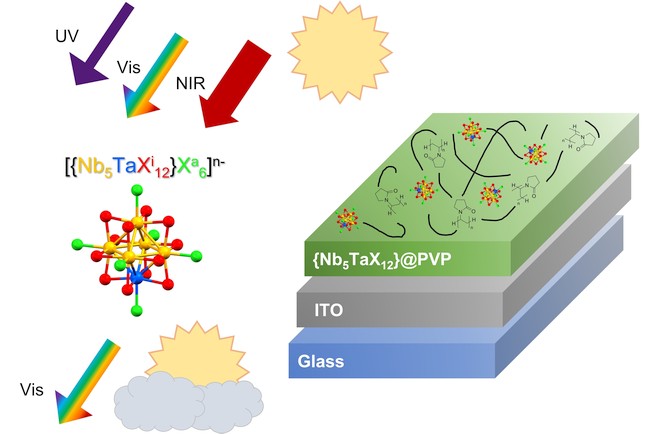
The nanoclusters are dispersed in a PVP matrix that is then coated on ITO glass to block NIR and UV rays while letting visible light pass through.

“Although the fabrication of a commercial products is still a long way ahead, our work demonstrated a significant improvement in UV and NIR blocking properties compared to previous research,” says solid-state chemist Fabien Grasset, research director at the French National Centre for Scientific Research (CNRS).

“Buildings account for a large part of global energy consumption,” explains Grasset, “with a large amount of the annual energy consumption of a standard building going to cooling and/or heating systems to maintain indoor temperatures at comfortable levels.” Scientists are looking for ways to develop window glass coatings that can block the entry of NIR radiation so that buildings, and even cars, can consume less energy to keep it cool inside. However, this needs to be done in a way that still allows visible light to enter. Ideally, harmful UV rays would also be blocked.

To this end, the international French-Japanese research collaboration fabricated and analysed the performance of nanocomposites based on niobium-tantalum cluster compounds containing chloride or bromide ions.

They found that chloride-based nanoclusters provided the best performance in terms of blocking NIR and UV rays and allowing the passage of visible light. NIR and UV blocking by the nanoclusters depended on their concentration, dispersion and oxidation state. By tuning these parameters, the team was able to improve the nanocluster performance.

The nanoclusters were dispersed into a polyvinylpyrrolidone (PVP) matrix that was then coated onto indium-tin-oxide (ITO) glass. The combination increased the transmittance of visible light while reducing that of NIR and UV rays, relative to previous research. “These are very promising coating materials that block the most troublesome NIR wavelengths,” says Grasset.

“We have a long history of Japanese-French collaboration,” he continues. “We were already convinced that we are stronger working together by mixing our different cultures and ways of thinking. The international LINK project has reinforced this belief. We will continue to do our best to make further progress towards finding solutions for the global warming problem.”

Further information
Fabien Grasset
French National Centre for Scientific Research (CNRS)
Email: fabien.grasset@cnrs.fr

Research paper: https://www.tandfonline.com/doi/full/10.1080/14686996.2022.2105659

About Science and Technology of Advanced Materials (STAM)
Open access journal STAM publishes outstanding research articles across all aspects of materials science, including functional and structural materials, theoretical analyses, and properties of materials. https://www.tandfonline.com/STAM

For more information on STAM, contact
Dr. Mikiko Tanifuji
STAM Publishing Director
Email: TANIFUJI.Mikiko@nims.go.jp

Press release distributed by Asia Research News for Science and Technology of Advanced Materials.

Novel patching material for bone defects

  • Scientists at Tokyo Medical and Dental University have discovered a new type of bone repairing material that could be used to more precisely fix bone defects.

Ceramics and metals have been used for a while as structural materials to repair bones and joints. In the past, scientists engineered bioinert materials, which do not bond to bones directly; bioactive materials that can bond to bones; and bio-absorbable materials that are categorized in bioactive materials but they are absorbed by the body over time and are replaced by advancing bone tissue.

A new bio-responsive ceramic can be used to repair bone defects
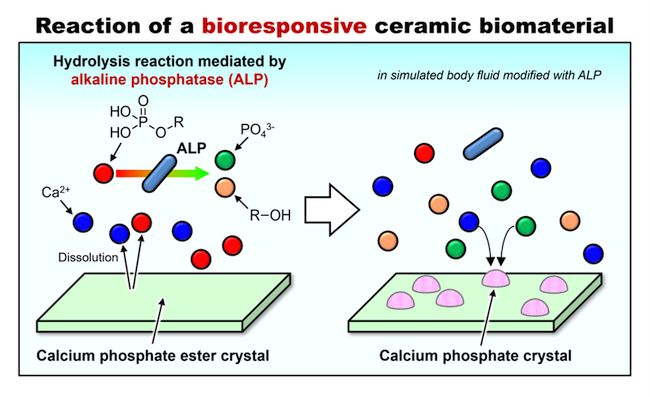
With an enzyme found in blood, different types of salts were converted to hydroxyapatite, a bone mineral

Now, a fourth type of bone repairing materials has been found: a bio-responsive ceramic that interacts with an enzyme found in blood to be absorbed into the body at a precise and predictable rate.

The research was done by Taishi Yokoi, an associate professor at the Institute of Biomaterials and Bioengineering at Tokyo Medical and Dental University, and his colleagues. The study was published in May in Science and Technology of Advanced Materials.

“Extending healthy life expectancy is an important issue for all of us,” Yokoi says. “Bone repairing materials aid in the recovery of bone defects and help improve quality of life.”

At the heart of this discovery is a biological reaction: an enzyme called alkaline phosphatase (ALP), which is present in human serum and reacts with various phosphate esters to generate bone mineral known as hydroxyapatite.

The scientists mimicked this process using a simulated body fluid that contained the enzyme ALP. They placed four different salts in a simulated body fluid containing or lacking the enzyme ALP. The salts were calcium salts of methyl phosphate (CaMeP), ethyl phosphate (CaEtP), butyl phosphate (CaBuP) and dodecyl phosphate (CaDoP). The phosphate component of each of these salts has an alkyl group at its end – a chain composed of hydrogen and carbon atoms – of differing lengths.

The scientists found that the first three salts were converted to hydroxyapatite, but only in the presence of ALP. Interestingly, the length of the alkyl group on the phosphate ester determined the rate at which this reaction happens. With more research, the scientists think that this could allow greater control of the bone healing process in the body.

“We expect the findings of this study will be applied towards designing and developing novel bone-repairing materials with precisely controlled degradation and resorption rates inside the body,” says Yokoi.

Further information
Taishi Yokoi
Tokyo Medical and Dental University
Email: yokoi.taishi.bcr@tmd.ac.jp

Research paper: https://www.tandfonline.com/doi/full/10.1080/14686996.2022.2074801

About Science and Technology of Advanced Materials (STAM)
Open access journal STAM publishes outstanding research articles across all aspects of materials science, including functional and structural materials, theoretical analyses, and properties of materials. https://www.tandfonline.com/STAM

Mikiko Tanifuji
STAM Publishing Director
Email: TANIFUJI.Mikiko@nims.go.jp

Press release distributed by Asia Research News for Science and Technology of Advanced Materials.

Machine learning speeds up search for new sustainable materials

  • A model that rapidly searches through large numbers of materials could find sustainable alternatives to existing composites.

Researchers from Konica Minolta and the Nara Institute of Science and Technology in Japan have developed a machine learning method to identify sustainable alternatives for composite materials. Their findings were published in the journal Science and Technology of Advanced Materials: Methods.

Researchers are looking for sustainable options, such as recyclable materials or biomass, to substitute the constituent materials in composites which are used in various applications including electrical and information technologies.

Composite materials are compounds made of two or more constituent materials. Due to the complex nature of the interactions between the different components, their performance can greatly exceed that of single materials. Composite materials, such as fibre-reinforced plastics, are very important for a wide range of industries and applications, including electrical and information technologies.

In recent years, there has been increasing demand for more environmentally sustainable materials that help reduce industrial waste and plastic use. One way to achieve this is to substitute the constituent materials in composites with recyclable materials or biomass. However, this can reduce performance compared to the original material, not only due to the features of the individual constituent materials, such as their physicochemical properties, but also due to the interactions between the constituents.

“Finding a new composite material that achieves the same performance as the original using human experience and intuition alone takes a very long time because you have to evaluate countless materials while also taking into account the interactions between them,” explains Michihiro Okuyama, assistant manager at Konica Minolta, Inc.

Machine learning offers a potential solution to this problem. Scientists have proposed several machine learning methods to conduct rapid searches among a large number of materials, based on the relationship between the materials’ features and performance. However, in many cases the properties of the constituent materials are unknown, making these types of predictive searches difficult.

To overcome this limitation, the researchers developed a new type of machine learning method for finding alternative materials. A key advantage of the new method is that it can quantitatively evaluate the interactions among the component materials to reveal how much they contribute to the overall performance of the composite. The method then searches for replacement constituents with similar performance to the original material.

The researchers tested their method by searching for alternative constituent materials for a composite consisting of three materials – resin, a filler and an additive. They experimentally evaluated the performance of the substitute materials identified by machine learning and found that they were similar to the original material, proving that the model works.

“In developing alternatives, that make up composite materials, our new machine learning method removes the need to test large numbers of candidates by trial and error, saving both time and money.” says Okuyama.

The method could be used to quickly and efficiently identify sustainable substitutes for composite materials, reducing plastic use and encouraging the use of biomass or renewable materials.

Further information
Michihiro Okuyama
KONICA MINOLTA, INC.
Email: michihiro.okuyama@konicaminolta.com

About Science and Technology of Advanced Materials: Methods (STAM Methods)
STAM Methods is an open access sister journal of Science and Technology of Advanced Materials (STAM), and focuses on emergent methods and tools for improving and/or accelerating materials developments, such as methodology, apparatus, instrumentation, modeling, high-through put data collection, materials/process informatics, databases, and programming. https://www.tandfonline.com/STAM-M

Dr. Masanobu Naito
STAM Methods Publishing Director
Email: NAITO.Masanobu@nims.go.jp

Press release distributed by Asia Research News for Science and Technology of Advanced Materials.
Portable generator powers small safety devices

  • The compact, lightweight device generates electricity when shaken and can power 100 LEDs.

A new stick-like, water-based device can convert energy from movement into electricity. The technology, which was reported in the journal Science and Technology of Advanced Materials, could be used to power portable devices, such as safety lights.

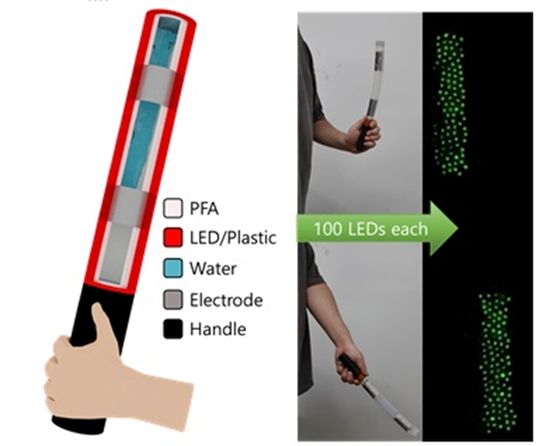
The portable stick generator can be used to power a safety traffic light baton with 100 LEDs.

With the growing interest in the internet of things and small electronics, there is high demand for portable energy sources. One way to produce power is to harvest energy from the environment, such as thermal, solar or mechanical energy. To capture mechanical energy – the power an object gets from its position and motion – scientists have developed triboelectric nanogenerators, which can produce electricity through friction.

“Triboelectric nanogenerators are one of the most effective tools for harvesting mechanical energy because of their high electrical output, low cost and easy accessibility,” professor Sangmin Lee of Chung-ang University in the Republic of Korea.

Triboelectric generators are electrically charged when two dissimilar materials touch and then separate. For example, when a balloon is rubbed on clothing, the balloon becomes charged and can stick to things. However, friction between two materials inevitably causes damage, reducing device lifespan.

Using liquids can reduce friction, but liquid-based generators have a considerably lower electrical output than solid ones. There is also a trade-off between making the device large enough for the liquid to move and generate electricity, while also ensuring it is compact enough to be portable.

To overcome these problems, researchers at Chung-ang University, together with colleagues in South Korea and the US, developed a lightweight, compact, water-based generator that can produce electrical power when shaken.

The device has a simple stick-like design and consists of 10ml of water, a polymer cylinder and electrodes. The container’s polymer material is negatively charged. The water moves up and down when the device is shaken, acquiring a positive charge that is transferred to the electrodes to generate a high electrical output.

“Because of its simple mechanism and design, this small and lightweight device could be used in everyday life. Electrical power can be produced simply by pouring water into the generator then giving it a shake,” explains Lee.

The researchers tested different designs, changing the size and ratio of the electrodes, the physical space between the electrodes and the amount of water in order to determine the optimal combination. They found that the portable stick generator could generate a high electrical output reaching 710 volts when it had adequate space for water movement and a high electrode area.

The researchers showed that the generator can power 100 LED lights, meaning it could be used as a traffic safety light baton that illuminates when shaken. This study demonstrates the potential for triboelectric nanogenerators to be used for a wide range of everyday applications.

Further information
Sangmin Lee
Chung-ang University
Email: slee98@cau.ac.kr

Research paper: https://doi.org/10.1080/14686996.2022.2030195

About Science and Technology of Advanced Materials (STAM)
Open access journal STAM publishes outstanding research articles across all aspects of materials science, including functional and structural materials, theoretical analyses, and properties of materials. https://www.tandfonline.com/STAM

Dr. Yoshikazu Shinohara
STAM Publishing Director
Email: SHINOHARA.Yoshikazu@nims.go.jp

Press release distributed by Asia Research News for Science and Technology of Advanced Materials.
Tiny electric generators could accelerate wound healing

Researchers are working to overcome challenges in order to bring wearable, electric, wound-healing devices to clinical practice.

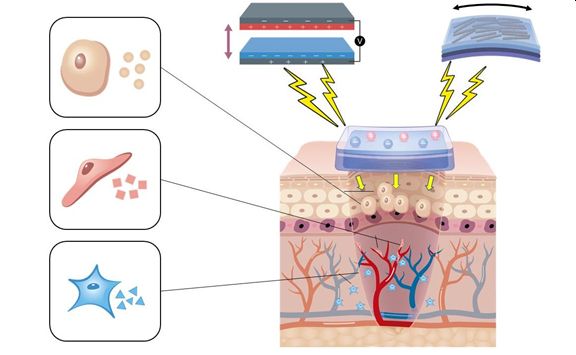
Tiny dressings that generate electricity in response to movement could accelerate wound healing and tissue regeneration. Scientists in Taiwan reviewed the latest advances and potential applications of wound healing technology in the journal Science and Technology of Advanced Materials.

“Piezoelectric and triboelectric nanogenerators are excellent candidates for self-assisted wound healing due to their light weight, flexibility, elasticity and biocompatibility,” says bioengineer Zong-Hong Lin of the National Tsing Hua University in Taiwan.

The natural wound healing process involves complex interactions between ions, cells, blood vessels, genes and the immune system; with every player triggered by a sequence of molecular events. An integral part of this process involves the generation of a weak electric field by the damaged epithelium – the layer of cells covering tissue. The electric field forms as a result of an ion gradient in the wound bed, which plays an important role in directing cell migration and promoting blood vessel formation in the area.

Scientists discovered in the mid- to late-1900s that stimulating tissue with an electric field could improve wound healing. Current research in this field is now focused on developing small, wearable, and inexpensive patches that aren’t encumbered by external electrical equipment.

This has led to research on piezoelectric materials, including natural materials like crystals, silk, wood, bone, hair and rubber, and synthetic materials such as quartz analogs, ceramics and polymers. These materials generate an electric current when exposed to mechanical stress. Nanogenerators developed using the synthetic materials are especially promising.

For example, some research teams are exploring the use of self-powered piezoelectric nanogenerators made with zinc oxide nanorods on a polydimethylsiloxane matrix for accelerating wound healing. Zinc oxide has the advantage of being piezoelectric and biocompatible. Other scientists are using scaffolds made from polyurethane and polyvinylidene fluoride (PVDF) due to their high piezoelectricity, chemical stability, ease of manufacturing and biocompatibility. These and other piezoelectric nanogenerators have shown promising results in laboratory and animal studies.

Another type of device, called a triboelectric nanogenerator (TENG), produces an electric current when two interfacing materials come into and out of contact with each other. Scientists have experimented with TENGs that generate electricity from breathing movements, for example, to accelerate wound healing in rats. They have also loaded TENG patches with antibiotics to facilitate wound healing by also treating localized infection.

“Piezoelectric and triboelectric nanogenerators are excellent candidates for self-assisted wound healing due to their light weight, flexibility, elasticity and biocompatibility,” says bioengineer Zong-Hong Lin of the National Tsing Hua University in Taiwan. “But there are still several bottlenecks to their clinical application.”

For example, they still need to be customized so they are fit-for-size, as wound dimensions vary widely. They also need to be firmly attached without being negatively affected or corroded by the fluids that naturally exude from wounds.

“Our future aim is to develop cost-effective and highly efficient wound dressing systems for practical clinical applications,” says Lin.

Further information
Zong-Hong Lin
National Tsing Hua University
Email: linzh@mx.nthu.edu.tw

Research paper: https://www.tandfonline.com/doi/full/10.1080/14686996.2021.2015249

About Science and Technology of Advanced Materials (STAM)
Open access journal STAM publishes outstanding research articles across all aspects of materials science, including functional and structural materials, theoretical analyses, and properties of materials. https://www.tandfonline.com/STAM

Dr. Yoshikazu Shinohara
STAM Publishing Director
Email: SHINOHARA.Yoshikazu@nims.go.jp

Press release distributed by Asia Research News for Science and Technology of Advanced Materials.

Improving machine learning for materials design

A quick, cost-effective approach improves the accuracy with which machine learning models can predict the properties of new materials.

A new approach can train a machine learning model to predict the properties of a material using only data obtained through simple measurements, saving time and money compared with those currently used. It was designed by researchers at Japan’s National Institute for Materials Science (NIMS), Asahi KASEI Corporation, Mitsubishi Chemical Corporation, Mitsui Chemicals, and Sumitomo Chemical Co and reported in the journal Science and Technology of Advanced Materials: Methods.

The new approach can predict difficult-to-measure experimental data such as tensile modulus using easy-to-measure experimental data like X-ray diffraction. It further helps design new materials or repurpose already known ones.

“Machine learning is a powerful tool for predicting the composition of elements and process needed to fabricate a material with specific properties,” explains Ryo Tamura, a senior researcher at NIMS who specializes in the field of materials informatics.

A tremendous amount of data is usually needed to train machine learning models for this purpose. Two kinds of data are used. Controllable descriptors are data that can be chosen without making a material, such as the chemical elements and processes used to synthesize it. But uncontrollable descriptors, like X-ray diffraction data, can only be obtained by making the material and conducting experiments on it.

“We developed an effective experimental design method to more accurately predict material properties using descriptors that cannot be controlled,” says Tamura.

The approach involves the examination of a dataset of controllable descriptors to choose the best material with the target properties to use for improving the model’s accuracy. In this case, the scientists interrogated a database of 75 types of polypropylenes to select a candidate with specific mechanical properties.

They then selected the material and extracted some of its uncontrollable descriptors, for example, its X-ray diffraction data and mechanical properties.

This data was added to the present dataset to better train a machine learning model employing special algorithms to predict a material’s properties using only uncontrollable descriptors.

“Our experimental design can be used to predict difficult-to-measure experimental data using easy-to-measure data, accelerating our ability to design new materials or to repurpose already known ones, while reducing the costs,” says Tamura. The prediction method can also help improve understanding of how a material’s structure affects specific properties.

The team is currently working on further optimizing their approach in collaboration with chemical manufacturers in Japan.

Further information
Ryo Tamura
National Institute for Materials Science (NIMS)
Email: tamura.ryo@nims.go.jp

About Science and Technology of Advanced Materials: Methods (STAM Methods)
STAM Methods is an open access sister journal of Science and Technology of Advanced Materials (STAM), and focuses on emergent methods and tools for improving and/or accelerating materials developments, such as methodology, apparatus, instrumentation, modeling, high-through put data collection, materials/process informatics, databases, and programming. https://www.tandfonline.com/STAM-M

Dr. Yoshikazu Shinohara
STAM Methods Publishing Director
Email: SHINOHARA.Yoshikazu@nims.go.jp

Press release distributed by Asia Research News for Science and Technology of Advanced Materials.
Submerged sensors to control wearable electronics

  • Scientists in Korea make hand-drawn and flexible pressure sensors that can control a phone from underwater

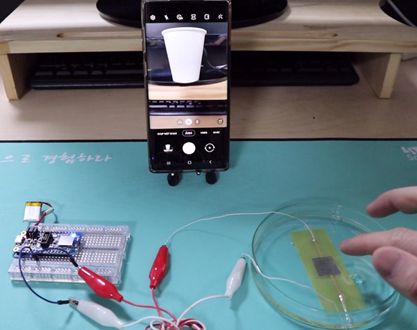
Flexible and waterproof sensors that could unlock new applications for wearable electronics have been developed by scientists in Korea. Published in the journal Science and Technology of Advanced Materials, the study shows how the pressure sensor can control a phone, to take photos and play music, even when the sensor is fully immersed in water.

Scientists in Korea have developed a pressure sensor that can control a cell phone from underwater

The technology could transform the use of wearable electronics in healthcare, smart textiles and for specific applications including scuba diving equipment, say the study researchers, who are based at Soongsil University in Seoul.

“Flexible electronics will usher in a whole new world of wearable technologies to monitor our health and lifestyles,” says Jooyong Kim, a materials scientist who led the research. “But until now, many of these applications have been held back because the pressure sensors they rely on could not handle being exposed to water. We have changed that.”

To demonstrate the power of the new technology, the researchers incorporated one of the sensors into a flexible face mask. Sensitive enough to detect the movement of air inside the mask, the sensor could track and report the rate of breathing of a wearer in real-time.

The sensor converts tiny movements caused by change in pressure and electrical resistance into electronic signals. Like many similar flexible electronic devices, the design of the circuit was hand-drawn onto a conducting material with a marker-pen, which acts to shield the circuitry when the rest of the material was etched away. This is cheaper than traditional methods.

The researchers then mounted the finger-print sized circuit onto a blend of wet tissue paper and carbon nanotubes, which works to detect changes in pressure. They then covered the layered sensor device with a strip of tape, to make it waterproof.

The device can track both the magnitude and location of pressure applied to it. Using machine learning technology to process the signals, the researchers found the sensors could feel and report applied pressures in the lab with up to 94% accuracy. And by connecting the sensor to a wi-fi network, the researchers could press it underwater to control phone functions, including double touch, triple touch, short touch, and long touch patterns.

“We expect the readily-available materials, easy fabrication techniques, and machine learning algorithms we have demonstrated in this journal article will bring significant contributions to the development of hand-drawn sensors in the future,” says Kim.

Further information
Jooyong Kim
Soongsil University
Email: jykim@ssu.ac.kr

Paper: https://www.tandfonline.com/doi/full/10.1080/14686996.2021.1961100

About Science and Technology of Advanced Materials (STAM)
Open access journal STAM publishes outstanding research articles across all aspects of materials science, including functional and structural materials, theoretical analyses, and properties of materials. https://www.tandfonline.com/STAM

Dr. Yoshikazu Shinohara
STAM Publishing Director
Email: SHINOHARA.Yoshikazu@nims.go.jp

Press release distributed by Asia Research News for Science and Technology of Advanced Materials.
Hydrogel holds life-giving cells longer

  • An injection made of a hydrogel containing stem cells could treat damaged tissue following a heart attack.

Heart muscle becomes damaged and cardiac function is affected when blood vessels feeding the heart are blocked. A new stem-cell-carrying hydrogel helps mice recover from this condition, called myocardial infarction, by stimulating formation of new blood vessels. Developed by a team of scientists at Kansai University in Japan, the stem cell delivery system is described in the journal Science and Technology of Advanced Materials.
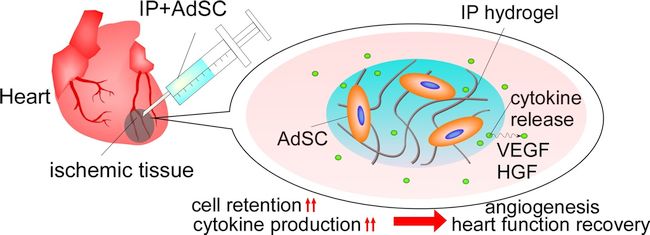
The hydrogel acts as a scaffold that holds the stem cells in place at the site of injection and keeps them alive for longer. The stem cells produce cytokines that stimulate the formation of blood vessels to help the heart recover. The gel is biodegradable, so it eventually dissolves and is removed by the body.

The team used stem cells derived from fat tissue in their application. These so-called ‘adipose-derived stem cells’ have already been investigated for treating damaged cardiac tissue from reduced blood flow to the heart, known as myocardial ischemia. The idea is that the stem cells will release stimulating factors to regenerate blood vessels once injected into damaged heart tissue. The problem, though, is that they can’t be retained or survive in the tissue long enough. In other studies, scientists have found that injecting cell-free biodegradable hydrogels into damaged heart tissue helps partial recovery of heart functions.

Kansai University bioengineer Yuichi Ohya and his colleagues mixed the two techniques together.

Firstly, they developed hydrogel formulas that can hold stem cells in place for longer periods of time at the site of tissue damage. These hydrogels start off as a solution when they are at room temperature. This makes it easy to mix in the stem cells. When the solution is injected into an organ, it warms to body temperature, triggering its transformation into a gel.

One of their hydrogels was especially good at staying in its gel state. It was made with a combination of molecules, called tri-PCG, with acrolyl groups attached to them. The tri-PCG-acryl was then mixed with a polythiol derivative.

The team added adipose-derived stem cells to the hydrogel and observed, both in petri dishes and inside mouse heart tissue, how long the cells lived and what kinds of genes and substances were produced by the cells.

“The stem cells were able to survive in our injectable hydrogel and released molecules that stimulate blood vessel formation, improving heart function and making it effective for treatment of ischemic heart,” says Ohya.

The team next plans to test their therapy on larger animals after confirming its safety, and then to conduct clinical studies in humans. They also plan to investigate using their injectable hydrogel to deliver immune cells to treat cancer or in vaccines to protect against viral infections.

Further information
Yuichi Ohya
Kansai University
Email: yohya@kansai-u.ac.jp

Paper: https://www.tandfonline.com/doi/full/10.1080/14686996.2021.1938212%40tsta20.2021.22.issue-BioJ

About Science and Technology of Advanced Materials Journal
Open access journal STAM publishes outstanding research articles across all aspects of materials science, including functional and structural materials, theoretical analyses, and properties of materials. https://www.tandfonline.com/STAM

Dr. Yoshikazu Shinohara
STAM Publishing Director
Email: SHINOHARA.Yoshikazu@nims.go.jp

Press release distributed by ResearchSEA for Science and Technology of Advanced Materials.
Stimulating blood vessel formation with magnets

  • Magnetic field could boost blood vessel growth to regenerate damaged tissue.

Magnetic field can be used to stimulate blood vessel growth, according to a study published in the journal Science and Technology of Advanced Materials. The findings, by researchers at the Tecnico Lisboa and NOVA School of Science and Technology in Portugal, could lead to new treatments for cancers and help regenerate tissues that have lost their blood supply.
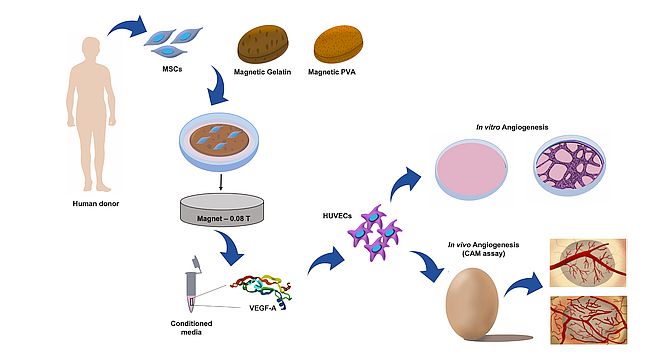
Human-donated mesenchymal stromal cells were placed on PVA or gelatin hydrogels containing iron oxide nanoparticles. Applying a magnetic field to the gelatin hydrogel triggered the release of VEGF-A. This was used to treat endothelial cells, stimulating blood vessel formation.

“Researchers have found it challenging to develop functional, vascularized tissue that can be implanted or used to regenerate damaged blood vessels,” says Frederico Ferreira, a bioengineer at Tecnico Lisboa’s Institute for Biosciences and Bioengineering. “We developed a promising cell therapy alternative that can non-invasively stimulate blood vessel formation or regeneration through the application of an external low-intensity magnetic field.”

The researchers worked with human mesenchymal stromal cells from bone marrow. These cells can change into different cell types, and also secrete a protein called VEGF-A that stimulates blood vessel formation.

Ana Carina Manjua and Carla Portugal, at the Research Centre LAQV at the NOVA School of Science and Technology, developed two hydrogel supports, made from polyvinyl alcohol (PVA) or gelatin, both containing iron oxide nanoparticles. Cells were cultured on the hydrogels and exposed to a low-intensity magnetic field for 24 hours.

The cells on the PVA hydrogel produced less VEGF-A after the magnetic treatment. But the cells on the gelatin hydrogel produced more. Subsequent lab tests showed that this VEGF-A rich extracts, taken from the cultures on magnet-stimulated gelatin hydrogel, improved the ability of human vascular endothelial cells to sprout into branching blood vessel networks.

Endothelial cells were then placed onto a culture dish with a gap separating them. The conditioned media from magnet-treated mesenchymal stromal cells from the gelatin hydrogel were added to the endothelial cells, moving to close the gap between them in 20 hours. This was significantly faster than the 30 hours they needed when they had not received magnetic treatment. Placing a magnet directly below the dish triggered the mesenchymal stromal cells to close the gap in just four hours.

Finally, VEGF-A extracts produced by magnet-treated mesenchymal stromal cells on gelatin increased blood vessel formation in a chick embryo, although further research is needed to confirm these results.

More work is needed to understand what happens at the molecular level when a magnetic field is applied to the cells. But the researchers say gelatin hydrogels containing iron oxide nanoparticles and mesenchymal stromal cells could one day be applied to damaged blood vessels and then exposed to a short magnetic treatment to heal them.

The team suggests that magnet-treated cells on PVA, which produce less of the growth factor, could be used to slow down blood vessel growth to limit the expansion of cancer cells.

Further information
Frederico Castelo Ferreira
Universidade de Lisboa
Email: frederico.ferreira@ist.utl.pt

Carla Portugal
Universidade Nova de Lisboa
Email: cmp@fct.unl.pt

Ana Carina Baeta Manjua
Universidade de Lisboa
Email: carina.manjua@tecnico.ulisboa.pt

About Science and Technology of Advanced Materials Journal
Open access journal STAM publishes outstanding research articles across all aspects of materials science, including functional and structural materials, theoretical analyses, and properties of materials. Website: https://www.tandfonline.com/toc/tsta20/current

Dr. Yoshikazu Shinohara
STAM Publishing Director
Email: SHINOHARA.Yoshikazu@nims.go.jp

Press release distributed by ResearchSEA for Science and Technology of Advanced Materials.

Spinning electricity from heat and cold

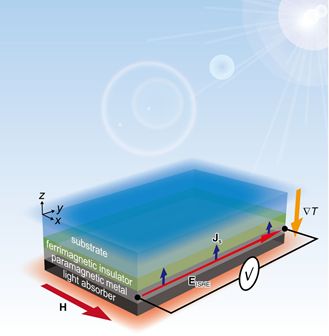
A new device harvests two types of energy during the daytime, making it cool on one end and hot on the other, to generate electricity around the clock. With further improvements, the device could be used in off-grid Internet-of-things sensors. The details were published in the journal Science and Technology of Advanced Materials.

Thermal emission is radiated from the top of the device, keeping it cool, while sunlight is absorbed at the bottom, keeping that part warm. The temperature gradient and types of materials used lead to the generation of a spin current that is converted to thermoelectric voltage.

Scientists have known for at least 200 years that electricity can be generated from a temperature gradient, a phenomenon called thermoelectric generation. Recently, researchers have developed thermoelectric conversion technologies by changing material parameters and introducing new principles. For example, researchers have found that magnetic materials can generate thermoelectric voltage by inducing a flow of electron spins along a temperature gradient, called the spin Seebeck effect, and that increasing a device’s length perpendicular to the gradient boosts voltage. Scientists would like to fabricate more efficient, thin thermoelectric devices based on the spin Seebeck effect. However, the thinner the device, the more difficult it is to maintain a temperature gradient between its top and bottom.

Satoshi Ishii and Ken-ichi Uchida of Japan’s National Institute for Materials Science and colleagues have solved this problem by making a device with magnetic layers that continuously cools at the top and absorbs heat from the sun at the bottom. In this way, the device harvests two types of energy. Radiative cooling occurs at the top, as heat is lost from material in the form of infrared radiation, while solar radiation is absorbed in the bottom.

“It is really important to take full advantage of renewable energy in order to achieve a more sustainable society,” explains Ishii. “Daytime radiative cooling and solar heating have both been used to improve a variety of thermoelectric applications. Our device uses both types of energy simultaneously to generate a thermoelectric voltage.”

Here’s how it works:

The device has four layers. The top layer is a weak paramagnet made of gadolinium gallium garnet. This layer is transparent to sunlight and emits thermal radiation to the universe, getting cooler. Sunlight passes through to the following ferrimagnetic layer made of yttrium iron garnet. This layer is also transparent, so light continues to travel down into the bottom two light-absorbing layers, made of paramagnetic platinum and blackbody paint. The bottom section stays warm due to sunlight absorption. The spin current is generated in the ferromagnetic layer owing to the temperature gradient between the top and bottom of the device and is converted to electric voltage in the paramagnetic platinum layer.

The device works best on clear days, as clouds reduce the achievable temperature gradient by blocking the emitted infrared radiation from passing through the atmosphere and reducing the solar heating.

While promising, the device’s thermoelectric generation efficiency was still quite low. The team plans to boost its efficiency by improving the design, experimenting with different material combinations, and developing even more novel strategies for thermoelectric generation.

Further information
Satoshi Ishii
National Institute for Materials Science
E: sishii@nims.go.jp

Ken-ichi Uchida
National Institute for Materials Science
E: UCHIDA.Kenichi@nims.go.jp

About Science and Technology of Advanced Materials Journal

Open access journal STAM publishes outstanding research articles across all aspects of materials science, including functional and structural materials, theoretical analyses, and properties of materials. Website: https://www.tandfonline.com/toc/tsta20/current

Dr. Yoshikazu Shinohara
STAM Publishing Director
E: SHINOHARA.Yoshikazu@nims.go.jp

Press release distributed by ResearchSEA for Science and Technology of Advanced Materials.