A Selling Exhibition of Multidisciplinary Works by 8 Global Artists
HOFA Gallery and PhillipsX announce the launch of ‘SPACES’, the inaugural selling exhibition in HOFA’s new curated digital realities series; which brings together leading voices in the intersection of technology and art. The selling exhibition, set to debut at Phillips, London, from 3 – 10 October, during Frieze 2024, will showcase 10 works by eight global visionaries blending digital innovation with artistic expression: Sougwen Chung, Emily Xie, Refik Anadol, Krista Kim, Ana María Caballero, Shirin Abedinirad, Random International and Joseph Klibansky.
Sougwen Chung, Spectral, 2024. Acrylic on Perspex, Created with DOUG6. (Photo by David Sprangl)
Sougwen Chung, Spectral, 2024. Acrylic on Perspex, Created with DOUG6. 152.5 x 152.5 cm (Photo by David Sprangl)
SPACES is a series of immersive exhibitions exploring the profound challenges and possibilities presented by computing technologies and their impact on humanity. The first edition at Phillips will feature a curation of contemporary artworks integrating digital techniques with tangible media, as well as digital works that challenge conventional perceptions of art, inviting viewers to reconsider the boundaries between the digital and physical realms.
Elio D’Anna, curator and co-founder of HOFA Gallery, says, “HOFA is honoured to present SPACES with Phillips. This series explores the evolving interplay between digital technology and contemporary art, showcasing how artists are integrating AI and digital techniques into their work.”
D’Anna adds, “SPACES highlights the transformative impact of these technologies on art forms and reveals new possibilities for creative expression.”
One of the main highlights of SPACES is Sougwen Chung, the Chinese-Canadian artist named as one of TIME100’s top AI innovators and whose human-machine collaboration was the first AI model acquired by the Victoria and Albert Museum, London.
At Phillips, Chung will unveil Spectral, a dynamic new installation where a robotic arm will collaborate with them in the painting process, exemplifying the evolution of machines as creative partners rather than mere tools. This work explores the innovative interplay between humans and AI, and technology and artistic expression.
Other highlights include:
Krista Kim Krista Kim, founder of Techism, is a pioneering artist who explores digital consciousness through art, technology and philosophy, working across both digital and physical mediums. As a cultural leader at the World Economic Forum since 2022, Vogue Singapore’s metaverse editor, and one of UNESCO’s ’50 Minds for the Next 50,’ Kim is widely recognised for her innovative contributions to the art world. Her notable works include the 2022 immersive installation Continuum in Times Square, and the 2024 installation Mirror of the Mind featured on The Sphere in Las Vegas.
SPACES will showcase a triptych of Kim’s signature gradient works, UV-printed on Trulife Plexi and mounted on Dibond. These pieces, created using digital software from as early as 2012, represent her vision of technology as a tool for mental wellness and cultural reflection. Her meditative gradients explore the fluid intersection of art and technology, symbolising constant transformation in the digital age.
Emily Xie Xie is a New York-based artist known for her innovative use of algorithms to create lifelike textures and forms. Her work has been showcased at the Singapore ArtScience Museum and the Armory Show in New York. Inspired by traditional Chinese embroidery, Xie’s exhibited work Cresting Figure is a digital collage integrating rich textures and intricate patterns, reimagining ancient techniques through generative AI within a digital framework. Bridging the gap between contemporary art and 21st Century technology, it offers a beautiful perspective on cultural heritage.
Refik Anadol Anadol is a Turkish-American media artist and director renowned for his innovative approach that blends art with data, creating captivating experiences through digital mediums. Anadol has collaborated with prestigious institutions such as MoMA New York and Sotheby’s and has digital collectible sales surpassing $30 million. SPACES will present Winds of Yawanawa #888, part of his Winds of Yawanawa collection. This series comprises 1,000 unique NFT Data Paintings that merge weather data from the Yawanawa tribe’s Amazonian village with the artistic expressions of young Yawanawa artists, showcasing a dynamic interplay between traditional art forms and digital innovation.
Miety Heiden, Deputy Chairwoman and Head of Private Sales at Phillips, says “Phillips is thrilled to collaborate with HOFA Gallery on SPACES, an exhibition that pushes the boundaries of contemporary art by exploring the intersection of digital innovation and creative expression. SPACES reflects our commitment to supporting artists whose practice comprises cutting-edge technologies.”
The leading express freight network operator in China’s less-than-truckload (LTL) market – ANE (Cayman) Inc. (the Company, together with its subsidiaries, the Group, HKG: 9956), announces details of its Global Offering and listing on the Main Board of the Stock Exchange of Hong Kong Limited (Hong Kong Stock Exchange).
Highlights of the Global Offering:
Number of Offer Shares under the Global Offering: 80,220,000 Offer Shares (subject to the Over-allotment Option);
Number of Hong Kong Offer Shares: 8,022,000 Offer Shares (subject to reallocation);
Number of International Offer Shares: 72,198,000 Offer Shares (subject to reallocation and the Over-allotment Option);
Offer Price Range: HK$13.88 to HK$16.88 per Offer Share;
The Hong Kong Public Offering is expected to close at 12:00 noon (at 11:30 a.m. for submitting applications under the eWhite Form Service) on Thursday, November 4, 2021;
Dealings in the Shares on the Hong Kong Stock Exchange are expected to commence on Saturday, 11 November 2021;
J.P. Morgan Securities (Far East) Limited and China International Capital Corporation Hong Kong Securities Limited are the Joint Sponsors.
ANE (Cayman) Inc. plans to offer an aggregate of 80,220,000 Shares (subject to the Over-allotment Option) under the Global Offering, of which 8,022,000 Shares (subject to reallocation) will be offered in the Hong Kong Public Offering, and 72,198,000 Shares (subject to reallocation and the Over-allotment Option) will be offered by way of International Placing. The Offer Price will not be more than HK$16.88 per Offer Share and is expected to be not less than HK$13.88 per Offer Share. The Company is also expected to grant the Over-allotment Option, at any time from the Listing Date until Saturday, December 4, 2021, being the 30 days after the last day for lodging applications under the Hong Kong Public Offering, pursuant to which our Company may be required to issue up to an aggregate of 12,033,000 additional Shares. If the above Over-allotment Option is exercised in full and the final issued price capped at the maximum Offer Price (which refers to HKD16.88 per share), the total amount of funds raised will up to approximate US$200 million.
The Hong Kong Public Offering will commence on Saturday, 30 October 2021 and is expected to close at 12:00 noon (at 11:30 a.m. for submitting applications under the eWhite Form Service) on Thursday, 4 November 2021. Dealings of the Shares on the Main Board of Hong Kong Stock Exchange are expected to commence on Thursday, 11 November 2021. The Shares will be traded in board lots of 500 Shares each.
Assuming an Offer Price of HK$15.38 per Offer Share (being the mid-point of the stated range of the Offer Price of between HK$13.88 and HK$16.88 per Offer Share), the Company estimates that we will receive net proceeds of approximately HK$1,124.1 million from the Global Offering after deducting the underwriting commissions and other estimated expenses in connection with the Global Offering. The Company intends to use the net proceeds from the Global Offering for the following purposes and in the amounts set out below, subject to changes in light of our evolving business needs and changing market conditions:
Approximately 40%, or HK$449.6 million, will be used for building, upgrading and potential acquisitions of 5 to 10 key transit hubs in strategic locations to accommodate the high volume growth, improve the network structure;
Approximately 30%, or HK$337.2 million, will be used for the investment in the Company’s line-haul truck fleet to further improve the Company’s operational efficiency. In particular: (i) approximately 25%, or HK$281.0 million, will be used to purchase approximately 2,000 to 3,000 modern and high-capacity truck tractors and trailers, and to partner with major trucking manufacturers to customise their models to fit the operational needs; and (ii) approximately 5%, or HK$56.2 million, will be used to repay the borrowings for the purchase of trucks.
Approximately 20%, or HK$224.8 million, will be used for the investment in technology innovations. In particular: (i) approximately 10%, or HK$112.4 million, will be used to upgrade the technologies and automated facilities of our sorting network; and (ii) approximately 10%, or HK$112.4 million, will be used to invest in intelligent transportation management systems and autonomous driving technologies.
Approximately 10%, or HK$112.4 million, will be used for working capital and other general corporate purposes.
The Company have entered into a Cornerstone Investment Agreement with the cornerstone investor Harvest International Premium Value (Secondary Market) Fund SPC, to subscribe at the Offer Price for a certain number of Offer Shares that may be purchased for an aggregate amount of US$12.50 million (or approximately HK$97.23 million).
J.P. Morgan Securities (Far East) Limited and China International Capital Corporation Hong Kong Securities Limited are the Joint Sponsors. J.P. Morgan Securities (Asia Pacific) Limited, China International Capital Corporation Hong Kong Securities Limited, and Citigroup Global Markets Asia Limited are the Joint Global Coordinators. J.P. Morgan Securities (Asia Pacific) Limited, J.P. Morgan Securities plc, China International Capital Corporation Hong Kong Securities Limited, Citigroup Global Markets Asia Limited, Citigroup Global Markets Limited, China Galaxy International Securities (Hong Kong) Co., Limited, CMB International Capital Limited, China Merchants Securities (HK) Co., Limited, Futu Securities International (Hong Kong) Limited, and Haitong International Securities Company Limited are the Joint Bookrunners and Joint Lead Managers. ABCI Capital Limited is the Joint Bookrunner. ABCI Securities Company Limited and Livermore Holdings Limited are the Joint Lead Manager.
About the ANE (Cayman) Inc. (HKG: 9956) ANE (Cayman) Inc. (“ANE”), the predecessor of which was founded in June 2010 in Shanghai, is an express freight network operator who have nationwide coverage. With the mission of “To create infinite possibilities with logistic services”, ANE as a leading less-than-truckload (“LTL”) service provider, delivers timely and comprehensive freight transportation services to operate a leading express freight network in China’s LTL market, according to freight partner platform creating significant network effects, continuous technology innovation and digitalised operation and customer-centric product offerings with high service quality. As of 30 April 2021, ANE has 151 self-operated sorting centres across China, with our self-operated fleet consisted of approximately 2,400 high-capacity line-haul truck tractors and over 3,600 trailers. With approximately 29,400 freight partners and freight agents, our express freight network serves over 3.6 million shippers including e-commerce merchants, manufacturers, wholesalers, retailers, and individuals across the entire commerce landscape in China, covering approximately 96% of the counties and townships, as at April 30, 2021. In terms of total freight volume, ANE has 10.2 million tons of total freight volume and a market share of 17.3% in 2020 among all express freight networks in China.
Kine Protocolhas partnered with Polygon to bring high margin, cross-chain derivatives trading to the Polygon Network for further scalability and increased user adoption.
Kine Protocol makes cross-chain asset transformation between Polygon, Binance Smart Chain and Ethereum network possible with lower gas fees, assuaging concerns about increasing gas fees on the Ethereum network. Accepted assets for staking include BTC, MATIC, BNB, Kine, BTC/ETH Quick LP, USDC/ETH Quick LP, MATIC/ETH Quick LP with Kine dAPP managing risk and distributing rewards.
Sandeep Nailwal, Co-Founder of Polygon, said, “The launch of Kine Protocol is yet another example of the world’s brightest blockchain developers choosing Polygon as the foundation for their innovations. We’re excited to facilitate frictionless experiences so users can experience the future of derivatives trading on Kine Protocol.”
Kine Protocol’s team has extensive experience in derivatives trading, with previous roles at HSBC and Merrill Lynch. By deploying general-purpose liquidity pools, Kine’s DeFi protocol facilitates fast, transparent derivatives trading without the presence of counterparties.
Lei Wang, CEO and Founder of Kine Protocol, said, “We look forward to growing the Kine Protocol community through Polygon and supporting Polygon’s mission to bring blockchain infrastructure to the masses.”
With Polygon’s full-stack Ethereum scaling solution, tens of thousands of Polygon users can log on at the same time to open and close derivatives positions without counterparties.
Polygon’s high-speed and low-gas infrastructure makes Kine’s features – including staking, minting, burning, rewards, and liquidity farming – even faster, providing a frictionless experience for all users.
Kine is a decentralized protocol that establishes general-purpose liquidity pools backed by a customizable portfolio of digital assets. The liquidity pool allows traders to open and close derivatives positions according to trusted price feeds, avoiding the need for counterparties. Kine lifts restrictions on existing peer-to-pool (or peer-to-contract) trading protocols by expanding the collateral space to any Ethereum-based assets and allowing third-party liquidation.
Polygon is the first well-structured, easy-to-use platform for Ethereum scaling and infrastructure development. Its core component is Polygon SDK, a modular, flexible framework that supports building and connecting Secured Chains like Plasma, Optimistic Rollups, zkRollups, Validium, etc, and Standalone Chains like Polygon POS, designed for flexibility and independence. Polygon’s scaling solutions have seen widespread adoption with 450+ Dapps, ~350M txns, and ~13.5M+ unique users.
If you’re an Ethereum Developer, you’re already a Polygon developer! Leverage Polygon’s fast and secure txns for your Dapp, get started here.
CASPER, WYO – Onomy Protocolhas recently announced plans to open the world of Decentralized Finance (DeFi) to traditional Centralized Finance (CeFi) operators with its ambitious cross-chain stablecoin infrastructure.
Institutions worldwide are looking to tap into blockchain’s edge on secure, trustless, and quick transactions. Financial entities are aware there is a Great Financial Migration currently underway, but they face significant stumbling blocks as they move their currency operations on-chain. Goldman Sachs’ Crypto Trading Desk is one of the first forays into blockchain by a major bank, with private entities like Fidelity Investments providing enterprise-grade custody and execution services for institutional investors. Likewise, JPMorgan has just announced plans to give wealthy clients direct access to crypto funds.
Despite the acknowledgment of the promising underlying technology, volatility is cited as the primary concern holding back traditional institutions. This has led to the proliferation of ‘stablecoins’ that are digital crypto tokens pegged to major national currencies, enabling access to decentralized finance and crypto financial infrastructure whilst evading volatility concerns. Stablecoins have grown from a market capitalization of $10B, to over $108B within the year, spawning an entirely new segment of financial products that offer extremely competitive yield when compared to traditional financial products. Stablecoins are currently dominated by US Dollars, but Onomy Protocol sees an imminent future wherein other major national currencies will gain prominence in the cryptocurrency space – opening the door to foreign currency exchange markets (Forex) migrating on-chain.
Onomy Protocol provides the bridge for this migration, empowering institutions to onboard their fiat exchange operations on-chain through the use of stablecoins, conceiving a new and enhanced outlet for the $6.6 trillion daily volume traded across the foreign exchange markets. Through Onomy, users are empowered with a secure platform to onboard their liquidity into decentralized finance in a manner that evades volatility concerns and provides access to novel products and yield opportunities not present in traditional finance.
By making Forex more accessible by plugging it into the booming blockchain economy, it opens opportunities for banks, enterprises, and retail users to enhance the utility of their assets. Institutions have traditionally struggled to implement new technologies at scale due to the size of their operations and depth of asset pools, but Onomy Protocol’s products will sustain the migration.
Moreover, each blockchain platform is siloed unto itself, increasing friction and inefficiencies when attempting to exchange assets cross-chain. Onomy is built on cross-chain architecture, enabling assets to transfer freely amongst prominent blockchain economies.
Onomy Protocol bolsters adoption through the suite of products available on its ecosystem, powered by the ONET blockchain, a Proof-of-Stake and application-specific network operating at unprecedented efficiency. These include the ONEX (Onomy Exchange), a hybrid DEX that converges automated market maker (AMM) and order book functionalities into a standalone stablecoin & native assets exchange, suitable for emulating the Forex market on-chain.
The stablecoin economy is a force to be reckoned with, granted that even under the heavy storm of market plunges, stablecoins have proven resilient and have effectively maintained their peg, allowing for the entire market to grow due to the confidence in these digital safe havens.
Onomy Protocol, therefore, plans to build on the success of fiat-pegged digital assets, opening this economy to holders of the world’s 100+ currencies, who may easily mint, trade, and lend stablecoins.
Institutions will participate and onboard liquidity into a cross-chain stablecoin economy in an efficient manner that emulates and eventually supersedes their traditional operations. With trustless transactions being validated at speed, financial institutions can leverage their currency reserves to take advantage of the DeFi marketplace and other opportunities that develop as blockchain technology evolves.
To enact this goal, Onomy has announced one of its partnerships with Avalanche, a prominent and interoperable blockchain economy backed by Andreesen Horowitz’s A16z crypto fund, which facilitates the deployment of decentralized apps and enterprise blockchains.
Onomy Protocol aims to serve as the world’s decentralized reserve bank. In allowing both retail and institutional users to mint, deploy, exchange and utilize their currency reserves through digital stablecoins that can interact with the entire DeFi landscape, it solves long-standing issues that hamper the potential of the Forex market. Just as the computer and the movement away from the gold standard unleashed an economic explosion in the mid-seventies, Onomy hopes to be the bridge that realizes the potential of currency markets, and the currency itself.
Today, AppsFlyer, the global attribution and marketing analytics leader, announces that strategic technology marketing veteran Sam Chiu will head AppsFlyer’s marketing team as its new Senior Director of Marketing, Asia-Pacific (APAC). Sam will report to Ronen Mense, President and Managing Director, AppsFlyer APAC.
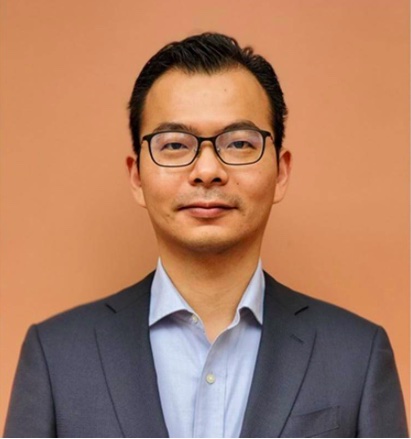
Sam Chiu, Senior Director of Marketing, APAC, AppsFlyer
This latest appointment follows the company’s recent senior hire of ex-Oracle Sales Vice President Joen van Driel as AppsFlyer’s VP of Sales for APAC earlier this year. With app install ad spend in the region poised to reach $61 billion in 2022, these key hires highlight AppsFlyer’s strengthening commitment to the region, signaling its plan to cement its leadership position in APAC’s marketing attribution and analytics space.
Sam Chiu, Senior Director of Marketing, APAC, AppsFlyer, said: “AppsFlyer is experiencing phenomenal growth, not only in APAC but globally, and I am honored to work alongside talented individuals in the team to further advance our marketing efforts and assert AppsFlyer’s dominance in the region. AppsFlyer is well-positioned to help marketers transform their businesses, and the mobile marketing industry continues to expand with the use of mobile apps wildly increasing day by day. I am excited about what lies ahead.”
In his new role, Sam will spearhead AppsFlyer’s brand awareness, strategic marketing strategies, and demand generation for the company, driving engagement strategies, supporting the current customer base and working with high-performing teams across countries to strengthen AppsFlyer’s presence. Currently based out of Hong Kong, Sam will relocate to AppsFlyer’s SEAPAC hub in Bangkok, where he will play a critical role in driving AppsFlyer’s go-to-market strategy for over 22 markets across ASEAN, South Asia (including India and Pakistan), Japan, Korea, and ANZ.
Ronen Mense, President and Managing Director, AppsFlyer APAC says, “Throughout the last twelve months we have continued to focus on growing AppsFlyer, not only in APAC, but globally. In a crucial time of AppsFlyer’s expansion, Sam brings in a wide range of experience, having worked at an array of established players in the industry. His role will drive key business goals in the region.”
Sam brings an extensive amount of experience with close to twenty years of digital transformation and omni-channel strategy implementation to AppsFlyer’s Southeast Asia-Pacific (SEAPAC) team. His full stack marketing tech career spans Boston, New York City and Hong Kong across agencies (iProspect), publishers and ad networks (Microsoft, Yahoo), and B2C & B2B advertisers (DFS/LVMH, SAS), with deep experience driving campaign results for various Fortune 500 firms.
About AppsFlyer
AppsFlyer, the global attribution leader, empowers marketers to grow their business and innovate with a suite of comprehensive measurement and analytics solutions. Built around privacy by design, AppsFlyer takes a customer-centric approach to help 12,000+ brands and 8,000+ technology partners make better business decisions every day. To learn more, visit www.appsflyer.com
Sports and Leisure Expo and World of Snacks well-received Events mark return of large-scale physical fairs
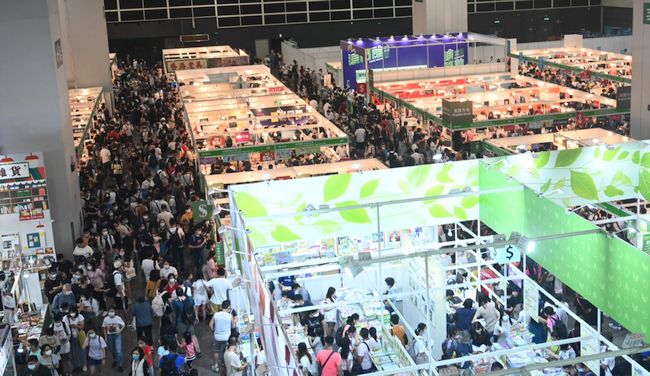
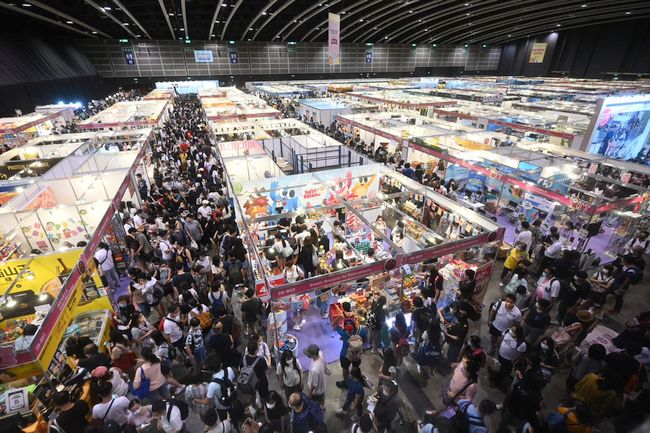
The HKTDC Hong Kong Book Fair, the HKTDC Hong Kong Sports and Leisure Expoand the debut HKTDC World of Snacks drew to a successful close today. The seven-day fairs, organized by the Hong Kong Trade Development Council (HKTDC), attracted more than 830,000 visitors, offering a brand-new experience by bringing together a broad selection of books, sports and leisure products and snacks from more than 760 exhibitors.
The HKTDC Hong Kong Book Fair, organised by the Hong Kong Trade Development Council (HKTDC), concluded today. The event welcomed more than 830,000 visitors during its seven-day fair period, running concurrently with the HKTDC Hong Kong Sports and Leisure Expo and the debut HKTDC World of Snacks.The HKTDC Hong Kong Sports and Leisure Expo showcased a broad selection of sports and leisure products and services, allowing visitors to try out different experiences, discover new interests and make good use of their leisure time.The new HKTDC World of Snacks was well-received, featuring six thematic zones and bringing together more than 1,000 popular treats from across the globe.
Book Fair marks the return of large-scale physical public shows, with more to come
Benjamin Chau, HKTDC Deputy Executive Director, said: “This year’s Hong Kong Book Fair attracted more than 830,000 visitors over its seven-day run. We express our sincere gratitude to exhibitors and the general public for their support. The Hong Kong Sports and Leisure Expo and the debut World of Snacks also drew eager participation, offering visitors a wide range of activities and products, as well as a relaxing and diverse experience.”
Mr Chau added that the gradual recovery of the local economy will lead to the return of more physical public shows and that the HKTDC is preparing to stage more such exhibitions to give a further boost to the recovery. These include the HKTDC Hong Kong International Jewellery Show and HKTDC Hong Kong International Diamond, Gem & Pearl Show, which will run from 25 to 29 July, as well as the HKTDC Food Expo, HKTDC Hong Kong International Tea Fair, Beauty & Wellness Expo, HKTDC Home Delights Expo and HKTDC Kong International Wine & Spirits Fair (Special Edition), which will run from 12 to 16 August.
Hundreds of cultural activities attract 310,000+ attendees
More than 250 cultural events were held on-site during the fair period, including the Theme of the Year: “Inspiring the Mind and Refreshing the Soul” Seminar Series, the Renowned Writers Seminar Series, and seminars under the theme English and International Reading. A total of over 600 events have been held to date in connection with the Book Fair, including activities under the month-long Cultural July citywide campaign, drawing more than 310,000 attendees. Five seminars under the Renowned Writers banner were streamed live online and attracted more than 130,000 views, enabling booklovers outside Hong Kong to participate virtually.
Average per capita spending at Book Fair reaches HK$817
The HKTDC commissioned an independent market research agency to conduct an on-site survey during the Book Fair, interviewing more than 800 visitors. Respondents reported that their average per capita spending at the Book Fair was HK$817, representing 65% of their overall average annual spending on books (HK$1,262). The survey results highlight the fact that the Book Fair remains a major book-purchasing platform for the public. Most respondents said they were drawn to the event by the prospect of new releases (82%), followed by discounted items (40%), children’s books (17%) and diversified cultural activities (17%).
Most popular genres: fiction, literature, comics, self-improvement and travel
The survey also revealed more about the reading habits and preferences of visitors. Some 98% of respondents said they had read printed books in the past month, spending an average of 20 hours reading. The most popular genres were fiction (58%), literature (38%), comics (26%), self-improvement (22%) and travel (18%), with other popular genres including language study, social science, and arts and music. The survey also found that more than 70% of respondents had read e-books in the past month, spending an average of 15 hours reading.
Array of onsite hygiene measures provide reassurance
With the safety of the public and exhibitors remaining its top priority, the HKTDC adopted a range of onsite hygiene measures during the fairs. A total of 82% of respondents said they were satisfied with the crowd control measures adopted, while 86% said the various health measures put in place at the fairground helped to reassure them during their visit. The vaccination incentive campaign launched by the HKTDC along with a number of exhibitors was well received by the public. The HKTDC also offered some 30,000 free admissions to vaccinated visitors.
Exhibitions, seminars and more continue in Cultural July
While the Hong Kong Book Fair closed today, readers can still revisit recordings from about 100 selected seminars through the fair website or via the HKTDC’s online video channels. The Cultural July citywide campaign continues until the end of this month with a broad range of activities including arts and cultural tours, exhibitions and seminars. For details, please visit the Cultural July website.
Sports and Leisure Expo and debut World of Snacks well-attended
The Hong Kong Sports and Leisure Expo and the debut World of Snacks also concluded today, after showcasing a broad selection of sports and leisure products and services along with tasty treats from across the globe. On-site events organized by the HKTDC, as well as various trials and interactive experiences offered by exhibitors, were enthusiastically received. The World of Snacks offered a brand-new experience to visitors and helped to create a vibrant atmosphere at the fairground.
The Hong Kong Trade Development Council (HKTDC) is a statutory body established in 1966 to promote, assist and develop Hong Kong’s trade. With 50 offices globally, including 13 in Mainland China, the HKTDC promotes Hong Kong as a two-way global investment and business hub. The HKTDC organizes international exhibitions, conferences and business missions to create business opportunities for companies, particularly small and medium-sized enterprises (SMEs), in the mainland and international markets. The HKTDC also provides up-to-date market insights and product information via trade publications, research reports and digital news channels. For more information, please visit our website. Follow us on Twitter @hktdc and LinkedIn
Media inquiries: HKTDC Communications and Public Affairs Department
Adlai Nortye Ltd. (hereinafter referred to as Adlai Nortye), a global biopharmaceutical company focused on developing innovative oncology drugs, today announced the completion of $100 million Series D financing round. Co-led by SDIC Fund Management and Tigermed, this round of financing is participated by Legend Star, Wuxi Biologicals Healthcare Ventures, Triwise Capital, Qingdao Mukui, Guolian Industrial Investment, Tian Ge Interactive, etc. Proceeds from the financing will be used to accelerate the development of ongoing clinical and preclinical programs, expand drug portfolio through in-house R&D capability, in-licensing, mergers and acquisitions and other strategic collaborations.
“We intend to develop differentiated and innovative oncology drugs globally to address the unmet medical needs and aspire to transform deadly cancer into a chronic and eventually a curable disease,” said Carsten Lu, President and CEO of Adlai Nortye. “This round of financing represents an important milestone for Adlai Nortye, and we are honored to continue gaining support from our prestigious new and existing investors as Adlai Nortye has demonstrated a proven track record of delivering what we promised to the market and investors in the previous rounds. We are well-positioned to advance the development of our robust therapeutics pipeline and looking forward to bringing in more and more innovative treatments benefiting patients globally.”
“We have strong conviction in innovation and paying close attention to what is trending in the biopharmaceutical industry,” said Dazhong Lv, Managing Director of SDIC Fund Management. “Adlai Nortye’s strategic vision in global market, dedication to innovation in research and strong execution capability are what have been attracting us. We are pleased to have the opportunity to lead Adlai Nortye’s D round and look forward to the development of multiple first-in-class drugs from the company’s innovative pipeline globally and in China.”
Yan Leng, partner of Legend Star added, “Adlai Nortye is quickly emerging as a leader in the field of oncology and we are delighted to have invested in Adlai Nortye and provided support for the R&D of the company’s promising pipeline. Combining innovative research and advanced clinical assets with proven management experience, Adlai Nortye has built an exciting portfolio filled with opportunities. We are excited to join such an experienced and proven management team, an outstanding group of investors and top-tier pharmaceutical partners to advance the company’s pipeline products.”
About Adlai Nortye
Adlai Nortye is a global clinical-stage biopharmaceutical company focused on innovative oncology drugs, with its R&D and global clinical operation centers in both China and the United States. With a strategic emphasis on oncology, the Company has built a global pipeline through collaborations and internal discoveries with more than 10 drug candidates in development. Currently, four of them are being investigated in clinical trials. The FDA Fast Track-designated AN2025 (Buparlisib) is undergoing a global multicenter Phase III clinical trial. AN1004 (Pelareorep), an FDA Fast Track-designated intravenously-administered oncolytic virus, has completed a Phase II clinical trial. Oral EP4 antagonist AN0025 (Palupiprant) has completed Phase 1b trial in a neoadjuvant setting in locally advanced rectal cancer and is undergoing Phase 1b trial in combination with Keytruda in patients with multiple solid tumors. AN4005, the internally discovered oral small molecule PD-L1 inhibitor, is currently in Phase I clinical trial in the U.S.
The Company has assembled a world-class leadership team, built its unique immuno-oncology platforms, and established strategic collaborations with multiple global leading biopharmaceutical companies, such as Novartis, Merck, Eisai, Oncolytics Biotech, etc. Adlai Nortye is committed to becoming an innovative biopharmaceutical company with a global vision and strives to bring more effective treatments to patients in China and worldwide. The Company shoulders the mission of transforming cancer into a non-fatal disease or even a cure. For more information, please visit: www.adlainortye.com.
About SDIC Fund Management
Established in July 2009, SDIC Fund Management Corporation Limited is an independent, professional private equity company. It currently manages and advises more than RMB 50 billion of capital for a wide range of institutional investors including financial institutions, social security funds, and state-owned and private capital. SDIC Fund Management Corporation Limited is one of the largest professional private equity fund managers in China.
About Tigermed
Tigermed (Stock code: 300347.SZ/3347.HK) is a leading provider of innovative clinical research solutions across the full life cycle of biopharmaceutical and medical device products globally. With a broad portfolio of services and a promise of quality, from clinical development to commercialization, we are committed to moving our customers and patients through their development journey efficiently and cost-effectively. Tigermed currently represents a worldwide network of more than 60 subsidiaries and 150 offices and sites, with over 6,400 employees across 38 countries in Asia Pacific, Europe, North & South America and Africa. We are devoted to building an integrated platform that enables boundless possibility for the healthcare industry, embracing challenges to fulfill our commitment to serve unmet patients’ needs, and eventually saving lives.
About Legend Star
Founded in 2008 as an angel investor, Legend Star is managing 7 early-stage funds with a total commitment of up to RMB 3.5 billion. By the end of 2020, it has made about 300 new name investments in cutting-edge technology, TMT and healthcare / pharmaceutical sectors.
About Wuxi Biologics
WuXi Biologics (stock code: 2269.HK), a Hong Kong-listed company, is a leading global open-access biologics technology platform offering end-to-end solutions to empower organizations to discover, develop, and manufacture biologics from concept to commercial manufacturing. The company’s history and achievements demonstrate its commitment to providing a truly one-stop service offering and strong value proposition to its global clients.
The company is currently conducting (as of March 22, 2021) a total of 361 integrated projects: 190 in pre-clinical development; 137 in early-phase (phase I and II) clinical development; 32 in late-phase (phase III) development; and 2 in commercial manufacturing. With a total estimated capacity at around 430,000 liters for biopharmaceutical production planned by 2024 in China, Ireland, the U.S., Germany, and Singapore, WuXi Biologics will provide its biomanufacturing partners with an even more robust and premier-quality global supply chain network.
WuXi Biologics views Environmental, Social, and Governance (ESG) responsibilities as an integral component of its ethos and business strategy and has established an ESG committee led by the CEO to increase efficiency while advancing commitment to sustainability. For more information about WuXi Biologics, please visit: www.wuxibiologics.com.
BlueHelix Group (BHEX) has launched HDEX, the world’s first decentralized trading platform to support cross-chain deposit/withdrawals of any asset, on July 8, 15:00 (UTC+8). HDEX is the perfect landing for BlueHelix’ decentralized financial layout and will empower the BHEX centralized trading platform, BHEX Cloud SaaS and whitelabel solutions, and BHEX Chain, the ecological sectors of BlueHelix Group.
HDEX exchange is based on BHEX Chain technology, the patented Bluehelix decentralized private key generation technology. It overturns CEX and the traditional DEX model, supporting arbitrary linkage and trading among heterogeneous and homogeneous chains, and is fully compatible with various cross-chain technologies and standards, providing a technical foundation for HDEX to change the business logic of digital asset trading platforms.
Through HDEX, users can realize “decentralized and cross-chain safe asset deposit and withdrawal, the swap and circulation of any trading pair on-chain, and the rapid transfer of assets between any public chains, truly realizing a complete cross-chain DEX model.”
The innovation and integration of DEX + CEX In the process of digital currency trading in a centralized exchange, the exchange is responsible for the entire transaction process such as custody of funds, providing liquidity, matching transactions, and delivery and clearing. The platform has the absolute right and controls the user’s asset security, users are in a weak position.
With the development of DeFi, DEX has risen rapidly, solving many problems of centralized exchanges: Asset ownership risk: Users do not need to hold assets in CEX, and assets will be under their own control; Regulatory risk: Unable to be supervised by government and not affected by policies; and Trading risk: Users do not need to worry about counterparty and transaction fraud and other issues.
DEX makes up for the deficiency of CEX and meets the actual needs of users. Currently, the market capitalization of some DEX platforms has surpassed CEX, along with the continuously growing trading volume and daily active users.
However, DEX in the market is built on a single public chain and deployed via smart contracts, such as Uniswap on Etherum, MDEX on HECO and Pancake on BSC, or the Layer2 mode on Etherum, such as Loopring and Zkswap, while it: Does not support swap between Native tokens and mainstream assets like BTC; Most are based on the AMM model but not OrderBook model; Low Asset trading efficiency and higher gas fees; Unable to realize the liquidity combination between cross-chain assets nor achieve liquidity sharing between DEXs.
HDEX has been committed to changing the existing problems of DEX and CEX since establishment, while perfectly integrating the advantages of the two. Through HDEX, users can share the liquidity and depth of any trading pair on any chain, enjoying the trading experience of a centralized exchange, with better user privacy and asset security.
HDEX also announces the Global Ambassador Recruitment Program, and we welcome all global partners to join. As a member of the BHEX ecosystem, HDEX is expecting a bright future with the full recourse, technology, and management support of the Bluehelix Group.
About HDEX HDEX is an easy and high-speed cross-chain decentralized trading platform that supports the cross-chain withdrawal and deposit of any assets. It is based on the BHEX Chain OpenDEX protocol and supports both AMM and Orderbook modes, to provide crypto users with a decentralized trading experience. Official website: https://hdex.bhexchain.com.
About BHEX Chain BHEX Chain is based on cryptographic technology-based cross-chain support, combined with cryptographic tools such as elliptic curve digital signatures, zero-knowledge proofs, and trusted multi-party computing, to achieve the cross-chain private keys custody and the distributed private key generation and signatures on all core nodes. Official website: https://www.bhexchain.com
About BHEX BHEX is the world’s leading technology-driven crypto asset trading platform, jointly invested by Huobi, OKEx and 56 first-class institutions. After nearly two years of smooth operation, BHEX is now able to provide customers with spot, contract, OTC, options and staking products and services, with additionally first-tier liquidity of mainstream currency and contract trading on the platform.
BHEX business also includes BHEX white label brokers and BHEX Chain. Among them, BHEX white label brokers enable its partners to start the exchange business at low cost. BHEX Chain has decentralized cross-chain custody technology to assist the transparency of exchange assets and expand the application ecology of third-party public Chain. Official website: https://www.bhex.com
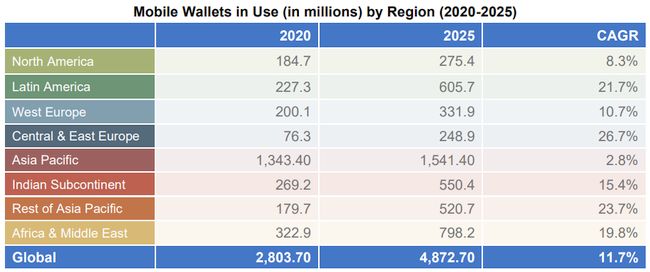
The biggest report ever on the growth of mobile wallets projects that one in two people will use a mobile wallet by 2025. At the end of 2020, there were over 2.8 billion mobile wallets in use. That number is projected to increase by nearly 74% to reach 4.8 billion mobile wallets in use by the end of 2025 – nearly 60% of the world’s population. The fastest-growing markets are Southeast Asia, Latin America, and Africa & Middle East where mobile wallets are displacing cash and cards for more convenient digital payments.
Boku, a fintech pioneering the world’s first global mobile payments network, has released its 2021 Mobile Wallets Report in partnership with digital technology analyst house Juniper Research, which provides insight into mobile wallet adoption and use in leading markets across the globe. In 2019, mobile wallets overtook credit cards to become the most widely used payment type globally and the shift to online driven by the pandemic has accelerated adoption. Mobile wallets use is growing rapidly across the world with emerging markets leading the way.
Key findings
– Southeast Asia is the fastest-growing mobile wallet region Mobile wallet use will grow by 311% between 2020-2025, reaching up 439.7 million wallets in use across Indonesia, Malaysia, the Philippines, Singapore, Thailand and Vietnam from 141.1 million in 2020. The rise in e-Commerce and the dominance of super-apps like Grab and Gojek, particularly in markets like the Philippines and Indonesia, is driving accelerated mobile wallet adoption.
– China reaches maturity but Japan, Korea and Taiwan set for hyper-growth The Far East and China continue to be the largest mobile wallet region in the world with 1.34bn users in 2020. Market saturation is resulting in slowing growth in China with a CAGR of just 2.2% per year. Meanwhile, markets including Japan, Korea and Taiwan will continue to see accelerated adoption of mobile wallets with 98.4% market penetration by 2025.
– Africa & Middle East is the second biggest mobile wallet market The second-biggest mobile wallet market is set to grow by 147% between 2020-2025. This is driven by expanded usage of mobile money services such as M-Pesa which are increasingly offering additional services such as access to eCommerce.
– Latin American growth is being supercharged by eCommerce This region is set to increase mobile wallet use by 166% between 2020-2025. Long-held back by consumers’ preference for cash-based payments and comparatively lower smartphone penetration, this is fast-changing, and the region’s eCommerce growth is supercharging mobile wallet use.
– Slow growth in Western Europe and North America With 65% growth in Western Europe and 50% in North America by 2025, these regions will see the least amount of mobile wallet growth in the next five years. However, markets such as the UK are seeing a rise in card-based mobile wallets due to the adoption of contactless spurred on by the pandemic and shift towards cashlessness.
“While mobile wallets are being used on a global basis, we see two distinct types being used today. One is card-based mobile wallets, like Apple Pay and Google Pay, which provide an easier way to pay with cards people already have. The other is stored value mobile wallets, like AliPay and GrabPay, that enable consumers to transact with digital cash and are popular in emerging markets with fast-growing e-Commerce sectors,” said Adam Lee, Chief Product Officer at Boku. “The markets that are set to grow the fastest are those with the lowest levels of card penetration, stored value wallets are thriving. In North America and Western Europe, which are dominated by card-based mobile wallets, we are seeing the slowest growth in mobile wallet adoption, as the technology provides merely incremental benefit.”
“We are seeing a clear bifurcation in the market between card-based mobile wallets in developed markets and stored value mobile wallets that are ubiquitous in Asia and rapidly growing in all emerging markets,” concluded Lee.
“Southeast Asia is one of the most rapidly digitalizing regions in the world. In 2020, the region added 400 million new internet users, with 70% of the region now online. Together with consumption trends brought about due to lockdowns during the pandemic, that has led to a familiarity with e-Commerce and an exponential rise in mobile wallet use,” said Loke Hwee Wong, Vice President and General Manager, APAC at Boku. “This is also because the region was heavily dependent on cash and bank transfer before mobile wallet use, and the convenience and accessibility, especially with stored value mobile wallets, will see Southeast Asia leapfrog the rest of the world in mobile payment adoption.”
The growth and bifurcation of mobile wallet use present both an opportunity and challenge for merchants. The number of mobile wallets transacting over $1 billion per year is set to grow by 27% from 54 wallets in 2020 to 69 wallets by 2025. This provides a lucrative opportunity for merchants looking to acquire valuable customers, many of whom only use mobile wallets. However, not only are consumers using mobile wallets more, they are using more mobile wallets. Consumers in high-growth markets such as India and Indonesia use an average of 2.74 wallets. This means that not only do merchants need to accept wallets but they need to ensure broad coverage across each target market.
“We are witnessing a paradigm shift in payments driven by mobile wallets. Mobile wallets have lowered the barrier to making digital payments and in parallel ushered billions of new consumers into eCommerce. These consumers are not in North America or Western Europe, they are in emerging markets, and while they don’t have credit cards, they overwhelmingly have mobile wallets,” said Jon Prideaux, CEO at Boku. “For global merchants, mobile payment acceptance is not about accepting one type of mobile wallet or another, but ensuring that consumers in every market will have the required selection on payment types in order to monetize transactions.”
To download the 2021 Mobile Wallets Report please visit our website.
About Boku
Boku Inc. (AIM: BOKU) is a fintech pioneering the world’s first global, mobile payments network. With 45% of global consumers using mobile payment methods to buy goods online, compared to 18% using credit cards, the future of commerce is mobile-first. Boku’s technology platform helps the world’s most demanding merchants attract, convert, and retain customers using mobile payments. By turning payments infrastructure into a source of sustainable competitive advantage, Boku safely activates a range of new merchant business models – from bundling to subscriptions.
Boku’s platform is used in over 70 countries with more than a billion verified transactions in 2020, contributing $8.5 billion to the digital economy. Customers that trust Boku to simplify sign-up, acquire new paying users and prevent fraud include global leaders such as Apple, DAZN, Facebook, Google, Microsoft, Netflix, PayPal, Sony, Spotify and Tencent.
Boku Inc. was incorporated in 2008 and is headquartered in London, UK, with offices in Brazil, China, Estonia, France, Germany, India, Indonesia, Japan, Singapore, Spain, Taiwan, Vietnam, and the US. To learn more about Boku please visit our website.
About Juniper Research
Juniper Research provides research and analytical services to the global hi-tech communications sector, providing consultancy, analyst reports and industry commentary.
Inquiries: PRecious Communications for Boku, Inc. Singapore/Asia Pacific: Clarence Lim, boku@preciouscomms.com
Boku in Asia
In Asia, Boku’s payment partners for Mobile Wallets include: AliPay, Dana, GCash, GoPay, GrabPay, KakaoPay, LINE Pay, Ovo, PayMaya, PayPay, Toss, Touch ‘n Go, Truemoney.
Boku also partners with payment partners to offer Direct Carrier Billing: AIS, BSNL, Celcom, Digi, dtac, Globe, Indosat Ooredoo, Jio, Korea Telecom, KDDI, LG U+, Maxis, M1, NTT Docomo, StarHub, Singtel, Softbank, SK Telecom, Smart, Smartfren, Tata Docomo, Telkomsel, Three, TrueMove, Vodafone, XL (amongst others).
Additional insights from the Mobile Payments Report 2021
Other insights from the Southeast Asian region include: 1. Indonesia represents one of the greatest opportunities for merchants accepting mobile payments: its mobile wallet penetration is at 25.6% in 2020, and set to triple to 76.5% by 2025. The report also expects that mobile wallet transactions will increase by volume to 16 billion transactions in 2025 (from 1.7 billion in 2020), and $107 billion in 2025 (from $28 billion in 2020) – the highest in the region. 2. Malaysia mobile payment adoption is behind other Southeast Asian countries currently, at a 31.7% penetration rate, but is poised for hyper-growth over the next five years to 93.9%. 3. Philippines has one of the lowest levels of mobile wallet penetration at 22.4% of the population, but expected to grow to 63.4% by 2025 with a mobile wallet transaction value of $63.4 billion by 2025 (from $15 billion in 2020). 4. Singapore is set to reach mobile wallet penetration of nearly 95% by 2025 from 30.4% in 2020 – the highest in the Southeast Asian region, and with mobile wallet transactions projected to increase by 11x (from 101 million transaction volume in 2020, to 1.1 billion in 2025). 5. Mobile wallet penetration in Thailand is at 21.4% in 2020 and set to grow to 63.4% in 2025. The country is also set to hit $36.7 billion in transaction value in 2020 (from $10.6 billion in 2020). 6. Vietnam is primed for massive mobile payments growth – with mobile wallet transaction growth of 7x expected to 5 billion by 2025 from 674 million in 2020, and a mobile wallet penetration rate of 55.5% in 2025 (from 19.7% in 2020).
As part of the Mobile Payments Report 2021, Boku also conducted an in-depth consumer survey of 1035 respondents in Indonesia, during May 2021, which showed that: 1. Consumers use an average of 3.2 wallets in use per respondent, one of the highest in the world after India. The top reason for using more than one type of mobile wallet included different wallets giving different benefits (63%). 2. Cash was the payment type that is most in use prior to mobile wallets (at 66%), followed by bank transfers (63%) and debit cards (44%), which can likely be attributed to the extremely low credit card penetration rate in Indonesia.
Global New Material International Holdings Limited (Global New Material) is a leading player in the market segment, with main products including natural mica, synthetic mica, silica, alumina and other base materials, all representative of the segment in new consumable materials featuring high market barriers, high added value and broad market prospects.
Global New Material published its IPO prospectus on 30 June 2021. Dealings in its shares on the Main Board of the Hong Kong Stock Exchange (6066.HK) are expected to commence on 16 July 2021.
I. Rapid growth of the new material industry empowers Global New Material’s great potential of development
Generally, growth stocks are of greater market potential than value stocks, and a company that grows faster than its industry sector usually shows growth in sales and profits. Many outstanding growth stock companies are leaders in some emerging industries. Global New Material has the characteristics of a growth stock company.
The fast-growing “new material” industry shows promising prospects
With its main products including natural mica-based and synthetic mica-based pearlescent pigment products, Global New Material has the core technologies required in producing synthetic mica, occupies a dominant position in the high-end market, and is at the forefront of advanced technology.
With breakthroughs made in production technology, the rise of scientific manufacturing, increased public awareness and recognition of synthetic mica-based pearlescent materials in the future, and the gradually increased consumption level, synthetic mica-based, alumina-based and other pearlescent materials will be widely applied in different application fields, and will have further space for market growth.
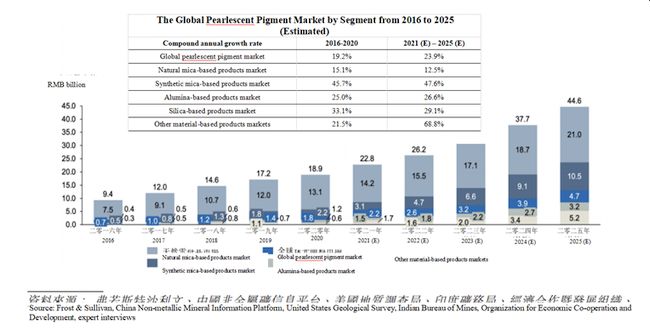
Frost & Sullivan forecasts that the market size of the global new materials market will reach RMB3,251.11 billion in 2024, with an average annual compound growth rate of 10.9% from 2020 to 2024. Frost & Sullivan also forecasts that from 2021 to 2025, the new material market segment in which Global New Material is will experience a compound annual growth rate of 23.9% and 30.8% respectively in the global market and the Chinese market, and a rapidly increasing quantity of pearlescent materials will be applied and demanded.
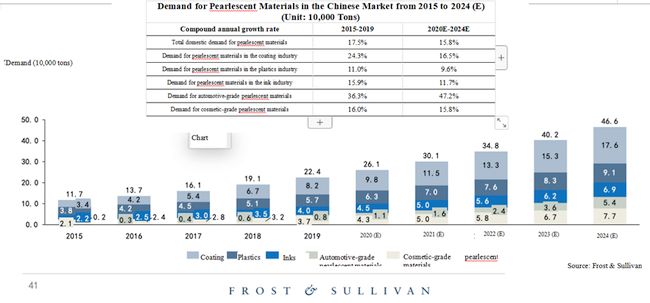
Moreover, there is a strong demand for high-end and high-performance pearlescent pigment products, and the fields of automobiles and cosmetics in which pearlescent pigment products are widely applied have been developing rapidly in recent years with an annual compound growth rate of 47.1% and 32.8% respectively from 2021 to 2025, which indicates that there is a strong demand for high-end and high-performance pearlescent pigment products, and that Global New Material is expected to further develop in this context.
Global New Material is building a second-phase plant for production of high-end products as synthetic mica-based products, triggering a new wave of growth
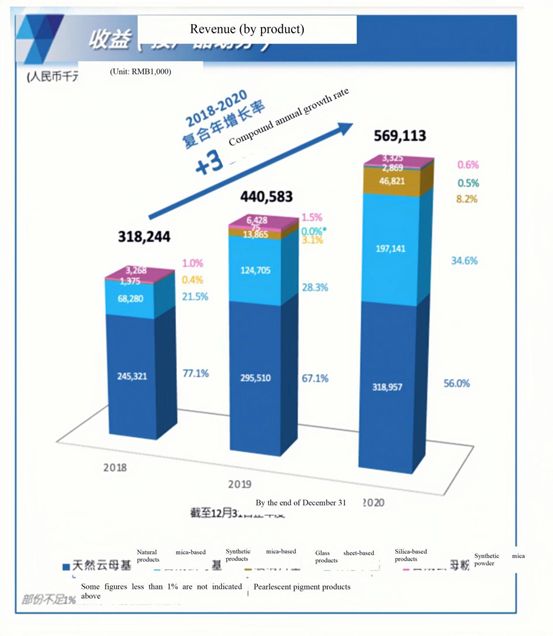
From 2018 to 2020, Global New Material revenue increased from RMB318 million to RMB569 million and remained on the steady rise in business performance, with a compound growth rate of revenue reaching 33.7%. The company achieved this business performance thanks to continuous increase in its product sales volume and its adjustments to product structure.
In terms of sales volume, the sales volume of Global New Material’s pearlescent pigment products increased from 8,451 tons in 2018 to 14,165 tons in 2020. In terms of revenue structure, the proportion of synthetic mica-based products in total revenue remained on the rise from 2018 to 2020, and increased from 21.8% in 2018 to 34.6% in 2020. Therefore, synthetic mica-based products have become one of the main pillars supporting Global New Material’s business performance growth.
In the industrial field, synthetic mica-based pearlescent materials can replace metal, organic and inorganic pigments. Synthetic mica-based pearlescent materials are priced at mid- to high-level, and are mainly applied in mid-to-high-end industrial, automobiles, cosmetics and other fields. Under the influence of the trend of consumption upgrade, increasingly higher requirements are made for the performance of pearlescent materials. Synthetic mica-based pearlescent materials will be widely applied in a wide range of application fields, indicating that such materials will enjoy market potential in the high-end market.
Frost & Sullivan forecasts that from 2020 to 2024, the domestic demand for pearlescent materials will be on the rise, especially in the high-end market represented by synthetic mica-based pearlescent materials.
In order to meet the strong demand in the market for high-end and high-performance pearlescent pigment products, Global New Material is building the second-phase plant to expand its production capacity and seize market potential of pearlescent pigment products. The plant is expected to be put into operation in 2021.
According to the prospectus, Global New Material will start trial production of 6,000-ton synthetic mica in its newly-added production capacity in the second quarter of 2022, and will further expand its production capacity to 14,000 tons in the second quarter of 2023 and to 30,000 tons in the second quarter of 2025.
II. Global New Material possesses many patents, core technologies, and sustainable competitive advantage
It is well known that in the investment philosophy proposed by Buffett, those companies with high gross profit margin in the industry have more advantages. Gross profit margin reflects a company’s ability to transform business operations into profit, and also reflects a company’s unique advantages in raw material pricing, production technology level, product competitiveness, supply-and-demand relations, market pricing power.
That is to say, gross profit margin directly reflects a company’s competitiveness. Gross profit margin of Global New Material was in the range of 46.2%-49.9% from 2018 to 2020. Can we see the unique advantages?
Global New Material possesses core technologies
Technological breakthroughs in the field of pearlescent materials has become one of the major trends in the future development of the industry. Regarding core technologies, breakthroughs in the technologies applied in producing synthetic mica are one of the key factors driving performance improvement of pearlescent materials.
At present, base materials used in pearlescent materials mainly include natural mica and synthetic mica, of which the former is scarce in China and is mainly imported from other countries and regions. Synthetic mica is a new material that features in big difficulties in R&D, low output, high added value and high technical barriers, and is currently in short supply in face of strong demand in the market. Besides, technologies applied in producing synthetic mica are of great importance for manufacturers to have a place in the high-end market.
As one of the few manufacturers with core technologies and capacity to produce high-end products, Global New Material is at the forefront of emerging technologies in the industry, possesses three patented technologies applied in producing synthetic mica, and has its core technologies and corporate strength being widely recognized in the industry.
In 2020, the market size of the Chinese synthetic mica-based pearlescent materials market reached RMB770 million, and in terms of the value corresponding to market share, top five players in the Chinese synthetic mica-based pearlescent materials market occupied a total market share of 43.3%. Among those top five players, Global New Material ranked first with a market share of 25.4%.
Global New Material has outstanding R&D advantages and highly-recognized R&D capabilities
The pearlescent material industry is a technology-intensive industry. Different technologies are required for production of pearlescent materials to meet the needs of different downstream industries. The competitiveness of a pearlescent material manufacturer in the increasingly competitive market depends on its strong R&D capabilities. Global New Material possesses industry-leading R&D capabilities, and has won many awards and titles such as “National Intellectual Property Powerful Enterprise”.
Global New Material has 12 registered patents and 26 patent applications, and has 40 R&D workers. The prospectus points out that in the past three years, R&D expenditures of Global New Material were RMB10.7 million, RMB23.2 million and RMB29.3 million respectively, which accounted for 3.4%, 5.3% and 5.1% of its total revenue, and that in the future, approximately 5% of its total revenue will be invested in its R&D activities each year.
Global New Material has significant advantages in business scale, and occupies a dominant position in the industry
With respect to production and marketing of pearlescent materials, huge investments are required in R&D, production sites, precision manufacturing equipment, introduction and training of R&D workers and technicians, market promotion, import and storage of raw materials, daily capital turnover and other aspects, and a long R&D and construction cycle is involved during which huge preliminary capital investments and a large amount of working capital need to be in place. Therefore, adequate operating capital and extensive accumulated R&D technologies are the key factors for success in the pearlescent material industry.
In the pearlescent material market which is fragmented, Global New Material, as the largest synthetic mica manufacturer in China, occupies a big market share and the dominant position, and has certain advantages in terms of financial support, technologies, patents and customer relationships.
Summary:
Global New Material’s EPS in 2021 is HKD0.2342, and its price-to-earnings ratio is expected to be about 15X assuming the IPO price is HKD3.52. It is a cost-effective opportunity for investors in the secondary market to buy stock in a leading company in a market segment in the field of new materials that is innovative and has growth potential, profitability, strong R&D capabilities, core technologies and sustainable competitive advantages.