Jinjiang Wulin Qiaopi Hall Included in UNESCO’s Memory of the World Register

Jinjiang, China, July 2, 2021 – (ACN Newswire) – With the recent approval of UNESCO Memory of the World Program’s Sub-Committee on Education and Research and the National Archives Administration of China, the Fujian Provincial Archives and Jinjiang Municipal Archives jointly established Jinjiang Wulin Qiaopi Hall as the practice base of the “Memory of the World Program Knowledge Center – Fujian”.

Wulin Qiaopi Hall.
Citizens read Qiaopi at Wulin Qiaopi Hall.
Simulation of Qiaopi Office at the first floor.

It is reported that the MoW Knowledge Center – Fujian is located in the Fujian Provincial Archives, which is responsible for assisting the China National Committee of the Memory of the World Program and the UNESCO Memory of the World Program’s Sub-Committee on Education and Research. It aims at strengthening the research on the value of the Qiaopi archives, developing different forms of archival products and promoting the communication, promotion and utilization of the MoW program across countries, regions, and communities.

Qiaopi, commonly known as “Fanpi” and “Yinxin”, is a collective term for letters and remittances sent home by overseas Chinese through private channels. The name “Qiao (overseas Chinese) Pi” came as the Southern Min dialect pronounces “xin (letter)” as “pi”.

The hall reminds people of how the Qiaopi Office operated during the period of the Republic of China. People can request a letter from an old writer here. Also, they may interpret the stories of overseas Chinese entrepreneurs from the aged Qiaopi and their belongings, and feel their patriotism, love for hometown, and zeal for public welfare.

It is an immersive cultural experience. People can view the development history of Jinjiang as an Overseas Chinese Hometown, and appreciate the overseas Chinese culture of Jinjiang and even Fujian Province.

The base will serve as a demonstration center to promote Qiaopi culture in Fujian Province. It will work with the MoW Knowledge Center – Fujian to build a conservation, research and promotion platform of Qiaopi archival legacies with local characteristics and to add another popular travel destination to inherit and develop the “Jinjiang Experience” of innovation and development.

Contact:
Lisa Wu, lisa_wu916@163.com
http://www.jinjiang.gov.cn/xxgk/gzdt/jjyw/202106/t20210622_2576937.htm

Princeton Digital Group announces 100 MW Flagship Data Center Campus in Japan, committing $1 Billion in investment

Singapore-based Princeton Digital Group (PDG), Asia’s leading data center provider, today announced its plan to build one of the largest hyperscale facilities in Tokyo, Japan, with a total investment value of USD 1 Billion. Japan is the fifth market that the company has entered in since its formation 4 years ago. With this investment, PDG marks a major milestone in its plan to build a 600 megawatts (MW) portfolio across the region.

The new campus at Saitama City will have close to 100 MW of critical IT capacity across two phases of 48.5 MW each. Saitama City is one of the major commercial centers of the Greater Tokyo area. Located 30 km north of central Tokyo, the PDG Saitama campus has a total land area of 33,047 m2. The facility is designed to serve leading hyperscalers in Japan, one of the most dynamic cloud markets in the world.

PDG has already secured the land and power with construction to begin later this year. The facility will be built to the latest hyperscale design and standards, with unrivalled scalability, connectivity and reliability.

“The Asia Pacific region is set to be the largest data center market in the world, and this announcement underscores our vision to be the market leader in this region,” said Rangu Salgame, Chairman and CEO of Princeton Digital Group. “Over the last four years, through our unique three-pronged strategy of acquisitions, carve-outs and greenfield development, we’ve built a strong portfolio of data centers across key Asian markets such as China, Singapore, Indonesia and India. PDG has become a partner of choice for hyperscalers across multiple countries. Our entry into Japan and, in particular, Tokyo demonstrates our continued ability to enter new markets that matter to our customers.”

Tokyo is the largest data center market in Asia outside of China and is still in the early stages of growth, particularly in terms of entry and expansion of global hyperscalers. According to Structure Research, Greater Tokyo’s hyperscale colocation market is expected to reach USD1.6 billion by 2025, growing at a CAGR of 25.1% between 2021 and 2025.

“The Greater Tokyo market is projected to see accelerated demand from hyperscale data center deployments moving forward from what we believe is a convergence of several critical factors that include Japan’s sizeable addressable market as the 3rd largest country in the world by GDP, the absence of a domestic hyperscale cloud platform that presents an ideal competitive landscape between both US and Chinese hyperscale cloud providers, as well as being a key connectivity aggregation and distribution hub for submarine cables landing from the US West Coast to access the rest of the Asia Pacific region”, said Jabez Tan, Head of Research, Structure Research.

About Princeton Digital Group

Princeton Digital Group (PDG) is a leading investor, developer and operator of Internet infrastructure. Headquartered in Singapore with presence and operations in China, Singapore, India, Indonesia, and Japan, its portfolio of data centers power the expansion of hyperscalers and enterprises in the fastest-growing digital economies across Asia. For more information, visit www.princetondg.com

Media Contacts
Princeton Digital Group
Grace Chen
PR@princetondg.com

PRecious Communications for Princeton Digital Group
PDG@preciouscomms.com

PDG Release: https://princetondg.com/newsroom/pdg-announces-100-mw-flagship-data-center-campus-japan-1-billion-investment/

Spinning electricity from heat and cold

A new device harvests two types of energy during the daytime, making it cool on one end and hot on the other, to generate electricity around the clock. With further improvements, the device could be used in off-grid Internet-of-things sensors. The details were published in the journal Science and Technology of Advanced Materials.

Thermal emission is radiated from the top of the device, keeping it cool, while sunlight is absorbed at the bottom, keeping that part warm. The temperature gradient and types of materials used lead to the generation of a spin current that is converted to thermoelectric voltage.

Scientists have known for at least 200 years that electricity can be generated from a temperature gradient, a phenomenon called thermoelectric generation. Recently, researchers have developed thermoelectric conversion technologies by changing material parameters and introducing new principles. For example, researchers have found that magnetic materials can generate thermoelectric voltage by inducing a flow of electron spins along a temperature gradient, called the spin Seebeck effect, and that increasing a device’s length perpendicular to the gradient boosts voltage. Scientists would like to fabricate more efficient, thin thermoelectric devices based on the spin Seebeck effect. However, the thinner the device, the more difficult it is to maintain a temperature gradient between its top and bottom.

Satoshi Ishii and Ken-ichi Uchida of Japan’s National Institute for Materials Science and colleagues have solved this problem by making a device with magnetic layers that continuously cools at the top and absorbs heat from the sun at the bottom. In this way, the device harvests two types of energy. Radiative cooling occurs at the top, as heat is lost from material in the form of infrared radiation, while solar radiation is absorbed in the bottom.

“It is really important to take full advantage of renewable energy in order to achieve a more sustainable society,” explains Ishii. “Daytime radiative cooling and solar heating have both been used to improve a variety of thermoelectric applications. Our device uses both types of energy simultaneously to generate a thermoelectric voltage.”

Here’s how it works:

The device has four layers. The top layer is a weak paramagnet made of gadolinium gallium garnet. This layer is transparent to sunlight and emits thermal radiation to the universe, getting cooler. Sunlight passes through to the following ferrimagnetic layer made of yttrium iron garnet. This layer is also transparent, so light continues to travel down into the bottom two light-absorbing layers, made of paramagnetic platinum and blackbody paint. The bottom section stays warm due to sunlight absorption. The spin current is generated in the ferromagnetic layer owing to the temperature gradient between the top and bottom of the device and is converted to electric voltage in the paramagnetic platinum layer.

The device works best on clear days, as clouds reduce the achievable temperature gradient by blocking the emitted infrared radiation from passing through the atmosphere and reducing the solar heating.

While promising, the device’s thermoelectric generation efficiency was still quite low. The team plans to boost its efficiency by improving the design, experimenting with different material combinations, and developing even more novel strategies for thermoelectric generation.

Further information
Satoshi Ishii
National Institute for Materials Science
E: sishii@nims.go.jp

Ken-ichi Uchida
National Institute for Materials Science
E: UCHIDA.Kenichi@nims.go.jp

About Science and Technology of Advanced Materials Journal

Open access journal STAM publishes outstanding research articles across all aspects of materials science, including functional and structural materials, theoretical analyses, and properties of materials. Website: https://www.tandfonline.com/toc/tsta20/current

Dr. Yoshikazu Shinohara
STAM Publishing Director
E: SHINOHARA.Yoshikazu@nims.go.jp

Press release distributed by ResearchSEA for Science and Technology of Advanced Materials.

Avance Clinical Appoints Asia Biotech Specialist to Support APAC Growth

Avance Clinical, the leading Australian CRO for international biotechs and Frost & Sullivan Asia-Pacific CRO Market Leadership Award recipient, announced the appointment of Andy Hu as Business Development Manager APAC, to support increasing biotech clinical trial demand from the region.

Andy Hu

Formerly with Informa Pharma Intelligence, the international biopharma data company, Andy will head up the APAC business development program for Avance Clinical.

Andy says the main drivers for Asian biotechs looking to Australia are speed, data quality and access to international regulatory authorities.

“They select Avance Clinical in Australia because its CRO data is accepted by the FDA, and it gives them a rapid pathway for international licensing, investment and ultimately drug approvals,” he said.

“I wanted to work with Avance Clinical because it’s a mid-sized CRO that offers deep therapeutic experience, expedited timelines, and exceptional support to APAC biotech clients.”

Avance Clinical has grown significantly over the past two years with an increasing number of clients coming from APAC to conduct their trials in Australia.

Chief Strategy Officer Ben Edwards said the appointment of Andy Hu will further support growth and strengthen relationships with clients in the region.

“Andy is multilingual, being fluent in English, Mandarin and Korean, and has completed both a Bachelor of Korean Language and Culture as well as a Master of Translation and Interpreting. He will be responsible for developing business across the APAC region to better serve our clients operating in the region,” he said.

The Avance Clinical team is attending BIO Digital 2021 virtually and is available on the BIO One-on-One Partnering(TM) platform to discuss the benefits of conducting trials in Australia.

Avance Clinical has recently won the BDO Excellence in Business Award 2021 for rapid managed growth and attracting and nurturing experienced staff in a competitive global environment.

The mid-sized CRO has a reputation for going beyond the industry time and support for Sponsors, and for providing staff the training and resources needed to deliver excellence in clinical research management.

About Avance Clinical

Avance Clinical is the largest specialist Australian CRO delivering quality clinical trials in Australia and New Zealand for international biotechs. Avance Clinical has been delivering CRO services in the region for the past 24 years. Our clients are international biotechs in their early phases of drug development that need fast, agile, and adaptive solution-oriented clinical research services. Avance Clinical delivers customized solutions designed around specific client needs rather than a one size fits all approach. As a company, we have focussed on state-of-the-art technology and systems across all functional areas to provide our clients with the most effective processes. Medidata, Oracle, and Medrio are just some of our technology partners. The collective pool of knowledge and experience at Avance Clinical continually grows through the careful selection of candidates who demonstrate passion and expertise in their chosen field. Visit http://www.avancecro.com for more information.

Recent Awards:
Excellence in Business Award 2021
Frost & Sullivan Asia-Pacific CRO Market Leadership Award 2020

Media Contact:
media@avancecro.com

Bussr Joins BMW Foundation and MIT Global Sustainability Initiative

Singapore-based transport disruptor Bussr is joining the BMW Foundation and Massachusetts Institute of Technology (MIT) to participate in their global mobility and sustainability initiatives. The initiative will kick start with a global workshop panel of cross-sectoral leaders on June 23.

The global workshop will “Explore how digital and socio-ecological transformations will change the ways in which humans interact with civic and social mobility, within the existing infrastructure as well as within entirely new infrastructure systems.”

Uniquely qualified to present new ideas and perspectives on the topic of mobility, Bussr is one of the world’s leading innovators in the global transit and ground passenger transportation market, which will reach US$908.8 billion by 2027.

Bussr is a world-leading AI-based mobility company that offers advanced technology for cities’ public transportation, private transport operators, corporates, and schools. Bussr uses advanced AI algorithms for elegant booking, payments, analytics, and operations to facilitate mobility to millions of people.

With the confident aim of changing the way the world moves from A to B, Bussr is the bold vision of former Microsoft Chief Architect, co-founder and CTO Ajay Bhandari, former Rocket Internet founder and CEO Hussein Abdelkarim, and veteran technology consultant and co-founder I.M. Shousha.

Ajay, who will speak at the prestigious event, said, “We are seeing undeniable and massive population shifts towards urban centers, and now is the time to have an honest but optimistic discussion about how we can leverage technology to give equitable access to mobility services. It’s also important that we make transport services and infrastructure sustainable and viable for operators and society overall. We are thrilled to talk at this important event, and we look forward to providing insight wherever we can.”

With everyday citizens seeking better lives in our cities, the world’s urban population has increased by 55% in the previous 50 years and now accounts for more than 80% of global GDP. Mobility is key to this growth, with demand for urban road passenger transport predicted to double by 2050.

Forward-thinking global centers have realized that mass transport, such as subways, buses, ferries, and trains, as well as cycling and walking, are the way of the future. The rise of electric cars (EVs), micromobility, Uber, Didi, and Grab have made some gains in recent years, but much more needs to be done to solve the global transportation sector’s inherent throttling.

Ajay, Abdelkarim, and Shousha view today’s transportation industry as a busy, but chaotic dance. Currently, private passengers must arrange their travel manually, connecting multiple modes of transportation at different times that may or may not be convenient. On the other hand, transport providers still use manual scheduling techniques based on outmoded tradition rather than real-time data, which results in massive inefficiencies across the board.

The trio believes that their digitization of mobility networks will add a coordinated elegance to the way people travel. With its AI-powered technology, each Bussr journey is a synchronized, smooth jump from point A to point B, leaving cities less polluted and filled with people rather than vehicles. All of this contributes to Bussr’s overall objective of “Digitizing mobility. Connecting the world.”

Bussr’s Mobility-as-a-Service (MaaS) platform serves as a private-use app as well as an end-to-end, omnichannel payment, ticketing, and fleet management solution for transport providers. Its specialized AI platform constantly analyzes millions of data points to assist mass transit systems to operate at peak efficiency for both passengers and operators.

For private passengers, the Bussr app is accessible for both iOS and Android, and gives end-to-end travel alternatives such as public buses, ride-sharing, trains, or even bike and scooter rentals to complete a trip. The user simply enters Point A and Point B, and the Bussr app uses its advanced AI algorithms to offer the optimal route in terms of time, cost, and carbon footprint by reducing reliance on single-occupant motor vehicle use.

Bussr’s platform, which is available to cities, transport operators, schools, and corporations, may be branded or white-labeled for any use case. Bussr enables ticketing and payment administration, as well as extensive data insight on passenger flow, timing, and density. Operators are then able to correctly predict and plan for future passenger and transportation demands.

More than 900 transport partners already benefit from Bussr technology. In addition, 60 major payment providers are already on the Bussr platform, with 100,000 retail stores in 500 cities and towns.

The global workshop will be hosted by RESPOND, an initiative of the BMW Foundation. RESPOND works with entrepreneurs across the globe to drive innovation, accelerate sustainable business models, and empower responsible leadership in order to solve the world’s social, environmental, and economic challenges.

Media Contact:
HA, Bussr Technologies
Email: press@bussr.com
Web: https://www.bussr.com

1982 Ventures Invests in Infina, Vietnam’s ‘Robinhood’ Investment App

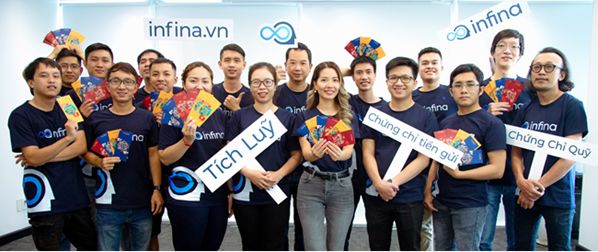
Infina, Vietnam’s leading digital investment platform, has secured seed funding, raising an oversubscribed 7-digit seed round with 1982 Ventures, Saison Capital, Venturra Capital, 500 Startups, Nextrans and prominent angel investors. Infina, on a mission to democratize investments for Vietnam’s population of 97 million, will use the funds to fuel growth and expand its product offerings.

1982 Ventures backs Infina, Vietnam-based digital investment platform, in an oversubscribed 7-digit seed round. 1982 Ventures is the leading seed fund focused on fintech in Southeast Asia. [Images: Infina]

Launched in January 2021, Infina is the latest to join the boom of investment apps across the region. Amid the pandemic, the startup currently serves tens of thousands of users and has seen its assets under management (AUM) rise more than fourfold. Infina’s financial partners include some of the largest fund managers in the country, including Dragon Capital, Mirae Asset Fund Management and Viet Capital Asset Management.

Herston Powers, Managing Partner of 1982 Ventures stated, “Vietnam is the most promising market in Southeast Asia for the next wave of retail investing. Infina is at the forefront of the retail investing revolution in Vietnam and has quickly become the most trusted brand with millennial investors. Their commitment and experience building online communities is the key differentiator that makes Infina special.”

James Vuong, CEO and Co-Founder of Infina stated, “Infina is building the ‘Robinhood of Vietnam’, to make investment accessible, easy, and engaging for the country’s middle and lower classes.” The majority of Vietnamese previously let their money sit in risk-free checking accounts or freeze in long-term real estate. However, millennial investors are shifting toward higher-yield asset categories with smaller required investments.

“As millennial investors shift toward higher-yield asset categories, Infina allows users to make a contribution as low as US$25 into a broad range of assets including savings, term deposits, mutual funds, and fractionalized real estate,” added James. Infina’s customers are primarily millennials aged 25 to 40 who would save or invest their disposable income on family planning, child education and early retirement.

James Vuong is an engineer-turned-VC-turned-startup-founder with a track record in Silicon Valley and Vietnam. In 2008, he returned to Vietnam as VP of Investment and a Kauffman Fellow at IDG Ventures. James launched Infina after exiting the last company he founded which was acquired by the Japanese giant LINE Corporation.

Scott Krivokopich, Managing Partner of 1982 Ventures stated, “Infina is the right team to back to capture this massive opportunity. Vietnam’s digital retail investing industry is at an inflection point driven by rising incomes and millennials.” He added, “Infina is democratizing access to wealth management to a largely underserved market.”

Infina will use the funding to fuel growth and expand product offerings. Infina is built with regional aspirations but will continue to focus on Vietnam due to significant growth opportunities.

About 1982 Ventures

1982 Ventures is the leading seed fund investing in fintech startups in Southeast Asia. Our focus makes us the first port of call for fintech founders and the first money in. Our investments include Southeast Asian Open Banking API Platform Brick, Vietnam’s leading Buy Now, Pay Later Fundiin, Vietnam’s Rent-to-Own Home Financing app Homebase (YC W21), Indonesia’s first Earned Wage Access platform Wagely. 1982 Ventures is investing in and supporting the best founders to positively impact the future of financial services in Southeast Asia. Visit https://1982.vc, or follow us on LinkedIn.

About Infina

Infina is the leading digital investment platform in Vietnam. Infina allows users to invest in higher yield asset categories with smaller required investments – savings, term deposits, mutual funds, and fractionalized real estate. To learn more, visit https://infina.vn/.

Contact:
Herston Powers
1982 Ventures
herston@1982.vc

Pingtan Strait Road-Rail Bridge in Fujian Provence a Scenic Spot during Dragon Boat Festival

When midsummer comes, the cultural and tourism markets of Pingtan in Fujian Province heat up again. During the three day Dragon Boat Festival (June 12-14), the Pingtan district received 158,400 tourists, a year-on-year increase of 76.63%, with tourism revenue of RMB 114.84 million, a year-on-year increase of 34.52%, and increases of 25.16% and 21.33% respectively compared with 2019.

Surrounded by the sea, Pingtan is home to one thousand reefs and one hundred islands, abundant resources and beautiful scenery.
A bridge shortens the distances and hastens the development of Pingtan, known as China’s ‘Maldives’, into an international tourist island.
The waves of Pingtan’s famous ‘Blue Sand’ or ‘Blue Tears’ in late spring and early summer this year again drew crowds of tourists.

The Pingtan Tourism and Sports Bureau assure that during the Dragon Boat Festival holiday, the tourism market in the Pingtan Comprehensive Experimental Zone was safe and orderly, and the tourism reception picked up steadily.

During the festival, self-driving tourists were still the force in Pingtan tourism. Differing from the medium to long-distance tourism during the May Day holiday, the travel trend during the Dragon Boat Festival holiday was medium to short distance tourism, and the popularity of tourism in the surrounding province is high. Pingtan has attracted tourists from Xiamen, Zhangzhou, Quanzhou, Fuzhou, Ningde and other places.

The opening of the Pingtan Strait Road-Rail Bridge on December 26, 2020, adds a highway with a designed speed of 100km/h and a railway with a designed speed of 200km/h to the international tourism island. As the world’s longest and China’s first cross-sea road-rail bridge, it has helped heat up the tourism industry in Pingtan.

Surrounded by the sea, Pingtan is home to one thousand reefs and one hundred islands, abundant tourism resources and beautiful scenery. The Pingtan Strait Road-Rail Bridge has brought a steady stream of visitors and makes in-depth island tour highly popular. In particular, the number of inter-provincial tourists has experienced significant increases, the same for weekend, family and senior travels. What’s more, many tourists come as a group.

The waves of Pingtan’s famous “Blue Sand” or “Blue Tears” in late spring and early summer this year drew crowds of tourists. While the sea breeze blows in the summer night, the romance-seeking tourists are flooding into the “Blue Sand” sites – Liushui Wharf, Beigang Village, Longwangtou Beach, Tannan Bay, and the Aoqian Waters.

A bridge shortens the temporal and spatial distances and hastens the development of Pingtan, known as China’s “Maldives”, into an international tourist island. The “traffic + tourism” model is revitalizing the local villages by benefiting more people from the developing all-for-one tourism.

Media Contact
Lisa Wu, lisa_wu916@163.com
http://fuzhou.customs.gov.cn/

Global IT Consultancy Firm Xebia Acquires coMakeIT To Support Clients’ Continuous Innovation

Hilversum, the Netherlands, 22 June 2021 – Xebia, the global IT consultancy firm, has acquired software product engineering company coMakeIT to support clients’ continuous innovation and business growth.

coMakeIT, founded in the Netherlands in 2006, helps product and software companies thrive by providing software product expertise, people and tools needed to meet ambitious objectives. Today, the company’s primary focus is on product software companies creating the right mix of technology and teams support with the right talents so that its clients can achieve sustainable growth. CoMakeIT has profound knowledge of software development, product engineering, application modernization, digital transformation, and recruitment and operates from offices in the Netherlands, the UK, India, and Australia.

Xebia is a fast-growing digital leader known for helping companies worldwide digitally transform by offering high-quality IT consultancy from its offices in the Netherlands, India, the UK, the US and Dubai. The company has successfully launched several brands and continues to expand in line with its ‘buy and build’ strategy: partnering with thought leaders to gain additional footing in the digital space together. With coMakeIT, Xebia looks forward to expanding its managed services capability and having the resources to accelerate its clients’ software development.

Steven ten Napel, CEO and founder coMakeIT: “We are extremely value-driven. Just like Xebia, at coMakeIT, it’s all about ‘people first.’ Our company culture and field of work are very similar, which makes us a perfect match. Together, we will soon be able to better assist clients in overcoming scalability issues, implementing modern technology, and realizing growth.”

Anand Sahay, CEO Xebia Global Services: “Xebia is an established leader in the Digital transformation, Software Engineering, Cloud, DevOps and Architecture space. Acquiring coMakeIT will help Xebia address the cloud-native and platform development needs of the ISV market and grow in that space globally. Together with coMakeIT, we clearly see complementary ability to create future-ready products for our ISV customers and also develop innovative software for these platforms to help ISV’s customers’ needs. This creates a very strong proposition for ISVs and our ability to partner with them.”

The right technology and the right talents are crucial for growth in a digital world. Acquiring coMakeIT will strengthen Xebia’s long-term relationships with clients through comprehensive managed services, and coMakeIT will gain access to Xebia’s in-depth knowledge of all digital transformation domains. Besides sharing the same values, both original Dutch companies have experience expanding their presence to India, for example, and will jointly continue to help businesses grow worldwide.

About Xebia

Xebia is a leading IT Consulting and Digital Technology company committed to delivering innovation and business excellence across the globe. It delivers digital solutions to global leaders for transforming their IT and Business Operations.

With nearly two decades of experience, it enables its clients through their digital journey by enabling them with informed decision-making through process level enhancements, intelligent data solutions, enhance their customer experience & journeys with new-age solutions and help strengthen their core with modern technologies such as AI/ML/Robotics, Microservices, Cloud-native apps and agile at scale to deliver unprecedented levels of performance. For more information, please visit us at www.xebia.com

About coMakeIT

Headquartered in Baarn, Netherlands, and with offices in Australia, UK, and India, coMakeIT helps software businesses and enterprises to accelerate their product innovationmodernize aging applications and productize best practices into new software IP. For more information, please visit us at https://www.comakeit.com

For media queries
Email: infoindia@xebia.com

Unscientific, Unrealistic and Imaginary Claims; a threat to peace in the South China Sea

MANILA – Seas have acquired unparalleled importance in modern times owing to their trade routes and rich resource base. The territorial claims of sovereignty over the various unclaimed and disputed regions are thus on the rise fueling further conflict, friction and chances of the potential outbreak of violence. The South China Sea and its island chains are experiencing rising escalation and tension first-hand. The situation as it is in the South China Sea is very alarming owing to the power imbalance in the region. This shifted axis of power is concerning for the smaller states in South East Asia and a major threat to their territorial sovereignty.

China’s claim to the island chains is not new and has been there for a few decades now. The history of the claim can be traced to a map published at the request of the Kuomintang Govt. based on the maps drawn by some private firms and cartographic books, the Map of the South Sea Islands, issued in 1947. The 9-Dash Line used by China to claim their historical right was drawn as a part of this map to illustrate the territorial extent of China. The Chinese claim at that time was though limited to small scattered islands in the South China Sea. The position of the Kuomintang Govt. on territorial extent was adopted by the mainland Govt. in China, and not having any background information on this, it maintained the islands within the 9-Dash Line: Nansha (Spratly), Sheesha (Paracel) and Zhongsha (an imaginary island group which has no physical existence and is actually a misinterpretation of Macclesfield Bank, a submerged feature in the South China Sea). China has never been able to justify the claim to these island groups primarily as they have never exercised sovereignty over them over an extended period of time and also due to the existence of non-factual and imaginary claims over fictitious islands.

UNCLOS (United Nations Convention on the Law of the Sea) has clearly defined laws to define coastal and maritime boundaries, and per its laws, a 200 Nautical Mile Sea Floor as a part of the Continental Shelf of a State, with exclusive rights reserved for all individual states. Things began to get serious in 2009 when all of the countries in South East Asia implemented UNCLOS and aligned their respective claims and jurisdictions in accordance with international law. China reacted badly to UNCLOS as they knew if UNCLOS was implemented their Claim to the international China Sea would be defunct, and thereby China began the program to strengthen its presence and activity in the South China Sea, leading to more friction between China and smaller states. The situation worsened when China began to interfere in the special economic zones of smaller states and escalations were reported closer to the coasts of smaller states. The incident at Scarborough Shoal, a standoff between the Philippines and China, is one of the recent examples of the rising escalations and conflicts, and Chinese attempts to exercise jurisdictional rights as per the 9-Dash Line.

Growing Chinese interest in the sea trade routes has created friction points. China’s interest in the Arctic is a major concern for many. Global warming has opened up the Arctic and is allowing ships to pass which means it is opening up new trade routes from East to West and vice versa. If the Arctic trade routes open, the South China Sea, which is the doorway for China to the Indian Ocean, Africa and Europe would have an alternative Maritime trade route via the Arctic. This has fascinated China, and China is concerning and aligning itself with the geopolitical and scientific developments related to the Arctic. However, the countries surrounding the Arctic are worried about the Chinese Navy and military build-up in the Arctic, as happened in Djibouti-Africa. China will have a tough time convincing the states surrounding the Arctic about building ports even when the countries are divided over the opinion to allow China access to the Arctic. Russia and the United States are among the states who favour opening up the Arctic for naval and maritime trade activities, while states like Canada are concerned and against it as large parts of the Arctic are considered to be Canadian territory by Canada. The US is also concerned about Chinese dual use of technology for trade and military and this has made it difficult for China to establish ports with many countries in that area. Chinese Arctic policy can lead to the emergence of fresh flashpoints in the Arctic, given the divided opinion on access to the Arctic to China.

The growing conflict and escalation over marine water bodies make it imperative for the implementation of UNCLOS, especially in the South China Sea. The claim to the Island chains and subsequent friction between states can be reduced by not including the islands as an extension of the continental shelf of countries and thus the claim would not result in overlapping of maritime boundaries of states thus reducing the chances of a possible outbreak of violence by eliminating the zones wherein more than one state could exercise their exclusive rights. UN must involve itself and enforce the implementation of UNCLOS as abiding by International Law and give peace a sustainable chance to flourish.

* The Author: Professor Jay L. Batongbacal is Director, Institute for Maritime Affairs and Law of the Sea (IMLOS) at the University of the Philippines (UP). IMLOS serves as the country’s national centre for independent research and policy studies on maritime matters of interest to the nation and collaborates with a wide network of government groups, non-government organizations, academic institutions, and private entities within and across our country borders, covering the law of the sea, maritime affairs, and even territorial issues.

Professor Batongbacal was a member of the technical team that prepared and defended the Philippines’ claim to a continental shelf beyond 200 nautical miles in the Benham Rise Region, made in a Submission filed with the Commission on the Limits of the Continental Shelf (CLCS) pursuant to the provisions of Article 76 of the Law of the Sea Convention. The CLCS recognized Philippine jurisdiction over the Benham Rise Region in April 2012.

Batongbacal obtained his LL.B. (1991) from UP College of Law, and Masters in Marine Management (1997) and Doctorate in the Science of Law (2010) from Dalhousie University in Canada, acquired under scholarship grants from the Canadian International Development Agency and the prestigious Pierre Elliot Trudeau Foundation, respectively.

(C) South China Sea series by N.W.Ali, Director, JKCPJ India.

Joy Spreader Secured Investments from Blackrock and State Street Corp, Performance-based Marketing Leader Obtains Recognitions from Global Institutional Investors

Since Joy Spreader (HKG: 6988) was incorporated into the MSCI China Small Cap Index with effect upon the closure of the market on May 27, 2021, the Company secured investments from Blackrock Inc. and State Street Group respectively, the two most influential global institutional investors.

According to Bloomberg data, Blackrock and State Street hold 2,560,000 shares and 629,000 shares of the Company, representing 0.12% and 0.03% of total shares outstanding, respectively.

Blackrock Inc. is the largest asset management institution worldwide. By the end of Q1 2021, the total asset under management of Blackrock peak at 9.0 trillion USD.

State Street Corporation is one of the largest financial services and investment groups globally. By the end of 2020, State Street Corporation has $38.8 trillion USD of assets under custody and administration, as well as 3.5 trillion USD of assets under management.

Investments made by Blackrock and State Street demonstrate strong evidence that Joy Spreader receives significant recognitions from top-tier global financial institutions, which will further empower the Company to optimize the shareholding structure and to implement the international expansion strategy.