SOEs Minister Erick Thohir paves the way for Good Corporate Governance

Good corporate governance (GCG) can help Indonesia’s state-owned enterprises (SOEs) increase their value, investor confidence, develop their businesses, and manage risks. Therefore, Indonesian SOEs must implement GCG to fulfill their responsibility to the country, their shareholders, and the public, according to analysts.
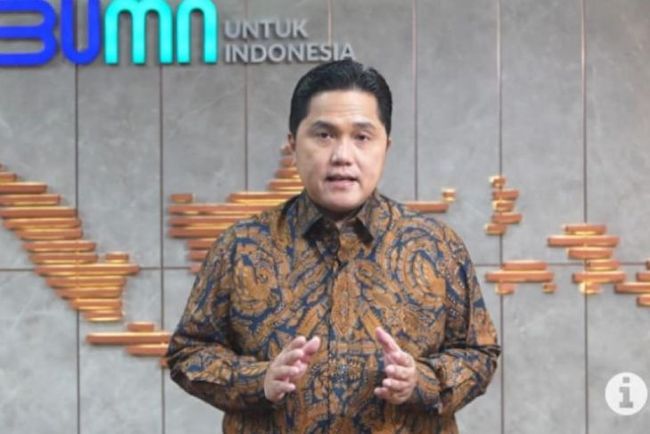
SOEs Minister Erick Thohir (ANTARA/HO)

GCG involves regulating, managing, and supervising a sustainable business control process to increase share value, as a form of accountability to shareholders without ignoring the interests of stakeholders, including employees, creditors, and the community.

In Indonesia, the implementation of GCG has been mandated for all SOEs under Erick Thohir’s leadership as the Minister of SOEs.

According to Thohir, all SOEs must apply the five GCG principles outlined in the SOE Minister’s Regulation Number PER-09/MBU/2012, Amendments to Regulation Number PER-01/MBU/2011 on the Implementation of Good Corporate Governance in SOEs.

– The first GCG principle involves transparency in decision-making and disclosing material and relevant information regarding the company.

– The second principle is accountability in terms of clarity of function to ensure the management in the company is working effectively.

– The third principle pertains to the responsibility of the company’s management to obey applied law and regulations.

– The fourth is independence in managing the company in a professional way without conflict of interest and pressure from certain parties.

– The last is fairness or justice and equality in fulfilling stakeholders’ interests and rights that arise based on agreements, laws, and regulations.

Under Thohir’s leadership, several SOEs have implemented GCG. To comply with GCG principles, state-owned energy company PT Pertamina has increased the involvement of legal institutions in its business processes and company projects.

Pertamina President Director Nicke Widyawati says during 2020-2021 it carried out strategic cooperation with several law enforcement agencies, including the Indonesian National Police (Polri), the Financial Transaction Reports and Analysis Center (PPATK), the Government’s Development Finance Comptroller (BPKP), the Indonesian Attorney General’s Office, and the Corruption Eradication Commission (KPK).

Pertamina and PPATK established cooperation in data exchange for investigations for preventing and eradicating money laundering and other criminal acts in the company, she said. Pertamina will also continue to collaborate with BPKP for company audits, she added.

Meanwhile, Pertamina’s cooperation with the National Police involves supervising and assisting procurements for strategic projects, such as the construction, development, and operation of oil refineries and petrochemicals.

State-owned port operator PT Pelindo I has also implemented GCG through mutual cooperation with KPK for the handling of complaints of criminal acts, such as corruption. President Director Dani Rusli Utama said that this mutual cooperation is in line with the principle of GCG applied by Pelindo I in its work activities.

Pelindo I’s anti-corruption commitment has also been integrated with 26 other SOEs through the Whistleblowing System. The Whistleblowing System is an App for reporting violations of the code of ethics, regulations,and legal provisions, he said. The App does not reveal the identity of the whistleblower and aids fair reporting of corruption.

The collaboration with KPK is a form of the ministry’s support for SOEs as a partner in preventing corruption, Thohir said. “We are committed to continued transformation, transparency, and professionalism in the Ministry of SOEs, as well as for our SOEs. One of our breakthroughs in transparency is opening all SOEs’ financial reports to President Joko Widodo and the Finance Minister.”

During Thohir’s term, the SOEs Ministry has made other major breakthroughs in bureaucratic reform by making bold moves. To simplify bureaucracy, Thohir reduced the number of deputies from seven to three (focusing on legal, human resources and finance), and appointed two deputy ministers to handle the portfolios of 142 SOEs.

Evaluating SOE subsidiaries, Thohir contends that they can reduce the profits of the main company, which may already be excessive, and he further says he will issue ministerial regulations regarding the establishment of SOE subsidiaries.

Eventually, the business model of each SOE will be improved. SOEs must go back to their business core to avoid similar businesses overlapping each other, he explained. Thohir said he will also encourage SOEs’ expansion in foreign markets to boost revenue.

Furthermore, troubled companies will not be liquidated, according to the previous policy, but will be merged instead, the minister added. He pointed out how his ministry successfully engineered the merger of state-owned Islamic banks into a single entity called Bank Syariah Indonesia, or BSI.

BSI was formed through the merger of three Sharia banks owned by the State-Owned Banks Association (Himbara): Mandiri Sharia, BRI Sharia, and BNI Sharia. With the formation of BSI, for the first time, Indonesia finally has a large Islamic bank, with assets totaling around Rp 247 trillion, Thohir said.

BSI has also received official permission from the United Arab Emirates to open a branch in one of its Islamic finance centers, Dubai, he highlighted. The recognition has brought BSI a step closer to achieving its goal of becoming a key player in the global Islamic banking industry, he remarked.

Thohir said his ministry also successfully merged four state-owned port operators Pelindo I, Pelindo II, Pelindo III, and Pelindo IV into one company, with each operating ports in different areas. The Pelindo merger, which had been attempted for two decades, was successfully realized in October 2021, he noted. The merger aimed to reduce logistics costs in Indonesia, which were still higher than in neighboring Asian countries.

With this merger, Pelindo has emerged as the eighth-largest container terminal operator in the world, with a total of 16.7 million TEUs, and become one of the main players in the ports sector, with assets totaling Rp 112 trillion, Thohir said. This merger also aims to boost connectivity and efficiency to lower national logistics costs in an effort to further drive the competitiveness of Indonesia’s industry sector, he said.

Social expert Budi Muliawan said all of these transformations of SOEs were realized through strategic plans and the well-organized vision of leaders. Leaders must be able to internalize GCG in modern corporate principles, he said. In leading SOEs, leaders should also have a sense of crisis and a sense of belonging.

Reporter: Resinta Sulistiyandari; Editor: Rahmad Nasution. (c) ANTARA 2022.
ANTARA/HO: https://www.acnnewswire.com/topimg/Low_Antara202202241.jpg
Myanmar Government Approved USD 3.82 Billion in Foreign Investment and USD 651 Million in Domestic Investment in First Year of State Administration Council

The Myanmar Government said today it has approved USD 3.82 billion equivalent* in foreign investments and USD 651 million equivalent in domestic investments in the first year since the State Administration Council (SAC) took office. The investment commitments underscore confidence in the country’s economic potential amid a return to national stability and efforts to increase vaccination rates to contain the COVID-19 pandemic.

The Ministry of Information (MOI) and the Ministry of Investment and Foreign Economic Relations (MIFER) released the latest investment figures for the country for the period between 1 February 2021 – when a Proclamation was issued – and 20 January 2022.

The SAC was formed on 2 February 2021, a day after the Proclamation was issued after the failure to settle the issue of voter list fraud and malpractices in the 8 November 2020 elections, and to postpone parliament sessions. A state of emergency was declared in accordance with Article 417 of the 2008 Constitution of Myanmar.

Despite destruction of public property, attacks on Government personnel and attempts to sabotage the domestic economy by the so-called People’s Defense Force – with clear support from foreign elements – the SAC had largely restored national stability by the second half of 2021.

Myanmar faced a second crisis, a health pandemic that arose from the outbreak that was first detected in the country in March 2020. However, due to intense efforts to contain COVID-19, schools, universities have reopened, and most commercial activities have resumed in recent months with the vaccination of at least 60% the country’s population (above 18 years) to date.

The MOI and MIFER said among the 50 domestic (citizens’) investments approved in the past year, seven were for projects in the services sector with investment value of USD 427.34 million equivalent and 29 were for manufacturing projects with investment value of USD 74.58 million equivalent. The mining, power and construction sectors also attracted sizeable citizens’ investments during this period.

Foreign investments approved in the past year included a USD 2.5 billion project to construct a liquefied natural gas (LNG) power plant, the two Ministers said.

The People’s Republic of China (PRC), apart from being the largest trading partner of Myanmar, is the largest foreign investor in the country. Among the non-PRC foreign investments approved in the past year were one from Japan (USD 516.43 million), four from Singapore (totaling USD 442.20 million), two from Thailand (totaling USD 75.50 million) five from South Korea (totaling USD 66.17 million) and seven from Hong Kong (totaling USD 60.09 million).

The Government estimates that the foreign investments over the past year led to the creation of 25,383 new jobs while domestic investments added a further 11,879 new jobs, or a total of 37,262 jobs.

Myanmar Government is accelerating efforts to improve trade flows with and investments from countries such as Russia that, until recently, have not been among its leading economic partners. Prior to the pandemic, which curtailed business travel and activities, Myanmar-Russia bilateral trade had increased 30% in FY2019-2020 (November to October) compared to the year earlier.

Despite the challenges of the pandemic Myanmar and Russia are actively formulating a Bilateral Strategy for Development of Economic Cooperation. The latter has already led to a first virtual business matching session attended by dozens of business leaders from both countries last September. A second such virtual session will be held on 31 January 2022.

The two countries, which signed an Inter-Governmental Joint Commission for Trade and Economic Cooperation in August 2014, plan to hold its third Joint Commission meeting, physically, in Nay Pyi Taw in the near future.
Russian corporations have invested USD 94 million in Myanmar, mostly in the oil and gas sector, and the country currently ranks 22nd out of 52 foreign investors. Myanmar Government will support the extension of Russian investment interest to sectors such as mineral processing, solar energy, railway and ICT, aviation, automobiles and tourism.

“Economic recovery is a major priority as the country recovers from two crises and prepares for multi-party elections to be held by August 2023,” said MOI Minister Mr. Maung Maung Ohn and MIFER Minister Mr. Aung Naing Oo in their joint statement.

“Due to good weather, Government financial support such as concessionary loans, and the relatively low impact of the pandemic compared to other sectors, the agriculture, fisheries and livestock sectors are reporting healthy growth. As workers return to workplaces in the past few months, the influx of new domestic and foreign investments will also contribute to job creation,” they said.

These factors along with national stability and improved vaccination rates will help Myanmar register a modest economic recovery in 2021-2022 after a single-digit contraction of its Gross Domestic Product in 2020-2021 – which is less dire than forecasts of some international economists.

“While certain quarters of the international community publicly discourage economic cooperation with Myanmar, the country continues to record substantial trading volume as well as domestic and foreign investments. Many of our foreign partners choose to work quietly with us, fully recognizing Myanmar’s economic potential as well as its unique challenges,” the two Ministers said.

“We have shared with foreign partners our efforts to deal with economic sabotage in the form of attempts to boycott Government revenue, shake confidence in financial institutions and destabilise the kyat. Despite these challenges, our Ministries and Government departments have been working diligently away from public glare to increase trade and investment flows,” they added. “These efforts have clearly borne fruit and we seek to increase such activities domestically and with foreign partners.”

* All equivalents based on exchange rate of approximately USD1.0 to 1,771 kyat as at 26 January 2022.

Issued by Ministry of Information, Union Government of Myanmar
Please see https://www.moi.gov.mm/moi:eng/announcements/5962
Contact mediacontact@e-information.gov.mm or myintkyawmoi@gmail.com.

Myanmar Government Looks to Early Resumption of Development & Infrastructure Projects with China, Its Close Neighbour and Main Trading Partner

The Myanmar Government looks forward to re-start development projects and accelerate bilateral economic and technical cooperation with the People’s Republic China (PRC), its largest trading following disruptions caused by the pandemic and recent social unrest.

The Ministry of Information (MOI) and Ministry of Investment and Foreign Economic Relations (MIFER) said in a joint statement that Myanmar enjoys a special ‘paukphaw’ or kinship with its close neighbour and has received substantial economic and technical support from the PRC over 71 years of bilateral ties.

Having achieved national stability in recent months, and with the health situation stabilizing after receiving substantial vaccines from the PRC, a major priority for Myanmar is to implement projects involving PRC development assistance, amounting to 3.8 billion renminbi (RMB).

Myanmar’s State Administration Council (SAC) has reviewed an original list of 97 projects that were proposed by the previous government in late 2020 in response to the PRC’s offer of 4.0 billion RMB in development assistance to Myanmar. The offer was announced during President Xi Jinping’s visit on 17-18 January 2020.

Following the review, the SAC has consulted with various Ministries to revise the list so as to prioritise projects that can be effectively implemented and which are better suited to the current needs of Myanmar. The SAC also reviewed and revised 15 projects under a separate 200 million RMB PRC grant specifically dedicated for Rakhine State.

The latter grant involves projects related to the environment and improving medical access and rural transport. Myanmar Government appreciates these corporate social responsibility initiatives by the PRC which will contribute to the success of the China-Myanmar Economic Corridor (CMEC).

The CMEC includes road and rail infrastructure stretching 1,700 km from Kunming in China’s Yunnan Province through several regions in Myanmar to Kyaukpyu along the Bay of Bengal. The site of a proposed Special Economic Zone (SEZ) Deep Sea Project, Kyaukpyu is of special significance for infrastructure-related and economic cooperation between the 2 countries.

The Kyaukpyu SEZ is a priority project revised and shortlisted by SAC from a list of 33 bilateral agreements signed during President Xi’s visit. Prior to 2020, China had agreed to provide grants totaling 4.9 billion RMB to Myanmar between 2014 to 2019. Over this period, 1 project has been completed, 12 are ongoing and 18 are at proposal stage, with a combined value of 6.01 billion RMB.

Implementation of the revised list of PRC-funded development programmes and related projects in the coming months will enhance bilateral cooperation after nearly 2 years of disruption caused by the pandemic and domestic issues, the 2 Ministers said.

They said the SAC is confident that bilateral cooperation to improve infrastructure, especially in less developed parts of the country, and to create jobs will be enhance economic recovery as Myanmar prepares for multi-party national elections which are scheduled to be held by August 2023.

To further improve bilateral cooperation, the Central Bank of Myanmar (CBM) has agreed to a pilot project starting next year to accept the RMB as an official settlement currency for border trade.

This settlement, which will substantially improve border trade especially for perishable goods such as fresh agriculture products, will be facilitated by 3 banks – Myanmar’s state-owned Myanmar Economic Bank and the PRC’s Bank of China (BOC) and Industrial and Commercial Bank of China (ICBC). This decision follows the recent relaxation of travel restrictions at 2 Myanmar-PRC border checkpoints after COVID-19 infection rates were reduced nationwide.

Myanmar’s pandemic control has been greatly supported by vaccines donated by or procured from PRC pharmaceutical giants Sinovac and Sino Pharm. The Government remains on target to vaccinate at least 50% of Myanmar’s population above the age of 18 by the end of this month. The majority of all vaccines used in Myanmar originate from the PRC.

The 2 Ministers, on behalf of the Myanmar Government, also announced that:

i) With the improved vaccination rates and national stability, Gross Domestic Product (GDP) in fiscal 2020-2021 (November-October) is expected to decline by a single-digit – much less severe than forecasts of some international economists. Myanmar Government expects GDP to record modest growth in 2021-2022.

ii) The Health Ministry is assessing carefully new COVID-19 variants such as Omicron before relaxing travel protocols. Apart from helping to implement development and economic projects, the easing of travel lanes will also facilitate visitor arrivals from the PRC as Myanmar prepares to revive its tourism sector.

iii) The Government has improved security and provided assistance to Chinese factories that suffered attacks by the People’s Defensive Force which had waged a terror campaign against civilians. As such disturbances have declined sharply, the Government is confident that PRC investments to Myanmar will improve soon.

Since the 1 February 2021 Proclamation to declare a state of, civil disobedience and terrorism activities carried out by the outlawed People’s Defensive Force (PDF) have led to deaths of 198 administrative officials and at least 12 Buddhist monks and many injuries. The PDF has also destroyed roads and bridges, schools, government offices and telecommunication towers as well as branches or offices of state-owned and private banks.

“Myanmar has achieved national stability due to efficient handling by the security forces and the clear wish of the general population to resume normal economic and social activities. We are confident that the normalized situation will provide assurance to investors and lead to the improvement of bilateral cooperation with the PRC, a country that enjoys a long and trusted relationship with Myanmar,” said Minister of Information, Mr Maung Ohn.

“Myanmar Government has recently reviewed development and economic projects involving the PRC. This review is to ensure effective implementation of development assistance that can address the current needs of the country. Myanmar Government will do its best to protect all foreign direct investments, including those from the PRC. We also look forward to increased border trade through RMB-kyat settlement,” said Minister of Investment and Foreign Economic Relations, Mr Aung Naing Oo.

– Issued by Ministry of Information and Ministry of Investment and Foreign Economic Relations, Union Government of Myanmar.
– For more information, please contact mediacontact@e-information.gov.mm or myintkyawmoi@gmail.com

Export Commodities Online Fair promotes trade between China’s Hebei and ASEAN

  • ASEAN and China establishing a comprehensive strategic partnership

China will boost new forms and models of foreign trade to advance high-quality development of the trade sector, according to a circular issued by the General Office of the State Council on July 9, 2021, and aims to have better mechanisms and policy systems in place to support these new trade protocols by 2025, along with the backing of leading enterprises and globally competitive industrial clusters.

ASEAN continues to be China’s largest trading partner, these new forms and evolving models of foreign trade further spurring the strong growth momentum. China’s bilateral trade with ASEAN topped 4.08 trillion yuan ($639 billion) during the first three quarters of the year, an increase of 21.1%, while Hebei’s bilateral trade with ASEAN increased by 24.3% during the same period, led by exports of mechanical and electrical products, agricultural products and textiles.

In order to promote the innovative business development methods of foreign trade enterprises in Hebei, the Hebei Provincial Department of Commerce has sponsored a number of one-country, one-exhibition and multi-country, one-exhibition trade promotion activities, among them Hebei (ASEAN) Export Commodities Online Exhibition & Fair, a virtual exhibition hosted with co-organizer CMEC International Exhibition Co., Ltd. at www.gbmof.com.

The Online Exhibition was held between Nov 29 to Dec 3, and the Online Fair continues through June 30, 2022. 60+ buyers and representatives of ASEAN companies and associations registered for match-making, attending one-on-one meetings during the Exhibition with 50+ Heibei suppliers and products, offering the range of export categories in Hebei Province. Both buyers and suppliers enjoyed the in-depth trade discussions and product demonstrations on the cloud. Both sides made new friends and many have received orders online.

Potential buyers from ASEAN countries are invited to join us at CMEC Global Business Matching Fair, where you can check out the E-brochures and catalogues available at the virtual exhibition halls, and meet any of Hebei’s high-quality manufacturers and suppliers online throughout the Fair. The CMEC Business Matching Fair site will be open through November 2022 at http://www.gbmof.com.

Media contact:
Emera Zhang
CMEC International Exhibition Co., Ltd.
E: zhangjq@cmecexpo.com
T: +86 15810085600
U: http://www.cmecexpo.com

Myanmar Government Prioritizes Economic Recovery as Pandemic Infections Decline Amid Return of National Stability Ahead of Preparations for Multi-Party National Elections

The Myanmar Government said today that it has largely restored national stability after recent civil unrest and is now focused on increasing vaccination rates to reduce COVID-19 infections and attracting local and foreign investments to jump-start economic growth and job creation.

The Ministry of Information (MOI) and Ministry of Investment and Foreign Economic Relations (MIFER) said in a joint statement that with the restoration of stability, economic recovery was now a top priority as the Government prepares for multi-party elections to be held by August 2023.

The Union Election Commission has reviewed weaknesses, fraud and malpractices in the 8 November 2020 elections. It has held 3 consultations with political parties between February and November 2021. A fourth consultation will be held this month to discuss the Proportional Representation System. To update data and to prevent voter fraud, joint inspection teams led by the Commission have started audit of membership, funding, premises, business dealings and election expenses of all political parties.

Preparations for elections are taking place amid a significant rise in domestic applications for investments. Upon approval, domestic investments are expected to increase by over 50% in 2021-2022 (November to October) compared to 2020-2021. The Government is aware of concerns among foreign investors and is addressing issues of business travel, health and safety of staff, and apparent pressure from some quarters of the international community.

The two Ministers, on behalf of the Myanmar Government, announced that:

i) Gross Domestic Product (GDP) in 2020-2021 is likely to contract by single digit – less dire than forecasts of some international economists. The single-digit contraction is due to the combined impact of the pandemic and civil unrest. Myanmar Government expects recovery to positive GDP growth in 2021-2022.

The economic recovery is due to the combination of lower rates of pandemic infection amid increased vaccination rates, return to national stability, and increasing investment commitments, especially domestic investments.

ii) The Health Ministry is assessing new COVID-19 variants such as Omicron before announcing business travel protocols including vaccinated travel lanes.

iii) MIFER expects domestic investments (Myanmar Citizens Investments, or MCI) to increase by over 50% in 2021-2022 compared to 2020-2021. MCI will rise further in 2022-2023, based on applications received. To increase Foreign Direct Investments (FDI), MIFER is actively engaging the international business community. It is also addressing issues related to investments in certain sectors such as port development and telecommunications.

iv) The so-called ‘National Unity Government (NUG) Bond’ is deemed illegal as it has not been registered with relevant authorities. Myanmar nationals involved in funds transfer to transact it will be considered to have broken the law. Based on monitoring by Myanmar financial authorities, there is little local interest in this so-called bond, which appears to be a possible channel for terrorist financing from external sources.

National Security Situation

Civil disturbances earlier this year appear to be related to the 1 February 2021 Proclamation to declare a State of Emergency. The Proclamation followed failure to settle the issue of voter fraud list related to the 2020 elections, and subsequent postponement of Parliament sessions. On 2 February 2021 the State Administration Council (SAC) was formed.

Providing an update of civil unrest, MOI said that since the 1 February 2021, civil disobedience and terrorism activities carried out by the outlawed People’s Defensive Force (PDF) had led to:
– 198 administrative officials from various Government and State agencies being killed and 148 other injured; the deaths of at least 12 Buddhist monks;
– Damage or destruction of 397 roads and bridges, 565 Government offices, 409 telecommunications towers and 444 schools or colleges; and
– Damage to branches or offices of 26 state-owned banks and 41 private banks, amongst others.

However, civil unrest has declined significantly since early November 2021 as indicated by the resumption of most schools and normal commercial activity. Nonetheless, security forces remain on the alert.

International Collaboration on Enforcement Against Crime and Terrorism

To prevent rising cross-border cybercrime and terrorism, Myanmar Government has increased collaboration with police and public security officials from the international community.

A Myanmar delegation led by Deputy Minister for Home Affairs Lt-General Than Hlaing participated in the INTERPOL General Assembly held in Istanbul, Turkey, from 23 to 25 November 2021. The delegation held discussions with Mr Kim Jong Yang, President of INTERPOL’s Executive Committee, and Mr Jurgen Stock, INTERPOL’s Secretary General, as well as senior police or public security officials from China, Russia, India, Vietnam, and the United Arab Emirates.

“Despite earlier civil disturbances, the situation in Myanmar has clearly stabilized recently. This is due to efficient law enforcement and the collective wish of most Myanmar citizens to return to normal social and economic life. They are tired of the destruction of lives and property, and of other disruptions. Myanmar Government is committed to holding multi-party elections by August 2023. National stability is a pre-requisite for this important political event,” said Minister of Information Mr Maung Maung Ohn.

Update on Economic and Investment Matters

The Myanmar Government estimates that in the last 23 months (coinciding with the COVID-19 outbreak in the country), 222 factories (many of them from the garment sector) were temporarily closed, 63 were permanently shuttered, and 181 had to reduce their workforce – all largely due to the pandemic.

In total about 185,324 garment workers are estimated to have lost their jobs, mostly in Yangon, Bago and Ayeyawady where most of factories involved in making, garments, shoes and bags are located.

To overcome the challenges of the pandemic, economic uncertainty and domestic issues, and to promote job creation, Myanmar Government has in recent months announced multiple economic stimulus programmes, stabilization of the kyat and assistance to the agriculture sector and small and medium enterprises.

The Government will also announce in the coming weeks the Myanmar Economic Recovery Plan (MERP). Covering the 2021-2022 to 2023-2024 period as a medium-term plan, the MERP will facilitate post-COVID-19 economic recovery ahead of the next election. It will contain 30 goals, 165 outcomes and 430 action plans to accelerate job growth and value-added economic activities. It will include reform of rules, regulations and procedures covering tax, banking, finance, trade, development of digital economy, transport and supply chains, tourism development, and agriculture, livestock and fisheries as well as energy sector and protection of the environment.

MIFER has to date received MCI applications totaling 1,795.36 billion kyat (USD 1.0 billion) for 2021-2022, a 51% increase compared to 1,171.8 billion kyat (USD 660 million) in 2020-2021, the period most affected by the pandemic and civil disturbances. MCI applications received thus far for 2022-2023 stood at 2,107.7 billion kyat (USD 1.18 billion). If approved, MCI investments for the latter period would have increased by nearly 80% compared to 2020-2021.

MIFER believes that the higher MCI, a substantial portion of which is for manufacturing, is due to: i) stabilization of the kyat; ii) increasing national stability; iii) tax incentives; iv) introduction of the Government’s one-stop service for speedy business approvals; and v) relaxation of a requirement that at least 1 director must reside at least 6 months of a year in the country.

Since 2 February 2021, MIFER has approved 18 FDI projects valued at USD 3.3 billion. Approved FDI in 2020-2021 from 49 business enterprises amounted to USD 3.89 billion. The sectors that attracted most FDI were energy/power, followed by manufacturing, transport, telecommunications and real estate.

“Declining pandemic infection rates and the return of national stability have contributed to the increase in domestic investments. We have also received substantial interest in recent months from Russia and Asian countries for various economic activities. Business confidence has improved significantly. Our priority is to facilitate safe travel with appropriate health protocols and security within the country so as to generate investments, trade and jobs rapidly to expedite economic recovery,” said Minister of Investment and Foreign Economic Relations Mr Aung Naing Oo.

– Issued by Ministry of Information and Ministry of Investment and Foreign Economic Relations, Union Government of Myanmar : https://tinyurl.com/mmpr6
For more information, please contact mediacontact@e-information.gov.mm or myintkyawmoi@gmail.com
https://www.myanmar.gov.mm/web/guest/news-media/news/-/asset_publisher/XsvJM68wX2w0/content/press-relea-6

President Jokowi highlights priority issues for G20 Indonesia 2022

Indonesia assumes G20 Presidency: “A Trust, and an Honor”

President Joko Widodo (Jokowi) says the Indonesia G20 Presidency will focus on three priority issues, namely: inclusive health management, digital-based transformation, and the transition toward sustainable energy. Indonesia officially assumed the G20 Presidency on December 1, continuing the Presidency relay from Italy.

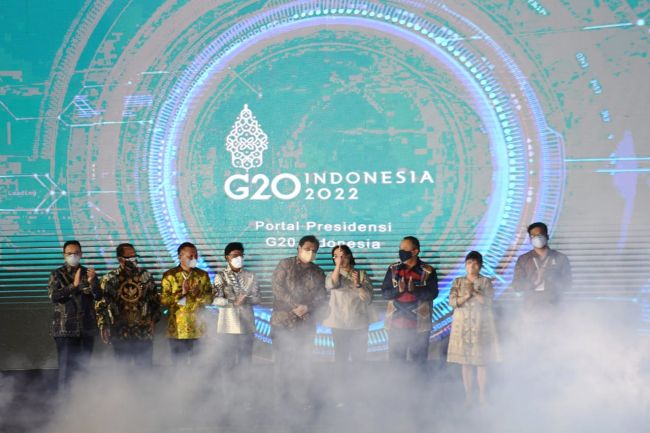
Opening Ceremony, G20 Indonesia 2022 in Jakarta on Wednesday. The Indonesia G20 Presidency runs from December 1, 2021 until November 30, 2022 with the theme “Recover Together, Recover Stronger”. (ANTARA FOTO/Hafidz Mubarak A/wsj)

In its G20 Presidency, Indonesia will focus on handling inclusive health care, digital-based transformation, and the transition to sustainable energy,” said Jokowi. The Indonesian President spoke at the Opening Ceremony for G20 Indonesia 2022 in Jakarta on Wednesday.

Indonesia will carry the theme “Recover Together, Recover Stronger” for its G20 Presidency, “A trust and an honor for Indonesia, and an opportunity to make a greater contribution to the world’s economic recovery.”

The President emphasizes that Indonesia would strive to build fair and sustainable world governance based on world peace and social justice. “Indonesia will try to build fair world governance, and strengthen world solidarity in overcoming climate change and sustainable development, and gather commitment from developed countries to help developing countries,” Jokowi said.

Coordinating Minister for Economic Affairs Airlangga Hartarto conveyed Indonesia’s G20 Presidency aims for the world to emerge from the crisis and become more resilient. To achieve the goal, it requires a transformation in the way of working, a change in mindset and business model, as well as opportunity utilization amid the pandemic to bring new breakthroughs.

Jokowi continued, “During this G20 Presidency, Indonesia will use the forums at the G20 to fight for the aspirations and interests of developing countries to create fair governance in the world. This is to strengthen world solidarity in overcoming the threat of climate change and promote sustainable development.”

The G20 is a global forum consisting of 19 countries and one European Union. G20 was formed in 1999, contributes to 80% of the world’s GDP and 75% of world exports. The Bali Summit will take place in October 2022 in Bali, Indonesia, for G20 Heads of State and Government. It is the pinnacle of G20 work carried out within Ministerial Meetings, Working Groups, and Engagement Groups throughout the year.

Indonesia’s G20 Presidency runs from December 1, 2021 until November 30, 2022. Visit G20 Indonesia 2022 at https://g20.org/ and see the virtual G20 Presidency at https://g20virtualgallery.id/.

Pictured (from left):
Jakarta Governor Anies Baswedan, BPK Vice Chairman Agus Joko Pramono, Indonesian House of Representatives Deputy Speaker Lodewijk F Paulus, Economic Affairs Coordinating Minister Airlangga Hartarto, Bank Indonesia Governor Perry Warjiyo, Chair Business 20 Shinta Widjaja Kamdani and Co Chair Youth 20 Michael Victor Sianipar at the Opening Ceremony for G20 Presidency 2022 in Jakarta on Wednesday.

ANTARA FOTO/Hafidz Mubarak A/wsj: https://www.acnnewswire.com/topimg/Low_Antara20211202.jpg.
Reporters: Indra Arief P, Resinta S; Editor: Fardah Assegaf. (c) ANTARA 2021.

Singapore P2P Lender BRDGE: Flexible financing key to SME survival during pandemic-driven business uncertainty; launches F&B loans package and SME digitalisation platform

  • BRDGE funded more than S$ 11m in loans to 46 Singapore SMEs since April 2020; across more industries as compared to a similar period pre-pandemic
  • Average loan size today is S$352,000 compared to S$836,000 pre-pandemic, a decrease of 58% alluding to focus on cashflow for rising costs around rent and labour instead of growth
  • In response to uncertainty around dining-in, BRDGE launches new F&B loans packaged with interest rates from less than as 1% per month for between three to six months, with a lowered credit assessment criteria matched to changing dining in rules in the past three to six months
  • Part of BRDGE’s focus on Singapore SME Survival during COVID-19, together with efforts around digitalisation through its e-commerce mobile app B Mart

BRDGE Technology (BRDGE), an MAS licensed Peer-to-Peer lending platform launched in 2014, today announced the launch of a food and beverage (F&B) financing package specially catered to support Singapore’s Food and Beverage (F&B) Small Medium Enterprises (SMEs) in the current pandemic-driven uncertainty around dining-in. The loans package, with affordable interest rates from less than 1% per month and a short tenure of three-to-six-months, is specially designed to help establishments survive and potentially thrive during this period when cashflow is of importance for salaries and rentals.

One unique aspect of the F&B BRDGE loan is the credit assessment process, which takes the challenging business landscape into account with a lowered and targeted criteria on credit assessment: BRDGE will assess only the latest three-to-six months of the SME’s recent cashflow, bank statements and bank balance, matched against the changing dining-in rules, to identify F&B businesses which are able to survive and thrive.

BRDGE offers funding support for SMEs that are non-bankable or unable to secure a loan from traditional financial institutions. Most of the time it is due to a less than two-year track record or small annual revenues, or have maxed their credit facilities or who require a Bridging Loan. BRDGE then carries out an assessment and matches SMEs with potential investors.

Mr Kevin Wong, CEO, BRDGE Technology, said, “The government has been extremely supportive with the various grants and packages for businesses and their employees in Singapore since the start of the pandemic, and the community has also continued their support to Singapore SMEs. However, with the recently announced extension of the stabilisation phase, Singapore businesses, specifically F&B establishments which depend very much on dining-in for their revenues, continue to be pressured by thinner margins, tight cashflow, and the rising cost of rent and labour. With group sizes for dining-in having been adjusted more than 10 times since April 2020, F&B businesses are faced with continued uncertainty and many are on the brink of survival. This loan package is designed to help them survive and potentially thrive in the short term, with a more relevant assessment process grounded in the very different business reality today.”

Cashflow a priority for SMEs during COVID-19
Since the start of the pandemic in April 2020 till today, BRDGE has funded more than 46 SMEs with more than S$ 11m in loans. As compared to a similar period pre-pandemic (April 2019 to April 2020), there has been a distinct reduction of 58% to the average loan size per borrower from S$352,000 vs S$836,000, alluding to a shift in borrowing for growth pre-pandemic, to survival during the pandemic with cash used to maintain operational costs.

More SMEs has also requested for funding since April 2020, at 46 against 17 pre-pandemic, with companies from industries such as Arts, Entertainment and Recreation, Health and Medical, Marine and Shipping, and Beauty and Wellness, requesting for loans.

Kevin added, “As the pandemic continues, more and more businesses are facing problems maintaining cashflow. We’re also seeing a fundamental shift in the reasons for getting loans. Where previously companies were discussing funding to help them grow or expand, today we are speaking to business owners who are concerned about surviving to the next month. The government and consumers are surely doing their part to help businesses survive, but every little bit helps and this relook at how we assess loans is one part of our commitment to the Singapore business community.”

As part of its efforts to tide SMEs through this challenging period, BRDGE also recently started developing B Mart, a new e-commerce mobile app that is designed to help SMEs in Singapore digitalise and find new customers online. On the platform now are more than 7 businesses with over 500 SKUs representing B2B industries such as Creative and Marketing and B2C businesses such as Food & Beverages, Beauty & Health, Fashion, etc. BRDGE plans to increase this to 2,000 SKUs by the end of the year, with all 237 BRDGE’s SME borrowers since 2014 being able to tap on this platform. All applicants of today’s F&B BRDGE loans can have access to the platform and will be able to tap on the BRDGE online delivery app at a fixed and competitive 5% commission rate to help lower operational costs.

F&B businesses can apply for the BRDGE F&B loan via the BRDGE website: https://register.brdge.tech/fandb-smes, while investors who are seeking to support local businesses can find out more here https://register.brdge.tech/fandb-investor or register themselves on the BRDGE website.

SME owners who are interested in listing their products on the B Mart app to grow their customer base and business can get in touch with BRDGE directly at admin@bmart.sg.

About BRDGE Technology
BRDGE Technology is an MAS licensed P2P lending platform with a Capital Market Service license (CMS 100642). Founded in 2014, it is among the pioneer batch of homegrown P2P lending platforms and is the highest-rated crowdfunding platform on Seedly. Till date, BRDGE has crowdfunded a total of S$72,022,115 and has a community size of over 17,000 investors and SMEs. https://www.brdge.tech/

FOR MEDIA ENQUIRIES
PRecious Communications for BRDGE
Martin Lim, BRDGE@preciouscomms.com

FACTSHEET
Address: 57 Mohamed Sultan Rd #03-05 Sultan-Link, Singapore 238997
Tel: 6916 1799
Email: hellosg@brdge.tech
Website: https://www.brdge.tech/
iOS App: https://apps.apple.com/us/app/id1061018232
Android App: https://play.google.com/store/apps/details?id=com.app.brdge
Seedly Reviews: https://seedly.sg/reviews/p2p-lending/brdge-p2p-lending
Facebook: https://www.facebook.com/BRDGEsg
Instagram: https://www.instagram.com/brdgesg
LinkedIn: https://www.linkedin.com/company/brdgesg/
YouTube: https://www.youtube.com/channel/UCxsxymQ5CU8K0NL0thZXzrA

Universitas Brawijaya developing digital halal certification system for Indonesian MSMEs

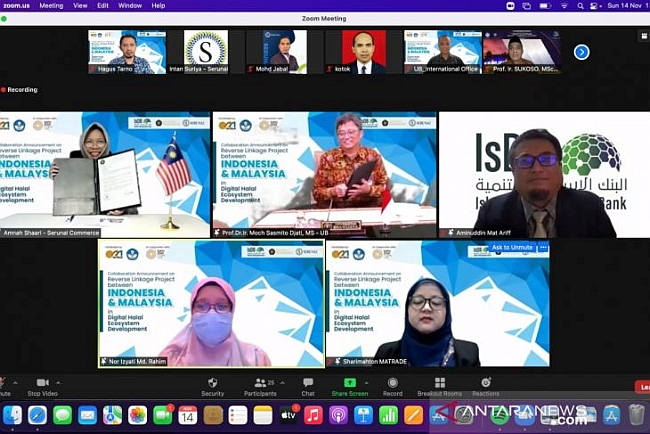
Universitas Brawijaya (UB/Unibraw) is developing a digital halal certification system for micro, small and medium enterprises (MSMEs) in Indonesia, as part of the Reverse Linkage Project. According to the head of the project team, Dr. Hagus Tarno, the system will archive documents from the processing stage through to certification. By archiving documents digitally, MSMEs will find it easier to see the results of evaluation for each step of the process.

“MSMEs that will apply for halal certification through Brawijaya University will be directed to a system that will assist them to check which documents must be prepared and filled out. Continue to the certification process, there will be another system that will make sure that the business owners know the step they are currently in — whether their documents are returned to them or they are going to the certification,” Dr Tarno said during a webinar last Sunday.

There has been a request from the Department of Cooperatives and SMEs, Malang Regency to assist 100 business owners who will apply for halal certification through Brawijaya University in the near future, he informed. “There has been an offer. We will try to apply it to the MSMEs that we will assist,” Tarno said.

The project for developing a halal digital system received US$2.06 million funding for two years (2021-23) from Serunai Malaysia and the Islamic Development Bank (IsDB), he said. Meanwhile, the University, IsDB and Serunai Malaysia signed a letter of intent (LOI) virtually during the webinar.

The LOI will be followed up with a tri-partite agreement before the project is carried out, Tarno said. If the system is already running in Brawijaya U, it can be applied in other universities, he added.

The university’s vice rector for planning and cooperation, Prof. Dr. Ir. Moch. Sasmito Djati, M.S., said that Brawijaya would contiue to support development of the halal certification project, which can be applied not only to food and beverages products but also to pharmacy and tourism MSMEs.

University Brawijaya is known as a pioneer in incubating critical aspects of the halal value chain since 1987, he added. At that time, the concept of halal certification originated with the efforts of Dr. Ir. Tri Susanto, a lecturer in Food Technology, Department of Agricultural Technology, Faculty of Agriculture at the University.

Since then, the scientific products developed at the university have become formal archetypes for the Muslim community in Indonesia, creating awareness on the importance of the halal concept and promoting the halal ecosystem, said Prof Sasmito..

Considering Brawijaya’s long history in developing the halal concept and ecosystem, it is perfect to become a beneficiary of the Reverse Linkage Project, for utilizing digital technology to help improve the role of MSMEs in the Indonesian economy, the Prof added.

Reporters: Endang Sukarelawati, Yashinta; Editor: Fardah Assegaf. (c) ANTARA 2021.

Pertamina to expand geothermal capacity by implementing ESG

“Our expansive plan will help Indonesia to achieve the net zero emission target by 2060.”

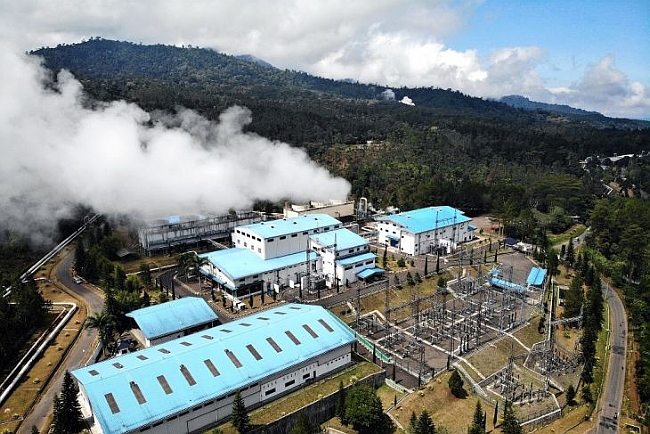
Pertamina Geothermal Energy (PGE) has planned to expand its installed geothermal power plant capacity in order to provide greater contribution to the reduction of greenhouse gas emissions in Indonesia, and support achieving the sustainable development goals (SDGs) on climate action, through implementing Environmental, Social, & Governance (ESG) based programs.

PT Pertamina Geothermal Energy’s (PGE’s) geothermal power plant. [ANTARA/HO-PGE]

“Our expansive plan will help Indonesia to achieve a net zero emissions target by 2060,” said the Chief Financial Officer (CFO) of Pertamina Geothermal Energy, Nelwin Aldriansyah, during a discussion session at the UN Global Compact on responsible business conduct and climate ambition, held virtually on Wednesday, Nov 10.

The UN Global Compact is a “voluntary initiative based on CEO commitments to implementing universal sustainability principles, and taking steps to supporting UN goals. Pertamina reiterates its commitment to achieving SDGs through the implementation of Environmental, Social, and Governance (ESG) based programs in their operational areas.”

According to Aldriansyah, PGE is planning to issue its own wind green bonds in the first half of next year (2022) in addition to PT Pertamina’s plan to issue green bonds in 2022. “Proceedings of green bonds will be used to refinance our existing conventional loans and also to finance our capex (capital expenditure) plan in developing new geothermal projects in Indonesia,” he said.

With such an initiative, PGE would be expected to gain an additional 375 megawatts (MW) over the next four years, from the current installed capacity at its geothermal power plant of 672 MW.

“We are aiming to have a total installed capacity to 1,500 megawatts by 2030,” Aldriansyah remarked. He expressed optimism that with such an additional capacity, PGE would contribute significantly to Pertamina’s plan to decarbonize its assets and reduce emissions by 30 percent by 2030.

“At our current capacity, we currently reduce emissions by about 3.5 million tonnes of carbon dioxide (CO2) per annum. And with the additional capacity, we expect to reduce the emissions further, to six million tonnes annually over the next four years, and to 12 million tonnes by year 2030,” he stated.

Aldriansyah stated that the government of Indonesia aims to improve its energy mix with the use of renewable energy sources from the current 12 percent to 23 percent by 2025. He expressed confidence that the increased use of energy mix would provide ample room for renewable energy companies such as Pertamina Geothermal Energy to expand installed capacity and provide higher contributions to emissions reduction.

The CFO believes that financing plans, including the issuance of green bonds next year, can support the capacity growth in the future, which will contribute significantly to Pertamina’s objective to decarbonize its asset portfolio. “It is also aligned with the Indonesian Government’s commitment to Paris Agreement,” added Aldriansyah, “And with goal No.13 of the sustainable development goals (SDGs) on climate action.”

Media contact:
Fajriyah Usman
Pjs Senior Vice President,
Corporate Communications & Investor Relations
PT Pertamina (Persero)
M : +62 858 8330 8686
E : fajriyah.usman@pertamina.com
U : https://www.pertamina.com

2021 Global Digital Trade Conference concludes; 15 days trade dialogues, 8,500 companies from 100 countries

Building a bridgehead for “dual circulation” between China and the rest of the world

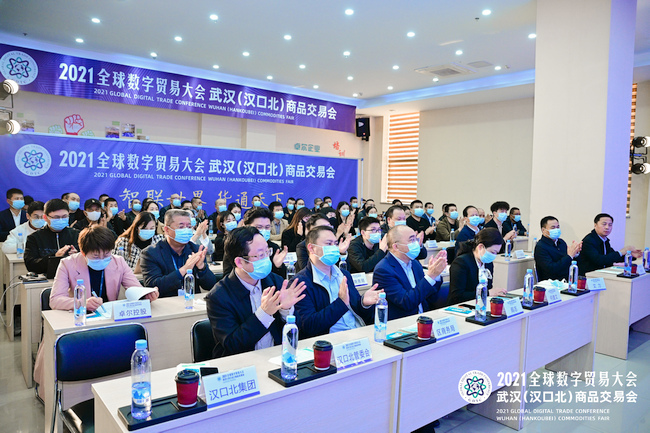
The 2021 Global Digital Trade Conference and Wuhan (Hankoubei) Commodities Fair concluded after 15 days of global trade dialogues, procurement fairs, and live streaming activities. Diplomatic representatives and business delegations from 103 countries and close to 8,500 foreign and Chinese companies participated in the event, achieving a total purchase order of RMB 402.8 billion (S$ 85.0 billion) and attracting 520,000 trade visitors to the event.

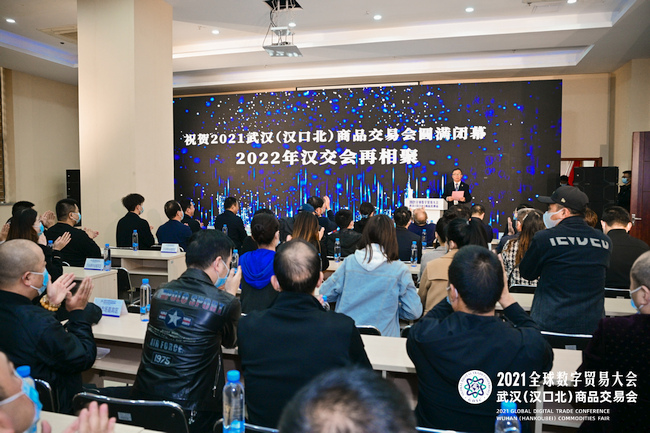
Li Jun, Deputy District Mayor of Huangpi District, Wuhan, announcing the results
2021 Wuhan (Hankoubei) Commodities Fair Closing Ceremony
2021 Global Digital Trade Conference successfully concludes

As China’s first large-scale digital trade themed event, the 2021 Global Digital Trade Conference and Wuhan (Hankoubei) Commodities Fair aims to promote the development of China’s digital economy, showcasing Wuhan’s strengths in the global digital trade and driving China’s “dual circulation” strategy, marking a new milestone for the trading system of the future.

Various forums and thematic events on digital technology empowerment were organised to support Wuhan’s vibrant commercial and logistics center development, including the opening ceremony, China’s wholesale market annual meeting, cross-border cooperation promotion events, and the digital trade and technology thematic conference. The conference focused on current digital trade issues, providing a platform that facilitated discussions and exchanges around the development of the digital economy and trade to build a bridgehead for “dual circulation” between China and the rest of the world.

A new white paper on Global Digital Trade was also launched at the event, shedding insights into the current development of digital trade from the existing digital infrastructure, policies, technologies, and capital. The paper analyses how digital technologies and supply chain services can bring about profound changes to global trade and the development prospects of digital trade. Experts and scholars also highlighted the importance of the digital economy as a key driver for China’s “dual circulation” development strategy, with Wuhan among China’s most promising cities for the digital economy.

Fifteen leading national enterprises and institutions, including Digital China, Alibaba, Ant Group, and JD Group have signed a cooperation proposal to increase investments and support Wuhan’s construction of a national trade and logistics center in Central China. ZALL Smart Commerce Group also signed a digital service agreement with 15 wholesale markets across China, including Shandong Linyi Trade City, Chengdu Hehuachi Market and Shenyang Wuai Market Clothing City to promote digital upgrading of China’s national wholesale markets.

The diverse formats and trade activities of the Wuhan (Hankoubei) Commodities Fair exemplify how “goods sell well when they reach Hankou” during the new era. The event attracted China’s well-known brand manufacturers and popular products, featuring 39 commodity-themed exhibition areas across the country, including Guangdong Pavilion, Hunan Pavilion, Chu Chamber of Commerce, Jiangxi Pavilion, and Hubei’s 17 cities and prefectures. A total of 30 themed commodity trade activities were held during the event to promote Hubei’s local brands and culture, and 113 procurement events were organized to support domestic consumption, including the Hankoubei Hotel Supplies Expo, the first Wuhan-style Children’s Clothing Trade Fair; and China’s National Footwear Brands Exhibition.

The integration of domestic and foreign trade, and building a bridgehead for “dual circulation” between China and the rest of the world is a key objective of this year’s flagship event that aims to promote the development of a high-level open world economy. Accolades were received from hundreds of diplomatic representatives and foreign business delegates regarding Wuhan’s efforts to promote commodities trade and support economic, trade, and technological exchanges. 80% of the international trade platforms that participated were first-timers. They include cross-border e-commerce expo, Hubei’s export-to-domestic trade fair, eight cross-border e-commerce platforms, such as Amazon, eBay, Wish, Newegg, and 50 cross-border service organisations, including PingPong Payments. The European Pavilion, Shanghai Cooperation Pavilion, and ASEAN Pavilion were also launched and featured products from more than 50 countries.

About ZALL Smart Commerce Group
ZALL Smart Commerce Group (HKG:2098) is a leading Chinese B2B e-commerce group (ranked 155th in Fortune China 500, 2021) with a global footprint across the world and its companies listed on four exchanges: HKSE, NYSE, SSE and SZSE. ZALL Group develops and operates Asia’s largest B2B offline-to-online trade ecosystem in China and Southeast Asia, including Singapore, with more than 30 B2B platforms in China, US and Singapore, and a GFA of more than 10 million sqm of wholesale trade centres in China. In 2018, ZALL Group achieved a GMV of more than RMB 600 billion (US$85.2 BN), serving over 1 million SME customers worldwide. ZALL has also obtained a virtual banking licence and currently operates Z-Bank in China since 2017, one of China’s Top 5 digital banks that has supported more than 5.5 million SME and individual customers. See http://en.zallcn.com.

Since 2018, ZALL has invested in five projects in Singapore, including ezbuy.sg, Singapore’s leading global online shopping platform; ZMA Smart Capital, an online trade finance company; ZALL Chain Technology, a blockchain solutions company, and the Commodities Intelligence Centre (CIC), Singapore’s first physical commodity eTrading platform (B2B) powered by blockchain technology, see https://www.cic-tp.com.