G20 Sherpa committed to address global solutions

The third G20 Sherpa meeting in Yogyakarta has concluded with G20 member countries agreeing to seek solutions to myriad global problems.
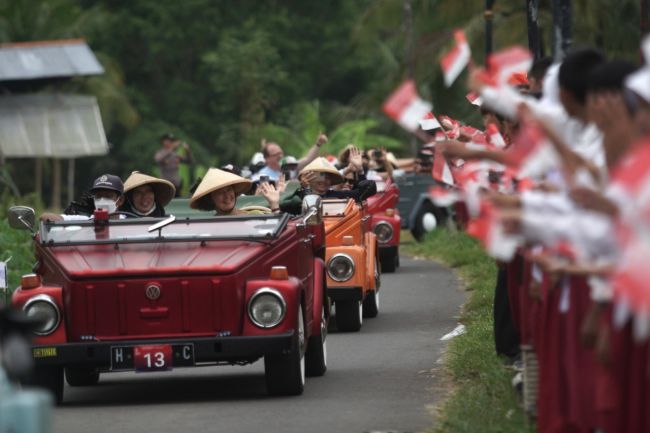
The 3rd Sherpa Meeting G20 Indonesia delegations travel around Borobudur Temple in Magelang, Central Java, Indonesia, Tuesday (29/9). (ANTARA PHOTO/Andreas Fitri Atmoko/POOL/rwa/FR)

“During this meeting, we can see the collective commitment of G20 countries to remain united by offering solutions to global problems that occur recently,” Co-Sherpa Edi Prio Pambudi noted through a statement, Thursday (Sept 29).

Problems, such as the energy crisis, food scarcity, rising food prices, inflation, and continuity of COVID-19 recovery, are issues that are not only encountered by G20 countries but also developing and vulnerable countries.

Discussion on Leaders’ Declaration began from materials that are relatively easy to accept by all countries followed by a bilateral meeting with several key countries, so that an agreement can be achieved.

A technical discussion on Leaders’ Declaration will be conducted in October 2022 before it is finalized during the fourth Sherpa meeting in Bali in November 2022, near the execution of the G20 Summit held in the same month and place.

The declaration draft that contains three priority issues during Indonesia’s G20 Presidency comprises global health architecture, digital-based economic transformation, and energy transition as well as food security.

This draft comes from 39 parties, comprising G20 member countries, nine invited countries, and 10 invited international organizations, that will attend the G20 Summit Conference in Bali, November.

The meeting also endorsed concrete deliverables, such as programs or initiatives. This aligns with President Joko Widodo’s mandate that Indonesia’s G20 Presidency should produce real benefits for Indonesians.

“It is true that the concrete results will have their follow-up programmed,” secretary of the Coordinating Ministry for Economic Affairs Susiwijono, said at an online press conference, which was followed from here on Tuesday (Sept 27).

The programs arising out of this year’s G20 Summit will be reviewed together at next year’s meeting.

“There is an annual forum so that we can review several agreements that have been conducted together,” he said.

This year, in the midst of various global crises, Indonesia was able to contribute fairly, leading many to praise it, he added.

The G20 Sherpa Track discusses global challenges and various economic (non-financial) issues to find solutions and provide recommendations on the G20 agenda and priority issues, such as energy, development, tourism, digital economy, education, labor, agriculture, trade, investment, industry, health, anti-corruption, environment and climate change.

The role of Sherpa Track is very vital, especially in coordinating all Working Groups and Engagement Groups under its coordination.

Indonesia’s G20 presidency in 2022 provides an opportunity for Indonesia to lead developed and developing countries in discussing various issues and the process of global economic recovery.

Underscoring Indonesia’s important role as president of this year’s G20, Foreign Minister Retno Marsudi said that the world was pinning hopes on G20 being a catalyst of global economic recovery, especially for developing countries.

“The G20 must not fail to be a catalyst for world recovery. We cannot let global recovery fall at the mercy of geopolitics,” she stated, while delivering a speech at the general debate of the 77th United Nations General Assembly on Tuesday (Sept 27).

She proposed the paradigm of collaboration to surmount numerous global challenges.

“A paradigm of win-win, not of zero-sum. A paradigm of engagement, not of containment. A paradigm of collaboration, not of competition. This is the transformative solution that we need,” Marsudi noted.

According to Marsudi, such a collaboration paradigm is deemed necessary to facing the current concerning world conditions wherein the pandemic persists and the global economy remains sluggish, war among nations, and violation of international law that has become a norm in pursuit of narrow self-interests.

Written by: Sanya Dinda S, Fadhli Ruhman, Editor: Fardah Assegaf (c) ANTARA 2022
G20 Digital Ministers yields consensus on 3 priorities

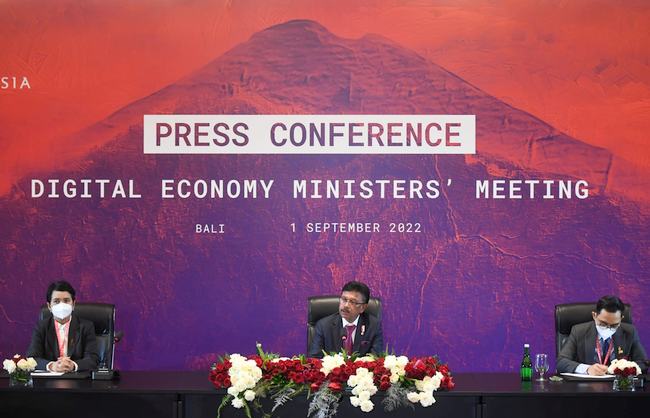
The Digital Economy Ministers Meeting (DEMM) was held in Nusa Dua, Bali, Thursday (September 1, 2022). It was the culmination of the Digital Economy Working Group (DEWG) meetings, as one of working group of the G20 that focuses on issues related to the digital economy and highlights the role of digital transformation on economic and social growth.

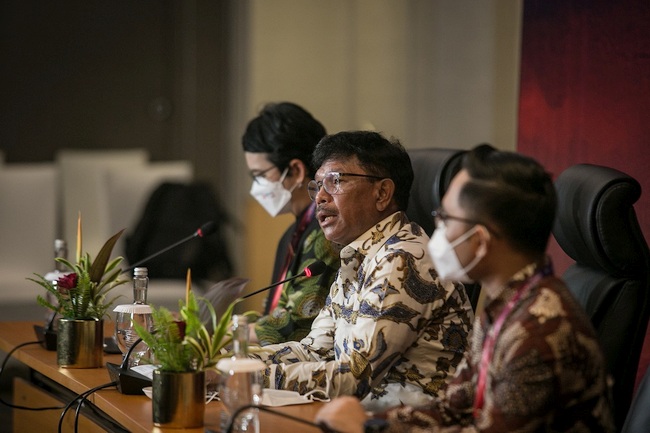
Communication and Information Minister Johnny G. Plate opened the 2022 G20 Digital Economy Ministers’ Meeting in Nusa Dua, Bali province, on Thursday (September 1, 2022). (ANTARA PHOTO/Hafidz Mubarak A/foc/uyu)

The DEWG itself discussed three priority issues of the digital economy at the G20 Indonesia Presidency, including digital connectivity, digital skills and literacy, and cross-country data flow.

The Minister of Communication and Informatics, Johnny G. Plate, said the DEMM has produced a document called “G20 Digital Economy Minister Meetings 2022; Chair Summary”.

The document summarizes agreements between the ministers for the digital economy on the three priority issues of the DEWG.

“The document shows that for all substantive content, the Indonesian Presidency (G20) has reached consensus from all DEWG members in accordance with DEWG priority issues,” Plate said at a press conference, Thursday afternoon.

It also summarizes all ideas and dynamics that developed during the series of G20 DEWG meetings presented by representatives of G20 member countries over the past six months.

The formulation of concrete steps in the document will be presented as input for President Joko Widodo in leading the G20 Summit which will be held in November.

On the first priority issue regarding connectivity and post-COVID-19 recovery, Plate said the meeting agreed on the need for a people center in an effort to strengthen digital connectivity. The meeting, he said, also agreed on the importance of digital security as the key to business sustainability.

“The meeting also welcomed various initiatives of the G20 Indonesia Presidency, such as the G20 Digital Innovation Network (DIN), G20 Digital Transformation Expo (DTE), and the smart village and island initiative together with ITU,” he said.

On the issue of digital skills and digital literacy which is the second priority issue, the DEMM meeting succeeded in compiling the “G20 toolkit for measuring digital skills and digital literacy”.

The document is useful for standardizing the measurement of literacy indicators and digital skills for more objective public policy making and encouraging international cooperation in overcoming gaps between countries, responding to the challenges of a digital future.

“The presidency has also succeeded in compiling a compilation of reports on policies and recommendations to increase meaningful participation of vulnerable groups in the digital economy, as well as a summary document of practices and policies on digital skills and advanced digital literacy,” he said.

On the issue of free data flow with trust and cross-border data flow, Johnny said the DEWG forum has recognized the efforts of the Indonesian Presidency to initiate discussions on the principles of justice, transparency and legitimacy proposed by Indonesia.

“This is a new principle base in cross-border data governance. We all know that data contains at least two important things. The first is that the data has a high economic value, and the second is that the data is related to geopolitics and geostrategy as well as the sovereignty of each nation and state,” he explained.

The DEMM meeting was attended by digital ministers from the United Arab Emirates (UAE), Singapore, Cambodia, South Africa, Japan, India, Saudi Arabia, the United Kingdom, and the Netherlands. Meanwhile, Australia, Germany and Spain were represented by ministerial representatives.

DEMM was also attended by representatives from international organizations, including the Secretary General of the International Telecommunication Union (ITU) and the Under Secretary General of the United Nations and Executive Secretary of the United Nations Economic and Social Commission for Asia and The Pacific (UNESCAP).

Written by: Rizka Khaerunnisa, Uyu Liman, Editor: Suharto (c) ANTARA 2022

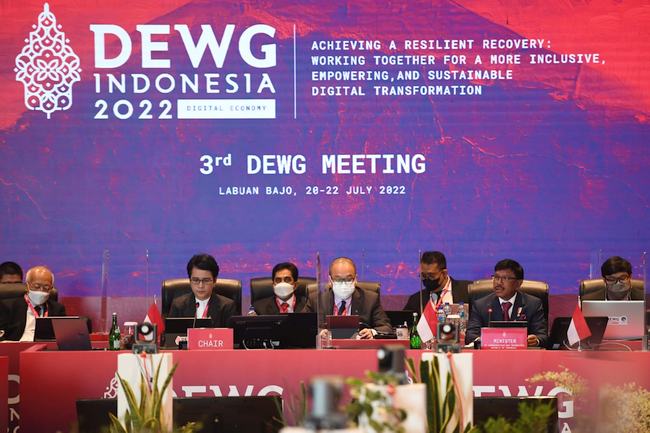
Enhancing data governance through the 3rd DEWG meeting

The implementation of equitable and inclusive Data Free Flow with Trust (DFFT) and Cross-Border Data Flow (CBDF) had become crucial issues nowadays as data traffic between countries kept increasing.

Hence, as chairman of the 2022 G20 presidency, Indonesia proposed four principles of fairness, lawfulness, transparency, and reciprocity for the implementation of cross-border data governance.

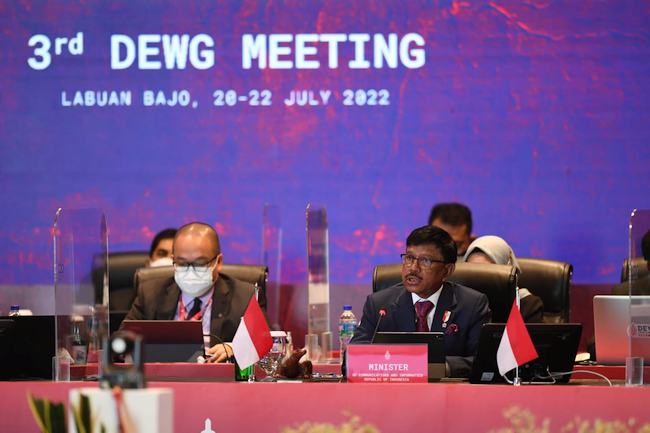
Through the 3rd Digital Economy Working Group (DEWG) Meeting, held in Labuan Bajo, East Nusa Tenggara (NTT) Province, on July 20-22, 2022, Indonesia highlighted digital skills and literacy as the second priority issues of the DEWG, as well as the DFFT and CBDF as its third priority issue that will enhance the Bali Package document.

The Ministry of Communication and Informatics has consulted with G20 members and partners to follow up on the results of previous meetings to be accommodated into a declaration draft, known as the Bali Package.

The Bali Package will reflect the commitment of G20 members to achieve recovery through inclusive, empowering, and sustainable cooperation.

Additionally, Communication and Informatics Minister Johnny G. Plate expected that the 3rd DEWG meeting could establish three deliverables.

The deliverables include the recommendations and policies to increase the vulnerable groups’ involvement in the digital economy sector; a G20 Toolkit on digital skills, literacy, and workshop; as well as a summary of practices and policies to develop advanced digital skills and literacy.

The G20 members also sought a common understanding on a clear definition of trust and general principles in implementing the cross-border data flow.

Spokesperson for the Communication and Informatics Ministry Dedy Permadi said all parties involved in the 3rd DEWG Meeting agreed to strengthen the cross-border data governance.

“The Digital Economy Working Group or DEWG had completed discussions regarding the CBDF,” he stated.

The results of the working group’s discussions will be presented at the G20 Digital Economy Ministers’ Meeting, which is scheduled to take place in Bali, in early September 2022.

A workshop had been implemented on the last day of the 3rd DEWG Meeting to enhance the discussion on the CBDF and establish a common agreement on the agenda.

In addition to the G20 members, a number of private actors, international organizations, academics, and non-governmental organizations were also invited, since the workshop served as a multi-stakeholder dialogue forum.

“Thus, the agenda does not only contain the government’s interest, hence, the cross-border data flow agenda will be able to provide comprehensive recommendations,” Permadi, who was also the Alternate Chair of 2022 G20 DEWG, remarked.

The effort showed Indonesia’s commitment in pursuing concrete deliverables to realize beneficial data utilization for all to encourage the recovery of the global digital economy.

Additionally, the Director General of Informatics Application at the ministry, Semuel Abrijani Pangerapan, stated the value of Indonesia’s digital economy was projected to reach US$124 billion (Rp1,855 trillion) in 2025.

To optimize the potentials, Indonesia will hold a 2022 G20 DEWG side event entitled G20 Digital Innovative Network, themed ‘The Rise of Digital Economy: Post-pandemic Recovery and Beyond’.

The forum aims to facilitate knowledge-sharing as well as international partnerships among start-ups, venture capitalists, policy makers, and corporations to solve various global challenges.

It was initiated by Italy’s 2021 G20 Presidency under the name of G20 Digital Innovation League.

The G20 Digital Innovative Network aims to find the 100 most promising start-ups in five priority sectors of healthcare, renewable energy, smart society, financial inclusivity, and supply chain.

Start-up pitching, discussion panels, 1-on-1 business meetings, networking sessions, as well as cultural events will be held in a hybrid way during the implementation of the forum in Bali on September 2-4, 2022.

The registration for the forum has been opened to the public at g20innovationnetwork.org.

(c) ANTARA 2022

RI strives to bridge differences in G20 to overcome economic challenges

The third Finance Ministers and Central Bank Governors (FMCBG) meeting within the framework of Indonesia’s G20 Presidency kicked off in Nusa Dua, Badung, Bali, on Friday (July 15).

The 3rd Finance Ministers and Central Bank Governors (FMCBG) Meeting of G20 in Nusa Dua, Badung, Bali, on 16 July. (ANTARA FOTO/Fikri Yusuf/Pool/wsj)

The meeting aims to seek ways to promote better global economic recovery amid the issues or challenges that had become more apparent nowadays.

“G20 needs to (apply more measures) by taking real actions based on the spirit of coordination, collaboration, and consensus in order to solve global issues,” Finance Minister Sri Mulyani Indrawati delivered the statement during the opening of the meeting.

In total, 407 delegations were physically present in Bali, and 120 attended the event through virtual means. Some 19 finance ministers and 11 governors of Central Banks were also physically present. Thereby making it the one with the most number of physical attendees during the course of Indonesia’s G20 presidency.

Minister Indrawati stated that the presence of majority of the delegations of member countries, guest nations, and international organizations demonstrated global commitment and willingness to support the Indonesian G20 Presidency, as well as promote a sustainable economy, especially in the midst of global challenges.

Bridging Differences
Indonesia is committed to bridging various differences and becoming the main supporter of multilateralism in the G20 forum to overcome various current global economic challenges.

“We want to be an honest liaison. Indonesia will tirelessly seek communications and consultations, so we can continue to build bridges to accommodate the differences,” the minister noted while opening the 3rd G20 FMCBG meeting.

The 3rd FMCBG meeting discussed seven priority agendas, comprising the current situation and risks of the global economy, health issues, international financial architecture, financial issues, sustainable finance, infrastructure development, and international taxation.

Meanwhile, several issues that became part of the priority agenda are the impacts of the Russian-Ukraine conflict on global food, energy, and financial security.

On the second day of the meeting on Saturday, Indrawati announced that all G20 members has agreed on the majority of the meeting results despite tensions over Russia-Ukraine conflict.

Indrawati conveyed that the meeting succeeded in agreeing on a number of initiatives, and successfully garnering support to overcome various global economic and financial problems.

“There are 14 paragraphs of the draft on the result of this two-days meeting,” Indrawati stated on her speech delivering the results of the meeting.

She mentioned that two paragraphs of the result draft containing different views of several G20 members, one of which was regarding the use of the word “war” on several issues.

Indonesia and other G20 members, however, should still place the G20 as the world’s largest economic cooperation forum that has a long history of solving various global problems.

Additionally, Bank Indonesia (BI) Governor Perry Warjiyo has called upon all G20 members to commit to working together to support global economic recovery in order to realize a sustainable, balanced, and inclusive world economy.

“It is important for us to stay focused on what we have planned to achieve this year,” Warjiyo said at the opening of the second day of the G20 Finance Ministers and Central Bank Governors (3rd FMCBG) meeting.

Such a focus, according to Warjiyo, will send a positive message to the global community about the role and efforts of the G20 toward supporting recovery.

During Saturday’s meeting, the G20 finance ministers and central bank governors discussed five topics including COVID-19 exit strategies for ensuring financial stability, climate-related financial risks, crypto assets, financial inclusion and digitization, and initiatives to address new data gaps.

Written by: Yuni Arisandy Sinaga, Editor: Fardah Assegaf (c) ANTARA 2022
Indonesian peace mission on Russia-Ukraine conflict

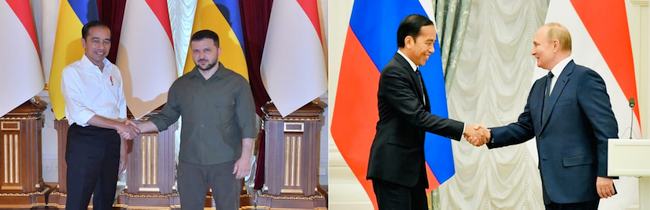
President Joko Widodo has accomplished his visits to Ukraine and Russia on Thursday evening (June 30) to invite both countries to build dialogue, stop the war, and build peace.

President Joko Widodo has visited Kyiv, Ukraine, for a peace mission. (Laily Rachev – Biro Pers Sekretariat Presiden)

President started his mission by visiting Kiev, Ukraine. At the Maryinsky Palace, Kyiv, Jokowi was greeted by Ukrainian President Volodymyr Zelenskyy on Wednesday afternoon (June 29).

For Ukraine, that day was a historic day, as President Jokowi’s visit was the first one to be made by an Asian leader since the start of the Russian invasion of Ukraine.

Jokowi, during a joint press statement with Zelenskyy, conveyed several important points from his visit to Ukraine.

“I conveyed to President Zelenskyy that I made this visit as a manifestation of Indonesia’s concern for the situation in Ukraine,” he remarked.

He reiterated the invitation to Zelenskyy to attend the G20 Summit in November 2022 in Bali.

Jokowi also emphasized Indonesia’s principled position regarding the importance of respect for sovereignty and territory.

“Although it is still very difficult to achieve, I still convey the importance of a peaceful settlement, and the spirit of peace must never fade,” he affirmed.

Indonesia will strive to contribute through assistance, including medicines, and remain committed to reconstructing one of the hospitals around Kiev.

To this end, President Jokowi offered to carry a message from President Zelenskyy to President Putin.

On the other hand, President Zelenskyy praised Jokowi’s visit because Indonesia hosts the G20 Presidency this year and is the strongest country in ASEAN.

Zelenskyy expressed optimism that it would strengthen the effort to end the war.

After visiting Kiev, President Jokowi also made a visit to Moscow, Russia and meet Russian President Vladimir Putin.

During the visit, Jokowi emphasized the issue of peace and humanity has always been a priority for Indonesia.

“The Indonesian Constitution mandates Indonesia to always try to contribute to the creation of world peace. In this context, I made visits to Kiev and Moscow,” he stated.

He also emphasized that food and fertilizers were humanitarian issues and were of interest to the world community. Thus hundreds of millions of people affected by disruptions, especially in developing countries.

Hence, Jokowi lauded Putin’s guarantee for the security of food and fertilizer supplies.

Jokowi stressed that Indonesia has no interest apart from helping resolve the war between Russia and Ukraine.

“I invite all world leaders to work together to revive the spirit of multilateralism, the spirit of peace, and the spirit of cooperation,” President Jokowi stated.

Meanwhile, Putin noted that Indonesia is one of their key partners in the Asia-Pacific region.

“Russian-Indonesian relations are constructive and mutually beneficial, developing steadily on the basis of long-standing good traditions of friendship and mutual assistance,” he said.

During the joint press conference, President Jokowi reiterates the importance of the spirit of peace.

With President Jokowi’s visit to Ukraine and Russia for a peaceful mission, hopes are pinned high on the war ending soon and the food crisis being mitigated quickly.

Written by: Katriana, Editor: Rahmad Nasution (c) ANTARA 2022

Indonesian calls, messages at G7 Summit

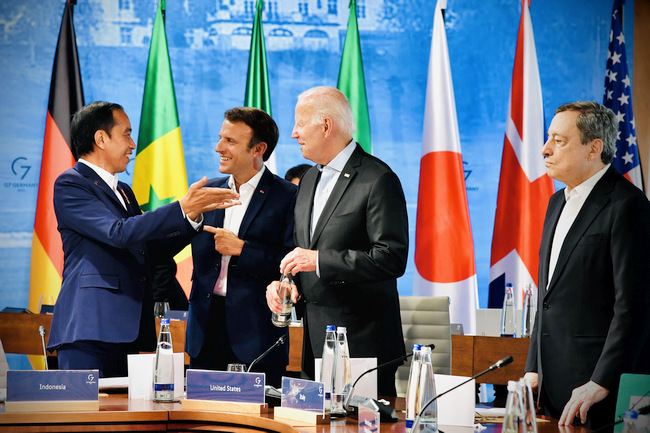
Indonesian President Joko Widodo (Jokowi) has arrived at the venue of the 48th G7 Summit in Schloss Elmau, Germany on Monday afternoon (June 27) local time (UTC+1) to attend the meeting in the capacity of a partner country and as the G20 President.

Indonesian President Joko Widodo in conversation with French President Emmanuel Macron and United States President Joe Biden while attending the G7 Summit in Elmau, Germany, Monday, June 27, 2022. ANTARA/HO-Press Bureau of the Presidential Secretariat/Laily Rachev/aa/ak. (Handout of Press Bureau of the Presidential Secretariat/Laily R)

The G7 is an informal forum bringing together leaders of the world’s leading industrial nations from the European Union and countries such as Canada, France, Germany, Italy, Japan, the United Kingdom, and the United States.

Jokowi was welcomed by German Chancellor Olaf Scholz.

During the official welcoming session by the chancellor, Jokowi was present with the leaders of G7 partner countries, including Argentine President Alberto Fernandez, Indian Prime Minister Narendra Modi, Senegalese President Macky Sall, and South African President Cyril Ramaphosa.

Furthermore, during the photo session, he posed for a picture accompanied by the German chancellor and United States President Joe Biden.

All heads of government attended two sessions of the G7 meeting.

President Jokowi invited G7 countries to contribute to capitalizing on investment opportunities in the clean energy sector in Indonesia.

President Jokowi conveyed the statement while attending the G7 Summit working lunch session based on the topics of climate change, energy, and health in Elmau, Germany, Monday (June 27).

“(This is) especially (regarding) investment opportunities in the clean energy sector in Indonesia, including the development of an electric car and lithium battery ecosystem,” the president stated.

According to President Jokowi, Indonesia’s potential, as a contributor to clean energy, whether in the bowels of the earth, on land, or at sea, is very large. Indonesia needs large investments and low-carbon technologies to support a fast and effective transition to clean energy.

“Indonesia needs at least US$25-30 billion for energy transition in the next eight years. We can optimize this transition as a motor of economic growth, open up business opportunities, and create new jobs,” President Jokowi stated.

Furthermore, the president noted that in Indonesia as well as in other developing countries, the risk of climate change is very real, especially since it is an archipelagic country, with 17 thousand islands. The risks are not only detrimental to health but also put farmers and fishermen in trouble.

“We really hope for the support of all G7 countries in the Indonesian Presidency at the G20. See you in Bali. Thank you,” the president stated.

During session II of the G7 summit on the topics of food security and gender equality, President Jokowi called on G7 and G20 countries to jointly overcome the food crisis that currently threatens people in developing countries to fall into extreme hunger and poverty.

“(Some) 323 million people in 2022, according to the World Food Programme, are at risk of facing acute food insecurity. The G7 and G20 have a big responsibility to overcome this food crisis. Let us fulfill our responsibilities now and from now on,” President Jokowi affirmed.

According to the president, food is the most basic human rights issue. Indubitably, women from poor families suffer the most from food shortages for their children and families.

“We must act quickly to find a concrete solution. Food production must be increased. The global food and fertilizer supply chain must return to normal,” the president stated.

In his speech, President Jokowi emphasized the importance of G7 countries’ support for the reintegration of Ukraine’s wheat exports and Russia’s exports of food and fertilizer commodities in global supply chains.

There are two ways to realize this, with the first being the facilitation of Ukraine’s grain exports that can begin immediately.

According to the president, the second approach is proactive communication with the public worldwide that food and fertilizer commodities from Russia are not subject to sanctions.

“This intensive communication is very necessary, so that there is no prolonged doubt in the (minds of the) international public. This intensive communication also needs to be strengthened with communication with related parties, such as banks, insurance, shipping, and others,” the president explained.

President Jokowi had paid significant attention to the impact of the war on food and fertilizer supply chains.

“(This is) especially for fertilizers, because if we fail to handle it, then a rice crisis involving two billion people, especially in developing countries, can occur,” the president cautioned.

At the end of his remarks, the president again called for the importance of the G7 and G20 countries to jointly overcome this food crisis while also inviting G7 leaders to attend the G20 Summit in Bali.

“I am waiting for the G7 leaders to attend the G20 summit. See you in Bali, on November 15-16, 2022,” President Jokowi stated.

Meanwhile, Minister of Foreign Affairs Retno Marsudi noted that the president held about nine bilateral meetings with: the Prime Minister of India; French President; Prime Minister of Canada; Chancellor of Germany; British Prime Minister; Prime Minister of Japan; President of the European Commission; President of the Council of Europe; and the Managing Director of the IMF.

During the bilateral meetings, besides inviting other countries to solve the problems of the food supply chain, president Jokowi also highlighted the preparations for the G20 Summit.

“In these meetings, we can clearly see that support for the Indonesian Presidency is still very strong,” Marsudi noted.

In 2022, Germany takes over the G7 Presidency and hosts the 48th G7 summit held on June 26-28, 2022, in Schloss Elmau.

The G7, originally G8, was set up in 1975.

The annual G7 summits have, over the years, developed into a platform for determining the course of multilateral discourse and shaping political responses to global challenges.

Written by: Azis Kurmala, Editor: Fardah Assegaf (c) ANTARA 2022
G20 committed to financing better pandemic response

The G20 members and several relevant international organizations agreed to work together to create the Financial Intermediary Fund (FIF) to help countries in need to face any pandemic in the future.

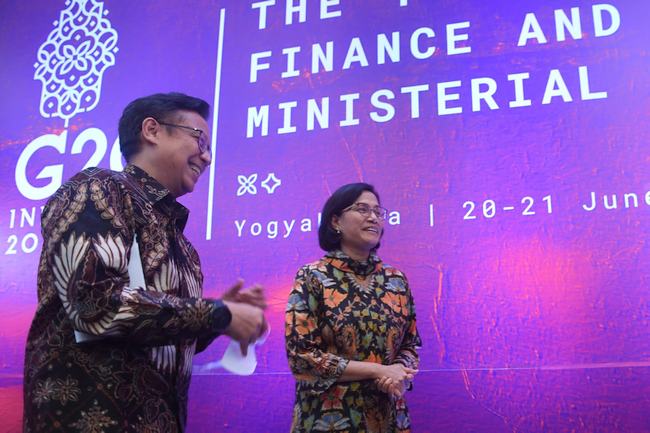
Indonesian Health Minister Budi Gunadi Sadikin (L) and Indonesian Finance Minister Sri Mulyani (R) at the first G20 Joint Finance and Health Ministerial Meeting held in Yogyakarta, 21 June. (ANTARA/AstridFaidlatulHabibah)

During the 1st G20 Joint Finance and Health Ministerial Meeting held in Yogyakarta on Tuesday, Indonesian Finance Minister Sri Mulyani emphasized the urgency for collaborative work between health and finance sectors to better prepared for future pandemics, considering that the COVID-19 would not be the last.

“The world is definitely watching us – how the G20 is going to respond with delivering concrete action in pandemic preparedness and response. The world is waiting for us,” Mulyani remarked.

Furthermore, she also asserted the importance of inclusivity in the work of FIF, led together by the World Health Organization (WHO) and the World Bank, which required the involvement of both developed and developing countries.

“Only then, we can be effective in preparing to tackle the next global pandemic together,” Mulyani stated.

“I would like to acknowledge the central role of the WHO in fighting pandemic and the importance of including the voice of developing countries in our institutional arrangement to create the most effective system for pandemic preparedness and response,” she added.

The WHO and the World Bank estimated that US$31 billion is required annually for strengthening global health security, according to WHO Director General Tedros Adhanom Ghebreyesus.

About two-third of that fund could come from existing resources but that leaves a gap of US$10 billion per year. Hence, he expects that the FIF would help close that gap.

WHO and the World Bank have been cooperating to establish the FIF, which would be overseen by a board that takes a decision on funding allocation supported by a technical advisory panel.

Both the board and the technical advisory panel would be supported by the joint WHO-WB secretariat based at the Bank’s headquarters in Washington, with assisting staff from the WHO.

According to the plan, the Bank will provide financial and administrative leadership at the secretariat, operate as a representative for the FIF, hold and transfer relief funds, as well as provide administrative services.

Meanwhile, the WHO will provide technical leadership; coordinate input for the technical advisory panel; and prepare relevant technical documentation, recommendations, and reports for the council.

Both the World Bank and WHO will act as implementing entities, along with other global health partners with relevant expertise, including the Global Fund, the Global Alliance for Vaccines and Immunization (GAVI), and the Coalition for Epidemic Preparedness Innovations (CEPI).

“We look forward to your active participation in building and financing a FIF that is inclusive, equitable, and effective in making our world safer from pandemics,” Tedros noted.

To date, the G20 has pushed for an emergency fundraising commitment of around US$1.1 billion from five member countries and one international social organization to mobilize the role of FIF.

The pledges came from the United States, the European Union, Germany, Indonesia, Singapore, and the Wellcome Trust.

Additionally, Indonesian Health Minister Budi Gunadi Sadikin stated the meeting was not only focusing on the FIF as the source of funds to face future pandemics, but the world must also think about the uses of funds.

“Because money is (only) half the solution for the health crisis. We need to translate this money into access to vaccines, medicines, and diagnostic tools,” he said at a press conference after the joint ministerial meeting.

In order to create such access, he explained, the engagement with private sectors as the producers of vaccines, therapeutics, and diagnostics was crucial.

“We need to talk to them, to engage with them. How can they maintain a certain volume commitment? How then we will be able to distribute equally and very quickly if the next pandemic happens?” he noted.

The establishment of FIF is still in the ongoing discussion that will be continued at the next G20 meetings, hosted this year by Indonesia.

However, as the G20 President, Indonesia will continue to gather as much as possible support from more countries as well as an international organization even philanthropists, in order for them to be able to contribute to the financing side of pandemic preparedness and response.

Written by: Yashinta Difa Pramudyani, Editor: Fardah Assegaf (c) ANTARA 2022

Second G20 DEWG focuses on digital connectivity for recovery

The Indonesian government has urged the G20 Digital Economy Working Group (DEWG) to continue the discussion on digital connectivity.

Minister of Communication and Informatics Johnny G Plate, G20 Digital Economy Working Group (DEWG) Chair Mira Tayyiba (L), and G20 DEWG Alternate Chair Dedy Permadi (R), second DEWG meeting in Yogyakarta, 18 May. (ANTARA FOTO/MOHAMMAD AYUDHA)

“I believe we have all witnessed the importance of information and communication technology in helping people cope with the impact of the COVID-19 pandemic,” Minister of Communication and Informatics, Johnny G. Plate, stated.

The DEWG is part of the Indonesian G20 Sherpa Track. The working group originated with the formation of the G20 Digital Economy Task Force (DETF) in 2017 during the German G20 presidency.

The working group was mandated to discuss the implementation of an interconnected, protected, and safe digital technology to develop an inclusive, resilient, and sustainable digital economy.

The second DEWG meeting, under Indonesia’s G20 presidency, which is being held in Yogyakarta on May 17-19, 2022, discusses the issue of digital connectivity.

As the chair of the 2022 G20 Presidency, Indonesia has encouraged the 2022 G20 DEWG participants to discuss three priority issues: digital connectivity and post-COVID-19 recovery; digital skills and digital literacy; as well as cross-border data flow and trusted free data flow.

At the meeting, Minister Plate emphasized the importance of overcoming the digital divide by building digital connectivity or telecommunications infrastructure.

During the second DEWG meeting, he urged that the discussion focus on inclusiveness, empowerment, and sustainability for strengthening the global position and recovering from the COVID-19 pandemic.

The digital divide has remained an issue until now. According to data from the International Telecommunication Union (ITU), in 2021, a total of 2.9 billion people across the world had never used the Internet.

Meanwhile, according to the World Bank data for Indonesia, 94 million adults could not access the Internet via mobile devices in 2019.

“The digital divide remains a challenge. Those who have access to fixed broadband Internet are even fewer,” Plate pointed out.

The digital divide has become one of the reasons for the G20 DEWG forum to discuss the issue of digital connectivity.

The Ministry of Communication and Informatics, which is in charge of the DEWG, is seeking to address the digital divide by strengthening collaboration to drive massive construction of digital infrastructure between G20 member countries and the rest of the world.

Digital Connectivity
The discussion on connectivity has become more relevant in the wake of a global economic turmoil that has affected food, commodities, and energy availability as well as caused the inflation rate to soar.

“The discussion on digital connectivity becomes important at the second DEWG meeting because after the COVID-19 pandemic, the economy is greatly supported through the use of digital connections in solving various community problems as well as empowering the community itself,” Minister Plate emphasized.

Plate further accentuated that the pandemic had shown the extent to which people are dependent on digital ecosystems in various public sectors, such as education, health and, of course, economic development.

Taking into account the importance of the digital connectivity issue, the priority issue of DEWG is discussed in five subtopics.

First, Plate said, DEWG discusses a common understanding of digital connectivity by placing the community as the main focus of the digital connectivity development efforts.

“This is what we mean by people-centric digital connectivity,” he remarked.

The second subtopic of the digital connectivity discussion at the second DEWG meeting is digital security as a key enabler to support the business community.

The intensification of digital communications indirectly also raises new challenges in the form of various digital security risks that threaten the online safety of internet users, especially the increasingly digital economic actors.

Recognizing the importance of digital security in supporting the sustainability of digital businesses in the future, the DEWG decided to facilitate the collection of existing digital security and safety practices.

On the third subtopic, the Working Group agreed to establish a G20 Digital Innovation Network as a continuation of the G20 Innovation League hosted by the G20 Italian presidency last year.

Such a network aims to accommodate and support the collaboration of digital innovation actors around the world, such as start-ups, venture capitalists, corporations, and governments.

On the fourth subtopic, the G20 DEWG welcomes the implementation of the digital transformation expo that will showcase the achievements of G20 members regarding strategic policies and information on digital transformation.

“The Indonesian G20 presidency hopes that the concept of the event would be welcomed positively and enthusiastically by the holders of the next G20 presidency,” Minister Plate stated.

On the fifth subtopic, the G20 DEWG supports the notion from the International Telecommunication Union (ITU) on the smart village and smart island initiative.

“Support for this idea shows Indonesia’s commitment to taking advantage of the role of the G20 to solve various issues in the global community. DEWG encourages solidarity in the use of digital transformation, not only from G20 member countries but also non-member countries, especially small island developing states,” he stated.

Minister Plate expressed gratitude for the smooth, proper, and focused implementation of the second DEWG meeting.

Plate also reminded all delegates and knowledge partners to join the third DEWG meeting that will be held in Labuan Bajo, East Nusa Tenggara, on July 20-21, 2022.

Written by: Yuni Arisandy Sinaga, Editor: Rahmad Nasution (c) ANTARA 2022

G20 urges World Bank to prepare FIF Establishment: Indrawati

G20 members have urged the World Bank to immediately prepare for the establishment of the Financial Intermediary Fund (FIF), Finance Minister Sri Mulyani Indrawati stated. FIF should be formed immediately in the framework of pandemic preparedness and response (PPR) in the future, the minister emphasized.

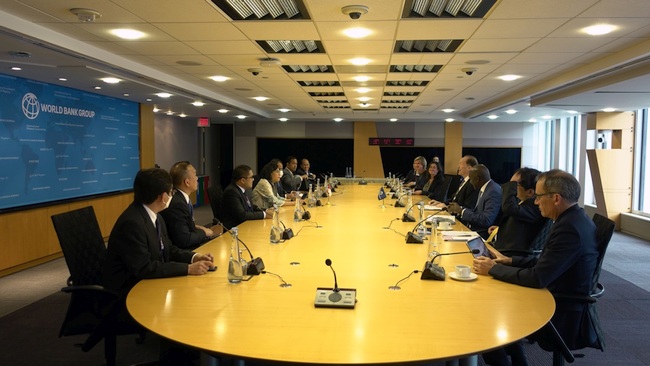
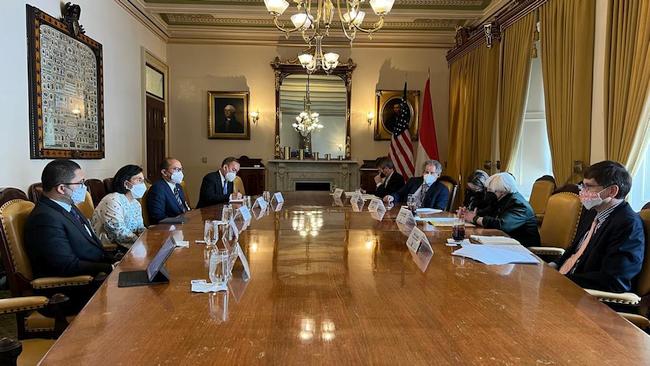
Indonesian Finance Minister Sri Mulyani Indrawati met with World Bank Group President David Malpass at the G20’s second meeting of the FMCBG in Washington D.C on Wednesday (April 20, 2022). Minister Indrawati and President Malpass discussed structural reforms and other steps toward a sustainable post-pandemic recovery.

“The (G20) presidency concluded that the World Bank should start exploring the process for developing and establishing FIF,” Indrawati remarked at the second meeting of the G20 Finance Ministers and Central Banks Governors (FMCBG) press conference here on Thursday.

G20 members view FIF as being the most effective choice for new financial mechanisms, especially in preparing for other potential pandemics in future. Indrawati believes this is because the establishment of FIF is viewed as being able to overcome the financing gap in the health sector as had occurred during the current COVID-19 pandemic.

“Most (G20) members agree on the need for a new financial mechanism dedicated to addressing the financing gap in PPR,” she stated, explaining that G20 members hope that the establishment of FIF would mitigate the health financing needs in line with the World Health Organization’s (WHO’s) expectations.

Moreover, G20 members called on the World Bank to explore discussions on the governance and operational regulations of FIF by involving the WHO. “There is widespread support for WHO and the World Bank regarding the assessment of significant financing gaps that need to be addressed,” Indrawati remarked.

Earlier, on April 1, the Indonesian finance and health ministries resumed the third G20 Joint Finance and Health Task Force (JFHTF). At the meeting, JFHTF co-chair Wempi Saputra invited G20 member countries to draw up a financing action plan for pandemic preparedness and response (PPR).

“The third JFHTF meeting is an important step for all member countries in drafting the financing strategies for prevention, preparedness, and response to the pandemic or PPR,” Saputra stated.

Meanwhile, one of the main agendas of Indonesia’s G20 Presidency is global health architecture.

Written by Astrid H, Kenzu T, Editor: Suharto (c) ANTARA 2022

G20 hopes Indonesia’s G20 Presidency finds solution to Global Economic Impact of Russia-Ukraine conflict

The second G20 Finance Ministers and Central Bank Governors (FMCBG) meeting expects Indonesia’s G20 Presidency to bring about a solution to the Russia-Ukraine conflict, Indonesian Finance Minister Sri Mulyani Indrawati stated.

The second G20 Finance Ministers and Central Bank Governors (FMCBG) meeting expects Indonesia’s G20 Presidency to bring about a solution to the Russia-Ukraine conflict, Indonesian Finance Minister Sri Mulyani Indrawati stated.

“(G20) members hope that the current geopolitical situation, particularly related to the war in Ukraine, will be handled,” Indrawati noted at a press conference of the second G20 FMCBG meeting on Thursday.

The expectation is based on the fact that the global situation has worsened and changed rapidly due to the COVID-19 pandemic, coupled with the Russia-Ukraine war, she remarked.

Moreover, the Russia-Ukraine conflict has a very dynamic implication, including on the energy, food, and fertilizer price hike, she affirmed.

Indrawati said Indonesia, which currently holds the G20 presidency, will continue to conduct intensive communication and consultations with all G20 members to address the very dynamic situation.

“The G20 good governance is actually based on consultations as well as cooperation,” she remarked.

Indonesia continues to hold discussions with all G20 member states to find ways to get out of the various global economic risks that result not only from the war in Ukraine but also from the pandemic, she stated.

The minister emphasized the current need for an exit strategy since several countries were under the threat of high inflation while the global energy and food price hike will increasingly create a challenging situation for policy makers.

According to Indrawati, G20 members are concerned about inflationary pressures that tend to prompt several central banks to raise the policy interest rates that will eventually lead to faster-than-expected global liquidity tightening.

Hence, the higher level policy becomes the focus to fulfill the exit strategy-related commitment that is well-calibrated, planned, and communicated to support recovery and reduce the potential impact of a spillover, she stressed.

The collective and coordinated actions are not only aimed at mitigating the impact of the Russia-Ukraine war but also at controlling the pandemic. The actions will remain high on the list of G20’s priorities, she stated.

G20 members have recorded an increase in the number of COVID-19 cases in several regions that burdened growth, extended supply disruption, worsened inflationary pressure, and slowed down global recovery, she remarked.

Written by Astrid Faidlatul H, Suharto, Editor: Fardah Assegaf (c) ANTARA 2022