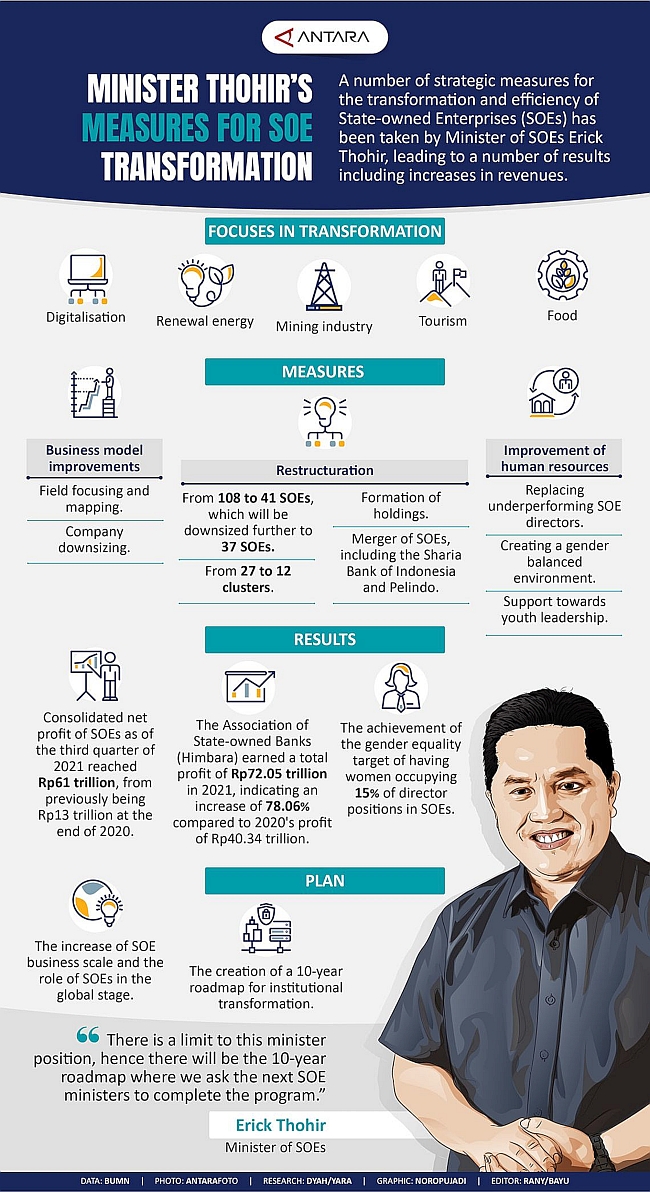
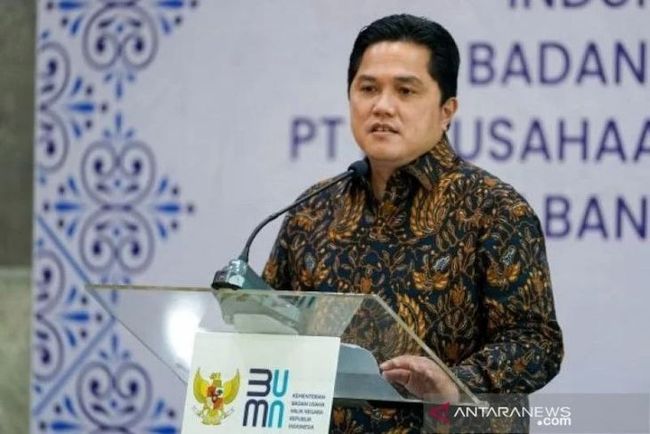
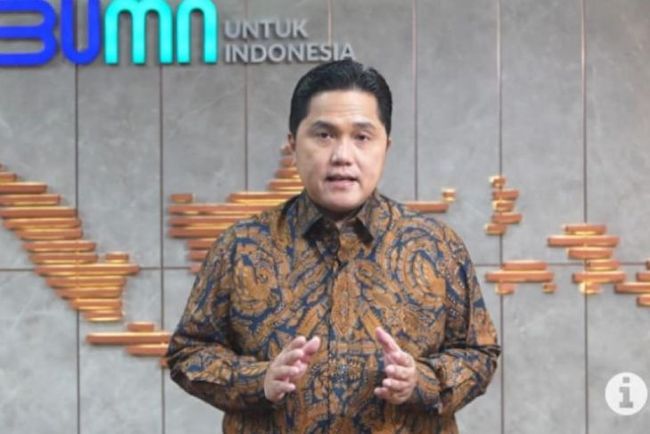
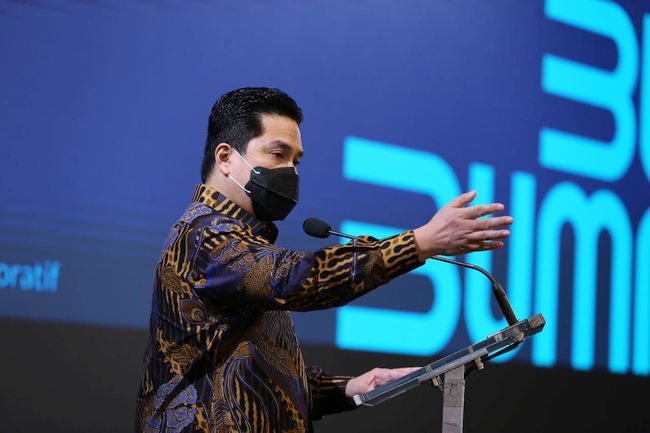
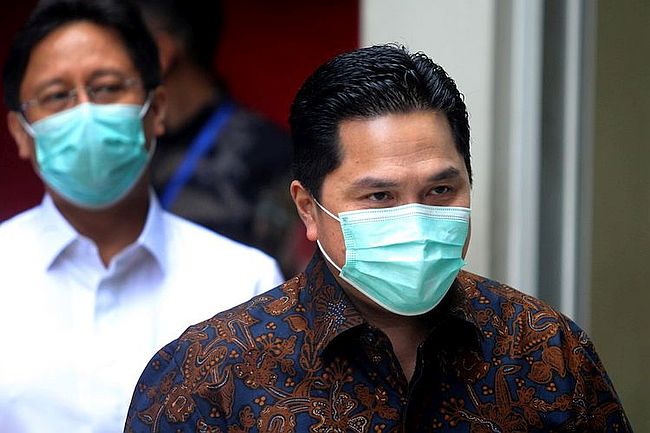
A number of strategic measures for the transformation and efficiency of State-owned Enterprises (SOEs) have been taken by Minister of SOEs Erick Thohir, leading to various results including increases in revenue.
“There is a limit to this ministerial position, hence there will be a 10-year roadmap where we ask the next SOE ministers to complete the program,” says Minister of SOEs Erick Thohir.
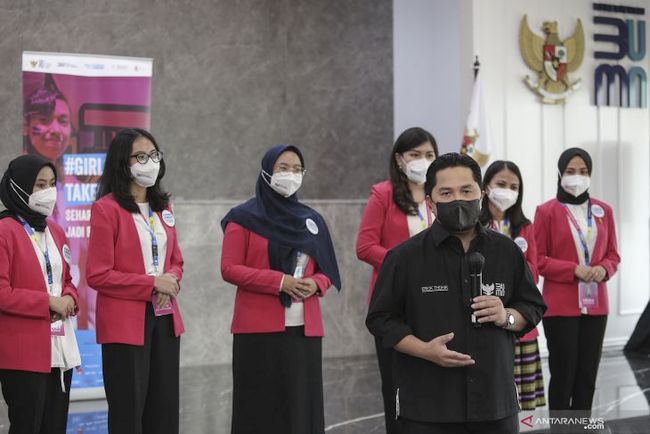
SOE MInister Erick Thohir during the ministry’s Girls Take Over Program (27/9/2021) (ANTARA FOTO/Dhemas Reviyanto/hp)
SOEs Minister Erick Thohir will target the promotion of 10 percent of young leaders in the SOEs by 2023, or double from five percent of young leaders promoted this year.
Young leadership and women’s leadership is viewed as a driving force to help expedite the realization of the SOEs programs, as well as to transform the human capital.
“I am fully concerned about the human capital transformation, since it is the start to push the transformation in the ministry. We are changing the structures, leaderships, mindsets, and core values we own,” he said.
In addition, young people are blessed with outstanding intelligence and mindsets that, in nature, may function differently when they are older, according to Thohir.
“In terms of leadership, we know that God blesses extraordinary intelligence and mindsets to humans, but in the limited ages,” he said.
Hence, the Indonesian younger generation should be offered the opportunities to become leaders and take positions in SOEs that align with their competence.
By 2021-end, the minister installed some young leaders under 42 years in several strategic positions, such as Soleh Ayubi, 38, who currently serves as Chief Digital Health Officer at PT Bio Farma. He formerly worked and built a career in the United States.
Muhammad Fajrin Rasyid is also among the young leaders who was promoted to become a director at PT Telekomunikasi Indonesia. He formerly served as Bukalapak co-Founder and President.
Productive Generation The ministry is pressing for young leadership, since Indonesia will reach a critical momentum from 2024-2034 when young people under 40 years will become the majority in the country.
Young people will dominate and become the trendsetters in the market during the upcoming years. Currently, however, most of the Indonesian younger generation tend to be consumptive, not productive.
“We must change the mindsets, and how they can be productive and create the markets for Indonesian markets,” Thohir noted.
To this end, they need to be assisted with a supporting ecosystem that helps them to develop their ideas and create breakthroughs.
Thohir spoke of his intent to build such an ecosystem, that could be very competitive among other countries.
He mentioned South Korea as a country that has successfully built its pop-culture ecosystem in the past ten years, compared to the US and Japan that had led the industry.
He is optimistic that Indonesia can also be the country that can build its own supporting ecosystem, as it has large infrastructures and SOEs in many areas, such as telecommunication, banking and tourism.
Indonesia is also projected to become the fourth largest economy in the world. Such a prediction will not remain a dream if the young generation prepares themselves well, Thohir noted.
“The opportunities will not come twice. We have built toll roads, airports, seaports, and other infrastructures. In the near future, we will build digital infrastructures, such as data centers, wifi, optic fiber, 5G tower,” he said.
Women Empowerment The role of women is inseparable in SOEs, since their ideas, thoughts, initiatives, and actions contribute to the companies’ advancement.
Women leaders in SOEs mirror the ministry’s efforts in enhancing equal leadership. They hold some strategic positions akin to president director, for instance, with President Director of PT Pertamina Nicke Widyawati, President Director of PT ASDP Indonesia Ferry Ira Puspadewi, and President Director of Airnav Indonesia Polana B Pramesti.
To involve more women in SOEs, the ministry incorporated with Indonesian Human Capital Forum (FHCI) and Indonesia’s Plan Foundation also ran an empowerment program for young and talented women, namely the 2021 Girls Takeover.
The program offers opportunities for six young women aged 20-24 years who were selected from some 7,000 candidates, to play a role as an SOE ministers or director for one day to coincide with International Daughters’ Day on October 11.
One of the finalists, Sharon Florencia, 24, shared her experience in taking over as SOE Minister. She acknowledged the valuable lessons she gained from Minister Thohir, especially from his leadership.
“During taking over as the SOE Minister, I observed the need to boost women’s leadership through mentorship programs for women, as well as scholarship programs for those in eastern Indonesia who do not have equal access to education,” she said.
Another finalist, Adinda Zenniar, 20, who took over for Bank Mandiri President Director Darmawan Junaidi, is keen on enhancing women’s capabilities in digitalization.
“I see that the company plays an important role in enhancing women’s leadership in information and communication technology by providing training and job opportunities for young women to work in this area,” she said.
Young Papuans in SOEs BUMN Muda (Young SOEs), a community under FHCI, plays an active role in developing SOEs’ human capital, including young talents from Papua and West Papua, to become future leaders.
“We focus on human capital development of the young generation nationwide, including young talents from Papua and West Papua,” BUMN Muda Chairman Soleh Ayubi said.
FHCI recruited 776 young Papuans by 2021-end. They were installed in 55 SOEs, reaching 77 percent of the realization from 1,000 talents targeted.
The forum strives to uphold the commitment to recruiting the best Papuan talents by improving the process and the SOEs involvement to offer them more opportunities, FHCI Chairwoman Alexandra Askandar remarked.
The commitment is in line with President Joko Widodo’s policy to recruit 1,000 young talents from Papua and West Papua to work in SOEs across Indonesia.
Reporter: Juwita Trisna Rahayu; Editor: Fardah Assegaf (c) ANTARA 2022. Photo: ANTARA FOTO/Dhemas Reviyanto/hp
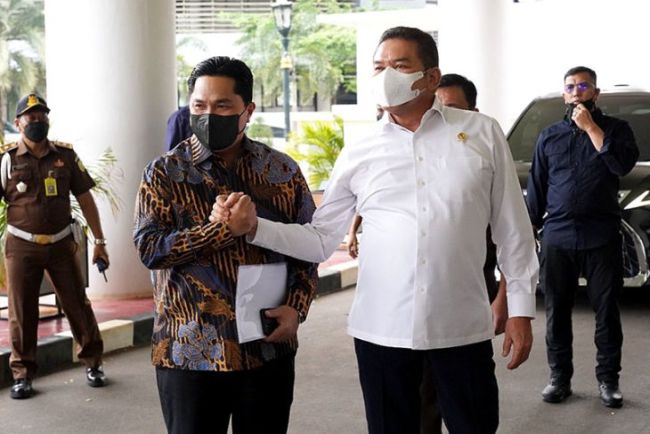
State-Owned Enterprises (SOEs) Minister Erick Thohir (L) meets Attorney General Sanitiar Burhanuddin (R) to file report on the Garuda Indonesia case at the Attorney General’s office, Jakarta, Tuesday, January 11, 2022. (ANTARA/HO-Ministry of Energy and Mineral Resources/pri)
Gontha urged the State-Owned Enterprises (SOEs) Ministry to dismantle past cases of alleged corruption in the company related to aircraft leasing.
He cited issues related to powerful groups in the company and the price difference between Boeing 777-300ER aircraft rental and CRJ1000 aircraft purchase.
Ghonta spoke of having reported the problems to several institutions ranging from the director-general of the Ministry of Law and Human Rights to the chairman of the Corruption Eradication Commission (KPK).
State-Owned Enterprises (SOEs) Minister Erick Thohir then filed a report on an alleged graft case in the financially beleaguered state-owned airline PT Garuda Indonesia (Persero) to the Attorney General’s Office.
The report outlines the government’s plan to restructure Garuda Indonesia as well as provides evidence regarding the procurement of ATR 72-600 aircraft.
We provide evidence from the investigative audit, so it is not an accusation, he asserted.
For the past two years, Garuda Indonesia had faced a financial storm due to past mismanagement that caused the company’s debt to swell to more than Rp140 trillion, Thohir remarked.
Meanwhile, Thohir noted that the Garuda Indonesia case was not just about an aircraft but pertaining to an ecosystem.
He encouraged the Garuda Indonesia case to be resolved, as it was impossible to buy or rent an aircraft without a business plan and without calculating flight routes.
In the absence of such a calculation, Garuda ultimately paid the aircraft rental fee of up to 28 percent to the lessor as compared to only eight percent to other airlines’ aircraft lessors.
“Hence, there is a system and there is a solution, so that in the future, Garuda will not repeat similar cases again since due to no management, the loss will also affect the people, in the form of expensive tickets,” he pointed out.
In addition, the SOEs Ministry has taken steps to restructure and salvage the state-owned airline.
The ministry will focus on transforming the airline to make it more accountable, professional, and transparent.
More than 470 creditors have submitted claims of up to US$13.8 billion, or equivalent to Rp198 trillion, to Garuda Indonesia as of January 5, 2022, as part of a debt recast.
The figure has been cited by Garuda Indonesia’s Suspension Debt Payment Obligation (PKPU) team, Thohir remarked.
After the verification is completed, the PKPU team will take a decision on January 19, 2022, regarding the amount considered to be valid and can be included in the restructuring process, he remarked.
The Garuda management had earlier submitted a proposal to reduce its liabilities by more than 60 percent, from US$9.8 billion to US$3.7 billion through restructuring.
The proposal aimed to help the company survive amid the COVID-19 pandemic that has protracted for two years.
Save Garuda
Commission VI of the Indonesian House of Representatives formed a working committee to rescue national carrier Garuda Indonesia.
“In principle, the Committee for Rescuing Garuda is a follow-up to the three work meetings undertaken by Commission VI with the SOEs minister, deputy ministers, and the Garuda Indonesia Board of Directors,” Head of the Committee for Rescuing Garuda Martin Manurung stated.
Manurung explained that the working committee will work not only to look for management issues within the state-owned airline but also to explore options offered by the government.
The deputy chairman of Commission VI stated that the formation of the working committee was also a form of political support for Commission VI of the Indonesian House of Representatives for Garuda Indonesia to stay afloat.
“We want Garuda Indonesia, as a national flag carrier, to be able to stay in the air, to be able to fly, as an airline of national pride,” Manurung noted.
Meanwhile, State-Owned Enterprises Minister Erick Thohir expressed support for the establishment of a working committee by Commission VI of the House of Representatives (DPR RI) to rescue and reform national carrier Garuda Indonesia.
Establishment of the working committee is proof of DPR RI’s concrete support and commitment to monitoring the state-owned airline’s rejuvenation process, the minister noted.
The political support that the legislature has exhibited would be key to rescuing the flag carrier, the minister noted while adding that his ministry is committed to cooperating with the parliament’s working committee for seeking solutions to remedy issues that have plagued the national airline.
The ministry will also inform the working committee, which will monitor the airline’s restructuring and reform progress, about Garuda Indonesia’s future business and reform plan, he added.
The State-Owned Enterprises Ministry cannot rescue the airline alone, and we need to collaborate with relevant stakeholders, including DPR RI’s Commission VI, in mending Garuda Indonesia, Thohir remarked.
Transforming Garuda Indonesia is a must to ensure the flag carrier survives amid the economic uncertainty posed by the COVID-19 pandemic and to ascertain that it records positive performance after the pandemic, he noted.
The ministry has also collaborated with the Attorney General’s Office to investigate allegations of corruption by the airline management in the past, the state firm minister remarked.
Thorough reforms in the law enforcement and business aspects are expected to bolster Garuda Indonesia’s performance to become more accountable, professional, and transparent in the future, Thohir affirmed.
Jiwasraya, Pension Fund
Efforts to eradicate corruption by the minister are also being made in the insurance business sector.
Thohir revealed that the completion of Jiwasraya’s mega scandal case provided a solution for the aggrieved parties.
“However, what distinguishes us from other corruption cases is that the Jiwasraya case has a solution for those who were harmed. It is not a pending case for which there is no explanation. Those who were harmed will be recompensated for their losses,” Thohir stated.
The minister drew attention to no solution being found to this day in several cases of corruption in pension funds and insurance. No refund was offered to the cheated parties.
For instance, the case of illegal online loans where no perpetrators or masterminds had yet been revealed and no refund was provided to the victims and deceived parties.
Thohir affirmed that the collaboration was necessary to solve the Jiwasraya case.
President Joko Widodo gave directions that the Jiwasraya case should be solved immediately.
After looking at the facts and evidence, an audit investigation from the Development Finance Comptroller (BPKP) and a report from the Supreme Audit Agency (BPK), the Ministry of SOEs officially reported the Jiwasraya case to the Attorney General’s Office.
“The Ministry of SOEs does not want to become trapped in legal problems, and it focuses on corporate issues,” the minister stated.
In addition, Thohir will fix pension funds in state-owned enterprises comprehensively this year.
The pension fund has become a breeding ground for corruption, with the pensioners’ bills not being paid in the end, he pointed out.
To this end, the minister of SOEs urged Commission VI of the Indonesian House of Representatives to jointly conduct a focus group discussion on exposure regarding pension funds.
“We are ready, but we cannot clean it up right away, as there is a binding law. Hence, the Ministry of SOEs cannot intervene,” Thohir noted.
Meanwhile, he remarked that comprehensive improvement in pension funds in the state firm became one of the SOE Ministry’s programs in 2022.
The existence of state-owned companies aims to provide the greatest profits to the state.
Thereafter, the profits will be channeled back through various programs for the people, starting from infrastructure development to welfare improvement, and others.
There is no place for corruption within SOEs.
The accountability, transparency, and anti-graft approaches must continue to be implemented to build prosperous SOEs.
(c) ANTARA 2022. Reporter: Azis Kurmala; Editor: Sri Haryati ANTARA/HO-Ministry of Energy and Mineral Resources/pri
President Joko Widodo harbors many hopes and expectations for Indonesia’s State-Owned Enterprises (SOEs), and strives to see them succeed not only at a national level, but also at an international level. The President believes these SOEs hold vast potential to dominate the essential sectors earlyon, and move to the global level as they mature.
SOEs Minister Erick Thohir (ANTARA/HO-KBUMN)
Yet SOEs require professional management and a helping hand to assist them on their way. However great, any company that falls into the hands of mis-management will experience under development and and ultimate demise. To survive this fourth industrial revolution, companies need to elevate human resources and ecosystems to the highest standards. In theory, transformation coupled with technological adaptation will follow.
Indonesian SOEs Minister Erick Thohir spoke of three big dreams for SOEs, the first being larger SOE contributions to the nation. “If it is not my wishful thinking, it is how to enable SOEs to make a bigger contribution to the country. That is number one,” Thohir wrote on his official Instagram account @erickthohir on Feb 20.
The second dream involves the number of State-Owned Enterprises becoming less, but therefore larger in terms of the average footprint. The third dream pertains to rationalizing and optimizing the role of SOE services in the community. Each of these three dreams have Key Performance Indicators or KPIs.
SOEs have been undergoing a massive and ongoing transformation. It has borne fruit; for the first half of 2021, SOEs reported an income of Rp96 trillion, and net profit of Rp26 trillion. Reflecting on an improved state of affairs, Erick suggested that the restructuring program among State-Owned Enterprises had been going well.
It turns out that SOEs behaved more efficiently as they realized greater profits, bringing the total number of SOEs from 108 to 41, and SOE sectors from 27 to 12, comprised of mineral and coal, forestry and plantations, foods, healthcare, finance and insurance, telecommunication, infrastructure and logistics, and several others.
Thohir’s ministry was successful in reducing the niumbers of SOE companies, and SOE sectors, which he had deemed too great, focusing instead on specific SOEs or segments to incorporate his tranformative notions. Among the groups undergoing transformation, the State-Owned Banks showed some tangible results.
The minister noted that the State-Owned Bank Association (Himbara) profit rose by 78% in 2021, while the banks remained focused on their respective segments: BRI (Indonesian Peoples Bank) catering to MSMEs, company-oriented Mandiri Bank, BNI (Indonesian State Bank) with its international scope, and BTN (State Savings Bank) of housing-related financial services.
The Himbara Association gained around Rp72.05 trillion in profit in 2021, much improved from their combined profit of Rp40.34 trillion in 2020. BRI contributed Rp 30.76 trillion to this total, Mandiri Rp28.03 trillion, BNI Rp10.89 trillion, with BTN pitchig in for Rp2.37 trillion.
Syahrul Ramadhan, Coordinator of Millennial Indonesia’s MSME and Business Sector, lauded Erick’s initiatives, encouraging the banks to such lofty achievements. Under Thohir’s command, for example, less-experienced directors had been replaced with seasoned professionals, the means to generate more profits for the state.
Moreover, a business sector mapping was undertaken since the SOEs had so many businesses; some SOEs weren’t even sure what their focus sector was. Deputy Head of Commission VI, House of Representatives, Martin Manurung seconded a motion recognizing the adjustments of State-Owned Enterprises as ongoing.
Although there are issues here and there, overall, it is doing well. Indeed troubles from the past still linger, though the Commission VI and the government are both committed to the betterment of the situation, as was apparent from their meetings.
Manurung affirmed that President Joko Widodo (Jokowi) hopes that a future will materialize through Revisions of the SOEs Laws, which are currently being prepared by his administration. Manurung concluded by commending Jokowi’s promotion of government investment.
Government Capital: the rules Essentially, the commission and the ministry are on the same boat for most aspects in the quest to improve SOEs. These include restructuring, holdings, clusters, and investments, among others. The commission also agrees to some suggestions made by SOEs that received Government Capital for company acts.
In some instances, the discussions of Government Capital cannot be avoided. It should be ensured that capital is used for boosting the SOEs productivity, thereby offering significant contributions to the state in the form of dividend, tax, and more.
President Jokowi drew attention to several SOEs that had received excess government capital as a means of protecting continuation, despite making no meaningful contribution to the state, and it has often been stressed that capital should not be used as a way to cover losses caused by faulty management, he insisted.
The president gave stern warning that no such cases should recur. In fact, he also suggested that the dying companies be closed right away in lieu of having government capital being handed over to them. The president has sought for such action not out of malice or cynicism but rather based on the spirit to see the companies achieve success together, an expectation which hopefully does not end in dreams.
Good corporate governance (GCG) can help Indonesia’s state-owned enterprises (SOEs) increase their value, investor confidence, develop their businesses, and manage risks. Therefore, Indonesian SOEs must implement GCG to fulfill their responsibility to the country, their shareholders, and the public, according to analysts.
SOEs Minister Erick Thohir (ANTARA/HO)
GCG involves regulating, managing, and supervising a sustainable business control process to increase share value, as a form of accountability to shareholders without ignoring the interests of stakeholders, including employees, creditors, and the community.
In Indonesia, the implementation of GCG has been mandated for all SOEs under Erick Thohir’s leadership as the Minister of SOEs.
According to Thohir, all SOEs must apply the five GCG principles outlined in the SOE Minister’s Regulation Number PER-09/MBU/2012, Amendments to Regulation Number PER-01/MBU/2011 on the Implementation of Good Corporate Governance in SOEs.
– The first GCG principle involves transparency in decision-making and disclosing material and relevant information regarding the company.
– The second principle is accountability in terms of clarity of function to ensure the management in the company is working effectively.
– The third principle pertains to the responsibility of the company’s management to obey applied law and regulations.
– The fourth is independence in managing the company in a professional way without conflict of interest and pressure from certain parties.
– The last is fairness or justice and equality in fulfilling stakeholders’ interests and rights that arise based on agreements, laws, and regulations.
Under Thohir’s leadership, several SOEs have implemented GCG. To comply with GCG principles, state-owned energy company PT Pertamina has increased the involvement of legal institutions in its business processes and company projects.
Pertamina President Director Nicke Widyawati says during 2020-2021 it carried out strategic cooperation with several law enforcement agencies, including the Indonesian National Police (Polri), the Financial Transaction Reports and Analysis Center (PPATK), the Government’s Development Finance Comptroller (BPKP), the Indonesian Attorney General’s Office, and the Corruption Eradication Commission (KPK).
Pertamina and PPATK established cooperation in data exchange for investigations for preventing and eradicating money laundering and other criminal acts in the company, she said. Pertamina will also continue to collaborate with BPKP for company audits, she added.
Meanwhile, Pertamina’s cooperation with the National Police involves supervising and assisting procurements for strategic projects, such as the construction, development, and operation of oil refineries and petrochemicals.
State-owned port operator PT Pelindo I has also implemented GCG through mutual cooperation with KPK for the handling of complaints of criminal acts, such as corruption. President Director Dani Rusli Utama said that this mutual cooperation is in line with the principle of GCG applied by Pelindo I in its work activities.
Pelindo I’s anti-corruption commitment has also been integrated with 26 other SOEs through the Whistleblowing System. The Whistleblowing System is an App for reporting violations of the code of ethics, regulations,and legal provisions, he said. The App does not reveal the identity of the whistleblower and aids fair reporting of corruption.
The collaboration with KPK is a form of the ministry’s support for SOEs as a partner in preventing corruption, Thohir said. “We are committed to continued transformation, transparency, and professionalism in the Ministry of SOEs, as well as for our SOEs. One of our breakthroughs in transparency is opening all SOEs’ financial reports to President Joko Widodo and the Finance Minister.”
During Thohir’s term, the SOEs Ministry has made other major breakthroughs in bureaucratic reform by making bold moves. To simplify bureaucracy, Thohir reduced the number of deputies from seven to three (focusing on legal, human resources and finance), and appointed two deputy ministers to handle the portfolios of 142 SOEs.
Evaluating SOE subsidiaries, Thohir contends that they can reduce the profits of the main company, which may already be excessive, and he further says he will issue ministerial regulations regarding the establishment of SOE subsidiaries.
Eventually, the business model of each SOE will be improved. SOEs must go back to their business core to avoid similar businesses overlapping each other, he explained. Thohir said he will also encourage SOEs’ expansion in foreign markets to boost revenue.
Furthermore, troubled companies will not be liquidated, according to the previous policy, but will be merged instead, the minister added. He pointed out how his ministry successfully engineered the merger of state-owned Islamic banks into a single entity called Bank Syariah Indonesia, or BSI.
BSI was formed through the merger of three Sharia banks owned by the State-Owned Banks Association (Himbara): Mandiri Sharia, BRI Sharia, and BNI Sharia. With the formation of BSI, for the first time, Indonesia finally has a large Islamic bank, with assets totaling around Rp 247 trillion, Thohir said.
BSI has also received official permission from the United Arab Emirates to open a branch in one of its Islamic finance centers, Dubai, he highlighted. The recognition has brought BSI a step closer to achieving its goal of becoming a key player in the global Islamic banking industry, he remarked.
Thohir said his ministry also successfully merged four state-owned port operators Pelindo I, Pelindo II, Pelindo III, and Pelindo IV into one company, with each operating ports in different areas. The Pelindo merger, which had been attempted for two decades, was successfully realized in October 2021, he noted. The merger aimed to reduce logistics costs in Indonesia, which were still higher than in neighboring Asian countries.
With this merger, Pelindo has emerged as the eighth-largest container terminal operator in the world, with a total of 16.7 million TEUs, and become one of the main players in the ports sector, with assets totaling Rp 112 trillion, Thohir said. This merger also aims to boost connectivity and efficiency to lower national logistics costs in an effort to further drive the competitiveness of Indonesia’s industry sector, he said.
Social expert Budi Muliawan said all of these transformations of SOEs were realized through strategic plans and the well-organized vision of leaders. Leaders must be able to internalize GCG in modern corporate principles, he said. In leading SOEs, leaders should also have a sense of crisis and a sense of belonging.
COVID-19 has had a significant impact on people’s lives, how businesses and economies operate, and the global sustainability agenda. Nevertheless, the current conditions will provide an unprecedented opportunity to build a better world by implementing more sustainable policies and actions. In addressing these, the G20 heads of state and government will convene at the Rome Summit this month to discuss various development agendas, from health and education to the economy, emphasizing trade, investments, and the digital economy.
The Rome Summit is not the only significant event happening in the world in October. In the same month, International Day of the Girl (IDG) is being celebrated annually on 11 October, and this event, which intends to campaign on gender equalities, has become an important moment for us. It is a reminder for gender equality, to amplify girls’ voices meaningfully, and to support their presence and leadership.
Women’s effective participation and leadership have been recognized by UN Women reports to improve productivity, enhance ecosystem conservation, and create more sustainable systems. The participation has been progressing in the last decade: an increasing number of women serving in parliament, gender budgeting policy, and equal school attendance. Despite these gains, many challenges remain at the country, region, and global level. Globally, of the 500 world-class companies, only around 5.8% (just 29 women) became CEOs in 2019, and 5.3 percent of women became board members in 2018 (Catalyst 2020). The Global Gender Gap Report in 2021 by the World Economic Forum shows that across the 156 countries covered by the index, women’s representation is only at 26.1% of some 35,500 parliament seats and just 22.6% of over 3,400 ministers worldwide.
Women’s participation in Indonesia is not far behind when compared to the global levels. The McKinsey Global Institute in 2018 revealed that Indonesia could add $135 billion to its annual gross domestic product by 2025 if it can improve gender equality, the Asia-Pacific Girls Report 2021, published by Plan International, revealed that Indonesia is ranked 10th of 19 countries in the Girls Leadership Index based on six domains: education, health, economic opportunities, protection, political voice and representation, and laws and policies in the Asia Pacific. In this index, Indonesia’s position is ranked 12th in vote representation and representation of young women in politics. The progress achieved before the outburst of the COVID-19 pandemic has worsened gender equality’s situation during the pandemic. Women, mainly in the informal sector, is amongst the hardest hit by the pandemic. According to the Ministry of Women’s Empowerment and Child Protection, women bear more burden in doing domestic chores and spend more time caring for the family than men. This potentially affects their productivity, mental health, and participation in economic and leadership positions.
Responding to the situation, increasing the role of women in the Indonesian State-Owned Enterprises (SOEs) has been a key development agenda of the Ministry of SOEs since 2019. The Ministry of SoEs has been recognized as one of the agents of change in promoting women’s empowerment. The Ministry has set a high target of at least 15 percent of SOEs leaders being women in aggregate by the end of 2021, which is in line with the Asia average. Singapore and Italy have been in front of this by having the highest female CEOs at 15 percent. With the current figure in Indonesian SOEs at 13 percent, significant progress has been made, and the target will be increased to 25 percent in 2023.
In celebrating the IDG, the Indonesian Government, through the Ministry of State-Owned Enterprises, has involved five major Indonesian SOEs in the #GirlsTakeover campaign starting this year and joined forces with the Plan International. A commitment to participate in the #GirlsTakeover campaign is being set for this year and the subsequent five years. This participation is not mere rhetoric, but it represents the genuine readiness and a long-term commitment to promote and involve women and young people in transforming SOEs and develop the best solution for more sustainable and inclusive development within the Ministry and 100 state-owned companies, including their subsidiaries throughout Indonesia.
The #GirlsTakeover program had attracted over 7000 participants, and the outcome of the program resulted in recognizing outstanding leadership skills shown by six young women. As one of the #GirlsTakeover finalists, Sharon has had first-hand experience in being part of the high level commitment of the Ministry in promoting women leaders through mentoring, coaching and education programs for women.
#GirlsTakeover is also aligned with the Ministry of SOE’s programs to develop women and youth leadership in SOEs, aiming to provide an opportunity for people under 42 to lead and transform SOEs. The target is for young leaders populating 5 percent of all SOEs’ leadership positions by 2021 and 10 percent by 2023. The Ministry facilitated the establishment of Srikandi BUMN (Women of SOEs) and BUMN Muda (Youth of SOEs) communities as strategic partners to implement measures and build support systems to meet the targets. These affirmative actions by SOEs can inspire other private companies and enterprises to support women and youth leadership for a more equal future in our nation.
With a full commitment from the Indonesian Government and the business leaders for women and youth leadership, we can contribute to achieving gender equality and pre-condition for achieving the Sustainable Development Goals, particularly goals 5 and 10. We believe that promoting women and youth leadership can significantly contribute to the development of a country.
Next year, Indonesia will be trusted to host the G20 Summit, which will focus on three pillars: promoting productivity, increasing resilience and stability, and ensuring sustainable and inclusive growth. Evidence has shown that women and men, and young people are inseparable success factors for these pillars. Indonesia cannot deliver success in those pillars by only having men and male and senior leaders. If anything, this crisis teaches us about balance, inclusiveness, and togetherness. Hence, it is important for Indonesia, as the 2022 G20 Presidency, to promote women and youth leadership for an equal world which will contribute to country development performance in gender equality and a significant improvement to global development goals and prosperity.
*) @ErickThohir is Indonesia’s Minister of State-Owned Enterprises (SOEs) @SharonFlorencia is a future female leader who took over the Minister of SOEs’ role in the Girls Takeover 2021 campaign organized by Plan Indonesia in collaboration with the Ministry of SOEs, Srikandi BUMN and Indonesia Human Capital Forum.
As many as 13 Indonesian state-owned enterprises (SOEs) display their latest innovations at the largest industrial technology exhibition, the Hannover Messe 2021, as Indonesia plans to join the top 10 global economies by 2030.
Minister of State-owned Enterprise of Republic of Indonesia Erick Thohir
“This goal can be achieved by accelerating the fourth industrial revolution, and pursuing not only technological transformation, but the digital transformation of industry, especially during this pandemic,” Indonesian President Joko Widodo said.
Indonesia was the first Southeast Asian country to become an official partner of the exhibition, which is being held this week, 12 – 16 April, in a digital edition. Participation at Hannover Messe (HM21) is part of the national policy “Making Indonesia 4.0”.
“We expect our state-owned enterprises to ‘go global’ as we stated in our ministry’s road map. Not only through acquisition, but by leading the global competition,” said Erick Thohir, Minister of State-owned Enterprises (BUMN).
Some state-owned enterprises have adopted and developed recent technologies to compete with, and even lead the competition in digital technology, specifically in the energy industry, and in the automotive, electronics, chemical and pharmaceutical sectors, and the health equipment industry. All have their innovation on display at MH21.
Indonesia’s premier energy holding company PT Pertamina engages 4.0 industry transformation by transitioning energy consumption from fossil fuels to renewable energies. For energizing its sustainable future, Pertamina is converting its refineries to produce green diesel, green jet fuels and green gasoline, optimizing geothermal capacity, and utilizing green hydrogen. It also works with other state-owned companies to develop Indonesian EV batteries and energy storage systems.
The state-owned enterprise in the electricity sector, PT Perusahaan Listrik Negara promotes digital-based products that can acclerate business processes, such as the iCORE Digital Power Plant for electricity generation, Digitally Enabled Distribution Excellence for electricity distribution, PLN Mobile application for customer service and the Charge in application for charging electric vehicles.
A testing, inspection and certification company, PT Surveyor Indonesia is showcasing its drone-powered enhanced solution services for predictive maintenance and remote surveys. Meanwhile, Indonesia’s state mint Peruri developed a research institute for authenticity and collaborated with SICPA SA (a Switzerland company) and Giesecke+Devrient (a German company). At the Hannover Messe, Peruri introduces its innovations in digital business solutions with its products Peruri Sign, Peruri Code and Peruri Trust.
PT Pupuk Indonesia, the holding company for state-owned fertilizer producers, has implemented a “Smart Production” system that uses big data and integrates several data including operational data and distributed control systems. The system is expected to increase efficiency of operations and monitors production processes in real-time. The company also implements a ‘Smart Distribution’ system that integrates data in the warehouse all the way through the ports. Another smart product is the PreciPalm or Precision Agricuture Platform for Palm Oil that provides digital maps on soil condition in oil palm plantation that can give recommendations for fertilization.
Indonesian pharmaceutical holding company PT Bio Farma displays “bio tracking”, “bio detect” and an integrated packaging line for vaccine distributions. A thermal sensor and a GPS are installed in vaccine transporting vehicles to monitor temperatures inside the vehicles and their real-time position. Bio Farma hopes to expand to Eastern Europe following HM21. PT Indofarma promotes several premium products and seeks to attract foreign investment in pharmaceutical and herbal products. PT Kimia Farma, another state-owned pharmaceutical company also joins the exhibition, alongside its subsidiary PT Kimia Farma Sungwun Phramacopia.
The largest port operator in Indonesia, PT Pelabuhan Indonesia II is showcasing several of its latest innovations, including i-Hub, an application for one-stop port service and e-government solutions National Single Window and Online Single Submission.
In line with transforming into a digital telecommunications company, PT Telekomunikasi Indonesia brought several digital solutions, including digital connectivity, digital platform and digital service, all being displayed at HM21.
PT INKA, the first integrated train manufacturer in Southeast Asia, presents ‘E-Inobus’, an electric bus that was produced in a configurable virtual workstation concept. The nation’s shipbuilder PT PAL Indonesia introduces a dual fuel (diesel and LNG) barge-mounted plant, a floating power plant that can be operated in shallow waters and remote regions.
Another state-owned company attending Hannover Messe is PT Barata Indonesia, which produces various machinery and components for power plants and trains. The company expects to expand its market and joins the global supply chain for industrial components.
“Leadership and technology transformation will create a momentum that will not only pull us out of this pandemic but will push us to leap further ahead,” Thohir said. Indonesia’s participation in Hannover Messe 2021 does push state-owned companies in going global, and it opens opportunities in forging business partnerships and investment cooperation with international companies towards building the future of industry 4.0.
Christovita Wiloto, Founder of IYE! Indonesian Young Entrepreneurs, believes that the BUMN Go Global strategy issued by the Minister of State Owned Enterprises (BUMN) is exactly what Indonesia needs right now, especially in the midst of a global economic recession due to the Covid-19 pandemic.
State-Owned Enterprises (BUMN) Minister Erick Thohir(R) and BUMN Deputy Minister Budi Gunadi Sadikin in Jakarta, Wed (8/19/20). (Antara Photos / Adam Bariq)
Indonesia Young Entrepreneurs, otherwise known as IYE!, is a global network of young Indonesians with entrepreneurial spirit across all industries. With over 50,000 members based all around the world, this organization acts as a platform to bring together young minds that are resilient and have integrity.
“The launch of the BUMN Go Global strategy as we enter a world recession due to the Covid-19 pandemic is very timely. Even countries as strong as the United States and China have been overwhelmed by this mega disruption. These new circumstances level the playing field so that countries are now in a position of equal opportunities within the global business playing field,” explained Christovita Wiloto.
Known as a reliable global entrepreneur with an extensive international network, BUMN Minister Erick Thohir is believed to be able to direct BUMNs to be more active on a global scale.
“Under the leadership of Erick Thohir, the opportunities for SOEs to be more active at the global level has widened through the BUMN Go Global program,” Christov said.
BUMN Minister Erick Thohir and Minister of Foreign Affairs Retno Marsudi initiated the BUMN Go Global economic diplomacy program. The goal of the program is to improve Indonesia’s supply chain. BUMNs are encouraged to acquire foreign companies, many of which are beginning to stagger during this time of global recession.
State-Owned Enterprises Minister Erick Thohir explained that the BUMN GO Global program is an effort to develop and uplift the Indonesian business world towards the international level. He said there were two big goals of the program, which includes marketing BUMN products as well as improving supply chains in Indonesia.
“So this is not a program that is just for show. But it really has to be able to improve the ecosystem of our nation,” said Erick.
From the marketing side, Erick said that Indonesia’s state-owned companies currently already have various products that are recognized by various countries. Examples of products that are already well known in other countries include vaccines produced by Biofarma as well as products of the defense industry, and these can be improved even more.
Christov also observed that there are actually quite a number of Indonesian state-owned companies that have already successfully penetrated the global market. These companies include Telkomcel, PT Bank Negara Indonesia (Persero) Tbk, Bank BRI, Bank Mandiri, PT Semen Indonesia (Persero) Tbk., PT Pertamina (Persero), PT Wijaya Karya (Persero) Tbk., Kimia Farma Dawaa, and many more.
“But it is not enough that BUMN Go Global, we also want to participate in improving the supply chain in Indonesia. We know that, so far, Indonesia has only been a market for other global companies, but how long will this go on? What we can expect from acquiring several global companies overseas is a simple objective, namely to improve Indonesia’s supply chain,” Erick asserted.
Erick further said that Indonesia actually has two advantages, namely a large market and rich natural resources. However, on the other hand, Indonesia is still facing challenges related to logistics and technology. For that reason, these are the areas that he intends to fix.
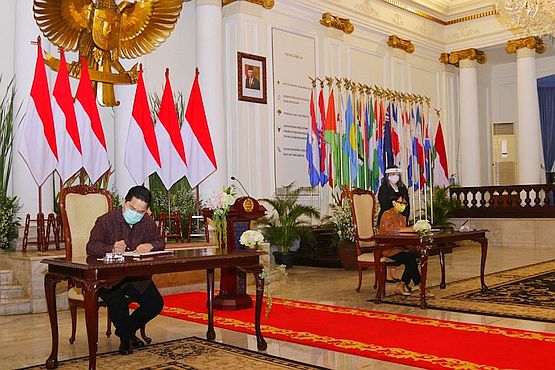
Indonesian Minister of BUMN (State-Owned Enterprises) Erick Thohir, promoting the vision behind his BUMN Go Global program and cooperation between the ministries required to make the program work, has been articulate in encouraging the country’s massive State-Owned Enterprise (SOE) sector, presently more than 100 companies and 800,000 employees, into action towards developing more rapidly in the global business arena, while inking a Memorandum of Understanding (MoU) for Economic Diplomacy and Support of the program with Retno Marsudi, the Minister of Foreign Affairs (photo below.)
JAKARTA – The Minister of BUMN (SOEs) Erik Thohir[L] and Minister of Foreign Affairs Minister Retno Marsudi[R] signing a Memorandum of Understanding in Economic Diplomacy for the ‘BUMN Go Global’ program. (July 17)
Based on dynamic data collected from key govt representatives, Indonesia’s SOE sector accounted for some US$17.5 billion in outbound investment last year, commercially reaching around the world, but as Erick Thohir points out, without any particular strategy. The Go Global agreement between the ministries is expected to remedy this situation, increase the value of SOE investments abroad, and encourage the country’s export performance. In addition, the cooperation area also includes match making efforts between SOEs and foreign investors interested in making inbound investments into Indonesia in accordance with their sectors of interest.
“BUMN launched its Go Global program to support Indonesia’s Supply Chain in marketing products in strategic markets. Now this is a special momentum because there is a common awareness and vision to encourage the development of BUMN (SOEs) in the global market, so as to increase the number of SOE outbound transactions and investment value, and advance Indonesia’s leadership abroad,” says BUMN Minister Thohir, at 50, one of the youngest members of Jokowi’s second cabinet, and a successful media tycoon known internationally for his former ownership of football teams D.C. United and Inter Milan.
So far, several State-Owned Enterprises (BUMNs) have ventured overseas, among them PT INKA, which has established a joint railroad project with the Bangladesh government, defense SOEs that export various products such as the Elite G2 Pistol, Bullet Ammunition, Medium Tanks, Cargo Ships, CN 235-220 Planes, and others. In addition, Bio Farma has produced and marketed polio vaccines in various countries such as Angola, Somalia and Ethiopia.
To achieve Erick Thohir’s lofty BUMN goals, the two Ministries agreed to the possibility of forming a tactical team consisting of representatives of the two Ministries as well as BUMN representatives who have the readiness and capacity to carry out outbound investment. This special tactical team will collaborate as exploratory partners in identifying investment opportunities and access to capital through to the implementation of investments and the protection of Indonesian investments abroad. The MoU is valid for up to four years, and will be regularly monitored and evaluated.
“The formation of the Go Global Joint SOE Team between the Ministry of Foreign Affairs and the Ministry of SOEs is intended to synergize the development of SOEs in the global market and increase cooperation with strategic partners,” says Foreign Affairs Minister, Retno Marsudi. “It is hoped that the cooperation and assistance regarding economic diplomacy can expand the partnership network, the potential for BUMN investment and the opportunity to market SOE products on the international scene.”
“Thus, the BUMN Go Global program has two main objectives,” says Erick Thohir. “The first objective is to market SOE products that have already established some demand in multiple countries or markets, while the second objective is to improve the Supply Chain in Indonesia. In the past, Indonesia was only ever seen and treated as a domestic market. The BUMN Go Global program also hopes to help facilitate SOEs in acquiring enterprises in foreign countries. This will in turn ultimately rectify the supply chain in Indonesia.”
Christovita Wiloto, Founder of IYE! (Indonesian Young Entrepreneurs), is optimistic about the BUMN Go Global strategy, saying, “It’s about time that Indonesia’s State Owned Enterprises go global and it’s only natural that we are no longer satisfied only competing domestically. While it’s true that our domestic market is full of potential and should not be neglected, Go Global is the strategy that should be implemented as soon as possible so that Indonesia may not only survive, but thrive.”
Indonesia Young Entrepreneurs, known as IYE!, is a global network of young Indonesians with entrepreneurial spirit, across all industries. With over 50,000 members based around the world, the IYE! organization acts as a platform to bring together young minds that are resilient and have integrity. In regards to the BUMN Go Global strategy, Christov asserts that SOEs and the business world in Indonesia are ready and more than capable of competing at the global level.
What we urgently need is to solidify a clear and consistent strategy that will give guidance to the Go Global program. The steps that the Ministry of BUMN and the Ministry of Foreign Affairs have taken have been celebrated by tens of thousands of Indonesian Young Entrepreneurs across Indonesia, who are already fighting to break into the global market with a plethora of goods and services that they have continued to develop and perfect, Christov emphasized.
“The Go Global strategy has the potential to lift the standard of quality among Indonesian businesses in all aspects, whether it be integrity of individual character to the sophistication of the goods and services themselves. At the same time, this program will introduce a variety of disruptions in all aspects, which will work to turn the wheels of revolution within the world of business in Indonesia, in an integrated manner,” Christov further explained. “Strike while the iron is hot: taking advantage of the moment, when the momentum is right in Indonesia.”
BUMN Minister Erick Thohir believes that the country has reached the stage and a special momentum in its capacity to develop SOEs for the global market , and to advance Indonesia’s leadership in the international arena. Factors that support this are, among others, a common awareness and vision to encourage the development of SOEs in the global market, which acts to increase the number of transactions and the value of outbound SOE investments, as well as to advance Indonesia’s leadership abroad.
Collaboration between Indonesian government agencies has been intensified by the recent Onward Indonesia Cabinet, so the Indonesian economy will have the power to recover quickly following the COVID-19 pandemic. Moreover, this collaboration is further fortified by an aggressive strategy which ensures that every step taken promotes Indonesian competitiveness in an increasingly fierce global market.