Myanmar Announces Direct Border Trade Currency Settlement with Thailand; Plans Similar Non-Dollar Convertibility with India in Near Future

Myanmar to Implement Commitments under ASEAN Economic Pillar

The Myanmar Government has agreed to accept the Thai baht as an official currency for settling border trade starting this month. Thailand is the second country after China to permit its national currency to be exchangeable with the Myanmar kyat for border trade activities.

Myanmar’s Minister of Information (MOI) Mr Maung Maung Ohn and Minister of Investments and Foreign Economic Relations (MIFER) Mr Aung Naing Oo said in a joint statement today that the kyat-baht initiative is a significant development as Thailand is Myanmar’s second largest trading partner after China. The Myanmar Government intends to initiate similar currency convertibility for the Indian rupee for trade along the border it shares with India.

Myanmar and China commenced kyat-renminbi settlement for border trades in January 2022. The increasing use of non-US dollar direct currency settlement for border trade underscores the strong bilateral relations that Myanmar enjoys with its neighbours.

The kyat-baht settlement arrangement was endorsed by an official notification and guidelines issued by the Central Bank earlier this month. All settlements will be conducted online as opposed to cash transactions previously.

In Fiscal Year (FY) 2020-2021 (November-to-October) border trade along five checkpoints of the Myanmar-Thai border – Tachileik, Myawady, Kawthoung, Myeik and Hteekhee, – amounted to USD4.3 billion equivalent, up from USD3.9 billion in FY 2019-2020.

Starting this month merchants along the Myanmar-Thai border who are registered with the Myanmar Economic Bank can conduct trade based on the kyat-baht exchange rate announced daily by the Central Bank of Myanmar.

In FY 2020-2021 Thailand accounted for 17.61% of Myanmar’s total trade which rose to USD5.3 billion from USD5.2 billion in FY2019-2020. Myanmar’s main exports to Thailand include natural gas, base metals, electronic goods, pulses, and garments. In turn, Myanmar imports from Thailand machinery, appliances transport equipment and manufactured goods.

“Myanmar’s immediate neighbours account for up to 70% of the country’s total trade volume. Direct non-dollar currency settlements will help to broaden and facilitate bilateral trade, flow of goods and other forms of payment and settlement with the respective countries.

“As Myanmar gradually adopts full bilateral currency swap arrangements with various countries, regional economic cooperation will also be strengthened. By reducing dependence on the US dollar, we will mitigate the risk of sudden exchange rate swings due to external geopolitical factors. Myanmar can also reduce physical money in circulation as more trade transactions migrate online. If we can succeed with such arrangements with our immediate neighbours, Myanmar can gradually reduce the dependence on the US dollar for up to 70% of Myanmar’s national trade volume,” the two Ministers added.

The currency arrangements will also help Myanmar reduce inflation caused by the rise of the U.S. dollar, while alleviating concerns of currency shortage within the country. The arrangements will also contribute to the economic recovery of the country which – despite rising energy prices – expects to record modest GDP growth in the current fiscal year ending October 2022.

The currency shortage and weaker kyat last year was stoked by economic sabotage by the opponents including so-called People’s Defensive Force (PDF) which tried to sow distrust in the local banking and financial system. Supported by foreign elements, the outlawed PDF also launched a terror campaign which caused the lives of many Government servants, security forces, and damage to public infrastructure.

The disturbances commenced after the 1 February 2021 Proclamation to declare a state of Emergency in Myanmar. Since the second half of 2021, the country has achieved national stability under the State Administration Council (SAC) which intends to call for a multi-party general election to be held by August 2023.

ASEAN Economic Ministers’ Meeting
Myanmar’s Minister of Foreign Investments and Economic Relations will represent the country at the March 16-17 ASEAN Economic Ministers’ Retreat. “The Ministry will update other ASEAN members on the economic impact on Myanmar caused by two recent crisis situations – the COVID-19 pandemic and civil disobedience,” said MIFER Minister Aung Naing Oo.

The Ministry will also update the significant efforts Myanmar is taking to develop the small and medium enterprises especially in the agriculture and manufacturing sectors through provision of credit and measures to facilitate the business environment despite the two major challenges.

“While the pressure on the financial system has eased and the kyat has stabilized due to policies implemented by the SAC, the Russia-Ukraine conflict has caused domestic energy prices to spike.

Due to the level of development of the country and recent crisis situations, Myanmar has probably faced more challenges than most other ASEAN members in the past year or so,” they said.

Minister Aung Naing Oo also said:
“Myanmar has made every effort to fulfill its obligations under the four pillars of the ASEAN Economic Community.

Myanmar is one of the earliest signatory states to deposit its instrument of ratification of the Regional Comprehensive Economic Partnership (RCEP) in accordance with the RCEP Agreement. However, Myanmar’s instrument of ratification has been politicised by some RCEP participating countries. Likewise, Myanmar’s ratification letter for Protocol to Implement the Tenth Package of Commitments under the ASEAN Framework Agreement on Services has also faced the same problem.

ASEAN’s approaches to creating a much stronger Southeast Asia, narrowing the development gap within ASEAN, and strengthening economic resilience cannot be fulfilled if Myanmar is excluded. This is not consistent with the ASEAN Charter. Myanmar believes that such actions can affect ASEAN’s centrality.

For all member countries to benefit from economic integration, an all-inclusive manner is needed in ASEAN. No country should lag in regional economic integration. Sadly, some of ASEAN’s directions and actions appear mismatched on the ground.

Whatever the challenges, Myanmar will actively continue to fulfill the commitments and obligations as an ASEAN member and as a responsible global citizen.”

Issued by Ministry of Information and Ministry of Investment and Foreign Economic Relations, Union Government of Myanmar.
For more information, please contact mediacontact@e-information.gov.mm or myintkyawmoi@gmail.com

B20 Task Force Proposes 3 Green Energy Transition Recommendations

To be presented at the G20 high-level meeting in Bali in November 2022

The B20 Energy, Sustainability & Climate Task Force, led by the largest Energy State-Owned Enterprise in Indonesia PT Pertamina (Persero), has proposed three green energy transition recommendations to be presented at the G20 high-level meeting in Bali in November 2022.

President Director of state-owned oil giant Pertamina Nicke Widyawati delivers a speech as Chair of B20 Energy, Sustainability and Climate Task Force at the B20 inception meeting in Jakarta on January 28. (ANTARA/HO-Pertamina)

The three recommendations were agreed upon during the Business 20 (B20) Inception Meeting held virtually at the end of January 2022, as noted in a release issued by PT Pertamina and received here on Thursday.

The Business 20, or B20, is an outreach group from the G20 that represents the international business community.

Chair of B20 Energy, Sustainability, and Climate Task Force Nicke Widyawati emphasized the importance for Indonesia to transition to green energy as mandated by President Joko Widodo.

According to Widyawati, the energy transition effort is a challenge for all, but it should also be viewed as an opportunity to create sustainable economic growth in future by implementing good established scenarios and roadmaps, especially with regard to the financial aspects.

“The B20 Energy, Sustainability and Climate Task Force has the same priorities as Indonesia’s G20 presidency in which we must be a strong green energy catalyst and go hand in hand with the principles of energy security, energy equity, and environmental sustainability,” Widyawati, concurrently the president director of state-owned oil giant Pertamina, stated.

She further noted that the Task Force will formulate some policy recommendations for sustainable energy transition, with focus on three priority issues.

  • First, the Task Force will put forth the recommendation on accelerating transition to sustainable energy use in order to ensure that global warming is limited to a maximum of 1.5 degrees Celsius.

    With regard to such a recommendation, the main efforts identified for the energy transition policy is the development of alternative fuel industries around the use of hydrogen and biofuels.
  • The second issue for recommendation is to ensure a fair and affordable way of transition as well as global cooperation on impact mitigation and support for adaptation to changes brought about by energy transition.
  • The third is global cooperation in increasing energy security for households and MSMEs as a means to end extreme poverty and accelerate energy transition to sustainable energy use.

“Those three priority issues will form the basis for formulating policy recommendations from the Energy, Sustainability and Climate Task Force by considering other critical issues, such as carbon pricing, global cooperation, livelihoods, and institutional development for financing and technology adoption,” Widyawati explained.

She also stated that energy is a binding constraint for sustainable economic growth and is a crucial matter for economic development to recover from the impact of the COVID-19 pandemic.

She also emphasized that urgent and focused action was currently needed to address various global challenges, including the lagging rate of energy transition, climate change due to anthropogenic greenhouse gas (GHG) emissions that have become a critical issue, and economic growth depending on fossil fuel energy consumption that contributed to most of the GHG emissions.

Widyawati also pressed for expediting energy transition globally while continuing to increase energy security and equity in an effort to sustain economic growth and reduce extreme poverty.

In addition, the financing gap must be bridged and investment must be shifted more to the energy transition infrastructure that can be paid for by carbon pricing, she remarked.

Widyawati also accentuated the importance of ensuring energy equity by increasing access to and affordability of clean and modern energy that is not only essential for a successful transition but also delivers environmental and economic benefits.

“Renewable energy-based power generation, electrification, and energy efficiency are the main pillars for faster energy transition, technology investment, and energy transition sector,” she stated.

“However, developing countries still lack frameworks, well-established governance, markets, advanced financial services, trained workforce, and access to advanced technology. Those aspects are needed for changes (in energy transition), and all of them are owned by developed countries,” she remarked.

At the B20 Inception Meeting, the Task Force Deputy Chair Agung Wicaksono stated that in order to seek inputs from businesspersons, the Task Force had also conducted a survey.

The survey covers 13 potential issues: institutional development, global cooperation, alternative energy sources, differential rates per sector, prevention of new carbon lockouts, carbon pricing, mitigation of financial impact, mitigation of loss of livelihoods, standardized ESG frameworks, ensuring orderly transitions, increasing access, affordability and adoption of end-user technologies.

Wicaksono stated that the survey results became the basis for the Task Force to formulate recommendations.

He also acknowledged that the energy transition efforts will require structured and committed global cooperation in improving governance capacity, supporting market development, channeling finance and technology, and upgrading workforce skills.

“The spirit, hard work, and commitment of this meeting continues, and it will bring global change for the better after the COVID-19 pandemic, so that we can Recover Together, Recover Stronger,” he remarked.

Written by: Yuni Arisandy Sinaga, Editor: Fardah Assegaf (c) ANTARA 2022

Media Contact: Fajriyah Usman, Vice President Corporate Communications, PT Pertamina (Persero)
Mobile: +62 858 8330 8686, Email: fajriyah.usman@pertamina.com, URL: https://www.pertamina.com

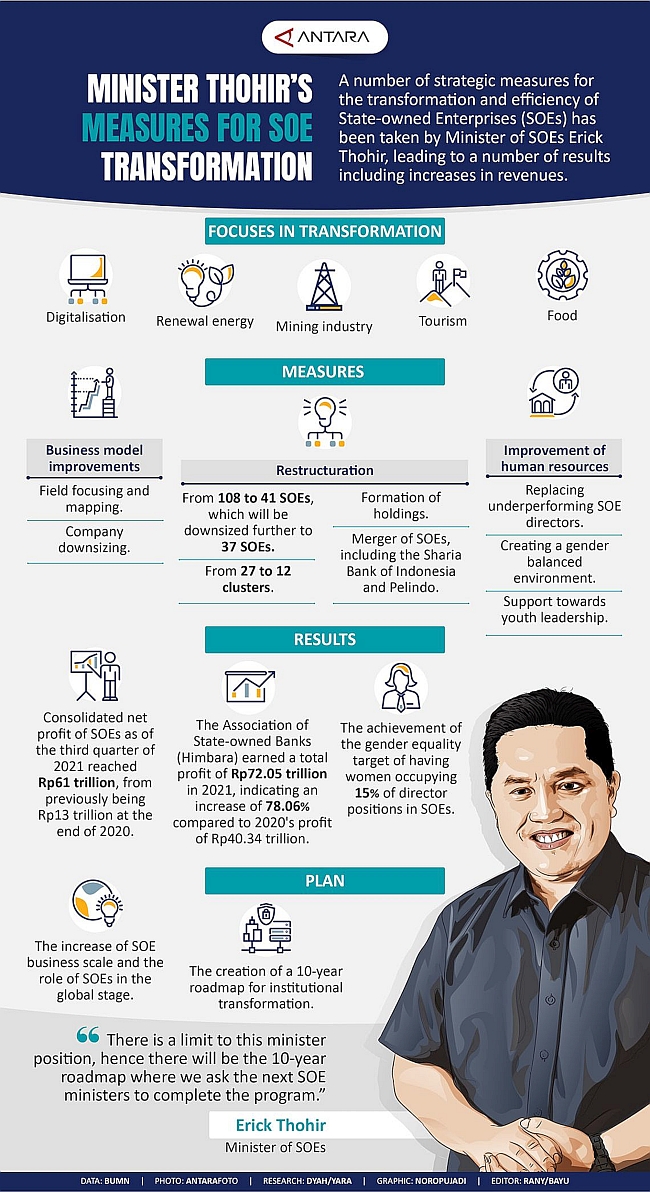
Minister Thohir’s measures for Indonesia’s SOE transformation

A number of strategic measures for the transformation and efficiency of State-owned Enterprises (SOEs) have been taken by Minister of SOEs Erick Thohir, leading to various results including increases in revenue.

“There is a limit to this ministerial position, hence there will be a 10-year roadmap where we ask the next SOE ministers to complete the program,” says Minister of SOEs Erick Thohir.

Infographic credits:
Data: BUMN, Photo: ANTARA FOTO, Research: DYAH/YARA, Graphic: Noropuadi, Editor: Rani/Bayu
https://en.antaranews.com/infographics/2724557/minister-thohirs-measures-for-soe-transformation
(https://tinyurl.com/yuenm9v7) (c) ANTARA

The Place Holdings Signs MOU to Acquire 51% of IP Rights Associated with Property Landmark, THE PLACE, and Iconic Attraction, Shimao Tianjie Sky Screen, in Beijing

SGX mainboard-listed company, The Place Holdings Limited (“The Place Holdings”, the “Company” and together with its subsidiaries, the “Group”), is pleased to announce that it has entered into a non-binding Memorandum of Understanding (“MOU”) to acquire a 51% stake in two entities which hold the IP Rights of design patent and certain trademarks that are related to property landmark, THE PLACE, in Beijing as well as certain assets and businesses relating to the iconic attraction, Shimao Tianjie Sky Screen, in Beijing.

Highlights:

– The first acquisition relates to the intellectual Property Rights (“IP Rights”) of design patent and certain trademarks that are used for the operations and management of the Sky Screen and real estate properties associated with the property landmark, THE PLACE (“THE PLACE”), in Beijing
– The recurring royalty income of the IP Rights are derived from the operation and management of the Shimao Tianjie Sky Screen and the usage of IP Rights in relation to the real estate properties associated with THE PLACE mall
– The second acquisition relates to the acquisition of certain assets and businesses relating to the Shimao Tianjie Sky Screen that are expected to generate operating revenue
– Shimao Tianjie Sky Screen (“Shimao Tianjie Sky Screen”) is one of the largest sky screens in Asia, comprising 7,500 sqm of LED lights that is located next to THE PLACE
– Pioneering new experiential marketing experiences, Shimao Tianjie Sky Screen continues to be a popular venue and platform for various events, advertisements and media
– Both the IP Rights and Shimao Tianjie Sky Screen are income-generative businesses and they are expected to strengthen the financial performance of the Group
– There are also various opportunities to leverage on the IP Rights and technological features of Shimao Tianjie Sky Screen to develop new business propositions related to the digital economy (such as gamification, NFTs, Metaverse) and create new revenue streams

More information on THE PLACE and Shimao Tianjie Sky Screen can be accessed at https://www.theplacebeijing.com. After the completion of the Proposed Acquisitions, the Group is expected to receive recurring royalty income from the licensing of the IP Rights for the use in the operation and management of Shimao Tianjie Sky Screen and the real estate properties associated with THE PLACE, which is a mixed-use development built in 2006, comprising two top-tier office buildings and a high-end shopping retail mall, located at No. 9 Guanghua Road, Chaoyang District, Beijing, the heart of Beijing’s Central Business District (CBD). In addition, the Group will also generate operating revenue from the operation of the Shimao Tianjie Sky Screen.

Shimao Tianjie Sky Screen is one of the largest sky screens in Asia with 7,500 sqm of LED lights across a space of 250m long and 30m wide, offering a spectacular light show experience with high-resolution imagery and state-of-the-art, immersive sound systems as well as technological features that enable interactivity.

Pioneering new experiential marketing experiences, Shimao Tianjie Sky Screen has established a strong brand and continues to be a popular venue and platform for various events, advertisements and media.

Developed by Beijing Aozhong Xingye Real Estate Development Co., Ltd, THE PLACE and Shimao Tianjie Sky Screen have quickly become a property landmark and iconic attraction in Beijing since it was unveiled to the public in September 2007.

Both the IP Rights and Shimao Tianjie Sky Screen are income-generative businesses and the proposed acquisitions are expected to strengthen the Group’s cash flow and financial performance.

With a scalable asset-light model that can be replicated across various countries, there are also various opportunities to utilise the IP Rights and technological features of Shimao Tianjie Sky Screen to potentially develop new business propositions related to the digital economy (such as gamification, NFTs, Metaverse) and create new revenue streams.

Mr Ji Zenghe, Executive Chairman of The Place Holdings, said, “With THE PLACE and Shimao Tianjie Sky Screen having been in operations for more than 15 years, the proposed acquisitions represent direct access to a well-known property landmark and iconic attraction that are both cash-flow generative and profitable.

The revenue streams from both acquisitions can strengthen our financial performance and enhance our business agility to pursue new growth initiatives.

Based on the proven operating models of the underlying assets, the Group can adopt an asset- light business approach to pursue various collaborations and opportunities across various countries in Asia.

In addition, with evolving consumer behaviors in lifestyle and business activities, we believe that there are various opportunities to leverage on the IP Rights and technological features of Shimao Tianjie Sky Screen to push the boundaries of digital innovation and develop new business propositions related to the digital economy.”

Contact:
Mr. Alex TAN
Mobile: +65 9451 5252
Email: alex.tan@8prasia.com

Enhancing Indonesian state-owned enterprises (SOEs) through clustering

President Joko Widodo (Jokowi) has given a period of one to two years for state-owned enterprises (SOEs) to make fundamental changes to increase their competitiveness.

On October 14, 2021, Jokowi stated that he was pleased to witness the clustering of container terminal operator and port development firm Pelindo into one holding, which was PT Pelabuhan Indonesia, to cuts logistics costs and helps improve connectivity throughout Indonesia.

According to Jokowi, the clustering forms into one great power, as it builds networking with partnerships abroad. “Through partnering with overseas companies who have networks, the (SOEs’) link to all countries can become a huge power,” the president remarked.

Through clustering, SOE companies have shown above-standard or even excellent work performance that has contributed significantly to the state budget.

According to data from the National Development Planning Board (Bappenas) in 2019, the estimated total budget for infrastructure development in the period of 2020-2024 was US$447 million or Rp6,445 trillion, and 21 percent of them came from or supported by SOEs.

In the third quarter of 2021, the total assets of SOEs reached some US$610.5 million or Rp8,767 trillion, equivalent to some 57 percent of Indonesia’s GDP.

Moreover, in January – September 2021, the total consolidated revenues were closed at Rp1,613 trillion, or grew 14% compared to the same period in 2020.

One of the efforts to enhance state firms’ performances is through clustering and restructuring.

Clustering efforts have been accomplished by reducing the number of SOEs from 107 to 41, and sector clustering from 27 to 12, where two deputy ministers each oversee six clusters.

Currently, there are 12 sectors that 41 SOEs engage in: energy, oil, and gas; mineral and coal; insurance and pension funds services; plantations and forestry; and telecommunications and media.

Additional industries include the food and fertilizer industry, tourism and supporting services, health industry, manufacturing industry, infrastructure, logistics, and financial services.

On February 18, 2022, SOEs Minister Erick Thohir announced that he would again downsize the number of state-owned enterprises from 41 to 37 in the next two years.

In addition, he expressed his hope that the next SOEs Minister can complete the reducing program to only 30 state-owned enterprises. With a roadmap for a ten-year period, he has targeted to make the scope of state firms more manageable.

So far, the ministry has encouraged and carried out the SOEs transformation through reducing companies that are considered too large in number, and focusing on inefficient business sectors.

Under his leadership, the transformation is focused on human capital through replacing underperforming board of directors with better ones, so many state-owned enterprises can generate profits for the state.

Through restructuring, holdings, mergers, and acquisitions, Thohir has made SOEs’ work performances more efficient.

According to Thohir, the SOEs Ministry distinguishes the strategy of the three pharmaceutical SOEs, where Bio Farma focuses on vaccines, Kimia Farma is focused on chemicals, and Indofarma on herbs. Indonesia has extraordinary potential in the herbal sector, but it has not been explored, so the SOEs Ministry had tried to re-map the path in developing it.

“We know that we import 90 percent of the raw material for medicines, and even medical devices. The COVID-19 pandemic has woken us up that we need to create a roadmap for Kimia Farma to focus on chemicals and Indofarma to be positioned on herbs,” he explained.

Thohir said that since health and energy are under the same SOEs ecosystem, a connection between sectors needs to be built.

On the other hand, oil and gas firm Pertamina has begun to build petrochemicals, and one of the derivatives of petrochemicals is to create paracetamol. If Pertamina is merged with a health state firm into one ecosystem, Indonesia would no longer need to import paracetamol.

The ministry also consolidated and launched the tourism holdings and its sub holdings into one cluster, consisting of airport operator Angkasa Pura I and Angkasa Pura II, as well as some aviation and hotel companies.

Thohir put together the infrastructure construction SOE and cement SOE into one cluster, as he viewed that the two need each other and are expected to synergize.

Meanwhile, the tourism, logistics, and support cluster consists of Hotel Indonesia, temple tourism managing firm PT TWC, which manages the temples of Prambanan and Borobudur and Ratu Boko, and Indonesia Tourism Development Corporation (ITDC).

State-owned Bank Negara Indonesia (BNI) also announced that it relied on clustering to strengthen the distribution of smallholder business credits (KUR), as well as to help boost the productivity of Micro, Small, and Medium Enterprises (MSMEs) during the COVID-19 pandemic.

Moreover, on February 23, three state-owned companies have agreed to collaborate on building green industry clusters in Indonesia that will prioritize the efficient and effective use of sustainable resources. The three state firms are electricity company PT Perusahaan Listrik Negara (PLN), oil and gas company PT Pertamina, and fertilizer company PT Pupuk Indonesia.

The clustering efforts began in 2020, as many state firms decided to be merged. Thohir also significantly increased the performance target of SOEs to double their outputs in 2024, especially on profits, which are projected to reach some US$20.8 billion or Rp300 trillion.

To be successful

Performance of banks incorporated in the Association of State-Owned Banks (Himbara) throughout 2021 showed satisfactory results through well-implemented credit restructuring, economist and capital market practitioner Lucky Bayu Purnomo said.

According to Purnomo, credit restructuring has resulted in more efficient and effective management of operational expenditures. In December 2021, the total profit of Himbara banks shot up to US$5 billion or Rp72.05 trillion, significantly increasing by 78.06 percent, compared to 2020 at US$2.8 billion or Rp40.34 trillion.

Thohir said each Himbara bank has a specific business focus, such as BRI prioritizes the MSME and ultra micro-segments, Mandiri is dedicated to enhancing the national corporates and entrepreneurs, BNI on international business, and BTN focuses to reduce backlog numbers and help people, including millennials, to make it easier to purchase a home.

“We hope that Himbara’s role can be more prominent and become the main national economic driver through enrichment in various segments that provides positive impacts for stakeholders and Indonesian society,” he said.

Previously, SOE holdings that had been formed were plantation holdings under PT Perkebunan Nusantara III, forestry holding under Perum Perhutani, fertilizer holding under PT Pupuk Indonesia, and cement holding under PT Semen Indonesia.

Under Thohir’s leadership, the holdings of SOEs that have been completed are the mining holdings under Mining Industry Indonesia (MIND ID), oil and gas holdings under PT Pertamina, pharmaceutical holdings under PT Biofarma, state-owned hospital holdings under Pertamedika IHC, insurance and underwriting holdings Indonesia Financial Group (IFG), and tourism and aviation holdings under Aviasi Pariwisata Indonesia or InJourney.

Fixing SOEs through the establishment of holdings is a task that must be carried out sustainably to yield powerful government-owned corporations that can compete on the international stage.

Photo: ANTARA / HO-Kementerian BUMN / pri
Reporter: Kenzu Tandiah; Editor: Rahmad Nasution (c) ANTARA

Motul Asia Pacific proudly launches all-new Motul Asia Hub

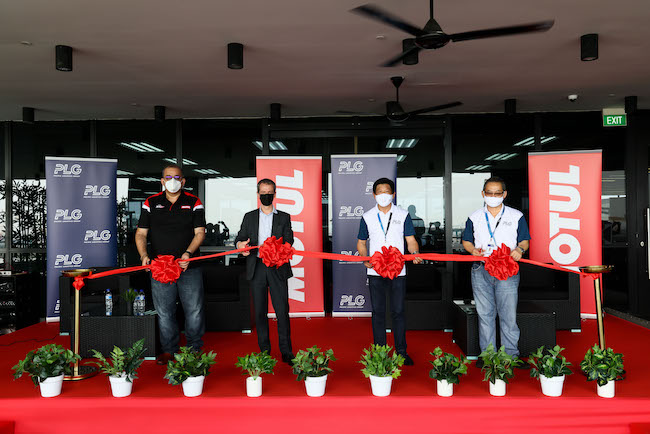
Lionel Dantiacq, CEO of Motul Asia Pacific, cut the ribbon to launch a new, state-of-the-art Motul regional warehouse, the Motul Asia Hub, on 1st March 2022. The Motul Asia Hub is located at the Pacific Logistics Group (PLG), Tuas Headquarters at Singapore’s brand new Tuas Mega Port. The 700,000 sq ft facility will support and enhance Motul’s supply chain across the Asia Pacific region by consolidating warehousing and inventory operations. The Hub will play a monumental role as Motul continues to build a greater presence across the APAC region and further strengthens its leadership in high performance lubricants and fluids for all uses.

Motul is excited about the launch of the Asia Hub, which will be essential to support its ambitions of accelerated growth. A modern supply chain solution will tackle the complexities of the market and streamline business operations.

The unique location of the warehouse will provide a geographical advantage for faster and easier transit with quick turnaround times for both air and sea shipments to all regional markets. The close proximity to the Tuas Mega Port makes the location of the warehouse optimal for improved supply chain efficiency. The facility will also house the latest technology, including a secure web-based inventory management system for instant access to up to date information.

Through the partnership with PLG and their bonded facilities, Motul will ensure a streamlined distribution network across the region to support its dealers. A unique aspect of the bonded facilities is the exemption of GST imposed on goods imported to be re-exported, reducing processing time and overhead costs leading to ultimate efficiency.

Motul continues to expand its market reach across APAC and exceed customer expectations. Providing the highest level of service to its customers is a core value at Motul and the Hub will enable it to meet the growing demands of the consumers. With an ever-changing automotive industry and new technologies pushing boundaries every day, the Hub will allow Motul to bring newly developed product lines to market faster than their competitors across the region. Motul aims to broaden its category reach and embrace product innovations for changing mobility requirements.

Asia has been a key market to Motul’s global business for many years, and the region continues to grow as the demand for lubricants ramps up. Motul Asia Pacific has set a clear target to focus on the needs of its discerning customers. With the launch of the Asia Hub, Motul will deliver its high-quality range of products to customers across the region in the only way they know how, fast and reliable. The Hub will also serve as a landmark for Motul to remain a preferred choice for customers for years to come.

LIONEL DANTIACQ | CEO Motul Asia Pacific

“The launch of our new Motul Asia Hub today represents an exciting continuation of our efforts to capitalize on Asia’s dynamic growth and transformation. With this Hub, we aim to streamline our supply chain in the region and bring our products to customers with greater efficiency. Catering to the customer’s need is at the core of who we are, and this Hub serves as a symbol of our dedication to hundreds of thousands of customers who choose Motul. The Hub will play a monumental role in expanding our reach, tapping new markets and bringing these amazing Motul products to existing and new customers for all their lubrication needs.”

ABOUT MOTUL

Motul is a world-class French company specialised in the formulation, production and distribution of high-tech engine lubricants (two-wheelers, cars and other vehicles) as well as lubricants for industry via its Motul Tech activity. Motul offers a whole range of products for everyday car use, including the 8100, H-tech, RBF series, ATF, CVTF and DCTF among others. Motul products ensure all parts of the car are kept in pristine condition to extract maximum performance and reliability.

Unanimously recognised for more than 150 years for the quality of its products, innovation capacity and involvement in the field of competition, Motul is also recognised as a specialist in synthetic lubricants. As early as 1971, Motul was the first lubricant manufacturer to pioneer the formulation of a 100% synthetic lubricant, issued from the aeronautical industry, making use of esters technology: 300V lubricant. In 2021, Motul launched the newest iteration of the 300V with revolutionary technology, setting a new benchmark for high-performance lubricants.
Motul is a partner to many manufacturers and racing teams in order to further their technological development in motorsports. It has invested in many international competitions as an official supplier for several championship winning racing teams.

Motul is committed to its growing business presence in Asia Pacific. Over the years, the company has expanded operations significantly. Currently it has 3 major manufacturing facilities and 2 R&D centres across the region to cater to the ever-growing demand. These centres focus on refining the lubricant technology for Asian climate and driving conditions, which are vastly different from Europe.

MOTUL Asia Pacific Pte. Ltd
1A International Business Park, #06-03
Singapore 609933
www.motul.com

For more information, please contact Motul at pr@motul.com.sg

Myanmar’s Minister of Information Mr Maung Maung Ohn Addresses Domestic Security Situation, Foreign Media Perception, and Preparations for Multi-Party Elections

The Ministry of Information (MOI) of the Union Government of Myanmar released today remarks by Minister of Information, Mr Maung Maung Ohn, addressing the domestic security situation, preparations for multi-party elections and foreign media perception.

“As you are aware, Myanmar Government is committed to maintaining friendly relationships with the media. Through your efforts you can share the true situation about Myanmar to the world.

Myanmar recently marked 2 major milestones. 2 February 2022 marked the anniversary of the formation of the State Administration Council (SAC) on 2 February 2021 after the Proclamation a day earlier. The second is the celebration of Union Day on 12 February 2022.

The Proclamation of 1 February 2021 was made following the failure to settle the issue of voter fraud list related to the 2020 elections, and subsequent postponement of Parliament sessions. The SAC has clearly stated that it is a caretaker government to carry out duties during a state of emergency.

The SAC has clearly stated to the people and to the international community that the Five-Point Road Map and Nine Objectives of the country were set out once it took the power of the State. It is performing its duties as a national responsibility, focusing on 2 main areas: national welfare and food security.

The SAC’s interim role will end after a new government is formed following multi-party democratic elections which will be held by August 2023 under Article 429 of the 2008 Constitution. Indeed, these elections will serve as the foundation of Myanmar’s democratic and political system.

Myanmar is a country with more than 130 ethnic groups among our population of 54 million people. Without such a firm foundation of proportional representation Myanmar will never achieve unity. That is the spirit of Union Day which we just celebrated on 12 February. Hence, this date is sacred to our nationhood.

Those who seek to divide Myanmar had tried to convene Parliament without addressing the fraud issue of the November 2020 elections. When the SAC was formed, they sought to discredit it. They have chosen a path of civil disobedience which has caused death, destruction and disruption of social and economic activity. Calling themselves the People’s Defensive Force they have chosen terrorism and sought foreign support. And some foreign elements seem to have supported them and such acts of terrorism.

I want to address 3 issues at this media briefing.

The first is to update on security matters from the viewpoint of the Government.

The second is the media bias and the perception of Myanmar by the international community.

The third relates to Proportional Representation and Preparations by The Union Election Commission for the coming elections.

Security Matters

The Government of the day has a duty to protect its citizens. Its security forces must prevent death, injury, destruction of property and disruption of social and economic activity. Its duty is to ensure peace and security.

Since the Proclamation the security forces have had to deal with clear acts of terrorism. Indeed, on 7 September 2021 the so-called National Unity Government (NUG) said it had launched a ‘defensive war’ and called for ‘revolt’ against the Government in ‘every corner of the country’.

Government officers have suffered attacks which resulted in the deaths of 95 civil servants and many injured. 20 monks have been assassinated. 153 Government servants were injured. Acts of terrorism have led to the destruction of large number of public and government buildings. These include 525 roads and bridges, 27 hospitals and clinics, 504 schools and educational buildings were destroyed across the nation from 1 February 2021 to 20 January 2022.

All told, the Government recorded 9,437 terrorist attacks in the past year and seized 5,606 assorted arms, 161,556 rounds of ammunition, 1,890 grenades and 11,424 homemade mines and bombs.

The security forces have arrested 4,338 terrorists. Nonetheless, the SAC has, on humanitarian grounds, pardoned and released 48,718 persons who had been prosecuted for participating in protests due to the incitement of the so-called Committee Representing Pyidaungsu Hluittaw (CRPH) and the so-called National Unity Government (NUG). Those released include 23,369 inmates released on Union Day on 12 February 2022.

In preventing such violence, the security forces have had to carry out the duty. Please see for yourself the return to normalcy in all major towns and cities in the country. Yes, there are still terrorism incidents in some parts of the country but in general, the security forces have helped to achieve national stability that we see today.

Media Perception

Myanmar is friendly to the media. We have accredited many journalists from international media organisations. What we find troubling is the clear and persistent bias of certain foreign media towards terrorist groups. But these media are doing so without fully ascertaining the facts. The terrorists appear to have swayed sections of the foreign media who report without checking and repeat misinformation as truth.

Two specific incidents come to mind. The first is the incident at Thantlang, Chin State in October 2021 to early January 2022. The second is an incident at Phruso Township, Kayah State in December 2021.

In both instances, the so-called PDF and parties sympathetic to it initiated attacks with arms and committed arson against security forces. In the Kayah State incident, the terrorists hid among civilians, and fired a 107-mm rocket launcher before fleeing. I have to stress that these attacks were initiated by terrorists and not by the security forces who were then called to respond.

In the Chin State incident that occurred on 29 October 2021, some vehicles caught between the 2 sides involved in the fire fight were set ablaze. The security forces tried to engage the local firefighting brigade but its vehicles had already been damaged earlier by the terrorists and it could not extinguish the fire. The terrorists abducted, handcuffed and killed some members of the Border Guard Force and then fabricated a story that security forces were responsible.

Many of the stories were written by journalists from the Western media who were not even present in Myanmar at the time. Indeed, many of these writers are reporting from abroad. They rely on ‘informants’ or propaganda on social media. They carried pictures of the arson attacks and blame the incidents on security forces.

The Ministry of Information will do its best to communicate the role and actions of the Government. That we are meeting the media and taking questions shows you that we have nothing to hide. We hope that the international media adhere to the principles of good journalism when reporting on Myanmar.

Preparing for Elections

Myanmar has held multi-party democracy elections in 2010 and 2015 and will do so again by August 2023.

The SAC is committed to the concept of Federalism. By this we understand it as sharing authority with regions, states, ethnic groups and races in a spirit of unity and integration.

We need to achieve true Proportional Representation (PR) so that various political parties have a wider scale of representation. Even if different political parties have different interpretations and concepts of federalism, we must come together to select the political system through a democratic process.

That political system must recognise the wishes of the majority and the minority in achieving harmony. It must involve sharing of power to enable the regions and states to have the rights of self-administration under the Constitution. Power must be shared on a tripartite basis – the Union, the regions, and the states.

In line with these principles and objectives, the current Union Election Commission (UEC) held 4 meetings with Political Parties last year to implement the System of Proportional Representation that is voter-based and democratic. These meetings have been successful, and a Closed List Proportional Representation System will be used to ensure that the process is fair. To achieve this UEC is amending the relevant laws and rules, reorganizing sub-commissions and providing the necessary training.

Basic voter registration is being carried out in the Regions and States to complete the voter list. A pilot project to verify the ground census so as to ensure accuracy of the basic voter list is also being implemented by the relevant ministries. Hence, major preparations are underway to hold free and fair multi-party democratic general elections in accordance with the Constitution (2008).

We hope that the international community understands that Myanmar is committed to the democratic process. They should not be blinded by sections of the international media who are fixated on a certain narrative about the country.

Myanmar has friendly relations with many countries who understand our challenges and have extended help in the form of humanitarian assistance and regular dialogue without interfering in domestic affairs. They continue to invest in our country away from the glare of publicity.

But Myanmar also has countries that are not friendly to us. Some want to impose a set of values that are consistent with the negative perception of sections of the foreign media. Some of these actions verge on interference of our domestic affairs. We hope these countries can view Myanmar without the lens of a biased narrative and recognise our history and unique social-political fabric.

We are determined to purse the path to democracy to ensure unity and progress. Thank you.”

Issued by Ministry of Information, Union Government of Myanmar.
For more information, please contact: mediacontact@e-information.gov.mm or myintkyawmoi@gmail.com
SOEs Ministry presses for more involvement of younger staff, women

The State-owned Enterprises (SOEs) Ministry aims to involve more women, millennials, and Papuans either in its companies or in the ministry itself, in a bid to build a diverse, equal and sustainable leadership.

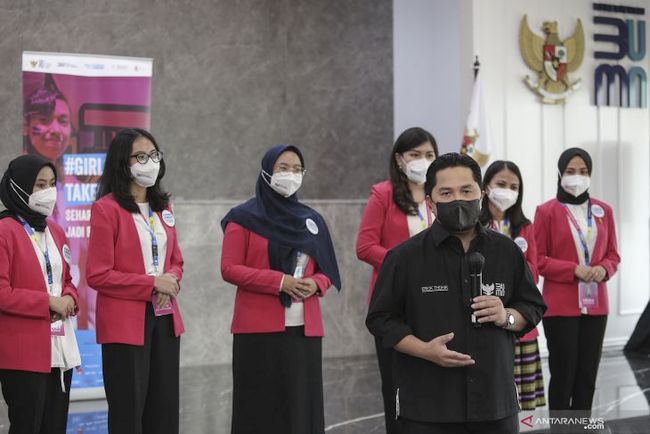
SOE MInister Erick Thohir during the ministry’s Girls Take Over Program (27/9/2021) (ANTARA FOTO/Dhemas Reviyanto/hp)

SOEs Minister Erick Thohir will target the promotion of 10 percent of young leaders in the SOEs by 2023, or double from five percent of young leaders promoted this year.

Young leadership and women’s leadership is viewed as a driving force to help expedite the realization of the SOEs programs, as well as to transform the human capital.

“I am fully concerned about the human capital transformation, since it is the start to push the transformation in the ministry. We are changing the structures, leaderships, mindsets, and core values we own,” he said.

In addition, young people are blessed with outstanding intelligence and mindsets that, in nature, may function differently when they are older, according to Thohir.

“In terms of leadership, we know that God blesses extraordinary intelligence and mindsets to humans, but in the limited ages,” he said.

Hence, the Indonesian younger generation should be offered the opportunities to become leaders and take positions in SOEs that align with their competence.

By 2021-end, the minister installed some young leaders under 42 years in several strategic positions, such as Soleh Ayubi, 38, who currently serves as Chief Digital Health Officer at PT Bio Farma. He formerly worked and built a career in the United States.

Muhammad Fajrin Rasyid is also among the young leaders who was promoted to become a director at PT Telekomunikasi Indonesia. He formerly served as Bukalapak co-Founder and President.

Productive Generation
The ministry is pressing for young leadership, since Indonesia will reach a critical momentum from 2024-2034 when young people under 40 years will become the majority in the country.

Young people will dominate and become the trendsetters in the market during the upcoming years. Currently, however, most of the Indonesian younger generation tend to be consumptive, not productive.

“We must change the mindsets, and how they can be productive and create the markets for Indonesian markets,” Thohir noted.

To this end, they need to be assisted with a supporting ecosystem that helps them to develop their ideas and create breakthroughs.

Thohir spoke of his intent to build such an ecosystem, that could be very competitive among other countries.

He mentioned South Korea as a country that has successfully built its pop-culture ecosystem in the past ten years, compared to the US and Japan that had led the industry.

He is optimistic that Indonesia can also be the country that can build its own supporting ecosystem, as it has large infrastructures and SOEs in many areas, such as telecommunication, banking and tourism.

Indonesia is also projected to become the fourth largest economy in the world. Such a prediction will not remain a dream if the young generation prepares themselves well, Thohir noted.

“The opportunities will not come twice. We have built toll roads, airports, seaports, and other infrastructures. In the near future, we will build digital infrastructures, such as data centers, wifi, optic fiber, 5G tower,” he said.

Women Empowerment
The role of women is inseparable in SOEs, since their ideas, thoughts, initiatives, and actions contribute to the companies’ advancement.

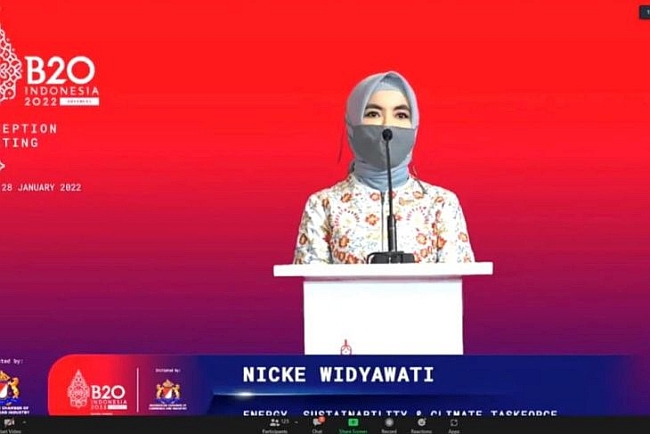
Women leaders in SOEs mirror the ministry’s efforts in enhancing equal leadership. They hold some strategic positions akin to president director, for instance, with President Director of PT Pertamina Nicke Widyawati, President Director of PT ASDP Indonesia Ferry Ira Puspadewi, and President Director of Airnav Indonesia Polana B Pramesti.

To involve more women in SOEs, the ministry incorporated with Indonesian Human Capital Forum (FHCI) and Indonesia’s Plan Foundation also ran an empowerment program for young and talented women, namely the 2021 Girls Takeover.

The program offers opportunities for six young women aged 20-24 years who were selected from some 7,000 candidates, to play a role as an SOE ministers or director for one day to coincide with International Daughters’ Day on October 11.

One of the finalists, Sharon Florencia, 24, shared her experience in taking over as SOE Minister. She acknowledged the valuable lessons she gained from Minister Thohir, especially from his leadership.

“During taking over as the SOE Minister, I observed the need to boost women’s leadership through mentorship programs for women, as well as scholarship programs for those in eastern Indonesia who do not have equal access to education,” she said.

Another finalist, Adinda Zenniar, 20, who took over for Bank Mandiri President Director Darmawan Junaidi, is keen on enhancing women’s capabilities in digitalization.

“I see that the company plays an important role in enhancing women’s leadership in information and communication technology by providing training and job opportunities for young women to work in this area,” she said.

Young Papuans in SOEs
BUMN Muda (Young SOEs), a community under FHCI, plays an active role in developing SOEs’ human capital, including young talents from Papua and West Papua, to become future leaders.

“We focus on human capital development of the young generation nationwide, including young talents from Papua and West Papua,” BUMN Muda Chairman Soleh Ayubi said.

FHCI recruited 776 young Papuans by 2021-end. They were installed in 55 SOEs, reaching 77 percent of the realization from 1,000 talents targeted.

The forum strives to uphold the commitment to recruiting the best Papuan talents by improving the process and the SOEs involvement to offer them more opportunities, FHCI Chairwoman Alexandra Askandar remarked.

The commitment is in line with President Joko Widodo’s policy to recruit 1,000 young talents from Papua and West Papua to work in SOEs across Indonesia.

Reporter: Juwita Trisna Rahayu; Editor: Fardah Assegaf (c) ANTARA 2022.
Photo: ANTARA FOTO/Dhemas Reviyanto/hp

Eradicating corruption within SOEs

In October 2021, former Garuda Indonesia commissioner Peter Ghonta took the lid off various problems brewing in the company.

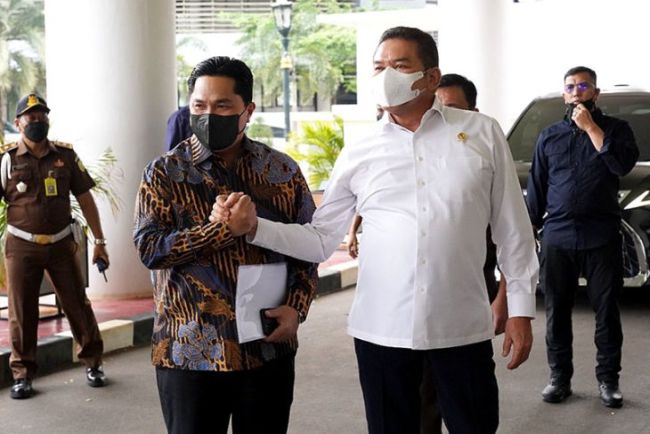
State-Owned Enterprises (SOEs) Minister Erick Thohir (L) meets Attorney General Sanitiar Burhanuddin (R) to file report on the Garuda Indonesia case at the Attorney General’s office, Jakarta, Tuesday, January 11, 2022. (ANTARA/HO-Ministry of Energy and Mineral Resources/pri)

Gontha urged the State-Owned Enterprises (SOEs) Ministry to dismantle past cases of alleged corruption in the company related to aircraft leasing.

He cited issues related to powerful groups in the company and the price difference between Boeing 777-300ER aircraft rental and CRJ1000 aircraft purchase.

Ghonta spoke of having reported the problems to several institutions ranging from the director-general of the Ministry of Law and Human Rights to the chairman of the Corruption Eradication Commission (KPK).

State-Owned Enterprises (SOEs) Minister Erick Thohir then filed a report on an alleged graft case in the financially beleaguered state-owned airline PT Garuda Indonesia (Persero) to the Attorney General’s Office.

The report outlines the government’s plan to restructure Garuda Indonesia as well as provides evidence regarding the procurement of ATR 72-600 aircraft.

We provide evidence from the investigative audit, so it is not an accusation, he asserted.

For the past two years, Garuda Indonesia had faced a financial storm due to past mismanagement that caused the company’s debt to swell to more than Rp140 trillion, Thohir remarked.

Meanwhile, Thohir noted that the Garuda Indonesia case was not just about an aircraft but pertaining to an ecosystem.

He encouraged the Garuda Indonesia case to be resolved, as it was impossible to buy or rent an aircraft without a business plan and without calculating flight routes.

In the absence of such a calculation, Garuda ultimately paid the aircraft rental fee of up to 28 percent to the lessor as compared to only eight percent to other airlines’ aircraft lessors.

“Hence, there is a system and there is a solution, so that in the future, Garuda will not repeat similar cases again since due to no management, the loss will also affect the people, in the form of expensive tickets,” he pointed out.

In addition, the SOEs Ministry has taken steps to restructure and salvage the state-owned airline.

The ministry will focus on transforming the airline to make it more accountable, professional, and transparent.

More than 470 creditors have submitted claims of up to US$13.8 billion, or equivalent to Rp198 trillion, to Garuda Indonesia as of January 5, 2022, as part of a debt recast.

The figure has been cited by Garuda Indonesia’s Suspension Debt Payment Obligation (PKPU) team, Thohir remarked.

After the verification is completed, the PKPU team will take a decision on January 19, 2022, regarding the amount considered to be valid and can be included in the restructuring process, he remarked.

The Garuda management had earlier submitted a proposal to reduce its liabilities by more than 60 percent, from US$9.8 billion to US$3.7 billion through restructuring.

The proposal aimed to help the company survive amid the COVID-19 pandemic that has protracted for two years.

Save Garuda

Commission VI of the Indonesian House of Representatives formed a working committee to rescue national carrier Garuda Indonesia.

“In principle, the Committee for Rescuing Garuda is a follow-up to the three work meetings undertaken by Commission VI with the SOEs minister, deputy ministers, and the Garuda Indonesia Board of Directors,” Head of the Committee for Rescuing Garuda Martin Manurung stated.

Manurung explained that the working committee will work not only to look for management issues within the state-owned airline but also to explore options offered by the government.

The deputy chairman of Commission VI stated that the formation of the working committee was also a form of political support for Commission VI of the Indonesian House of Representatives for Garuda Indonesia to stay afloat.

“We want Garuda Indonesia, as a national flag carrier, to be able to stay in the air, to be able to fly, as an airline of national pride,” Manurung noted.

Meanwhile, State-Owned Enterprises Minister Erick Thohir expressed support for the establishment of a working committee by Commission VI of the House of Representatives (DPR RI) to rescue and reform national carrier Garuda Indonesia.

Establishment of the working committee is proof of DPR RI’s concrete support and commitment to monitoring the state-owned airline’s rejuvenation process, the minister noted.

The political support that the legislature has exhibited would be key to rescuing the flag carrier, the minister noted while adding that his ministry is committed to cooperating with the parliament’s working committee for seeking solutions to remedy issues that have plagued the national airline.

The ministry will also inform the working committee, which will monitor the airline’s restructuring and reform progress, about Garuda Indonesia’s future business and reform plan, he added.

The State-Owned Enterprises Ministry cannot rescue the airline alone, and we need to collaborate with relevant stakeholders, including DPR RI’s Commission VI, in mending Garuda Indonesia, Thohir remarked.

Transforming Garuda Indonesia is a must to ensure the flag carrier survives amid the economic uncertainty posed by the COVID-19 pandemic and to ascertain that it records positive performance after the pandemic, he noted.

The ministry has also collaborated with the Attorney General’s Office to investigate allegations of corruption by the airline management in the past, the state firm minister remarked.

Thorough reforms in the law enforcement and business aspects are expected to bolster Garuda Indonesia’s performance to become more accountable, professional, and transparent in the future, Thohir affirmed.

Jiwasraya, Pension Fund

Efforts to eradicate corruption by the minister are also being made in the insurance business sector.

Thohir revealed that the completion of Jiwasraya’s mega scandal case provided a solution for the aggrieved parties.

“However, what distinguishes us from other corruption cases is that the Jiwasraya case has a solution for those who were harmed. It is not a pending case for which there is no explanation. Those who were harmed will be recompensated for their losses,” Thohir stated.

The minister drew attention to no solution being found to this day in several cases of corruption in pension funds and insurance. No refund was offered to the cheated parties.

For instance, the case of illegal online loans where no perpetrators or masterminds had yet been revealed and no refund was provided to the victims and deceived parties.

Thohir affirmed that the collaboration was necessary to solve the Jiwasraya case.

President Joko Widodo gave directions that the Jiwasraya case should be solved immediately.

After looking at the facts and evidence, an audit investigation from the Development Finance Comptroller (BPKP) and a report from the Supreme Audit Agency (BPK), the Ministry of SOEs officially reported the Jiwasraya case to the Attorney General’s Office.

“The Ministry of SOEs does not want to become trapped in legal problems, and it focuses on corporate issues,” the minister stated.

In addition, Thohir will fix pension funds in state-owned enterprises comprehensively this year.

The pension fund has become a breeding ground for corruption, with the pensioners’ bills not being paid in the end, he pointed out.

To this end, the minister of SOEs urged Commission VI of the Indonesian House of Representatives to jointly conduct a focus group discussion on exposure regarding pension funds.

“We are ready, but we cannot clean it up right away, as there is a binding law. Hence, the Ministry of SOEs cannot intervene,” Thohir noted.

Meanwhile, he remarked that comprehensive improvement in pension funds in the state firm became one of the SOE Ministry’s programs in 2022.

The existence of state-owned companies aims to provide the greatest profits to the state.

Thereafter, the profits will be channeled back through various programs for the people, starting from infrastructure development to welfare improvement, and others.

There is no place for corruption within SOEs.

The accountability, transparency, and anti-graft approaches must continue to be implemented to build prosperous SOEs.

(c) ANTARA 2022. Reporter: Azis Kurmala; Editor: Sri Haryati
ANTARA/HO-Ministry of Energy and Mineral Resources/pri

The Ongoing Quest for Advancing Indonesia’s State-Owned Enterprises (SOEs)

President Joko Widodo harbors many hopes and expectations for Indonesia’s State-Owned Enterprises (SOEs), and strives to see them succeed not only at a national level, but also at an international level. The President believes these SOEs hold vast potential to dominate the essential sectors earlyon, and move to the global level as they mature.

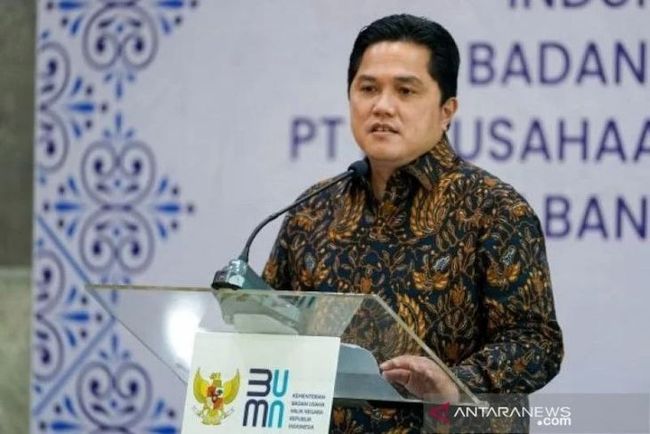
SOEs Minister Erick Thohir (ANTARA/HO-KBUMN)

Yet SOEs require professional management and a helping hand to assist them on their way. However great, any company that falls into the hands of mis-management will experience under development and and ultimate demise. To survive this fourth industrial revolution, companies need to elevate human resources and ecosystems to the highest standards. In theory, transformation coupled with technological adaptation will follow.

Indonesian SOEs Minister Erick Thohir spoke of three big dreams for SOEs, the first being larger SOE contributions to the nation. “If it is not my wishful thinking, it is how to enable SOEs to make a bigger contribution to the country. That is number one,” Thohir wrote on his official Instagram account @erickthohir on Feb 20.

The second dream involves the number of State-Owned Enterprises becoming less, but therefore larger in terms of the average footprint. The third dream pertains to rationalizing and optimizing the role of SOE services in the community. Each of these three dreams have Key Performance Indicators or KPIs.

SOEs have been undergoing a massive and ongoing transformation. It has borne fruit; for the first half of 2021, SOEs reported an income of Rp96 trillion, and net profit of Rp26 trillion. Reflecting on an improved state of affairs, Erick suggested that the restructuring program among State-Owned Enterprises had been going well.

It turns out that SOEs behaved more efficiently as they realized greater profits, bringing the total number of SOEs from 108 to 41, and SOE sectors from 27 to 12, comprised of mineral and coal, forestry and plantations, foods, healthcare, finance and insurance, telecommunication, infrastructure and logistics, and several others.

Thohir’s ministry was successful in reducing the niumbers of SOE companies, and SOE sectors, which he had deemed too great, focusing instead on specific SOEs or segments to incorporate his tranformative notions. Among the groups undergoing transformation, the State-Owned Banks showed some tangible results.

The minister noted that the State-Owned Bank Association (Himbara) profit rose by 78% in 2021, while the banks remained focused on their respective segments: BRI (Indonesian Peoples Bank) catering to MSMEs, company-oriented Mandiri Bank, BNI (Indonesian State Bank) with its international scope, and BTN (State Savings Bank) of housing-related financial services.

The Himbara Association gained around Rp72.05 trillion in profit in 2021, much improved from their combined profit of Rp40.34 trillion in 2020. BRI contributed Rp 30.76 trillion to this total, Mandiri Rp28.03 trillion, BNI Rp10.89 trillion, with BTN pitchig in for Rp2.37 trillion.

Syahrul Ramadhan, Coordinator of Millennial Indonesia’s MSME and Business Sector, lauded Erick’s initiatives, encouraging the banks to such lofty achievements. Under Thohir’s command, for example, less-experienced directors had been replaced with seasoned professionals, the means to generate more profits for the state.

Moreover, a business sector mapping was undertaken since the SOEs had so many businesses; some SOEs weren’t even sure what their focus sector was. Deputy Head of Commission VI, House of Representatives, Martin Manurung seconded a motion recognizing the adjustments of State-Owned Enterprises as ongoing.

Although there are issues here and there, overall, it is doing well. Indeed troubles from the past still linger, though the Commission VI and the government are both committed to the betterment of the situation, as was apparent from their meetings.

Manurung affirmed that President Joko Widodo (Jokowi) hopes that a future will materialize through Revisions of the SOEs Laws, which are currently being prepared by his administration. Manurung concluded by commending Jokowi’s promotion of government investment.

Government Capital: the rules
Essentially, the commission and the ministry are on the same boat for most aspects in the quest to improve SOEs. These include restructuring, holdings, clusters, and investments, among others. The commission also agrees to some suggestions made by SOEs that received Government Capital for company acts.

In some instances, the discussions of Government Capital cannot be avoided. It should be ensured that capital is used for boosting the SOEs productivity, thereby offering significant contributions to the state in the form of dividend, tax, and more.

President Jokowi drew attention to several SOEs that had received excess government capital as a means of protecting continuation, despite making no meaningful contribution to the state, and it has often been stressed that capital should not be used as a way to cover losses caused by faulty management, he insisted.

The president gave stern warning that no such cases should recur. In fact, he also suggested that the dying companies be closed right away in lieu of having government capital being handed over to them. The president has sought for such action not out of malice or cynicism but rather based on the spirit to see the companies achieve success together, an expectation which hopefully does not end in dreams.

(c) ANTARA 2022. Reporters: Hanni Sofia, Mecca Yumna; Editor: Rahmad Nasution
ANTARA/HO-KBUMN: https://www.acnnewswire.com/topimg/Low_Antara202202242.jpg