Moomoo Inc. clinches Title Sponsorship for Yahoo Finance’s Exclusive Livestream of the 2021 Berkshire Hathaway Shareholders Meeting

Moomoo Inc, an all-in-one digitalised stock trading and wealth management platform and a wholly owned subsidiary of Futu Holdings Ltd (Nasdaq: FUTU), announced today that it has been selected as the title sponsor of the 2021 Berkshire Hathaway Shareholders Meeting live stream event. Yahoo Finance is the exclusive live stream host for the event which will be held on Saturday, 1 May 2021 beginning at 12:30 pm ET.

Berkshire Hathaway’s Annual Shareholders Meeting, known as the “Woodstock for Capitalists”, is one of the most well attended shareholder meetings in the world. In the new normal, the event will be broadcast remotely. Yahoo Finance will connect moomoo’s 13 million users to the only destination for investors and professionals to hear directly from billionaire investor Warren Buffett.

Millions of people around the world are expected to tune in to hear Chairman and CEO Warren Buffett, Vice Chairman Charlie Munger, Vice Chairman of Non-Insurance Operations Greg Abel and Vice Chairman of Insurance Operations Ajit Jain share their insights on economic recovery, today’s markets, the company, and more.

Mr. Leaf Hua Li, Founder & CEO of FUTU, said: “We are honoured to be selected as the Title Sponsor for Yahoo Finance’s live stream of Berkshire Hathaway’s Shareholder Meeting. The walls of access are tumbling down in this digital world and it is our privilege to provide our users with this opportunity.

There is always so much to learn from Berkshire Hathaway and Warren Buffett, one of the greatest investors of our times. We look forward to seeing a lively discussion on our moo community platform, with industry experts commenting and interpreting these nuggets of wisdom for our users.”

Created with the intention of fulfilling its mission in making investing “not alone”, the moo community serves as a platform for users to post investment ideas and trading history as well as interact directly with over 700 companies, fund managers, media and key opinion leaders through posts and live-streaming. On a daily basis, it has more than 1 million active users, over 310,000 user-generated content and over 3,000 posts. FUTU will be streaming the show live on its moomoo app, which is available in the Apple App Store or Google Play Store.

As an incentive to download the app for first time users, Futu Singapore is offering the following with a SGD 2,700 deposit for every account opening*:

– 1 Free Apple (AAPL) Share
– Cash coupon of SGD 30
– 90 days unlimited commission-free trading for US, HK & SG markets
– Free level 2 market data for US Stocks

The schedule of the live coverage is below, with special guests and interviews for the pre and post shows to be announced at a later date.

Yahoo Finance Livestream Programming Schedule:

· 12:30pm ET Yahoo Finance pre-show

· 1:30pm ET Shareholder Q&A with Warren Buffett, Charlie Munger, Ajit Jain, and Greg Abel

· 5:00pm ET Berkshire Hathaway business meeting

· 5:30pm ET Yahoo Finance post-show

· 6:00pm ET Livestream ends

The programme will also be broadcasted live on Yahoo Finance.

*Terms and conditions apply. The full terms and conditions and disclaimer can be found at https://j.moomoo.com/003U7L . This advertisement has not been reviewed by the Monetary Authority of Singapore. In Singapore, capital market products and services in moomoo are offered by Futu Singapore Pte. Ltd.

About Futu Holdings Limited

Futu Holdings Limited (NASDAQ: FUTU) is an advanced technology company transforming the investing experience by offering a fully digitised brokerage and wealth management platform. Pursuing a massive opportunity to facilitate a once-in-a-generation shift in the wealth management industry and build a digital gateway into broader financial services. The organisation’s primary fee-generating services include trade execution and margin financing which allow its clients to trade securities, such as stocks, warrants, options, futures and exchange-traded funds, or ETFs, across different markets. Futu enhances the user and client experience with market data and news, research, as well as powerful analytical tools, providing them with a data rich foundation to simplify the investing decision-making process. Futu has also embedded social media tools to create a network centered around its users and provide connectivity to users, investors, companies, analysts, media and key opinion leaders.

About Futu Singapore Pte. Ltd

Futu Singapore Pte. Ltd. is a wholly-owned subsidiary of Futu Holdings Limited.Futu Singapore Pte. Ltd. (www.futusg.com) is a capital markets services licence holder regulated by the Monetary Authority of Singapore (Licence No. CMS101000).

About moomoo

moomoo Inc. is a wholly-owned subsidiary of Futu Holdings Ltd, which is an advanced technology company transforming the investing experience by offering a fully digitised brokerage and wealth management platform. moomoo’s mission is to provide any level of investors with an intuitive and powerful investing platform by using technology. We keep improving customer’s experience and driving industrial innovation backed by independent technological research and development (R&D) capabilities on the whole trading process and our creative internet operating model. Capital markets products and services on moomoo are offered by Futu Singapore Pte. Ltd. to persons in Singapore, or to persons in jurisdiction where such offers are permitted.

For all media queries, please contact:

Ashley Tan / Jass Lim
FPR
T: 6438-2990
E: FUTU-SG@financialpr.com.sg

Diplomatic Posturing and the Power Game in Southeast Asia

Interview with Dr Stephen Nagy by the Centre for Peace and Justice (JKCPJ) Director, Mr Nadir Ali

Dr Stephen R Nagy, in a recent interview by Mr Nadir Ali, Director of the Centre for Peace and Justice (JKCPJ), responded to the rising tensions in Southeast Asia and spoke about mitigating the cascading issue of asymmetry of power and economy in the region.

In his opinion, the world is once again experiencing a great power competition, a competition that could cascade into conflict and catastrophe. Terrestrial land disputes have expanded to the maritime domain, with China having disputes with states in Southeast Asia, India, and Japan.

Chinese efforts to dominate Southeast Asian Politics and redistribute power is placing the region into the position of trying to balance regional security interests and national security interests. China is effectively using its asymmetric economic relations with its neighbours to achieve its strategic security objectives which focus on territorial control and political deference by neighbours.

In response to the question of China’s domestic legislation and its invention of historic claims and their role in China’s foreign policy, Dr Nagy answered that with China’s re-emergence as the dominant economy in the region, China has widened its claims on features in the South China Sea and islands in the East China Sea, many through domestic legislation and the invention of historic claims as tools to achieve foreign policy objectives. The effectiveness of domestic legislation by China in terms of securing its claims in the South China Sea and East China Sea is however debatable. Many such claims are not recognized by international bodies and courts such as the Permanent Court of Arbitration. One such claim in the South China Sea was ruled not legal by the Permanent Court of Arbitration in July 2016, in a case drawn upon by the Philippines.

China is using domestic legislation to expand its exclusive economic zones by creating municipalities at the edge of the South China Sea which gives a legal foundation to the exclusive economic zones. The impact of China’s legislation is however small. A parallel can be drawn comparing control through domestic legislation between the Chinese claims in the South China Sea and the Japanese controlled Senkaku Islands. Japan has controlled the Senkaku Islands for over a century and there is continuity in that control via coast guard and environmental management, mostly and mainly through domestic legislation and international partnership; no such continuity of control with regard to the Chinese claim exists on the ground in the South China Sea.

The invention of historic claims by China as a tool for foreign policy is even more debatable and problematic. To analyze this, one must turn back the pages of history and search for signs of claims of sovereignty by China over the island territories in the South China Sea; no such claim can be found. Bill Hayton in his book “Invention of China”, writes in detail how during the Ching (Qing) Dynasty, China showed no interest in the island formations in the South China Sea, whether the islands neighbouring Indonesia, Vietnam or the Philippines. China in the past has never set any claim of any of the island territories and thus the invention of historic claim is not only debatable but problematic as well. The UNCLOS treaty signed by 117 states which sets the 200-mile limit for Exclusive Economic Zones gives these countries a claim over the island formations in the South China Sea. UNCLOS however is not ratified by the US, which gives it a loose footing to enforce any such claims on China. This is despite the US conducting operations within the scope of the law.

Dr Nagy briefly touched on the role of ASEAN (Association of Southeast Asian Nations) and individual cooperation in establishing regional stability, and in his viewpoint, ASEAN could play a significant role in resolving territorial issues in Southeast Asia, but it is a loose association of nations and doesn’t have the legal capacity to challenge and enforce its decisions on China. Hitherto, it has till now not played any decisive role. At the 2014 ASEAN Summit, a consensus was developed for a joint statement with regard to territorial disputes, however, Cambodia succumbed to influence from China, making a joint statement impossible. This fracturing of ASEAN unity and division of opinion is mainly achieved through aid and pledges to promote development; an example of how China uses its economic influence to shape the behaviour of neighbouring states.

With most of the ASEAN states not claimants in the SCS disputes, China has a free hand in manipulating the decision-making capability of ASEAN. The ASEAN members hold mixed views about China; some members perceive China as an economic opportunity and think that China is critical for the development of ASEAN member states, while others see China as a state having dominating and hegemonic interests in the region, thus the relationship of China and ASEAN will always be important but challenging. The main problem is the power asymmetry between China and the Southeast Asian nations. These nations seek strategic autonomy to resolve the South China Sea issues peacefully and effectively. The pattern we are seeing, at an individual level, is to bring an extra-regional power to the region to enhance the human capital and other capabilities so that they can push back unilaterally against some of the more assertive behaviour of China. This becomes more important for ensuring that the economic, political and national security interests of smaller nations are met and secured.

Dr Nagy then addressed the need to establish and maintain partnerships and the formation of Quad-like groups in restoring stability and balance in Southeast Asia and particularly the South China Sea, as Japan has been the most active in establishing strategic partnerships, by providing coast guard vessels, maritime domain awareness, and human capital to support individual members and enhance ASEAN’s integration. Japan’s role is even more important when it comes to the Chinese maritime militia (fishermen boat strategy), whereby the militia tries to instigate escalations that allow China to build an image seen as being defensive. The militia is used to build pressure on the states and in the case of the Philippines, China has already occupied some features in the South China Sea using these militia forces. The militia moves in and out of sovereign national waters, where every movement is planned in building a Lawfare strategy, as in the case of the Senkaku islands.

The US needs to designate a dedicated naval fleet for the South China Sea, so it has a constant presence 365 days a year. This would limit the influence of China in the region, restore the symmetry of trade relations to some extent and stop the undue exploitation of smaller states by the People’s Republic of China. Naval cooperation and joint exercises in the South China Sea challenge China in particular when French and Canadian navies are involved. Quad and Quad-plus like cooperation is the way forward, however, this could lead to catastrophe if maritime management systems and communications channels are not established. China has to adjust to the presence of an extra-regional power in the South China Sea, and the US and allies have to work to keep China’s assertive behaviour at bay while avoiding accidental conflict.

– Dr Stephen R Nagy is a Senior Associate Professor at the Department of Politics and International Studies, International Christian University, Tokyo. He is a Distinguished Fellow at the Asia Pacific Foundation (APF) in Canada, a Fellow at the Canadian Global Affairs Institute, and a Visiting Fellow at the Japan Institute for International Affairs (JIIA). He is currently working on ‘Chinese Perceptions of Japan’s Foreign Policy under PM Abe since 2012’, and ‘Middle Power Cooperation in the Indo-Pacific’. Follow Stephen on Twitter @nagystephen1.

– Nadir Ali Wani is currently Director of the Center for Peace and Justice, a research-based group in Srinagar, the capital of Jammu and Kashmir, India. He holds a Master’s degree in Conflict Studies and International Relations from Jawahar Lal Nehru University, New Delhi, and has an abiding interest in the study of conflicts in South Asia with a particular interest in international politics to do with China, Islam and Kashmir.

– Jammu and Kashmir Centre for Peace and Justice (JKCPJ) is a youth-oriented, independent, multidisciplinary research organization. The Centre came into being in 2018, against the backdrop of global challenges upholding peace and social justice. The driving concern of the JKCPJ is bringing people together to accomplish things in an environment of trust, to strive for sustainable peace. Our mechanism transmits knowledge, hope, hard work, and successfully contributing to the development of humankind. Please visit https://jkcpj.org.

Commodities Intelligence Centre (CIC) Sees 26% Jump in Registered Customers in 2020

Singapore-based Commodities Intelligence Centre (CIC) – a Joint Venture between the ZALL Smart Commerce Group (ZALL), Singapore Exchange (SGX) and Global eTrade Services (GeTS) – has announced strong growth in FY2020, driven by the urgency for supply chains to digitalize during the pandemic. In 2020, the number of customers on the platform grew by 26 percent as compared to 2019 to reach 5800 registered users. Among the commodities traded on the platform include ferrous and non-ferrous metals, agricultural products, plastics and chemicals, and oil products. The total cumulative gross merchandise volume (GMV) on the CIC platform grew by over US$3.1 billion (S$4.1 billion) to reach US$13.4 billion (S$17.6 billion), an increase of more than 30 percent from 2019.

Peter Yu, Chief Executive Officer of CIC shared, “By making our platform and technologies affordable and easy to use, SMEs are able to easily onboard the platform and make use of these digital tools to grow their businesses. With global disruptions such as COVID-19 and the recent Suez Canal incident, we want to help SMEs build more sustainable and resilient businesses that can endure these challenging times as they grow and expand in Asia and to achieve greater trading synergies globally.”

According to the UOB SME Outlook Survey 2021, 34 percent of SMEs find digital adoption costly to implement, and yet companies who have digitally transformed one or more departments, or their entire business, have seen significantly higher revenue growth. One of the Singapore SMEs who have benefited from CIC’s platform is Go Holdings, a cullet supplier in Southeast Asia. Tapping on CIC’s business intelligence service DataPro, it has been able to access a wide database of over 2 billion records of customs and trade data from more than 110 countries across Asia, Europe and the Americas. This has allowed them to uncover new markets and diversify their trading operations, and connect with reliable partners and suppliers that align with their business goals. Alongside this, CIC also recently introduced a convenient Know-Your-Customer (KYC) service that helps SMEs with their due diligence to better manage their business risks.

Huang Zhi Rong, Business Development Executive of Go Holdings, shared, “As a general trading company from a traditionally offline industry, the thought of digitalization can be daunting and challenging as this is often costly and resource-intensive, and it takes up time and effort. However, digital platforms such as CIC, has allowed us to gain a competitive edge in the market, especially during the Covid-19 pandemic, by providing us with valuable market insights to guide our decision making and has enabled us to tap on the right information sources to strategize our business plans that have brought about profound changes to our import and export trade businesses.” Go Holdings is currently a subscriber of CIC’s DataPro services.

Over the past year, CIC has embarked on numerous initiatives to support SMEs in their digital transformation journey. In May 2020, CIC worked with Singapore Business Federation (SBF) to support SMEs under the “Rising in Support of Enterprises (RISE)” programme during the height of the pandemic. In December 2020, it has also jointly launched a “Digital Silk Road” initiative led by ZALL, and joined Singapore’s Blockchain for Trade & Connectivity (BTC) Network, which aims to help SMEs embrace the power of digitalisation to uncover new trading opportunities and to promote greater efficiency and transparency across global supply chains.

With sustainability becoming increasingly important for companies, CIC is also focusing more efforts to support commodity trading that contributes towards climate change and environmental sustainability, such as clean and renewable energy, as it aims to groom more than ten Global Commodity Champions over the next three to five years on the back of the world’s largest trade pact, the Regional Comprehensive Economic Partnership (RCEP) and China’s dual circulation strategy.

“At Go Holdings, we have also focused on environmental sustainability. Although it has not been an easy journey for us, we have taken steps to become a sustainable company, from our selection of partners and vendors that share our common values to our internal processes that promote the use of sustainable materials and culture of Reuse, Reduce and Recycle among our employees”, added Huang Zhirong of Go Holdings.

About Commodities Intelligence Centre (CIC)

The Commodities Intelligence Centre (CIC) is a global trading platform for physical commodities including Ferrous & Non-Ferrous Metals, Chemicals & Plastics, Oil & Petroleum, and Agri Commodities. Officially launched in Singapore on 12 Oct 2018, CIC is a Joint Venture between China-based ZALL Smart Commerce Group, Global eTrade Services (GeTS) and Singapore Exchange (SGX) to build trade connectivity through digital marketplaces and to grow a vibrant trading ecosystem in Singapore.

CIC aims to revolutionize commodity trading and facilitate cross-border trade through deal matching, trade finance, supply chain logistics, track and trace and global trade compliance. Since its establishment in October 2018, CIC has achieved a GMV (Gross Merchandise Volume) of more than US$13.4 billion (S$17.6 billion), with over 5,800 registered users covering markets including Singapore, Malaysia, Indonesia, India, China, among other countries in Asia. For more information, please visit www.cic-tp.com.

For media queries
E: CIC@preciouscomms.com

Indonesia’s State-owned Companies Go Global, Display Innovation at Hannover Messe Exhibition

As many as 13 Indonesian state-owned enterprises (SOEs) display their latest innovations at the largest industrial technology exhibition, the Hannover Messe 2021, as Indonesia plans to join the top 10 global economies by 2030.

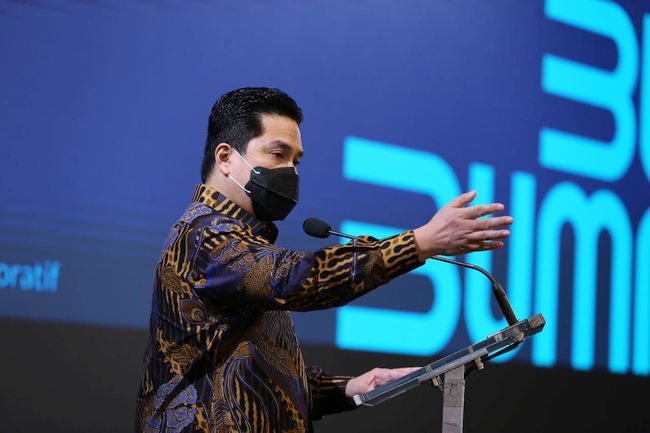
Minister of State-owned Enterprise of Republic of Indonesia Erick Thohir

“This goal can be achieved by accelerating the fourth industrial revolution, and pursuing not only technological transformation, but the digital transformation of industry, especially during this pandemic,” Indonesian President Joko Widodo said.

Indonesia was the first Southeast Asian country to become an official partner of the exhibition, which is being held this week, 12 – 16 April, in a digital edition. Participation at Hannover Messe (HM21) is part of the national policy “Making Indonesia 4.0”.

“We expect our state-owned enterprises to ‘go global’ as we stated in our ministry’s road map. Not only through acquisition, but by leading the global competition,” said Erick Thohir, Minister of State-owned Enterprises (BUMN).

Some state-owned enterprises have adopted and developed recent technologies to compete with, and even lead the competition in digital technology, specifically in the energy industry, and in the automotive, electronics, chemical and pharmaceutical sectors, and the health equipment industry. All have their innovation on display at MH21.

Indonesia’s premier energy holding company PT Pertamina engages 4.0 industry transformation by transitioning energy consumption from fossil fuels to renewable energies. For energizing its sustainable future, Pertamina is converting its refineries to produce green diesel, green jet fuels and green gasoline, optimizing geothermal capacity, and utilizing green hydrogen. It also works with other state-owned companies to develop Indonesian EV batteries and energy storage systems.

The state-owned enterprise in the electricity sector, PT Perusahaan Listrik Negara promotes digital-based products that can acclerate business processes, such as the iCORE Digital Power Plant for electricity generation, Digitally Enabled Distribution Excellence for electricity distribution, PLN Mobile application for customer service and the Charge in application for charging electric vehicles.

A testing, inspection and certification company, PT Surveyor Indonesia is showcasing its drone-powered enhanced solution services for predictive maintenance and remote surveys. Meanwhile, Indonesia’s state mint Peruri developed a research institute for authenticity and collaborated with SICPA SA (a Switzerland company) and Giesecke+Devrient (a German company). At the Hannover Messe, Peruri introduces its innovations in digital business solutions with its products Peruri Sign, Peruri Code and Peruri Trust.

PT Pupuk Indonesia, the holding company for state-owned fertilizer producers, has implemented a “Smart Production” system that uses big data and integrates several data including operational data and distributed control systems. The system is expected to increase efficiency of operations and monitors production processes in real-time. The company also implements a ‘Smart Distribution’ system that integrates data in the warehouse all the way through the ports. Another smart product is the PreciPalm or Precision Agricuture Platform for Palm Oil that provides digital maps on soil condition in oil palm plantation that can give recommendations for fertilization.

Indonesian pharmaceutical holding company PT Bio Farma displays “bio tracking”, “bio detect” and an integrated packaging line for vaccine distributions. A thermal sensor and a GPS are installed in vaccine transporting vehicles to monitor temperatures inside the vehicles and their real-time position. Bio Farma hopes to expand to Eastern Europe following HM21. PT Indofarma promotes several premium products and seeks to attract foreign investment in pharmaceutical and herbal products. PT Kimia Farma, another state-owned pharmaceutical company also joins the exhibition, alongside its subsidiary PT Kimia Farma Sungwun Phramacopia.

The largest port operator in Indonesia, PT Pelabuhan Indonesia II is showcasing several of its latest innovations, including i-Hub, an application for one-stop port service and e-government solutions National Single Window and Online Single Submission.

In line with transforming into a digital telecommunications company, PT Telekomunikasi Indonesia brought several digital solutions, including digital connectivity, digital platform and digital service, all being displayed at HM21.

PT INKA, the first integrated train manufacturer in Southeast Asia, presents ‘E-Inobus’, an electric bus that was produced in a configurable virtual workstation concept. The nation’s shipbuilder PT PAL Indonesia introduces a dual fuel (diesel and LNG) barge-mounted plant, a floating power plant that can be operated in shallow waters and remote regions.

Another state-owned company attending Hannover Messe is PT Barata Indonesia, which produces various machinery and components for power plants and trains. The company expects to expand its market and joins the global supply chain for industrial components.

“Leadership and technology transformation will create a momentum that will not only pull us out of this pandemic but will push us to leap further ahead,” Thohir said. Indonesia’s participation in Hannover Messe 2021 does push state-owned companies in going global, and it opens opportunities in forging business partnerships and investment cooperation with international companies towards building the future of industry 4.0.

CropLife Asia’s ‘Drone for Pesticide Application’ Online Forum draws Asian Policymakers and Global Experts

A first-of-its-kind virtual conference on drone use for pesticide application in Asia concluded this week after three days of dialogue and discussion among stakeholders from across the food supply chain. The event focused on perspectives ranging from those of regional governments, manufacturers as well as commercial adopters, and experts in the field forecasting future innovations.

“OUR INDUSTRY TAKES SERIOUSLY ITS COMMITMENT TO ENSURE RESPONSIBLE USE OF PLANT SCIENCE TECHNOLOGIES AND SUSTAINABLE AGRICULTURAL PRACTICES. DRONES ARE A NEW TOOL THAT CAN SUPPORT AND STRENGTHEN THAT EFFORT – AND HAVE THE POTENTIAL TO PLAY A TRANSFORMATIVE ROLE IN ASIAN AGRICULTURE,” SAID MR. GUSTAVO PALEROSI-CARNERIO, CROPLIFE ASIA PRESIDENT.

“As with any innovation, the most critical components are the best practices that reflect responsible use and the policies that underpin them. Through this week’s conference, we’ve heard vital insights from agricultural drone use experts in these areas and what the future may hold. We look forward to continuing these constructive conversations, and working with regulators and other key stakeholders across the food supply chain to help deliver drone use for pesticide application in Asia that is conducted responsibly.”

Drones or unmanned aerial vehicles (UAVs) are increasingly being used by large and small-scale farmers globally. This includes use for mapping, crop surveillance and scouting, pesticide application, and monitoring both irrigation as well as grazing livestock. According to a recent Industry ARC report, “Agricultural Drones Market – Forecast (2021-2026)”, the market for agricultural drones is projected to reach more than $5.8 billion by 2026.

In Asia, the use of drones for pesticide application is rapidly growing in popularity due to the advantages it provides, namely: efficiency with use of inputs; enhanced spray precision; reduced water consumption; and less dependence on labor, resulting in lower associated costs.

“As food and agricultural stakeholders, we all have a duty to ensure our region’s farmers are enabled and empowered to grow the nutritious crops on which we depend – and help deliver a food supply for Asia that is safe, secure and sustainable,” commented Dr. Siang Hee Tan, CropLife Asia Executive Director.

“When used responsibly, drone technology can be a game-changer for Asia’s smallholder farmers. However, it’s critical that the growth in agricultural drone use in our region is matched by an expansion of sound and science-based regulations to support their responsible use. By bringing together a broad array of government and private sector stakeholders, this week’s forum was a substantial step forward on that front.”

Asia is home to the smallest-sized farms and the largest number of smallholder farmers in the world. It’s estimated that 85% of the world’s 525 million smallholder farmers live and work within our continent. These growers face unique challenges in comparison with larger commercial farmers – landholder rights, access to finance, labor shortages, and availability of technology among them. With COVID-19 having an exacerbating effect on many of these and other obstacles Asia’s smallholders face, drone use with pesticide application has the potential to benefit these growers by helping drive production and sustainability at the same time.

CropLife Asia’s Drone for Pesticide Application Online Forum was conducted 8-10 March and brought together virtually technology experts and sector stakeholders from across Asia and around the globe. The three-day conference was structured to convey and grow: common understanding of drone benefits to sustainability as well as farmers’ safety and productivity; strong cross-sector partnership between government and industry; and an open exchange of knowledge and best practices to manage risks and concerns.

A total of seven sessions were conducted during the forum to guide the discussion on a range of topics. From the “government” perspective, this included sessions on: Digital transformation and its impact on government agricultural policies; Regulatory frameworks for pesticide application by drone around Asia Pacific; and Safety Standard Operating Procedure (SOP) for pesticide application by drone. Sessions focusing on the “field” perspective included: R&D – Technology enablers for pesticide application by drone; and Commercial adoption of drone for pesticide application in APAC. Lastly, capturing the “future” perspective were sessions on: Emerging technological advancements in drone for pesticide application; and Roundtable – Future collaborations to drive best practices in the region.

For additional details regarding the Forum, including a full roster of moderators and panelists who participated, please consult the Events section of the CropLife Asia website.

About CropLife Asia

CropLife Asia is a non-profit society and the regional organization of CropLife International, the voice of the global plant science industry. We advocate a safe, secure food supply, and our vision is food security enabled by innovative agriculture. CropLife Asia supports the work of 15 member associations across the continent and is led by six member companies at the forefront of crop protection, seeds and/or biotechnology research and development. For more information, visit us at www.croplifeasia.org.

For more information please contact:
Duke Hipp
Director, Public Affairs & Strategic Partnerships
CropLife Asia
duke.hipp@croplifeasia.org

CropLife Asia 2021 Annual General Meeting convenes virtually with Regional Food Supply Chain & Farmer Resiliency Center Stage

The CropLife Asia 2021 Annual General Meeting (AGM) commenced virtually today, bringing together plant science industry leaders from across the continent. This year’s edition of the annual gathering includes a unique focus on how the global pandemic has impacted various aspects of the regional food supply chain as well as the official presentation of the newly-elected Board of Directors. The 2021 Board consists of:

  • Mr. Gustavo Palerosi Carneiro – President, CropLife Asia (BASF)
  • Mr. Alexander Berkovskiy – Vice President, CropLife Asia (Syngenta)
  • Mr. Jens Hartmann – Treasurer, CropLife Asia (Bayer)
  • Mr. Peter Ford – Secretary, CropLife Asia (Corteva Agriscience)

“It is an honor to lead CropLife Asia at such a consequential time for our region and industry,” said Gustavo Palerosi Carneiro, President of CropLife Asia.

“The challenges we face in Asia are daunting. While our region remains home to the highest number of hungry and undernourished, farmers are facing increasing pressure from pests, weeds, disease and the impacts of climate change. The far-reaching effects of the COVID-19 pandemic have only exacerbated the strain on food production and distribution.

“Plant science has an important role to play in making our food supply chain more resilient, but it’s only part of the solution. On behalf of CropLife Asia, we look forward to working with food and agriculture stakeholders across the region to meet these growing demands.”

In January of this year, the United Nations (UN) released a report titled Asia and the Pacific Regional Overview of Food Security and Nutrition. Among the findings of the report was new data reflecting a troubling lack of food security among children and the most vulnerable parts of society in Asia. Specifically, nearly two billion people in Asia cannot afford a healthy diet, with two-thirds of children in the region suffering from the physical effects of malnutrition.

Beyond food security, sustainability is a topic of increasing focus for society – particularly the issue of climate change. Activities related to crop production are estimated to generate anywhere from 10-13% of global greenhouse gas emissions, and agriculture is a leading cause of deforestation.

The innovative technologies of plant science continue to enable farmers to produce more safe and nutritious food with fewer impacts to the world around us. Biotech crops have been developed with improved traits such as increased yield, better resistance to pests and/or improved nutrition, among others – and allow for sequestration of carbon in the soil through practices such as no-till farming. These are crucial tools that help farmers address global challenges such as food insecurity and climate change together.

Meanwhile, farmers rely on crop protection products (or pesticides) to grow more food on less land and raise productivity per hectare. Without pesticides, 40% of global rice and maize harvests could be lost every year and losses for fruits and vegetables could be as high as 50-90%. These losses in yield would likely mean additional land would need to be cleared for agriculture, leading to increased carbon emissions.

The CropLife Asia 2021 Annual General Meeting will conclude on Thursday, March 4.

About CropLife Asia

CropLife Asia is a non-profit society and the regional organization of CropLife International, the voice of the global plant science industry. We advocate a safe, secure food supply, and our vision is food security enabled by innovative agriculture. CropLife Asia supports the work of 15 member associations across the continent and is led by six member companies at the forefront of crop protection, seeds and/or biotechnology research and development. For more information, visit us at www.croplifeasia.org.

For more information please contact:
Duke Hipp
Director, Public Affairs & Strategic Partnerships
CropLife Asia
duke.hipp@croplifeasia.org

Lunar New Year Brings Call from CropLife Asia to “Think of and Thank our Farmer Heroes”

With people in Asia and around the world set to celebrate Lunar New Year, CropLife Asia called for greater appreciation of regional growers and their critical contributions to food production – helping ensure food security across Asia and making available many of the ingredients to dishes enjoyed during this festive time of year.

Lunar New Year is a time when we reflect, spend more time with friends and family, and enjoy the delicious foods of the season,” said Dr. Siang Hee Tan, CropLife Asia Executive Director. “In the midst of the ongoing global pandemic, it all takes on greater meaning. The time spent with loved ones and eating the foods we savour will be that much more enjoyable and memorable.

“In the midst of this year’s gatherings, I hope we can also take time to think of and thank our farmer heroes. The men and women we depend on for the food we eat during this holiday and throughout the year have been hit hard by COVID-19. They drive food security for Asia in the midst of a growing number of challenges and obstacles. Asia’s farmers earn our respect and appreciation every day, and we owe them our gratitude.”

Farmers across Asia help make Lunar New Year celebrations more festive, nutritious and delicious by producing the various foods that are served during the holiday season. In China and across Asia, mandarin oranges are a staple that can be found on tables and given as gifts. In Vietnam, xoi (sticky rice) is synonymous with Tet celebrations. Meanwhile, tteokguk (rice cake soup) is a popular dish enjoyed by many in Korea; while tikoy (sticky rice treat) is a delicacy prepared by many of those celebrating in the Philippines.

The past year has been an unprecedented time for everyone; this has been particularly true for farmers in our region. Asia is home to the smallest-sized farms and the largest number of smallholder farmers globally. The pandemic has only exacerbated a challenging landscape for these smallholders – one that includes mitigating the devasting impacts of locusts, the Fall Armyworm invasive pest and climate change. Despite these challenges, regional farmers continue to grow the safe and nutritious foods on which we depend and help ensure food security for a growing Asia and world.

Plant science continues to play a critical role in enabling farmers on this front. Biotech crops have been developed with improved traits such as increased yield, better resistance to pests and/or improved nutrition, among others. These traits are crucial tools that help farmers meet global challenges such as food insecurity. Meanwhile, farmers continue to rely on crop protection products to produce more food on less land and raise productivity per hectare. Without crop protection products, 40 percent of global rice and maize harvests could be lost every year and losses for fruits and vegetables could be as high as 50-90 percent.

About CropLife Asia

CropLife Asia is a non-profit society and the regional organization of CropLife International, the voice of the global plant science industry. We advocate a safe, secure food supply, and our vision is food security enabled by innovative agriculture. CropLife Asia supports the work of 15 member associations across the continent and is led by six member companies at the forefront of crop protection, seeds and/or biotechnology research and development. For more information, visit us at www.croplifeasia.org.

CropLife Asia: Reaction to UN Report on State of Food Security and Nutrition in Asia

With today’s launch of the United Nations (UN) “Asia and the Pacific Regional Overview of Food Security and Nutrition”, CropLife Asia released a statement urging more partnership and agricultural technology adoption across the region to help ensure an abundant and accessible supply of safe, nutritious food for all.

“Today’s report confirms a sadly familiar refrain for Asia: our region is failing to deliver food security for far too many – particularly among mothers, children and the more vulnerable parts of society,” said Dr. Siang Hee Tan, CropLife Asia Executive Director.

“The new data shared today is troubling and simply unacceptable. Nearly two billion people in Asia cannot afford a healthy diet. Meanwhile, two-thirds of our region’s children suffer from wasting; and 14 countries in Asia have a prevalence of stunting with children exceeding 30%.

“Ensuring a healthy start for our region’s children is crucial. We owe it to this generation and those that will follow to put aside differences and work together to address Asia’s growing food crisis. From farm to fork, greater cooperation and collaboration across the region’s food supply chain is critically important in helping realize positive nutritional outcomes.

“The innovative technologies of the plant science industry have a key role to play, but it’s only one part of the solution. Making certain an ample supply of affordable and nutritious food reaches those who need it most is not a government, civil society or private sector responsibility – it’s all our responsibility.”

About CropLife Asia

CropLife Asia is a non-profit society and the regional organization of CropLife International, the voice of the global plant science industry. We advocate a safe, secure food supply, and our vision is food security enabled by innovative agriculture. CropLife Asia supports the work of 15 member associations across the continent and is led by six member companies at the forefront of crop protection, seeds and/or biotechnology research and development. For more information, visit us at www.croplifeasia.org.

For more information please contact:

Duke Hipp
Director, Public Affairs & Strategic Partnerships
CropLife Asia
Tel: +65 6221 1615
duke.hipp@croplifeasia.org

Launch of Digital Week 2021: Southeast Asia

Calling all Cloud enthusiasts!

W.Media is gathering ASEAN’s best and brightest for a 4-day virtual conference to cover everything from datacenter deployment to digital banking. From 23-26 February, network with 7000+ Senior IT Leaders across the Malaysia, Indonesia, Singapore, Vietnam, Philippines, and Thailand markets.

Digital Week is the webinar experience: REVAMPED.

Our virtual platform is a community hub for you to access more content and engagement than ever:
– Interactive industry chat rooms
– Live speaker Q&A sessions
– 1-on-1 video calls between attendees
– Conference-wide prizes and competitions

Registration is open. Join the conversation today!

Register here: https://whova.com/portal/registration/digit2_202102/

For more information, please visit https://w.media/digital-week/.

About W.Media

W.Media is a global B2B technology marketing agency specialising in PR, Media, and Events. It is the anchor of the cloud, datacenter and cybersecurity communities in Asia Pacific, combining market knowledge and network to uplift brands via targeted communication. W.Media educates both industry stakeholders and the public on the latest developments in these industries through personalized engagement with the marketplace.

From its founding in 2018, W.Media began organising Cloud & Datacenter Conventions throughout the APAC region, in countries such as Vietnam, Malaysia, Indonesia, Thailand, Singapore and South Korea. In 2020, W.Media complemented its in-person events offerings by launching a series of webinars to connect top industry professionals in the three pillars driving tech today: Cloud, Cybersecurity, and Datacenters.

Beyond events, W.Media works closely with its clients to curate effective content marketing, editorial coverage, and digital advertising campaigns. This expertise and expansive regional network make W.Media a key player in Asia’s Cloud and Datacenter market.

About Digital Week (Southeast Asia)

With cloud migration and storage demands at an all-time high, it’s essential to stay up to date on the market’s latest developments and technologies. So, our W.Media team has created a space for IT professionals to come together and share their insights while reaching an even broader, digitized network: Digital Week.

Our Digital Weeks combine the informational expertise of a leading webinar series with the personal touch of in-person conferences and exhibitions. This four-day virtual event brings together experts from the Cloud, Data Center, and Cybersecurity industries to share both regional overviews and local observations, as well as enables you speak directly to potential clients or future business partners one-on-one.

Our first Digital Week kicks off in February 2021 and caters specifically to key players across South East Asia: Malaysia, Singapore, Thailand, Vietnam, the Philippines, Indonesia. Join thousands of industry peers–from specialists to C-suite–as we explore the future of Cloud in ASEAN. We’ll be covering: Datacenter Deployment Trends, Regional Cybersecurity Risk Assessments, The Future of Fintech, Cloud Migration Case Studies, Digital Transformation Developments, Sustainable Infrastructure Innovations, Data Sovereignty Best Practices, 5G and IoT Adoption Analysis, and much, much more.

UNISOC-powered Fibocom L610-EU obtains GCF/CE/NCC Certification

SHANGHAI, CHINA, Dec 23, 2020 – (ACN Newswire) – UNISOC, China’s CTTL, and Fibocom have announced the successful GCF/CE/NCC certification of the Fibocom L610-EU Cat 1 Module. The Fibocom L610, based on the UNISOC 8910DM, the world’s first LTE Cat 1 bis chipset platform, is an industrial-grade LTE Cat 1 module with maximum speeds of up to 10Mbps. GCF certification is a requirement for European operators, who require manufacturers to complete certification before entering the market.

Obtaining GCF, CE and NCC (National Communications Commission) certification is the result of close collaboration between Fibocom, UNISOC and CTTL (China Telecommunication Technology Labs). CTTL is the first laboratory with 3GPP Cat 1 bis GCF certification capacity and has provided rigorous certification services for the partnership. UNICOM, with a mission as the Digital World Eco-carrier, provides the core Cat 1 bis chip platform for the L610-EU.

Wei Ran, Director at CTTL, said, “CTTL has been paying close attention to the evolution of medium-speed IoT technology and market developments. We are optimistic that Cat 1 bis technology, which has been promoted by chipset manufacturers, most notably UNISOC, will achieve commercial success on a global scale by virtue of its data rate, terminal cost and network transformation cost. CTTL is the world’s first institution to formally qualify for granting 3GPP Cat 1 bis GCF certification. We aim to help domestic manufacturers such as Fibocom to participate globally with outstanding products. It is also important that CTTL becomes a comprehensive and large-scale inspection and test base for electronic information and communication equipment for domestic and international manufacturers.”

Judy Wei, Director of Product Marketing at Fibocom, said, “The Fibocom LTE Cat 1 L610-CN achieved domestic certification in April 2020, and the L610-EU has now achieved GCF/CE/NCC certification for Europe. Fibocom would like to thank UNISOC and CTTL for their strong support. With the GCF certification opening export to the world, the L610-EU, L610-LA, and other series products will be exported to Europe, Latin American, and other global markets. Based on L610-CN market reaction, we believe the L610 series will achieve great things in the global market.”

Allen Huang, Senior Vice President at UNISOC, commented, “UNISOC 8910DM, the world’s first Cat 1 IoT wide-area chipset platform, has quickly become the benchmark for medium-speed IoT products, with its advantageous technical specifications and technological maturity. The chipset platform has created many industry firsts since its release. Now, the 8910DM will officially enter the European, Latin American and other overseas markets based on the large-scale commercial experience of medium-speed IoT products accumulated in the domestic market over the past year. I am honoured to cooperate with our eco-system partners CTTL and Fibocom to create the successful launch of Cat 1 bis chipsets in overseas markets.”

Fibocom’s LTE Cat 1 Module L610 supports LTE, GSM dual-mode communication, VoLTE, audio, camera, LCD, keypad, and other functions. Formed as both LCC+LGA and MiniPCIe packages, it provides universal interfaces such as USB / UART / SPI / I2C / SDIO to meet various application demands of the IoT industry. The product covers the IoT market at medium- and low-speed and provides the perfect high-speed experience to all.

About UNISOC

UNISOC is a leading fabless semiconductor company committed to R&D in core chipsets for mobile communications and IoT. With 4,500 staff, 17 R&D centres, and 7 customer support centres in locations around the world, UNISOC is one of the largest chipset providers for IoT and connectivity devices in China, a global top 3 mobile chipset supplier, and the leading 5G company in the world. Please visit http://www.unisoc.com.

Media Contact

Yueying Tang, PR Team

e: yueying.tang@unisoc.com

UNISOC Technologies Co., Ltd