Nasdaq Verafin Joins Global Anti-Scam Alliance

The Global Anti-Scam Alliance (GASA) is pleased to announce that Nasdaq Verafin has joined GASA as a Foundation Member, strengthening the global effort to combat scams, financial crime, and digital fraud. As fraud tactics continue to evolve across borders and digital channels, cross-sector collaboration has become essential to protecting consumers and building safer financial ecosystems.

Nasdaq Verafin’s participation marks a meaningful step forward in the shared mission to advance trust, transparency, and resilience across the globe. In addition to joining the global effort, Nasdaq Verafin will join both the Brazil and Mexico chapters of GASA to partner with stakeholders across the financial ecosystem in Latin America, bolstering regional initiatives to combat financial crime.

“Criminals are innovating at an unprecedented rate, taking advantage of information siloes and the shortcomings of legacy technology to avoid detection. We are at an inflection point in the fight against financial crime, one that requires the entire ecosystem to come together, leveraging the power of collective intelligence to strengthen our defenses and better protect consumers around the globe. We look forward to partnering closely with the Global Anti-Scam Alliance to share innovative solutions, intelligence, and global expertise to the unique challenges financial institutions in Brazil and Mexico face,” said Mauriceo Castanheiro, Head of International Payments Fraud at Nasdaq Verafin.

Nasdaq Verafin is a global leader in financial crime management technology solutions, trusted by more than 2,700 financial institutions around the globe. The company’s innovative approach combines consortium data, AI, and machine learning to deter, detect, and prevent criminal activity. Nasdaq Verafin’s consortium approach uncovers hidden risks across the financial system, leveraging data and insights from across 800 million counterparties to improve fraud detection and prevention while reducing false positives.

“Having Nasdaq Verafin join the Global Anti-Scam Alliance as a Foundation Member is a milestone for our organization and for the global fight against scams. Their deep expertise in leveraging technology to more efficiently and effectively detect criminal activity brings a new level of insight and influence to our mission. With Nasdaq Verafin’s partnership, and their representatives joining the boards of our Brazil and Mexico Chapters, we are strengthening our ability to connect global knowledge with local action. Together, we can help shape stronger policies, accelerate industry collaboration, and build the foundations of a scam free future.” said Jorij Abraham, Managing Director of GASA.

“The addition of Nasdaq Verafin as a Foundation Member is not only a milestone for the Brazil Chapter, it is a strong endorsement of the relevance of our market and the seriousness of the work we have been building from day one. We are starting our journey already alongside a globally recognized institution known for excellence, innovation, and a deep commitment to integrity. This partnership strengthens our ability to translate global expertise into local impact and accelerates our mission to raise the standard of collaboration in the fight against scams and financial crime in Brazil.” said Renata Salvini, Chapter Director for Brazil.

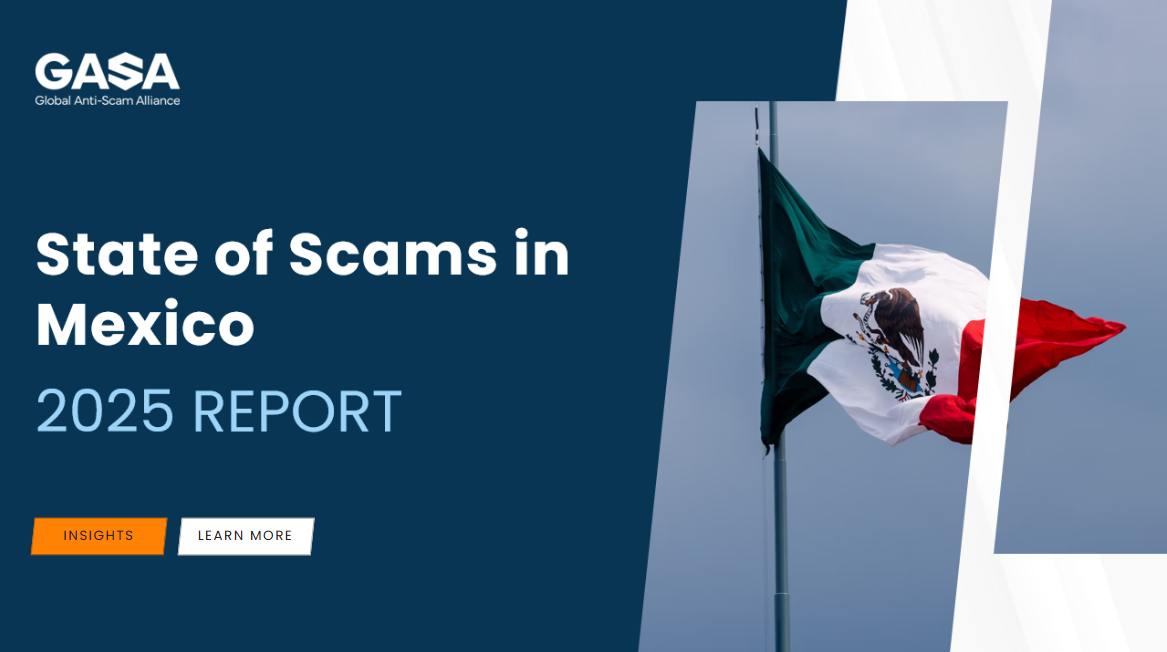
“With 76 percent of Mexican adults victimized by scams and 139 billion pesos lost annually, according to the 2025 State of Scams in Mexico Report, 2026 will be devastating. AI democratized productivity but industrialized fraud, this isn’t a prediction, it’s a countdown. Combating this epidemic requires integrated defenses where early detection triggers coordinated action across digital platforms, telecommunications, finance, and authorities. Nasdaq Verafin’s addition to GASA Mexico bridges the gap between technology and coordination. Without systemic collaboration, our economic system remains vulnerable. This strengthens our multistakeholder commitment to essential stability”, added Sissi de la Peña, Chapter Director for Mexico.

Through this partnership, Nasdaq Verafin executives will join the Chapter Advisory Boards of GASA Mexico and Brazil. As a Foundation Member, Nasdaq Verafin will collaborate with GASA and its members, bringing insights from more than two decades of stopping financial crime to develop innovative new strategies that protect consumers from fraud and scams.

To learn more about Nasdaq Verafin’s approach to financial crime detection and prevention, visit www.verafin.com.

About the Global Anti-Scam Alliance (GASA)
The Global Anti-Scam Alliance is a non profit organization whose mission is to protect consumers worldwide from scams. GASA brings together policymakers, law enforcement agencies, consumer authorities, NGOs, the financial sector, telecom operators, internet platforms, service providers, and cybersecurity organizations to share insights, uncover emerging scams, and promote coordinated action against fraud. Learn more at https://www.gasa.org.

About Nasdaq Verafin
Nasdaq Verafin provides Financial Crime Management Technology solutions for Fraud Detection and Management, AML/CFT Compliance and Management, High Risk Customer Management, Sanctions Screening and Management, and Information Sharing. More than 2,700 financial institutions, representing 11 trillion dollars in collective assets, use Nasdaq Verafin to prevent fraud and strengthen AML/CFT efforts. Visit www.verafin.com to learn more.

Cautionary Note Regarding Forward-Looking Statements:
Information set forth in this release contains forward-looking statements that involve a number of risks and uncertainties. Nasdaq cautions readers that any forward-looking information is not a guarantee of future performance and that actual results could differ materially from those contained in the forward-looking information. Forward-looking statements can be identified by words such as “will”, “may” and other words and terms of similar meaning. Such forward-looking statements include, but are not limited to, statements related to future actions and expected results. Forward-looking statements involve a number of risks, uncertainties or other factors beyond Nasdaq’s control. These risks and uncertainties are detailed in Nasdaq’s filings with the U.S. Securities and Exchange Commission, including its annual reports on Form 10-K and quarterly reports on Form 10-Q which are available on Nasdaq’s investor relations website at http://ir.nasdaq.com and the SEC’s website at www.sec.gov. Nasdaq undertakes no obligation to publicly update any forward-looking statement, whether as a result of new information, future events or otherwise.

© 2005 Nasdaq, Inc. The Nasdaq logo and the Nasdaq ‘ribbon’ logo are the registered and unregistered trademarks, or service marks, of Nasdaq, Inc. in the U.S. and other countries. All rights reserved. This communication and the content found by following any link herein are being provided to you by Nasdaq, Inc. and/or certain of its subsidiaries (collectively, “Nasdaq”), for informational purposes only. Nasdaq makes no representation or warranty with respect to this communication or such content and expressly disclaims any implied warranty under law. At the time of publication, the information herein was believed to be accurate, however, such information is subject to change without notice. Nothing herein shall constitute a recommendation, solicitation, invitation, inducement, promotion, or offer for the purchase or sale of any investment product, nor shall this material be construed in any way as investment, legal, or tax advice, or as a recommendation, reference, or endorsement by Nasdaq.

GASA Media Contact
Metje van der Meer
Marketing Director
metje.vandermeer@gasa.org
+31 6 48456282

Nasdaq Contact:
Nick Eghtessad
Corporate Communications
nick.eghtessad@nasdaq.com
+1 929 996-8894

SOURCE: Global Anti-Scam Alliance

OpenAI Joins the Global Anti-Scam Alliance as Foundation Member to Strengthen Global Response Against AI-Enabled Scams

  • New partnership marks a significant step forward in the shared mission to combat AI-enabled fraud and strengthen digital safety worldwide.

As scammers adopt increasingly sophisticated methods powered by artificial intelligence, global coordination and responsible innovation have become essential to protecting consumers. Today, the Global Anti-Scam Alliance (GASA) and OpenAI announce that OpenAI has joined GASA as a Foundation Member, marking a significant step forward in the shared mission to combat AI-enabled fraud and strengthen digital safety worldwide.

OpenAI Joins GASA

OpenAI Joins GASA

OpenAI is an AI research and deployment company whose mission is to ensure AI benefits all of humanity. The company heavily invests in safety and misuse prevention, including efforts to detect and disrupt malicious attempts to use AI systems for scams, phishing, fraud, and other harms. OpenAI also publicly shares lessons from this work to strengthen collective defenses and reinforce its commitment to transparency and responsible deployment.

“The rise of AI enabled scams demands coordinated action across technology, policy, and law enforcement. OpenAI’s efforts to detect and disrupt malicious use of AI systems align closely with our mission. Their decision to join GASA as a Foundation Member sends a strong signal that protecting consumers in the age of AI requires shared intelligence, shared responsibility, and shared purpose,” said Jorij Abraham, Managing Director of GASA.

“Scams are one of the fastest-growing threats people face online, and our tools are increasingly good at spotting them. That’s why OpenAI is joining the Global Anti-Scam Alliance, where we can share insights, strengthen our collective defenses, and help people stay safe. This work fits squarely within our mission to build AI tools that benefit all of humanity,” said Will McCants, Head of Intelligence and Investigations at OpenAI.

By joining GASA as a Foundation Member, OpenAI will contribute to global research, the global advisory board, and cross-sector collaboration focused on reducing the impact of AI-enabled scams. This partnership strengthens the collective effort to build safer digital ecosystems and ensure that innovation is supported by safeguards, accountability, and shared intelligence.

Read the full release here.

Contact Information
Metje van der Meer
Marketing Director
metje.vandermeer@gasa.org

SOURCE: Global Anti-Scam Alliance
Related Images

OpenAI Joins GASA

Global Scams on the Rise: Over Half of Adults Worldwide Report Scam Encounters, 23% Lost Money

Global Anti-Scam Alliance and Feedzai Release Global State of Scams 2025

The Global Anti-Scam Alliance (GASA), in partnership with Feedzai, has released the Global State of Scams 2025 Report. Based on a survey of 46,000 adults across 42 markets, the report provides a comprehensive analysis of the prevalence, impact, and policy challenges of scams worldwide.

GASA's Global State of Scams

GASA’s Global State of Scams

In the past 12 months, 57 percent of adults worldwide experienced a scam and 23 percent lost money. Shopping scams affected 54 percent of victims, while investment scams and unexpected money scams each impacted 48 percent. Scam encounters were most frequent in South America, Africa, and Oceania, where up to one in four adults lost money in the last year.

The research also highlights the emotional toll of scams. 69 percent of victims reported (huge) stress as a result, while 17 percent reported a loss of confidence and 14 percent said scams created heightened tension within their family unit. Despite this, many scams remain unreported, with uncertainty over where to report being the main barrier.

93% of adults globally claim to take at least one step to verify if an offer is legitimate or not. However, many often rely on methods that are less effective such as checking for spelling and grammar errors (27%); looking for reviews on the same website (24%) and checking if the company is on social media (21%).

Despite nearly three quarters of adults globally feeling confident in their ability to recognise a scam, scams remain prevalent, with many scam victims losing money and a significant proportion never reporting their encounters.

Jorij Abraham, Managing Director of GASA, comments: “We have a huge challenge, 73 percent of people worldwide feel confident they can recognize scams, however, nearly a quarter still lost money in the past year. Scams are not only draining finances but also eroding trust and creating significant stress within families. We are learning that scam awareness campaigns alone are not enough. We need to continuously educate consumers, build better solutions to recognize and block (AI) scams and work internationally closer to get to catch the scammers.

“Fraud isn’t just about transactions anymore. It’s about intent. Criminals are exploiting trust, behavior, and technology in real time. Stopping them takes more than spotting anomalies; it takes understanding human patterns. No single bank or payment provider can do that alone. The only way forward is collaboration across financial institutions and cybersecurity teams. That’s how we protect consumers everywhere.” adds Nuno Sebastião, CEO, Feedzai

The Global State of Scams 2025 Report emphasizes that scams are no longer isolated crimes but a global threat to consumer safety, financial stability, and trust in digital economies. GASA and Feedzai call for stronger international collaboration, better scam prevention tools, and accountability across platforms, governments, and industries.

The full report can be downloaded here: https://www.gasa.org/research

Contact Information
Metje van der Meer
Marketing Director
metje.vandermeer@gasa.org

.SOURCE: Global Anti-Scam Alliance

31 Concept Accelerates Next-Gen DPI Leadership With Strategic Acquisition of Xynthor AI

Acquisition Strengthens 31C’s Deep Packet Intelligence Platform with Revolutionary AI-Native Data Loss Prevention Technology

31 CONCEPT (31C), a leading UAE-based cybersecurity innovator, today announced the strategic acquisition of Xynthor AI Software Inc., a Canadian company pioneering AI-native Data Loss Prevention (DLP) solutions. This acquisition strengthens 31C’s commitment to advancing Deep Packet Intelligence (DPI), corporate security, and data sovereignty in an AI-centric world.

31 Concept & Xynthor

31 Concept & Xynthor

By integrating Xynthor’s “DLP for AI Era” with 31C’s DPI expertise, the combined platform will deliver the most comprehensive AI-aware security solution available. This move addresses the growing need for security systems capable of handling modern AI-driven workflows.

Why It Matters
The rise of generative AI tools such as ChatGPT and Claude has outpaced the capabilities of traditional DLP systems, which were built for structured data and static rules. High-profile incidents, including the accidental leakage of proprietary source code by Samsung engineers using ChatGPT, highlight the urgent need for AI-specific safeguards.

Misha Hanin, CEO of 31C, emphasized: “The convergence of AI and cybersecurity is the most significant paradigm shift our industry has ever seen. Traditional methods cannot manage the dynamic, context-aware data flows of today’s AI environments. Through this acquisition, we are pioneering an entirely new category of AI-native security solutions.”

Xynthor’s Breakthrough Technology
Xynthor brings several unique differentiators:
AI Data Guardian: Prevents sensitive information from leaving the organization using NLP-driven detection.
Air-Gapped Architecture: Keeps analysis inside the client’s environment, ensuring privacy and compliance.
Context-Aware Intelligence: Reduces false positives through AI-driven classification and behavioral analysis.
Private LLM Protection: Enables safe use of internal large language models without external exposure.
Seamless Integration: Works with existing infrastructure while supporting regulations like HIPAA and GDPR.

Comprehensive AI-Era Platform
The integrated platform enhances DPI with real-time policy management, adaptive threat detection, and behavioral analytics. It also streamlines compliance with GDPR, HIPAA, PCI DSS, and upcoming AI governance standards.

Boris Heismann, CTO of 31C, stated: “We’re not only responding to current demands but anticipating tomorrow’s challenges. Combining DPI with AI-native DLP creates a future-ready security platform.”

Strategic Impact
The global cost of data breaches averages over $4 million per incident, and AI-driven risks are only increasing. By uniting DPI and AI-native DLP, 31C positions itself as a global leader capable of addressing these critical challenges.

This acquisition aligns with 31C’s growth strategy, including performance-based incentives tied to Xynthor’s product success. Both companies will continue to operate from the UAE and Canada, combining their strengths to accelerate innovation and market expansion.

About 31C
Founded in the UAE, 31C is a cybersecurity company specializing in Deep Packet Intelligence, corporate security, and data sovereignty. Its innovative approach makes it a trusted partner for enterprises, governments, and regulators worldwide.

About Xynthor AI
Based in Canada, Xynthor AI develops AI-native security platforms designed to protect organizations using generative AI, ensuring both safety and compliance in the AI era.

For more information about 31C’s Next Gen DPI solutions, visit https://31c.io.

Contact Information
Misha Hanin
CEO
misha.hanin@31c.io.

SOURCE: 31 Concept

New Report Reveals Brazilians Face 252 Scam Encounters Annually Despite High Confidence in Spotting Fraud

  • State of Scam Brazil Report Shows R$99 billion Lost; Cross-Sector Webinar to Address Growing Crisis

The Global Anti-Scam Alliance (GASA) will release its State of Scam Brazil Report 2025 on November 13, revealing an alarming disconnect between confidence and vulnerability: while 75% of Brazilians believe they can recognize scams, 70% have fallen victim to at least one within the past year. The report estimates total losses at R$99 billion, underscoring the urgent need for coordinated action across sectors.

State of Scams in Brazil

State of Scams in Brazil

Part of a landmark global study covering 42 markets and interviewing 46,000 people worldwide, the Brazilian findings from 1,000 adults paint a troubling picture of daily vulnerability. Brazilians encounter scams on average once every day and a half – totaling 252 encounters per person annually. These encounters occur most frequently through phone calls (65%), text messages (55%), and email (55%), with shopping scams emerging as the most common type of fraud.

“Scams have become part of everyday life in Brazil. The fact that most people feel confident spotting scams, yet continue to fall for them, shows how sophisticated and convincing these schemes have become,” said Renata Salvini, GASA Chapter Director Brazil. “Education, prevention, collaboration, and accountability must go hand in hand if we want to stop this cycle.”

The Human Cost Beyond Financial Loss
The report reveals that 86% of scam victims felt very or somewhat stressed by their experience, while 59% reported significant or moderate impacts on their mental wellbeing. On average, each victim has been scammed 1.9 times in the past year, demonstrating how repeat victimization compounds both financial and psychological harm.

Despite the prevalence of scams, reporting remains disappointingly low. While just over two-thirds of those exposed have reported an incident, 60% of those who did report said either no action was taken (44%) or they were unsure of the outcome (16%). Among those who never reported, 44% cited the belief that reporting wouldn’t make a difference – reflecting a troubling perception that the problem is unmanageable.

Taking Action: Cross-Sector Solutions
In response to these findings, GASA will host a webinar on November 13, 2025, at 11:00 AM (Brasília Time) titled “State of Scams in Brazil: Turning the Tide on Scams.” The session will explore concrete strategies and coordinated actions to combat the growing scam epidemic in Brazil, featuring a distinguished panel of experts sharing insights from the legal, technology, and financial sectors.

Register for the webinar: https://streamyard.com/watch/wGnWNAayknPD

Read the report:
Read the full report
November 13 webinar
Read the full release, including methodology & boilerplate

Contact Information
Metje van der Meer
Marketing Director
metje.vandermeer@gasa.org

SOURCE: Global Anti-Scam Alliance

Scam Encounters Every Four Days: Mexico’s Financial Toll

This study of 1,000 Mexican adults reveals that over three-quarters have encountered a scam, with an average of one scam encounter happening every four days, equating to 86 scam encounters on average per person per year in Mexico.

Additionally, nearly 3/5 of Mexican adults claim to have experienced a scam in the last year, with each scam victim being scammed on average 1.8 times.

With widespread financial losses
Shopping scams (55%), investment scams (48%) and unexpected money scams (47%) are the most common types of scams in Mexico, with some having money stolen via email while others received kidnapping threats. Additionally, over 1/3 of Mexican adults claim to have lost money to scams in the last year. Wire or bank transfers (55%) and debitcard payments (21%) are the most common methods used by scammers to receive payment. Of those who have experienced being scammed, 2/3 have reported the scam to the payment service, and half of those were not able to recover any money lost.

And limited confidence in reporting
Scam encounters are frequent in Mexico, with 12% of Mexican adults encountering a scam multiple times a week. Over the past 12 months, over half of those who have encountered a scam have reported it at least once. However, those who reported the scam encounter said that either no action was taken (37%) or they are not sure what the outcome was (15%). Half of those who have never reported a scam encounter said they did not report it because they were unsure who to report the scam to, while over 1/3 did not think it would make a difference/no action would be taken.

Leading to increased vigilance
97% of Mexican adults claim to take at least one step to check if an offer is legitimate or a scam. The most common step taken is searching for reviews on other websites (36%), reflecting high effectiveness against scams.

And rising calls for accountability
1/3 of Mexican adults believe full repayment to the victim should be the top penalty for scammers, however, 19% believe in more severe punishment such as jail time of 6 to 10 or more years. Scams in Mexico continue to take a heavy toll, causing financial losses, emotional strain and prompting calls for greater protections and stricter consequences.

“These findings show both the scale of the challenge and the resilience of the Mexican people. Despite facing scams every few days, most adults are taking steps to verify information and protect themselves. Now it is time for organizations, regulators, and companies to match that vigilance with concrete measures to make Mexico a safer place online,” said Sissi de la Peña, Director of GASA Chapter Mexico.

Read the report & join our webinar:

Contact Information
Metje van der Meer
Marketing Director
metje.vandermeer@gasa.org

SOURCE: Global Anti-Scam Alliance

Use of AI in cybersecurity surges in Singapore

Artificial Intelligence (AI) is no longer a futuristic concept in cybersecurity but is now the frontline. Fortinet, a global leader in cybersecurity, has unveiled findings from a 2025 IDC survey that show a dramatic surge in AI adoption across Singapore’s enterprises, with 82% of organisations already integrating AI into their security operations.

The IDC study, commissioned by Fortinet, highlights how AI is now central to threat detection, incident response and even recruitment and investment strategies. As cyber threats grow more sophisticated, AI is being deployed not just to keep pace, but to get ahead.

AI: A double-edged sword

AI is transforming cybersecurity on both sides of the battlefield. While defenders use it to automate detection and scale threat intelligence, attackers are also leveraging AI to launch faster, stealthier and more adaptive campaigns.

The survey found that some 56% of Singapore organisations encountered AI-powered threats in the past year. Among them, 52% saw a two-fold increase in threat volume, while 42% reported a three-fold surge. These attacks often exploit gaps in visibility and governance, making them harder to detect and contain.

From detection to prediction

AI’s role in cybersecurity is advancing rapidly. Beyond basic detection, organisations are now deploying AI for automated response, predictive threat modelling and behavioural analytics.

Generative AI (GenAI) is gaining traction for tasks like updating rules, detecting social engineering, and guiding investigations. However, trust in full autonomy remains low. Auto-remediation is still rare, indicating that most teams are in the “co-pilot” phase of AI adoption.

Building AI-first teams

The rise of AI is reshaping the cybersecurity workforce. The top five roles in demand across Singapore include security data scientists, AI security engineers and AI-specific incident response professionals.

Organisations are no longer just buying AI tools but building teams around them. This reflects a broader trend of aligning talent with technology to stay ahead of evolving threats.

Strategic spending and smarter investments

Cybersecurity budgets are increasing, but cautiously. While 86% of organisations reported budget growth, 68% saw increases of less than 5%.

Spending is being directed toward high-impact areas like identity security, Zero Trust frameworks, and cloud-native protection. This marks a shift from infrastructure-heavy investments to more targeted, risk-centric strategies.

Understaffed and overwhelmed

Despite growing executive attention, many cybersecurity teams remain stretched thin. Only 6% of the total workforce is allocated to internal IT, and just 13% of that focuses on cybersecurity. Less than 15% of organisations have a dedicated Chief Information Security Officer (CISO), and only 6% have purpose-built threat hunting teams.

This lack of specialisation is contributing to burnout and reduced effectiveness.

Convergence and consolidation take centre stage

To combat complexity, organisations are embracing unified cybersecurity frameworks. A staggering 96% are either converging security and networking or actively evaluating it. Additionally, 70% are considering vendor consolidation – not just for cost savings, but for better integration, faster support and improved security posture.

Simon Piff, Research Vice-President at IDC Asia-Pacific, noted: “Organisations are no longer experimenting with AI, they are embedding it across threat detection, incident response and team design. This signals a new era of security operations that is smarter, faster and more adaptive to the evolving risk landscape. AI is fundamentally reshaping how threats are identified, prioritised and acted upon. This evolution demands a parallel shift in strategy and talent.”

Jess Ng, Country Manager, Singapore and Brunei, Fortinet, added: “CISOs across Singapore are entering a more advanced phase of cybersecurity planning – one where AI is not just augmenting defences but influencing how organisations structure teams, allocate budgets and prioritise threats. At Fortinet, we are helping customers embrace this shift by embedding AI across the platform, enabling faster detection, smarter responses, and more resilient operations as cyber risks become more complex and distributed.”

About Fortinet

Fortinet is a driving force in the evolution of cybersecurity and the convergence of networking and security. Our mission is to secure people, devices, and data everywhere, and today we deliver cybersecurity everywhere our customers need it with the largest integrated portfolio of over 50 enterprise-grade products. Well over half a million customers trust Fortinet’s solutions, which are among the most deployed, most patented, and most validated in the industry. The Fortinet Training Institute, one of the largest and broadest training programs in the industry, is dedicated to making cybersecurity training and new career opportunities available to everyone. Collaboration with esteemed organizations from both the public and private sectors, including Computer Emergency Response Teams (“CERTS”), government entities, and academia, is a fundamental aspect of Fortinet’s commitment to enhance cyber resilience globally. FortiGuard Labs, Fortinet’s elite threat intelligence and research organization, develops and utilizes leading-edge machine learning and AI technologies to provide customers with timely and consistently top-rated protection and actionable threat intelligence. Learn more at https://www.fortinet.com, the Fortinet Blog, and FortiGuard Labs.

Media Contact:
Leonard Low
leonard.low@priorityconsultants.com 

31 Concept to Debut Patent-Pending Technology at ISS Asia 2025 in Singapore

After just seven months in stealth mode, 31 Concept’s research division delivers a breakthrough in network intelligence – now patent-pending and set to debut at one of the world’s top security conferences.

31 Concept (31C), an emerging leader in network intelligence and cybersecurity innovation, today announced it will unveil its first patent-pending technology at ISS Asia 2025 in Singapore. The breakthrough, developed entirely within the company’s 31 Concept Research Lab, marks a major milestone for the startup, which is stepping out of stealth mode after just seven months of intense development.

31 Concept's Innovation Patented

31 Concept’s Innovation Patented

The 31 Concept Research Lab serves as the company’s innovation engine, uniting world-class experts in deep packet inspection, AI-driven analytics, cybersecurity, and advanced networking. With decades of combined experience from projects spanning telecom, military, and national infrastructure, the lab’s team operates at the intersection of applied research and practical deployment, delivering solutions designed to solve real-world challenges at scale.

“Our patent-pending technology is the direct result of the unique expertise and relentless drive inside our Research Lab,” said Misha Hanin, CEO and Co-Founder of 31C. “We built this in record time without compromising on quality or innovation. This is just the first step in a series of breakthroughs we intend to bring to the market.”

ISS Asia, recognized as one of the most important professional conferences in the world for intelligence, security, and law enforcement technologies, will provide the global stage for the debut. The event draws leaders from government, telecom, and private industry, making it the perfect venue for 31C’s first public presentation.

“The speed at which the 31 Concept Research Lab turned a concept into a patent-pending reality shows the strength of our people and our process,” added Boriss Heismann, CTO of 31C. “This is technology designed to address the most pressing needs in network visibility, security, and performance – and to do it in ways the industry has not seen before.”

The company’s presentation at ISS Asia 2025 will highlight the capabilities of the new platform, detail the patent-pending elements, and outline the roadmap for further innovations currently in development.

About 31C
31 Concept is a technology company focused on next-generation data intelligence platforms for telecom providers, governments, and regulated industries. Its flagship R&D division, the 31 Concept Research Lab, develops breakthrough technologies in network intelligence, cybersecurity, and AI-driven analytics.

Contact Information
Misha Hanin
CEO
misha.hanin@31c.io.

SOURCE: 31 Concept

Related Images

31 Concept to Debut Patent-Pending Technology at ISS Asia 2025 in Singapore

Naoris Protocol Stakes $120,000 Bounty To Break Cryptography Securing $470 Trillion Global Economy

Naoris Protocol, the post-quantum infrastructure pioneer, today announced a $120,000 (1BTC at time of announcement) bounty program challenging cryptographers worldwide to break the elliptic curve algorithms that currently secure the global digital economy, from Bitcoin’s $2.4 trillion market to the $410 trillion banking system.

The challenge highlights an urgent reality: while these cryptographic foundations remain unbreakable today, quantum computers will inevitably crack them within 10-20 years, potentially triggering the largest financial crisis in history.

The Bounty Structure

  • $50,000 for breaking secp256k1 (Bitcoin and Ethereum)
  • $30,000 for breaking Ed25519 (Signal, WhatsApp, Solana)
  • $20,000 for breaking NIST P-256 (TLS/SSL, Internet security)
  • $10,000 for other major curves (P-224, P-384, P-521)

“This isn’t about attacking cryptocurrency, it’s about defending it,” said David Carvalho, CEO of Naoris Protocol. “These curves are mathematical masterpieces that have protected global commerce for decades. But quantum computing will render them obsolete. We’re building the quantum-safe infrastructure the world needs before that day arrives.”

What’s at Stake

The elliptic curve cryptography targeted by this bounty currently protects:

  • $410 trillion in global banking assets
  • $145 trillion in assets under management
  • $57 trillion in intellectual property
  • $2.4 trillion in cryptocurrency
  • Government communications and defense systems
  • Every secure internet transaction

The Challenge

Participants must demonstrate the ability to recover a full private key from a public key using mathematical cryptanalysis. Implementation flaws, side-channel attacks, or weak random number generators don’t qualify; this is about breaking the math itself.
Submissions can be made at: BountyForm

“When quantum computers achieve this in the next decade or two, it won’t be a drill,” Carvalho warned. “That’s why forward-thinking enterprises and governments are transitioning to post-quantum cryptography now.”

Racing Against Time

Current quantum computers have approximately 1,000 physical qubits. Breaking 256-bit elliptic curve cryptography requires an estimated 2,330 logical qubits. Although that gap may seem large, quantum computing is advancing at an exponential rate.

“The NSA announced in 2015 they’re transitioning to quantum-resistant cryptography,” noted Carvalho. “When the world’s premier cryptographic authority moves, smart organizations follow.”

About Naoris Protocol

Naoris Protocol is building enterprise-grade, quantum-resistant blockchain infrastructure using lattice-based cryptography that withstands both classical and quantum attacks. The company serves Fortune 500 enterprises and government agencies, preparing for the post-quantum era.

Submit entries here: BountyForm

Media Contact: sharon@babslabs.io 

Naoris Protocol Announces Upcoming TGE for $NAORIS

Naoris Protocol, the first in production quantum-resistant blockchain and cybersecurity mesh architecture, has announced its upcoming TGE for July 31, 2025, marking a key milestone in the rollout of a new foundational security layer for the internet, designed to protect both Web3 and Web2 ecosystems from quantum and traditional threats. 

The $NAORIS token will launch for trading on July 31 at 12:00PM UTC / 08:00AM ET. At TGE, the initial circulating supply will be 599.260,000 NAORIS tokens, with a fully diluted valuation (FDV) of $500M FDV. The token will be available for trading on Binance Alpha, Binance Perps, and Gate.io with additional exchange listings to be confirmed. For the latest details, visit the Naoris Protocol website on July 31.

In terms of utility, the $NAORIS token powers a machine-driven trust economy, enabling real-time, quantum-resistant security validations across both Web3 and traditional Web2 infrastructures. Embedded at the Sub-Zero layer within a Decentralized Trust Mesh, $NAORIS powers autonomous device-to-device security challenges that trigger token swaps per block, ensuring continuous, automated trust without human input. Each node earns influence and rewards based on its trust score, creating a dynamic consensus system rooted in behavior and reliability. Token holders can stake to secure the network and participate in governance, aligning incentives with long-term protocol resilience.

The announcement comes just weeks after Naoris raised $3 million in a strategic funding round led by Mason Labs, with participation from Frekaz Group, Level One Robotics and Tradecraft Capital.

The $NAORIS token is the core utility asset powering this infrastructure, enabling access to security services, governance and incentives for network participants. As the lifeblood of the Naoris Protocol, $NAORIS serves as the cyber-trust primitive that drives decentralized security infrastructure across blockchains, enterprises and IoT ecosystems.

Operating at the Sub-Zero Layer, beneath L0 to L2 blockchains, Naoris Protocol provides the trust and security fabric for decentralized applications and existing internet infrastructure. It integrates directly with EVM-compatible blockchains without requiring hard forks and extends protection to blockchain transactions, physical infrastructure, including enterprise systems, cloud platforms, IoT devices, validators, bridges and decentralized exchanges. Naoris Protocol’s Post-Quantum technology is aligned with NIST, NATO and ETSI post-quantum standards – the US Government has mandated that all digital systems transition to post-quantum cryptographic standards by 2030, with legacy algorithms fully phased out by 2035.

“At Naoris, we firmly believe that blockchains cannot retrofit their way to post-quantum security, they must be built into the infrastructure from the ground up,” said Naoris CEO and Founder David Carvalho. “Our TGE helps us move closer to delivering the next standard in cyber-resilient infrastructure,ensuring global systems remain secure in the post-quantum era.”

Naoris’ architecture combines Post-Quantum Cryptography, Decentralized Proof-of-Security (dPoSec) consensus, and Swarm AI to secure blockchain transactions and web infrastructure against quantum computing risks. Key features include:

Quantum-Secure Blockchain Transactions: Enhances EVM blockchains against quantum threats without network disruptions.

Trusted Web3 Infrastructure: Immutable, real-time mesh network secures nodes, validators, bridges, and DEXs.

Distributed Web2 Security: Converts all devices into validator nodes, forming a self-healing network without single points of failure.

Since launching its testnet in January, Naoris Protocol has recorded significant growth, with over 100 million post-quantum transactions processed, over 3.3 million wallets onboarded, over 1M security nodes and over 475 million cyber threats mitigated as well as 31 active projects under development across sectors such as finance, telecom, energy, defense, and IoT.

Alongside CEO and Founder David Carvalho, Naoris Protocol is guided by a leadership team with deep expertise across cybersecurity, defense, and blockchain verticals, bringing together a diverse range of global experience. The team includes David Holtzman, former CTO of IBM and a key architect of the DNS protocol; Ahmed Réda Chami, Ambassador of Morocco to the European Union and former CEO of Microsoft North Africa; Mick Mulvaney, former White House Chief of Staff; and Inge Kampenes, retired Major General and former Chief of the Norwegian Armed Forces Cyber Defence. Their combined backgrounds reflect the protocol’s focus on building secure, scalable infrastructure for both Web3 and traditional systems.

To learn more about Naoris Protocol, users can visit https://www.naorisprotocol.com/ 

About Naoris Protocol

Naoris Protocol is the world’s first Decentralized Post-Quantum Infrastructure, built to secure both Web3 and Web2 against traditional and quantum threats. Operating beneath blockchain layers 0 to 3 as a Sub-Zero Layer, it integrates with existing EVM chains, nodes, bridges, dApps, enterprise systems, and IoT devices without requiring hard forks.

Media Contact: sharon@babslabs.io 

Disclaimer: All product and company names herein may be trademarks of their registered owners.  The information provided in this press release is not a solicitation for investment, nor is it intended as investment advice, financial advice, or trading advice. It is strongly recommended you practice due diligence, including consultation with a professional financial advisor, before investing in or trading cryptocurrency and securities.