Nasdaq Verafin Joins Global Anti-Scam Alliance

The Global Anti-Scam Alliance (GASA) is pleased to announce that Nasdaq Verafin has joined GASA as a Foundation Member, strengthening the global effort to combat scams, financial crime, and digital fraud. As fraud tactics continue to evolve across borders and digital channels, cross-sector collaboration has become essential to protecting consumers and building safer financial ecosystems.

Nasdaq Verafin’s participation marks a meaningful step forward in the shared mission to advance trust, transparency, and resilience across the globe. In addition to joining the global effort, Nasdaq Verafin will join both the Brazil and Mexico chapters of GASA to partner with stakeholders across the financial ecosystem in Latin America, bolstering regional initiatives to combat financial crime.

“Criminals are innovating at an unprecedented rate, taking advantage of information siloes and the shortcomings of legacy technology to avoid detection. We are at an inflection point in the fight against financial crime, one that requires the entire ecosystem to come together, leveraging the power of collective intelligence to strengthen our defenses and better protect consumers around the globe. We look forward to partnering closely with the Global Anti-Scam Alliance to share innovative solutions, intelligence, and global expertise to the unique challenges financial institutions in Brazil and Mexico face,” said Mauriceo Castanheiro, Head of International Payments Fraud at Nasdaq Verafin.

Nasdaq Verafin is a global leader in financial crime management technology solutions, trusted by more than 2,700 financial institutions around the globe. The company’s innovative approach combines consortium data, AI, and machine learning to deter, detect, and prevent criminal activity. Nasdaq Verafin’s consortium approach uncovers hidden risks across the financial system, leveraging data and insights from across 800 million counterparties to improve fraud detection and prevention while reducing false positives.

“Having Nasdaq Verafin join the Global Anti-Scam Alliance as a Foundation Member is a milestone for our organization and for the global fight against scams. Their deep expertise in leveraging technology to more efficiently and effectively detect criminal activity brings a new level of insight and influence to our mission. With Nasdaq Verafin’s partnership, and their representatives joining the boards of our Brazil and Mexico Chapters, we are strengthening our ability to connect global knowledge with local action. Together, we can help shape stronger policies, accelerate industry collaboration, and build the foundations of a scam free future.” said Jorij Abraham, Managing Director of GASA.

“The addition of Nasdaq Verafin as a Foundation Member is not only a milestone for the Brazil Chapter, it is a strong endorsement of the relevance of our market and the seriousness of the work we have been building from day one. We are starting our journey already alongside a globally recognized institution known for excellence, innovation, and a deep commitment to integrity. This partnership strengthens our ability to translate global expertise into local impact and accelerates our mission to raise the standard of collaboration in the fight against scams and financial crime in Brazil.” said Renata Salvini, Chapter Director for Brazil.

“With 76 percent of Mexican adults victimized by scams and 139 billion pesos lost annually, according to the 2025 State of Scams in Mexico Report, 2026 will be devastating. AI democratized productivity but industrialized fraud, this isn’t a prediction, it’s a countdown. Combating this epidemic requires integrated defenses where early detection triggers coordinated action across digital platforms, telecommunications, finance, and authorities. Nasdaq Verafin’s addition to GASA Mexico bridges the gap between technology and coordination. Without systemic collaboration, our economic system remains vulnerable. This strengthens our multistakeholder commitment to essential stability”, added Sissi de la Peña, Chapter Director for Mexico.

Through this partnership, Nasdaq Verafin executives will join the Chapter Advisory Boards of GASA Mexico and Brazil. As a Foundation Member, Nasdaq Verafin will collaborate with GASA and its members, bringing insights from more than two decades of stopping financial crime to develop innovative new strategies that protect consumers from fraud and scams.

To learn more about Nasdaq Verafin’s approach to financial crime detection and prevention, visit www.verafin.com.

About the Global Anti-Scam Alliance (GASA)
The Global Anti-Scam Alliance is a non profit organization whose mission is to protect consumers worldwide from scams. GASA brings together policymakers, law enforcement agencies, consumer authorities, NGOs, the financial sector, telecom operators, internet platforms, service providers, and cybersecurity organizations to share insights, uncover emerging scams, and promote coordinated action against fraud. Learn more at https://www.gasa.org.

About Nasdaq Verafin
Nasdaq Verafin provides Financial Crime Management Technology solutions for Fraud Detection and Management, AML/CFT Compliance and Management, High Risk Customer Management, Sanctions Screening and Management, and Information Sharing. More than 2,700 financial institutions, representing 11 trillion dollars in collective assets, use Nasdaq Verafin to prevent fraud and strengthen AML/CFT efforts. Visit www.verafin.com to learn more.

Cautionary Note Regarding Forward-Looking Statements:
Information set forth in this release contains forward-looking statements that involve a number of risks and uncertainties. Nasdaq cautions readers that any forward-looking information is not a guarantee of future performance and that actual results could differ materially from those contained in the forward-looking information. Forward-looking statements can be identified by words such as “will”, “may” and other words and terms of similar meaning. Such forward-looking statements include, but are not limited to, statements related to future actions and expected results. Forward-looking statements involve a number of risks, uncertainties or other factors beyond Nasdaq’s control. These risks and uncertainties are detailed in Nasdaq’s filings with the U.S. Securities and Exchange Commission, including its annual reports on Form 10-K and quarterly reports on Form 10-Q which are available on Nasdaq’s investor relations website at http://ir.nasdaq.com and the SEC’s website at www.sec.gov. Nasdaq undertakes no obligation to publicly update any forward-looking statement, whether as a result of new information, future events or otherwise.

© 2005 Nasdaq, Inc. The Nasdaq logo and the Nasdaq ‘ribbon’ logo are the registered and unregistered trademarks, or service marks, of Nasdaq, Inc. in the U.S. and other countries. All rights reserved. This communication and the content found by following any link herein are being provided to you by Nasdaq, Inc. and/or certain of its subsidiaries (collectively, “Nasdaq”), for informational purposes only. Nasdaq makes no representation or warranty with respect to this communication or such content and expressly disclaims any implied warranty under law. At the time of publication, the information herein was believed to be accurate, however, such information is subject to change without notice. Nothing herein shall constitute a recommendation, solicitation, invitation, inducement, promotion, or offer for the purchase or sale of any investment product, nor shall this material be construed in any way as investment, legal, or tax advice, or as a recommendation, reference, or endorsement by Nasdaq.

GASA Media Contact
Metje van der Meer
Marketing Director
metje.vandermeer@gasa.org
+31 6 48456282

Nasdaq Contact:
Nick Eghtessad
Corporate Communications
nick.eghtessad@nasdaq.com
+1 929 996-8894

SOURCE: Global Anti-Scam Alliance

OpenAI Joins the Global Anti-Scam Alliance as Foundation Member to Strengthen Global Response Against AI-Enabled Scams

  • New partnership marks a significant step forward in the shared mission to combat AI-enabled fraud and strengthen digital safety worldwide.

As scammers adopt increasingly sophisticated methods powered by artificial intelligence, global coordination and responsible innovation have become essential to protecting consumers. Today, the Global Anti-Scam Alliance (GASA) and OpenAI announce that OpenAI has joined GASA as a Foundation Member, marking a significant step forward in the shared mission to combat AI-enabled fraud and strengthen digital safety worldwide.

OpenAI Joins GASA

OpenAI Joins GASA

OpenAI is an AI research and deployment company whose mission is to ensure AI benefits all of humanity. The company heavily invests in safety and misuse prevention, including efforts to detect and disrupt malicious attempts to use AI systems for scams, phishing, fraud, and other harms. OpenAI also publicly shares lessons from this work to strengthen collective defenses and reinforce its commitment to transparency and responsible deployment.

“The rise of AI enabled scams demands coordinated action across technology, policy, and law enforcement. OpenAI’s efforts to detect and disrupt malicious use of AI systems align closely with our mission. Their decision to join GASA as a Foundation Member sends a strong signal that protecting consumers in the age of AI requires shared intelligence, shared responsibility, and shared purpose,” said Jorij Abraham, Managing Director of GASA.

“Scams are one of the fastest-growing threats people face online, and our tools are increasingly good at spotting them. That’s why OpenAI is joining the Global Anti-Scam Alliance, where we can share insights, strengthen our collective defenses, and help people stay safe. This work fits squarely within our mission to build AI tools that benefit all of humanity,” said Will McCants, Head of Intelligence and Investigations at OpenAI.

By joining GASA as a Foundation Member, OpenAI will contribute to global research, the global advisory board, and cross-sector collaboration focused on reducing the impact of AI-enabled scams. This partnership strengthens the collective effort to build safer digital ecosystems and ensure that innovation is supported by safeguards, accountability, and shared intelligence.

Read the full release here.

Contact Information
Metje van der Meer
Marketing Director
metje.vandermeer@gasa.org

SOURCE: Global Anti-Scam Alliance

Related Images

OpenAI Joins GASA

Global Scams on the Rise: Over Half of Adults Worldwide Report Scam Encounters, 23% Lost Money

Global Anti-Scam Alliance and Feedzai Release Global State of Scams 2025

The Global Anti-Scam Alliance (GASA), in partnership with Feedzai, has released the Global State of Scams 2025 Report. Based on a survey of 46,000 adults across 42 markets, the report provides a comprehensive analysis of the prevalence, impact, and policy challenges of scams worldwide.

GASA's Global State of Scams

GASA’s Global State of Scams

In the past 12 months, 57 percent of adults worldwide experienced a scam and 23 percent lost money. Shopping scams affected 54 percent of victims, while investment scams and unexpected money scams each impacted 48 percent. Scam encounters were most frequent in South America, Africa, and Oceania, where up to one in four adults lost money in the last year.

The research also highlights the emotional toll of scams. 69 percent of victims reported (huge) stress as a result, while 17 percent reported a loss of confidence and 14 percent said scams created heightened tension within their family unit. Despite this, many scams remain unreported, with uncertainty over where to report being the main barrier.

93% of adults globally claim to take at least one step to verify if an offer is legitimate or not. However, many often rely on methods that are less effective such as checking for spelling and grammar errors (27%); looking for reviews on the same website (24%) and checking if the company is on social media (21%).

Despite nearly three quarters of adults globally feeling confident in their ability to recognise a scam, scams remain prevalent, with many scam victims losing money and a significant proportion never reporting their encounters.

Jorij Abraham, Managing Director of GASA, comments: “We have a huge challenge, 73 percent of people worldwide feel confident they can recognize scams, however, nearly a quarter still lost money in the past year. Scams are not only draining finances but also eroding trust and creating significant stress within families. We are learning that scam awareness campaigns alone are not enough. We need to continuously educate consumers, build better solutions to recognize and block (AI) scams and work internationally closer to get to catch the scammers.

“Fraud isn’t just about transactions anymore. It’s about intent. Criminals are exploiting trust, behavior, and technology in real time. Stopping them takes more than spotting anomalies; it takes understanding human patterns. No single bank or payment provider can do that alone. The only way forward is collaboration across financial institutions and cybersecurity teams. That’s how we protect consumers everywhere.” adds Nuno Sebastião, CEO, Feedzai

The Global State of Scams 2025 Report emphasizes that scams are no longer isolated crimes but a global threat to consumer safety, financial stability, and trust in digital economies. GASA and Feedzai call for stronger international collaboration, better scam prevention tools, and accountability across platforms, governments, and industries.

The full report can be downloaded here: https://www.gasa.org/research

Contact Information
Metje van der Meer
Marketing Director
metje.vandermeer@gasa.org

.SOURCE: Global Anti-Scam Alliance

New Report Reveals Brazilians Face 252 Scam Encounters Annually Despite High Confidence in Spotting Fraud

  • State of Scam Brazil Report Shows R$99 billion Lost; Cross-Sector Webinar to Address Growing Crisis

The Global Anti-Scam Alliance (GASA) will release its State of Scam Brazil Report 2025 on November 13, revealing an alarming disconnect between confidence and vulnerability: while 75% of Brazilians believe they can recognize scams, 70% have fallen victim to at least one within the past year. The report estimates total losses at R$99 billion, underscoring the urgent need for coordinated action across sectors.

State of Scams in Brazil

State of Scams in Brazil

Part of a landmark global study covering 42 markets and interviewing 46,000 people worldwide, the Brazilian findings from 1,000 adults paint a troubling picture of daily vulnerability. Brazilians encounter scams on average once every day and a half – totaling 252 encounters per person annually. These encounters occur most frequently through phone calls (65%), text messages (55%), and email (55%), with shopping scams emerging as the most common type of fraud.

“Scams have become part of everyday life in Brazil. The fact that most people feel confident spotting scams, yet continue to fall for them, shows how sophisticated and convincing these schemes have become,” said Renata Salvini, GASA Chapter Director Brazil. “Education, prevention, collaboration, and accountability must go hand in hand if we want to stop this cycle.”

The Human Cost Beyond Financial Loss
The report reveals that 86% of scam victims felt very or somewhat stressed by their experience, while 59% reported significant or moderate impacts on their mental wellbeing. On average, each victim has been scammed 1.9 times in the past year, demonstrating how repeat victimization compounds both financial and psychological harm.

Despite the prevalence of scams, reporting remains disappointingly low. While just over two-thirds of those exposed have reported an incident, 60% of those who did report said either no action was taken (44%) or they were unsure of the outcome (16%). Among those who never reported, 44% cited the belief that reporting wouldn’t make a difference – reflecting a troubling perception that the problem is unmanageable.

Taking Action: Cross-Sector Solutions
In response to these findings, GASA will host a webinar on November 13, 2025, at 11:00 AM (Brasília Time) titled “State of Scams in Brazil: Turning the Tide on Scams.” The session will explore concrete strategies and coordinated actions to combat the growing scam epidemic in Brazil, featuring a distinguished panel of experts sharing insights from the legal, technology, and financial sectors.

Register for the webinar: https://streamyard.com/watch/wGnWNAayknPD

Read the report:
Read the full report
November 13 webinar
Read the full release, including methodology & boilerplate

Contact Information
Metje van der Meer
Marketing Director
metje.vandermeer@gasa.org

SOURCE: Global Anti-Scam Alliance
Scam Encounters Every Four Days: Mexico’s Financial Toll

This study of 1,000 Mexican adults reveals that over three-quarters have encountered a scam, with an average of one scam encounter happening every four days, equating to 86 scam encounters on average per person per year in Mexico.

Additionally, nearly 3/5 of Mexican adults claim to have experienced a scam in the last year, with each scam victim being scammed on average 1.8 times.

With widespread financial losses
Shopping scams (55%), investment scams (48%) and unexpected money scams (47%) are the most common types of scams in Mexico, with some having money stolen via email while others received kidnapping threats. Additionally, over 1/3 of Mexican adults claim to have lost money to scams in the last year. Wire or bank transfers (55%) and debitcard payments (21%) are the most common methods used by scammers to receive payment. Of those who have experienced being scammed, 2/3 have reported the scam to the payment service, and half of those were not able to recover any money lost.

And limited confidence in reporting
Scam encounters are frequent in Mexico, with 12% of Mexican adults encountering a scam multiple times a week. Over the past 12 months, over half of those who have encountered a scam have reported it at least once. However, those who reported the scam encounter said that either no action was taken (37%) or they are not sure what the outcome was (15%). Half of those who have never reported a scam encounter said they did not report it because they were unsure who to report the scam to, while over 1/3 did not think it would make a difference/no action would be taken.

Leading to increased vigilance
97% of Mexican adults claim to take at least one step to check if an offer is legitimate or a scam. The most common step taken is searching for reviews on other websites (36%), reflecting high effectiveness against scams.

And rising calls for accountability
1/3 of Mexican adults believe full repayment to the victim should be the top penalty for scammers, however, 19% believe in more severe punishment such as jail time of 6 to 10 or more years. Scams in Mexico continue to take a heavy toll, causing financial losses, emotional strain and prompting calls for greater protections and stricter consequences.

“These findings show both the scale of the challenge and the resilience of the Mexican people. Despite facing scams every few days, most adults are taking steps to verify information and protect themselves. Now it is time for organizations, regulators, and companies to match that vigilance with concrete measures to make Mexico a safer place online,” said Sissi de la Peña, Director of GASA Chapter Mexico.

Read the report & join our webinar:

Contact Information
Metje van der Meer
Marketing Director
metje.vandermeer@gasa.org

SOURCE: Global Anti-Scam Alliance
Historic Global Anti-Scam Summit Convenes in London to Combat Escalating Online Fraud

The World’s largest gathering of international leaders, law enforcement, and industry experts aims to reshape the fight against global scams

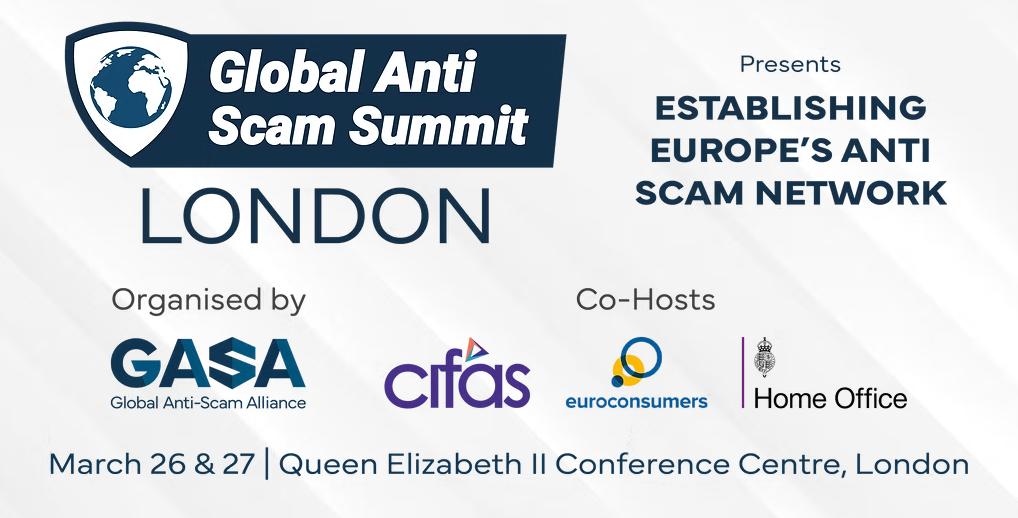
In a landmark event, the United Kingdom will host the Global Anti-Scam Summit (GASS) London 2025, bringing together an unprecedented number of policymakers, industry leaders, and cybersecurity experts. This summit, organized by the UK Home OfficeGlobal Anti-Scam Alliance (GASA)Cifas, and Euroconsumers, is set to be the most significant anti-scam event to date, with a focus on forging global partnerships to address the rampant rise of online scams, which last year cost the global economy nearly US$1.03 trillion.

Unveiling Global Strategies Against Scams
The summit will kick off with keynote speeches from top international figures, including The Rt Hon Lord Hanson of Flint, who will outline the UK’s initiatives and the collaborative efforts needed to combat this global menace. Discussions will focus on enhancing international cooperation, harmonizing scam prevention efforts, and leveraging technology to protect consumers worldwide.

Panel discussions on the first day will explore the urgent need for coordinated global action. Sessions will dive into the human cost of scams, share international lessons in scam prevention, and highlight the role of public-private partnerships in advancing fraud legislation and industry best practices. The main focus of the event is to foster cross-border and -sector collaborations.

Industry Leaders to Drive Technological Innovations
The summit will also feature contributions from tech giants and financial institutions, focusing on how cutting-edge technologies like AI can be utilized to thwart scammers effectively. Industry leaders will discuss the creation of the Global Signal Exchange, an innovative platform aimed at enhancing data sharing across borders to better track and prevent scams.

Day two of GASS London 2025 will be dedicated to solutions-focused workshops and breakout sessions. Experts will present the latest advancements in scam detection and prevention, from deepfake recognition to strategies for securing digital identities. Interactive discussions will enable participants to share insights and develop actionable strategies for protecting consumers globally, such as the GASA recommendation that every country should have a dedicated national anti-scam centre.

The event agenda and attendance tickets are available here: https://www.gasa.org/gass-2025-london

The summit will look to solidify commitments from attending public and private organizations and set a roadmap for international cooperation through 2026 and beyond.

GASS London 2025 is a call to action for every stakeholder in the fight against online fraud. It offers a unique opportunity to join forces with global leaders and take a stand against the cyber threats that impact millions of lives each year.

Selected speakers include:

  • Aad Lensen, Jeroen Niessen, and Ruben van Well, Dutch Police
  • Andrei Skorobogatov, Home Office
  • Angelique Miet, European Commission
  • Ben Donaldson, UK Finance
  • Dr Elizabeth Carter, Kingston University London
  • Els Bruggeman, Euroconsumers
  • Hedwige Nuyens, International Banking Federation (IBFed)
  • Henriette Bongers, FraudeHelpdesk.nl
  • Jayde Richmond, Australian National Anti-Scam Centre
  • Jean-Jacques Sahel, Google
  • Jorij Abraham, GASA
  • Kate Griffin, Aspen Institute
  • Kitboga, YouTube Scambaiter
  • Laura Kankaala, F-Secure
  • Lucia Harris, Match Group
  • Luke Reynolds, Mastercard
  • Lynette Owens, Trend Micro
  • Mike Haley, Cifas
  • Natalie Black, OFCOM
  • Nathaniel Gleicher, Meta

The event agenda and attendance tickets are available here: https://www.gasa.org/gass-2025-london

Contact Information
Sam Rogers
Marketing Director, Global Anti-Scam Alliance
sam.rogers@gasa.org
+31 (0) 645 130 670

Hayley Paterson
Press & PR Manager, Cifas
hayley.paterson@cifas.org.uk

Related Video

https://youtube.com/watch?v=5hMU5TIQBwc%3Ffeature%3Doembed

SOURCE: Global Anti-Scam Alliance

Related Documents: Global State of Scams Report – 2024.pdfState of Scams in the United Kingdom Report – 2024.pdf

International Scam Losses Over US $1 Trillion in 12 Months as Scams Continue to Plague Consumers

Global Anti-Scam Alliance and Feedzai Unveil 2024 Global State of Scams Report

The Global Anti-Scam Alliance (GASA), in partnership with Feedzai, has released its 2024 Global State of Scams report, revealing that scams have stolen another staggering US $1.03 trillion globally over the past year. The report, based on insights from 58,329 respondents across the world, highlights the vast losses to scam activity but also a growing disparity between scam survivors in different regions.

Educational Campaigns See Varied Results Across the Globe
Despite ongoing awareness campaigns, scams remain a constant threat. Nearly half of global consumers are targeted by scammers at least once a week. The report sheds light on the stark disparities in scam trends across different regions. While countries like Brazil, Hong Kong, and South Korea see scams as an almost daily occurrence, other nations, such as Vietnam, Saudi Arabia, and China, report a marked decrease in scam activity.

“Very little has changed in the last 12 months, as the world’s consumers bear the weight of another US $1.03 trillion stolen by scammers,” says Jorij Abraham, Managing Director of GASA. “We must do more to combat these crimes, as they continue to erode trust in our systems and cause immense harm to individuals and economies.”

Developed Nations Lose Most per Capita, but Developing Nations Sustain Bigger Hit to GDPThe financial losses from scams remain staggering, with the hardest-hit regions being the U.S., Denmark, and Switzerland. Victims in these countries reported some of the highest per capita losses, with the average U.S. victim losing $3,520. Yet, in developing nations like Pakistan, the losses represent a far graver concern, with scams accounting for a jaw-dropping 4.2% of the country’s GDP. Countries such as Kenya and South Africa follow closely behind, with losses equivalent to 3.6% and 3.4% of GDP, respectively.

While developed nations may lose more in absolute dollar amounts, the report emphasizes that developing economies often suffer more profoundly in proportion to their overall economic output, highlighting a disparity that calls for targeted interventions.

Trust in the Internet Largely Unaffected Despite Scams Causing Emotional Turmoil
The emotional impact of scams cannot be understated. In nations like Kenya, South Africa, and the Philippines, victims report feeling deeply vulnerable, fearful, and disillusioned. Yet, in regions like Japan and South Korea, while the financial damage is substantial, the emotional toll seems comparatively lighter. The report also finds that the internet itself is not losing trust worldwide, though developing nations saw a decline in trust in online services.

The report highlights the urgent need for global cooperation, enhanced public awareness, and stronger financial recovery processes to combat the growing threat of scams. With only 4% of global scam victims able to recover their losses, the time for decisive action is now.

For more information and to access the full Global State of Scams 2024 report, please visit https://www.gasa.org/research.

Contact Information
Sam Rogers
Marketing Director, Global Anti-Scam Alliance
sam.rogers@gasa.org

Austin Hyslip
Media Relations Manager – US, Feedzai
austin.hyslip@feedzai.com

SOURCE: Global Anti-Scam Alliance (GASA)

Governments, Law Enforcement, and Industry Leaders to Convene at Global Anti-Scam Summit Americas 2024 in Washington D.C.

  • Global Anti-Scam Alliance hosts strategy workshops designed to develop better protections for consumers against scams

Online scams wreak havoc across the Americas and globally, causing significant financial and emotional damage. The Global Anti-Scam Summit (GASS) Americas 2024, organized by the Global Anti-Scam Alliance (GASA) and hosted by Amazon.com, Inc., aims to combat these growing threats. The summit will feature over 30 hours of presentations, workshops, and interactive sessions across ten critical tracks, all focused on developing a global defense strategy to protect consumers and inform regulation.

The summit will empower experts to take decisive action by focusing on the impact on victims, highlighting global scam statistics, explaining emerging scam tactics, and fostering international cooperation. The aim is to provide a roadmap for regulatory bodies to drive meaningful change.

With $1.026 billion in global scam losses in 2023, this event seeks to mitigate further damage in 2024 and beyond.

Day 1 will address the human and policy aspects of scams:

Victim Impact: Led by AARP, this session delves into the emotional and financial toll on victims and their communities.

Policy: The Aspen Institute will explore regulatory gaps and legislative solutions, sharing best practices from around the world.

Law Enforcement: Chaired by UNODC, this session focuses on the collaboration between local and international agencies to disrupt scam networks.

Data & Signal Sharing: GASA and DNS Research Federation will unveil plans for an international cybercrime exchange to reduce cybercrime by 50% in 10 years.

Bank Collaboration: This session, led by Feedzai, will explore the critical role of banks in preventing scams.

Day 2 will shift to specific industries and technologies most at risk:

Financial Services: Featuring industry leaders like Capital One and Mastercard, this session will explore how multi-sector collaboration can build the perfect anti-fraud infrastructure.

Telecom: Focuses on how telecom companies can improve security to protect consumers.

Customer Digital Experience: Major platforms like Amazon will discuss how to strengthen protections at key digital touchpoints.

Blockchain: Investigating scams in crypto and blockchain, chaired by Cube3.AI.

Cybersecurity: Trend Micro will lead panels on advanced investigation techniques, focusing on scams like sextortion and pig butchering.

Uniting Expertise for a Scam-Free Future

“Consumers globally are facing a crisis with scams. Governments, private industry, and law enforcement must come together and act now,” says Jorij Abraham, Managing Director of GASA. “Our aim at this summit is not only to discuss the problems but to build solutions that protect consumers worldwide.”

Confirmed Speakers:

Glen Prichard, UNODC

Jean-Jacques Sahel, Google

Matthew Noyes, U.S. Secret Service

Laura Quevedo, Mastercard

Ben Chance, Zelle

Amy Nofziger, AARP

Mauro Ellovitch, MPMG

The summit will also launch the annual Global State of Scams Report 2024, offering an in-depth analysis of major scam trends and their impact.

Join us in Washington, D.C., for this landmark event. Visit gasa.org/gass-2024-americas to view the full schedule and register.

Contact Information
Sam Rogers
Marketing Director, Global Anti-Scam Alliance
sam.rogers@gasa.org

SOURCE: Global Anti-Scam Alliance (GASA)

New GASA Report Estimates $688 Billion in Scam Losses Across Asia Amid Rising Cyberthreat Worldwide

2024 Asia Scam Report Reveals Singapore and Japan See Decline in Scam Losses

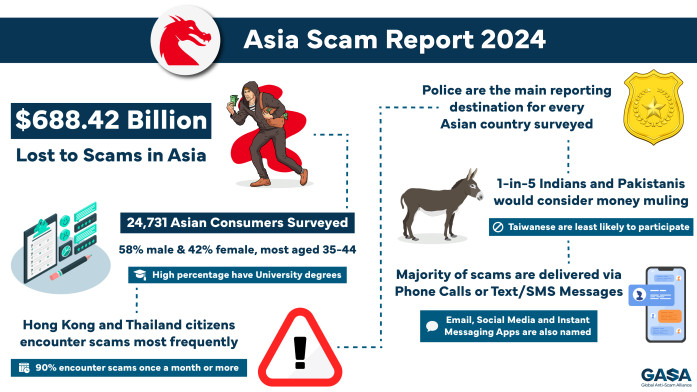
The Global Anti-Scam Alliance (GASA) has released the highly anticipated 2024 Asia Scam Report. Based on survey responses from 24,731 consumers across Asia, this annual report offers insights into the growing threat posed by scammers and their increasingly sophisticated tactics.

GASA's Asia Scam Report 2024
GASA’s Asia Scam Report 2024

Individual survey responses were extrapolated to report an estimated total loss of $688.42 billion over the last 12 months, a figure that represents a significant portion of the estimated $1.026 trillion global scam losses reported in GASA’s 2023 data. This year’s report highlights key trends such as the rise of AI-generated scam messages and the surge in social media-related fraud.

Key Findings from the 2024 Asia Scam Report:

  • Rapid Revictimization: Scam victims across Asia tend to be scammed repeatedly after they have been successfully targeted once.
  • Singapore (-40%) and Japan (-17%) have reported a noteworthy reduction in average scam loss per victim, indicating the effectiveness of preventive measures while other countries have seen increases. In Singapore, initiatives such as the co-location of police and banks has contributed to an efficient crackdown on scams.
  • Dominance of Social Media Scams: Some leading platforms have seen an increase in scam activity, with many users looking for social platforms to address fraudulent ads and fake accounts.
  • Top Scams by Category: Identity theft, investment scams, and shopping scams remain the leading threats across the region, with scammers targeting individuals through a range of channels, including phone calls, social media, and text messages.

Scam Prevention and Cross-Sector Collaboration in Focus at GASS Asia SummitAs Foundation Partners of GASA, Mastercard and ScamAdviser sponsored this report and will engage deeply in scam prevention discussions and partnerships at the Global Anti-Scam Summit (GASS) Asia Summit on October 20-21. The event, in Singapore, is a key gathering for stakeholders across sectors to joint actions against perpetrators of scams. With Amazon, Google, and other global organizations participating, the event will focus on best practices and new strategies in financial fraud, AI misuse, and consumer protection strategies.

For more information and to download the full 2024 Asia Scam Report, visit GASA’s official website.

Contact Information
Sam Rogers
Marketing Director, Global Anti-Scam Alliance
sam.rogers@gasa.org

SOURCE: Global Anti-Scam Alliance (GASA)

Erin West; Watchlist Internet; BBB Win at Scam Fighter of the Year Awards

  • GASA & ScamAdviser spotlight anti-scam heroes with honors for best individual, organization & tool

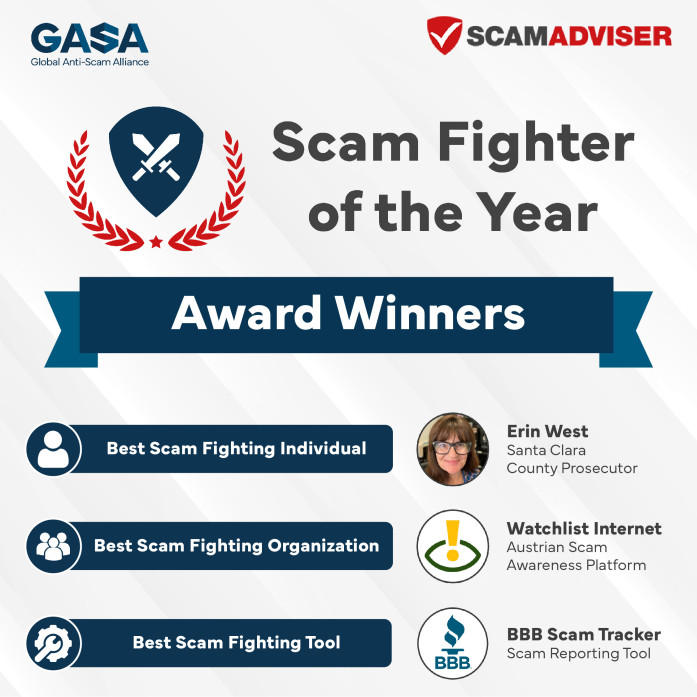
The Global Anti-Scam Alliance (GASA) and ScamAdviser have announced the winners of the 2024 Scam Fighter of the Year Awards. Previous years honored a single winner, but the latest edition has diversified to recognize the remarkable efforts of individuals, organizations, and tools in their relentless fight against online fraud and scams.

Scam Fighters 2024
Scam Fighters 2024

Best Scam Fighting Individual
Winner: Erin WestSanta Clara County Prosecutor & REACT Task Force, for her exceptional work in combating high-tech crimes, including the disruption of international SIM swappers and fraudulent call centers. Her dedication to addressing sophisticated scams, such as romance investment scams, underlines her significant contribution. Collecting her award, West said, “I can’t stop, won’t stop, until the day I open my email box and find it empty. Every day I’m deluged with victims of pig butchering and I’m gravely concerned about the transnational organized crime that is powered by human trafficking victims. I am so honored to be chosen for this award. It shows me that this work resonates with others and it motivates me to continue. I’m grateful.”

Runners-up: Pierogi, ‘Scammer Payback’Nazia KarrimSAFPS

Best Scam Fighting Organization
Winner: Watchlist Internet, Austria-based internet safety platform recognized for its comprehensive approach to providing insights into internet scams and frauds. Established by the ÖIAT, their extensive coverage on a range of topics, from subscription traps to phishing. Watchlist Internet Project Leader, Thorsten Behrens, celebrated by saying, “This achievement would not have been possible without the unwavering dedication and support of the community.” Head of Research at ÖIATLouise Beltzung, praised all nominees, “We all share the same mission – to make the internet a safer place for everyone.”

Runners-up: BlockchainUnmaskedTrilogy Media

Best Scam Fighting Tool
Winner: BBB Scam Tracker (Better Business Bureau), scam reporting and identification tool awarded for its significant impact in empowering consumers to report and avoid scams. BBB Executive Director, Melissa Trumpower, stated, “We’re incredibly proud of BBB Scam Tracker and grateful for this recognition. Thanks to the collaborative work of BBB’s professionals, we estimate that our scam-fighting tool helped people avoid losing $24.3 million in 2023.”

Runners-up: ÖIAT Fake-Shop Detector Plug-inGuardio

After public nominations, the jury of anti-scam professionals included Brook Stein (Trend Micro), Chien Fu “Jeff” Kuo (Gogolook), and Jayde Richmond (Australian National Anti-Scam Centre at ACCC), and previous winners, Derek Smythe (Artists Against 419 – AA419) and Ayleen Charlotte (Romance Scam Speaker and Tinder Swindler Victim).

Prof. Jorij Abraham, Managing Director of GASA and ScamAdviser, said, “Thousands of scam fighters across the world don’t get enough credit. Putting the spotlight on these dedicated scam fighters spreads the news of their good deeds and hopefully inspires the next generation of scam fighters.”

In October 2023, GASA and ScamAdviser released the Global State of Scams Report, which estimated worldwide losses to scams of $1.026 trillion in 12 months.

Contact Information
Sam Rogers
Marketing Director, Global Anti-Scam Alliance
sam.rogers@gasa.org

SOURCE: Global Anti-Scam Alliance (GASA)

.

View the original press release on newswire.com.