EBON: Becoming Qualcomm to the Mining Hardware Industry

SHENZHEN, CHINA, Dec 23, 2020 – (ACN Newswire) – Ebon’s exclusive license of the AsicBoost patent puts it in a very strong competitive position, and it is likely to develop into the ‘Qualcomm’ of the mining industry, even absorbing miners heavily dependent on Samsung, creating a new mining company that is capable of challenging the industry leader Bitmex. If this vision holds, Ebon will become the most suitable miner in the current market for investing.

On December 1st, Huangshou-based Ebang International Holdings Ltd (Nasdaq: EBON) announced it had signed a technology licensing agreement with AsicBoost patent-holder Circle Line International Limited, granting full exclusivity to the patent. After optimizing a bitcoin mining machine algorithm, AsicBoost can greatly reduce the amount of work a mining ASIC must do in order to compute a hashing attempt, thus reducing the energy consumption of the mining machine. The performance of the mining machine can be improved by about 20%, and the corresponding savings in mining costs are also about 20%.

AsicBoost, a SHA256 computing optimization algorithm developed by cryptologist Timo Hanke, PhD, was granted global priority by the inventor in late 2013 and published in May 2015, according to a statement from the patent attorney representing the patent. You can also find Dr. Timo Hanke’s revised AsicBoost white paper, published in March 2016. A 2017 letter from Getech, a law firm commissioned by the patent firm, noted that no company or individual had been authorized to file an AsicBoost patent, yet some mining companies had applied the design methods covered in the patent to mining hardware or software. At the time, the Chinese legal community held that the patentee had unsuccessfully applied for the patent, and one could therefore dismiss the patent’s claim.

Today, things are very different. The patent went to Circle Line and was eventually granted in South Korea and Europe, while the patent request has yet to be approved in the United States and China. Circle Line International, meanwhile, has recently sued Samsung in South Korea for patent infringement, demanding that it should stop making unauthorized AsicBoost equipment and destroy its inventory of finished and semi-finished products, according to We-media Wushuo Blockchain.

Mining companies that rely on Samsung will be in an awkward position since the patentees do indeed have South Korean patents and their claims are highly likely to be upheld by South Korean courts. Currently, among the mining machine manufacturers still in the office, Bitmain mainly relies on TSMC (NYSE: TSM), Jianan Yunzhi relies mainly on SMIC (HKG: 981) and Samsung (KS: 005930), with some production at TSMC, Ebon mainly relies on Samsung and TSMC, and Shenzhen Bit Microelectronics (Shenma mining machines) mainly relies on Samsung.

The patentees are suing Samsung in South Korea, and if they win, that will put them in an awkward position as well. There have been rumours in the market that Samsung has failed to acquire much capacity of 8 nanometers this year, so it lacks shipping capacity. In the future, if Samsung loses its capacity support again due to the lack of patent authorization, it will completely fall into the dilemma of no rice in the pot. Some would say that Shenma could do anything without AsicBoost, but then the miner’s energy consumption would go up significantly and it would no longer be competitive, so this option is unnecessary to follow or consider again.

Many investors outside the circle do not understand the current status of the mining machine industry, their understanding is still at the stage of Bitmain, Jianan Yunzhi and Ebon International, but in fact, the industry has already entered the duopoly of Bitmain and Shenma. Shenma was founded by Yang Zuoxing, who once worked in Bitmain and single-handedly created the once-dominant Jihuang S9. The industry delights to talking about whether Yang Zuoxing ever used 16 nm chips to make mining machines, completed more or less to 7 nm mining machine standards from Bitmain in performance. Because of this, Shenma’s flagship M20 product series sold as many as 600,000 units in 2019 and may have contributed more than 30EH/s computing power in 2019, meaning nearly half the growth of bitcoin’s online computing power in May 2019 came from Shenma mining machines. While the exact average price for this batch of miners is uncertain (prices are subject to adjustments due to bitcoin prices), if the prices of various models from the company’s M20 series are anything to go by, what miner’s 2019 revenue could be in the hundreds of millions of dollars. Thus, Shenma has pushed Bitmain into a corner, which has become a thorn in the side for the industrial leader.

European patents also mean that unauthorized miners can no longer be exported to Europe, especially northern Europe, such as Sweden and Iceland, which are suitable for mining. While TSMC, the world’s largest contract chipmaker, will not be bound by South Korean or, in theory, European patents, it is likely to consider partnerships with unauthorised miners carefully, has historically focused on compliance issues in the US and Europe. Firstly, the miners that TSMC supplies must not be exported to Europe, and secondly, it may consider scaling back its co-operation with unauthorised manufacturers. Especially for the chip OEM, mining machine manufacturers are still not mainstream customers, so it’s unnecessary to take the risk for mining machine manufacturers.

If Samsung can no longer provide capacity and TSMC has concerns, SMIC is left with the option. However, some analysts pointed out that during the CNY bull market 3Q 2020, Jia Nan’s profit margin was lower than expected, probably because SMIC’s N+1 process yield rate was low, leading to a high cost per machine. However, as a transition process, there is a big question mark over whether N+1 can improve yield rate in the future, whether SMIC can have batch production capacity, and whether SMIC can finally make real 7nm under the background of Liang Mengsong’s resignation and the US sanctions against SMIC advanced manufacturing process. SMIC’s announcement in late December confirmed the speculation, in saying that “according to our preliminary assessment, our company operations and financial situation in the short term will show no significant impact, but an adverse impact will follow later for our advanced technology research and development and the productivity construction, the company will continue to communicate with relevant departments of the US government, and take all feasible measures as appropriate to actively seek solutions and strive to minimize the adverse impact.”

The AsicBoost patent spoiler is likely to reshuffle the industry, which this year has limited chip capacity for mining hardware manufacturers because of strong demand in other industries. Shenma is the most affected, if you can’t reach a patent licensing agreement with Ebon, you will definitely go hungry. Considering the relationship between TSMC and Samsung, the success probability of turning to TSMC for production capacity is extremely low, while finding SMIC OEM also has to go the same way as Jinan Zhiyun again. Therefore, the best option for Shenma is still to reach a partnership with Ebon, the exclusive licensee of the patent, so as to continue to cooperate with Samsung. However, Samsung is expected to mass-produce 5 nm (equivalent to 7nm+ of TSMC) in 2021, and its production capacity will be greatly expanded. At that time, Ebon will hold a large number of Samsung’s 5 nm production capacity, so that its partners can get rid of the current shortage for OEM capacity, and thus occupy a favorable competitive position in the current bitcoin market.

According to international practice, the general royalty of patent rights shall be negotiated by both parties, but we can refer to Qualcomm’s 5% fee standard. Based on this, it can be inferred that if the revenue in 2019 can be maintained, Ebon shall pay tens of millions of US dollars in license fees, which will be converted into the net profit of Ebon in the vast majority. Ebon, on the other hand, lost $42.4 million in 2019 revenues of just $110 million. In other words, it could become a ‘Qualcomm’ in the mining industry and build a business model with long-term licensing fees. Which can clearly enjoy higher valuations than mining.

But it won’t simply end here. For EBON, simply charging patent licensing fees is not maximally beneficial. If it can form a strategic relationship with Shenma through cooperation, to eventually absorb or merge with Shenma, it can return to the first echelon of mining machine, and again challenge the Bitmain, while Shenma can also obtain the listing status, and do not have to struggle for a separate listing. As a matter of fact, it is very difficult for any company to be listed on the stock market without any rice at present, and it is bound to face the problem of capital exhaustion, so it is not a bad choice to borrow chicken eggs. And with Ebon walking on two legs with the exchange, it is entirely possible that the miner business will depend on Shenma, so that Ebon itself can concentrate on developing the exchange business. Therefore, any cooperation with Ebon will lead to a win-win situation, and reshape the new mining machine manufacturer in line for Bitmain’s leading position. Meanwhile, Chinese investors will finally have a more interesting mining hardware investment target than Jia-Nan.

Media contact:

Heidi He, Peanutmedia

E: meiyu.he@hstong.com

W: www.Peanutmedia.com

SDGs Media Compact Indonesia: Strengthening the Role of Media in Achieving SDGs Goals

The Ministry of National Development Planning/BAPPENAS together with the National Secretariat of SDGs Indonesia have launched the ‘SDGs Media Compact Indonesia’. This Media Compact aims to increase the involvement and role of Indonesian mass media in achieving Sustainable Development Goals (TPB / SDGs).

SDGs Media Compact Indonesia: an initiative inviting Indonesian Media to step up public awareness.. and participation.
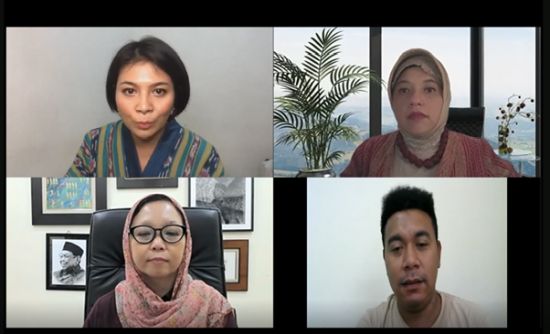
Host Meliza Gilbert (top left) discusses with key speakers Amalia Adininggar, Indonesian SDGs Secretariat (top right), and Indonesian SDGs ambassadors Alissa Wahid (bottom left) and Billy Mambrasar (bottom right).

“Based on Intelligence Media Management, of 50 media in Indonesia, only four percent consistently report in the spirit of the Sustainable Development Goals. Under these circumstances, where media involvement and public understanding are only developing, we have established the SDGs Media Compact in Indonesia,” said Amalia “Winny” Adininggar Widyasanti, Head of the National Secretariat SDGs Indonesia and Advisor to the Minister of National Development Planning. Winny was speaking during “Role of Media in Sustainable Development Goals: Launching SDGs Media Compact Indonesia”, a Webinar with Indonesian SDGs Ambassadors Billy Mambrasar and Alissa Wahid.

SDGs, which are mandated in the National Development Plan, has 17 objectives covering various development sectors, development aspects, and various aspects of life. Partnerships between the central government and parliament, to philanthropy, business, academics, experts, community organizations and also the media are very important to accelerate the achievement of sustainable development through SDGs. “The implementation of the TPB/SDGs in Indonesia must be a shared commitment and the media must play a role in harmonizing them because the media are the front mouthpiece to provide information to all parties,” said Winny.

The SDGs Media Compact was launched globally by the United Nations in September 2018. Through 2020, 100 media from 160 countries were registered as members, including three media from Indonesia. Apart from encouraging the media to spread the spirit of achieving SDGs in Indonesia, the SDGs Media Compact Indonesia acts as a forum for media activists to collaborate in the SDGs campaign in Indonesia. SDGs Media Compact Indonesia, as the official information channel for SDGs, will distribute monthly information bulletins that can be used as reference by the media in reporting on the achievements and programs of the SDGs.

SDGs Media Compact Indonesia can be accessed through www.media-sdgs.id and will officially launch in 2021. Media institutions in Indonesia are encouraged to increase their editorial commitment and intensity, such that information on SDGs will be understood by the public, and lead to collaborative initiatives and community participation to encourage efforts to achieve the SDGs. “We hope that with a greater role of the media, this will increase public awareness of SDGs and become a means of educating the public on the importance of SDGs to become part of everyday life,” said Winny.

Contact Fadlan Muzakki, Tel: +62 813-8005-1990, E-mail: fadlanmuzakki@gmail.com.


SMEStreet Foundation Unleashes Prestigious SMEStreet GameChangers 2020 List

SMEStreet Foundation is proud to announce the season one of SMEStreet GameChangers Award Listing Series. COVID-19 has emerged as a global challenge, the SMEStreet GameChangers Award Listing initiative is conceptualized to recognize agile and concerned thought leaders who, through their strategies, initiatives and activities, have contributed in restricting pandemic’s impact or helped MSMEs in getting back to business growthpath.

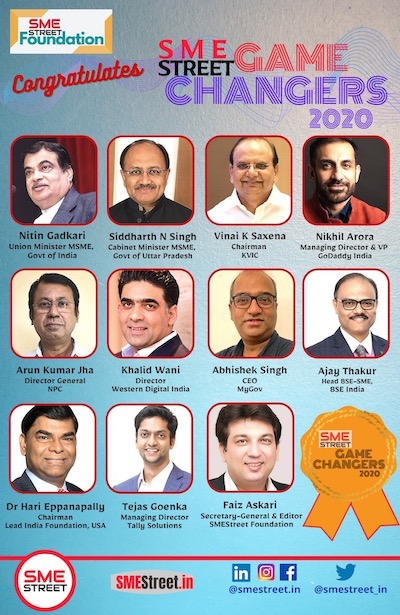
The first list of recipients of SMEStreet GameChangers 2020 includes Hon’ble Union Cabinet Minister, Road & Transport and MSME Ministry, Govt of India, Shri Nitin Gadkari; Hon’ble Cabinet Minister-Industries & MSME, Uttar Pradesh Govt, Shri Siddharth Nath Singh; Shri Vinai K Saxena, Chairman of KVIC; Shri Arun Kumar Jha, Director General, National Productivity Council; Shri Abhishek Singh, CEO MyGov; Shri Nikhil Arora, Managing Director & Vice President, GoDaddy India; Shri Tejas Goenka, Managing Director, Tally Solutions; Dr. Hari Eppanapally, Chairman, Lead India Foundation, NJ, USA; Shri Ajay Thakur, Head BSE -SME, BSE India; and Shri Khalid Wani, Director of Western Digital India.

“The COVID Pandemic has led to greater global cooperation and collaboration especially in the field of medical supplies and vaccine research. In the fight against COVID, MSMEs hold a key role in restoring economic growth and well being of people. MSMEs have been on the front end of an economic recovery plan by all countries, and hence all efforts are aimed to help MSMEs to come back to normal. Policy initiatives like Aatma Nirbhar Bharat, with a strong focus on restoring liquidity, creating jobs, creating markets for products, and creating a facilitating manufacturing ecosystem all have MSMEs at their focal point. I want to congratulate SMEStreet Foundation for taking this initiative to multiply the goodwill impact of leaders who contributed in the fight against the COVID Pandemic,” commented Shri Nitin Gadkari, Hon’ble, Cabinet Minister, MSME Ministry, Govt of India.

Commenting on the recognition and this activity, Shri Siddharth Nath Singh, Cabinet Minister of UP Government for MSMEs commented, “Since the pandemic started, we started our assessments and impacts of this on the economy of the state. Uttar Pradesh has powerful potential from the perspective of small businesses, local artisans and much more. On the other hand, we have also witnessed major reverse migration from other parts of the country. We have worked in ensuring job opportunities for local migrant workers who opted to come back from various places in the country during the lockdown period. We are thankful to the UP Government’s leadership through CM Shri Yogi Adityanath ji in taking all possible measures to enable a support ecosystem for MSMEs and local workforce. I would also like to thank SMEStreet Foundation for taking this initiative to highlight such success stories from across backgrounds.”

“With Pandemic impact, everything suddenly started getting considered for a restart and business activities. This effect has caused a major halt of financial flow among small entrepreneurs and the local artisans. At KVIC we aimed to break this halt and through our various efforts, we aimed to bring back economic revival for such entrepreneurs and artisans. I wish to thank SMEStreet’s team for taking up this venture of GameChangers as this will spread the right message of a strong come-back spirit among Indian job creators,” added Shri Vinai K Saxena, Chairman of KVIC.

Working rigorously on ensuring a strong communication flow around COVID-19, Mr. Abhishek Singh, CEO of MyGov, MeitY, Govt of India congratulated SMEStreet by adding: “Technology has been playing a critical role in ensuring continuation of normalcy and MSMEs are key to reviving our growth story post covid-19. During the Pandemic, ensuring availability of authentic information and fighting fake news and busting myths have been the focus of the communications on COVID19 by MyGov. In this endeavor, the role of MSMEs has been very important and many of them have emerged as true champions of Aatma Nirbhar Bharat. SMEStreet Game Changers recognition by SMEStreet Foundation is a welcome step for our collective work towards ensuring a robust communication stream around COVID awareness.”

“At SMEStreet Foundation, it is our great pleasure to recognize important game-changers who led our society to come out of this crisis of pandemic, which impacted the economy and the entire economic cycle. Industry leaders, policymakers have made a lot of efforts during the last nine months and ensured a support mechanism for their respective business ecosystem,” says Mr. Faiz Askari, Secretary-General and Editor of SMEStreet Foundation & SMEStreet.in. Congratulating all the distinguished listed GameChangers, he mentioned, “I am thankful to all the listed professionals, policymakers and bureaucrats who made their efforts to support their respective business ecosystem in the times when it is needed most.”

SMEStreet.in will publish detailed success stories of listed title recipients of SMEStreet GameChanger 2020. However, the campaign of SMEStreet GameChangers is still on. We are open for more success stories from the corporate world and recommendations from policymakers who inspired positive change in their respective ecosystem of MSMEs in response to COVID 19 Pandemic. You can click here to nominate your recommendation for SMEStreet GameChnagers 2020 Season 1.

Shri S Ravi Founder and Managing Partner of Ravi Ranjan & Co and Ex-Chairman of BSE India commented, “Whatever we witnesses was a lifetime-first experience, and we never wished to see such conditions again. We realized the importance of motivating such motivated leaders as Game Changers who paved this phase with their dedication and professional acumen in emerging as a winner for their organization and society.”

Shri Arun Kumar Jha, Director General of National Productivity Council also expressed his views by saying, “Well we are committed to working towards ensuring the best level ecosystem for professional productivity. Initiatives like SMEStreet GameChangers will create a strong impact on those who are working hard in ensuring the best for their ecosystem, which got impacted during the pandemic. It is like motivating the motivators, which is a noble cause.”

Representing world’s leading digital company which is committed towards taking businesses online, Mr. Nikhil Arora, MD & VP of GoDaddy India congratulated other recipients of this listing and commented, “Today, as the world is experiencing the unprecedented impact of COVID-19, we at GoDaddy stand committed to support India’s dynamic MSME ecosystem. Digital technology has emerged as a key survival mechanism for businesses and we aim to continue providing MSMEs with all the help and tools they need to successfully run their ventures online. In line with the government’s vision to promote local businesses in the country, we have introduced a slew of initiatives throughout the year, like the GoDaddy Academy, product and pricing incentives and even some philanthropic efforts, to help them get back at pace with their business goals. Motivation can often be in short supply, especially during a global pandemic, and we are extremely honoured and humbled to be receiving this award. We also commend the SMEStreet Foundation for their effort in recognizing all the incredible work being done in these challenging times.”

Congratulating the team of SMEStreet Foundation, Mr. Ajay Thakur, Head of BSE-SME, BSE India stated, “Pandemic has created huge challenge for business operations specially for the MSME entrepreneurs, but as we move ahead, we found that MSME Entrepreneurs require more proactive efforts which can help them to avail the stock market listing. Hence we made necessary steps to ease out the pressure of getting into stock market listing during the pandemic days. We are delighted to be part of the SMEStreet GameChangers listing by SMEStreet Foundation.”

Acknowledging SMEStreet GameChangers as a needed initiative, Mr. Khalid Wani, Director- Sales for Western Digital have shared his perspective on Indian SMEs and their potential for bringing back the economy into the growth path, he said, “SMEs play a pivotal role towards shaping the economic progress of a nation and I would like to congratulate SMEStreet for their role towards creation of a robust platform that helps to create a strong engagement and collaborations across various segments and become a catalyst for growth for SMEs.”

“The COVID-19 pandemic has shown us how fragile, yet how resilient we are as a society, and within that we have seen the tremendous spirit of the entrepreneurs in India and across the world to push through to serve and survive. We are blessed to play whatever small part we can to help them in their journey and are thankful to SMEStreet for the role they have played and for this recognition,” says Mr. Tejas Goenka, Managing Director, Tally Solutions while getting listed into SMEStreet GameChangers 2020.

Dr. Hari Eppanapally, Chairman, Lead India Foundation, NJ, USA stated, “I would like to thank the team of SMEStreet for taking this initiative. Recognizing those who have committed their lives in the last few months in doing everything possible to restrict COVID impact, is a noble work in itself.”

SMEStreet GameChangers is an attempt to recognize such individual success stories which have made a significant impact in their respective horizons of business. Success stories of successful COVID Warriors while doing something innovative, something constructive in sustaining business will get showcased here. We can refer to these heroes as COVID warriors of supporting business.

“Only few companies in the pandemic days were able to record miraculous turnarounds by adapting technology, efficient management and quick turnaround time for implementing realtime solutions to problems that dragged many down. At SMEStreet Foundation, we feel obliged and proud to be honouring such GameChangers via this recognition,” commented Mr. Deepu Madhavan, Director Operations and Research at SMEStreet Foundation.

While thanking the distinguished stakeholders of SMEStreet GameChangers initiative, Faiz Askari also said, “We are convinced that to come out from the Pandemic impact MSMEs require a long-term strong movement. I am obliged and thankful to all the distinguished leaders and thinkers who are mentioned above. Their participation has made the start of this campaign very positive and gradually, the Indian economy will bounce back and MSMEs will become the heroes of this success story.”

However, SMEStreet GameChangers will be a nationwide as well as global movement aimed to highlight those leaders, thinkers and heroes who acted smartly and proactively to curb the economic impact of Pandemic and helped MSME ecosystem at any respective level.

About SMEStreet Foundation
Click here: https://smestreet.in/smestreet-foundation

For More:
Tabinda Hilal
9354645130 /foundation@smestreet.in / smestreet.in@gmail.com

Carsome Announces Series D Fundraising

Capital to accelerate regional expansion of Southeast Asia’s largest integrated e-commerce platform for cars

Carsome, Southeast Asia’s largest integrated car e-commerce platform, recently completed its Series D fundraising. The US$30 million round, one of the largest all-equity financings to-date in Southeast Asia’s online automotive industry, was led by Asia Partners and was joined by existing Carsome investors Burda Principal Investments and Ondine Capital.

According to Eric Cheng, Co-founder and Group CEO of Carsome, this fundraising round, the largest equity investment in Carsome’s history, is a strong endorsement of its integrated business model, with end-to-end digital enablement across used car sellers, dealers, and buyers. “We will use this capital to strengthen our existing regional leadership in consumer-to-business (C2B) used car e-commerce and accelerate our already successful new offering in the business-to-consumer (B2C) segment. We look forward to rolling out Southeast Asia’s first-ever C2B and B2C integrated e-commerce platform for used cars, a significantly superior new retail experience,” said Cheng.

“Over the past six months, we have doubled our monthly revenue compared to pre-pandemic levels, a dramatic acceleration due to the impact of the ongoing Covid-19 pandemic on consumer behavior across our region,” Cheng added. “Consumers across our core markets of Malaysia, Indonesia, Thailand, and Singapore are increasingly purchasing cars to keep their families safe and adapt their businesses.”

Commenting on the fundraising, lead investor Oliver M. Rippel of Asia Partners observed that Carsome’s combination of strong executive leadership and a robust business model position the company well for future growth. “Carsome’s integrated approach offering a one-stop solution to used car buyers and sellers is genuinely impressive. We see that this will be the way forward for the used car industry, and we look forward to working closely with Eric and his very capable team in further scaling the business across the region.”

Founded in 2015, Carsome has grown to employ more than 1,000 people and today transacts an annualized 70,000 cars totalling US$600 million in transacted value on its online platform. Building on its original foundation in Malaysia, one of Southeast Asia’s largest car markets, Carsome then launched its operations in Singapore, Indonesia and Thailand, deepening its regional footprint.

Since founding, Carsome has delivered an impressive record of accomplishments, growing from strength to strength. Carsome recorded its highest revenue quarter in Q3 2020 in its history, doubling its revenue from the pre-pandemic period. In November 2020, Carsome celebrated its 100,000th car sold through its platform – an important milestone achieved within five years of founding.

Notably, Carsome has also achieved operational profitability as of October, ahead of earlier projections. “We have built a defensible, scalable, and profitable business with very healthy unit economics attributed to both growth in gross margin and steady improvements in productivity and conversion metrics,” said Juliet Zhu, Carsome Group Chief Financial Officer. “Our Series D round will further support potential merger and acquisition opportunities in acquiring ancillary capabilities and consolidating our supply chain.”

Crucial to Carsome’s success has been its commitment to rigorous car inspections, offering Carsome-inspected and certified cars directly to customers in a seamless fashion, building a reservoir of consumer trust and brand equity in an essential but historically complex industry. Every car that transacts on the Carsome platform goes through a comprehensive 175-point inspection, and every Carsome car purchase is backed up with an extended warranty and a money-back guarantee.

Carsome’s successful track record of digitizing a traditionally offline and fragmented industry, as well as its resilience in the face of the global pandemic, were key factors in several existing investors’ decisions to reinvest in the Series D round. “We appreciate the way Carsome has continued to support car sellers and dealers through the pandemic,” said Albert Shyy, the Singapore-based Managing Director of Asia for Burda Principal Investments, who first invested in the Series B round. “We witnessed Carsome’s growth and resilience during the pandemic and are proud to continue our support,” added Randolph Hsu, the Taipei-based Founding Partner of Ondine Capital, who first invested in the Series C round.

While the platform flourishes from digitalization tailwinds, Carsome remains focused on supporting its partners to navigate new challenges brought about by the pandemic. Carsome introduced various incentives and bonus rewards for used car dealers in Malaysia, Indonesia and Thailand under its Dealer Alliance Support Program. The company also introduced its Covid-19 Support Fund this year for employees affected by the pandemic.

About Carsome

Carsome is Southeast Asia’s largest integrated car e-commerce platform. With operations across Malaysia, Indonesia, Thailand and Singapore, Carsome aims to digitize the region’s used car industry by reshaping and elevating the car buying and selling experience. Carsome provides end-to-end solutions to consumers and used car dealers, from car inspection to ownership transfer to financing, promising a service that is trusted, convenient and efficient. Carsome currently transacts an annualized 70,000 cars totalling US$600 million in transacted value, and has more than 1,000 employees across all its offices. For more information, please visit www.carsome.com.

For media enquiries, please contact:
Liew Li Enn
E: lienn.liew@carsome.com
M: +601123079186

Teo Li Cheng
E: licheng.teo@carsome.com
M: +601116229405

PRecious Communications
E: carsome@preciouscomms.com
M: +6563030567

Rimba Raya’s Sustainable Peatland Farmer Field School

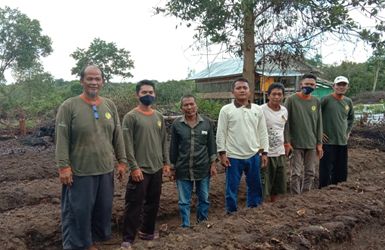
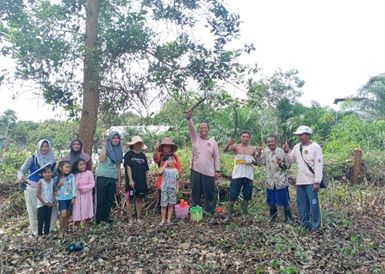
In November 2020, Rimba Raya Biodiversity Reserve (Rimba Raya) conducted training sessions aimed at strengthening the capacity of Farmer Groups (KT). The goal was to help them to improve their skills in cultivation and agriculture through our Peatland Farmer Field School (Peatland-FFS). The sessions were attended by 2 Farmer Groups; Harapan Jaya from Jahitan Village, and Hijau Bakung Permai from Baung Village.

HARAPAN JAYA Farmer Group and the preparation of an area of 0.5 ha, Jahitan Village
HIJAU BAKUNG PERMAI Farmer Group and land preparation covering an area of 17 x 50 meters, Baung village

This activity is a continuation of a Peatland-FFS training program held in September 2020 conducted by Rimba Raya in collaboration with the National Peatland Restoration Agency (BRG). The farmer group from Rimba Raya working area participated at that time. Aside from focusing on improving farming skills, participants were trained in preparing their land for agricultural development without the use of traditional ‘slash and burn’ methods.

During our most recent training sessions, Rimba Raya encouraged farmers to build on their traditional ecological knowledge with a focus on non-destructive land use and the development of areas according to soil suitability. The efficient production of nutritious food while ensuring forest preservation, was strongly encouraged.

The farmers were taught how to make organic fertilizers and pesticides using organic waste from their immediate environment. “Crop and forest burning actually eliminates beneficial microorganisms and nutrients, as it releases unwanted carbon dioxide into the atmosphere,” said Sylviana Andhella, Executive Director of Rimba Raya.

“Land preparation without burning and the use of organic fertilizers for agricultural practices will reduce carbon emissions and support the balance of microorganisms. This is in alignment with our project objective to reduce carbon emissions,” Andhella explained.

Additionally, the farmers were empowered to manage their own farmers organization. This included the election of; a chairman, secretary and treasurer by the group members. These positions were then ratified by the local village government.

During the training sessions, farmer groups were asked to develop relationships to encourage cooperation and net-working between other groups around the project area. This allows them to share information, experiences and valuable lessons learned which are beneficial to all farmers.

“I am thankful that Rimba Raya included our farmer group in this initiative. We have learned how to make organic fertilizer and our understanding of horticultural farming techniques has grown. We are eager to develop our farms using these strategies with the hope that we will be more successful so that we can set an example to other community farmers,” said Ardiansyah Ardian, head of Hijau Bakung Permai farmer group of Baung Village.

About Rimba Raya
The Rimba Raya Biodiversity Reserve is the largest REDD+ project in the world, protecting nearly 65,000 hectares of peat swamp forest in Central Kalimantan, Indonesian Borneo and avoiding more than 130 million tons of carbon emissions. Rimba Raya is a living example of an economically viable alternative to deforestation.

Rimba Raya develops livelihood programs in surrounding villages (addressing all 17 of the UN Sustainable Development Goals) to provide education, employment and hope for the future. Rimba Raya is also the world’s largest privately-funded orangutan sanctuary, and an InfiniteEARTH Project. Visit https://rimba-raya.com.

Contact:
Nisa Jalil, Vice President for Public & Government Relations
E: nisajalil@rimba-raya.com, PT. Rimba Raya Conservation

Fifth Belt and Road Summit draws to successful close

ASEAN countries actively pitch range of investment projects

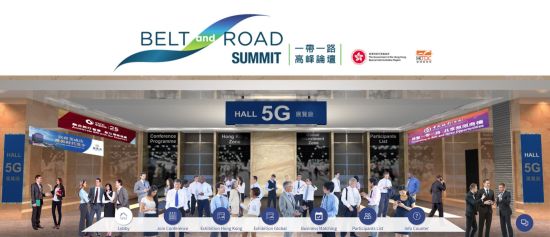
The fifth Belt and Road Summit, jointly organised by the Government of the Hong Kong Special Administrative Region (HKSAR) and the Hong Kong Trade Development Council (HKTDC), drew to a successful close today. In response to the COVID-19 pandemic, this year’s summit was changed to an online broadcast. With the new virtual platform helping to overcome geographical boundaries, more than 6,000 participants from about 80 countries and regions attended the event.

Under the theme “A Business Vision for a Sustainable and Inclusive Future”, the fifth Belt and Road Summit brought together more than 6,000 participants from about 80 countries and regions.

Under the theme “A Business Vision for a Sustainable and Inclusive Future”, the two-day summit featured more than 80 government and business leaders from countries and regions along the Belt and Road, along with investors from Mainland China, the Asia-Pacific region, Europe, the Middle East and Africa, as well as project owners and professional investment advisers, who all came together to discuss the latest developments driven by the Belt and Road Initiative.

Investment projects drive geographical connections
Holding the conference virtually presented no barrier to meaningful exchanges within the industry. In addition to various breakout discussion sessions, the 2020 summit featured one-to-one business matching meetings and project pitching sessions that proved popular among both project owners and participants. The summit received 20 investment projects from countries and regions along the Belt and Road, focusing on four major areas – innovation and technology; transport and logistics infrastructure; energy, natural resources and public utilities; and urban development – and covering some 12 countries and regions including Indonesia, Thailand, India, Saudi Arabia, Kenya, Austria, France and the United Kingdom.

The investment projects included the first Hong Kong-themed Thailand-based foreign project in Chonburi, “AMATA – Hong Kong Smart City”; a large-scale integrated project located nearby Indonesia’s proposed new capital city; a new railway link connecting Eastern Slovakia and Vienna; and other projects related to topical issues such as fighting COVID-19 and green technology. In addition, more than 700 business matching meetings were arranged for project owners, investors and professional service providers, with over 250 companies participating.

ASEAN Belt and Road countries show willingness to negotiate and promote
The Association of Southeast Asian Nations (ASEAN) bloc is set to play a crucial role in the Belt and Road Initiative. This year’s Policy Dialogue was chaired by Edward Yau, Secretary for Commerce and Economic Development of the Hong Kong Special Administrative Region (HKSAR), and invited Jerry Sambuaga, Vice Minister of Trade of the Republic of Indonesia, as one of the guest speakers. Mr Sambuaga commented on the recently signed Regional Comprehensive Economic Partnership (RCEP) free trade agreement, saying: “As the world’s largest trade bloc, the RCEP should create a modern, comprehensive, high-quality and mutually beneficial economic partnership that will expand regular trade and investment while contributing to the global economy.”

Ceferino S Rodolfo, Undersecretary of the Industry Development and Trade Policy Group of the Department of Trade and Industry in the Philippines, added: “While physical infrastructure is the most tangible aspect of the Belt and Road, equally important are the policies that will facilitate the flow of economic activity among Belt and Road participants and those who are not formally part of [the initiative]. The RCEP is a building block for greater openness in the global economy and is not supposed to be exclusive.”

Sompop Pattanariyankool, Assistant Permanent Secretary of the Ministry of Energy in Thailand, said: “During the pandemic, we need immediate recovery measures to ensure the energy sector continues to make an effective contribution to overcoming the current situation and empowering the subsequent recovery. To create a healthy, sustainable and inclusive future, it is important to include clean energy transition as part of this package, focusing on a cleaner, more secure and cost-effective energy system. This may include natural gas, renewables, batteries, hydrogen and other technologies.”

Sultana Afroz, Secretary to the Government of Bangladesh and CEO of the Public Private Partnership Authority in Bangladesh, also spoke at the Policy Dialogue, sharing that Bangladesh has set up 79 public-private partnership projects with an investment value of more than US$28 billion to realise the government’s vision of bringing about transformational change to its infrastructure sector. “Mainland China has always been a prime strategic partner for the Bangladesh government in terms of its development, and most of the major projects in Bangladesh are being constructed by Chinese construction companies.”

Increasing international cooperation amid pandemic
Speaking at one of the thematic breakout sessions, namely “Fighting the Coronavirus with Innovative Tech and Thriving in a Post-Pandemic World – Opportunities in the Greater Bay Area”, Nanshan Zhong, Academician of the China Academy of Engineering, Professor of Respiratory Medicine at Guangzhou Medical University, and Director of China’s National Clinical Research Center for Respiratory Disease, stated in his keynote speech that there are currently five vaccines going through stage-three clinical trials in China, with the country also cooperating closely with Indonesia and the Philippines on the development of vaccines. He further emphasised the importance of strengthening the healthcare systems of different countries and regions as the wait for a vaccine continues.

“We still need to enhance cooperation in the medical and health sectors and establish bilateral and multilateral cooperation mechanisms for epidemic response and biosecurity, ensuring that we are equipped with the ability to cope with virus outbreaks through regular detection, early warning, information sharing and the regional coordination and mobilisation of medical resources. By doing so, we will be able to prepare for other possible global outbreaks and pandemics through the timely sharing of data and information and by coordinating detection and early warning. All countries must join hands to combat COVID-19 internationally. We call for building a community of health for all, and as soon as possible, to deal with potential challenges. Let’s work together to protect health and lives in the region.”

Digitisation for sustainable and inclusive development
With the global economy battered by the COVID-19 pandemic, international cooperation through the Belt and Road Initiative presents an opportunity for a sustainable and inclusive recovery and development. At the summit’s Business Plenary session, a panel of business leaders shared valuable insights into the post-pandemic era.

Among the panelists, Victor Fung, Group Chairman of Fung Group, pointed out that prior to the COVID-19 outbreak, there were two major trends impacting global supply chains: technological change resulting, in particular, from digitisation; and the United States-China trade conflict. He noted digitisation had swept across the world in the past 10 years, affecting trade and every aspect of the global supply chain, from product design to production and distribution. “The COVID-19 pandemic has accelerated of these trends, resulting in a fundamental shift in the world’s supply chains. This creates a huge opportunity in terms of what Hong Kong and the rest of the GBA [Guangdong-Hong Kong-Macao Greater Bay Area], as well as countries along the Belt and Road can do in terms of adapting to this new situation in the global supply chains,” he said.

China International Capital Corporation Ltd served as the Strategic Partner of the fifth Belt and Road Summit. Bank of China (Hong Kong) Ltd was the Regional Banking Partner. China Merchants Group was the Sapphire Sponsor of the summit and China Mobile International Limited was the Platinum Sponsor.

Websites
– Belt and Road Summit website: www.beltandroadsummit.hk/en
– HKTDC Belt and Road Portal: https://beltandroad.hktdc.com/
– Webcast interviews (1): https://youtu.be/EaAHaqXnffY
– Webcast interviews (2): https://youtu.be/EPQxuBn87u4
– Photo download: https://bit.ly/2HVZ0gt

Contact:Angel Tang, Tel: +852 2584 4544, Email: angel.hc.tang@hktdc.org Clayton Lauw, Tel: +852 2584 4472, Email: clayton.y.lauw@hktdc.org

Fifth Belt and Road Summit opens today

The fifth Belt and Road Summit, jointly organised by the Government of the Hong Kong Special Administrative Region (HKSAR) and the Hong Kong Trade Development Council (HKTDC), opened today. The two-day event (30 November and 1 December) is being held online this year with a new virtual platform that includes plenary sessions, one-to-one business matching meetings, project pitching sessions and a virtual exhibition, bringing together some 80 ministerial officials and business leaders from countries and regions along and beyond the Belt and Road. The event attracted an audience of more than 6,000 from some 80 countries and regions.

Overcoming geographical boundaries, the event has brought together investors, project owners and professional investment advisors from Mainland China, the Asian Pacific region, Europe, the Middle East and Africa to share insights on the latest developments related to the Belt and Road Initiative.

Carrie Lam, Chief Executive of the HKSAR, officiated at the summit’s opening ceremony and delivered the opening address. She said: “Since its inception, the Belt and Road Initiative (BRI) has been well received by the international community. So far, China has already signed over 200 cooperation documents with 138 countries and 31 international organisations. The BRI is all about collaboration and partnership. “As an active player in the Initiative, Hong Kong is keen to strengthen our collaboration and partnership with other Belt and Road economies. For Hong Kong, given our location and our growing economic ties with Association of Southeast Asian Nations (ASEAN) countries, the Economic and Trade Co-operation Zones in the ASEAN region will present ample opportunities to Hong Kong enterprises and their partners.”

Joko Widodo, President of the Republic of Indonesia, gave a pre-recorded address in which he spoke about how the Belt and Road Initiative is helping to promote virus control, infrastructure development, economic development and commerce in the region. He said: “Our world is facing a common enemy: the COVID-19 pandemic. To control the virus, we must work together and synergise. Everyone must walk and move in-sync towards a common goal, a healthy community, and a strong and robust economy. Through synergy, anything we do will be more effective and have a bigger impact; and we can apply this lesson in many other areas, including Belt and Road Initiative (BRI) cooperation. The key to BRI cooperation is synergy. Indonesia hopes the BRI cooperation will also encourage partnerships between the government, the public and the private sector, in the form of Public-Private Partnership or PPP. Second, we must continue to maintain the principle of equality in cooperation. Equality will create space for countries to plan projects based on their national interests. Indonesia’s infrastructure development projects are open for cooperation with all partners, including BRI. The Government of Indonesia guarantees the establishment of a conducive environment for mutually beneficial cooperation.”

Also delivering special addresses were officials from the People’s Republic of China, including Ning Jizhe, Vice Chairman, National Development and Reform Commission; Wang Bingnan, Vice Minister, Ministry of Commerce; Ren Hongbin, Vice Chairman, the State-owned Assets Supervision and Administration Commission (SASAC) of the State Council; and Xie Feng, Commissioner, Ministry of Foreign Affairs. The speakers focused on the importance of the Belt and Road Initiative in driving the steady growth of China’s national economy and examined Hong Kong’s vital role in the process.

Speaking at the opening ceremony, Dr Peter K N Lam, Chairman of the HKTDC, said: “International cooperation is more important than ever as we face the challenge of a global pandemic. Hong Kong is the ideal platform to turn Belt and Road projects into viable commercial opportunities, and it was here in 2016 that the Belt and Road Summit was conceived. Growing together with the Belt and Road Initiative, the summit is now the premier international business event to find partners, raise funds and learn about new developments and investment opportunities on the Belt and Road. We are confident that the online summit will provide a powerful platform to share ideas and make connections.”

Hong Kong group forms partnership with Indonesian industrial estates

The first day of the summit marked the beginning of a new business partnership. Facilitated by the HKTDC, the Smart City Consortium used the virtual platform to sign a memorandum of understanding with an Indonesia-based enterprise, PT Graha Buana Cikarang, for the purpose of expanding Hong Kong’s smart city technology to Southeast Asia. PT Graha Buana Cikarang is a subsidiary company of a listed industrial estates operator in Indonesia, which is managing various industrial estates and developing new towns in different areas of the country. Both parties agreed to cooperate in research areas such as smart mobility, e-health, crisis and disaster protection management, environment and energy.

The Indonesian government has been making plans to relocate the country’s capital city to the province of East Kalimantan. The Belt and Road Infrastructure Investment Roundtable will be held by the HKTDC the day after tomorrow to discuss how to act on infrastructure development in Kalimantan as new opportunities arise. Participants will include representatives from some of the infrastructure projects in Kalimantan province, together with investors from Hong Kong and Mainland China and a number of local professional service providers and financial institutions.

Forum highlights Post-COVID economy

The pandemic has slowed down or halted economic activities, posing challenges to logistics and customer flow. Different cooperation activities and development projects under the Belt and Road Initiative have been affected to various extents. Today’s plenary session was a policy dialogue focused on “Creating a Healthy, Sustainable and Inclusive Future”, hosted by Edward Yau, Secretary for Commerce and Economic Development of the HKSAR. Mr Yau exchanged ideas with senior international figures including Peter Szijjarto, Minister of Foreign Affairs and Trade in Hungary; Jerry Sambuaga, Vice Minister of Trade from Indonesia; Ceferino S Rodolfo, Undersecretary of the Industry Development and Trade Policy Group, Department of Trade and Industry in the Philippines; Sultana Afroz, Secretary to the Government of Bangladesh and CEO of the Public Private Partnership Authority in Bangladesh; and Sompop Pattanariyankool, Assistant Permanent Secretary of the Ministry of Energy in Thailand. The discussion examined the policy landscapes and investment opportunities in their respective economies, including the Regional Comprehensive Economic Partnership (RCEP), a regional free trade agreement formed in mid-November this year.

Paul Chan, Financial Secretary of the HKSAR, delivered the opening remarks at the main plenary session that followed. The Business Plenary was hosted by Victor Chu, Chairman & CEO of First Eastern Investment Group, leading a group joined by Francis Chua, Chairman Emeritus of the Philippine Chamber of Commerce and Industry, Victor Fung, Group Chairman of the Fung Group, Vikrom Kromadit, Chairman of Amata Corporation PCL, Richard Lancaster, CEO of CLP Holdings Limited, Jean-Pascal Tricoire, Chairman and CEO & CEO Asia of Schneider Electric, Wang Tongzhou, Chairman and General Manager of China Communications Construction Group Ltd, and Bill Winters, Group Chief Executive of Standard Chartered PLC. Discussions focused on the topic “Powering the World’s Recovery through Sustainable and Inclusive Development”, seeking to find a way out of the current social and economic doldrums caused by the COVID-19 pandemic by adopting sustainable and inclusive development solutions, and examining how to navigate a clear pathway through the post-pandemic era.

Exploring infrastructure potential amid uncertainties

The economic challenges brought about by the pandemic have affected economic and trade cooperation, production cooperation and regional infrastructure development to varying degrees. Today’s afternoon breakout session, titled “Challenges and Opportunities for Belt and Road International Infrastructural Cooperation”, was co-organised with the China International Contractors Association to examine how to promote continuous innovation in the area of infrastructure cooperation in the new global landscape, exploring opportunities amid the current uncertainty.

Greater Bay Area a key focus for innovation

The markets resulting from the development of the Guangdong-Hong Kong-Macao Greater Bay Area and the Belt and Road Initiative are providing valuable opportunities to Hong Kong’s innovation and technology sectors. Co-organised with Hong Kong Science and Technology Parks Corporation, a session titled “Fighting the Coronavirus with Innovative Tech and Thriving in a Post-Pandemic World – Opportunities in the Greater Bay Area” brought together prominent experts in respiratory diseases, biomedical professors and business leaders to examine how anti-virus technology has become the driving force to help Hong Kong overcome the impact of the pandemic, and how to give added momentum to the local economy by taking advantage of the ample opportunities created by the Greater Bay Area. Another breakout session, jointly organised with Hong Kong Cyberport, gathered representatives from Hong Kong’s digital technology sector to share the latest information related to the Greater Bay Area and the not-to-be missed opportunities for the digital technology sector.

A thematic breakout session titled “Positioning Hong Kong for Deal-Making and Dispute Resolution under the Belt and Road Initiative”, co-organised with the Department of Justice of the HKSAR, saw the participation of distinguished legal professionals who exchanged insights on the current landscape for deal-making and dispute resolution, and how technology may be used to overcome some of the challenges brought by the pandemic. One of the major discussions was about Hong Kong’s strengths and how the city can build on its position as a leading international deal-making and dispute resolution centre to serve Belt and Road investors.

Given the unprecedented disruption of supply chains through the “double whammy” blow of global trade disputes coupled with the COVID-19 pandemic, how is the cluster development of Belt and Road Economic and Cooperation Zones paving the way for international cooperation on alternative manufacturing locations and huge consumer markets, creating opportunities for enterprising new overseas ventures? The thematic breakout session “Manufacturing and Selling in Belt and Road Markets: Seizing Opportunities from the Economic and Trade Cooperation Zones” invited enterprising Belt and Road pioneers to share their first-hand experience in this area and offer advice on how to seize the boundless opportunities that lie ahead.

The thematic breakout sessions tomorrow will be co-organised with the Hong Kong Monetary Authority’s Infrastructure Financing Facilitation Office (IFFO), the Financial Services Development Council, Hong Kong Association of Banks, Hong Kong Insurance Authority and InvestHK. Important issues such as financing, investment, risk management and start-ups will be discussed.

All-day online project pitching and business matching for first time

For the first time at the summit, a virtual exhibition is showcasing more than 30 local companies representing different sectors including banking and finance, infrastructure, professional services, and technology and innovation. The Global Investment Zone connects investors, project owners and professional investment consultants from 12 countries and regions, sharing the latest business information and highlighting investment opportunities.

The eagerly awaited Investment and Business Matching Session is held again this year. One-to-one business matching meetings and project pitching sessions will run virtually, providing a platform for project owners, investors and service providers to connect and discuss their business and investment needs as well as exploring cooperation opportunities. The project pitching sessions cover four main areas: innovation and technology, transport and logistics infrastructure, energy, natural resources and public utilities, and urban development.

Websites
– Belt and Road Summit website: www.beltandroadsummit.hk/en
– HKTDC Belt and Road Portal: https://beltandroad.hktdc.com/
– Photo download: https://bit.ly/33tq2Dz

About HKTDC

The Hong Kong Trade Development Council (HKTDC) is a statutory body established in 1966 to promote, assist and develop Hong Kong’s trade. With 50 offices globally, including 13 in Mainland China, the HKTDC promotes Hong Kong as a two-way global investment and business hub. The HKTDC organises international exhibitions, conferences and business missions to create business opportunities for companies, particularly small and medium-sized enterprises (SMEs), in the mainland and international markets. The HKTDC also provides up-to-date market insights and product information via trade publications, research reports and digital news channels. For more information, please visit: www.hktdc.com/aboutus. Follow us on Twitter @hktdc and LinkedIn.

Contact:

Angel Tang, tel: +852 2584 4544, email: angel.hc.tang@hktdc.org
Clayton Lauw, tel: +852 2584 4472, email: clayton.y.lauw@hktdc.org

Women Icons Network, Myanmar Coalition sign pact to enhance social conversations around workplace gender equality

Singapore headquartered, Women Icons Network (WIN), a platform that captures the value of gender-balanced workplaces by engaging women, corporates and D&I professionals, has signed a Memorandum of Understanding (MoU) with the Myanmar Business Coalition for Gender Equality (BCGE). Under the terms of the MoU signed on November 5, 2020, WIN and BCGE will work towards increasing commitment and social conversations around gender equality at the workplace.

BCGE is a non-profit association that encourages businesses to initiate gender equality practices in the workplace. The association and its member firms have made considerable progress towards creating gender-equal places of work. WIN is a technologically powered, globally scalable online platform that amplifies the voices of women at the workplace and also enables them to share their experiences.

“We are excited to welcome Women Icons Network (WIN) as our latest partner. The collaboration will not only help us highlight the tremendous work done by our member firms but also roll-out mentorship programs that address the gaps essential to building an inclusive leadership,” said Ms Kyawt Kay Thi Win, Country Director, BCGE

Mr Vishwesh Iyer, Co-founder, WIN, believes that all those working towards ensuring gender equal workplaces need to make a collective effort that augments individual strengths if we as a society are serious about SDG 5 Goals.

About Women Icons Network

Women Icons Network (WIN) is an engagement and data aggregation platform that captures the value of gender equal places of work across South and South East Asia. Integrating workplace feedback and published data on companies to create a Diversity Metric that differentiates places of work around gender equality, the platform will amplify the efforts of all stakeholders operating the area of diversity and inclusion.

WIN, headquartered in Singapore, is promoted by two experienced professionals and supported by hundreds of women leaders across South and South East Asia.

About Business Coalition for Gender Equality

The Business Coalition for Gender Equality (BCGE) is a non-profit association and also a coalition of companies that are committed to promoting gender equality in the workplace in Myanmar.

Our association is led and founded by seven leading businesses in Myanmar – City Mart Holding Limited (CMHL), KBZ Bank, KBZ MS, AYA Bank, FMI, Parami Energy Group of Companies, and Shwe Taung Group – that have all committed to achieve organizational growth and global sustainable development goals through workplace gender equality initiatives.

BCGE encourages all companies and organizations in the commercial sector to initiate workplace gender equality practices and serves as a center of excellence to support their journey.

Contact for Media queries

Vishwesh Iyer
vishwesh@womeniconsnetwork.com
+65 – 91018487

Commodities Intelligence Centre to groom Global Commodity Champions on the back of RCEP

Commodities Intelligence Centre (CIC), a B2B e-trade platform for physical commodities, has announced plans to groom one Global Commodity Champion from each participating country of the Regional Comprehensive Economic Partnership (RCEP). Since the start of year, CIC has reported more than 20% increases in customers joining the platform compared to the same period last year, and a surge in online transactions with over 4,000 customers searching for trading opportunities on the platform. CIC has since achieved a gross merchandise volume of US$13.2 billion (S$17.7 billion), with over 5,200 registered users covering markets including Singapore, Malaysia, Indonesia, India and China, among other countries in Asia. CIC looks to develop more than ten Global Commodity Champions over the next three to five years, as it strives to uncover new trading opportunities and boost global trade facilitation on the back of RCEP.

Peter Yu, Chief Executive Officer of Commodities Intelligence Centre, shared, “The coronavirus has radically reshaped the global supply chain, exposing the fragility of the industry. We believe that CIC is well-placed to empower companies, especially SMEs, from RCEP member countries to uncover new market opportunities and identify reliable partners and suppliers, while building business resilience and extending the global reach of their supply chains during this difficult period.”

The RCEP is the world’s largest trade pact signed by 15 countries in the Asia-Pacific region. It aims to eliminate as much as 90 per cent of tariffs on imports between member countries over the next 20 years, and will improve market access for goods and services within the region. RCEP members comprise all 10 ASEAN members and key partners Australia, China, Japan, South Korea and New Zealand, accounting for 30 per cent of the world’s economy and one-third of its population.

“The work that CIC has been doing for the past two years resonates strongly with the recently launched Regional Comprehensive Economic Partnership – to help participating countries establish a mutually beneficial economic partnership that will facilitate the expansion of regional trade and investment and contribute to global economic development and growth.” added Peter.

Established in 2018 as a Joint Venture between Asia’s leading B2B e-commerce group ZALL Smart Commerce Group, Global eTrade Services (GeTS) and Singapore Exchange (SGX), CIC platform supports 10 different languages encompassing RCEP member countries, and provides integrated services that help SMEs reduce transaction costs, optimise the efficiency of their supply chains across cross-border trading, financing, logistics and to be regulatory compliant. CIC also provides access to unique commodity offerings of participating RCEP countries, such as clean and renewable energy.

Recently, CIC has also successfully facilitated large-scale renewable energy transactions between customers from Australian, India and South Korea, with the official signing set to take place during this year’s Global Digital Trade Conference 2020 and the 11th China Wuhan (Hankou North) Commodity Fair from November 28 to December 6.

About Commodities Intelligence Centre (CIC)

The Commodities Intelligence Centre (CIC) is a global trading platform for physical commodities including Ferrous & Non-Ferrous Metals, Chemicals & Plastics, Oil & Petroleum, and Agri Commodities. Officially launched in Singapore on 12 Oct 2018, CIC is a Joint Venture between China-based ZALL Smart Commerce Group, Global eTrade Services (GeTS) and Singapore Exchange (SGX) to build trade connectivity through digital marketplaces and to grow a vibrant trading ecosystem in Singapore.

CIC aims to revolutionize commodity trading and facilitate cross-border trade through deal matching, trade finance, supply chain logistics, track and trace and global trade compliance. Since its establishment in October 2018, CIC has achieved a GMV (Gross Merchandise Volume) of more than US$13.2 billion, with over 5,200 registered users covering markets including Singapore, Malaysia, Indonesia, India, China, among other countries in Asia.

For media enquiries
PRecious Communications for Commodities Intelligence Centre
Email: CIC@preciouscomms.com

At a time when a safe and healthy home has never been more important, Habitat for Humanity serves 5.9 million more people through new or improved housing

A safe, decent, and healthy home has been the first line of defense for families around the globe during the COVID-19 pandemic. Thanks to the work of Habitat for Humanity, more than 5.9 million people accessed better housing in the last year, according to the global nonprofit’s fiscal year 2020 annual report released today. In Asia and the Pacific region, Habitat has helped more than 1.9 million people have access to better housing.

The report highlights how the organization addressed the need for safe, decent and affordable shelter worldwide, under mounting headwinds from the pandemic that restricted some of the ways Habitat traditionally executes its mission.

With many of the organization’s usual activities affected by the spread of COVID-19 over the course of the fiscal year (July 1, 2019 – June 30, 2020), its affiliated organizations in more than 70 countries and 1,100 communities across the United States found ways to adapt and continue serving.

“While this year has brought many challenges and heartaches to communities we serve across the world, I’m grateful that Habitat has had an opportunity to serve so many families when they needed it most,” said Jonathan T.M. Reckford, CEO of Habitat for Humanity International. “At Habitat, we are religious about our principles, but not about our tactics. I’ve been inspired by the ingenuity and flexibility of Habitat organizations around the world who quickly adapted to the crisis and built new strategies to carry out our mission. We are clear-eyed that the future will bring more headwinds, but I know that the people who enable our mission — our donors, staff, volunteers, advocates and the people we serve — are as dedicated as ever to our vision of a world where everyone has a decent place to live.”

While the COVID-19 pandemic greatly curtailed traditional volunteer experiences, with build sites largely closed to general volunteers since February, Habitat still benefited from the hands and hearts of nearly 1 million volunteers before the shutdowns began.

In the fiscal year 2020, Habitat for Humanity International reported US$287 million in revenue, along with an estimated US$2.3 billion in total revenue through the organization’s federated network in the U.S. and around the world. Program spending at Habitat for Humanity International accounted for 74% of total expenses, including the distribution of US$193 million in cash and donated product to Habitat organizations.

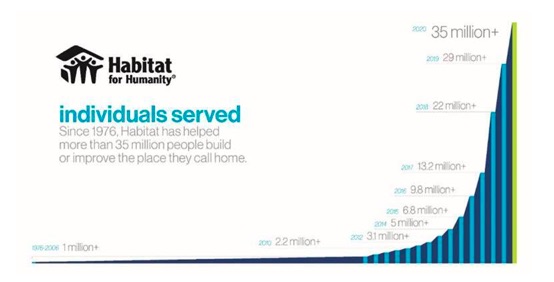
The 5.9 million people who accessed new or improved housing through new home construction, rehabilitation, incremental improvements and repairs helped the organization reach the milestone of 35 million people served since its founding in 1976.

Description automatically generated

Habitat views access to safe, decent, and affordable housing as the cornerstone of strong, thriving communities. Senghouch, Cheat, and their two young children are among the many families served by Habitat’s global network. Senghouch’s family built a new home with the help of Habitat for Humanity Cambodia. Living in a small village in Khsach Kandal district, Cambodia, Senghouch is now able to work comfortably on her weaving loom inside her home to earn more income for the family’s daily expenses. The training in water, sanitation, and hygiene practices conducted by Habitat has also helped to improve the children’s overall health.

In fiscal year 2020, Habitat continued to enable access to better housing for millions through its Terwilliger Center for Innovation in Shelter. To address the impacts of COVID-19, the Center developed nearly 40 activities, from issuing small grants to shelter-related innovators to prototyping temporary shelter concepts.

Habitat’s impact is felt well beyond the individuals that it serves. Habitat’s work promotes and drives social and economic outcomes by stimulating other sectors of the economy through spending and job creation associated with home construction, renovation, and repair.

Findings from a recent Habitat report determined that emerging economies that have been struggling to recover from the COVID-19 pandemic may be significantly underestimating their housing sector’s contribution to the gross domestic product of a country. The report, titled Cornerstone of Recovery: How Housing Can Help Emerging Market Economies Rebound from COVID-19, found that inclusive financial interventions in the housing sector can stimulate economies while also improving the wellbeing of families through healthier housing conditions.

Habitat is continuing its work in the face of growing need. Even before the pandemic, more than 1.6 billion people globally lack adequate shelter. The economic impact of COVID-19 has substantially increased the number of people struggling with the impossible choice of covering the cost of housing and other basic needs, like food, water, heat, and health care.

“These are our friends, our family and our neighbors, who now more than ever, could use the hand up that we can offer,” Reckford said. “The pandemic may have spread us apart physically, but we have never been more united it our work to build strength through shelter.”

To learn more and to read the full 2020 annual report, visit habitat.org/multimedia/annual-report-2020.

Note to Editor:
To set up an interview, receive photos or for further information, contact Michele Soh MSoh@habitat.org, +65 9233 1544 or Rona Azucena, RAzucena@habitat.org.

About Habitat for Humanity

Driven by the vision that everyone needs a decent place to live, Habitat for Humanity began in 1976 as a grassroots effort and has since grown to become a leading global nonprofit working in more than 70 countries. In the Asia-Pacific region since 1983, Habitat for Humanity has supported millions of people to build or improve a place they can call home. Through financial support, volunteering or adding a voice to support affordable housing, everyone can help families achieve the strength, stability and self-reliance they need to build better lives for themselves. To learn more, donate or volunteer, visit habitat.org/asiapacific.