Evolve Your Instinct with the Launch of Amazfit’s T-Rex 2

  • Military-grade smartwatch can withstand extreme conditions from a journey into space to desert heat

Amazfit, a premium smart wearable hardware brand owned by Zepp Health Corporation, launched the T-Rex 2, in Malaysia today, an outdoor, tough and rugged smartwatch, with a demonstration of its durability and versatility by wall climbing professionals from Camp5, the climbing gym.
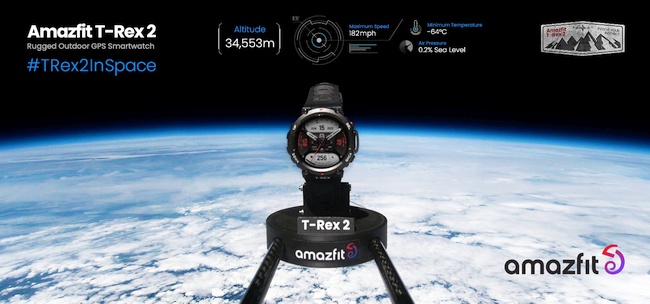
Amazfit recently sent the rugged outdoor GPS smartwatch Amazfit T-Rex 2 into space on a quest to prove its strength in extreme environments. The space journey began in the city of Sheffield in the United Kingdom, where Amazfit T-Rex 2 was sent off on a lightweight spacecraft equipped with fully functional tracking and control systems, as well as an on-board camera to capture the most exciting highlights during the two and a half hour round-trip.

The Amazfit T-Rex 2 has passed 15 military-grade tests and can remain functional in temperatures as low as -30 degrees Celsius through the ultra-low temperature operation feature. With a battery life that can stretch to 24 days, it comes with dual-band, 5-satellite positioning and route-import and real-time navigation for optimum outdoor use. Built for any terrain, the Amazfit T-Rex 2 can also resist heat up to 70 degrees Celsius, has a humidity resistance of 240h, 96h salt-spray resistance and shock-resistance.

Wearers can create their own training templates for 11 different sports through the Zepp app, which is powered by the Zepp operating system and includes a rich ecosystem of over 10 mini apps for seamless interactions. The Amazfit T-Rex 2 also has a huge selection of over 150 sports modes including the toughness-testing triathlon mode, the professional lap-data recording track run mode, with smart trajectory correction, and the more leisurely golf swing mode.

Mr. Benky Lin, Country Manager of Amazfit Malaysia, said, “There is no doubt that the Amazfit T-Rex 2 is one of the toughest smartwatches in the market. The military-grade tests ensures that it can withstand low and high pressure, extreme heat and cold, rain, salt, sand, dust, vibrations, shocks, acid and fungus. The Amazfit T-Rex 2 is built for durability and versatility and can be used for the great outdoors as well as for strength training in any condition.”

“We are happy to introduce the Amazfit T-Rex 2 here in Malaysia. This is a smartwatch that is ready to evolve your instinct anywhere in the world. We have pushed it to the limit, going all the way to space, subjecting it to the most extreme conditions we can reach and that includes the heat of Death Valley in California and depths of the Pacific. The Amazfit T-Rex 2 is a smartwatch you can wear with confidence in any terrain condition.”

The Amazfit T-Rex 2’s look is inspired by the spirit of nature and comes in Astro Black & Gold, Ember Black, Wild Green and Desert Khaki. It is rugged in style with HD AMOLED display that enables the wearer to download dozens of watch faces with matching always-on displays or images unique to the wearer.

The Amazfit T-Rex 2 comes with one-year warranty and retails at RM799 each. To commemorate the launch, Amazfit T-Rex 2 will be exclusive to Shopee Online Store with a store promotional price from 6 July to 8 July. At the promo, there are also one each of Powerbuds Pro, GTS 2 mini and Band 5 to be won. The first 100 buyers of the T-Rex 2 will get an Amazfit sport bottle and screen protector as a gift.

To know more on the Amazfit T-Rex 2 series of smartwatches, please go to www.amazfit.com/en or to Amazfit’s e-commerce partner platform http://bit.ly/Amazfit-MY-SHOPEE.

Amazfit: www.amazfit.com/en

First In-Person Satellite Industry Forum After COVID Sees the Industry in Strong Shape and Geared for Growth

The Asia Video Industry Association was finally able to host its annual Satellite Industry Forum in-person in Singapore on 31st May 2022 after a two-year hiatus, bringing together over 120 delegates from around the world and some of the satellite industry’s most foremost leaders.

Opening the Forum this year was keynote speaker, Steve Collar, Chief Executive Officer, SES, to address the issue of where future growth was coming from and kicked off the session with his views on demand and supply in the market. As platforms were getting longer to get built and become operational, it showed how difficult it was to get launches done, and how much the industry overestimated supply. Collar added that SES had always been a champion of multi-orbit, and not just having both MEO and GEO satellites, but also constructing a global network for customers to move seamlessly from one to the other to maximize the benefits of both. Collar also shared his excitement on demand, and the new applications and new services that could be run, with a sweet spot being the high throughput and high connectivity services which represented a significant market for SES.

Access to space was also what made the industry exciting, as technology continued to develop both in space and on the ground. However, he also highlighted that space sustainability was critical, with the industry having a duty and moral obligation to treat space in a sustainable way. “Our job is to make sure that space will be used by future generations, and the access to space is equivalent to what we enjoy today and hopefully more in the future,” said Collar.

COVID also saw the resurgence of the linear broadcast, with video having done very well over the last two years. Collar remained committed and excited on the long-term aspects of the video business, particularly in Asia. And while it was not going to be the source of growth, it was still overwhelmingly the source of cashflow.

This sentiment was also shared by some of the largest satellite operators in the region during the Satellite Operators’ Roundtable. Terry Bleakley, Regional Vice President, Asia Pacific, Intelsat, talked about the importance of satellite to video and how long-term agreements were still being signed with satellite operators. In terms of advertising in Asia Pacific, by 2024, $43.5 billion would come from broadcast and linear television, whereas OTT was only going to bring in $30 – 33 billion, hence linear was still generating more money. Patrick French, Executive Vice President, Global Business Development and Strategy, ABS, added that video still had a long lifetime ahead, and the core of Asia for the longer term. Software defined satellites were also going to be addressing all market segments and would de-risk the business case going forward.

From the manufacturer’s perspectives, Vaibhav Magow, Vice President, International Division, Hughes Network Systems, also said this was the most exciting time for the satellite industry, as software defined satellites could change and swap the configuration of what was being offered to the customers, and easily adapted to the change of demand. Joe Bogosian, Vice President, Global Sales & Marketing, Boeing Commercial Satellite Systems International, also agreed that software defined satellites were going to drive much higher utilisation of CAPEX that was going up, and multi-orbits were going to enable more efficient use of this CAPEX and were able to serve different applications more efficiently for LEO and GEO.

Closing off the Forum was Bill Carlin, Senior Manager, Global Sales, AWS Aerospace & Satellite Solutions whose interest in space and satellite was on the vast amount of data that was being collected and created from space, and soon in space, with a future view of launching data centers on the moon and even on Mars. “I see the ability of moving the cloud to space. If we move high speed computing to space, we can do all the things that we do on earth that require high volumes of computing, storage or analytics,” said Carlin.

The Satellite Industry Forum is generously sponsored by AsiaSat, AWS Aerospace & Satellite, Gilat, Hughes, Kymeta, Marsh, MEASAT, Milbank, SES, SpaceBridge, SpaceLogistics and Thaicom.

About the Asia Video Industry Association:

The Asia Video Industry Association (AVIA) is the trade association for the video industry and satellite ecosystem in Asia Pacific. It serves to make the video industry stronger and healthier through promoting the common interests of its members. The AVIA is the interlocutor for these industries with governments across the region, leads the fight against video piracy through its Coalition Against Piracy (CAP) and provides insight into the video industry through reports and conferences aimed to support a vibrant video industry.

For media enquiries and additional background, contact:
Charmaine Kwan
Head of Marketing and Communications
Email: charmaine@avia.org
Website: www.avia.org
LinkedIn: www.linkedin.com/company/asiavideoia
Twitter: @AsiaVideoIA

The Summit at Lan Space Concludes Successfully

A week of powerful conversations, immersive activities, and headline performances featured The Summit at Lan Space (www.thelan.space) as one of the most prominent events on the promenade, where some of the brightest minds around the globe were brought together during the annual Economic Meeting in Davos.

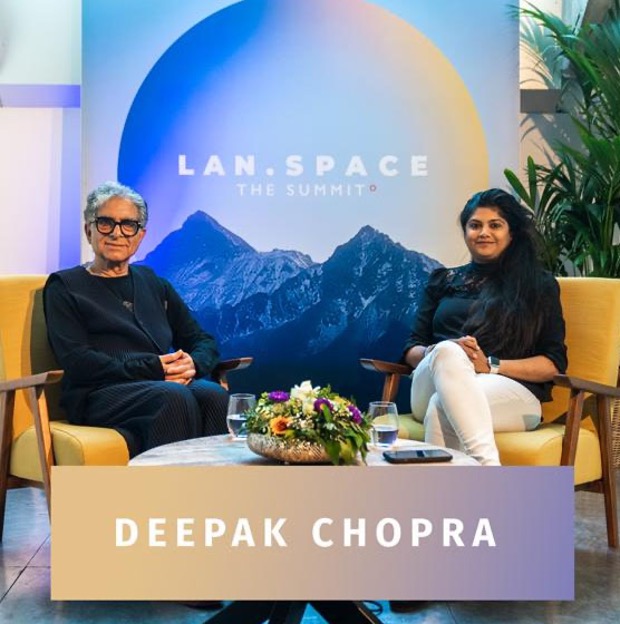
– Headline speakers like Deepak Chopra, Sian Proctor, Tessy De Nassau, Nik Gowing, Leonor Diaz Alcantara, and Helena Gualinga took center stage to advocate for audiences to keep collaboration, empathy, and empowerment at the forefront of their leadership in seismic times.
– Over five days, a platform was designed for innovative thinking with discussions converging on some of the most crucial conversations of our times: deglobalization and new geopolitical balances, disruptive decentralization in the age of Web3.0, solidarity in sustainability, and the future of leadership.

With the rugged snow-capped setting of the Swiss Alps transformed by the picturesque view of the mountain meadows in May, last week the participation of more than 200 impact investors and 1000 delegates at The Lan Space successfully concluded five days of thought-provoking panel discussions and live performances in Davos, Switzerland, during the annual economic meeting.

This year Davos was different not only because of the change of scenic backdrops but more so because of the lack of global cooperation to solve the most pressing issues of our current and future generations. With the turbulent aftermath of Covid-19 and its resulting rise of inequality, coupled with the climate crisis and the geopolitical turmoil following Russia’s invasion of Ukraine, the agenda-setting conversations that happened at the Lan Space throughout the week of May 20-26 focused on moving the needle in crucial areas such as cultural leadership, trust in and safety in the coming Web3.0, and regenerative solutions for the planet.

“The road of social injustice and mental distress is what leads to extinction. The other road, currently less traveled, is that of conscious choice-making in communities which could lead to a more peaceful, sustainable, and healthier world. As we explore consciousness, I hope that is the road that we’ll take, but it requires diligence and continued expansion of conversations like these,” commented Deepak Chopra after his discussion at the Lan Space about the spiritual codes of success.

Influential minds, globally renowned experts, and visionary changemakers, such as the Inspiration4 astronaut, Dr. Sian Proctor, UNAids ambassador, Tessy De Nassau, CEO of the Montessori Group, Leonor Diaz Alcantara, Chairman of Constellation Research, R Ray Wang, CEO of Ambika Inc., Aron Dutta, and indigenous rights activist, Helena Gualinga, also took to the stage to share their unique perspectives during interactive panel discussions that left the empowered and inspired.

Top Tier Impact, the global ecosystem of sustainable leaders and official partner of the World Economic Forum also used the Lan Space to host their private Global Impact Awards ceremony celebrating entrepreneurs who are building a new paradigm for the planet.

Guest speaker Tessy De Nassau, UN Aids ambassador and Woman of the Decade, said, “What I really loved [at the Lan Space] was the conversation around what our leadership is lacking today. We need to start learning about what it means to lead with empathy and what it takes to become that leader.”

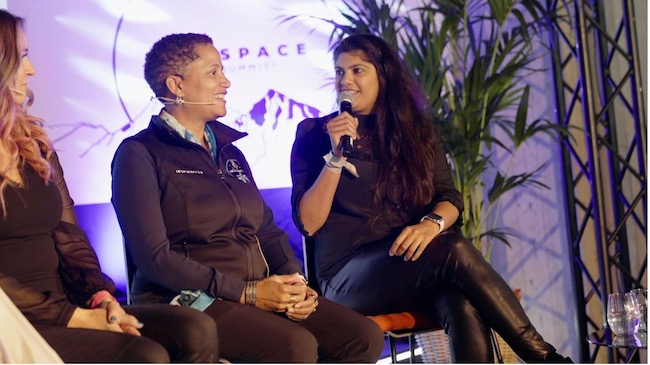
Another highlight of the event was a keynote panel with the astronaut Dr. Sian Proctor, pilot of the Inspiration4 mission, Christina Korp, Director of Space For A Better World, Rafal Modrzewski, CEO of ICEYE, and Fatema Hamdani, CEO of Kraus Hamdani Aerospace. “It is critical to talk about how space can advance a more equal and sustainable life here on Earth,” commented Dr. Proctor. “As we push humanity to the Moon, Mars, and beyond, we are also creating the needed innovations to solve some of Earth’s most challenging problems. I was honored to talk about how space will help us meet the UN SDGs at the Lan Space in Davos, we need more of those conversations.”

Closing the summit on the topic of leadership for the future generations to thrive, Leonor Diaz Alcantara, CEO of the Montessori Group summed up that, “Sustainable change is dependent on quality education now. The social problems the world is facing are problems that need long-term solutions and will require generations to implement and commit to resolving. If we do not prepare future generations now, by teaching them the skills and mindset they will need, any solutions will only be short term.”

The summit saw no shortage of enthralling evening events and artistic performances too. Among the highlights of the week, there were sensorial dinners cooked on the venue’s terrace by celebrity chef for the British Royal household, Khalid Dahbi, breathtaking bubbleology shows by Guinness world-record holder SamSam Bubbleman, and live DJ sets by globally recognized artists like NINJA, Francesco Mami, 3D Punk, Renato Oliveira, and the multi-platinum singer Alex Hepburn.

Lan Tschirky, Founder of Lan to Capital and visionary of the summit said: “We were beyond thrilled to welcome some of the brightest minds of our world to our space this week. I hope our guests left Davos inspired and with a sense of empowerment for what can come next if we keep collaboration as a core value. We look forward to showcasing more of our portfolio such as LAN Health and Havona, further welcoming impactful partners, brands, and start-ups to our venue next year.”

The event’s full agenda and list of guest speakers are downloadable, click https://drive.google.com/file/d/1-0yz-DW3cy_WCydbcpDXXZ9JwwUlNA_5/view.

For any press inquiries, please email farah@thelanspace.com

Source: Plato Data Intelligence: PlatoData.io

The Lan Space Announces The Summit In Davos

The Summit at The Lan Space, an exclusive gathering of visionary leaders collaborating on the most pressing issues of our current and future generations, is back in Davos, Switzerland this May in its second edition after a successful debut in January 2022.

From May 20th, The Lan Space in Davos will converge the frontiers of technology and humanity to showcase the cultural essence of life in a week-long immersive, elevated experience.

With 200+ elite investors in attendance, the Summit will act as a crucial place to engage with mind-blowing projects, societal change-makers, and digital-native visionaries.

With a diverse and disruptive program of panel discussions, debates, live performances, workshops and networking sessions, each day of the conference will be dedicated to a specific theme, spanning from sustainability and solidarity, the future of leadership, the arts and disruptive decentralisation. .

The contributions and perspectives of brilliant minds joining the panels range from Tessy De Nassau, UN Aids Ambassador and Woman of the Decade, the Inspiration4 astronaut Dr. Sian Proctor, to the Montessori Group’s CEO Leonor Diaz Alcantara, the Editor-In-Chief of Cointelegraph, Kristina Corner, and Berthold Baurek-Karlic, Founder of Venionaire Capital & President of European Super Angels Club, each of whom will be focused on discussing the future of humanity across disciplines and how to create positive change. Each session will be buzzing with thought-provoking insights and impactful ideas moderated by Farah Nanji (TEDx Speaker, BBC Producer), Kamran Khan (MIT Sloan, Former Chair of Asia at LSE, Investment Director at Expand Energy), and Gaia Lamperti (Reporter at IBS Intelligence).

The Lan Space will also be a meeting point for global leaders, VCs, start-ups, and entrepreneurs with a plethora of targeted opportunities to network and enjoy social interactions. Expect welcome drinks on stunning terraces, gala dinners cooked by celebrity chefs, live music performances by worldwide renowned artists, and collective meditation sessions. Notable investor networks in attendance range from Lan To Capital, Goldfingr, EQ Capital, Top Tier Impact, Chi Impact Capital, and Ukrainian Venture Capital and Private Equity Association.

Lan Tschirky (https://www.linkedin.com/in/lan-tschirky/), Founder of The Lan Space and organizer of the event, said, “With this event, we want to celebrate our collective inspiration, as well as our shared passion for philosophy, technology, the arts, and gastronomy. But most importantly, we want to focus on delivering practical solutions that converge between the digital and physical world to bring about positive change in society and for the environment. We are excited to offer a week of activities upholding the core values of trust, partnerships, collaboration, preservation, and nurture of creativity.”

Access to the Lan Space panel discussions, parties & investor network is by application only. Please email your bio and digital links to farah@thelanspace.com to request access after registering on Eventbrite (https://www.eventbrite.ch/e/the-summit-at-lanspace-tickets-320848605817).

You can download the event’s full agenda and list of guest speakers here (https://drive.google.com/file/d/1-0yz-DW3cy_WCydbcpDXXZ9JwwUlNA_5/view).

For any press inquiries, please email farah@thelanspace.com.

The Future of Video in India is Bright, as Video Becomes Increasingly Democratized and Consumers Have It All

The Asia Video Industry Association held its third Future of Video India virtual conference to much optimism as industry leaders remained bullish on India’s long-term view, after its fifth straight quarter of economic expansion, with all round economic recovery and an economic rebound that is much broader based and across multiple sectors.

Mihir Shah, Vice President, India, Media Partners Asia, opened the conference with an outlook on India’s video market, which showed a sharp rebound in the TV advertising market, after a depressed 2020. The market grew 37% last year and stood at U$S3.8 billion now. While the broader Pay TV industry continued to see a lot of pressure, Free to Air revenues have surged, and the pandemic has resulted in the rapid adoption and consumption of Connected TV especially in the urban centres. With a Total Video Market worth US$12 billion and growing at 9% CAGR in the next 5 years to US$20, the AVOD market was also predicted to remain buoyant and tripling in the next five years, with SVOD doubling as well.

This optimism for the market continued with the keynote conversation with Sunil Rayan, Head, Disney+ Hotstar India. With the mission to making the streamer as accessible to as many people as possible, Disney+ Hotstar India had made a significant shift to an SVOD offering while maintaining their freemium ad-supported model, which continued to be much larger than SVOD. “We’ve had significant growth in the SVOD side. But India is a highly price sensitive market and AVOD gives scale so we are always trying to balance the two,” said Rayan. Their content offering had also evolved into ‘cricket plus entertainment’, with a shift both in investment and quality of entertainment that is digitally native. Rayan was also of the view that the streaming market was highly vibrant, and there was certainly room for multiple operators. However, as the ecosystem developed, the content needed to be targeted at specific audiences, and while consolidation was already happening, it will continue to evolve.

Megha Tata, Managing Director, South Asia, Warner Bros. Discovery, was also positive on the outlook for both linear TV and OTT. “There are multiple scenarios which are evolving in the country each India needs to be catered to in a different way,” said Tata. This was also not just about pricing and product but also content. “It’s not an ‘either or’ market yet, but an ‘and’ market, both can survive and will survive,” added Tata. But how the share of wallet would play out continued to be an evolution every day. Gourav Rakshit, COO, Viacom18 Digital Ventures, added that the holy grail was to create habit in your consumers. “Real estate on the phone is small, real estate in the mind is even smaller,” said Rakshit. Sharing her views on the road ahead, Tata also pointed out that revenue and monetization today was still coming from linear, and funding all the investment that was needed in digital. “We need to take care of the now or there is no future,” said Tata.

The future was certainly going to be made brighter with the advent of 5G, as the session’s panellists spoke about the challenges that 5G alleviated and the opportunities it presented. Manoj Gurnani, CTO & Head of Strategy, India, Nokia, shared that a new generation of technology was going to bring more capabilities and more efficiencies. With 5G bringing on fixed wireless capabilities, it was going to be a great enabler, which would lead to the enhancement of the quality of experience. Mahendra Nath Vyas, Executive Director, Planetcast Media Services, also added that while AR/VR and gaming were the future technology that would ride on the 5G networks, there was also a huge opportunity to unlock content creation in remote areas with 5G.

However, content creation in itself had also evolved with OTT. Nimisha Pandey, Chief Content Officer, Hindi Originals, ZEE5, shared that OTT had enabled the content creators and the entire ecosystem to create content for small taste clusters, with the decision making no longer based on the mass audience. The biggest challenge faced by content creators now was the need to evolve at the pace that the audience was evolving, as audiences were evolving too fast and keeping in synch with the pace was the biggest challenge. Ultimately, Pandey also believed that it all began with a great story, and it was important to give value to both passion and craft.

Avinash Kaul, CEO, Network18, Managing Director, A+E Networks TV18, summed up the optimism for the industry in his closing keynote. With video now having been democratized, consumers have never had it better. And with the online video ecosystem having opened up, funding and content had also poured in, with money coming into the ecosystem from all sources. With a greater investment in technology and data, content was also getting shaped because of analytics and there was also a new future for data driven companies to tap into funding. All of this would have led to better content all round, and even tailored content for cohorts of audiences. From a consumer’s point of view, it was now utopian. “The future of video has always been bright and will continue to shine brighter and brighter,” said Kaul.

The Future of Video India is generously supported by Bharucha & Partners, Brightcove, Google Cloud, Netflix, Synamedia and Xandr.

About the Asia Video Industry Association

The Asia Video Industry Association (AVIA) is the trade association for the video industry and ecosystem in Asia Pacific. It serves to make the video industry stronger and healthier through promoting the common interests of its members. AVIA is the interlocutor for the industry with governments across the region, leads the fight against video piracy through its Coalition Against Piracy (CAP) and provides insight into the video industry through reports and conferences aimed to support a vibrant video industry.

For media enquiries and additional background please contact:

Charmaine Kwan
Head of Marketing and Communications
Email: charmaine@avia.org
Website: www.avia.org
LinkedIn: www.linkedin.com/company/asiavideoia
Twitter: @AsiaVideoIA

U-Boat Worx launches 9-person flagship lithium-ion battery submersible NEXUS

Dutch submersible manufacturer U-Boat Worx (www.uboatworx.com) breaks the mould with the launch of the NEXUS series. U-Boat Worx is the market leader in private and commercial submersibles. Since 2017, the company has sold more than 20 of its highly successful Cruise Subs to private operators, resorts, and cruise lines.

Nexus White Front View
Nexus White Side View
Nexus White Right Angle
Nexus White from Top Upside
Nexus Yellow Front Side

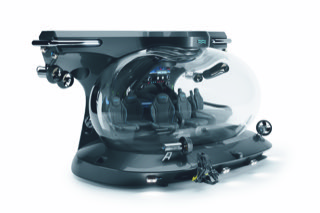
The NEXUS series (www.uboatworx.com/model/nexus-series) comprises two models featuring an ultra-large elliptical acrylic pressure hull with unrivalled passenger comfort. Seating up to eight passengers and one pilot, the NEXUS provides 25% more interior space than competing models. The NEXUS subs are depth-rated to 200 meters (650 feet).

Equipped with the latest lithium-ion battery technology, the subs can operate for up to 18 hours and dive up to ten times a day. 80 guests can participate in an unforgettable sub-sea adventure daily (www.uboatworx.com/model/nexus-series).

The unique revolving seating arrangement featured in the Cruise Subs has been replicated in the NEXUS. Passengers therefore always enjoy the best view, regardless of the direction the submarine is travelling. The NEXUS subs are designed as multi-directional, meaning they can manoeuvre in any direction without compromise. This is a distinguishing capability only achieved in U-Boat Worx submersibles. Ten silent thrusters provide the power required for top performance and unmatched speed.

The experience and knowledge gained from the development of the Cruise Subs has evolved the new features in the NEXUS series, including an XXL entrance hatch – the largest ever incorporated on a submersible of this size. For passengers of all ages, the entire boarding process has been streamlined, in keeping with U-Boat Worx’s vision that everyone should be able to experience the oceans in a safe and comfortable manner.

A unique feature of U-Boat Worx’ flagship submersibles is the optional passenger elevator, also integrated on the company’s C-Researcher models.

Thanks to top-mounted diving tanks, the view abeam on both sides is unrestricted by floaters, with ample freeboard. This also leads to a stable boarding platform granting sufficient space for all occupants to stand on deck.

The NEXUS is optimised for ship-based launch and recovery, and can also be deployed from land and transported to dive sites.

In addition to the 9-person NEXUS, a marginally smaller and lighter 7-person version is available.

NEXUS – meaning a point of connection – bridges the gap between people and the ocean, providing a truly immersive aquatic encounter.

About U-Boat Worx
The 10 Submersible essentials (www.uboatworx.com/why-u-boat-worx-submarines)

For centuries, the Netherlands has been synonymous with world-class maritime innovation. U-Boat Worx is proudly continuing this tradition by leading the global submersible market. Since becoming an industry leader in submarine design, construction, and operations, we see our commitments to safety, quality and service as the major reasons for our ongoing success.

The desire to explore the deep has existed since the dawn of humanity. The popularization of scuba-diving brought the oceans within reach. Unlike scuba-diving, a manned submersible can take us deeper, in safety and comfort – without any risk of decompression.

The dream of creating a superior submersible, available to the general public, began in the 1980s. Bert Houtman, founder of U-Boat Worx, had the revolutionary idea to create submersibles that would not only be operated by the military or large oceanographic research institutes, but also for the private sector. He realized that to do that, he needed to build his own.

U-BOAT WORX PRESS OFFICE / SAND PEOPLE COMMUNICATION
sandpeoplecommunication.com
Alexander Razinkov
uboatworx@sandpeoplecommunication.com
M: +7 909 1672905
https://sandpeoplecommunication.com

Indonesia Continues to Lead the Way in Site Blocking

The Coalition Against Piracy (CAP) has been tracking traffic to sites that have been blocked in Indonesia, as well as overall traffic to pirate sites and legitimate sites. The Indonesian government started blocking illegal sites in the middle of 2019 and by April this year the total number of sites blocked in Indonesia had topped 3,500. CAP’s latest data also showed traffic to all pirate sites in Indonesia was down by 75% as of January this year compared to when tracking first started in September 2019. Encouragingly traffic to legitimate sites in Indonesia had also tripled over the same period.

The effectiveness of the blocking is backed up by the most recent YouGov consumer surveys undertaken by CAP in which more than 50% of Indonesian consumers say that they have stopped or rarely access pirate services as a result of blocking. Perhaps more importantly, 76% of Indonesian consumers say they are accessing more legal content and pirating less, and 26% say they have subscribed to legitimate sources as a result of illegal streaming sites being blocked. Blocking as an educational tool may also be evident in 95% of Indonesian consumers agreeing that online piracy does have negative consequences – the highest in the region.

Local movie producer Edwin Nazir, the Chairman of Asosiasi Produser Film Indonesia (APROFI) was greatly encouraged by the ongoing blocking efforts and the positive traffic data. “It is through collective consciousness and continuous effort that we can stand against piracy and bring the Indonesian film industry forward,” said Nazir.

Matthew Cheetham, General Manager of CAP, noted, “Indonesia is leading the way when it comes to regulatory site blocking in the Asia Pacific region, if not the world, and the Indonesian government is to be congratulated for the strong stance they have taken in this area. Local industry is clearly benefitting from the actions, as are consumers who are not only being directed towards legitimate content, but in being blocked from accessing pirate sites, they are also protected from the serious risks that previous CAP studies shows are inherent in accessing pirate sites.”

CAP’s most recent YouGov consumer surveys show that while piracy continues to be a major concern around the Asia Pacific region, particularly in Vietnam, Malaysia and the Philippines, where 61% of consumers admit to accessing pirate services in each country, site blocking, and in particular government regulatory blocking, is having a noticeable effect in stopping consumers accessing pirated content online.

About the Asia Video Industry Association

The Asia Video Industry Association (AVIA) is the trade association for the video industry and ecosystem in Asia Pacific. It serves to make the video industry stronger and healthier through promoting the common interests of its members. AVIA is the interlocutor for the industry with governments across the region, leads the fight against video piracy through its Coalition Against Piracy (CAP) and provides insight into the video industry through reports and conferences aimed to support a vibrant video industry.

For media enquiries and additional background please contact:
Charmaine Kwan
Head of Marketing and Communications
Email: charmaine@avia.org
Website: www.avia.org

OTT Summit Ends with Much Optimism for Growth in Asia and a Strong Focus on Content and the Consumer

The Asia Video Industry Association (AVIA) hosted over 850 delegates and featured over 80 industry leaders at the recent OTT Summit, with conversations revolving a lot on the subject of growth, from subscriber and revenue growth to increased local content investment and an intense focus on the customer.

In discussing the outlook for the video industry in Asia, Vivek Couto, Executive Director and Co-Founder of Media Partners Asia (MPA), indicated there remained a lot of room for growth. With most markets having an SVOD household penetration of less than 50%, there was certainly an upside for Southeast Asia and some parts of North Asia as well. However, while the region remained bullish on growth, the Average Revenue Per User remained low, particularly in the Philippines, Thailand, Indonesia, and India. As such, some tiers and price increases would be introduced along the way, especially when premium sport started to be added to the platforms.

The adage of “Content is King” was very much heard throughout the summit. In MPA’s review of share of first-title consumption, premium local content was a key driver for customer acquisition, particularly in Indonesia and Thailand, with local content that showed some travelability, and as expected, with Korean content traveling very well, and some Japanese content as well.

This focus on content continued through to the fireside chat with Catherine Park, SVP, Head of Office & Streaming for Asia, Paramount Global, where she reiterated that their “mission is to unleash the power of the content with the belief that content is king.” With different go-to-market strategies to unlock maximum value, Paramount Plus planned to launch first in Korea with CJ ENM, then Japan as the next market followed by Southeast Asia in 2023. Park also shared Paramount’s “glocal” strategy – to have global vision but with local execution.

The importance of being local was also echoed by many panellists, as Asia could not be seen as one homogenous market. Sagar Pandit, Associate Director, Business Development, Asia Pacific, Discovery, Inc., said, “When you gun for growth, especially in Asia, it’s about tailoring your approach for every region but keeping your consumer at the front and centre of whatever you are doing.”

And with increasing fragmentation in Asia, customer obsession became a key part of the strategy, as more platforms leveraged technology to deliver personalised experiences. For Parminder Singh, Chief Commercial and Digital Officer, Mediacorp, the three things a customer looked for were highly personalized and relevant content, and new virtual interactive experiences, all built into one single experience, with the use of technology that would allow you to bring all of this to the customer. “If you are only delivering a straightforward service, you are going to be left behind,” added Akash Saxena, Head of Technology, Disney+ Hotstar India.

However, the challenge to integrate it all into an operator’s platform for a seamless experience very much remained, calling for perhaps greater aggregation and bundling for the OTT industry, as we started to see some fatigue from consumers working with multiple services to meet their content needs.

Closing off the summit with Bold Predictions for the Future of Streaming, Gourav Rakshit, COO, Viacom18 Digital Ventures, remained very optimistic, sharing that a large bet that platforms had not fully capitalised on was the area of media becoming social, with the opportunity to build communities. “We’ve really made rapid strides in the last five years . . . the next five will be focusing a lot more on delivering consumer delight,” said Rakshit.

The OTT Summit is generously supported by Gold Sponsors Brightcove, Lumen Technologies, Synamedia, TV5MONDE, Xandr and Silver Sponsors Akamai, Amagi, Broadpeak, BytePlus, Discovery, Encoding.com, Endeavor Streaming, Irdeto, Magnite, Mediacorp, Mirada, NAGRA, Nielsen, PubMatic and Vindicia.

About the Asia Video Industry Association

The Asia Video Industry Association (AVIA) is the trade association for the video industry and ecosystem in Asia Pacific. It serves to make the video industry stronger and healthier through promoting the common interests of its members. AVIA is the interlocutor for the industry with governments across the region, leads the fight against video piracy through its Coalition Against Piracy (CAP) and provides insight into the video industry through reports and conferences aimed to support a vibrant video industry.

For media enquiries and additional background please contact:
Charmaine Kwan
Head of Marketing and Communications
Email: charmaine@avia.org
Website: www.avia.org
LinkedIn: www.linkedin.com/company/asiavideoia
Twitter: @AsiaVideoIA

CAP Consumer Survey Shows the Benefits of Site Blocking

The Coalition Against Piracy’s (CAP’s) most recent YouGov consumer surveys show that while piracy continues to be a major concern around the Asia Pacific region, particularly in Vietnam, Malaysia and the Philippines where 61% of consumers admit to accessing pirate services in each country, site blocking, and in particular government regulatory blocking, is having a noticeable effect in stopping consumers accessing pirated content online.

Countries around the region that implement site-blocking showed a change in consumer behaviour to stop accessing piracy services due to sites being blocked and the change was most notable in those countries that used regulatory blocking. In Indonesia, more than 50% of consumers say that they have stopped or rarely access pirate services as a result of blocking, as do nearly 50% of consumers in Vietnam and 45% in Malaysia.

Encouragingly, the surveys show that regular site-blocking not only stops consumers accessing pirated content online, but also drives them towards legitimate sources, with more than 48% of consumers around the region stating they would subscribe to paid online services if the content they wanted to watch was not available via a pirate source.

Matthew Cheetham, General Manager of CAP, noted, “It is now clearly evident that site blocking, particularly regulatory blocking, is effective. The benefits are multi-fold, not only are consumers being directed towards legitimate content, but in being blocked from accessing pirate sites, they are also protected from the serious risks that previous CAP studies have proven are inherent in accessing pirate sites.” The surveys also illustrated the growing migration of consumption of pirate content via social media and messaging platforms. “However, the surveys also show the benefits of consumer education with a growing awareness amongst consumers of the negative consequences of piracy, most particularly via illicit profiteering and malware,” added Cheetham.

For the first time, CAP’s YouGov consumer surveys were undertaken across several countries simultaneously. The surveys will be repeated across the same countries annually, and in doing so, will enable longitudinal analysis of consumer behavioural trends towards piracy and enforcement measures around the region.

About the Asia Video Industry Association

The Asia Video Industry Association (AVIA) is the trade association for the video industry and ecosystem in Asia Pacific. It serves to make the video industry stronger and healthier through promoting the common interests of its members. AVIA is the interlocutor for the industry with governments across the region, leads the fight against video piracy through its Coalition Against Piracy (CAP) and provides insight into the video industry through reports and conferences aimed to support a vibrant video industry.

For media enquiries and additional background please contact:

Charmaine Kwan
Head of Marketing and Communications
Email: charmaine@avia.org
Website: www.avia.org
LinkedIn: www.linkedin.com/company/asiavideoia
Twitter: @AsiaVideoIA

8,000 talents join FILMART Online and EntertainmentPulse

Online platforms accessible until mid-May

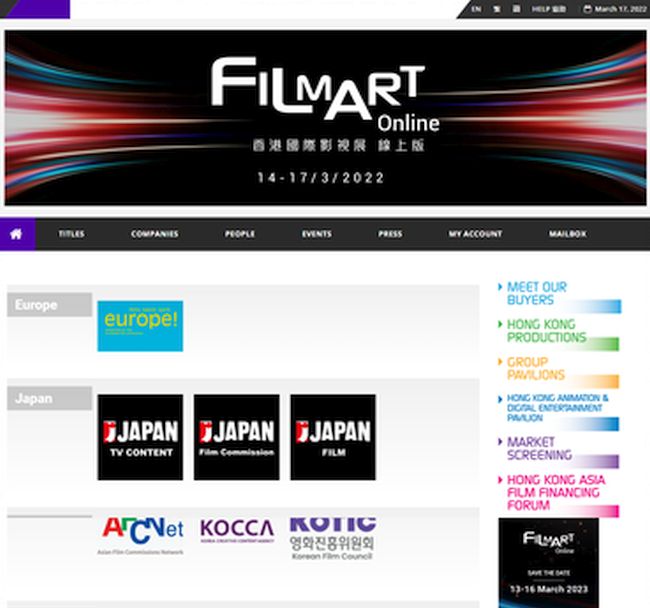
Organised by the Hong Kong Trade Development Council (HKTDC), FILMART Online and the first edition of EntertainmentPulse both received an enthusiastic response. The four-day virtual events brought together around 8,000 industry talents from 81 countries and regions. 749 exhibitors showcased over 2,400 new film and TV productions at the event, the majority being feature films, TV dramas and animations. FILMART Online also arranged business matchings for exhibitors and potential buyers, promoting trade and collaboration within the industry. FILMART Online saw a total of 27 online events staged, including 14 seminar sessions held at EntertainmentPulse.

FILMART Online and the first edition of EntertainmentPulse drew to a close on 17 March. The four-day dual events brought together around 8,000 industry talents from 81 countries and regions.
Gordon Lam (R) said the strengths of Hong Kong film continue to develop and he is sure that the old and new generations of filmmakers can come together and help to reinvigorate the local film industry.
Melody Hildebrandt, Chief Information Security Officer at FOX and President of Blockchain Creative Labs (R), shared her thoughts on non-fungible tokens (NFTs).

260+ mainland exhibitors featured
This year, FILMART Online welcomed exhibitors from more than 40 countries and regions, including Beijing, Shanghai, Chongqing, Guangdong, Zhejiang, Jiangsu, Shaanxi, Ningbo, Xiamen, Taiwan, the European Union, Japan, Korea, the Philippines, Thailand, the United States and more. More than 260 exhibitors were from Mainland China. The largest number of companies were from Beijing, Zhejiang and Guangdong. The Guangdong Pavilion was organised by the Film Administration of Guangdong Province and the Radio and Television Administration of Guangdong Province. Not only have they gathered 40 outstanding production companies from across the province to participate, they also promoted the advantages of Guangdong as a shooting location.

Gordon Lam says Hong Kong films are gaining advantages
Acting as a bridge connecting East and West, Hong Kong productions have shone internationally over the years, highlighting the uniqueness of the city’s own culture, content creation and distribution. In a session titled “Rediscovering the ‘Hong Kong Production”, Hong Kong actor and film producer Gordon Lam shared his views on the city’s film industry. “The strengths of Hong Kong film continue to develop with more diversified themes and new talents joining the industry, to meet the expectation of the increasingly demanding audience, I am confident that the old and new generations of filmmakers can come together to reinvigorate the local film industry.”

Mainland China productions reach global audience
The entertainment industry in Mainland China has seen robust growth in recent years. An abundance of quality films and TV dramas have been produced and distributed to international markets, winning over audiences with a diverse and sophisticated range of content. Karen Fu, CEO of Huace Group, unveiled the secrets behind the success of the mainland’s entertainment industry. “We are constantly on the lookout for new subjects. Themes based on the reality of daily life are very well-received in international markets,” she said.

BONA Film Group continues focus on realistic social subjects
In the seminar session titled “Experience and Innovation of the Chinese Film Industry”, the discussion focused on the development and breakthroughs of film production in Mainland China in recent years, as well as the reform of cinema operators and the application of new technologies. Yu Dong, founder, Chairman and CEO of BONA Film Group, said: “In recent years, BONA Film has continued to focus on realistic social themes, keenly capturing some of the scenes and characters that have deeply touched our country.”

NFTs boosts participation in digital asset market
Non-fungible token (NFT) marketplaces are bringing new digital experiences for creators and brands to interact with their communities through trading, unlocking and collecting memorabilia and exclusive content. Melody Hildebrandt, Chief Information Security Officer at FOX and President of Blockchain Creative Labs (BCL), explored how NFTs are becoming a new medium for content creators, intellectual property owners and advertising partners to monetise content, facilitate content distribution and create engaging fan experiences. “Collectibles are not the endgame for NFTs at all – this is just the beginning. We will see how people use this sense of digital ownership as a foundation to activate communities and gain a much more hands-on participation in the content they love,” Ms Hildebrandt said.

Online platforms accessible until 17 May
The online portals for FILMART Online and EntertainmentPulse will be open for access until 17 May. Users can revisit insightful content from EntertainmentPulse on demand at any time and utilise the business matching services offered through the FILMART Online platform.

FILMART Online and EntertainmentPulse
Date: 14 to 17 March 2022
Website:
– FILMART https://event.hktdc.com/fair/hkfilmart-en/
– EntertainmentPulse https://entertainmentpulse.hktdc.com/en
– EntertainmentPulse agenda https://entertainmentpulse.hktdc.com/en/programme/programme

Photo download: https://bit.ly/34Q1MPI

Media enquiries
Please contact the HKTDC’s Communications & Public Affairs Department:
Clayton Lauw, Tel: +852 2584 4472, Email: clayton.y.lauw@hktdc.org

About HKTDC
The Hong Kong Trade Development Council (HKTDC) is a statutory body established in 1966 to promote, assist and develop Hong Kong’s trade. With 50 offices globally, including 13 in Mainland China, the HKTDC promotes Hong Kong as a two-way global investment and business hub. The HKTDC organises international exhibitions, conferences and business missions to create business opportunities for companies, particularly small and medium-sized enterprises (SMEs), in the mainland and international markets. The HKTDC also provides up-to-date market insights and product information via trade publications, research reports and digital news channels. For more information, please visit: www.hktdc.com/aboutus. Follow us on Twitter @hktdc and LinkedIn