GA-ASI Completes Full-Scale Fatigue Test on MQ-9B

MQ-9B’s Third Lifetime Test Completes the FSF Testing Process With a Total of 120,000 Hours

On October 31, 2025, General Atomics Aeronautical Systems, Inc. (GA-ASI) completed its “third lifetime” of full-scale fatigue (FSF) testing for the MQ-9B Remotely Piloted Aircraft (RPA). Completion of FSF testing for the third and final lifetime includes a total of 120,000 operating hours (40,000+ flight hours per aircraft life) for the RPA and is a key milestone in validating the design of the airframe. The testing verifies the airframe structural integrity in support of certification to the NATO STANAG 4671 standard.
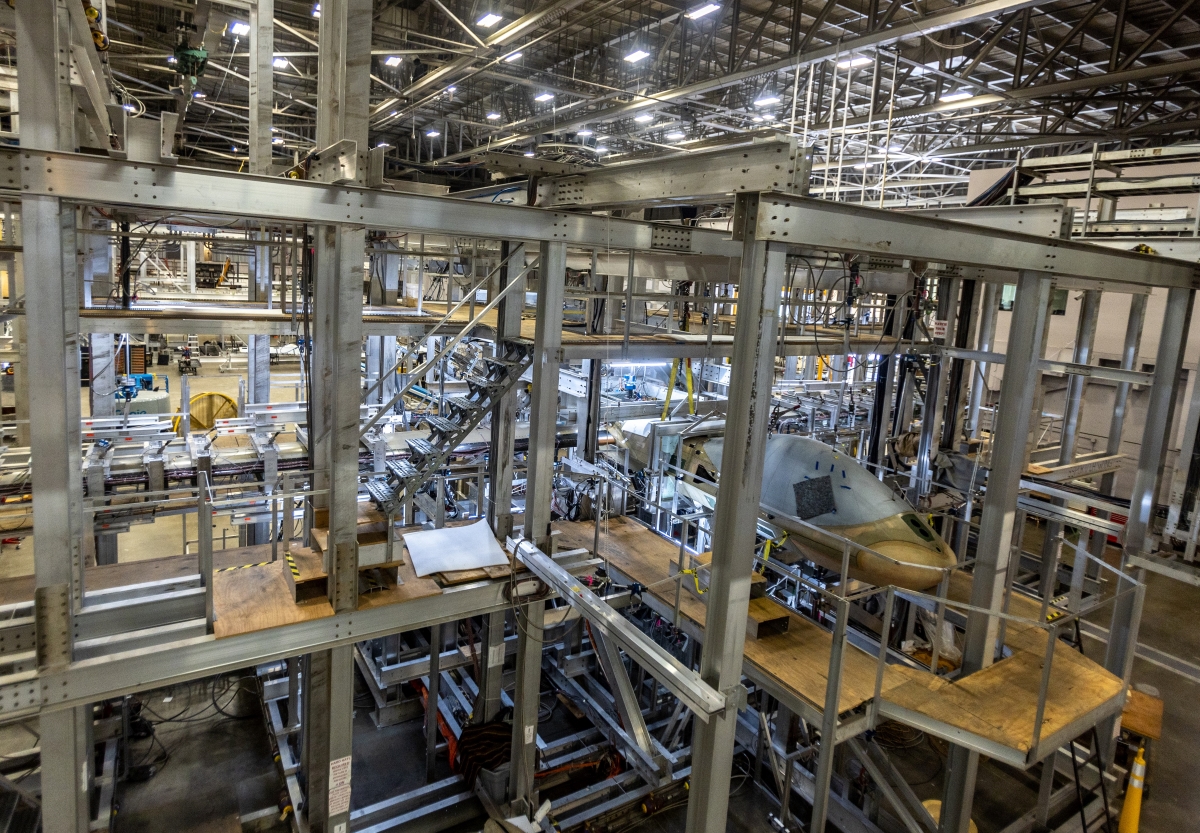
The aim of the testing is to identify any potential structural deficiencies ahead of fleet usage and assist in developing inspection and maintenance schedules for the airframe. Test results will be used as documentation for certification and will form the basis for in-service inspections of structural components.

“The completion of our full-scale fatigue test validates years of GA-ASI design and analysis efforts,” said GA-ASI President David R. Alexander. “The first two lifetimes simulated the operation of the aircraft under normal conditions, and the third intentionally inflicted damage to the airframe’s critical components to demonstrate its ability to tolerate operational damage that could occur over the lifetime of the aircraft.”

Testing was conducted from December 13, 2022, through October 31, 2025, at Wichita State University’s National Institute for Aviation Research in Wichita, Kansas. The airframe tested was a production airframe purpose-built to support the test campaign.

MQ-9B is GA-ASI’s most advanced RPA and includes the SkyGuardian® and SeaGuardian® models as well as the new Protector RG Mk1 that is currently being delivered to the United Kingdom’s Royal Air Force (RAF). In addition to the RAF, GA-ASI has MQ-9B procurement contracts with Belgium, Canada, Japan, Taiwan, Poland, India, Denmark, and the U.S. Air Force in support of the Special Operations Command. MQ-9B has also been featured in various U.S. Navy exercises, including Northern EdgeIntegrated Battle ProblemRIMPAC, and Group Sail.

About GA-ASI
General Atomics Aeronautical Systems, Inc., is the world’s foremost builder of Unmanned Aircraft Systems (UAS). Logging more than 9 million flight hours, the Predator® line of UAS has flown for over 30 years and includes MQ-9A Reaper®, MQ-1C Gray Eagle®, MQ-20 Avenger®, and MQ-9B SkyGuardian®/SeaGuardian®. The company is dedicated to providing long-endurance, multi-mission solutions that deliver persistent situational awareness and rapid strike.

For more information, visit www.ga-asi.com.

Avenger, EagleEye, Gray Eagle, Lynx, Predator, Reaper, SeaGuardian, and SkyGuardian are trademarks of General Atomics Aeronautical Systems, Inc., registered in the United States and/or other countries.

Contact Information
GA-ASI Media Relations
asi-mediarelations@ga-asi.com
(858) 524-8101.

SOURCE: General Atomics Aeronautical Systems, Inc.

Geespace Accelerates Global Expansion as GEESATCOM Enters New Markets

Chinese aerospace company Geespace continues to expand globally with a new cooperation agreement signed on November 26 with Systems & Services Limited (SSL), a leading satellite communications provider in Bangladesh. The partnership will support policy access, technical collaboration, and commercial deployment of GEESATCOM, a low-Earth-orbit (LEO) IoT constellation, marking another key step in Geespace’s international expansion.

The agreement follows a year of strong momentum for Geespace, which has already formed partnerships with operators in Morocco, Saudi Arabia, Kazakhstan, Argentina and other markets. This reflects a broader global trend, with Chinese commercial aerospace companies moving from R&D breakthroughs to scaled deployment of LEO communication constellations.

GEESATCOM reached a major milestone in September with the launch of its sixth orbital plane, completing Phase-1 constellation deployment. Geespace now operates 64 satellites in orbit with 100% on-orbit reliability. The constellation provides global coverage excluding the polar regions, supporting up to 340 million communications per day for as many as 20 million users. It delivers 1,900-byte message capability for text, voice, and image transmission, supported by in-house adaptive anti-interference technology offering up to 50 dB of protection to ensure secure and stable connectivity.

Through sustained investment in scalable innovation, Geespace has built full-stack capabilities across the space, ground, and application segments—from constellation system design and payload development to satellite mass production, telemetry and operation control, communication chipsets, modules and diversified terminals. Compared with traditional satellite communications, GEESATCOM’s IoT services offer significantly lower costs and flexible service tiers to support a wide range of industry scenarios.

Commercial use cases are expanding rapidly. In China, GEESATCOM has completed near-100% successful testing in sectors including marine fisheries, construction machinery, smart mobility, logistics and robotaxi. Internationally, Geespace has secured more than 20 operator partnerships across key emerging markets. In June 2024, GEESATCOM achieved a 99.15% communication success rate in its first overseas deployment test in Oman, with network availability exceeding 99.97%.

From remote industrial operations to offshore vessel tracking, GEESATCOM is enabling reliable connectivity in regions underserved by terrestrial networks. As global deployments accelerate, Geespace aims to further integrate satellite technology with industry applications—supporting mobility, energy, agriculture, logistics, and other sectors with cost-efficient, secure LEO IoT services that contribute to digital transformation across emerging economies worldwide.

Company: Geespace
Contact Person: Elliott Zhang
Email: geespace.pr@geely.com 
Website: https://www.geespace.com/ 
Telephone: +86 21 54200666

GA-ASI and Hanwha Finalize Deal To Produce Gray Eagle(R) STOL UAS

  • Partnership Will Enable Cost Savings By Manufacturing Unique and Flexible UAS Platform in South Korea

General Atomics Aeronautical Systems, Inc. (GA-ASI) and South Korea industry leader Hanwha Aerospace signed an agreement on October 14 to partner in development of the Gray Eagle® Short Takeoff and Landing (GE STOL) unmanned aircraft system (UAS). This landmark agreement marks the beginning of a new phase in U.S.-Korea defense cooperation, extending beyond traditional alliance structures to deliver next-generation, runway-independent UAS solutions that maximize commanders’ options in the face of evolving mission demands.

The deal marks the beginning of a co-development and co-production program between GA-ASI and Hanwha, with work set to begin immediately. The GE STOL will be offered to a worldwide customer base, including South Korea Ministry of Defense and the United States War Department.

Under the agreement, the two companies will design and build a production representative GE STOL. The maiden flight is scheduled for 2027 and first delivery to customers in 2028. With a GA-ASI-funded prototype already flying, the program has demonstrated its ability to accelerate from development to delivery. By leveraging the trusted Gray Eagle foundation and forward-leaning investments, the partnership offers the fastest path with lowest risk to operational capability. GA-ASI and Hanwha Aerospace will work closely throughout the design phase and establish a production facility in South Korea for final assembly and manufacturing of the GE STOL, with GA-ASI handling the final integration. GA-ASI will continue to produce its other Gray Eagle models in San Diego.

“GA-ASI and Hanwha are committed to investing in this project and building development and production capabilities in South Korea,” said GA-ASI President David R. Alexander. “We’ll be leveraging the expertise of both companies to quickly bring the Gray Eagle STOL to global customers.”

Gray Eagle STOL is the only medium-altitude, long-endurance UAS in its class to offer true runway independence by operating from semi-improved surfaces, including dirt roads, open fields, beaches, and parking lots. This exponentially increases its operational employment by providing multi-mission capability for Reconnaissance, Surveillance, and Target Acquisition (RSTA), counter UAS, and other missions including Manned-Unmanned Teaming (MUM-T) while leveraging GE STOL’s modular open systems approach.

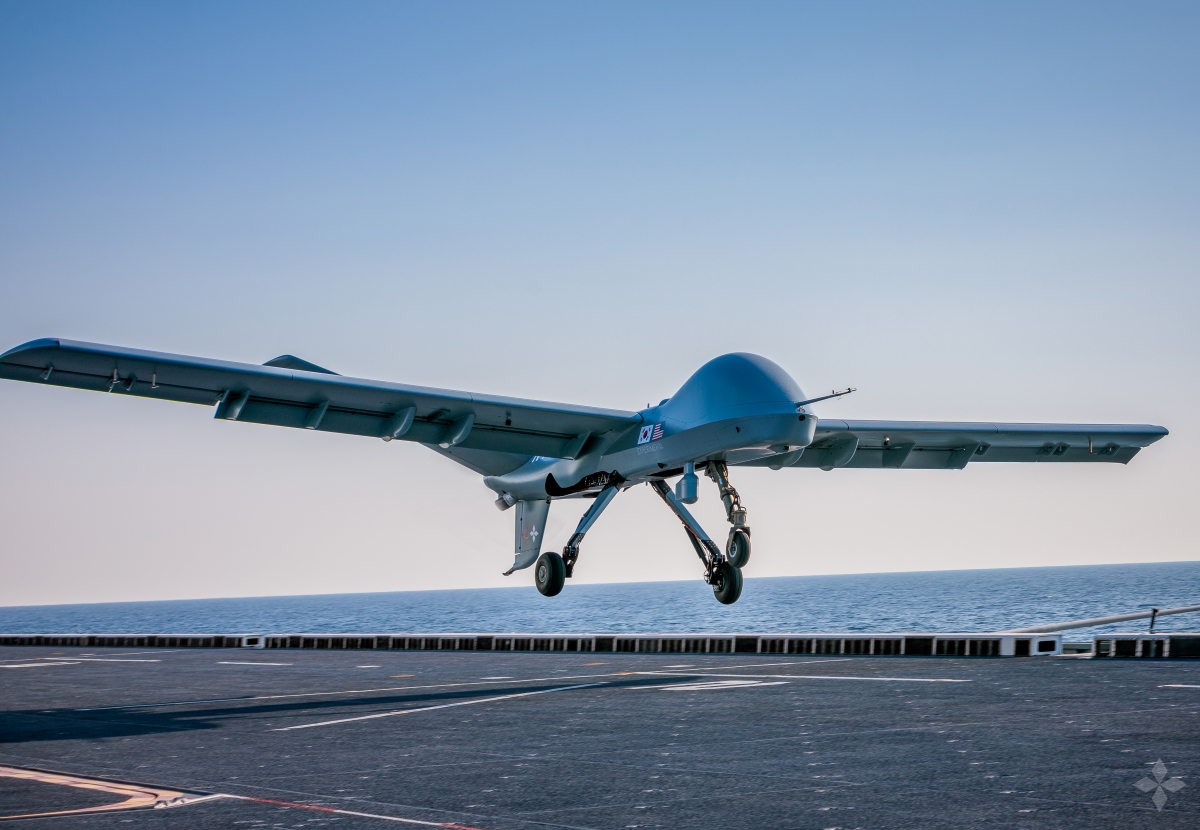
Using the GE STOL demonstrator, called Mojave, GA-ASI recorded several first-of-their-kind aviation milestones, including a 2024 demonstration when GA-ASI and Hanwha flew Mojave from the South Korean Navy’s amphibious landing ship ROKS Dokdo (LPH-6111) as it was underway at sea off the coast of Pohang, South Korea. It has also been launched and recovered aboard the British aircraft carrier HMS Prince of Wales (2023), performed live-fire testing at Yuma Proving Ground, Arizona (2024), and performed dirt strip operations (2023) underscoring GA-ASI’s advances in runway independence and operational flexibility.

The initiative is part of Hanwha’s strategic investment plan in its UAS business. This commitment, together with GA-ASI’s continued focus on UAS, demonstrates both companies’ strategy to invest ahead of customer demand, reducing risk and lowering lifecycle costs through international cost-sharing, and ensuring timely delivery of next-generation UAS solutions in Korea and abroad.

“Jointly producing GE STOL in South Korea and the U.S. will create jobs and help Hanwha secure talent in related fields as well as foster our domestic (Korean) UAS industry ecosystem. Hanwha is poised to become a comprehensive UAS company capable of executing everything from design to production and maintenance based on our capabilities, which span from fighter jet engines to radar and avionics equipment,” said Mr. Jae-il Son, President and CEO of Hanwha Aerospace.

Together, GA-ASI and Hanwha are delivering a low-risk, investment-backed, and innovation-driven UAS solution that provides commanders unmatched flexibility faster and at lower cost.

About GA-ASI
General Atomics Aeronautical Systems, Inc., is the world’s foremost builder of Unmanned Aircraft Systems (UAS). Logging more than 9 million flight hours, the Predator® line of UAS has flown for over 30 years and includes MQ-9A Reaper®, MQ-1C Gray Eagle®, MQ-20 Avenger®, and MQ-9B SkyGuardian®/SeaGuardian®. The company is dedicated to providing long-endurance, multi-mission solutions that deliver persistent situational awareness and rapid strike.

For more information, visit www.ga-asi.com.

Avenger, EagleEye, Gray Eagle, Lynx, Predator, Reaper, SeaGuardian, and SkyGuardian are trademarks of General Atomics Aeronautical Systems, Inc., registered in the United States and/or other countries.

Contact Information
GA-ASI Media Relations
asi-mediarelations@ga-asi.com
(858) 524-8101.

SOURCE: General Atomics Aeronautical Systems, Inc.

GA-ASI Line of UAS Passes 9 Million Flight Hours

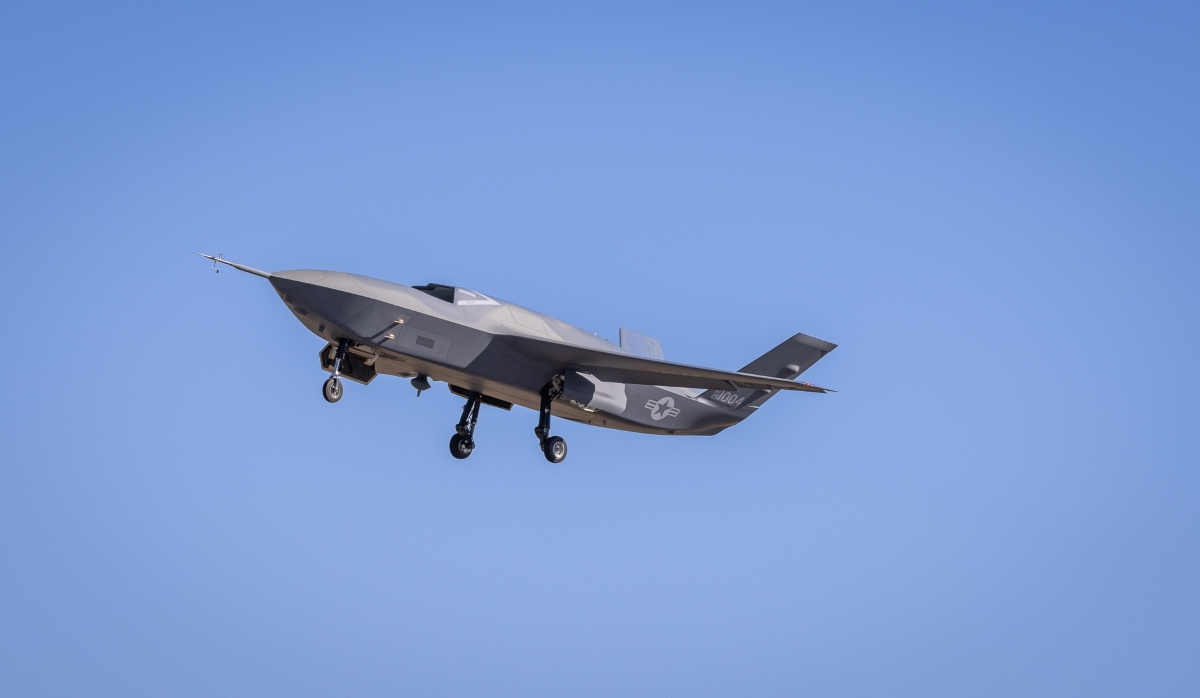
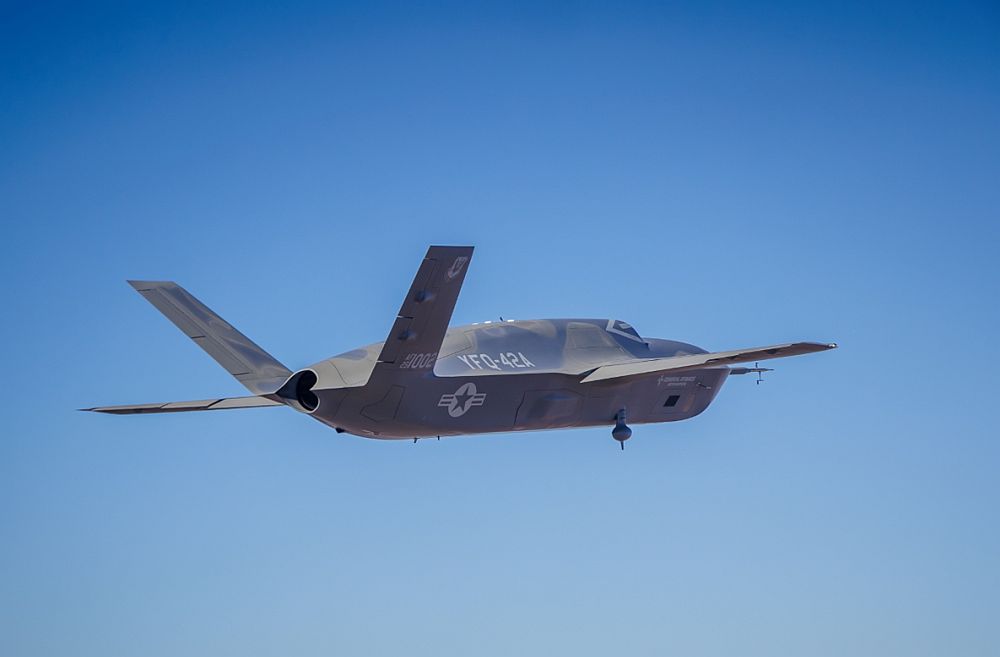
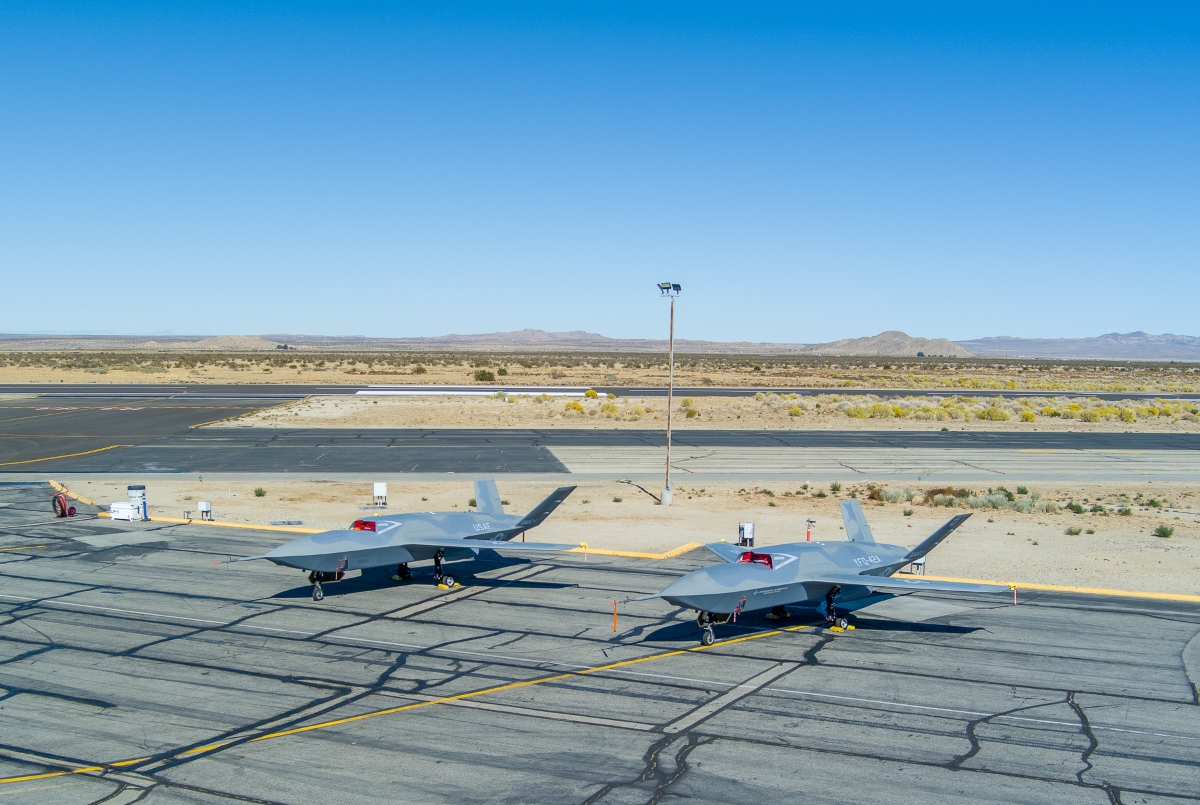
Ongoing flight operations of the new YFQ-42A Collaborative Combat Aircraft helped General Atomics Aeronautical Systems, Inc., set a new company record this week, pushing past a total of 9 million flight hours.

YFQ-42A

YFQ-42A

GA-ASI has been tracking total flight hours across its fleet of unmanned aerial systems since the company’s inception 33 years ago. Its line of UAS includes iconic aircraft such as the Predator®, Reaper®, Gray Eagle®, Avenger®, and MQ-9B SkyGuardian®/SeaGuardian®

“What an amazing moment,” said GA-ASI President David R. Alexander. “Having spent so much time supporting the U.S. military and its allies around the world with our other aircraft, it seems fitting that flight testing our new unmanned fighter jet for the U.S. Air Force was what helped bring us past this milestone as we look ahead to a program that will change air dominance again.”

YFQ-42A’s ongoing flights are only part of GA-ASI’s unmanned operations. At any point in time, as many as 50 GA-ASI aircraft are in flight supporting global security for U.S. and allied users worldwide.

GA-ASI’s aircraft have been a mainstay for the United States, allies and partners since the first flight of what was then called the RQ-1 Predator on July 3, 1994. The U.S. Air Force changed the designation to MQ-1 Predator in 2002. Other aircraft, including the MQ-1C Gray Eagle, MQ-9A Reaper, and MQ-20 Avenger, followed as GA-ASI drove forward the capabilities and employment of uncrewed aircraft.

More recently, GA-ASI has begun deliveries of its new MQ-9B SkyGuardians and SeaGuardians. MQ-9B is the world’s most advanced Remotely Piloted Aircraft System, delivering exceptionally long endurance and range – with automatic takeoff and landing under pole-to-pole satellite-only control – and will be able to operate in unsegregated airspace using the GA-ASI-developed Detect and Avoid system.

GA-ASI has made deliveries to the U.K.’s Royal Air Force (Protector) and the Belgian Air Force, and are fulfilling orders from CanadaDenmarkPoland, Japan, Taiwan, India, and the U.S. Air Force in support of the Special Operations Command. MQ-9B has also supported various U.S. Navy exercises, including Northern EdgeIntegrated Battle Problem, and Group Sail.

Meanwhile the company has been supporting the development of new aircraft and concepts of operation for the future of airpower. GA-ASI built and flies the XQ-67A Off Board Sensing Station – its second uncrewed combat jet – for the U.S. Air Force Research Lab. Just last month, GA-ASI announced the start of flight testing for its third, the new YFQ-42A Collaborative Combat Aircraft. The new unmanned fighter jet has been designed and developed by GA-ASI and is built for rapid production, in large quantities, at an affordable price.

About GA-ASI
General Atomics Aeronautical Systems, Inc., is the world’s foremost builder of Unmanned Aircraft Systems (UAS). Logging more than 9 million flight hours, the Predator® line of UAS has flown for over 30 years and includes MQ-9A Reaper®, MQ-1C Gray Eagle®, MQ-20 Avenger®, and MQ-9B SkyGuardian®/SeaGuardian®. The company is dedicated to providing long-endurance, multi-mission solutions that deliver persistent situational awareness and rapid strike.

For more information, visit www.ga-asi.com.

Avenger, EagleEye, Gray Eagle, Lynx, Predator, Reaper, SeaGuardian, and SkyGuardian are trademarks of General Atomics Aeronautical Systems, Inc., registered in the United States and/or other countries.

Contact Information
GA-ASI Media Relations
asi-mediarelations@ga-asi.com
(858) 524-8101

SOURCE: General Atomics Aeronautical Systems, Inc.

Second Blue Magic Netherlands Event Set for November 18

Registration Site Is Open and Dutch Innovators Are Encouraged to Attend and Apply to Present Capabilities

General Atomics Aeronautical Systems, Inc. (GA-ASI), in collaboration with the Dutch Ministry of Defence and the Dutch Ministry of Economic Affairs, will host its second Blue Magic Netherlands (BMNL) event on November 18, 2025. BMNL 2025 follows the successful first event in 2024 and will take place at the MELT at Avular building, a world-class venue for technology interchange near Brainport Eindhoven, the center of the Dutch high-technology manufacturing industry. The registration site can be accessed at www.ga-asi.com/blue-magic-netherlands-2025.

“The first BMNL event was a huge success for Dutch industry,” said Brad Lunn, managing director for GA-ASI. “We’ve built strong investment opportunities with Dutch companies – including ArceonEmergent Swarm Solutions, and Saluqi Motors – and now we’re looking to build on that success at BMNL 2025.”

Blue Magic Netherlands fosters technology ideation and implementation within the Dutch industrial ecosystem. GA-ASI is inviting Netherlands-based technology and aerospace companies, big and small, to apply for a chance to pitch transformative next-gen solutions that could shape the course of commercial and defence technologies. This event brings together leaders in advanced technology, aerospace, business, and government in a single Dutch forum to explore emerging technologies that address the world’s most pressing defence and security challenges. GA-ASI supplies its MQ-9A Remotely Piloted Aircraft to the Royal Netherlands Air Force.

Along with partners Brainport Development Eindhoven, Lockheed Martin Ventures, Brabant Development Agency and the Netherlands Industries for Defence & Security (NIDV), GA-ASI will accept proposals to present a broad range of technologies. Participating in this transformational event provides an ideal opportunity to connect with funding sources and collaborate with industry leaders. Companies and individuals wishing to only join the audience and network are welcome to register as well.

Companies interested in presenting their capabilities can submit a pitch proposal. GA-ASI and other participants will hear technology pitches followed by a lively panel discussion. Networking opportunities will also be available where participants can meet with other high-tech businesses and industry leaders to see if their capabilities can be leveraged in new and useful ways. Focus areas for this year are Intelligent Systems – Artificial Intelligence (AI)/Machine Learning and Autonomy, Smart Materials – Advanced Materials and Manufacturing, Sensors, Space, and Counter-UAS.

Companies interested in presenting their capabilities must submit pitch proposals in PDF format by no later than October 10, 2025. Companies selected to present pitches will be notified on November 3, 2025.

To submit a pitch proposal or register to attend in person or virtually, please visit the event website at www.ga-asi.com/blue-magic-netherlands-2025.

BMNL organizers will also host several virtual workshops covering a variety of topics relevant to defence technology start-ups. These workshops will be listed on the event website and are available for the entire Dutch innovation ecosystem.

About GA-ASI
General Atomics Aeronautical Systems, Inc., is the world’s foremost builder of Unmanned Aircraft Systems (UAS). Logging more than 8 million flight hours, the Predator® line of UAS has flown for over 30 years and includes MQ-9A Reaper®, MQ-1C Gray Eagle®, MQ-20 Avenger®, and MQ-9B SkyGuardian®/SeaGuardian®. The company is dedicated to providing long-endurance, multi-mission solutions that deliver persistent situational awareness and rapid strike.

For more information, visit www.ga-asi.com.

Avenger, EagleEye, Gray Eagle, Lynx, Predator, Reaper, SeaGuardian, and SkyGuardian are trademarks of General Atomics Aeronautical Systems, Inc., registered in the United States and/or other countries.

Contact Information
GA-ASI Media Relations
asi-mediarelations@ga-asi.com
(858) 524-8101

SOURCE: General Atomics Aeronautical Systems, Inc.

Latest GA-ASI and AeroVironment Complete First-Ever Air Launch of Switchblade 600 From MQ-9A UAS

Release of Smaller Loitering Munition Further Validates Large UAS as Motherships

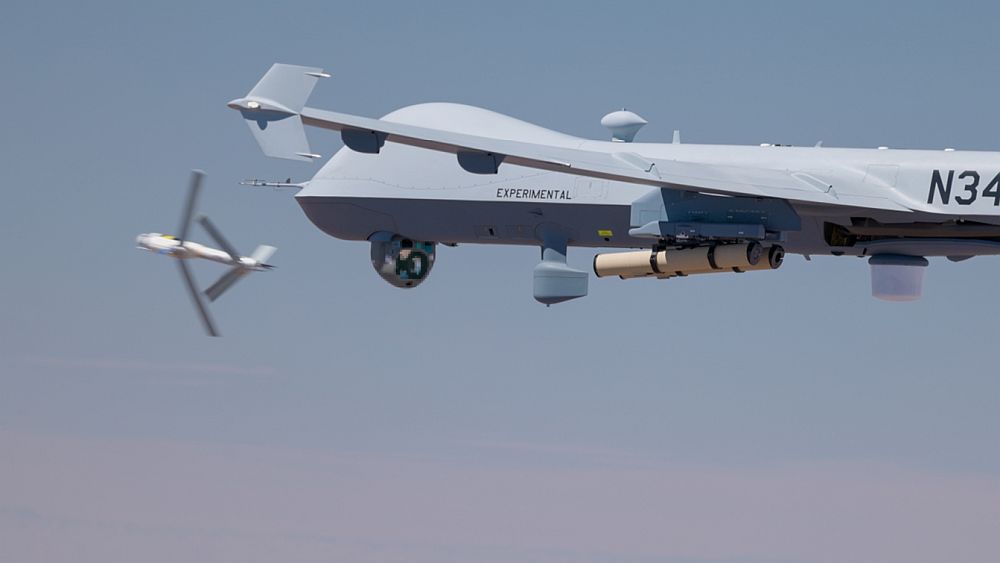
General Atomics Aeronautical Systems, Inc. (GA-ASI) and AeroVironment (AV) (NASDAQ:AVAV) collaborated on the air launch of a Switchblade 600 loitering munition (LM) from a GA-ASI Block 5 MQ-9A unmanned aircraft system (UAS). The flight testing took place from July 22-24 at the U.S. Army Yuma Proving Grounds Test Range. It marked the first time a Switchblade 600 has ever been launched from an unmanned aircraft.

“This cooperative effort showcased how combining different unmanned technologies could really provide value and effects to the warfighter,” said GA-ASI President David R. Alexander. “By using MQ-9A to carry the Switchblade, the MQ-9A is able to stand off farther from enemy weapons systems and increase the range of the SB600, which will provide greater access and options in contested airspace.”

After successfully integrating the SB600 with the MQ-9A, the team released two LMs: one with an inert warhead and the other with a high-explosive round. After launch, the team transferred control of the Switchblade from a user in the MQ-9A’s ground control station to a user on the ground nearer the operational area.

The test further validated GA-ASI’s ability to integrate and operate a variety of airborne launched effects on the battlefield – including both those built by GA-ASI and by partners such as AV – and how their use in conflict provides risk-tolerant options to commanders in contested operations.

About GA-ASI
General Atomics Aeronautical Systems, Inc. is the world’s foremost builder of Unmanned Aircraft Systems (UAS). Logging more than 8 million flight hours, the Predator® line of UAS has flown for over 30 years and includes MQ-9A Reaper®, MQ-1C Gray Eagle®, MQ-20 Avenger®, and MQ-9B SkyGuardian®/SeaGuardian®. The company is dedicated to providing long-endurance, multi-mission solutions that deliver persistent situational awareness and rapid strike.

For more information, visit www.ga-asi.com.

Avenger, EagleEye, Gray Eagle, Lynx, Predator, Reaper, SeaGuardian, and SkyGuardian are trademarks of General Atomics Aeronautical Systems, Inc., registered in the United States and/or other countries.

Contact Information
GA-ASI Media Relations
asi-mediarelations@ga-asi.com
(858) 524-8101

SOURCE: General Atomics Aeronautical Systems, Inc.
GA-ASI and Saab Will Demonstrate AEW&C on MQ-9B in 2026

Two Aerospace Leaders Are Bringing Airborne Early Warning and Control to UAS

Following their announcement to bring Airborne Early Warning and Control (AEW&C) capability to the world’s leading Remotely Piloted Aircraft (RPA) platform, General Atomics Aeronautical Systems, Inc. (GA-ASI) and Saab will now team up to demonstrate the capability in the summer of 2026. The demo will be conducted at GA-ASI’s Desert Horizon flight operations facility in Southern California using a GA-ASI MQ-9B equipped with AEW&C supplied by Saab.
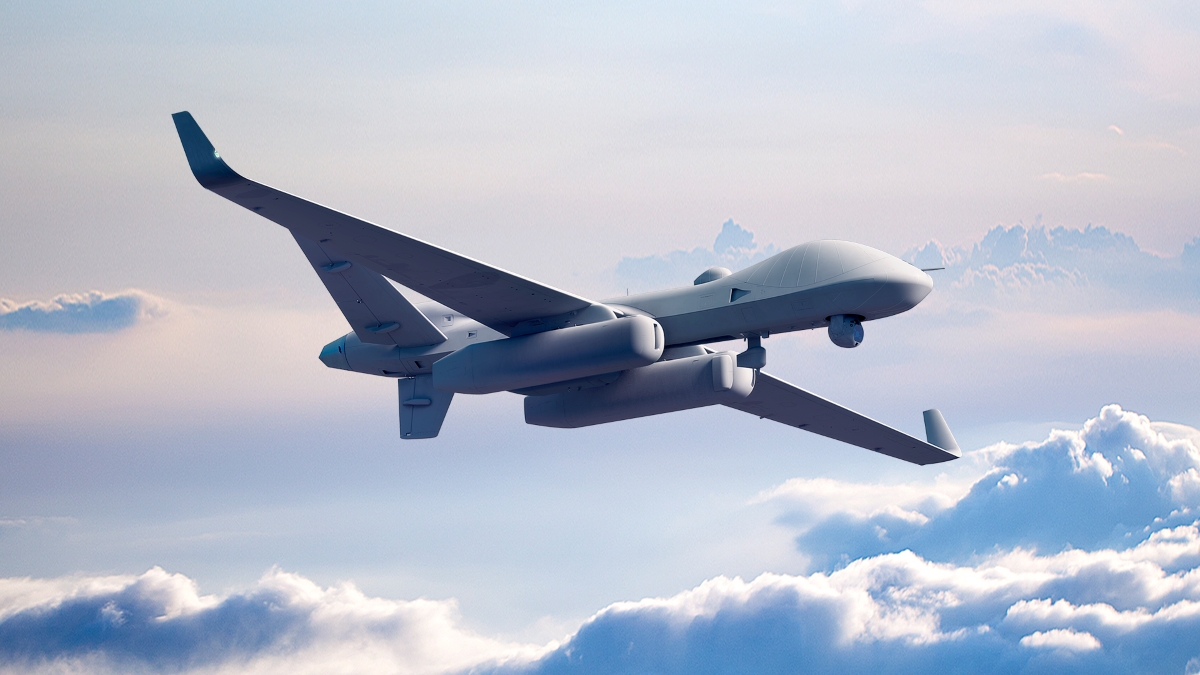
In partnership with Saab, a leading company in AEW&C systems, GA-ASI is pairing Saab’s AEW sensors with the world’s longest-range, highest-endurance RPA, the MQ-9B. At sea or over land, adding AEW capabilities on MQ-9B enables persistent air surveillance and enables AEW in areas of the world where it doesn’t currently exist or is unaffordable, such as for navy aircraft carriers at sea.

“Adding AEW&C to the MQ-9B brings a critical new capability to our platform,” said GA-ASI President David R. Alexander. “We want to deliver a persistent AEW&C solution to our global operators that will protect them against sophisticated cruise missiles as well as simple but dangerous drone swarms.”

MQ-9B models include the SkyGuardian® and SeaGuardian®, the United Kingdom’s MQ-9B variant known as Protector, and the new MQ-9B STOL (Short Takeoff and Landing) configuration currently in development.

The AEW solution for MQ-9B will offer critical aloft sensing to defend against tactical air munitions, guided missiles, drones, fighter and bomber aircraft, and other threats. Operational availability for a medium-altitude, long-endurance UAS is the highest of any military aircraft, and as an unmanned platform, its aircrews are not put into harm’s way.

GA-ASI and Saab’s AEW offering will span a wide range of applications, including early detection and warning; long-range detection and tracking; and simultaneous target tracking and flexible combat system integration – all over line-of-sight and SATCOM connectivity.

About GA-ASI
General Atomics Aeronautical Systems, Inc., is the world’s foremost builder of Unmanned Aircraft Systems (UAS). Logging more than 9 million flight hours, the Predator® line of UAS has flown for over 30 years and includes MQ-9A Reaper®, MQ-1C Gray Eagle®, MQ-20 Avenger®, and MQ-9B SkyGuardian®/SeaGuardian®. The company is dedicated to providing long-endurance, multi-mission solutions that deliver persistent situational awareness and rapid strike.

For more information, visit www.ga-asi.com.

Avenger, EagleEye, Gray Eagle, Lynx, Predator, Reaper, SeaGuardian, and SkyGuardian are trademarks of General Atomics Aeronautical Systems, Inc., registered in the United States and/or other countries.

Contact Information
GA-ASI Media Relations
asi-mediarelations@ga-asi.com
(858) 524-8101.

SOURCE: General Atomics Aeronautical Systems, Inc.

New GA-ASI Gambit 6 UCAV Adds Air-To-Ground Operations for International CCA

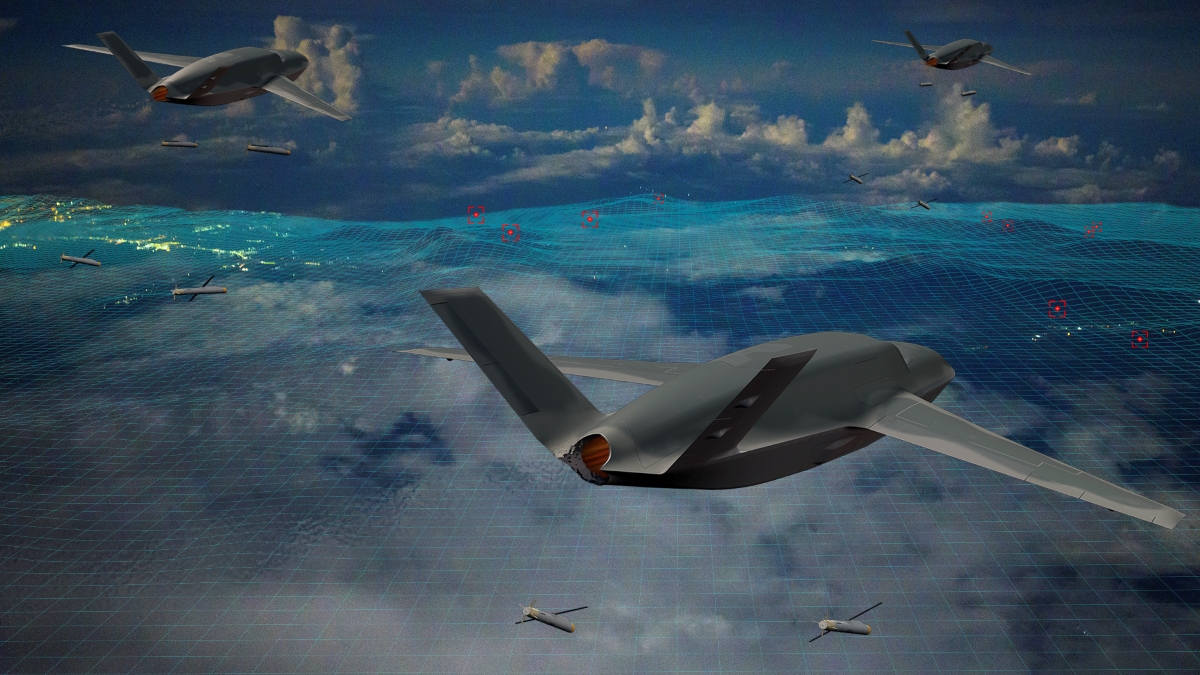
The latest iteration of the innovative Gambit Series of unmanned combat air vehicles (UCAV) from General Atomics Aeronautical Systems, Inc. (GA-ASI) is Gambit 6, a collaborative combat aircraft (CCA) that adds air-to-ground operations to its already proven air-to-air capability. The multi-role platform is optimized for roles such as electronic warfare, suppression of enemy air defenses (SEAD), and deep precision strike, making it a versatile option for evolving defense needs.
Air forces throughout the world are looking to air-to-ground-capable CCAs to enhance operational capabilities and address emerging threats in a denied environment. Gambit 6 is being developed to meet the corresponding need for adaptability, scalability, and mission-specific performance.

“These are real threats, and they require real solutions,” said GA-ASI President David R. Alexander. “The modular architecture and signature-reducing internal weapons bay of Gambit 6 allow for easy integration of advanced autonomy, sensors, and weapons systems, ensuring the aircraft can adapt to a wide range of operational scenarios.”

Airframes will be available for international procurement starting in 2027, with European missionized versions deliverable in 2029. GA-ASI is building industry partnerships throughout Europe with the aim of providing sovereign capabilities for all its platforms.

GA-ASI’s Gambit Series envisions multiple CCA variants rapidly reconfigured from a common core, enabling substantial commonality for rapid and affordable production at scale.

The Gambit Series is a modular family of unmanned aircraft designed to meet diverse mission requirements, including intelligence, surveillance, and reconnaissance; multi-domain combat; advanced training; and stealth reconnaissance. It’s built around a common core platform that accounts for a significant proportion of the aircraft’s hardware, including the landing gear, baseline avionics, and chassis. This shared foundation reduces costs, increases interoperability, and accelerates the development of mission-specific variants like Gambit 6.

By leveraging specialized configurations and advanced autonomy, Gambit aircraft offer tailored capabilities that enhance operational efficiency, reduce costs, and improve survivability in contested environments. One Gambit derivative is the U.S. Air Force’s YFQ-42A, developed as part of that service’s effort to field an AI-enabled uncrewed wingman. Based off the original Gambit 2 concept, the YFQ-42A is designed to complement human-crewed fighters like the F-35 and Next-Generation Air Dominance (NGAD) systems, expanding sensing, weapons capacity, and survivability in contested airspace.

The original concept for Gambit was announced three years ago and was based on four models. Gambit 1 is a nimble sensing platform optimized for long endurance; Gambit 2 adds the provision for air-to-air weapons; Gambit 3 looks much like Gambit 2 but is optimized for a complex adversary air role; Gambit 4 is a combat reconnaissance-focused model with no tail and swept wings. Then in 2024, GA-ASI announced Gambit 5 for ship-based CCA operations.

About GA-ASI
General Atomics Aeronautical Systems, Inc., is the world’s foremost builder of Unmanned Aircraft Systems (UAS). Logging more than 9 million flight hours, the Predator® line of UAS has flown for over 30 years and includes MQ-9A Reaper®, MQ-1C Gray Eagle®, MQ-20 Avenger®, and MQ-9B SkyGuardian®/SeaGuardian®. The company is dedicated to providing long-endurance, multi-mission solutions that deliver persistent situational awareness and rapid strike.

For more information, visit www.ga-asi.com.

Avenger, EagleEye, Gray Eagle, Lynx, Predator, Reaper, SeaGuardian, and SkyGuardian are trademarks of General Atomics Aeronautical Systems, Inc., registered in the United States and/or other countries.

Contact Information
GA-ASI Media Relations
asi-mediarelations@ga-asi.com
(858) 524-8101.

SOURCE: General Atomics Aeronautical Systems, Inc.
The Future of Autonomous Fighters Is Coming To Rome

  • GA-ASI Brings Uncrewed Fighter Fleet into Focus at International Fighter Conference 2025

General Atomics Aeronautical Systems, Inc. (GA-ASI), the world leader in uncrewed aircraft systems, is excited to participate in the upcoming 25th anniversary of the International Fighter Conference as the event’s only Four-Star Lead Partner, reflecting the company’s global commitment to the future of autonomous fighter jets.
GA-ASI’s growing production fleet of unmanned combat jets – including the MQ-20 Avenger®, XQ-67A Off-Board Sensing Station, and YFQ-42A Collaborative Combat Aircraft – is defining the global future of autonomous and semi-autonomous combat jets, leading the way in autonomy development, manned-unmanned teaming, and affordable, rapid delivery at scale. The company’s vision for its Gambit Series of modular, scalable, uncrewed fighters paves the way for U.S. forces, allies and partners to quickly evolve global air forces for the future fight.

Publicly promising to build and fly a production-representative uncrewed jet fighter for the U.S. Air Force by summer 2025, GA-ASI launched its YFQ-42A CCA in August, pioneering a new era for fighter jets. Flight operations continue today across the growing fleet, cementing GA-ASI’s continued dominance in UAS development and delivery while meeting anticipated timelines and remaining true to its word.

“The YFQ-42A is a revolutionary aircraft, and the fleet is in production and in the air today,” said David R. Alexander, president of GA-ASI. “This isn’t a ‘wait and see’ moment. We’re flying. We’re delivering. And we’re advancing this future of combat aviation, the same way we have for more than three decades.”

Since 1992, GA-ASI has delivered more than 1,300 combat aircraft to U.S. forces and international partners, surpassing more than 9 million total flight hours in 2025. The company’s Predator®, Reaper®, Gray Eagle®, SkyGuardian® and SeaGuardian® aircraft continue to set the standard for medium-altitude, long-endurance UAS performance.

The company’s MQ-20 Avenger, an internally funded uncrewed combat jet that achieved first flight in 2009, continues to serve as a test bed for advanced autonomy integration and demonstration, incorporating and flying the latest cutting-edge software from U.S. government sources, leading industry suppliers and GA-ASI’s own autonomy software development teams, often at company expense.

For International Fighter Conference, Nov. 4-6 in Rome, GA-ASI plans to offer attendees a chance to see the future for themselves, with a full-scale model display of the YFQ-42A CCA co-located inside the show venue and other announcements. For more information on IFC 2025, visit https://www.defenceiq.com/events-internationalfighter.

About GA-ASI
General Atomics Aeronautical Systems, Inc., is the world’s foremost builder of Unmanned Aircraft Systems (UAS). Logging more than 9 million flight hours, the Predator® line of UAS has flown for over 30 years and includes MQ-9A Reaper®, MQ-1C Gray Eagle®, MQ-20 Avenger®, and MQ-9B SkyGuardian®/SeaGuardian®. The company is dedicated to providing long-endurance, multi-mission solutions that deliver persistent situational awareness and rapid strike.

For more information, visit www.ga-asi.com.

Avenger, EagleEye, Gray Eagle, Lynx, Predator, Reaper, SeaGuardian, and SkyGuardian are trademarks of General Atomics Aeronautical Systems, Inc., registered in the United States and/or other countries.

Contact Information
GA-ASI Media Relations
asi-mediarelations@ga-asi.com
(858) 524-8101.

SOURCE: General Atomics Aeronautical Systems, Inc.
Related Images

Queensland’s Stralis lands clean aviation breakthrough in Japan, announced at Expo 2025 Osaka

In a landmark step for international clean aviation collaboration, Queensland aerospace innovator Stralis Aircraft has officially signed a Memorandum of Understanding (MoU) with the Joint Research Center for Electric Architecture, Akita University and Akita Prefectural University, at Expo 2025 Osaka.

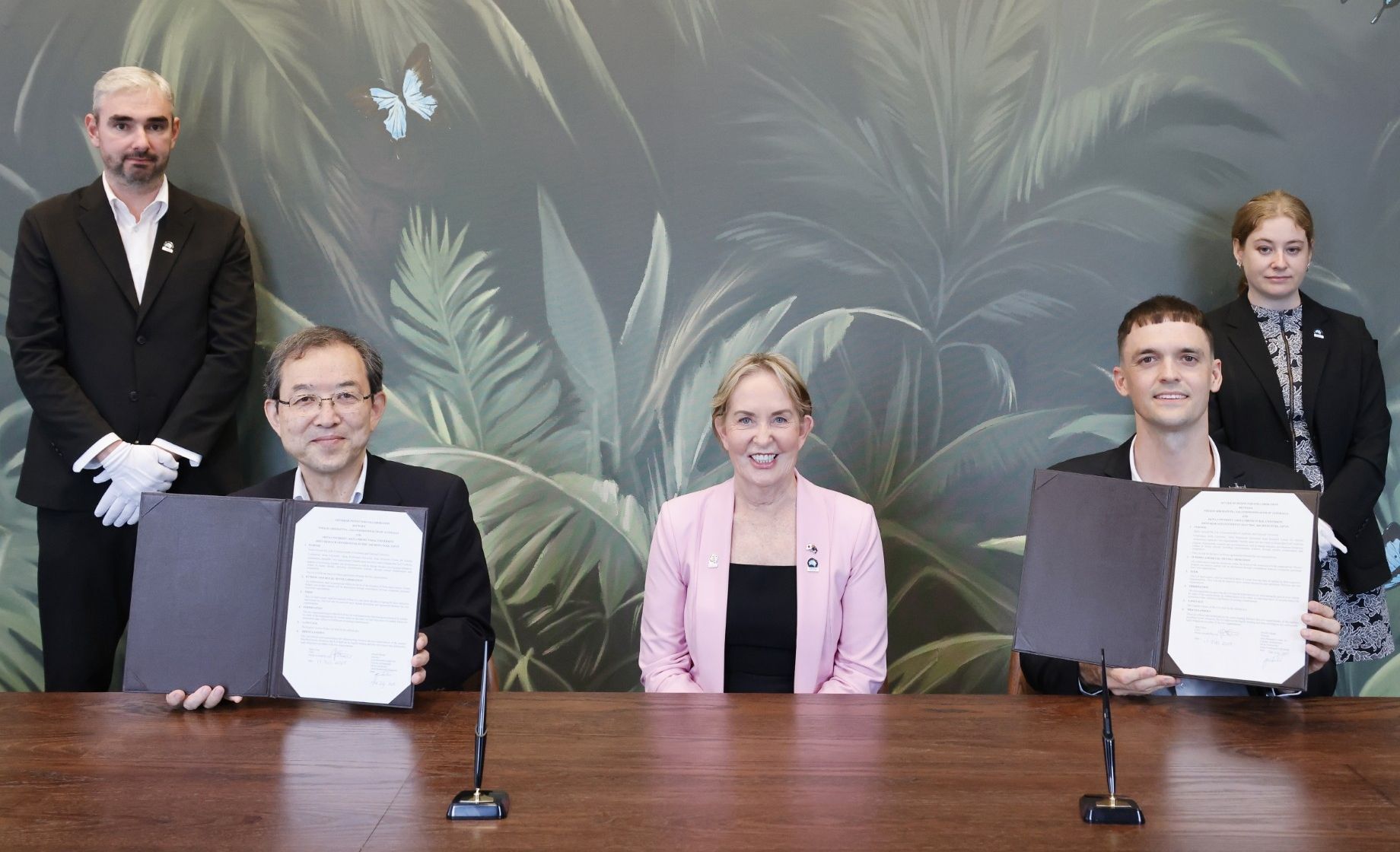
MOU Signing Ceremony, Australia Pavilion, Expo 2025 Osaka. From left: Junichi Sakaki, Director of the Joint Research Center for Electrification Architecture, Akita University, Hon. Ros Bates, Minister for Finance, Trade, Employment and Training, Queensland, Australia, and Bob Criner, Co-founder and CEO of Stralis Aircraft. [July 17, 2025]

The MoU signing was held at the Australia Pavilion in the presence of the Hon. Ros Bates MP, Queensland Minister for Finance, Trade, Employment and Training, as part of the Queensland Government’s flagship international trade mission to Japan.

“Stralis is a great example of how Queensland businesses can lead the world in clean aviation technology. We’re backing them in order to scale, export and grow jobs,” Minister Bates said. “It’s not just an MoU — it’s a runway for clean technology, innovation, and workforce development between Queensland and Japan.”

Under the agreement, Stralis will test its hydrogen-electric propulsion components at one of Japan’s most advanced electric aircraft testbeds, operated by the Joint Research Centre for Electric Architecture in Akita’s state-of-the-art all-electric aircraft testbed.

The deal will also support new training and skills pathways for future aviation engineers and technicians, backed by industry and academic partnerships.

Stralis’ proprietary hydrogen-electric system is six times lighter than existing fuel cell solutions, enabling hydrogen aircraft to fly ten times further than battery-electric alternatives, at half the cost of fossil fuel-powered planes.

The signing took place during a dedicated International Education, Research and Innovation Showcase hosted by Minister Bates at the Australia Pavilion, with Queensland as a Gold Partner of EXPO 2025.

“I’m extremely excited to begin our collaboration with this world class team and facility in Akita,” said Bob Criner, Co-Founder and CEO of Stralis Aircraft.

“Japan has been a global leader in aerospace and hydrogen innovation for decades. This partnership will accelerate our hydrogen aircraft technology development and facilitate skills and knowledge exchange between our organisations.

“It will also allow Stralis to create cutting-edge research and innovation jobs in Queensland, where our workforce is prepared to manufacture and export advanced aircraft technology in the future.”

“We are pleased to sign this MoU with Stralis,” said Junichi Sakaki, Director, Joint Research Center for Electric Architecture, Akita University / Akita Prefectural University.

“This collaboration in aircraft system electrification, using our testing facilities in Akita, represents a meaningful step in international technological cooperation. We look forward to contributing to both talent development and a more sustainable future.”

Supported by Trade and Investment Queensland (TIQ) Japan, Strali has been in high-level discussions with Japanese aerospace firms aligned with Japan’s Ministry of Economy, Trade and Industry (METI) and its 2035 target to commercialise decarbonised passenger aircraft.

Stralis is also planning to fly its Bonanza A36 hydrogen-electric demonstration aircraft in Japan in late 2026, showcasing the commercial and environmental viability of its technology.

This agreement adds momentum to Queensland’s broader trade mission in Japan, which is focused on expanding partnerships in International Education, Research and Innovation, advanced manufacturing, and the Queensland–Japan Trade and Investment Strategy 2025-2028, released this July, which places innovation-led collaboration at the core of the Queensland–Japan relationship.

Contact:

Minister Bates’ Media Contact: Illka Gobius, Pinpont PR, illka@pinpointpr.sk 

Stralis Media Contact: https://stralis.aero
Dr Emma Whittlesea, Stralis, Head of Partnerships, ew@stralis.aero
Bob Criner, Co-Founder & CEO, Stralis Aircraft, bc@stralis.aero