New data extracted from old for materials databases

A new approach uses data from one type of test on small metal alloy samples to extract enough information for building databases that can be used to predict the properties and potentials of new materials. The details were published in the journal Science and Technology of Advanced Materials: Methods.

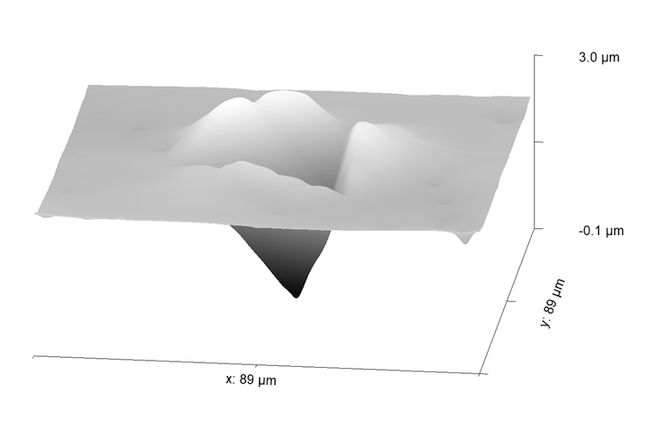
The test is called instrumented indentation. It involves driving an indenter tip into a material to probe some of its properties, such as hardness and elastic stiffness. Scientists have been using the data extracted from instrumented indentation to estimate the stress-strain curve of materials using computational simulations. This curve, and the data it provides, is important for understanding a material’s properties. That data is also used for building massive materials databases, which can be used, in conjunction with artificial intelligence, for predicting new materials.

A problem scientists face is that this approach for estimating material properties is limited when it comes to materials called ‘high work-hardening alloys’: metal alloys, like steel, that are strengthened through physical processes like rolling and forging. Only so much information can be estimated from the curve of these materials. To get the necessary additional information needed to determine their properties, more experiments would need to be done, which costs time, effort and money.

Ta-Te Chen of the University of Tsukuba and Ikumu Watanabe of the National Institute for Materials Science in Japan have developed a new computational approach to extract that additional information from instrumented indentation tests on work-hardening alloys.

“Our approach builds on an already-existing model, making it ready for use in industry. It is also applicable to existing data, including hardness,” says Watanabe.

The approach involves combining the results from two computational models, the power-law and linear hardening models, which produce their own individual stress-plastic strain curves from information gathered from indentation tests. Combining the data from both curves provides the extra data that, when added to the original stress-strain curve, shows a more holistic picture of the work-hardening alloys’ properties.

The scientists validated their approach by using it on a high-work-hardening stainless steel.

We have extended this approach to also evaluate mechanical properties at elevated temperatures, which can contribute to the development of high-temperature alloys,” says Chen.

Further information
Ikumu Watanabe
National Institute for Materials Science
Email: WATANABE.Ikumu@nims.go.jp

About Science and Technology of Advanced Materials: Methods (STAM Methods)

STAM Methods is an open access sister journal of Science and Technology of Advanced Materials (STAM), and focuses on emergent methods and tools for improving and/or accelerating materials developments, such as methodology, apparatus, instrumentation, modeling, high-through put data collection, materials/process informatics, databases, and programming. https://www.tandfonline.com/STAM-M

Dr. Yasufumi Nakamichi
STAM Methods Publishing Director
Email: NAKAMICHI.Yasufumi@nims.go.jp

Press release distributed by Asia Research News for Science and Technology of Advanced Materials.

JE Cleantech Holdings Limited Announces Receipt of NASDAQ Notification Regarding Minimum Bid Price Deficiency

JE Cleantech Holdings Limited (Nasdaq: JCSE), a manufacturer of a broad range of cleaning systems, announced that on November 3, 2022, it received a written notification from the Listing Qualifications Department of The Nasdaq Stock Market LLC (the “Nasdaq Notification”). The Notification stated that the Company’s ordinary shares failed to maintain a minimum bid price of $1.00 over the last 30 consecutive business days as required by Nasdaq Listing Rule 5550(a)(2) (the “Minimum Bid Price Requirement”). Receipt of the Nasdaq Notification does not result in the immediate delisting of the Company’s ordinary shares and has no immediate effect on the listing or the trading of the Company’s ordinary shares on the Nasdaq Capital Market under the symbol “JCSE”.

Pursuant to Nasdaq Listing Rule 5810(c)(3)(A), the Company has a compliance period of 180 calendar days from the date of the Nasdaq Notification, or until May 2, 2023, to regain compliance with the Minimum Bid Requirement. If at any time before May 2, 2023 the closing bid of the Company’s ordinary shares is at least $1.00 for a minimum of 10 consecutive business days, the Company will be deemed to have regained compliance with the Minimum Bid Requirement following which Nasdaq will provide a written confirmation of compliance and the matter will be closed.

In the event that the Company does not regain compliance by May 2, 2023, the Company may be eligible for additional time to qualify. To qualify for additional time, the Company will be required to meet the continued listing requirement for market value of publicly held shares and all other initial listing standards for The Nasdaq Capital Market with the exception of the bid price requirement.

In the event that the Company does not regain compliance with the Minimum Bid Price Requirement by May 2, 2023 and is ineligible for an additional grace period, Nasdaq will provide further written notice that the Company’s ordinary shares are subject to delisting from The Nasdaq Capital Market. In that event, the Company may appeal the determination to a Nasdaq hearings panel or consider transferring the listing and trading of its ordinary shares to the OTCQX of the OTC Markets.

The Company intends to monitor the closing bid price of its ordinary shares. Receipt of the Nasdaq Notification has no effect on the Company’s business operations.

“We are cognizant of the value to our shareholders of the listing of our shares on Nasdaq given the liquidity and pricing efficiency that the exchange provides. We pledge our best efforts towards improved performance which we believe will allow to meet the continued listing standards,” stated Ms. Bee Yin Hong, CEO and Founder of JE Cleantech.

About JE Cleantech Holdings Limited

JE Cleantech Holdings Limited is based in Singapore and is principally engaged in (i) the sale of cleaning systems and other equipment; and (ii) the provision of centralized dishwashing and ancillary services. Through its subsidiary, JCS-Echigo Pte Ltd, the company designs, develops, manufactures, and sells cleaning systems for various industrial end-use applications primarily to customers in Singapore and Malaysia. Its cleaning systems are mainly designed for precision cleaning, with features such as particle filtration, ultrasonic or megasonic rinses with a wide range of frequencies, high pressure drying technology, high flow rate spray, and deionized water rinses, which are designed for effective removal of contaminants and to minimize particle generation and entrapment. The Company also has provided centralized dishwashing services, through its subsidiary, Hygieia Warewashing Pte Ltd, since 2013 and general cleaning services since 2015, both mainly for food and beverage establishments in Singapore. For more information about JE Cleantech, please visit our website: www.jecleantech.sg.

JE Cleantech Contact:
enquiry@cleantech.sg

Corporate Communications
Address
3 Woodlands Sector 1
Singapore 738361
Telephone
+65 6368 4198

Forward-Looking Statements

This press release includes “forward-looking statements” within the meaning of the “safe harbor” provisions of the United States Private Securities Litigation Reform Act of 1995. JE Cleantech’s actual results may differ from their expectations, estimates and projections and, consequently, readers should not rely on these forward-looking statements as predictions of future events. Words such as “expect,” “estimate,” “project,” “budget,” “forecast,” “anticipate,” “intend,” “plan,” “may,” “will,” “could,” “should,” “believes,” “predicts,” “potential,” “continue” and similar expressions (or the negative versions of such words or expressions) are intended to identify such forward-looking statements. These forward-looking statements include, without limitation, JE Cleantech’s expectations with respect to future performance and anticipated potential financial impacts.

These forward-looking statements involve significant risks and uncertainties that could cause actual results to differ materially from those discussed in the forward-looking statements. Most of these factors are outside JE Cleantech’s control and are difficult to predict. Factors that may cause such differences include, but are not limited to: (1) dependence on our customer groups’ needs and relationship with them; (2) the inability to obtain or maintain the listing of JE Cleantech Holdings Limited’s ordinary shares on Nasdaq; (3) the ability of JE Cleantech to continue grow its business operations, manage growth profitably, retain its key employees and timing of meeting expected business milestones; (4) changes in applicable laws or regulations; (5) the possibility that JE Cleantech may be adversely affected by other economic, business and/or competitive factors; and (6) other risks and uncertainties identified, including those under “Risk Factors,” contained in the filings with the SEC. The foregoing list of factors is not exclusive. Should one or more of these risks or uncertainties materialize, or should underlying assumptions prove incorrect, actual results may vary materially from those indicated or anticipated by such forward-looking statements. JE Cleantech cautions readers not to place undue reliance upon any forward-looking statements, which speak only as of the date made. JE Cleantech does not undertake or accept any obligation or undertaking to release publicly any updates or revisions to any forward-looking statements to reflect any change in their expectations or any change in events, conditions or circumstances on which any such statement is based.


Windows gain competitive edge over global warming

  • An international collaboration is developing coating materials that could make windows better insulators.

A French-Japanese research collaboration has fabricated metal nanocomposite coatings that improve the insulating properties of window glasses. The new coating prevents a significant portion of near-infrared (NIR) and ultraviolet rays (UV) from passing through, while at the same time admitting visible light. The findings were reported in the journal Science and Technology of Advanced Materials.

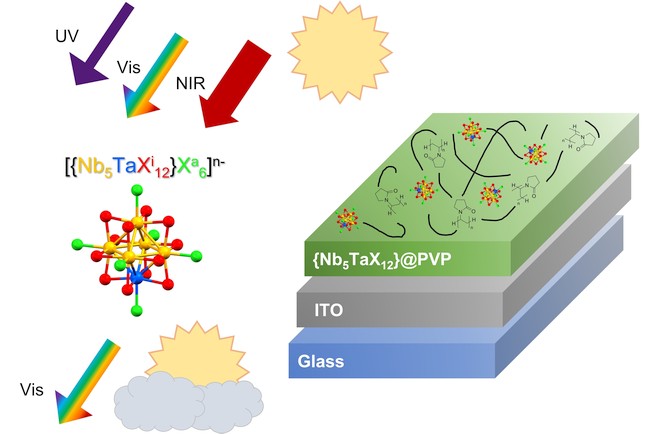
The nanoclusters are dispersed in a PVP matrix that is then coated on ITO glass to block NIR and UV rays while letting visible light pass through.

“Although the fabrication of a commercial products is still a long way ahead, our work demonstrated a significant improvement in UV and NIR blocking properties compared to previous research,” says solid-state chemist Fabien Grasset, research director at the French National Centre for Scientific Research (CNRS).

“Buildings account for a large part of global energy consumption,” explains Grasset, “with a large amount of the annual energy consumption of a standard building going to cooling and/or heating systems to maintain indoor temperatures at comfortable levels.” Scientists are looking for ways to develop window glass coatings that can block the entry of NIR radiation so that buildings, and even cars, can consume less energy to keep it cool inside. However, this needs to be done in a way that still allows visible light to enter. Ideally, harmful UV rays would also be blocked.

To this end, the international French-Japanese research collaboration fabricated and analysed the performance of nanocomposites based on niobium-tantalum cluster compounds containing chloride or bromide ions.

They found that chloride-based nanoclusters provided the best performance in terms of blocking NIR and UV rays and allowing the passage of visible light. NIR and UV blocking by the nanoclusters depended on their concentration, dispersion and oxidation state. By tuning these parameters, the team was able to improve the nanocluster performance.

The nanoclusters were dispersed into a polyvinylpyrrolidone (PVP) matrix that was then coated onto indium-tin-oxide (ITO) glass. The combination increased the transmittance of visible light while reducing that of NIR and UV rays, relative to previous research. “These are very promising coating materials that block the most troublesome NIR wavelengths,” says Grasset.

“We have a long history of Japanese-French collaboration,” he continues. “We were already convinced that we are stronger working together by mixing our different cultures and ways of thinking. The international LINK project has reinforced this belief. We will continue to do our best to make further progress towards finding solutions for the global warming problem.”

Further information
Fabien Grasset
French National Centre for Scientific Research (CNRS)
Email: fabien.grasset@cnrs.fr

Research paper: https://www.tandfonline.com/doi/full/10.1080/14686996.2022.2105659

About Science and Technology of Advanced Materials (STAM)
Open access journal STAM publishes outstanding research articles across all aspects of materials science, including functional and structural materials, theoretical analyses, and properties of materials. https://www.tandfonline.com/STAM

For more information on STAM, contact
Dr. Mikiko Tanifuji
STAM Publishing Director
Email: TANIFUJI.Mikiko@nims.go.jp

Press release distributed by Asia Research News for Science and Technology of Advanced Materials.

JE Cleantech (JCSE) Announces Results for H1 2022, Revenue of S$7.2 Million and Net Income of S$147,000

JE Cleantech Holdings Limited (Nasdaq: JCSE), (the Company) a Singapore-based cleantech company, has announced its financial results for the six months ending 30 June 2022. In its first mid-year update since completing its Nasdaq listing in 2022, the company has seen a decline of 19 per cent in its revenue compared to the corresponding period last year (H1 2021). Net income for the reporting period has been S$147,000, lower than the S$616,000 reported for the first six months of 2021.

Speaking about the 2022 results, Ms. Bee Yin Hong, CEO and Founder, JE Cleantech said, “Our industry as with many others was hit hard by the pandemic, but we have weathered it and even achieved impressive growth in one of our key business verticals. We strongly believe in the future to come as we enter the endemic phase and the F&B, travel, and hospitality sectors see rapid recovery. JE Cleantech is well positioned to capture growth opportunities. We are actively widening our product offerings and exploring new markets to bring sustainable returns to our shareholders and investors.”

The group has been negatively affected by the ongoing disruptions caused by Covid-19, some effects of which may linger post-pandemic such as supply chain disruptions, fluctuations in the cost of raw materials and uneven demand growth from customer groups. Despite this, the Company did not experience any material order cancellations during the reporting period and records an order book value of approximately S$36.8 million as of August 15, 2022.

The Company saw a growth of 36 per cent in its provision of centralized dishwashing and ancillary services, compared to the same corresponding period last year, with revenue of S$3.585 million. The company also announced the renewal of a key customer to provide centralized dishwashing services to a fully owned subsidiary of Singapore’s leading ground-handling and in-flight catering service provider for a period of three years, starting in September 2022. The contract, which has been closed through its subsidiary, Hygieia Warewashing Pte Ltd., is valued at approximately S$9.3 million (around US$6.7 million). With this renewal, Hygieia Warewashing will have been providing cleaning services for the client for nine years continuously.

Having provided centralized dishwashing services in Singapore since 2013, management believes that JE Cleantech is now Singapore’s leading manufacturer of precision cleaning systems and provider of centralized dishwashing and ancillary services, with approximately 15 per cent market share in 2020 in terms of revenue (Source: Euromonitor estimates from desk research and trade interviews with leading centralized dishwashing services providers and the relevant trade associations in Singapore). Ms. Hong stated “we believe that JE Cleantech has not only left a strong footprint in Singapore and Malaysia, but has also established a robust network of long-term customers across Southeast Asia, with a growing international footprint in markets such as Europe and the United States.”

Moving forward, the company is looking to expand its team of R&D staff and engineers, while continuing to strengthen its product portfolio. Recently, it has expanded its scope of service offerings to include tech hardware.

About JE Cleantech Holdings Limited
JE Cleantech Holdings Limited is based in Singapore and is principally engaged in (i) the sale of cleaning systems and other equipment; and (ii) the provision of centralized dishwashing and ancillary services. Through its subsidiary, JCS-Echigo Pte Ltd, the company designs, develops, manufactures, and sells cleaning systems for various industrial end-use applications primarily to customers in Singapore and Malaysia. Its cleaning systems are mainly designed for precision cleaning, with features such as particle filtration, ultrasonic or megasonic rinses with a wide range of frequencies, high pressure drying technology, high flow rate spray, and deionized water rinses, which are designed for effective removal of contaminants and to minimize particle generation and entrapment. The Company also has provided centralized dishwashing services, through its subsidiary, Hygieia Warewashing Pte Ltd, since 2013 and general cleaning services since 2015, both mainly for food and beverage establishments in Singapore.

Disclaimer: Forward looking statements
This news release includes forward-looking statements within the meaning of Section 27A of the Securities Act of 1933, as amended, and Section 21E of the Securities and Exchange Act of 1934, as amended. Forward-looking statements may be identified by such words or phrases as “should,” “intends,” “is subject to,” “expects,” “will,” “continue,” “anticipate,” “estimated,” “projected,” “may,” “I or we believe,” “future prospects,” “our strategy,” or similar expressions. Forward-looking statements made in this press release that relate to our future contract revenues among other things involve known and unknown risks and uncertainties that may cause the actual results to differ materially from those expected and stated in this announcement. We undertake no obligation to update “forward-looking” statements.

For Media Enquiries and Investor Relations, please contact:
jcse@preciouscomms.com

Alaska Mining Sells 51% Interest to Australian Nanotechnology Specialist

  • Company’s sole shareholder, Lee Hon Kit, to receive A$5.0 million in new Nanopac shares from sale

Alaska Mining Sdn Bhd is pleased to announce that its sole shareholder, Lee Hon Kit, is selling a 51% interest in the Company amounting to A$5.0 million (RM15.2 million) under a share sale agreement to Nanopac Alaska Sdn Bhd (NASB).

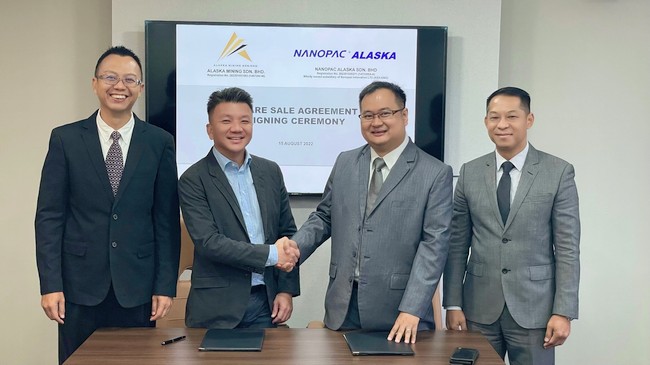
Director of Nanopac Alaska Sdn Bhd Henry Cheang; Managing Director of Alaska Mining Sdn Bhd Lee Hon Kit; Acting CEO of Nanopac Alaska Sdn Bhd Tobby Tan, and Chairman of Nanopac Innovation Limited, Dato’ Dr Cheng Kok Leong[L-R]

NASB is a unit of Nanopac Innovation Limited, which is listed on the Sydney-based National Stock Exchange of Australia. Nanopac principally engages in the research and development, manufacturing, distribution and servicing of nanotechnology materials and products. Nanopac’s other businesses include Nano-Solar panels and raw materials for paint industry. Mr. Lee is the sole shareholder of Alaska Mining, which is an earthworks and mining specialist as well as a trader of a variety of goods and logistics services provider.

Under the agreement, the sale of the 51% interest in Alaska Mining by Mr. Lee to NASB will be satisfied through the issuance of new shares in Nanopac to be paid in two tranches. The first tranche of new shares amounting to A$2.5 million (RM7.77 million) will be paid up front following the share sale agreement while the second tranche of new shares amounting to A$2.5 million (RM7.77 million) will be paid out after the Company has achieved A$5.0 million (RM15.2 million) in net profit. As part of the share sale agreement, Mr. Lee will be appointed the managing director of Alaska Mining.

Alaska Mining has been granted rights to mine sands to be processed into silica and ilmenite, from which a Chinese business group has agreed to an offtake agreement in relation to part of the ilmenite produced.

Mr. Lee expressed that he is looking forward to working with NASB and Nanopac to grow the mining business and at the same time ensure there is a steady flow of silica for Nano-Solar panel production and ilmenite for its paint products.

“This acquisition is advantageous to Nanopac as this secures a steady flow of raw materials for Nano-Solar and existing line of products, which it would otherwise have to source through third parties.”

“The mining operations will also give Nanopac a source of recurring income as the silica and ilmenite that it does not require will be sold to others while ensuring that the mining operations remain commercially sustainable, as the offtake agreement with the Chinese business group shows.”

Mr. Tobby Tan, Acting Chief Executive Officer of NASB said, “We welcome Mr. Lee to the Nanopac family and we have no doubt that with his knowledge and experience, we will be able to grow the mining business to greater heights. We also believe that the acquisition of the stake will add to our production capabilities and is positive for the growth of Nanopac’s solar panels and paints businesses.”

Nanopac Alaska Sdn Bhd https://www.nanopac.com.my/

Singapore NASDAQ Listed Precision Cleaning Systems Manufacturer And A Provider of Centralized Dishwashing And Ancillary Services, JE Cleantech Holdings Rings Closing Bell

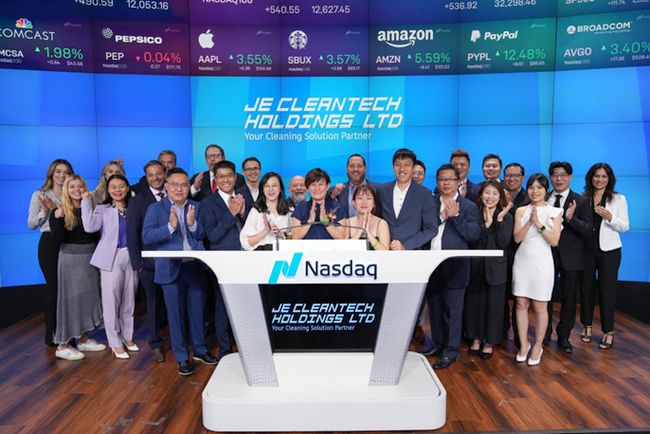
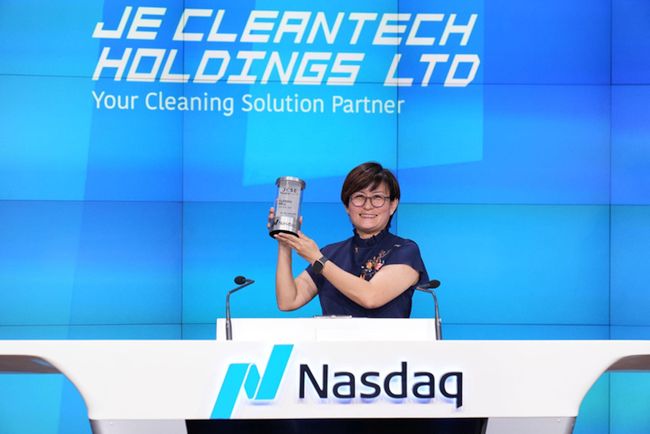
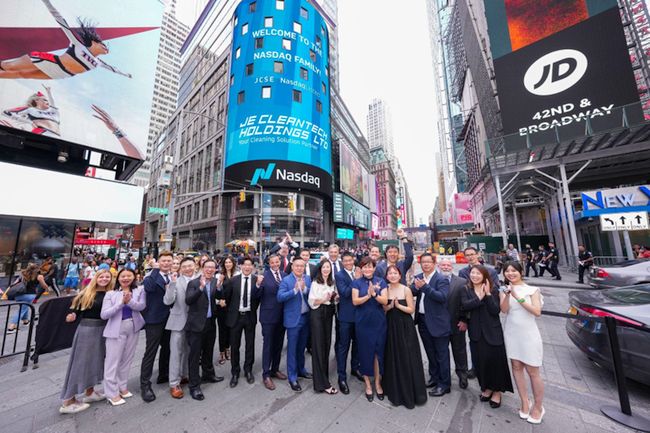
JE Cleantech Holdings Limited (Nasdaq: JCSE), (the Company), Singapore’s leading manufacturer of precision cleaning systems and a provider of centralized dishwashing and ancillary services, recently rang the closing bell of the NASDAQ stock exchange.

JE Cleantech Holdings Limited rings NASDAQ Closing Bell
Elise Hong, CEO and Co-Founder, JE Cleantech Holdings Limited
NASDAQ Tower, New York

JE Cleantech is a Singapore-based manufacturer of precision cleaning systems and a provider of centralized dishwashing and ancillary services in Singapore and Malaysia. Started in 1999, the company has an established local client network of long-term customers across Southeast Asia with a growing international footprint in markets such as Europe and the United States. The company also recently made its first foray into the tech hardware industry, securing its first contract to develop precision cleaning systems for a sensor products manufacturer.

About JE Cleantech Holdings Limited
JE Cleantech Holdings Limited is based in Singapore and is principally engaged in (i) the sale of cleaning systems and other equipment; and (ii) the provision of centralized dishwashing and ancillary services. Through its subsidiary, JCS-Echigo Pte Ltd, the company designs, develops, manufactures, and sells cleaning systems for various industrial end-use applications primarily to customers in Singapore and Malaysia. Its cleaning systems are mainly designed for precision cleaning, with features such as particle filtration, ultrasonic or megasonic rinses with a wide range of frequencies, high pressure drying technology, high flow rate spray, and deionized water rinses, which are designed for effective removal of contaminants and to minimize particle generation and entrapment. The Company also has provided centralized dishwashing services, through its subsidiary, Hygieia Warewashing Pte Ltd, since 2013 and general cleaning services since 2015, both mainly for food and beverage establishments in Singapore. http://www.jecleantech.sg/

For Media Enquiries and Investor Relations, please contact:
jcse@preciouscomms.com

JE Cleantech Secures More Than US$700,000 in New Orders During the First Half of 2022, Expands Capabilities into Tech Hardware

JE Cleantech Holdings Limited (Nasdaq: JCSE), (the “Company”), a Cayman Islands company whose group operations are based in Singapore, today announced the receipt of a new order by its subsidiary, JCS-Echigo Pte Ltd, from a major customer in Singapore. Under this new order, the group will design, develop and manufacture a new precision cleaning system under the customer’s specified requirements. The new order is valued at approximately US$700,000 and represents an expansion of JE Cleantech Holding’s presence in the tech hardware industry.

The new customer designs and manufactures sensor products. The new customer is part of the international group that serves clients worldwide. With the new precision cleaning system by JCSE, the new customer will be able to deliver better services to its customers.

JE Cleantech Holdings has experience in manufacturing precision cleaning systems for a wide range of sectors – past orders include cleaning and equipment manufacturing for hard disk drives, semiconductors, biomedical, food and beverage, and industrial electronics companies. As a leading homegrown industrial manufacturer with a long and proven track record, the entry into this new sector demonstrates JE Cleantech’s ability to apply its expertise to different sectors to scale and support its growth.

The precision-cleaning equipment manufacturing market in Singapore is estimated to reach an estimated S$143.0 million by 2025, marking a CAGR of 9.0 percent over the forecasted period. It also reflects an optimistic market outlook for the precision cleaning industry. The group also provides cleaning equipment and centralized washing services for food courts, hawker centers, restaurants, cookhouses, eldercare homes, and an inflight catering service provider. The Company has also maintained a healthy balance sheet through the height of the pandemic, the new partnership is the first step in a strong recovery for Singapore’s industrial sector and positive prospects for the years to come.

In the near term, JE Cleantech intends to double production capacity. The Company is looking to further expand its product portfolio and increase the size of its R&D and engineering team. Longer-term, the Company aims to become the preferred choice for all industrial precision cleaning needs in Singapore.

About JE Cleantech Holdings Limited

JE Cleantech Holdings Limited is based in Singapore and is principally engaged in (i) the sale of cleaning systems and other equipment; and (ii) the provision of centralized dishwashing and ancillary services. Through its subsidiary, JCS-Echigo Pte Ltd, the company designs, develops, manufactures, and sells cleaning systems for various industrial end-use applications primarily to customers in Singapore and Malaysia. Its cleaning systems are mainly designed for precision cleaning, with features such as particle filtration, ultrasonic or megasonic rinses with a wide range of frequencies, high pressure drying technology, high flow rate spray, and deionized water rinses, which are designed for effective removal of contaminants and to minimize particle generation and entrapment. The Company also has provided centralized dishwashing services, through its subsidiary, Hygieia Warewashing Pte Ltd, since 2013 and general cleaning services since 2015, both mainly for food and beverage establishments in Singapore. http://www.jecleantech.sg/

For Media Enquiries and Investor Relations, please contact:
jcse@preciouscomms.com

ULVAC-PHI Launches Sales of Latest XPS System that Dramatically Accelerates Battery Research and Development

  • ULVAC-PHI integrates every surface analysis technology which is essential for battery research and development into an advanced automated platform to contribute to battery performance and longevity through thin film and interface characterizations.

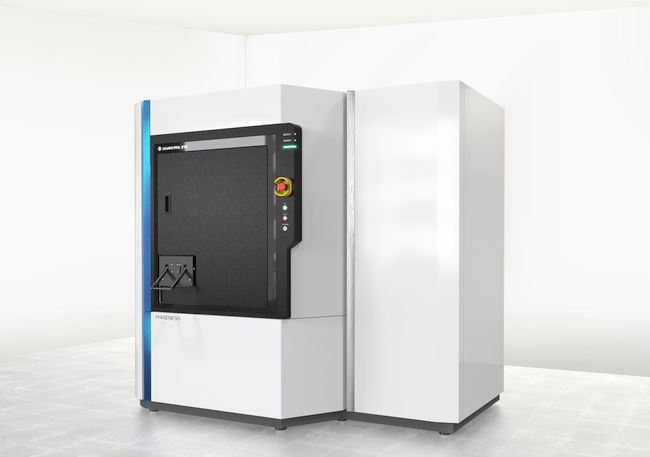
ULVAC-PHI Incorporated has launched the PHI GENESIS, an automated and multi-function scanning X-ray photoelectron spectrometer (XPS: X-ray Photoelectron Spectroscopy or ESCA: Electron Spectroscopy for Chemical Analysis). The PHI GENESIS is the united model of PHI’s multi-functional scanning XPS instruments and was designed for automation and simplified operation.

PHI GENESIS scanning X-ray photoelectron spectrometer

Background
Advanced materials such as all-solid-state batteries, advanced semiconductors, and artificial photosynthesis are complex combinations of materials, and their research and development require speed in optimizing the performance of each material as well as the combination of materials. There is a growing need for high-performance and highly functional surface and interface analysis that can dramatically accelerate such research and development. ULVAC-PHI begins offering a new surface analysis system that not only offers extremely high basic performance but also a high degree of automation to meet the various individual requirements of worldwide customers. The solution is the new “PHI GENESIS” scanning X-ray photoelectron spectrometer (XPS) from ULVAC-PHI.

Summary
The “PHI GENESIS” XPS is a new product that combines the core “GENESIS” of the PHI surface analysis instruments, which has a 50-year tradition of advanced automation and reduced analysis time, with expandability, and offers overwhelming basic performance in a compact housing.

The “PHI GENESIS” XPS provides high-speed, high-sensitivity, and overwhelming micro XPS analysis performance with automated multi-sample analysis with automatic sample exchange. A high-sensitivity analyzer with an improved counting rate also contributes to high performance. To date, ULVAC-PHI and Physical Electronics USA, a subsidiary of ULVAC-PHI, have developed various world-first XPS analysis technologies including scanning micro XPS and HAXPES (hard x-ray photoelectron spectroscopy), fully automated robotics XPS analysis, full-automatic insulator neutralization analysis, depth profiling of organic materials using cluster etching ion gun. All of these technologies are incorporated into a single instrument, making it possible to provide state-of-the-art XPS analysis technology for all kinds of materials, including metals, semiconductors, ceramics, and organic materials.

Another novel feature of PHI GENESIS is a new software package designed for ease of use and designed for all levels of users, from surface analysis beginners to well-trained scientists, from manufacturing to cutting-edge research and development. We have also prepared several options that allow customers to perform advanced analyses that previously required sophisticated analytical equipment such as a large synchrotron in a typical laboratory environment.

PHI GENESIS is fully compatible with the analysis of today’s most advanced composite solid materials and composite solid devices and aims to dominate the global market as an indispensable analytical instrument for speeding up research and development.

About ULVAC-PHI, Incorporated
ULVAC-PHI, Incorporated was founded in 1982 and provides advanced surface analysis instruments to universities and leading-edge industries worldwide for research and development. The company provides comprehensive surface analysis technology-based solutions for materials and devices including metals, polymers, semiconductors, batteries, organic and inorganic devices and microelectronics. For more information, visit https://www.ulvac-phi.com/en/.

X-ray photoelectron spectroscopy (XPS)
XPS (X-ray Photoelectron Spectroscopy) is one of the most popular surface chemical analysis techniques that can provide chemical information on the top few atomic layers of a solid surface. XPS can provide qualitative and quantitative chemical information on solid surfaces by evaluating the energy and intensity of X-ray-induced electrons (photoelectrons). XPS is provided to universities and industrial research facilities as well as for quality control and quality assurance purposes, as it shows excellent features for the analysis of surface and interface phenomena such as coloration, adhesion, sliding, catalyst, thin-film interfaces and electrical contacts.

For inquiries regarding this matter, please contact
Product Strategy Department, ULVAC-PHI Corporation
TEL: +81-467-85-4220 (Sales)

Related website
https://www.ulvac-phi.com
https://www.surf-analysis.com

Novel patching material for bone defects

  • Scientists at Tokyo Medical and Dental University have discovered a new type of bone repairing material that could be used to more precisely fix bone defects.

Ceramics and metals have been used for a while as structural materials to repair bones and joints. In the past, scientists engineered bioinert materials, which do not bond to bones directly; bioactive materials that can bond to bones; and bio-absorbable materials that are categorized in bioactive materials but they are absorbed by the body over time and are replaced by advancing bone tissue.

A new bio-responsive ceramic can be used to repair bone defects
With an enzyme found in blood, different types of salts were converted to hydroxyapatite, a bone mineral

Now, a fourth type of bone repairing materials has been found: a bio-responsive ceramic that interacts with an enzyme found in blood to be absorbed into the body at a precise and predictable rate.

The research was done by Taishi Yokoi, an associate professor at the Institute of Biomaterials and Bioengineering at Tokyo Medical and Dental University, and his colleagues. The study was published in May in Science and Technology of Advanced Materials.

“Extending healthy life expectancy is an important issue for all of us,” Yokoi says. “Bone repairing materials aid in the recovery of bone defects and help improve quality of life.”

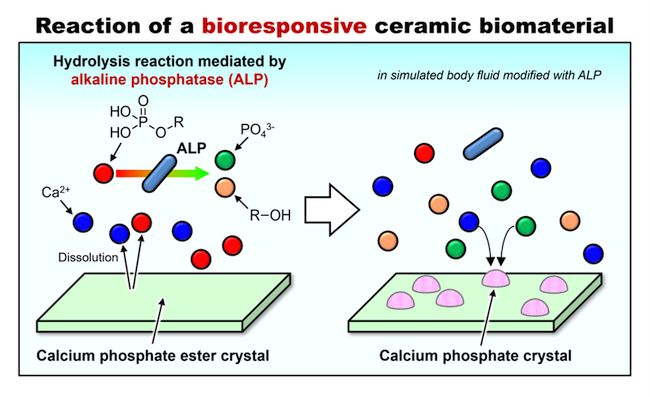
At the heart of this discovery is a biological reaction: an enzyme called alkaline phosphatase (ALP), which is present in human serum and reacts with various phosphate esters to generate bone mineral known as hydroxyapatite.

The scientists mimicked this process using a simulated body fluid that contained the enzyme ALP. They placed four different salts in a simulated body fluid containing or lacking the enzyme ALP. The salts were calcium salts of methyl phosphate (CaMeP), ethyl phosphate (CaEtP), butyl phosphate (CaBuP) and dodecyl phosphate (CaDoP). The phosphate component of each of these salts has an alkyl group at its end – a chain composed of hydrogen and carbon atoms – of differing lengths.

The scientists found that the first three salts were converted to hydroxyapatite, but only in the presence of ALP. Interestingly, the length of the alkyl group on the phosphate ester determined the rate at which this reaction happens. With more research, the scientists think that this could allow greater control of the bone healing process in the body.

“We expect the findings of this study will be applied towards designing and developing novel bone-repairing materials with precisely controlled degradation and resorption rates inside the body,” says Yokoi.

Further information
Taishi Yokoi
Tokyo Medical and Dental University
Email: yokoi.taishi.bcr@tmd.ac.jp

Research paper: https://www.tandfonline.com/doi/full/10.1080/14686996.2022.2074801

About Science and Technology of Advanced Materials (STAM)
Open access journal STAM publishes outstanding research articles across all aspects of materials science, including functional and structural materials, theoretical analyses, and properties of materials. https://www.tandfonline.com/STAM

Mikiko Tanifuji
STAM Publishing Director
Email: TANIFUJI.Mikiko@nims.go.jp

Press release distributed by Asia Research News for Science and Technology of Advanced Materials.

Machine learning speeds up search for new sustainable materials

  • A model that rapidly searches through large numbers of materials could find sustainable alternatives to existing composites.

Researchers from Konica Minolta and the Nara Institute of Science and Technology in Japan have developed a machine learning method to identify sustainable alternatives for composite materials. Their findings were published in the journal Science and Technology of Advanced Materials: Methods.

Researchers are looking for sustainable options, such as recyclable materials or biomass, to substitute the constituent materials in composites which are used in various applications including electrical and information technologies.

Composite materials are compounds made of two or more constituent materials. Due to the complex nature of the interactions between the different components, their performance can greatly exceed that of single materials. Composite materials, such as fibre-reinforced plastics, are very important for a wide range of industries and applications, including electrical and information technologies.

In recent years, there has been increasing demand for more environmentally sustainable materials that help reduce industrial waste and plastic use. One way to achieve this is to substitute the constituent materials in composites with recyclable materials or biomass. However, this can reduce performance compared to the original material, not only due to the features of the individual constituent materials, such as their physicochemical properties, but also due to the interactions between the constituents.

“Finding a new composite material that achieves the same performance as the original using human experience and intuition alone takes a very long time because you have to evaluate countless materials while also taking into account the interactions between them,” explains Michihiro Okuyama, assistant manager at Konica Minolta, Inc.

Machine learning offers a potential solution to this problem. Scientists have proposed several machine learning methods to conduct rapid searches among a large number of materials, based on the relationship between the materials’ features and performance. However, in many cases the properties of the constituent materials are unknown, making these types of predictive searches difficult.

To overcome this limitation, the researchers developed a new type of machine learning method for finding alternative materials. A key advantage of the new method is that it can quantitatively evaluate the interactions among the component materials to reveal how much they contribute to the overall performance of the composite. The method then searches for replacement constituents with similar performance to the original material.

The researchers tested their method by searching for alternative constituent materials for a composite consisting of three materials – resin, a filler and an additive. They experimentally evaluated the performance of the substitute materials identified by machine learning and found that they were similar to the original material, proving that the model works.

“In developing alternatives, that make up composite materials, our new machine learning method removes the need to test large numbers of candidates by trial and error, saving both time and money.” says Okuyama.

The method could be used to quickly and efficiently identify sustainable substitutes for composite materials, reducing plastic use and encouraging the use of biomass or renewable materials.

Further information
Michihiro Okuyama
KONICA MINOLTA, INC.
Email: michihiro.okuyama@konicaminolta.com

About Science and Technology of Advanced Materials: Methods (STAM Methods)
STAM Methods is an open access sister journal of Science and Technology of Advanced Materials (STAM), and focuses on emergent methods and tools for improving and/or accelerating materials developments, such as methodology, apparatus, instrumentation, modeling, high-through put data collection, materials/process informatics, databases, and programming. https://www.tandfonline.com/STAM-M

Dr. Masanobu Naito
STAM Methods Publishing Director
Email: NAITO.Masanobu@nims.go.jp

Press release distributed by Asia Research News for Science and Technology of Advanced Materials.