
ULVAC-PHI Launches Sales of Latest TOF-SIMS Instrument ‘PHI nanoTOF 3+’

Effortless automated measurement and high-quality data regardless of operator’s skill

ULVAC-PHI, Inc. has launched the sales of its flagship model of Time-of-Flight Secondary Ion Mass Spectrometry (TOF-SIMS) instrument, the ‘PHI nanoTOF 3+.’
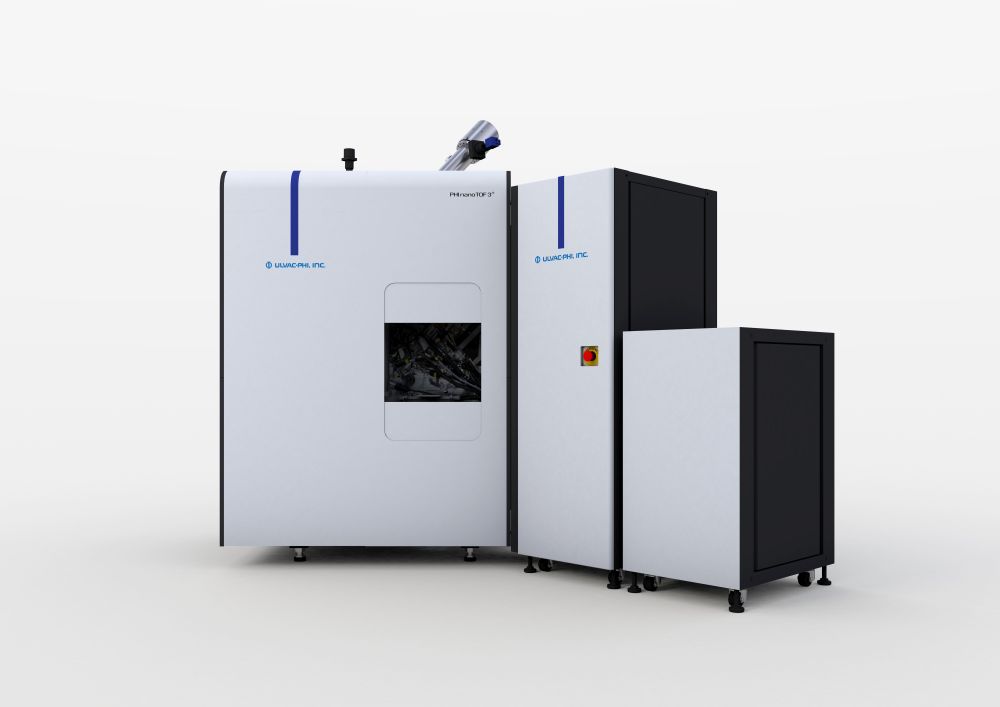
‘PHI nanoTOF 3+’ Time-of-Flight Secondary Ion Mass Spectrometry Instrument

Overview
We are pleased to announce the launch of the PHI nanoTOF 3+. This new product release comes two years after its predecessor, the PHI nanoTOF 3. The new model builds upon the foundation of the PHI nanoTOF 3 and introduces the following three new features.

1. Newly Developed Mass Analyzer
The newly developed mass analyzer inherits the advantages of the traditional TRIFT analyzer while enhancing the mass resolution (m/Δm) from 12,000 to 15,000. This advancement allows for the clear separation of peaks that were previously indistinguishable, enabling high-precision and reliable spectra analysis. It provides the best solution to meet the demands of research and industrial fields.

2. Comprehensive Analysis Enabled by a New Sample Handling System
A single analytical technique may not provide a full understanding of advanced materials. The new sample handling system in PHI nanoTOF 3+ achieves full compatibility with PHI XPS and AES instruments, enabling comprehensive analysis. Furthermore, this new system allows for sample transfer between PHI surface analysis instruments while preventing exposure to the atmosphere, making it an indispensable tool for analyzing advanced materials like battery and catalyst samples.

3. Automation of Measurements
The most important feature of PHI nanoTOF 3+ is the automation of TOF-SIMS measurements, which is a significant advancement from traditional manual operation. After determining analysis positions and recipes based on photos acquired in the sample introduction chamber, continuous measurements can be performed automatically. This new feature is effective for a wide range of materials, from inorganic materials like semiconductors and batteries to organic materials like polymers and biological samples. Furthermore, high-quality data can be available regardless of operator’s skill level.

In summary, PHI nanoTOF 3+ offers mass spectra with higher mass resolution than previous model. The new sample handling system on PHI nanoTOF3+ enables the comprehensive analysis with PHI XPS and AES instruments, especially for atmosphere-sensitive advanced materials. With the automation measurement function, PHI nanoTOF3+ provides high-quality data regardless of the sample type and operator’s skill level. The new features of PHI nanoTOF 3+ delivers enhanced performance and measurement efficiency, showing its value on effortless and smooth measurement for research applications and quality control demands.

For inquiries regarding this matter, please contact
Product Strategy Department, ULVAC-PHI, Inc. TEL: +81-467-85-4220 (Sales), Email: marketing@ulvac-phi.com

Related website
https://www.ulvac-phi.com

About ULVAC-PHI, Inc.
ULVAC-PHI, Inc. was founded in 1982 and provides advanced surface analysis instruments to universities and leading-edge industries worldwide for research and development. The company provides comprehensive surface analysis technology-based solutions for materials and devices including metals, polymers, semiconductors, batteries, organic and inorganic devices and microelectronics. For more information, visit https://www.ulvac-phi.com.

Time-of-Flight Secondary Ion Mass Spectrometry (TOF-SIMS)
TOF-SIMS (Time-of-Flight Secondary Ion Mass Spectrometry) is one of the surface analysis techniques that involves irradiating solid samples with an ion beam (primary ions) and then utilizing the time-of-flight difference to separate the emitted ions (secondary ions) from the surface. It provides information about elements or molecular species within 1-2 nm depth or less from the sample surface with high detection sensitivity. TOF-SIMS finds applications in various fields, including quality control, failure analysis such as contamination analysis in industrial materials, as well as the analysis of phenomena occurring at the surfaces and interfaces of advanced materials. Consequently, TOF-SIMS has redeemed itself to research facilities in universities and industry for research purposes.

ULVAC-PHI Launches Sales of Latest XPS System that Dramatically Accelerates Battery Research and Development

  • ULVAC-PHI integrates every surface analysis technology which is essential for battery research and development into an advanced automated platform to contribute to battery performance and longevity through thin film and interface characterizations.

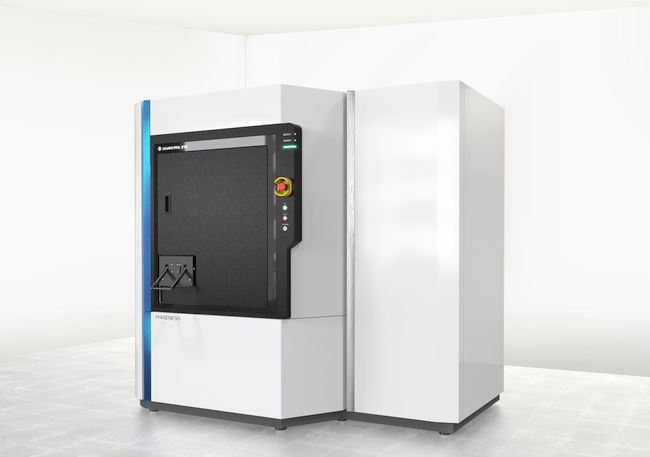
ULVAC-PHI Incorporated has launched the PHI GENESIS, an automated and multi-function scanning X-ray photoelectron spectrometer (XPS: X-ray Photoelectron Spectroscopy or ESCA: Electron Spectroscopy for Chemical Analysis). The PHI GENESIS is the united model of PHI’s multi-functional scanning XPS instruments and was designed for automation and simplified operation.

PHI GENESIS scanning X-ray photoelectron spectrometer

Background
Advanced materials such as all-solid-state batteries, advanced semiconductors, and artificial photosynthesis are complex combinations of materials, and their research and development require speed in optimizing the performance of each material as well as the combination of materials. There is a growing need for high-performance and highly functional surface and interface analysis that can dramatically accelerate such research and development. ULVAC-PHI begins offering a new surface analysis system that not only offers extremely high basic performance but also a high degree of automation to meet the various individual requirements of worldwide customers. The solution is the new “PHI GENESIS” scanning X-ray photoelectron spectrometer (XPS) from ULVAC-PHI.

Summary
The “PHI GENESIS” XPS is a new product that combines the core “GENESIS” of the PHI surface analysis instruments, which has a 50-year tradition of advanced automation and reduced analysis time, with expandability, and offers overwhelming basic performance in a compact housing.

The “PHI GENESIS” XPS provides high-speed, high-sensitivity, and overwhelming micro XPS analysis performance with automated multi-sample analysis with automatic sample exchange. A high-sensitivity analyzer with an improved counting rate also contributes to high performance. To date, ULVAC-PHI and Physical Electronics USA, a subsidiary of ULVAC-PHI, have developed various world-first XPS analysis technologies including scanning micro XPS and HAXPES (hard x-ray photoelectron spectroscopy), fully automated robotics XPS analysis, full-automatic insulator neutralization analysis, depth profiling of organic materials using cluster etching ion gun. All of these technologies are incorporated into a single instrument, making it possible to provide state-of-the-art XPS analysis technology for all kinds of materials, including metals, semiconductors, ceramics, and organic materials.

Another novel feature of PHI GENESIS is a new software package designed for ease of use and designed for all levels of users, from surface analysis beginners to well-trained scientists, from manufacturing to cutting-edge research and development. We have also prepared several options that allow customers to perform advanced analyses that previously required sophisticated analytical equipment such as a large synchrotron in a typical laboratory environment.

PHI GENESIS is fully compatible with the analysis of today’s most advanced composite solid materials and composite solid devices and aims to dominate the global market as an indispensable analytical instrument for speeding up research and development.

About ULVAC-PHI, Incorporated
ULVAC-PHI, Incorporated was founded in 1982 and provides advanced surface analysis instruments to universities and leading-edge industries worldwide for research and development. The company provides comprehensive surface analysis technology-based solutions for materials and devices including metals, polymers, semiconductors, batteries, organic and inorganic devices and microelectronics. For more information, visit https://www.ulvac-phi.com/en/.

X-ray photoelectron spectroscopy (XPS)
XPS (X-ray Photoelectron Spectroscopy) is one of the most popular surface chemical analysis techniques that can provide chemical information on the top few atomic layers of a solid surface. XPS can provide qualitative and quantitative chemical information on solid surfaces by evaluating the energy and intensity of X-ray-induced electrons (photoelectrons). XPS is provided to universities and industrial research facilities as well as for quality control and quality assurance purposes, as it shows excellent features for the analysis of surface and interface phenomena such as coloration, adhesion, sliding, catalyst, thin-film interfaces and electrical contacts.

For inquiries regarding this matter, please contact
Product Strategy Department, ULVAC-PHI Corporation
TEL: +81-467-85-4220 (Sales)

Related website
https://www.ulvac-phi.com
https://www.surf-analysis.com