Korindo in its Transition to an Eco-Friendly Company

Environmental issues and climate change get increasingly highlighted as nature declines at unprecedented speed and level. Continuous innovations and mass movements become necessary to soften impacts from the crises.
Korindo Group acknowledges the need to transform into a more environmentally-friendly company by creating breakthroughs in its various business units. An example of this is Cibubur Square Rest Area, with which the company tries to alleviate organic waste dumping issues. Operated by Korindo Group, the public facility includes a bioconversion waste processing plant with BSF (Black Soldier Flies) as its biological agent.

“Poor food waste management practices remain prevalent in many places, and these practices bring negative long-term impacts to nature and human health. That is why we built this facility,” said Seo Jeongsik, Korindo Foundation’s General Secretary.

Aside from being environmentally beneficial, the bioconversion process is relatively safe for the surrounding area and community. Of all 800 fly species on earth, the Black Soldier Fly stands out for its non-pathogenic nature and the absence of disease agents.

This project marks the foundation’s second collaboration with Forest For Life Indonesia (FFLI). In 2018, they built a similar plant in Lombok, West Nusa Tenggara.

For years, Korindo Group has strived to be more eco-friendly, especially in developing its businesses. Its Paper Division has been awarded as an environmentally-friendly paper producer by the UN Environment Programme (UNEP), due to its use of recycled product.

As we know, recycling is one of the ways to solve environmental problems caused by deforestation. Yet, despite using recycled material, Korindo Group pays attention to product quality by upholding ISO 9001:2015 Quality Management System.

Korindo’s Paper Division is one of the largest newsprint suppliers in Southeast Asia. Its mill is provided with DIP (Deinked Pulp) and paper machines with a total capacity of 330,000 MT per year. Boasting such a large capacity, the Division partners with a number of esteemed media companies, both domestic and abroad (Japan, United States, European countries).

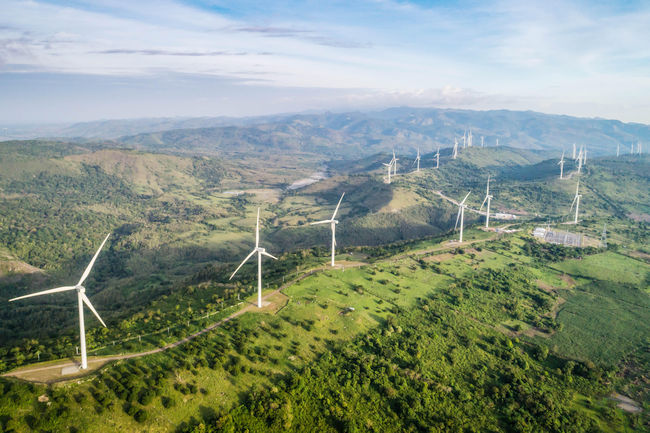
Korindo Group is also the region’s only wind tower manufacturer, with more than 50 years of operation. The wind towers help industries generate environmentally-safe renewable energy.

The factory has a production capacity of 500 towers per year, and received certification for ISO 14001:2000, ISO 9001:2000, and The National Board of Boiler & Pressure vessel DIN 18800-7 Class E Japan H-Grade. Today, over 3,000 towers (6 gigawatt) have been created and delivered around the world.

Korindo Group, a leader across multiple industries in the South East Asian market, have a lot to be proud of. Over our 50 years of operation, we’ve built up our business by making a significant contribution to the country’s economic development while simultaneously upholding environmentally friendly, future-oriented practices.

Related links
Korindo Group https://www.korindonews.com/
Korindo Foundation https://korindofoundation.com/
Korindo Wind http://korindowind.com/

Official Corporate Website: www.korindo.co.id
Official News Website: www.korindonews.com
Official Foundation Website: www.korindofoundation.com
Brawijaya University develops GIS-based IoT for disaster mitigation

Brawijaya University has developed an Internet of Things (IoT) technology based on the Geographic Information System (GIS) to mitigate disasters in Pronojiwo district, an area affected by the eruption of Mount Semeru.

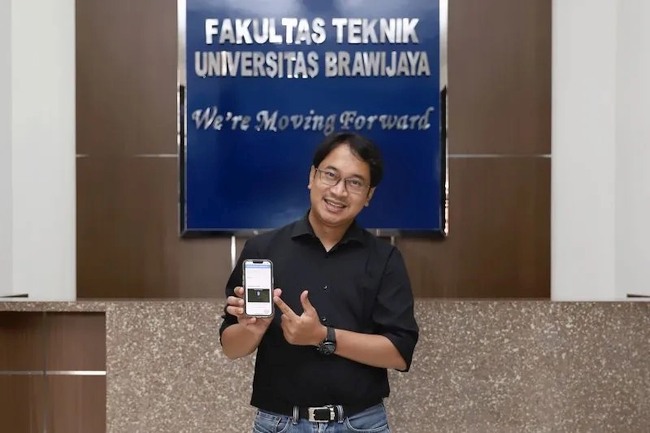
A lecturer on urban planning at the Faculty of Engineering of Brawijaya University, Adipandang Yudono, Ph.D., has developed an Internet of Things (IoT) technology based on the Geographic Information System (GIS) to mitigate disasters in Pronojiwo district, an area affected by the eruption of Mount Semeru. (Photo: ANTARA/HO-Humas UB)

“The data generated by IoT can be crucial information in dealing with disaster-affected areas,” a lecturer of urban planning at the university’s Faculty of Engineering, Adipandang Yudono, Ph.D., said here on Thursday.

After the Semeru eruption some time ago, the IoT technology was used to enter a number of data regarding the number of refugees, logistics, the distribution of survivors, the location of the post, medicines, and food, among others, he informed.

According to Yudono, during the recovery period, the GIS-based IoT technology has been used to map the condition of agriculture, livestock, as well as damaged schools in affected areas.

“This data can be used as a support system for determining areas that can be rehabilitated or determining lines for the protected areas,” he said.

Meanwhile, a volcanology and geothermal expert at Brawijaya University, Prof. Sukir Maryanto, said that the IoT system can work via two methods: through human media and the use of sensors.

When using human media, the IoT works in three stages, namely entering or inputting data, which can then be managed using a database, he informed. The database is then forwarded to the operational dashboard.

The operational dashboard contains infographics on the distribution of activities, the number of activities, and their graphs. Meanwhile, electronically, the IoT inputs data based on electronic sensors installed somewhere.

“In the future, the geospatial-based IoT can be used for planning activities for the recovery of areas affected by the Semeru eruption, such as reforestation,” he said.

According to the chairperson of the Independent Learning Program for the Independent Campus (MBKM), Semeru, Dr. Sujarwo, the IoT for disaster mitigation is supporting the activities of students involved in the Semeru humanitarian project.

“This (IoT) makes it easy, especially in identifying damage and providing better information, such as the number of damaged buildings and data on affected areas,” Sujarwo said.

In addition to the use of IoT for disaster mitigation, the MBKM Semeru has also initiated a “school and town watching” system, which is also being carried out with the help of schools and communities.

The disaster mitigation effort in schools or “school watching” involves identifying elements in schools that are at risk, analyzing the impact of risks, and finding solutions to problems when a disaster strikes.

Meanwhile, “town watching” is a program wherein people living in an area, namely residents, children, and students, go around the area to see and identify dangerous places when a disaster occurs.

“Town watching” seeks to increase public awareness on disaster management, identify environmental and surrounding vulnerabilities, and identify community capacities or resources that can be used when a disaster occurs.

In addition, it also identifies the main problems in the community and finds solutions to these problems.

Written by: Yashinta Difa Pramudyani, Editor: Suharto (c) ANTARA 2022

BayWa r.e. Eyes Expansion of Standalone Power Systems in Australia

BayWa r.e., the global energy developer, service provider, and distributor, is looking to expand its offering on Standalone Power Systems (SPS) to more regions in the State of Western Australia, and in the future, nationally, to different market sectors that require remote or standalone power.

This follows the company’s success in providing SPS to farming, mining, business communities and homeowners in parts of rural Western Australia at the beginning of 2018, who have greatly benefited from this innovative and cost-effective power source.

According to Western Power, the state owned corporation responsible for providing electricity in Western Australia, Western Australia has one of the largest isolated electricity networks in the world, and the provision of SPS at several sites in rural Western Australia in a trial exercise, helped ensure that the customers received adequate power supply.

Mr. Durmus Yildiz, Managing Director at BayWa r.e. Solar Systems Australia said “We are proud to be a part of powering the remote communities in the State of Western Australia and to be able to put our expertise in energy solutions to benefit the greater community. Through our network of trusted and capable off-grid installers, whom we work with to design and build such SPS. This has enabled BayWa r.e. to cater to different customers, depending on factors such as their required size of the system, location, or customer preference.”

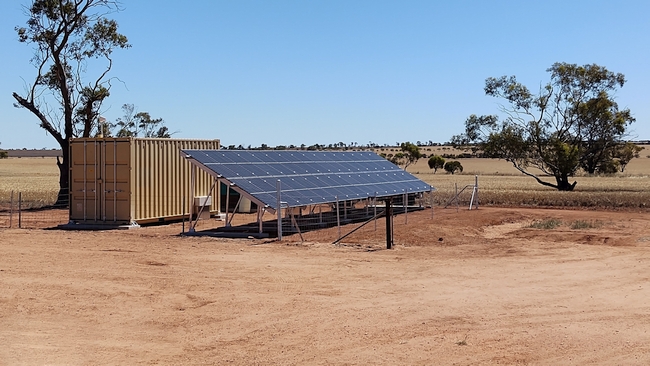
These SPS operate independently off the grid and supply continuous power 24 hours a day, using a mix of solar and battery storage and backup generation. It is by far one of the most efficient local energy solutions that allows customers and the wider community in these remote areas to access a steady supply of electricity.

BayWa r.e. expansion plans for its offering of SPS include tapping into other regions in Western Australia, namely, the Kimberley and Pilbara as well as regions in the other states of the country such as the Northern Territory and Queensland. This vision of providing SPS nation-wide is part of BayWa r.e. ‘s commitment to aid Australia’s energy transition processes.

This is in line with the country’s climate goal to reach net-zero emissions by 2050, which would require a rapid construction of an electricity grid running almost 100 percent on renewable energy.

Some benefits of SPS includes serving as a safe and reliable source, maximised efficiency via clean energy storage, reduction in electricity costs, flexibility for communities to place systems where it is needed, and integrated system monitoring for improved maintenance.

“SPS is a clear choice for remote areas, agricultural and mining sectors. It is a reliable and cost-effective energy solution that can power up these communities in the interim as the country continues to expand and improve its electricity grid. We are also confident that through BayWa r.e.’s technical expertise and product knowledge in renewable energy, that new design elements will be implemented to these systems, to further contribute to the state and country’s transition towards net-zero emissions,” continued Mr. Yildiz.

BayWa r.e. has been operating in Australia since 2016, after transitioning from existing solar wholesaling business Solarmatrix. The Projects team entered the Australian market through the acquisition and subsequent development of the Hughenden Solar Farm in Northern Queensland. The Wind Projects team was established through the acquisition of a local developer, Future Energy, and its project pipeline. In total, BayWa r.e. has delivered seven utility scale wind and solar assets in Australia, including the 112 MW Karadoc and the 106 MW Yatpool solar farms near Mildura in Victoria.

BayWa r.e. AG (BayWa r.e.)

At BayWa r.e. we r.e.think energy – how it is produced, stored and can be best used to enable the global renewable energy transition that is essential to the future of our planet.

We are a leading global developer, service supplier, distributor and solutions provider and have brought over 4.5GW of energy online and manage over 10GW of assets. We are also an Independent Power Producer with an expanding energy trading business.

BayWa r.e. works with businesses worldwide to provide tailored renewable solutions. Operating 100% carbon neutral, we are also committed to our own sustainability journey.

Every day, we are working hard to actively shape the future of energy in a diverse, equitable and inclusive workplace.

Our shareholders are BayWa AG, a EUR19.8 billion global business, and Energy Infrastructure Partners, a leader in energy infrastructure investment. Visit https://www.baywa-re.com/en/.

Contact information:

PRecious Communications for BayWa r.e. AG
Daniel Tan
Tel: +65 6303 0567
E-mail: baywa-re@preciouscomms.com

BayWa r.e. AG
Salim Pathan
Marketing Manager, APAC
Tel: +66 62 698 7162
E-mail: salim.pathan@baywa-re.com

Mark Cooper
Corporate Communications
Tel: +49 89 383932 3611
E-mail: mark.cooper@baywa-re.com

BPipe Corporation, a Joint Venture Partner of Biopipe Global USA, enters into Agreement with Major Global Food Company to Install 10 m3/day Biopipe Biological Sewage Wastewater Treatment Plant

BPipe Corporation, an equity joint venture partner of Biopipe Global USA, enters into an agreement with a major global food company to install a 10 m3/day Biopipe biological sewage wastewater treatment plant.

BPipe Corporation is focused on innovative, scalable and disruptive decentralized wastewater treatment and reuse technologies. Its flagship system is the Biopipe STP, which is a highly scalable onsite sludge, odor and chemical free sewage wastewater treatment technology. BPipe is an equity joint venture partner established in the Philippines to pursue both sewage and industrial wastewater treatment opportunities for technologies within our portfolio.

According to Mr. Freddie Canta, President of BPipe, “In addition to the sludge free, odor free, and chemical free features of Biopipe technology, the customizable design and flexibility to fit in small spaces were the deciding factors that led to this partnership with BPipe. We are happy that this client will promote environmentally sustainable practices by recycling treated wastewater through our Biopipe system.”

“Biopipe continues to see strong market interest in the Philippines as customers look to long-term, eco-friendly solutions for a more resilient future,” says Ms. Nina Aquino, CMO of Biopipe Global Corp. “We look forward to continuing our support of the country’s dedication to cleaner waters and safe sanitation practices.”

About Biopipe Global Corp
Biopipe Global Corp is a wholly owned subsidiary of Lifequest World Corp (OTC Markets: LQWC). Lifequest offers both effluent treatment (ETP) and sewage treatment (STP) solutions. Biopipe has developed a patented 100% sludge-free, chemical-free, odor-free, silent, easy to assemble and install, scalable, low cost, ecological and virtually maintenance-free onsite sewage wastewater treatment system. Our Abrimix ETP solution is a highly efficient and cost-effective industrial wastewater treatment system that is vastly superior to Dissolved Air Floatation (DAF) systems. See www.lifequestcorp.com and www.biopipe.co or contact: info@biopipe.co.

About BPipe Corporation
BPipe Corporation, a Philippine subsidiary of Biopipe Global Corp, is engaged in sales, marketing, distribution, installation, and maintenance of Biopipe STP, Abrimix ETP, Glanris Media and Goslyn FOG and other technologies through its global partnerships.

Philippines Contact
Name: Mr. Freddie Canta
Email: freddie@biopipe.co
Phone: +63 9171393642

Seiryoku Zenyo, Jita Kyoei spirit is fundamental to Value Creation

Kyoto’s Chiseikan Dojo Founder to speak at UN General Assembly Science Summit

Those in power have a choice, whether to use that power for their own benefit at the expense of all others or to use that power to help society constantly improve for the betterment of all. Based on which of these choices they make, the social impact of their efforts will change drastically.

As the world faces increasingly complex challenges, the belief that one country, company or individual should win at the expense of others continues to be at the heart of our collective thinking about competition. But what if there was a different way?

“The Japanese martial arts, or “Bu-do” in Japanese, are different from traditional sports, because their ultimate goal is to build the character of those who practice,” says Yoshie Sugai, Founder of Chiseikan Dojo in Kyoto, Japan. “In doing so, Budo was created to nurture leaders who can lead society toward prosperity and peace, rather than dominating others for individual gain.”

Yoshie Sugai will present these ideas as part of a larger panel discussion on value creation and sustainability, convened by the Value Research Center (VRC) at Doshisha University for the United Nations General Assembly 77 (UNGA77) Science Summit on Monday, September 26th from 09:00 – 11:30 AM EST.

Sugai will speak in the final panel of the “Valuing Value: How any organization can measure stakeholder value” session. She will include insights into the role of “Do” within Japanese culture, and how the actual application of “Seiryoku Zenyo, Jita Kyoei” principles by Minoru Mochizuki-sensei led to unexpected positive results for hundreds of thousands of people. She hopes to spark similar applications of the philosophy, and the fullest use of our energy for the mutual benefit of our communities, societies and countries globally.

“The idea that those in power have a responsibility to foster prosperity across all of their stakeholders is at the heart of what the VRC will be presenting at this year’s UNGA Science Summit,” said Dr Masato Yamazaki, Professor Emeritus at Aquinas College in Michigan.

“Yoshie Sugai-sensei’s introduction of the philosophy of ‘Seiryoku Zenyo, Jita Kyoei’ from Jigoro Kano, the founder of Judo, and his student and founder of Yoseikan Budo, Minoru Mochizuki, is critically important to anyone who is serious about value creation in business or government. Without the moral and ethical foundation that Yoshie will introduce, value creation efforts are bound to fail.”

Free registration for the UNGA77 Science Summit, and further information on the Valuing Value workshop are available at https://sched.co/1AWkD.

About Chiseikan Dojo (Aikido in Kyoto)
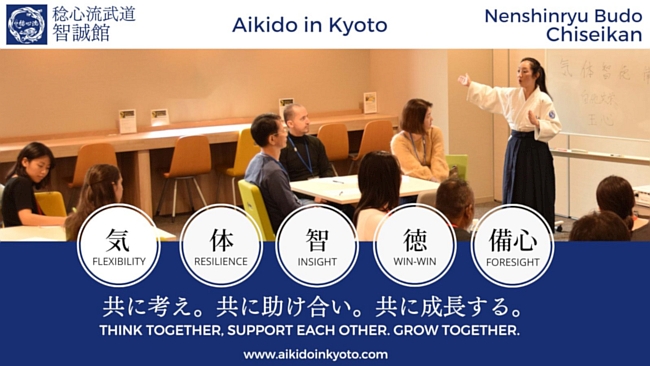
Chiseikan Dojo was founded in Kyoto Japan in April 2021. It is built upon a foundation of Aikido which integrates techniques and forms from other Japanese martial arts including karate, judo, jujutsu, and iaido. Chiseikan Dojo also teaches the underlying philosophy of the Japanese martial arts to all students, including children and adults.

Chiseikan Dojo teaches the Nenshinryu Budo style which was founded by Toru Kinefuchi-sensei, a live-in student of Minoru Mochizuki-sensei, who held advanced black belts in multiple Japanese martial arts styles and was awarded the French Legion d’Honneur for spreading the martial arts throughout France.

Visit online www.aikidoinkyoto.com, or Email: info@aikidoinkyoto.com.

Value Research Center, Kyoto at the UNGA77 Science Summit

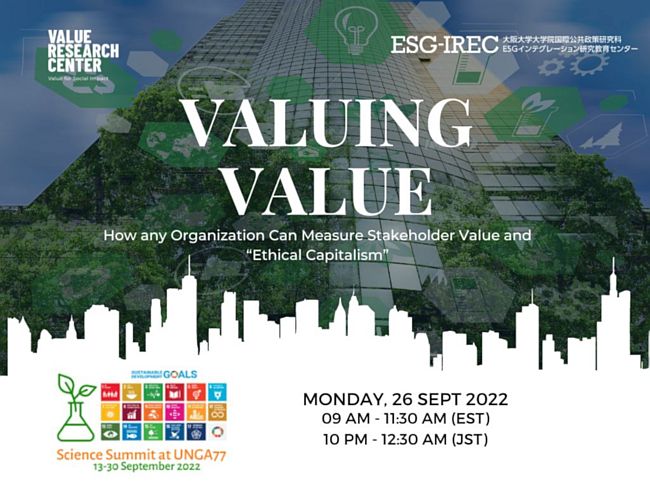
Valuing Value: How any organization can measure stakeholder value and “Ethical Capitalism”

What qualifies a ‘good’ company these days? How can a company’s impacts on key stakeholders be honestly measured?

Prof. Philip Sugai, Director of the Value Research Center (VRC) at Doshisha University, Kyoto will share how he and his research team have integrated and synthesized many of the world’s top ESG and sustainability reporting frameworks into The Value Model, a goal-based, objective, and transparent model for measuring stakeholder value at this year’s UN General Assembly Science Summit.

The theme of this year’s Science Summit is “The Role of Science and Innovation in Attaining the United Nations’ Sustainable Development Goals (SDGs).” This event brings together scientists, academics, government leaders and citizens from around the world to participate in a series of workshops, presentations and discussions. The 8th annual Science Summit is being held live in New York and online and it is free to attend.

This presentation is one of seven events hosted by the Okinawa Institute of Science and Technology (OIST) and its co-host, the Permanent Mission of Japan to the United Nations.

“Our half-day workshop aims to help move beyond the politics surrounding discussions around sustainability,” said Prof. Sugai. “Based on an ethical foundation from Japan, we’ll define what a ‘good’ company is, then explore how company impacts on its stakeholders can be measured and managed, and finally how this kind of measurement model can be used to develop both practical regulatory oversight as well as forward-thinking, value-focused business strategies across developed and developing economies.”

Following Prof. Sugai’s opening presentation, he and Prof. Toshiya Hoshino, Director of the ESG Integration Research and Education Center (ESG-IREC), OSIPP, Osaka University, will discuss how value measurement and more meaningful ESG reporting can help further enhance the achievement of SDGs, as well as Japan’s unique role and contribution to these issues.

After this discussion, a panel of experts in Japanese business and sustainability reporting who have deep experience across academia, industry, and government policy will dig more deeply into the essence of value, Japan’s historical and current efforts to align this history with the current challenges addressed by the achievement of Sustainable Development Goals, and how business can continue to drive real and measurable achievement of these in a just and equitable way.

Panel speakers include:

  • Prof. Haruko Satoh (Moderator), Co-Director, OSIPP-IAFOR Research Centre, Osaka University
  • Masato Yamazaki, Professor Emeritus of Economics, Aquinas College
  • Yoshie Sugai, Founder and Head Instructor, Chiseikan Dojo
  • Trista Bridges, Cofounder & Principal, Author, Read the Air
  • Jin Montesano, Chief People Officer, LIXIL Corporation
  • Kumar Iyer, Sustainable Strategy Mentor

The Valuing Value half-day workshop will be held on Monday, Sept 26 from 9:00 – 11:30 EST (22:00 – 00:30 JST).

Details of the Valuing Value workshop are here:
https://ssunga77.sched.com/event/1AWkD/valuing-value-how-any-organization-can-measure-stakeholder-value-and-ethical-capitalism/

Registration for Science Summit at UNGA77 (free) is here:
https://www.eventbrite.be/e/science-summit-at-unga77-september-2022-tickets-258988691147

About the Value Research Center
The Value Research Center (VRC) at Doshisha University in Kyoto, Japan was established in November 2021. Its mission: develop a practical system for organizations to measure, monitor, assess and report on the impacts they have on various stakeholder groups; the company, its shareholders, employees, customers, partners, society, and the planet.

The VRC enhances its Value Model continuously, integrating new frameworks as they’re introduced, bringing greater transparency, objectivity and measurability to value creation – in ways we often didn’t see. The VRC Value Model gives government and industry the eyes to see impacts they’re actually having, and the ability to fix what’s broken and enhance what they’re doing well. Learn more at www.valueresearchcenter.com.

About the ESG-IREC Research Center
The Osaka University Graduate School of International Public Policy – ESG Integration Research and Education Center (ESG-IREC) conducts research on practical implementable “ESG integration” models in corporate and business activities for the creation of a more sustainable future. Visit www.osipp.osaka-u.ac.jp/en/.

Pertamina-assisted MSMEs pull in crowds at Tong Tong Fair

Several products made by micro, small, and medium enterprises (MSMEs) assisted by state-owned oil and gas company PT Pertamina sold out at the recent Tong Tong Fair in The Hague, the Netherlands.

Visitors check out handicraft products from Indonesia at the Tong Tong Fair, which was held in The Hague, Netherlands, from September 1–11, 2022. (ANTARA/HO-PT Pertamina (Persero))

The fair was held from September 1-11, 2022, after a gap of two years due to the COVID-19 pandemic.

Foods from Dapur Bunda Duri, De Harvest Jaya, and Bakul Jamu Euis, as well as fashion products of Cetak Godhong and Dela Tapis, Sasirangan, and handicrafts made by Joglo Ayu Tenan and Bahalap were among the products that proved a draw for visitors.

Indonesian Ambassador to the Netherlands, Mayerfas, welcomed the participation of Indonesian SOEs, which brought a number of MSME products to the annual Tong Tong Fair.

“It needs to continue to be carried out to encourage MSMEs to go global and increase their competitiveness,” he said, according to a statement released by Pertamina.

He also lauded the effort made by the SOEs Ministry to open the Roemah BUMN pavilion to enable several SOE-assisted MSMEs from Indonesia to exhibit their products at the fair.

Pertamina showcased 175 types of superior products from various cities of Indonesia at the fair, including Yogyakarta, Balikpapan, Dumai, Banjarmasin, Pontianak, Lampung, and Tomohon, Sulawesi.

Products from the fashion, handicrafts, and food sectors were selected through a fairly long process after being curated based on product quality criteria that were in accordance with the needs of the global market.

“I am proud that the rubik balado product could pass the curation to the Netherlands, (it) can make the city of Duri Riau proud, which previously did not have regional specialties,” said Diah Novi Wulandari, owner of Dapur Bunda Duri, an MSME assisted by Pertamina since 2020.

Wulandari, who currently has more than 15 employees and more than 70 MSME partners in Duri, did not expect her products to be of interest to residents of The Hague and surrounding areas. However, her products sold out in less than a week.

Besides rubik balado, Cetak Godhong’s ecoprints also found a place in the hearts of visitors.

“What I never dreamed of was that my product could participate in the Tong Tong Fair in the Netherlands,” said Endah Hariyani, owner of Cetak Godhong.

Cetak Godhong makes environmentally friendly handmade products by printing fabrics using natural dyes and making motifs manually using leaves.

The use of leaves from various types of plants as motifs and natural coloring lend the products an exclusive air since no product has the exact same design.

Vice president of CSR & SMEPP at Pertamina, Fajriyah Usman, said showcasing MSME products at the Tong Tong Fair 2022 was a complete success.

“The fostered partners provided quality local products that had very high artistic and cultural value. We got a lot of visitors with a fairly significant number of sales. All visitors seemed to enjoy the product offerings and were enthusiastic about the lucky dip draw that we gave,” she informed.

Fajriyah said she hopes that the Tong Tong Fair would accommodate the hopes and aspirations of Pertamina-assisted MSMEs as well as encourage the entrepreneurs’ spirit of independence and spur them to become strong and professional players.

In collaboration with the trade attache at the Indonesian Embassy in the Netherlands, Pertamina-assisted MSMEs’ products are currently on display at the House of Indonesia, a one-stop shopping showcase that provides everything from products to information for prospective European business players.

“This promises a great opportunity for MSEs to expand their overseas marketing reach,” Fajriyah added.

The involvement of MSMEs in the Tong Tong Fair was a form of the SOEs’ support for achieving the Environmental, Social, and Governance (ESG) targets and Sustainable Development Goals (SDGs), particularly Point 8, namely decent work and economic growth, which is being realized through funding and coaching programs for SMEs.

This is part of the social and environmental responsibility push for realizing economic benefits for the community and driving the national economy.

Through MSME programs and the spirit of “Energizing Your Future,” Pertamina is striving to continue to encourage all MSME partners to level up and go global.

Contact: Fajriyah Usman, VP Corporate Communications, PT Pertamina (Persero)
M: +62 858 8330 8686, Email: fajriyah.usman@pertamina.com, URL: https://www.pertamina.com
Written by: Yashinta Difa Pramudyani, Editor: Sri Haryati (c) ANTARA 2022

Value Research Center (VRC) publishes August White Paper: The VRC Value Model & EFRAG

  • ESG reporting, the EFRAG model, and the overall quality of the VRC Value Model

Companies and sustainability teams need a new model for measuring and managing stakeholder impacts, as claims of corporate greenwashing and value washing increase daily. The Value Research Center (VRC) at Doshisha University in Kyoto, Japan has announced the publication of its 2022 August White Paper, focusing on the European Financial Reporting Advisory Group (EFRAG’s) latest disclosure drafts for sustainability reporting, and how this model aligns with and deepens the overall quality of the VRC Value Model.

The Value Research Center (VRC) publishes 2022 August White Paper: The Value Model & EFRAG

According to Professor Philip Sugai, Director of the Value Research Center, “After integrating EFRAG’s 114 draft disclosure requirements into the VRC Value Model, we were impressed with the scope of EFRAG’s coverage of many of the Value Model’s stakeholders, themes and goals. Especially with their push for companies to document their impacts using ‘double materiality’, we see a shift towards greater understanding of business decisions on individual stakeholder groups.”

SAP Japan International Ambassador Paul Beddie said, “The VRC In Kyoto has been working to organize the world’s top ESG and Sustainability Reporting frameworks into a goal-based, value creation model that will help companies to create value across their key stakeholders. Companies around the world are in desperate need of a way to consolidate the alphabet soup of standards to reduce their workload on ESG reporting and focus more on the critical ESG outcomes they transformed their businesses to achieve.

“The VRC’s Value Model is a very effective tool for doing just that. The additional integration of the draft reporting standards from EFRAG should also help companies doing business in the EU to align their disclosures with the EU Taxonomy.”

With the publication of the August White Paper, the VRC will begin to collaborate with several of the world’s leading companies in adopting the VRC Value Model, applying it to their own ESG and sustainability reporting requirements, and creating forward-looking sustainability strategies rather than backwards-focused disclosures.

Professor Sugai will be hosting a session at the UNGA77 Science Summit, where he will discuss the VRC Value Model and its broader practical applications, together with a panel of experts from academia, government, and business.

The UNGA77 Science Summit session, “Valuing Value: How any Organization Can Measure Stakeholder Value and “Ethical Capitalism” (https://ssunga77.sched.com/event/1AWkD), will be held on Sept 26 from 9:00 to 11:30 AM EST. Registration for the complete UNGA77 Science Summit is free and available at https://ssunga77.sched.com/tickets.

The “2022 August White Paper: The Value Model & EFRAG” is available for download at the Value Research Center website: www.valueresearchcenter.com/publications.

For more information about the Value Research Center and its projects, please visit: www.valueresearchcenter.com, or email Professor Philip Sugai at: info@valueresearchcenter.com .

About the Value Research Center
The Value Research Center (VRC) at Doshisha University in Kyoto, Japan was established in November 2021. Its mission: to develop a practical system for organizations to measure, monitor, assess and report on the impacts that they have on various stakeholder groups.

The VRC continues to enhance its Value Model, integrating new frameworks as they’re introduced, bringing greater transparency, objectivity and measurability to value creation – in ways we didn’t see. The VRC Value Model gives government and industry eyes to see the impacts they’re actually having, to fix what’s broken, and enhance what they’re doing well. For more information, visit www.valueresearchcenter.com.

Pertamina saves US$402.46 million amid rising global oil prices

State-owned oil and gas company PT Pertamina succeeded in saving operational costs of around Rp6 trillion (US$402.46 million) until July 2022 through several efficiency programs amid rising world oil prices that increased fuel production costs.

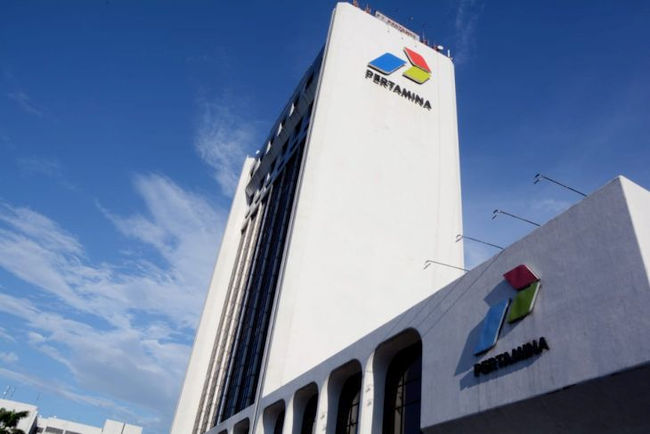
PT Pertamina head office building (ANTARA/HO-PT Pertamina)

She explained that energy companies around the world are facing difficult situations as a result of disruption of the global energy supply chain due to the Russia-Ukraine conflict. The global trade mobility leading to post-pandemic recovery was jolted by limited supply that led to an energy crisis.

The president director noted that the Indonesian government’s policy of maintaining the people’s purchasing power through fuel subsidies was the proper measure to accelerate economic recovery.

According to Widyawati, the accuracy of the policy is reflected in the fuel consumption increase for community mobility and business activities.

Pertamina President Director Nicke Widyawati stated that such a success could not be separated from strategic cost-saving measures taken by the company group since the start of this year.

She explained that energy companies around the world are facing difficult situations as a result of disruption of the global energy supply chain due to the Russia-Ukraine conflict. The global trade mobility leading to post-pandemic recovery was jolted by limited supply that led to an energy crisis.

The president director noted that the Indonesian government’s policy of maintaining the people’s purchasing power through fuel subsidies was the proper measure to accelerate economic recovery.

According to Widyawati, the accuracy of the policy is reflected in the fuel consumption increase for community mobility and business activities.

On the other hand, she also pointed out that the increase in fuel consumption had caused an increase in the burden of government subsidies.

“We understand the heavy burden of the government’s fuel subsidy, and for that Pertamina carries out various cost-saving programs in order to help reduce the burden,” she stated.

She remarked that the largest chunk of the company’s cost of fuel production is for the purchase of crude oil, which accounts for 92 percent of the production costs.

Fortunately, investment in upgrading the Pertamina Oil Refinery, which had been conducted in the last four years, had succeeded in increasing the flexibility of crude oil availability.

It means, if so far, the Pertamina refinery has only been able to process certain crude oil that is expensive, but starting last year, it has been able to process crude oil, with a higher sulfur content, which is cheaper and can be gained from many sources,” Widyawati stated.

This is Pertamina’s strategic move that has succeeded in significantly reducing fuel production costs, she affirmed.

In addition, the company’s energy efficiency efforts in all operational areas — from upstream to downstream — had caused significant cost savings while also contributing to a reduction in carbon emissions.

“The post-restructuring breakthrough, which is also significant to achieve Pertamina Group’s efficiency, is the centralization of the procurement of goods and services, as well as the integration and optimization of all assets from upstream to downstream,” she stated.

Apart from saving costs, the Pertamina Group has also succeeded in increasing its revenue through the export of high value-added products, such as HVO (palm-based D100) and Low Sulfur Fuel Oil.

By upgrading its refineries, Pertamina has currently been able to produce more low-carbon products whose demand had continued to increase, thereby capturing a very prospective opportunity in the midst of global demand for such a product.

“For Pertamina, cost savings are not just about cutting costs but also changing operating models and improving business processes, so that all company programs can be carried out and all targets are achieved, but at a lower cost,” Widyawati stated.

“Pertamina will continue to make various efforts to save costs, which at the same time can reduce carbon emissions, thereby supporting the company’s and national energy transition efforts,” she said.

Contact: Fajriyah Usman, VP Corporate Communications, PT Pertamina (Persero)
M: +62 858 8330 8686, Email: fajriyah.usman@pertamina.com, URL: https://www.pertamina.com
Written by: Yuni Arisandy Sinaga, Editor: Rahmad Nasution (c) ANTARA 2022

Aggresive in Global Market Expansion, PIS Meets BP, Shell, and Exxon in Singapore

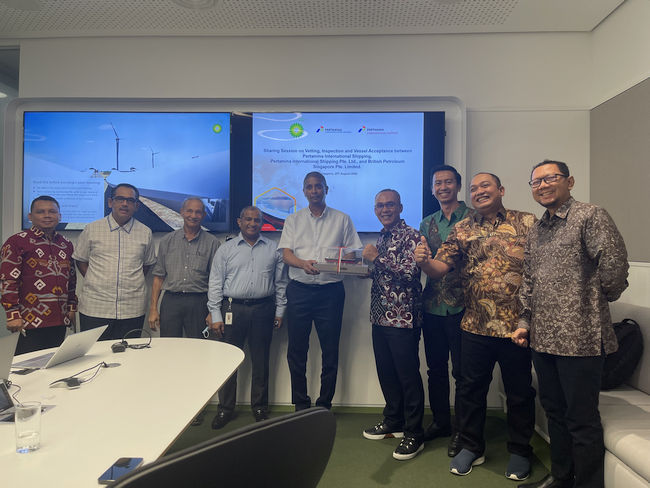
Pertamina International Shipping (PIS) is increasingly targeting consumers in the international market. In addition to this expansion, PIS strives to continuously improve the quality and standard of service by exchanging knowledge and experiences with world energy companies.

PT Pertamina International Shipping (PIS), in cooperation with PIS Pte Ltd (PIS PL), hosted a sharing session with BP Singapore Pte. Limited, Shell International Eastern Trading Co (SIETCO), and ExxonMobil Asia Pacific Pte Ltd. The meeting was held at the offices of each energy company on August 24-25, 2022, in Singapore.

PIS, in cooperation with PIS Pte Ltd (PIS PL), hosted a sharing session with BP Singapore Pte. Limited, Shell International Eastern Trading Co (SIETCO), and ExxonMobil Asia Pacific Pte Ltd. The meeting was held at the offices of each energy company on August 24-25, 2022, in Singapore.

During the sharing session, PIS discussed vetting, inspection, and vessel acceptance or vessel examination and inspection. The event was attended by PIS Director of Operations Arief Kurnia Risdianto, PIS PL Managing Director Brilian Perdana, Crude and Gas Operation (CGO) Vice President Harris Abdi Sembiring, and PIS Loss Prevention Safety Quality (LPSQ) Manager Soleh Komaruddin.

BP Singapore Pte Ltd Vetting and Clearance Senior Manager, ExxonMobil Asia Pacific Pte Ltd Asia Pacific Supply Coordinator, ExxonMobil Asia Pacific Pte Ltd Mogas Lead, ExxonMobil Asia Pacific Pte Ltd Global Senior Marine Operations, SIETCO Mogas Operation Team Lead, SIETCO Head of Marine, SIETCO Senior Originator, and more were also in attendance at this meeting.

The meeting was also a PIS endeavor to escalate acceptance of its ships at the terminals of world energy participants such as BP, Shell, and Exxon to showcase the existence and quality of PIS in international settings. In the maritime and energy sectors, these companies are significant participants that dominate the tanker chartering market called the Seven Sisters.

PIS Director of Operations, Arief Kurnia Risdianto, explained PIS performance which has now explored 12 international routes. PIS ships have met international shipping standards, including the Paris MOU for sailing requirements on the European continent and a Certificate of Compliance from the United States Coast Guard (USCG).

“PIS is the largest tanker operator in Southeast Asia, currently operating around 439 vessels with extensive experience serving the domestic and regional market,” he said.

Experience of PIS in serving the regional market is recorded by many international customers, including Vitol, Petronas, Trafigura, BP, Badak LNG, ExxonMobil, Petrobras, Chevron, Saudi Aramco, Shell, and many more.

As the Integrated Marine Logistics Sub Holding of PT Pertamina (Persero), PIS business includes shipping, marine services, port services, port and jetty management (port ownership), storage tanks, and other related services.

PIS owns two VLCCs, namely, Pertamina Pride and Pertamina Prime, with a capacity of 2 million barrels and incurs the Eco-Green Vessel concept. The two VLCCs are tangible manifestations of PIS endeavor to lead the marine and logistics business in both domestic and international markets.

Besides oil and gas, PIS expands its business potential to various segments and cargo types, including petrochemicals with medium-range chemical-specific vessel assets called PIS Precious.

In the meantime, to comply with regional trading and improve its role in the global market, Tanjung Uban offers an integrated terminal managed by the PIS subsidiary.

PIS CEO Erry Widiastono said that the company has prepared a roadmap to support energy transition programs. “PIS will anticipate the future of vessels business, specifically the greener vessels. For example, vessels responsible for gas shipping such as LPG, LNG, and many others. In the future, we will anticipate the progress of the renewable energy sector,” said Erry.

About Pertamina International Shipping (PIS)

As the Integrated Marine Logistics Sub Holding, PT Pertamina International Shipping (PIS) consistently stimulates Indonesia’s economic growth through safe and sustainable operation, becomes a trusted and reliable maritime partner, and promotes value for the stakeholders in running their business. See https://pertamina-pis.com/.

Media Contact:
M Aryomekka Firdaus
Corporate Secretary
M: +62-811-872-272
E: aryomekka@pertamina.com