Why Newborn Town is the best performing Chinese Internet company this year

Newborn Town Inc. (9911.HK) released its 2021 Interim Financial Report on August 25, showing satisfactory business performance. In fact, Newborn Town has long been favored by the capital market, and experienced a large rise in share price of 15.8% on August 24.

Newborn Town, after shifting its focus to social business in 2020, has achieved strong results in its business operations and aggressive acquisition and expansion strategies, acquisition of MICO and layout of mid- and hard-core games, leading to Newborn Town’s impressive outperformance in its stock price in the past two years.

It is not hard to understand why Newborn Town’s stock price has increased sharply by 186% from HKD1.8 to HKD5.14 since the beginning of this year. It should be noted that Newborn Town has been leading the e-commerce and Internet sectors in the Hong Kong stock market, and therefore, is well-deserved as one of the best performing Hong Kong stocks this year.

Newborn Town grows in line with the law of the Internet industry

There is a law in the Internet industry which was proposed by Robert Metcalfe, the inventor of the Ethernet, and was named after him as Metcalfe’s Law. According to Metcalfe’s Law, the value of the network is proportional to the number of network users squared.

As shown in Newborn Town’s latest Interim Financial Report, the number of overseas users remained on a stable and high rise while cumulative downloads of social apps reached 254 million through June 30 2021, with 17.41 million Monthly Active Users (MAU) on average during 1H2021, increasing by about 38% from 2H2020.

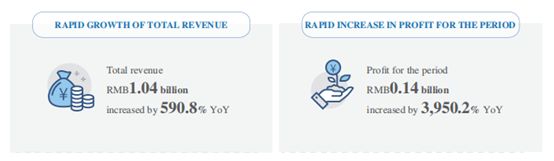
In response to the rapid growth in the number of users, Newborn Town recorded revenue of RMB1.04 billion and a net profit of RMB0.14 billion in the first half of the year, showing a year-on-year increase of nearly 6 times and nearly 40 times respectively.

In fact, in spite of Newborn Town’s excellent financial performance, what investors in the Internet sector value most is not a company’s short-term revenue and profit, but the sustainability of its user growth. This is because expansion of user groups of social products and diversified monetization methods will surely bring about rapid growth in operating revenue.

The rapid growth in Newborn Town’s revenue not only benefits from the sharp increase in the number of users, but also from the constantly diversified social product portfolio and the improvement of its operational efficiency.

It is widely held that Newborn Town is an “upstart” standing out from Chinese Internet companies having established business operations in foreign markets. In fact, it is not. Newborn Town began to expand its business to foreign markets in 2013 and began to deploy its social business in 2015. Its audio and video social platforms such as MICO and YoHo having been downloaded more than 200 million times worldwide, with more than 18 million MAU on average in the second quarter of 2021.

The Gulf countries in the Middle East contribute a great deal to Newborn Town’s revenue. For example:
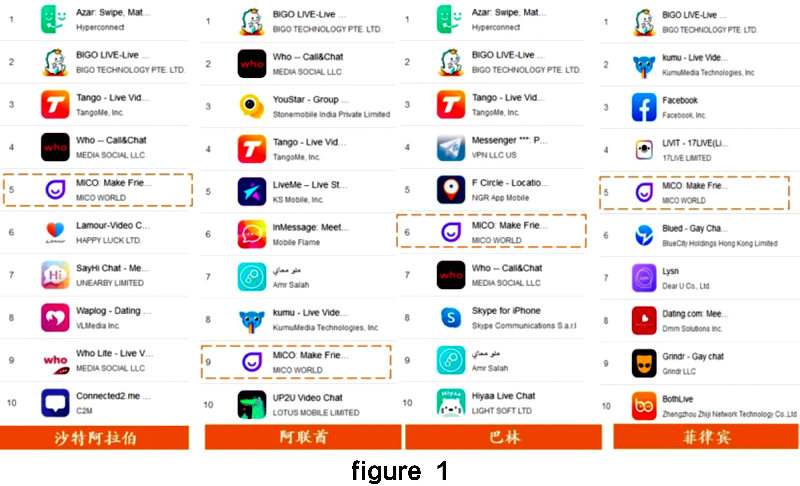
– In Saudi Arabia, MICO and YoHo ranked 10th and 8th respectively among the top-grossing social apps in Google Play, and ranked 7th and 6th respectively among the top-grossing social apps in App Store.
– In the UAE, YoHo and MICO ranked 5th and 11th among the top-grossing social apps in Google Play, and MICO ranked 4th among the top-grossing social apps in App Store.

From statistics released by Sensor Tower, we know:
– Newborn Town’s products rank among the top-grossing in social app rankings in many countries worldwide, which provides reliable evidence for the company’s satisfactory performance data.
– Newborn Town’s products are very popular in many countries worldwide, indicating that the product and operational strategies applied by the company work well.

If everything goes well, Newborn Town’s next important strategy is to focus on social traffic, further develop mid- and hard-core games, increase user stickiness and monetization rate, make its business layout in the game market by using the “independent research + release + investment” strategy, place emphasis on quality products, and increase the monetization efficiency.

Underestimated Newborn Town, Neglected High Growth

Based on the user and market data above, although Newborn Town’s stock price rose sharply by 15.58% on August 24, we believe that its closing price of RMB5.14 on August 25 is substantially undervalued by the capital market.

At market’s close on August 25, Newborn Town’s market capitalization reached HKD5.13 billion, equivalent to RMB4.26 billion. However, considering its expected annual revenue of about RMB2.1 billion, Newborn Town had a price-to-sales ratio of about 2.03x in the capital market.

Therefore, Newborn Town, a high-growth stock in the Internet sector, which has its revenue and net profit increasing by about 590% and 4000% year-on-year respectively and has the number of its half-year average MAU increasing by nearly 40%, has an extremely conservative valuation with a price-to-sales ratio of about 2x, as it may go for stocks in the banking and insurance sectors.

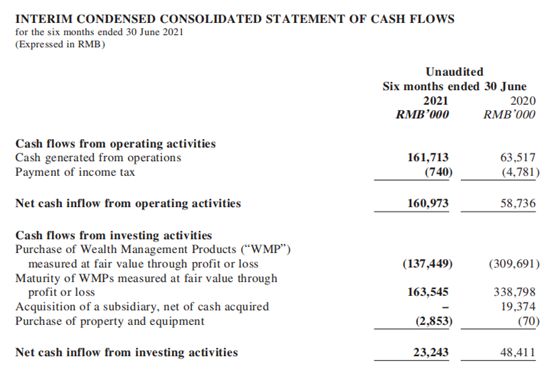
Look at Newborn Town’s cash flow statement. According to its annual report 2020, Newborn Town had net cash inflow from its operating activities in 2020 totaling RMB300 million, net cash outflow from its investment activities in 2020 totaling RMB97 million, and annual net cashes in 2020 of over RMB200 million. According to its interim report in 2021, in the first half of this year, Newborn Town had net cash inflow from its operating activities totaling RMB160 million, net cash inflow from its investment activities totaling RMB23 million, and net cashes of over RMB180 million.

It seems inconsistent that a company with rapid growth in user groups and with sound cash flows should receive such a low valuation.

What’s more, Newborn Town’s potential high-growth factors have not yet been included in the foregoing. For example, since the second quarter of this year, Newborn Town has focused on Japanese, South Korean and other developed markets, and began to expand MICO and other products into those markets. In another example this year, Newborn Town attached great importance to mid- and hard-core games and is releasing independently developed quality games, and is making initial investments in several game businesses which may exert influence on its current profit but will greatly drive Newborn Town’s future growth.

Value recognition may be late, but will never be absent. We believe the value of Newborn Town will be recognized at some point by the capital market, and so advise investors to take the long view.

Behind Newborn Town’s expansion to foreign markets: the victory of Internet industry players in China

According to data from Sensor Tower, in 2020, the total revenue of Chinese social apps launched in global markets increased by 127% from the previous year and the total revenue of Chinese entertainment apps launched in global markets increased by 250% from the previous year. As shown in the data from Analysys International, MICO ranked top five Chinese going-global entertainment and social apps contributing at least USD100 million to corporate revenue in 2020.

Since the beginning of 2021, Chinese apps have enjoyed worldwide popularity, especially social and game apps. Keeping up with this historical trend, Newborn Town has launched dozens of social, games and other apps widely used worldwide, and based on the average MAU of its social apps, it has become the largest Chinese company to have expanded its social networking business to foreign markets.

We believe that the value of Newborn Town Inc. (9911.HK) will be re-evaluated by the capital market. With its current valuation and potential for future growth, both of which are quite attractive, Newborn Town presents a great opportunity in the context of market recovery.

Contact:
Weijie Xie, Peanutmedia
E: xieweijie@czgmcn.com
URL: www.Peanutmedia.com
7.7% Below IPO Floor Price, Global New Material’s Low Offer Price Reveals Its Ambition to be Global Leader

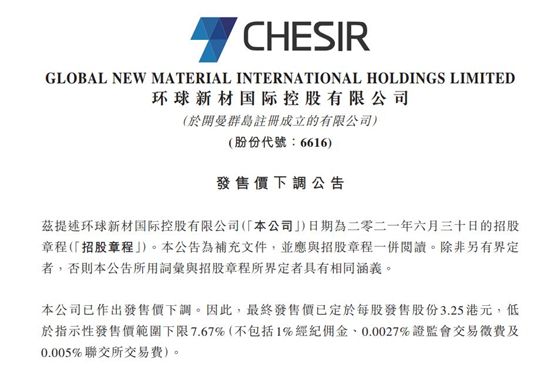
Global New Material, a leading company in the global new consumable materials market, gave a ‘big gift’ to its investors before officially listing. On July 9, Global New Material (stock code: 6616) announced an IPO price of HKD3.25, 7.67% lower than the previous IPO floor price. From the investors’ perspective, Global New Material lowering its IPO price from that of the IPO period, in fact, has left more room for market share price appreciation in the future.

High-quality companies prefer low-price offerings in mature capital markets
In mature capital markets, the lower-price offering is an effective strategy for information transmission. Those high-quality companies that are confident in their future business operations prefer the low-price offering strategy with higher market awareness, instead of advertising, extended lock-up period, underwriting by high-reputation investment banks or other approaches to deliver their intrinsic value to the markets.

The low-price offering is not harmful to high-quality companies as the low-price offering will attract more investors and will further lay a solid foundation for their post-listing stock price growth. Continuous growth in stock price and market value is extremely conducive to post-listing financing and therefore, will make up the value that companies give to their investors in IPO.

Besides, the low-price offering strategy is unlikely to be copied by poorer-quality companies. Since poorer-quality companies probably “usher in the peak when they go public” and then experience stock price decline, they will not and dare not purposefully lower their offering price. In fact, Global New Material lowering its IPO price is probably not only for this purpose.

Global New Material is preparing for access to Southbound Trading Link
Low-price offering activates stock trading, which probably demonstrates Global New Material’s preparation for access to Southbound Trading Link. Access to Southbound Trading Link is a very essential step to enhance market attention and activate stock trading of stocks listed in Hong Kong. It is learned from the management that Global New Material, which has just completed its IPO, is currently preparing for access to Southbound Trading Link.

The inclusion of Hang Seng Indexes will affect the inclusion of the Southbound Trading Link. According to the inclusion criteria of Hang Seng Indexes, the turnover rate is also considered in addition to the examination of the companies with the top 95% of the market capitalization in the option pool. Global New Material’s low-price offering strategy can facilitate faster meeting the requirements at the market dealing level.

Global New Material, which is preparing for access to Southbound Trading Link, is expected to experience stock price growth. Aftermarket close on August 20, 2021, the results of the latest mid-term review of Hang Seng Index constituent stocks will be released. As calculated by brokerage firms, the average market value threshold for entry into Hang Seng Composite Index this time is approximately HKD8.77 billion.

Global New Material currently applies an offering price of HKD3.25 with a stock market value of HKD3.779 billion, which is lower than that required for access to Southbound Trading Link. However, the company still strongly desires to make access to Southbound Trading Link, indicating that its management is confident in its future business operations and post-listing stock price performance.

Two new materials are of great potential in huge consumer markets
Both pearlescent pigments and synthetic mica, Global New Material’s two main types of new material products, are of great potential in huge markets in the fields of basic necessities of life and other consumer fields.

Pearlescent pigments are penetrating high-end fields at an expedited pace while replacing traditional pigments. As shown in the prospectus, Global New Material’s pearlescent pigments have two major significant advantages over traditional pigments in terms of being colour-lasting, toxic-free, harmless and environmentally friendly. In addition to traditional application fields, there is a fast-growing demand for pearlescent pigments in recent years in various high-end fields such as automobiles and cosmetics.

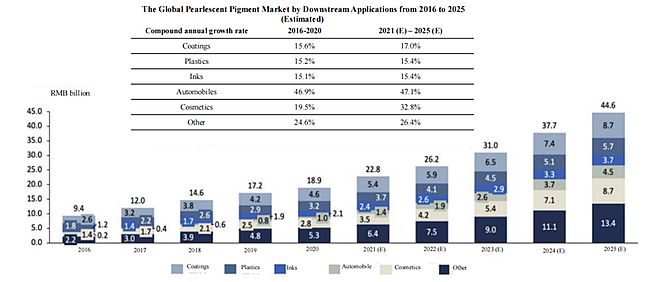
From 2021 to 2025, the compound annual growth rate of the global pearlescent pigment market will further climb to 23.9%, and the compound annual growth rate of pearlescent pigments in the global automotive and cosmetics sectors will surprisingly reach 47.1% and 32.8% respectively. Therefore, Global New Material’s pearlescent pigment products are expected to be applied in a wider range of application fields and occupy a huge market share with tremendous potential for future growth.

Synthetic mica is also penetrating mid-to-high-end consumer markets, such as the fairly popular field of fuel cells. In view of the exhaustion of natural mica resources in China and synthetic mica products’ advantages in terms of insulation, high-temperature resistance and corrosion resistance, there is an extremely strong demand for synthetic mica products and synthetic mica-based pearlescent pigments which are priced at a medium-to-high level and are mainly applied in mid-to-high-end industrial fields and other fields such as automobiles and cosmetics.

Moreover, according to scientific research findings, synthetic mica materials are being used to improve the existing fuel cell technology by virtue of their high proton conductivity and excellent heat resistance. The existing product prototype, i.e. mica membrane, is recognized as a new proton-conducting membrane with high proton conductivity.

To sum up, pearlescent pigments and synthetic mica, as two new material products, are of tremendous market potential, and Global New Material, as the leader in the fields of such two new materials, has gained dominant competitive advantages.

Comprehensive advantages cement the dominant position in the fields of the scarcest resources
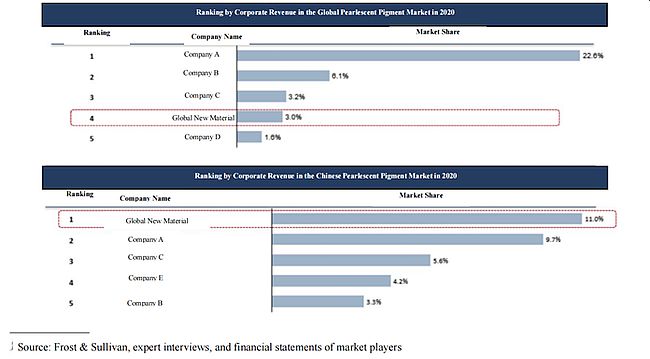
In both pearlescent pigments and synthetic mica, Global New Material has built significant advantages in technology and business scale. In 2020, in terms of corporate revenue, Global New Material was the largest pearlescent pigment manufacturer in China with a market share of 11% and ranked fourth in the global market with a market share of 3%. Global New Material has sold its products to more than 30 countries and regions worldwide, and its technical team is headed by Professor Jiansheng Fu – known as the leading authority on pearlescent materials in China and father of chameleon pearlescent materials.

According to the prospectus, Global New Material is currently the only company in the field of synthetic mica that possesses all the core technologies of synthetic mica. Backed by strong R&D, Global New Material can launch over 100 new products each year, leading the global industry.

Contact:
Haolu Wang, Peanutmedia
E: wanghaolu@czgmcn.com
URL: www.Peanutmedia.com
Global New Material (6616.HK): Dominating two new materials with a market share of RMB100 billion

New materials, with the new international situation, has become a key segment for overcoming market challenges, and is favoured by national strategic development planning policies. Pearlescent materials and synthetic mica are high value-added new materials.

Global New Material (6616.HK), which carried out its IPO from June 30 to July 6 and plans to issue 290 million shares at HKD3.52-4.22 when it lists July 16, produces China’s market-leading shares in both.

Pearlescent materials are expected to boom, achieving a market size of over RMB140 billion.

Pearlescent materials have dominant advantages when compared with traditional pigments. As a new consumable material without a definite industry life cycle, pearlescent pigments are rapidly replacing traditional organic pigments and metal pigments, and are widely applied in coatings, inks, plastics, cosmetics, automobiles, aerospace and other fields. As set forth in the Classification of Strategic Emerging Industries (2018) issued by the central government, pearlescent materials are included in the pigment manufacturing sector of strategic emerging industries.

Global New Material, which stays focused on technology, plays a leading role in the field of pearlescent materials. With the strong support of the technical team, headed by Professor Jiansheng Fu, a world-renowned pearlescent material expert known as the leading authority on pearlescent materials in China, and father of chameleon pearlescent materials, Global New Material can launch over 100 new products every year, including silicon ball series, the Light of the Dawn series, and other innovative lines of products leading the global industry.

Global New Material has sold its products in China and to more than 30 countries and regions in Asia, Europe, Africa and South America. As shown in a report issued by Frost & Sullivan, in terms of corporate revenue, Global New Material was the largest manufacturer of pearlescent materials and the industry leader in China in 2020 with a market share of 11.0%, the only company in China that occupies a market share of over 10%.

In the global market, Global New Material ranked as the fourth largest manufacturer of pearlescent materials in 2020 with a market share of 3.0% which is only 0.2% lower than that of the third largest one. Global New Material is currently in the explosive stage of acquiring a market share of RMB140 billion.

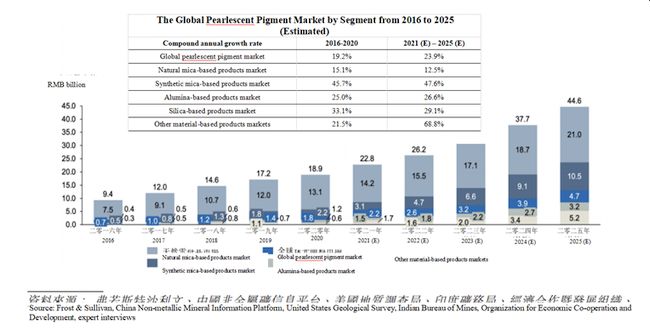
On the whole, the global pearlescent material market is on the steady rise with the market seize reaching RMB18.9 billion in 2020 and with a compound annual growth rate of 19.2% from 2016 to 2020. Considering that the total market size of the global pigment market is currently RMB160 billion, pearlescent pigments are expected to replace other pigments and gain a bigger market share.

As forecasted by Frost & Sullivan, in view of consumption upgrade and of the fact that pearlescent materials are gradually replacing other pigments, the market size of the pearlescent material market will reach RMB44.6 billion in 2025, and the compound annual growth rate of the global pearlescent pigment market will further climb to 23.9% from 2021 to 2025, indicating that the industry is in the explosive growth stage. (Chart #1)

In the mid-to-high-end consumer sector, the market share occupied by pearlescent materials is growing at an expedited pace.

According to data, the market size of automotive-grade pearlescent materials reached RMB950 million in 2020, accounting for 5.0% of the overall market size of the pearlescent materials market. In the field of cosmetics, the market size of cosmetic-grade pearlescent materials is also on the steady rise. Data shows that from 2021 to 2025, pearlescent materials to be applied in the global automotive market and the global cosmetics market will experience a compound growth rate of 47.1% and 32.8% respectively. (Chart #2)

In the consumer sectors, especially in the mid-to-high-end consumer sector, pearlescent materials that are gaining a greater market share will continue to drive the rapid development of Global New Material.

However, in addition to pearlescent materials, synthetic mica that is a new material extending to the upstream of the industrial chain and having core technical advantages is also giving strong support to the development of Global New Material.

From pearlescent materials to fuel cells, synthetic mica is of great market potential

Synthetic mica is widely applied in different fields, and is used as a base material of pearlescent materials. First-generation pearlescent materials are natural mica-based, and all-natural mica materials currently used are imported from India as natural mica in China has been exhausted. In this context, the best solution for achieving localization and avoiding reliance on imported technologies is to replace natural mica with synthetic mica.

Data shows that the market share of synthetic mica-based pearlescent pigments has increased from 5.3% in 2016 to 11.7% in 2020. Driven by the technology advancement and productivity improvement of synthetic mica, the market share of synthetic mica-based pearlescent pigments in the global market is expected to reach 23.6% in 2025, and the synthetic mica-based pearlescent pigment market will usher in a compound annual growth rate of 47.6% from 2021 to 2025.

Mica products are also widely used in producing insulating materials and refractory materials which are further used in electric power, high-temperature smelting, household appliances and other fields. In 2020, the market size of mica applied in producing pearlescent materials, in producing refractory materials, and in producing insulating materials reached RMB1.38 billion, RMB7.66 billion, and RMB3.70 billion respectively.

Moreover, synthetic mica products with better overall performance than natural mica products are still extending to higher-end markets, including the field of fuel cells that is the focus of the most attention in the market. Additionally, these materials can be further applied to semiconductors and other cutting-edge fields.

Given that synthetic mica-based products show better insulation, high-temperature resistance and corrosion resistance than natural mica-based products, synthetic mica-based products are more likely to be used in higher-end fields and broader applications. For example, synthetic mica-based products are widely used in producing cosmetic-grade and automotive-grade pearlescent pigment products, and in the thermal insulation material industry and even the fuel cell field of new energy vehicles.

Mica can be used as a high-temperature proton exchange membrane for fuel cells. Studies found that compared with graphene, which is developing as a proton-conducting material, mica performs better in terms of proton conductivity and thermal stability. At 150 degrees Celsius, mica membrane shows proton conductivity more than 2 times higher than that required for commercialization, which indicates that vehicles designed with fuel cells using mica membranes will have a greatly improved mileage.

At present, mica membrane as a new type of proton-conducting membrane material with high proton conductivity has taken shape in the research and development process. Studies found that the treated mica films show greatly improved proton conductivity and have their service temperature having been increased from 100 degrees Celsius to 500 degrees Celsius, and that the application of such films with high proton conductivity and excellent heat resistance in improving existing fuel cells will boost the development of the field of fuel cell vehicles.

Global New Material, which ranks first in the synthetic mica industry, is expected to be able to fully exploit the potential of this field. In 2015, the Ministry of Industry and Information Technology of the People’s Republic of China listed synthetic mica as one of the 18 key basic new materials for the national industrial upgrading project, and only CHESIR (now Global New Material) was authorized to take on this project.

As the only company in the industry that possesses all the core technologies of synthetic mica, Global New Material has effectively solved the key technical difficulties such as control instability, poor insulation performance, and hardness and brittleness caused by high fluorine content, and has realized the localization of the production of high-quality synthetic mica with the world-leading quality level of synthetic mica products. Besides, Global New Material is also expanding applications of synthetic mica.

Global New Material’s business scale is currently ranking first in the global industry.

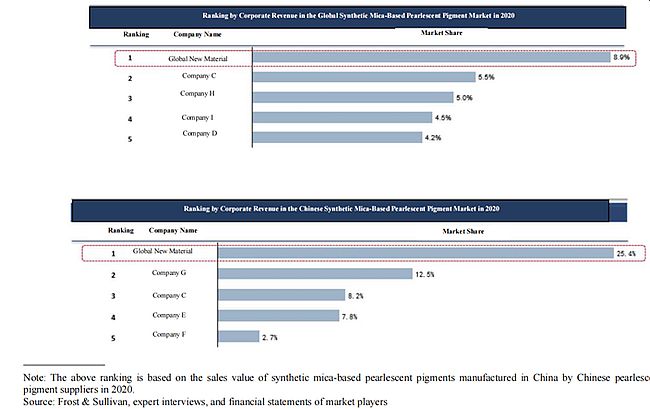
In the global synthetic mica-based pearlescent materials market, top five market players ranked by corporate revenue in 2020 occupied a total market share of 28.1%, and Global New Material ranked first with a market share of 8.9% which is 3.4% higher than that of the second one. In the domestic market, Global New Material ranked first with a market share of 25.4% which is more than twice the market share of 12.5% of the second player. (Chart #3)

With significant advantages in terms of technology and business scale, Global New Material will have immeasurable development prospects so long as it can commercialize synthetic mica in the field of fuel cells. As a leader in the global new material market which is gaining market share and has space for future development, Global New Material will appear in the secondary market at an attractive corporate valuation.

Global New Material still has an advantage in corporate valuation under the drive of two types of new consumable materials

Global New Material currently has a share capital of 1.163 billion shares at an issue price of HKD3.52-HKD4.22, with a total market value of HKD4.094 billion to HKD4.909 billion.

Global New Material had its net profit attributable to shareholders reaching RMB77.402 million, RMB103 million and RMB148 million respectively from 2018 to 2020, and had the net profit attributable to shareholders in 2019 and 2020 showing a year-on-year increase of 33.07% and 43.69% respectively. It is estimated based on those data that Global New Material’s price-to-earnings ratio will reach 15x-18x in 2021.

Ganfeng Lithium, a listed company on HKEx that is engaged in the upstream fields of the new energy battery, is expected to achieve a price-to-earnings ratio of about 64x in 2021, and Flat Glass Group, engaged in the industry of new energy photovoltaic glass materials, is expected to achieve a price-to-earnings ratio of 23x in 2021. This means that as an industry-leader possessing core technologies necessary for manufacturing two types of new consumable materials, Global New Material is of great potential to increase its corporate valuation.

Moreover, once its second-phase plant, with an annual output of 30,000-ton synthetic mica, is completed and put into operation, Global New Material will be able to take control of the upstream fields in the global supply chain of synthetic mica products, to take a leading position in the pearlescent material industry and the synthetic mica industry, and as a result, to further enhance its net profitability in the future.

Therefore, a wave of investment is expected to be triggered once Global New Material is officially listed on July 16.

Contact:
Haolu Wang, Peanutmedia
E: wanghaolu@czgmcn.com
URL: www.Peanutmedia.com
Global New Material (6616.HK) to list on HKEx as New Material Market Shines

As one of the seven strategic emerging industries in China and one of the ten key areas of development under the “Made in China 2025” policy, the new material industry is considered the high-tech industry with the greatest potential in the 21st century, with significant impact on future development.

Global New Material International Holdings Limited (Global New Material) is a leading player in the market segment, with main products including natural mica, synthetic mica, silica, alumina and other base materials, all representative of the segment in new consumable materials featuring high market barriers, high added value and broad market prospects.

Global New Material published its IPO prospectus on 30 June 2021. Dealings in its shares on the Main Board of the Hong Kong Stock Exchange (6066.HK) are expected to commence on 16 July 2021.

I. Rapid growth of the new material industry empowers Global New Material’s great potential of development

Generally, growth stocks are of greater market potential than value stocks, and a company that grows faster than its industry sector usually shows growth in sales and profits. Many outstanding growth stock companies are leaders in some emerging industries. Global New Material has the characteristics of a growth stock company.

The fast-growing “new material” industry shows promising prospects

With its main products including natural mica-based and synthetic mica-based pearlescent pigment products, Global New Material has the core technologies required in producing synthetic mica, occupies a dominant position in the high-end market, and is at the forefront of advanced technology.

With breakthroughs made in production technology, the rise of scientific manufacturing, increased public awareness and recognition of synthetic mica-based pearlescent materials in the future, and the gradually increased consumption level, synthetic mica-based, alumina-based and other pearlescent materials will be widely applied in different application fields, and will have further space for market growth.

Frost & Sullivan forecasts that the market size of the global new materials market will reach RMB3,251.11 billion in 2024, with an average annual compound growth rate of 10.9% from 2020 to 2024. Frost & Sullivan also forecasts that from 2021 to 2025, the new material market segment in which Global New Material is will experience a compound annual growth rate of 23.9% and 30.8% respectively in the global market and the Chinese market, and a rapidly increasing quantity of pearlescent materials will be applied and demanded.

Moreover, there is a strong demand for high-end and high-performance pearlescent pigment products, and the fields of automobiles and cosmetics in which pearlescent pigment products are widely applied have been developing rapidly in recent years with an annual compound growth rate of 47.1% and 32.8% respectively from 2021 to 2025, which indicates that there is a strong demand for high-end and high-performance pearlescent pigment products, and that Global New Material is expected to further develop in this context.

Global New Material is building a second-phase plant for production of high-end products as synthetic mica-based products, triggering a new wave of growth

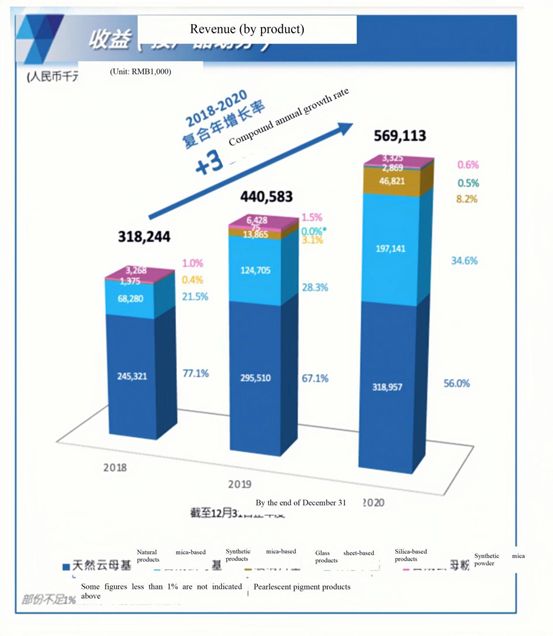
From 2018 to 2020, Global New Material revenue increased from RMB318 million to RMB569 million and remained on the steady rise in business performance, with a compound growth rate of revenue reaching 33.7%. The company achieved this business performance thanks to continuous increase in its product sales volume and its adjustments to product structure.

In terms of sales volume, the sales volume of Global New Material’s pearlescent pigment products increased from 8,451 tons in 2018 to 14,165 tons in 2020. In terms of revenue structure, the proportion of synthetic mica-based products in total revenue remained on the rise from 2018 to 2020, and increased from 21.8% in 2018 to 34.6% in 2020. Therefore, synthetic mica-based products have become one of the main pillars supporting Global New Material’s business performance growth.

In the industrial field, synthetic mica-based pearlescent materials can replace metal, organic and inorganic pigments. Synthetic mica-based pearlescent materials are priced at mid- to high-level, and are mainly applied in mid-to-high-end industrial, automobiles, cosmetics and other fields. Under the influence of the trend of consumption upgrade, increasingly higher requirements are made for the performance of pearlescent materials. Synthetic mica-based pearlescent materials will be widely applied in a wide range of application fields, indicating that such materials will enjoy market potential in the high-end market.

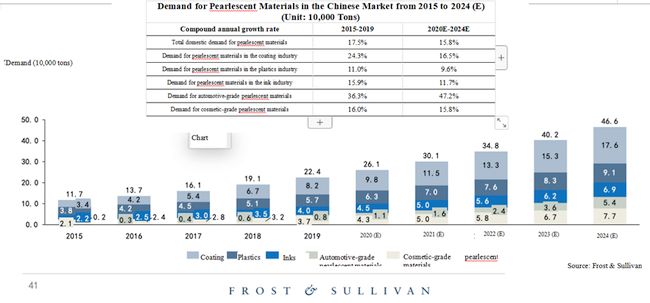
Frost & Sullivan forecasts that from 2020 to 2024, the domestic demand for pearlescent materials will be on the rise, especially in the high-end market represented by synthetic mica-based pearlescent materials.

In order to meet the strong demand in the market for high-end and high-performance pearlescent pigment products, Global New Material is building the second-phase plant to expand its production capacity and seize market potential of pearlescent pigment products. The plant is expected to be put into operation in 2021.

According to the prospectus, Global New Material will start trial production of 6,000-ton synthetic mica in its newly-added production capacity in the second quarter of 2022, and will further expand its production capacity to 14,000 tons in the second quarter of 2023 and to 30,000 tons in the second quarter of 2025.

II. Global New Material possesses many patents, core technologies, and sustainable competitive advantage

It is well known that in the investment philosophy proposed by Buffett, those companies with high gross profit margin in the industry have more advantages. Gross profit margin reflects a company’s ability to transform business operations into profit, and also reflects a company’s unique advantages in raw material pricing, production technology level, product competitiveness, supply-and-demand relations, market pricing power.

That is to say, gross profit margin directly reflects a company’s competitiveness. Gross profit margin of Global New Material was in the range of 46.2%-49.9% from 2018 to 2020. Can we see the unique advantages?

Global New Material possesses core technologies

Technological breakthroughs in the field of pearlescent materials has become one of the major trends in the future development of the industry. Regarding core technologies, breakthroughs in the technologies applied in producing synthetic mica are one of the key factors driving performance improvement of pearlescent materials.

At present, base materials used in pearlescent materials mainly include natural mica and synthetic mica, of which the former is scarce in China and is mainly imported from other countries and regions. Synthetic mica is a new material that features in big difficulties in R&D, low output, high added value and high technical barriers, and is currently in short supply in face of strong demand in the market. Besides, technologies applied in producing synthetic mica are of great importance for manufacturers to have a place in the high-end market.

As one of the few manufacturers with core technologies and capacity to produce high-end products, Global New Material is at the forefront of emerging technologies in the industry, possesses three patented technologies applied in producing synthetic mica, and has its core technologies and corporate strength being widely recognized in the industry.

In 2020, the market size of the Chinese synthetic mica-based pearlescent materials market reached RMB770 million, and in terms of the value corresponding to market share, top five players in the Chinese synthetic mica-based pearlescent materials market occupied a total market share of 43.3%. Among those top five players, Global New Material ranked first with a market share of 25.4%.

Global New Material has outstanding R&D advantages and highly-recognized R&D capabilities

The pearlescent material industry is a technology-intensive industry. Different technologies are required for production of pearlescent materials to meet the needs of different downstream industries. The competitiveness of a pearlescent material manufacturer in the increasingly competitive market depends on its strong R&D capabilities. Global New Material possesses industry-leading R&D capabilities, and has won many awards and titles such as “National Intellectual Property Powerful Enterprise”.

Global New Material has 12 registered patents and 26 patent applications, and has 40 R&D workers. The prospectus points out that in the past three years, R&D expenditures of Global New Material were RMB10.7 million, RMB23.2 million and RMB29.3 million respectively, which accounted for 3.4%, 5.3% and 5.1% of its total revenue, and that in the future, approximately 5% of its total revenue will be invested in its R&D activities each year.

Global New Material has significant advantages in business scale, and occupies a dominant position in the industry

With respect to production and marketing of pearlescent materials, huge investments are required in R&D, production sites, precision manufacturing equipment, introduction and training of R&D workers and technicians, market promotion, import and storage of raw materials, daily capital turnover and other aspects, and a long R&D and construction cycle is involved during which huge preliminary capital investments and a large amount of working capital need to be in place. Therefore, adequate operating capital and extensive accumulated R&D technologies are the key factors for success in the pearlescent material industry.

In the pearlescent material market which is fragmented, Global New Material, as the largest synthetic mica manufacturer in China, occupies a big market share and the dominant position, and has certain advantages in terms of financial support, technologies, patents and customer relationships.

Summary:

Global New Material’s EPS in 2021 is HKD0.2342, and its price-to-earnings ratio is expected to be about 15X assuming the IPO price is HKD3.52. It is a cost-effective opportunity for investors in the secondary market to buy stock in a leading company in a market segment in the field of new materials that is innovative and has growth potential, profitability, strong R&D capabilities, core technologies and sustainable competitive advantages.

Contact:
Haolu Wang, Peanutmedia
E: wanghaolu@czgmcn.com
URL: www.Peanutmedia.com
iDreamSky Technology (1119.HK) Lifetime Value (LTV) seriously undervalued, upside 65%

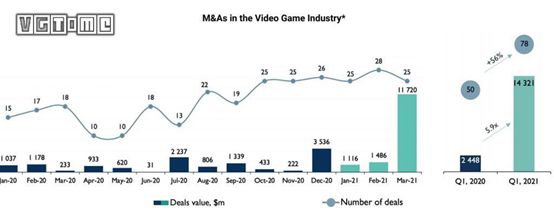
Since last year, the domestic and global game market has been prospering rapidly and this momentum has continued into the first quarter. From the perspective of global game transaction scale, there were 280 open transactions within the game industry in the first quarter with a total value of US $39 billion, while the total transaction volume in 2020 was only US $33 billion, according to Investgame data.

Because the blooming of the game trading market has gradually affected the stock market, secondary market research institutions have begun to explore the undervalued game stocks.

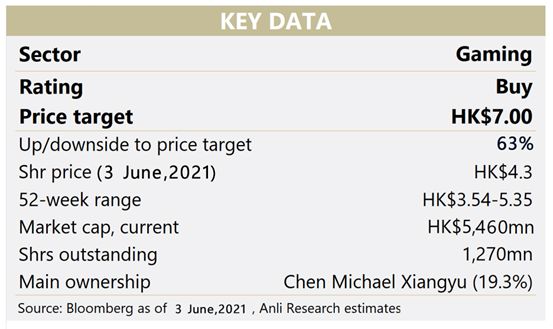
Recently, Anli released its first coverage research report, giving iDreamSky Technology (1119. HK) a “buy” rating. The target price is HK $7 per share, up to 63% from HK $4.3 per share on June 3.

According to the report, as iDreamSky Technologyhas moved up along the value chain of the game industry and has actively transformed into a game developer, it builds a long-life cycle ecology to form a closed-loop cash flow.

Therefore, its user group is more valuable than those in the same industry. However, relatively speaking, the valuation of iDreamSky Technology is the lowest among its peers. Since iDreamSky Technology is seriously underestimated, it is optimistic about the company’s future valuation.

01. The valuation is seriously undervalued with a potential increase of 65%
In the report, based on the strategy and progress of iDreamSky Technology, Anli has made forward-looking forecasts on the company’s financial and valuation.

In terms of finance, previous iDreamSky Technology’s monthly active users (MAU) and average per user income (ARPPU) have maintained a favorable growth trend. According to Anli’s forecast, in 2021-2022, through strong game channel promotion, iDreamSky will achieve 3% / 5% Mau growth; thanks to the steady progress of medium and heavy games and the high average duration of leisure games, ARPPU’s compound annual growth rate in the same period was 6%.

Based on the above forecast, in 2021-2022, the adjusted net profit of IdreamSky Technology will reach 266 million yuan and 368 million yuan. More importantly, after 2022, as Idreamsky Technology demonstrates and consolidates the synergy between online and offline ecological effects, high customer lifetime value (LTV) and high user stickiness will push the company into a real harvest period.

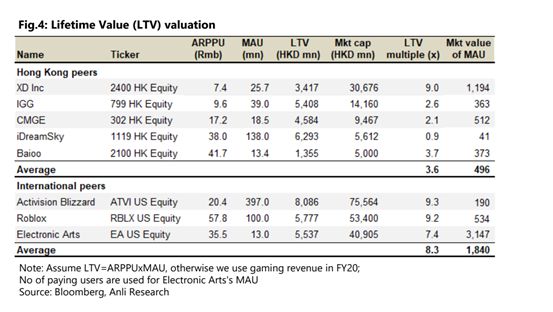
In terms of valuation, Anli believes that the customer base preserve a great value with the characteristics of high viscosity and high unit price. Because the P/E ratio valuation method can only reflect the short-term profitability of game developers, but incapable of reflecting the long-term user value, Amway adopts a more reasonable multiple of customer lifetime value (LTV) as the pricing index in the report.

By assuming ARPU x Mau = LTV, Anli compares the major companies in the same industry, and finds out that the LTV multiple and MAU market value of Idreamsky Technology are obviously undervalued. Considering the tremendous user base of 138 million players have longer game life cycle and higher average game duration, Anli thinks IdreamSky is seriously underestimated. Based on the LTV multiple of 1.5 times, the target price of IdreamSky Technology is set at HK $7, with a potential increase of 65%.

02. Welcome the stock age and create a long game lifecycle ecosystem
The deep logic that supports the above prediction is the forward-looking strategic layout and good progress of IdreamSky Technology.

Due to the vanishing demographic dividend, the Internet began to accelerate from the era of increment to the era of inventory, and the major giants shifted the competition from seizing users to users’ time. The biggest change in the game industry is the increasing cost of buying customers.

In short, companies that can improve the player lifetime value (LTV) will acquire advantage in the inventory age.

Facing the general trend, iDreamSky is committed to creating a “24-hour entertainment life circle online and offline”. On the basis of the original online format, iDreamSky Technology creates offline game experience scenes and uses the integrated SaaS system tools of Zhongtai incubation in order to open up the online and offline platforms as well as an ecosystem with games as the core.

In this ecosystem, the 138 million users of IdreamSky can enjoy one-stop services including games, game retail, art toy and player social interaction. Such service can achieve “high frequency, long time, and high stickiness” interaction with users. Finally, iDreamSky Technology can obtain lower traffic cost and higher user value.

Meanwhile, according to the needs of users, IdreamSky Technology has built a wonderful “online + offline” game world, which deeply binds players in iDreamSky Technology ecosystem, so iDreamSky Technology has successfully stood out in the inventory era.

Specifically, in terms of games, in addition to business rearranging and strategic focus, IdreamSky Technology focuses on elimination, competitive and medium heavy games. These types of games have the features of high Mau, high ARPU and long LTV, which fit in the ecosystem and is conducive to amplifying user value.

In the aspect of offline, as the offline experiential entertainment store of Tencent and Nintendo, IdreamSky integrates game retail, social gathering and trendy play to meet the diversified needs of generation Z. According to the data, the disposable income of generation Z is 3501 yuan, which is higher than the national per capita disposable income of 2561 yuan. At the same time, generation Z is more willing to pay. The payment rate of mobile games reaches 35.7%, which is the highest among all online consumption.

In 2021, iDreamSky Technology plans to open 30 direct offline stores of “play together” brand in first and second tier cities and plans to open 150 stores in the next three years, covering more cities and players. By setting up experience of console games in offline stores, IdreamSky can attract audience users and establish an online user community to enhance user loyalty. From the multi-dimensional offline to stimulate users to the online game, IdreamSky has formed the whole chain of user services.

It can be seen that iDreamSky Technology continuously improves the construction of the ecosystem around a core long customer lifetime value, and creates a game infrastructure for the stock era. In long run, the ecosystem value of iDreamSky Technology will accelerate. Expanding the imagination space for investors, Anli made a prediction that the company will enter the harvest period after 2022.

Media contact:
Heidi He, Peanutmedia
E: hemeiyu@czgmcn.com
T: +181 3887 0061
W: www.Peanutmedia.com

E-House’s open strategy to acquire an 85% stake in Tmall Haofang

On April 28, E-House China Enterprise Holdings Co., Ltd. (HKG:2048) announced it had acquired an 85% stake in Tmall Haofang, through an issue of 248 million new E-House shares to Alibaba (NYSE: BABA; 9988.HK). At HK$ 7.50 per share, it was the equivalent to an acquisition at HK$ 1.86 billion.

At the same time, Alibaba, E-House founder and chairman Zhou Xin, and Alibaba’s Yunfeng Fund invested HK$ 990 million, HK$ 1 billion and HK$ 500 million respectively at the price of HK$ 7.50 per share to subscribe to 132 million, 133 million and 66.67 million new shares of E-House.

On completion, Tmall Haofang will become a wholly-owned subsidiary of E-House, while Alibaba will continue to grant exclusive Tmall permits to Tmall Haofang including the name, domain name, trademark and other brand attributes, and simultaneously provide technical, product, data, operational and other means of support.

In terms of shareholding ratio, Zhou Xin will hold 22.84% shares of E-House to remain its largest shareholder, while Ali with 22.57% becomes the second-largest shareholder, and Yunfeng Fund 2.86%. Zhou Xin, as Chairman of the E-House Board of Directors, officially wrote an open letter “Hello, Tmall Haofang!” A few words were highlighted for the outside world: “After cooperation and upgrading, E-House will emphasize the three pillar businesses of Tmall Haofang: new housing transactions, a new housing agency and Kerry Big Data.”

This means that E-House will venture into the Internet transaction platform as a new housing agency and real estate big data and consulting service. It isn’t an exaggeration to say Alibaba has provided E-House with more than support, not only in the transfer of Tmall Haofang, but also by increasing its E-House shareholding, and by providing exclusive authorization, technology, products, traffic and many other means of support. It is evidence of Alibaba’s belief in the prospects of E-House successfully transforming imagination into market reality.

In fact, we see from experience with Lianja’s Shell Search online real estate brokerage that platforms are valued against their potential to develop, as seen by higher valuations in the capital market. According to the data, Lianjia’s annual sales were RMB 1 trillion in 2017, but by 2020, sales with Shell’s ACN (Asian Cooperative Network) reached RMB 3.5 trillion, and Lianja’s market cap exceeded USD 60 billion.

Real estate transactions have exceeded 20 trillion yuan nationwide. Yet there remains much potential and opportunity for integration, and another big player is venturing in. Zhou Xin said in his open letter, “This is an important milestone for the domestic real estate service industry and E-House.” When “There are good houses on Tmall” has changed to “To buy good houses on Tmall”, E-House strategy has evolved into an online real estate transaction platform, and the digitalization of real estate has also accelerated.

01. Build a new digital infrastructure of real estate

Since its founding more than two decades ago, E-House has been deeply involved in the real estate industry, from a new housing agency service initially to a real estate big data consulting service and then to a real estate brokerage platform. For most of that time, E-House’s core business was traditional real-estate agency services. According to the 2020 financial report, 32.9 million sq.m were successfully brokered via E-House for sales of RMB 405.6 billion, accounting for about 40% of E-House revenues.

However, from 2016 it was gathering a large number of medium and small to micro brokerage firms on the Fangyou platform, while launching a series of products such as the Youfang market resources sharing platform and Youfangtong and E-House Fangyou Management System vigorously promoting online and interactive new and pre-owned housing brokerage business, stimulating a rapid increase in the proportion of e-revenue.

2020 was the turning point for E-House. With the COVID-19 pandemic, online real estate transactions were ascendant. In November 2020 E-House completed the acquisition of Leju Holdings Ltd (NYSE: LEJU), a digital real estate media and online transaction platform, which had become a key ecological link for E-House in building a closed loop in which to complete real estate transactions.

And then came Alibaba. Working together with deep cooperation for online and offline real estate transactions, digital marketing and post-transaction services, E-House and Ali jointly launched the “Real Estate Transaction Collaboration Mechanism” (ETC), which is equivalent to, but more open and efficient than ACN brokerage system of Shell. From the results of promotion and operation across China, a new win-win brokerage ecological system is growing rapidly.

According to statistics, during 2020 double eleventh festival, a total of 41,775 transactions were cumulatively achieved via the ETC collaboration mechanism with a transaction volume of 93.1 billion yuan in 236 cities nationwide.

It is understood that around real estate transactions, E-House faces real estate developers, intermediaries and asset proprietors, and promotes the digital upgrade of real estate transactions and operations with the help of Cree Big Data, Fangyou brokerage platform, Leju, etc. and strives to gradually build new infrastructure in the domain of real estate.

Under the background of “three red lines”, it is more difficult for developers to yield profits, and even the marketing expenses of some projects have been as high as 5%. The digital new infrastructures have brought a new possibility for the whole industry. All these are regarded as the efforts of E-House in real estate digitalization, and gradually reveal the unique value of E-House in the domain of real estate. The cooperation between E-House and Ali shows E-House’s professional and resource advantages in the domain of real estate transactions, which directly paves the way for E-House to acquire Tmall Haofang to venture into the real estate online transaction platform.

02. Layout of real estate internet transaction platform

The real estate transaction platform is a more valuable and imaginative domain. An evidence is the striking transformation from Lianjia to shell platform, which lays a direct foundation for a higher premium in the capital market.

From the perspective of industry scale data, the huge real estate transaction market will continue to grow up to approximately 25 trillion yuan in the coming three years according to the National Bureau of Statistics. If the marketing expenses of new and pre-owned housing is calculated at the rate of 2.5% and 1.5% of the transaction volume respectively, the overall market capacity of real estate marketing expenses will reach 500-600 billion or so.

The cooperation between Tmall Haofang and E-House marks that a new pioneer will be ushered to the broad market. The advantages of both sides open a window for complementary win-win cooperation to bring great expectations to the entire industry.

In fact, many intermediaries and developers expect to build their own real estate transaction platforms. However, due to the difficulty in seeking customers, insufficient housing resources, real and false housing resources, interest conflict among brokers and many other challenges, it is difficult for most of them to set up a large real estate transaction platform.

However, Tmall itself is a B2C mall, with monthly active users over 50 million. The sufficient traffic is helpful to alleviate the difficulty in seeking customers. From Ali’s practice in the vertical field, it has successfully built Ali Health and Tmall Haofang is regarded as another practice of Ali in the vertical field of real estate, attracting more optimistic expectations from the outside world.

Tmall Haofang has built a real estate transaction platform to address the problems that exist in the transaction process by using Ali’s system and technical solution. Small, medium and micro-stores, brand owners, property service providers, etc. can participate in the transaction service, chain commission sharing and fund supervision online, so that the transaction will be “simple, efficient, fair and open”.

While E-House gives full play to the advantages of housing and brokerage companies. For E-House, E-House has been dedicated to the domain of new housing service for many years, and established a good relationship with developers as well as vast small and medium-sized brokerage stores.

Among them, the close ties between E-House and real estate enterprises can be confirmed from the shareholders when E-House went public. As shown in the prospectus, 26 out of the top 100 real estate enterprises in China subscribed for their shares respectively. By the end of 2017, the first-hand housing sales network of E-House has covered domestic 186 cities, and entered into long-term strategic partnership with dozens out of the top 100 real estate enterprises.

Meanwhile, for medium, small and micro brokerage firms across China empowered by asset-light strategy, E-House has built an overall resource pool for 10,000+ stores, 30,000 channels and 10,000 communities. In addition, the E-House ETC model is more open and fair: customers can have access to the housing resources directly so efficiency can improve significantly; channel dealers expand customer resource channels and find solutions to lost orders, commission sharing and various other problems; and buyers will have improved efficiency of housing inspection and an optimized transaction process.

It is undoubted that the difficulties in building a large platform for real estate transactions have been solved little by little under the joint efforts of E-House and Ali. The prospects of this acquisition rely more on the capacity of implementation. As Zhou Wei said in his open letter, Tmall Haofang will “build a new digital infrastructure for real estate marketing, empower brokerage firms and millions of brokers, and contribute to promoting the digitalization and intelligence of the real estate industry in an all-round manner, so that no difficulties will exist in real estate transactions”.

For this reason, after reaching a deal with Ali, Zhou Xin set in his letter to employees the target of 3 million DAU, 2000 billion GTV2 and 50 billion yuan revenue in the next three years. From his target, Zhou Xin is confident in the prospects of Tmall Haofang.

As indicated in 2020 annual report of E-House, the GTV of real estate agency service and real estate brokerage network service reached 513.4 billion yuan, with a total income of 8.0515 billion yuan and a profit of 439.2 million yuan in 2020. GTV and revenue are expected to increase fourfold and sixfold respectively in the next three years. It means that the compound growth rate of E-House’s revenue in the coming three years will be 84.2%. Compared with this growth rate, E-House’s current estimated value of more than 40 times is obviously underestimated.

It is not difficult to imagine that with the investment and promotion on Tmall Haofang, the income composition and profit structure of E-House will change accordingly in future. And meanwhile, the valuation system will be reconstructed after the quantitative change finally leads to qualitative change.

Media Contact
Haolu Wang, Peanutmedia
E: wanghaolu@czgmcn.com
Website: Peanutmedia.com

Can Newborn Town become the next tenfold gainer?

What is the trend of the Internet industry in 2021? Chances are it’s an open social platform. Elon Musk, the founder of Tesla, made Clubhouse popular around the world. Is Clubhouse the ultimate answer to an open social platform? It’s hard to say at the moment, but the era of open socialization has arrived.

Youth tend to move with anything new. So although Facebook has an absolute advantage in the global social field, Snapchat and Twitter still have room for development. With the continuous development of the Internet, a new generation of young users has a higher acceptance of video and audio, and a new generation of open social apps has also emerged.

For Chinese Internet companies seeking growth opportunities in overseas markets, open social networking provides huge development opportunities, among which two of the most successful are China-based Newborn Town Inc (HKG: 9911), and AE-based Yalla Group Ltd (NYSE: YALA). First, let’s take a look at Newborn Town, which has just released its 2020 financial report.

The great potential of strangers socializing

Since its listing in 2019, the changes in Newborn Town have been earth-shaking. Founded in 2009, its founder Liu Chunhe always cherished the dream of changing the world with Internet products. In 2013, Newborn Town began to expand overseas, since then overseas markets have become a company core strategy.

In the initial stage of going overseas, the company quickly accumulated internet tools, with hundreds of millions of users in the world. However, as the inherent shortcomings of tools, such as low stickiness and user duration, have been recognized by the capital market, the valuation of mobile Internet tools is at a low ebb, which is also a reason the share price of Newborn Town is still not high after its listing.

However, in 2020, Newborn Town engineered a magnificent makeover. The company’s core development strategy was successfully upgraded and the company seized the opportunity for open social networking with audio and video social products including Yiyo, MICO and YoHo. The average monthly active users of social platforms were about 11.36 million, and they are still growing rapidly.

In early 2021, when the market began to reassess the company’s stock, its price skyrocketed from HK$1.70 to a peak of HK$11.54. The price fell back, but is around HK$4.30, still up more than 200% from last year’s low. If the stock price of Newborn Town has risen sharply, will there be a bubble? It depends on strong performance.

On March 24, the company released its earnings for 2020. Revenue came in at CNY1.18 billion, an anual increase of 203.2%, net profit of CNY110 million represented an increase of 67.1%. Newborn Town’s current stock price is HK$4.3, with share capital of 999 million shares, and a market valuation of about HK$4.3 billion, or CNY3.6 billion. Compared to the growth in 2020 revenue and net profit, the share price is not expensive at all.

How was Newborn Town able to upgrade in just a year? In fact, Newborn Town began to lay out open social networking a few years ago. In 2016, the company incubated MICO, a social product aimed at overseas markets. After several years of rapid development, MICO has achieved rapid revenue growth and achieved profitability.

MICO ranked second as China’s overseas social networking platform. According to official data from MICO, the platform currently covers more than 150 countries and regions around the world, has entered the top 10 App Store bestsellers in 92 countries and regions, and has accumulated hundreds of millions of successful pairings.

On July 2, Sensor Tower, the mobile app data company, announced China’s Top 20 Short Video / Live Streaming Apps for the First Half 2020. MICO was once again on the list, ranking Top 20 in terms of download volume and revenue. Sensor Tower pointed out that with the global pandemic, people were seeking entertainment and socially networking online, with related apps ushering in an explosive round of growth in 2020.

In fact, MICO, which includes the live broadcast module, has been on the list many times before. In Q1 and Q2 2019, MICO continued in Sensor Tower’s Top 20 for overseas revenue of China’s Short Video / Live Streaming Apps, ranking firmly in the Top 10. Last year, MICO entered the list again ranking No. 6.

At the same time, YoHo, Newborn Town’s social voice platform, was launched in 2018. It is entrenched in the Middle East and North Africa with the six core Gulf countries. It has also entered the top 10 best-selling Google Play social applications in the Gulf countries, becoming the second voice social product in the Middle East.

Yiyo, the company’s video social product, aims at differentiation and creates social scenes in the form of video matching and one-to-one video chat, which is loved by young users. This product is among the top 20 of Google Play global social app download list in 2020, with a total of more than 50 million downloads.

By 2020, the average monthly active users of social platforms were about 11.36 million, and they are still growing rapidly. By the end of 2020, Newborn Town had a ‘super-traffic ecology’ with 1.2 billion users, and it was monetizing its ‘traffic + X’ business model on a global scale. In terms of core strategy, the company was focusing on stranger social business, supplemented by multiple businesses such as games.

After the stocks rise, it was still undervalued, and it may be the next tenfold gainer.
Although Newborn Town’s stock price has risen sharply recently, compared with similar companies, the company’s stock price is still seriously undervalued.

For example, Yalla, which has a business model similar to that of Newborn Town, was successfully listed on the New York Stock Exchange in October 2020 with a share price of US$20.3 and a market value of about US$3 billion by virtue of its product Yalla’s success in the Middle East.

According to the latest financial report of Yalla Group Inc, in the fourth quarter of 2020, Yalla, the company’s core social networking product, had 6.4 million monthly live users, which is only about half of the 13.18 million monthly live users of social networking platform of Newborn Town Technology in the fourth quarter of last year.

At the same time, the total income of Yalla in 2020 was RMB880 million, a year-on-year increase of 113%, and its net profit was RMB20.9 million, a year-on-year increase of 7%. These two key data are far lower than that of Newborn Town, but the current market value of Newborn Town is only HK$4.3 billion, or about US$550 million.

Through a comparison of monthly user data and financial data of the two companies, it is obvious that Newborn Town has greater potential and more stable financial data. But as the market has not fully recognized the potential of Newborn Town’s social networking platforms, the company’s share price is still seriously undervalued. Moreover, Newborn Town’s platforms have outstanding performance in many countries, and the long-term potential is undoubtedly greater than that of Yalla, which is only deployed in the Middle East and North Africa.

From the characteristics of the US and Hong Kong stock markets, the HK market is less friendly to small-cap companies. In addition, the HK market doesn’t fully tap the potential of Internet technology stocks, as leading blue-chip stocks are the market favorites. In the U.S. stock market, there are social media leaders like Facebook, and alternative social media companies such as Snapchat, Twitter, Match Group, and Pinterest. The U.S. stock market understands the business models and the growth potential of such companies.

Therefore, in the current Hong Kong stock market, the value of Newborn Town has been temporarily hidden. But with Kuaishou’s landing in the Hong Kong stock market, coupled with the upcoming Byte Dancing, the value on Internet social networking in Hong Kong stocks is expected to be immediately discovered.

Of course, there is a huge gap between the two companies in terms of market value. On the other hand, it is also because Yalla Group has been on the market for less than half a year and there are fewer circulating shares.

Frankly speaking, with the current user data and financial data of Newborn Town, the valuation on the primary market should definitely exceed US$1 billion. According to the normal secondary market valuation, even with the most conservative estimate of 50% off, the market value of Newborn Town should be about US$1.9 billion, and the corresponding stock price about HK$15, which is 10 times last year’s low of 1.5 Hong Kong dollars!

Going to sea is at the right time, with certainty and growth

The success of Newborn Town going overseas is not only a miniature of Chinese Internet companies going to sea, but also a typical successful case.

According to Senser Tower data, Chinese Internet companies will return with a full load from overseas markets in 2020. For the first time, the total revenue from China’s overseas mobile travel market will exceed US$10 billion, with the highest growth rate is in the world. Revenue from the top 30 mobile travel products will reach US$9.2 billion, up 47% this year, while revenue from Tiktok, by Byte Dance, of US$1.26 billion, has increased 590%.

Focus on the social track. The rapid growth of social products of Newborn Town overseas is based on the rapid development of Chinese social products overseas.

The development of Chinese Internet companies is similar to that of mobile phone companies. After the bloody fight in the domestic market, with the “all-in-one martial arts” trained in the domestic market, China’s Internet companies can make a big show in the overseas market through localized operations, such as Tiktok under Byte Dance. The overseas market has also given Chinese manufacturers ample room for development.

From another point of view, some domestic Internet companies, such as Momo, have missed opportunities for overseas development, which have hindered their development and their market value continued to fall.

For Newborn Town 2020 was undoubtedly a very successful year. The company transformed from a software tools company to a social product company, achieving a gorgeous upgrade, and the capital market has repriced the company. The company’s share price has risen by 200% from the lowest point.

From the perspective of the company’s development, high-speed growth in 2021 can still be expected. As the company’s revenues and profit continue to increase, the capital market will change the underestimation of the company. In the long run, Newborn Town Technology has a chance to become another tenfold stock.

Media contact:
Heidi He, Peanutmedia
E: hemeiyu@czgmcn.com
Website: Peanutmedia.com

Interpreting the underlying logic of CMGE’s adjusted net profit increase of 32.1%

In the mobile Internet era, games have become another online entertainment with reading, music, and video. Especially in the post-epidemic era, games are defined by social attributes. The era of national games has come, in which the growth of the mobile game market is particularly outstanding.

On the one hand, the mobile game market is constantly embracing good news:
According to the data of the “2020 China Game Industry Report” released by the Game Working Committee of the China Audio Digital Association in December 2020, the number of mobile game users in China reaches 654 million in 2020, with a year-on-year growth of 4.84%. Meanwhile, in 2020, the actual sales revenue of China’s mobile game market is CNY 209.676 billion, accounting for 75.24% of the total game market.

On the other hand, the booming growth of leading mobile game enterprises:
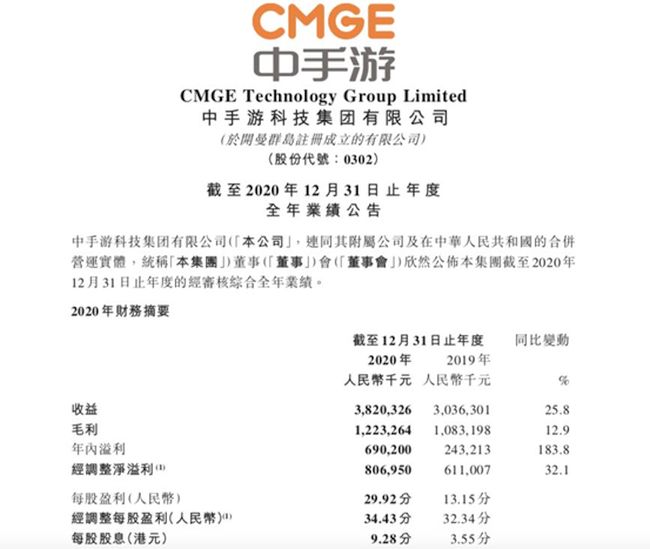
On March 24, CMGE Technology Group Co., Ltd. (HKG: 0302), a leading IP mobile game company, issued an earnings report for 2020, with operating revenue of CNY 3.820 billion, a year-on-year increase of 25.8%; and an adjusted profit of CNY 807 million, a year-on-year increase of 32.1%.

In the era of national mobile games, why can CMGE stand out and continue to win the favour of users and capital?

Publishing, licensing, and R&D: short-term and long-term capital depression

In this financial report, CMGE’s publishing, R&D, and licensing business grew steadily, and its self-development business performed well. These three businesses are the epitome of the three stages of the development of mobile games.

Mobile game 1.0 period: The market is barren, and the entire market is in a new stage, and all companies want to occupy a place in the market.

Almost every industry has a huge user demand in the market, but there are not enough products and services to meet these needs, because the urgent task is to solve the demand, so is the mobile game industry. This is also why CMGE can quickly occupy a place in the mobile game market with publishing business, which is the foundation of CMGE’s continuous evolution.

In 2020, the CMGE publishing business revenue of mobile games was CNY 2.978 billion, a year-on-year increase of 16.6%. “Reborn!” mobile game released in that year ranked second on the Top Free Game List of Apple stores in the first month of its launch in mainland China; the mobile game “Xuan Yuan Sword- the Origin” ranked second on the Top Free Game list of Apple stores in the first month of its launch in mainland China; “New Legend of the Condor Heroes: Iron Blood and Loyal Heart” ranked first on the Top Free Game list of Apple stores in the first month of its launch in mainland China and the fifth on Best Selling List on Apple Store (according to App Annie’s statistics).

Mobile game 2.0 period: The market aesthetics were initially formed, expand the demand for game content, pan ACG content began to break the circle, focusing on IP.

When the game players have gone through the primary stage of the market, they begin to have higher pursuit and expectation for the quality and content of the game, just like consumption upgrading. Moreover, ACG circle is very fragile, and various kinds of free game and novel game are constantly emerging, and CMGE is the epitome of IP mobile game.

In 2020, CMGE’s profit on IP games was 2.639 billion yuan, a year-on-year increase of 63.4%. New products, including “Swallowed Star: Dawn”, “Rakshasa Street”, “Soul Land”, “Three works of The New Legend of The Condor Heroes”, “Drawing Swords” etc., are in urgent need of development.

Mobile game 3.0 period: in the era of high-quality products market, more demanding pictures, modeling, playing methods, etc., focus on research and development.

With the gradual enrichment of content IP, users have higher requirements for game playability, modeling, screen, etc. The emergence of various game media has also enabled many players to gradually improve their understanding of game appreciation and game technology. With the advent of the times, technology and research and development have become the core of market competition.

In 2020, the revenue of CMGE reached CNY 730 million, a year-on-year increase of 73.4%. Many of its self-developed games performed strongly. For example, “Millionaire 10” launched by its holding subsidiary Beijing Softstar has reached 700,000 sets of sales on the Steam platform; “Legend of Dragon City” became popular after it was launched; the independently developed “Joy of Mahjong” game has won the second best-selling list of mahjong game products in Huawei, OPPO, VIVO and other channels, with a monthly turnover of nearly 20 million yuan.

CMGE has been advancing all the way, because it has been firmly holding the pulse of the market, accurately insight into the dynamic demand of the mobile game market, and with the efforts of publishing, research and development, and licensing, it can have a foothold in the present and look forward to the future.

From IP “Great Wall” to R&D “Long March”: From mode innovation to technology innovation

The reason why CMGE can maintain its competitiveness in the mobile game market for a long time lies in: on the one hand, it benefits from the enterprise moat established by CMGE’s IP game ecosystem, on the other hand, CMGE is also constantly deepening the research and development of mobile game technology and pursuing technological innovation.

According to the “2020-2021 China Game Enterprise R&D Competitiveness Report” released by Gamma Data, the R&D investment in the mobile game market has been continuously increased in the past two years, and the R&D cost of top 10 enterprises with market value has increased by about 36%. At the same time, among the Top250 domestic mobile game products, the proportion of self-developed new games has increased from 56% in 2018 to 76.7% in 2020.

The rise of self-developed games also means that the game market is also undergoing a transformation from model innovation to technological innovation.

In fact, in the middle of the development and evolution of the whole mobile Internet era, it is mainly mode innovation and technological innovation. Just as Meituan, food delivery platform, is based on innovation, allocating transportation capacity and intelligent order distribution is the core technology for Meituan to become a unicorn in the takeout Market.

CMGE is increasingly mature in its IP ecosystem. At the same time, it takes the initiative to go out of the development “comfort zone” and continuously deepen the R&D investment in game technology, which is a kind of development evolution from mode innovation to technological innovation, opening up a new development mode. CMGE can continue to rise to the forefront of the industry, which also relies on its continuous cultivation in mode innovation and technological innovation.

On the one hand, CMGE has a solid moat of IP innovation

CMGE, which takes IP game ecosystem as its core, has always put IP copyright investment at the center of corporate development. Since CMGE went public on October 31, 2019, as of December 31, 2020, 50% of the net proceeds have been used to expand and improve the company’s IP game publishing and development business.

Thanks to this, CMGE’s IP moat is vast and covers various fields, such as “Reborn!”, “One Piece: The Voyage”, “Soul Land: God of Battle Arise”, “Rakshasa Street: Chosen One”, “Xuan Yuan Sword: The Origin”, “Legend of Sword and Fairy series”,etc.

On the other hand, CMGE is competitive in R & D and innovation

CMGE has continuously increased R&D investment in the past two years. According to the financial report, in 2020, CMGE invested 209 million yuan in R&D, with a year-on-year growth of 29.7%. The release of “Xuan Yuan Sword: The Origin”, “The New Legend of The Condor Heroes: Iron Blood and Loyal Heart” and “Thunder Empire” all have better performance.

Moreover, by expanding investment to carry out new resource integration, CMGE continuously improves its R&D strength. By 2020, CMGE has more than 500 R&D personnel, reaching the top of the industry, and plans to double the number in 2021.

CMGE, on the one hand, firmly defends the enterprise moat of IP games, on the other hand, it constantly ploughs deep into the field and explores higher research and technology step by step. Only in this way can CMGE maintain its vitality and constantly bring forth new ideas in the ever-changing game market.

Ecological evolution of game publishing, R&D and licensing: breaking the “information closure” of mobile game market in the future

In addition, the unique IP game ecosystem formed by CMGE’s game publishing, R&D and licensing also has sustainable advantages in the future game market competition.

Since the post epidemic era, with the rapid rise of “home economy”, the national game has become the general trend of the game market. Nowadays, people generally accept and choose games.

But when choosing a game, people are often at a loss because they are not familiar with the content and playing method of the game. They don’t know which game is suitable for them. Moreover, due to the explosion of public opinion information in the era of we media, players are easy to fall into the “information closure” and can not achieve the perfect game experience.

For example, according to Gamma data, in the Research Report on “whether players watch the story completely”, only 32.5% of the players will watch the story completely, and at the same time, nearly 60% of the players say they don’t watch the plot because they want to play the game as soon as possible. This also means that in the future game market, how to effectively express the plot and not occupy the players’ game time has become an important breakthrough point in the future game industry.

The game based on IP is more familiar to the players in terms of content and plot, which means that even if the players don’t watch the plot, it doesn’t affect how to play the game. With the deepening of research and development, people can form a better game experience through gameplay, playing methods and pictures.

Therefore, with the R&D capability of CMGE, the same IP content is gradually expanded in different IP content of the same game form, reaching the essential needs of game users in multiple segmentation scenarios.

CMGE’s R&D integrated ecosystem around IP closed-loop enables users who like different IP and different game types to find the most suitable one. With IP as the cornerstone and R&D as the core, CMGE creates a competitive IP game ecosystem, so as to continuously deepen its market value and break the “information closure” of the future game market.

Centering on IP, CMGE has both short-term value and long-term value, which is conducive to reaching the interests of users and increasing investment value. For the capital market, both equity investment and property investment have certain value, so as to create a new game ecosystem in the future.

Media contact
Heidi He, Peanutmedia
E: hemeiyu@czgmcn.com
Web: www.peanutmedia.com

After Clubhouse, Roblox and Tiya, will audio platforms usher an iterative movement in China?

Following Elon Musk’s personal “endorsement” of Clubhouse, use of the international audio social apps exploded in China in February. During that time, a Clubhouse “invitation” code sold for nearly RMB1000 on a Chinese second-hand market platform. At the same time, Roblox, a social gaming platform, and Tiya, an audio-based social networking product, are becoming popular in overseas markets, along with Clubhouse.

When Roblox listed on the New York Stock Exchange (NYSE: RBLX) on March 10, its closing price on the first day ended up by 54.4% increase. The company’s valuation had exceeded US$45 billion. Seizing on this opportunity, investors looked for similar stocks to Roblox and the share price of LIZHI INC. (NASDAQ: LIZI), an online user-generated audio platform from China, also rose 15.5%.

Tiya is an audio-based social networking product launched by LIZHI in October last year. Market analysts believe that Tiya, which is in the same sector as Clubhouse, is mostly positioned for young social media users. At the same time, it meets the social needs of all types of users for real-time audio chat and “play with friends” for gaming. Many users also use Tiya as an audio tool to chat with friends while playing Roblox.

The popularity of overseas audio social platforms has encouraged many Chinese players to enter this sector. Where will the market go next? LIZHI CEO and Founder Marco Lai said in a recent live broadcast that young people make up the main market for audio-based social networking. Tiya’s design builds on its youth appeal, incorporating cartoon elements and similar design themes.

In terms of global geographical demand, the Middle East and Japan markets have strong demands on audio-based social networking. Therefore, Tiya chose to test its product in the Middle East and Japan markets first. The U.S. market, meanwhile, is broader and has a greater impact on global users which means it is easier for a popular product in the U.S. to become part of the global mainstream. Hence, Tiya chose to enter the U.S. market after its initial success.

The rapid user growth of Tiya today also confirms Lai’s comments on demand. As seen from LIZHI’s success, Chinese internet and game apps need to have deep insight into overseas markets and find its unique positioning in order to have differentiated competitiveness.

Tiya was able to soar to the top 10 in social networking ranking shortly after its launch in the U.S., ending as high as 4th place. This success is due to LIZHI’s insights into the audio social needs of young people in overseas market. And it’s also because LIZHI has differentiated competitiveness on its product.

Tiya and Clubhouse are currently competing in the same market but differentiate themselves in terms of product positioning. Instead of the live conferences and live panel discussions mode of Clubhouse, Tiya focuses on audio-based social networking for scenarios like playing games, singing karaoke together, animation, etc. Tiya has a broader appeal to mass market and younger users. Most of the users on Tiya are Generation Z.

This is why the public listing of Roblox has attracted the market’s attention to Tiya. According to the data, among Tiya’s many topics, users who enter Roblox-related rooms/topic interactions account for a relatively high proportion. Secondly, from the perspective of product evolution, any Internet product has periodicity. Social products are no exception.

There seems to be a paradox in the evolution of social media products: they are dominated by efficiency, and products follow the simple and effective “Occam razor” principle, but the most long-lasting and mature social products are often the most complex.

WeChat, which is ubiquitous in China, is a good example. In the early years, the functions of WeChat were simple, but with the rapid growth of its userbase, WeChat is no longer a purely social platform. It has become a comprehensive platform integrating text, video content and various services.

In overseas markets, Facebook is becoming more like the Chinese version of WeChat, adding shopping, fund transfers and other functions. After reaching a certain number of users, old social products often stop innovating. Users then look to find new social applications to meet their needs.

In the U.S. market, there is still demand from young users for audio-based social media. Tiya not only meets the personalized social needs of Generation Z, but also has simple product design, social efficiency and high capacity for interaction.

From this point of view, Clubhouse, Roblox, and Tiya are popular with users and to some extent, they also conform to the minimalist principle guaranteeing the success of the early generation of social media products. Their success seems to prove one thing. Overseas social media and social content products are undergoing the next phase of transition, which also creates an opportunity for Chinese companies.

However, most Chinese enterprises still need to be cautious about expanding overseas. The success of LIZHI is inseparable from a deep cultivation and understanding of overseas markets. Before enterprises decide whether they want to expand abroad, they need to be fully prepared.

During his live broadcast, Lai shared, “In fact, early in the release of Tiya, I tried to change the product design many times. Because I couldn’t see the growth of data, I was also very confused: am I right? At that time, we didn’t face the most difficult of times, only more difficult times. At that time, LIZHI didn’t have overseas business experiences before.”

When asked how to get out of the predicament, Marco replied that the LIZHI team has a slogan: “All because of love!” With the enthusiasm and deep understanding of our app, we are able to meet the needs of users. This is how we have Tiya.

Capital markets provide dynamic feedback, while the technical achievement of an app can also determine its value. Judging from the feedback from the capital market, and the popularity of overseas audio-based apps, third-party institutions have also given positive feedback.

Recently, the well-known financial institution Citron published a report offering to buy LIZHI shares with a target price of US$30. When the report was released, LIZHI’s stock price rose by 5.5% and triggered a surge. As of the close of March 16, LIZHI’s share price rose by 29.51%.

In the US capital market, the rise of audio social app stocks have brought positive feedback to some companies focusing on this sector. On the other hand, according to financial information previously released by LIZI, its financial and business conditions are generally better than market expectations. This has also contributed to the rise of its share price.

According to the fourth quarter of 2020 and the annual financial report released by LIZHI on March 9, net revenues in Q4 for last year reached RMB420 million, and the annual net revenues were RMB1.5 billion. In addition, the company achieved Non-GAAP net income for two consecutive quarters.

According to LIZHI’s financial filings, Tiya now has users in more than 200 countries, which has a great growth potential in the future.

Lai said that audio-based social media were only a product feature on LIZHI App at first. In 2019, he began to develop independent products and continuously test them. After three years of accumulation and eight years of experiences in audio sector, he achieved success with the explosive user growth of Tiya.

The quality of technology determines its value. The accumulation of technology is fundamental for the long-term development of Internet companies.

The leading edge in audio technology is an opportunity for Chinese enterprises to develop audio-based social media products for overseas markets. In the audio-based social field, the level of technology determines the user experience and ultimately the value.

What is unknown to the public is that the smooth sound quality of Clubhouse primarily depends on the networks of a Chinese technical service provider. In terms of audio technology, Chinese providers have many years of technology experiences and accumulation. US-listed Chinese company LIZHI has also been developing voice and sound effects, real-time audio and audio recognition technologies for many years, which explains why Tiya is so competitive in overseas markets.

From the perspective of the future of the industry, the social field is the field that follows Metcalfe’s law. The so-called Metcalfe’s Law refers to the value of the network V=K x N2; (K is the value coefficient, and N is the number of users). Generally speaking, the larger the number of users, the greater the final value.

In terms of the number of users, audio-based social media is widely loved by young people in overseas markets, and the user groups of social applications such as Tiya, Roblox, and Clubhouse are also growing rapidly. This means that Generation Z’s enthusiasm for audio-based social networking and gaming social networking will make the sector very valuable over time.

From the perspective of potential monetization, purchasing power and willingness to pay of overseas Generation Z users are generally high. According to the third-party agency DeepFocus’s “Cassandra Report” and IBM’s survey data, Generation Z in the US market has a direct purchasing power of US$200 billion and an indirect purchasing power of US $1 trillion.

Barclay bank also predicts that the Generation Z consumer group will occupy 40% of the consumer market in the United States, Europe and the BRIC nations, becoming the largest consumer group in the world. These statistics show a trend that in the future, with the iterative upgrading of mainstream consumers, the whole audio social industry will have great potential.

In the age of AI, audio-based social networking may become part of the Internet’s infrastructure. Ray Kurzweil, founder and president of Singularity University and Google’s chief technology officer, once said in his book The Singularity Is Near: most people tend to overestimate goals that can be achieved in the short term but tend to underestimate goals that will take a long time to achieve.

In the capital markets, people tend to overestimate the short-term value of a company and ignore the long-term value in some industries.

Objectively speaking, the current value of audio communication is really brought by its short-term popularity. Although it is accidental that Clubhouse and Roblox have been widely popular in the short term, it cannot cover up the long-term value of this sector.

In the long run, the era of intelligent economy driven by the AI technology in the future will be the era in which audio-based social networking will truly release value.

Some investors are not optimistic about audio-based social networking. A part of the reason is that on the Internet, text is still an important medium for people’s social communications, such as email, WeChat and Facebook. The era of intelligent economy has not yet arrived, and people have not fully formed the habit of audio interaction.

However, with the widespread application of AI audio technology, IoT technology, audio interaction will be ubiquitous. Under the ratcheting effect of product use, people will become accustomed to using audio-based social apps to communicate anytime and anywhere. As the phone was used in the past, but now it has been replaced with WeChat and Facebook, audio-based social networking is likely to become one of the key infrastructures of the Internet in the future.

Next, with the expansion of audio-based social networking in application scenarios, such long-term value will be further revealed. However, for now, in overseas markets, more investors should be paying attention to this area.

As Lai said during the broadcast, it is difficult for many investors to understand the business model of LIZHI because there are no comparable business models in the United States yet. The emergence of information barriers indicates that investors may miss some high-quality enterprises, which cause that some enterprises may miss development opportunities.

However, it can be predicted that audio-based social networking will receive more attention from the market along with the continuous development of it. The value of some global audio-based social networking businesses in the capital market is expected to continue to be unleashed.

Media contact
Heidi He, Peanutmedia
E: hemeiyu@czgmcn.com
Web: www.peanutmedia.com