2023 CAP Consumer Surveys Continue to Show the Benefits of Effective Site Blocking

The most recent piracy landscape consumer surveys commissioned by the Coalition Against Piracy (CAP) show that while piracy rates remain stable in many countries around Asia-Pacific, we have seen notable increases in piracy rates in Thailand and Taiwan, with a discernible increase also in Hong Kong. Notably, rights holders face challenges in procuring effective and efficient site blocking in all three of these countries. These consumer surveys acknowledge site blocking as an effective tool to mitigate piracy harm.

For those countries that are implementing site blocking effectively, there continue to be demonstrable effects in behavioral change with 62% of consumers in Indonesia and 64% in Malaysia indicating that they have changed their viewing habits as a result of pirate sites being blocked. Both of these countries have long-running, effective and efficient regulatory blocking regimes. In Singapore, one of the first countries in the region to allow rights holders to protect their content via the provision of judicial site blocking measures, it is notable that after almost ten years of this measure being in place, Singapore has the lowest percentage of consumer piracy in the region, with only 39% of consumers pirating. However there remains issues with the time and cost involved with obtaining site blocking orders in Singapore.

Encouragingly, the surveys show that regular site blocking not only stops consumers accessing pirated content online, but also drives them towards legitimate sources, with an average of 20% of consumers subscribing to paid services and an average of over 40% accessing legitimate free content services as a result of pirate sites being blocked. Furthermore, almost 50% of consumers around the region stated they would subscribe to legitimate paid online services if the content they wanted to watch was not available via a pirate source.

Awareness of the risks associated with online piracy also continues to grow, with at least 80% of consumers in every market around the region unequivocal that piracy has negative consequences. Consumers are aware that the perceived damage varies from job losses, impact on the creative industries and also the risk of malware infection on personal computers and devices.

In addition to consumers accessing pirate content via pirate streaming sites, apps or illicit streaming devices (ISDs), social media and messaging platforms providing access to pirated content continue to be a concern as one of the main sources of accessing pirate content. CAP is working with the major platforms across the region to address this issue.

Encouragingly, the survey also shows huge unmet potential as more than 60% of consumers across the region said they would subscribe to legitimate services if there was no pirate content available on social media and messaging platforms.

Matt Cheetham, General Manager of CAP, noted, “The evidence continues to show that site blocking, when implemented in an efficient and effective way, is an incredibly powerful tool to both stop online piracy, and direct consumers towards legitimate content.” As with the 2022 survey, the data points towards an ongoing consumption of pirate content via social media and messaging platforms. However, Cheetham also noted, “The surveys also show the benefits of consumer education with a growing awareness amongst consumers of the negative consequences of piracy, particularly via illicit profiteering and malware.”

This is the second time CAP’s YouGov consumer surveys were undertaken across several countries at the same time. The surveys will continue to be repeated across the same countries annually, and in doing so, will continue to provide longitudinal analysis of consumer behavioral trends towards piracy and enforcement measures around the region.

About the Asia Video Industry Association

The Asia Video Industry Association (AVIA) is the trade association for the video industry and ecosystem in Asia Pacific. It serves to make the video industry stronger and healthier through promoting the common interests of its members. AVIA is the interlocutor for the industry with governments across the region, leads the fight against video piracy through its Coalition Against Piracy (CAP) and provides insight into the video industry through reports and conferences aimed to support a vibrant video industry.

For media enquiries and additional background please contact:
Charmaine Kwan
Head of Marketing and Communications
Email: charmaine@avia.org
Website: www.avia.org
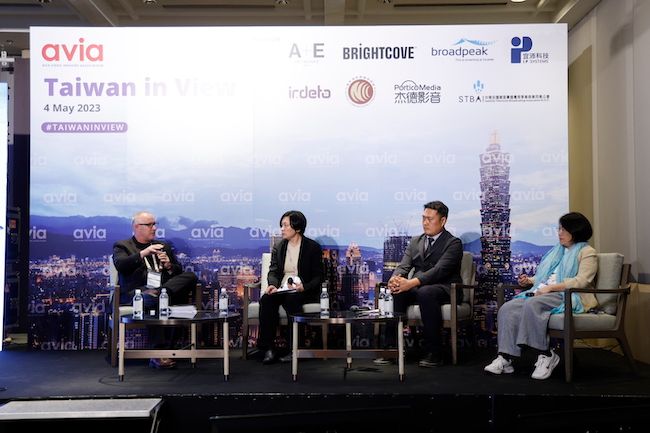
Vibrant Taiwan – Video Evolving at Home and Abroad

The Asia Video Industry Association (AVIA) welcomed over 100 guests to its Taiwan in View conference, with Deputy Minister of Culture, Sue Wang, giving the opening remarks as the Guest of Honour.

Deputy Minister Wang highlighted the importance of the video industry in Taiwan and announced that the Cultural and Creative Industries Development Act will be revised to foster its growth. She said that the government aims to work closely with video operators and urge them to invest more comprehensively in the video industry, beyond films and into local content creation. She also emphasized the need to safeguard local content from piracy and admitted that the current efforts are not satisfactory. She also shared that the Ministry of Culture’s vision is to enhance the quality and availability of Taiwanese content across all platforms.

National Communications Commission (NCC) Commissioner Wang Jiang-Jia set the stage for the day’s discussions with Commissioner Wang laying out NCC priorities to support the development and growth of the local content industry. He noted that the OTT TV Act, which had been under discussion for many years, was still being considered. However, the NCC was mindful of the need to ensure consumer protection was balanced with the constant needs for consumption of content, especially as 5G was being developed across Taiwan.

This focus on local content was reiterated during the panel on The Streaming Wars, where Daphne Yang, CEO of CATCHPLAY, stressed the importance of protecting and promoting local stories and content on both domestic and international platforms. She said that OTT players still need to work with aggregators to reach a wider audience and that there is a lack of original content in Taiwan. Similarly, Daphne Lee, Chairperson, NMEA and Vice President of New Media Service Business, Taiwan Mobile, also said that global OTT players will be key partners to mobile operators like herself. And like many markets around the region, the cost of acquiring and producing content in Taiwan is increasing and poses a challenge for everyone. However, the market certainly has potential for more content providers to compete and operators would like to see more quality content produced by their partners.

During his session on Upping the Local Content Game, Jay Lin, Founder & CEO, Portico Media & GagaOOLala, shared his strategy to go from niche to mainstream, or to “play small and go big”. Lin also shared that in the past, platforms and IP were the only ones travelling, but the trend has now shifted to streaming travelling too. Phil Tang, President, Greener Grass Culture, is also seeing a trend where local content producers are working with local OTT platforms to bring content internationally as evidenced by the huge success of his series, Copycat Killer, on Netflix.

With Taiwan having long been one of the most important cable markets in Asia, it was interesting to hear the differing views from cable industry chiefs. Cliff Lai, Vice Chairman, Homeplus Digital, felt that cable TV will slowly decline, and that broadband will be its salvation. He also expects more competition from broadband in the future, as it offers good transmission and affordable prices. Lai also highlighted that a stronger fight against piracy is needed to give cable TV a better outlook. Concurrently, Steve Wang, President, Kbro Co, highlighted the lack of uniform regulation across cable TV and how that was holding back the cable industry.

The conference also took time to focus on some of the issues that are impeding the growth of the industry. Grace Shao, Head, IP & Tech Group, Baker McKenzie Taipei, Edward Lee, Secretary General, Chinese Internet Channel Community Association (CICCA) and Yeo Kok Siew, Managing Director, Warner Music Taiwan, discussed the need to have transparency and accountability in the relationship between the video industry and the music collecting associations. Music is essential for the video industry, and there is no lack of desire to ensure rights are paid for, but the number of associations, the artists represented, and rates charged are not clear, making the subject more challenging than is seen in other markets.

Piracy has also been proliferating in Taiwan with a growing need to address the problem. Both Claudia Peng, Secretary General, Cable Broadband Institute in Taiwan (CBIT) and May Chen, Secretary General, Satellite Television Broadcasting Association (STBA) agreed that addressing online piracy, particularly via illegal set top boxes, is a matter of urgency and they urged the government to implement efficient and effective anti-piracy means such as Domain Name Service Response Policy Zones (DNS RPZ), while Taejin Lee, Senior Manager, International Development Department, Korea Copyright Protection Agency, concluded with a sense of hope by talking about the success that Korea had seen in both promoting and protecting their content.

Taiwan in View is proudly sponsored by A+E Networks, Brightcove, Broadpeak, IP Systems, Irdeto, National Communications Commission, Portico Media and Satellite Television Broadcasting Association

About the Asia Video Industry Association

The Asia Video Industry Association (AVIA) is the trade association for the video industry and ecosystem in Asia Pacific. It serves to make the video industry stronger and healthier through promoting the common interests of its members. AVIA is the interlocutor for the industry with governments across the region, leads the fight against video piracy through its Coalition Against Piracy (CAP) and provides insight into the video industry through reports and conferences aimed to support a vibrant video industry.

For media enquiries and additional background information, please contact:
Charmaine Kwan
Head of Marketing and Communications Email: charmaine@avia.org
Website: www.avia.org |LinkedIn: www.linkedin.com/company/asiavideoia |Twitter: @AsiaVideoIA

Content Remains King in the Future of Video in India

The Asia Video Industry Association’s (AVIA) Future of Video India conference opened to a full house with a keynote conversation with Shri Apurva Chandra, Secretary, Ministry of Information and Broadcasting (MIB). Secretary Chandra stated that with OTT, Indian content has become more accessible and more acceptable to a global audience. “Quality of content has always been very good in India, but now it is easier for Indian content to travel across the world. OTT has helped it in a big way,” said Chandra. He also reiterated the need for OTT to continue with a soft touch approach, as the three tier self- regulatory system has been working well. While there were concerns that light touch regulation has led to less desirable content, he remained of the view that the industry needed to be more self-aware so that the government need not step in. Chandra also shared that a National Broadcasting Policy has been in the works, as the industry was becoming more fragmented. However, this would take time in order to balance the conflicting interests of all the disparate parties.

With the explosive growth of OTT and original content in India, the MIB also remained committed to the fight against piracy. “The new Cinematograph Bill that is underway seeks to protect the entertainment industry from piracy. We are ready to take action against not only those who record the content illegally, but even those who are transmitting it online. The websites which stream pirated content will be blocked,” said Chandra.

This focus on content was a theme that followed throughout the conference. Sushant Sreeram, Country Director, Prime Video India, talked about the importance of authenticity in a market as diverse as India. “By being locally authentic, it provides the best opportunity for regional and global success,” noted Sreeram. India also maintained the second largest development slate after North America, signalling Prime Video’s commitment to the market.

Similarly, Sajith Sivanandan, Head of Disney+ Hotstar India, said, “We are building for all India. There is no one India, there are many India’s and it is important that we speak to all of them.” However, much greater interactivity with the content was on his wishlist for the future, as well as the ability to serve the masses but at a scale of one. “Creative and technology should be working together to serve every single person to get the content they want,” he added.

Meeting the digital consumers’ demand was also part of the vision for Viacom18. “We have a digital-first mindset for the foreseeable future. We want to back the digital India vision and put our might behind it,” said Jyoti Deshpande, CEO, Viacom18, with most of the money spent on content going to digital and not TV. “All formats will co-exist for the foreseeable future. The consumer should be free to interact with content the way they please,” added Deshpande. Sameer Nair, Managing Director, Applause Entertainment, also noted that ‘streamers have done a great service to the content industry, making content more easily available to consumers.’ “We are in the business of creating mass-distraction,” quipped Nair.

Vikram Sahay, Joint Secretary (Policy & Administration), MIB, who participated in a content panel with some of the industry’s top content leaders, also said that the best thing about OTT was the democratisation of talent. “The greatest thing is the democratisation of talent which this industry has allowed across all parts of the creative content chain,” said Sahay.

However, the jury is still out on the best way to monetize the content that is flooding the Indian market. For Arghya Chakravarty, COO, Shemaroo Entertainment, advertising was highly dependent on the economic climate, as the advertising markets changed. Hence the sweet spot was always somewhere in the middle, and for long term sustainability, it would require a mix of both. Praveen Chaudhury, Director, Retention, Engagement & Growth Strategy, DTC Marketing, Warner Bros Discovery, APAC, also noted that the high cost of direct customer acquisition meant aggregation and partnerships remained key.

As the fragmentation of advertising delivery was continuing to put huge downward pressure on rates, the role of operator bundling was also super important, said Prasad Sanagavarapu, Chief Business Officer, INVIDI. With very rich first party data sitting with the aggregator at a level dwarfing what any individual OTT service could manage, they had a crucial role to play in advertising, added Sanagavarapu.

The very important issue of female representation in the television and entertainment industry was discussed by a distinguished panel of female industry leaders. Smriti Mehra, CEO – Business News, Network18, highlighted the fact that all too often workplaces had defining gender roles and too many talented former colleagues had dropped out of the industry. There were societal issues at play as well of course, but there was much positive action that could be taken within the corporate context. Earlier in the day. Jyoti Deshpande had defined it as the search for equity, not just equality.

Wrapping up the conference, Mihir Shah, VP, India, Media Partners Asia (MPA), said that India’s growth story remained intact amidst global turmoil, with macro tailwinds and digitalization propelling growth for video advertising, and digital penetration now on par with television.

Content spend was also expected to double to US$10bn in the next five years, with online video content investments catching up with pay TV. Shah also noted that mergers and acquisitions will continue to fuel scale and profitability for the major incumbents. And with Connected TV adoption on the rise, premium inventory will fuel the growth for the AVOD segment. “Content is king, and it’s reigning supreme,” summarised Shah.

The Future of Video India is proudly sponsored by AKAMAI, Bharucha & Partners, INVIDI, Magnite, MEASAT, PubMatic and Samsung Ads.

About the Asia Video Industry Association

The Asia Video Industry Association (AVIA) is the trade association for the video industry and ecosystem in Asia Pacific. It serves to make the video industry stronger and healthier through promoting the common interests of its members. AVIA is the interlocutor for the industry with governments across the region, leads the fight against video piracy through its Coalition Against Piracy (CAP) and provides insight into the video industry through reports and conferences aimed to support a vibrant video industry.

For media enquiries and additional background information, please contact:
Charmaine Kwan
Head of Marketing and Communications
Email: charmaine@avia.org
Website: www.avia.org

LinkedIn: www.linkedin.com/company/asiavideoia
Twitter: @AsiaVideoIA

Singapore Continues To Lead the Way in Asia in Judicial Blocking of Illegal Streaming Sites, but More Can Be Done

The Asia Video Industry Association’s Coalition Against Piracy (CAP) commends the Singapore High Court for its latest Order to block another 20 illegal streaming sites and associated domains responsible for the distribution of illegally streamed content in Singapore. Under the Order, Internet Service Providers must disable access to these illegal sites and their associated domains.

The Order is the latest in an ongoing campaign by CAP members, BBC Studios, LaLiga, the Premier League and TVB International, that has seen the blocking of hundreds of illegal streaming sites that were offering access to some of the most sought-after content including premium sports, drama and entertainment.

The Order comes as CAP releases its latest YouGov consumer surveys that highlight the effectiveness of site blocking, particularly in Singapore. “It’s no coincidence that after almost ten years of blocking pirate sites, the research shows that Singapore has one of the lowest piracy rates in the region, but given the inherent time and cost inefficiencies in the system we can only imagine how much more effective it could be if rights holders were able to block more often and at a higher volume,” said CAP’s General Manager, Matthew Cheetham. The YouGov surveys also show that Singapore consumers are being educated about the dangers and risks associated with accessing illegal content online. Cheetham noted, “In blocking access to these illegal streaming sites, Courts are not only protecting the rights of content holders, but just as importantly continuing to educate and protect consumers who are often unknowingly exposed to viruses and malicious content when accessing illegal sites, including malware that can access a user’s sensitive data such as banking details.”

Site blocking continues to have multiple positive benefits as the YouGov research shows that in addition to Singapore having the highest consumer awareness in the region of the dangers and risks associated with accessing illegal content online, it also has the highest rates of subscription to legitimate content channels. Cheetham further noted, “Protecting content and providing easy access to legitimate sources go hand in hand. There are now a multitude of ways in which consumers can easily and affordably access legal content, and in doing so protect themselves from the risks associated in accessing pirate sites.”

About the Asia Video Industry Association
The Asia Video Industry Association (AVIA) is the trade association for the video industry and ecosystem in Asia Pacific. It serves to make the video industry stronger and healthier through promoting the common interests of its members. AVIA is the interlocutor for the industry with governments across the region, leads the fight against video piracy through its Coalition Against Piracy (CAP) and provides insight into the video industry through reports and conferences aimed to support a vibrant video industry.

For media enquiries and additional background please contact:
Charmaine Kwan
Head of Marketing and Communications
Email: charmaine@avia.org
Website: www.avia.org
LinkedIn: www.linkedin.com/company/asiavideoia
Twitter: @AsiaVideoIA

A Focus on Content and the Consumer is the Key Driver for Growth and Sustainability in Asia

The annual marquee event of the Asian video industry, the Asia Video Summit, returned in full swing, hosting over 300 delegates in person and online as a hybrid conference, amidst a time of immense innovation and disruption in the video industry.

The Summit opened with clear views from industry stalwarts, Henry Tan, Group CEO, Astro, Clement Schwebig, Chairman, Asia Video Industry Association (AVIA), and Vivek Couto, Executive Director, Media Partners Asia, that a return to profitability and a focus on revenue was much needed for sustained growth across Asia. Though Asia was a huge but diverse and difficult market, there was no doubt certain markets will continue to grow, said Couto. However, disruption was going to continue for the next few years, added Tan, and all players had to be prepared for a rollercoaster ride.

James Gibbons, President & Managing Director, Western Pacific, Warner Bros. Discovery, also shared his views on the massive changes that the industry had gone through over the last decade. While there used to be a real emphasis on subscriber growth, and the belief that the market for subscription video-on-demand was infinite, a business without an advertising component was no longer meaningful. A wholesale reassessment of how to assess the growth and value of a company was now needed. And content was no longer an individual line of business, but represented an entire franchise opportunity that enabled businesses to build a special relationship with their consumers across all touchpoints.

This focus on content certainly resonated through the Summit. For Donovan Chan, Founding Partner, Beach House Pictures, sticking to premium programming that was efficiently produced at a high quality to deliver on what the audiences want and need was a key part of his strategy to move more content from East to West. Kirana Cheewachuen, Deputy Director, Planning & Business Development, Strategic Content Group, True Corporation, also added that with Korea leading in script development, there was also a need to attract and develop the right talent in order to discover the secret sauce behind the success of Korean content, and hopefully replicate it in other parts of Asia.

However, while content was king, it was not an ‘either or’ situation, it needed to be across content, activation, distribution, and pricing, said Manish Kalra, Chief Business Officer, ZEE5 India. Leading on to rebundling, Ricky Ow, Partner, Quest Ventures, also shared that it was not ‘one size fits all’ and that there was a need to meet personal consumer demand and at a price point that made sense. There was also the need to solve this problem as a benefit to consumers as well as content providers, for less churn and more sustainability. For Clarissa Tanoesoedibjo, Managing Director, Vision+, aggregation was the way moving forward, with more integration across the ecosystem.

The topic of sustainability was certainly one that reiterated with the panellists this year as well. Chris Sewell, Founder, Net Zero Media, felt that more verifications and guidelines were needed around businesses to help people make informed decisions. Similarly, Esther Peh, Associate Director, Public Policy, Asia, Warner Bros. Discovery, also said that while there were industry wide tools to help take the first step towards being more conscious about your footprint and being more aware of the environmental impact, it was still very much at the nascent phase, and it was important for industry stakeholders and partners to come together. For Globe Telecom, Apple Evangelista, Head, Sustainability and Social Responsibility, while it was becoming a standard in the way they did business, there was also a need to reduce value chain emissions, both upstream and downstream, with the next step being customer education after greening the value chain.

On the advertising front, stakeholders too needed to come together as there was certainly enormous opportunity for growth in the OTT advertising space, which was currently under-indexed in Asia. While OTT was the natural evolution of TV, Elaine Tan, Head of Sales, Southeast Asia, International Business Department – Advertising, iQIYI International, felt that OTT was not quite mainstream as yet and there was still a lot of room to grow in the premium space especially with premium Asian content. “If we bring the content that users want, the growth will follow,” said Tan, with the advertising dollars following suit as well after.

And though TV was evolving to OTT and Connected TV(CTV), for Alex Lowes, Vice President, Client Engagement and Growth, APAC, Finecast, the one commonality was that they were both addressable premium broadcast quality content. And with addressable TV becoming part of an omnichannel strategy, addressable TV was the future. However, a key challenge that still remained for Kanika Manglik, Regional Managing Partner, Investments Strategy, Mindshare, was the adoption of unified measurement.

Despite these challenges, there was still much positivity among the panellists. Vignesh Narayanan, CEO, Airtel Ads, shared his prediction that US$200M was the addressable opportunity in India on the table over the next 2 years. Summing it up, Alysha Dino, Senior Director, Global Business Development, Publica, added that with 50% of viewers in Southeast Asia watching content online, this was a transforming time in the industry in Asia Pacific, to make these challenges into a good opportunity.

The Asia Video Summit is proudly sponsored by Gold Sponsors Brightcove, BytePlus, INVIDI, PubMatic, Tencent Cloud, TV5MONDE, Silver Sponsors AsiaSat, Broadpeak, Dolby, Edgio, Gracenote, InvestHK, Irdeto, Magnite, MEASAT, Mirada, NAGRA, SES, Synamedia, YouTube. Create Hong Kong of the Government of the Hong Kong Special Administrative Region as the Lead Sponsor supports the Community Outreach Programme that provides complimentary passes for local video and creative industries-related SMEs and tertiary students to participate in the virtual Summit. Complimentary in-person Mentoring Workshops will also be held on 10 November to provide insightful tips about the media industry.

About the Asia Video Industry Association

The Asia Video Industry Association (AVIA) is the trade association for the video industry and ecosystem in Asia Pacific. It serves to make the video industry stronger and healthier through promoting the common interests of its members. AVIA is the interlocutor for the industry with governments across the region, leads the fight against video piracy through its Coalition Against Piracy (CAP) and provides insight into the video industry through reports and conferences aimed to support a vibrant video industry.

About Create Hong Kong

Create Hong Kong (CreateHK) is a dedicated office set up by the Government of the Hong Kong Special Administrative Region (HKSAR Government) in June 2009 to spearhead the development of creative industries in Hong Kong. From 1 July 2022 onwards, it is under the Culture, Sports and Tourism Bureau. Its strategic foci are nurturing talent and facilitating start-ups, exploring markets, and promoting Hong Kong as Asia’s creative capital and fostering a creative atmosphere in the community.

For media enquiries and additional background information on Asia Video Summit 2022, please contact:
Charmaine Kwan
Head of Marketing and Communications
Email: charmaine@avia.org
Website: www.avia.org
|LinkedIn: www.linkedin.com/company/asiavideoia |Twitter: @AsiaVideoIA

Disclaimer: Create Hong Kong of the Government of the Hong Kong Special Administrative Region provides funding support to the project only, and does not otherwise take part in the project. Any opinions, findings, conclusions or recommendations expressed in these materials/events (or by members of the project team) are those of the project organisers only and do not reflect the views of the Government of the Hong Kong Special Administrative Region, the Culture, Sports and Tourism Bureau, Create Hong Kong, the CreateSmart Initiative Secretariat or the CreateSmart Initiative Vetting Committee.

Indonesia Market Poised for Big Growth in Streaming

For the first time in three years the Asia Video Industry Association (AVIA) returned to Jakarta to host Indonesia in View 2022, an event that welcomed some of the industry’s biggest players for a day of discussions dissecting the opportunities for growth in this expansive market.

Opening comments were made by Yuliandre Darwis, Commissioner with the Indonesian Broadcasting Commission (KPI) who talked about the development of the KPI over the last twenty years, and the hope for revisions to the broadcasting law which could see greater responsibilities given to them.

Highlights of the Indonesia in View Report, to be published by AVIA, were given by Bettina Cavenagh, President Director, Clarity Research Indonesia, outlining the state of Indonesia’s video markets in the post-pandemic economy. Pay television had plateaued and while DTH services were the biggest victims of increased broadband penetration, cable numbers were increasing meaning the overall pay TV market remained significant, even if ARPU’s were under pressure. But all eyes were now on the premium OTT market. Subscription Video on Demand (SVOD) has grown by more than 50% from 2020 to 2021, to 11.5M subscribers, while digital advertising grew by 33% over the same period. This set the scene for much debate throughout the conference on the relative merits of the subscription versus the advertising led business model for OTT.

In a conversation around growth and monetization, Hermawan Sutanto, COO of Vidio talked of the need to educate the market to pay for premium OTT services and Guntur Siboro, Country Head for Lionsgate Play further made the point that ad supported VOD (AVOD) was a different ballgame which required significant investment to monetise successfully. Whatever the business model, Avijit Duta, Deputy Country Manager for Viu, emphasized the need for the business to be sustainable and everyone was witnessing rising production costs as the production talent pool was still limited today.

In his keynote conversation, Sutanto Hartono, Managing Director of EMTEK and CEO of SCM and Vidio, discussed Vidio’s emphasis on local originals and live sports as differentiators in their quest to acquire customers and keep churn down. While sports rights were expensive and not owned in perpetuity, they played a crucial role in a growth strategy. Marlo Budiman, CEO & President Director, Link Net, later added that while the pay TV market had plateaued, its death knell had not quite sounded yet and also attributed this to the role of sports and original content keeping OTT churn low.

Clarissa Tanoesoedibjo, Managing Director of MNC’s Vision+, also talked about the importance of local original content and that Vision+ was increasing their investment in this sector for the service. She also pointed out that while Vision+ was primarily subscription led, the accompanying RCTI+ service was advertising led.

There was little doubt about the importance advertising played in the growth prospects for the market when Gavin Buxton, Managing Director, Asia for Magnite, Florencia Eka, Country Manager, Client Services, for The Trade Desk, and Lesley Simpson, Country Manager for WeTV and iflix Indonesia, got together. They agreed that OTT was the natural evolution of TV and provided unique opportunities for digital advertisers given the engagement with viewers. And while fragmentation of services was an issue, it was clear that there was more than enough scale in premium OTT as they looked forward to sustained growth in the sector.

Indonesia in View is generously sponsored by Gold Sponsors A+E Networks, Vidio and Vision+ and Silver Sponsors Akamai, Broadpeak, CDNetworks, Conviva, INVIDI, Irdeto, NAGRA, SES, TV5MONDE and YouTube.

About the Asia Video Industry Association

The Asia Video Industry Association (AVIA) is the trade association for the video industry and satellite ecosystem in Asia Pacific. It serves to make the video industry stronger and healthier through promoting the common interests of its members. The AVIA is the interlocutor for these industries with governments across the region, leads the fight against video piracy through its Coalition Against Piracy (CAP) and provides insight into the video industry through reports and conferences aimed to support a vibrant video industry.

For media enquiries and additional background, contact:
Charmaine Kwan
Head of Marketing and Communications
Email: charmaine@avia.org
Website: www.avia.org
LinkedIn: www.linkedin.com/company/asiavideoia
Twitter: @AsiaVideoIA

Philippine Industry Body Launched for Stronger Content Protection and Anti-Piracy Efforts

Today, leading Philippine industry players including, Globe, GMA Network, Inc., Cignal TV, Inc, KROMA Entertainment and Smart Communications, Inc, joined hands with the Asia Video Industry Association’s (AVIA) Coalition Against Piracy (CAP) to announce the formation of the Video Coalition of the Philippines (VCP).

The VCP aims to push for stronger intellectual property protection in the Philippines that will protect both original content and users, as well as promote the Philippines creative and media industries, not only in the Philippines but around the world.

VCP convenors will build on the momentum of the presentation of the proposed Revised Intellectual Property Code in the Philippines’ 19th Congress in July and the recent Protection of Online Content Summit held on September 2 in Manila.

House Bill No. 0799, filed by Albay 2nd District Rep. Joey Salceda, aims to update the Philippines’ patent application system and make it “more attuned to the digital age.” It also “provides for technologies and media that were not anticipated” at the time the intellectual property code was enacted.

Proposed revisions also give regulators greater authority to combat IP violations, including the power to issue “permanent blocking orders, takedown orders, cease-and-desist, or disable access orders” against websites, service providers, and online platforms, including social media. The current IP code does not cover electronic or online content in its definition of pirated goods and lacks clear provisions that would allow for efficient and effective site blocking, and other interventions against online IP violations.

CAP General Manager Matt Cheetham said, “With the presentation of Bill No. 0799, “An Act Establishing for the Revised Intellectual Property Code of the Philippines” to the House, the Philippines has a golden opportunity to not only update and future proof its intellectual property regime, but to act as a launching pad for intellectual property to protect consumers and advance the overall Philippine economy.”

Cheetham further noted CAP’s recent YouGov survey showed Philippine consumers believe a government regulation for Internet Service Providers (ISPs) to block pirated content would be the most effective measure to reduce piracy in the Philippines.

Globe, the Philippines’ leading digital solutions platform, has been an advocate of anti-piracy through its #PlayItRight advocacy. Globe hopes to rally consumers and stakeholders behind original content creators by making online content affordable and accessible via content subscription.

“Revising the Intellectual Property Code will go a long way in protecting Filipino consumers from the dangers that lurk in pirate sites and improving cybersecurity in the country, especially as Filipinos now rely heavily on digital platforms,” said Globe Chief Information Security Officer Anton Bonifacio.

Yoly Crisanto, Globe Group Chief Sustainability and Corporate Communications Officer, said revising the IP Code is necessary to improve the country’s regulatory environment just as the government aims for greater digitalization.

“The use of digital technologies and platforms is expected to further expand in the years to come, whether it be for education, finance, health or recreation. It is, therefore, urgent that we provide better protection for the creative industry and give them a secure environment conducive to creativity and innovation,” said Crisanto.

“Upholding intellectual property rights in the Philippines enables the creative industry to grow and thrive. KROMA, through the Video Coalition of the Philippines, is committed to collaborate with stakeholders to ensure that this is observed, for the industry’s success and sustainability,” said Jil Go, KROMA’s Head of Broadcast and Publishing.

“GMA’s participation in the Video Coalition of the Philippines presents an opportunity to further strengthen our existing anti-piracy initiatives by working with other players in the industry to push for the implementation of site blocking mechanisms and help protect our viewers and GMA content against unauthorized uploaders,” said Joseph T. Francia, First Vice President and Head of Operations, GMA International.

Pointing to the impact of site blocking in Indonesia, where traffic to pirate sites has dropped by more than 75% since the government implemented their rolling site blocking procedures in 2019, Cheetham further noted, “The effectiveness of site blocking is backed up by CAP’s most recent YouGov consumer surveys in which more than 50% of Indonesian consumers say that they have stopped or rarely access pirate services as a result of the highly efficient and effective blocking measures in place there.”

“Perhaps more importantly, 76% of Indonesian consumers say they are accessing more legal content and pirating less, and 26% have subscribed to legitimate sources as a result of illegal streaming sites being blocked. Blocking as an educational tool may also be evident in 95% of Indonesian consumers agreeing that online piracy does have negative consequences – the highest in the region,” said Cheetham.

When done efficiently and effectively, site blocking has a massive impact on combating piracy, changing attitudes and protecting consumers.

About the Asia Video Industry Association

The Asia Video Industry Association (AVIA) is the trade association for the video industry and ecosystem in Asia Pacific. It serves to make the video industry stronger and healthier through promoting the common interests of its members. AVIA is the interlocutor for the industry with governments across the region, leads the fight against video piracy through its Coalition Against Piracy (CAP) and provides insight into the video industry through reports and conferences aimed to support a vibrant video industry.

For media enquiries and additional background please contact:
Charmaine Kwan
Head of Marketing and Communications
Email: charmaine@avia.org
Website: www.avia.org

First In-Person Satellite Industry Forum After COVID Sees the Industry in Strong Shape and Geared for Growth

The Asia Video Industry Association was finally able to host its annual Satellite Industry Forum in-person in Singapore on 31st May 2022 after a two-year hiatus, bringing together over 120 delegates from around the world and some of the satellite industry’s most foremost leaders.

Opening the Forum this year was keynote speaker, Steve Collar, Chief Executive Officer, SES, to address the issue of where future growth was coming from and kicked off the session with his views on demand and supply in the market. As platforms were getting longer to get built and become operational, it showed how difficult it was to get launches done, and how much the industry overestimated supply. Collar added that SES had always been a champion of multi-orbit, and not just having both MEO and GEO satellites, but also constructing a global network for customers to move seamlessly from one to the other to maximize the benefits of both. Collar also shared his excitement on demand, and the new applications and new services that could be run, with a sweet spot being the high throughput and high connectivity services which represented a significant market for SES.

Access to space was also what made the industry exciting, as technology continued to develop both in space and on the ground. However, he also highlighted that space sustainability was critical, with the industry having a duty and moral obligation to treat space in a sustainable way. “Our job is to make sure that space will be used by future generations, and the access to space is equivalent to what we enjoy today and hopefully more in the future,” said Collar.

COVID also saw the resurgence of the linear broadcast, with video having done very well over the last two years. Collar remained committed and excited on the long-term aspects of the video business, particularly in Asia. And while it was not going to be the source of growth, it was still overwhelmingly the source of cashflow.

This sentiment was also shared by some of the largest satellite operators in the region during the Satellite Operators’ Roundtable. Terry Bleakley, Regional Vice President, Asia Pacific, Intelsat, talked about the importance of satellite to video and how long-term agreements were still being signed with satellite operators. In terms of advertising in Asia Pacific, by 2024, $43.5 billion would come from broadcast and linear television, whereas OTT was only going to bring in $30 – 33 billion, hence linear was still generating more money. Patrick French, Executive Vice President, Global Business Development and Strategy, ABS, added that video still had a long lifetime ahead, and the core of Asia for the longer term. Software defined satellites were also going to be addressing all market segments and would de-risk the business case going forward.

From the manufacturer’s perspectives, Vaibhav Magow, Vice President, International Division, Hughes Network Systems, also said this was the most exciting time for the satellite industry, as software defined satellites could change and swap the configuration of what was being offered to the customers, and easily adapted to the change of demand. Joe Bogosian, Vice President, Global Sales & Marketing, Boeing Commercial Satellite Systems International, also agreed that software defined satellites were going to drive much higher utilisation of CAPEX that was going up, and multi-orbits were going to enable more efficient use of this CAPEX and were able to serve different applications more efficiently for LEO and GEO.

Closing off the Forum was Bill Carlin, Senior Manager, Global Sales, AWS Aerospace & Satellite Solutions whose interest in space and satellite was on the vast amount of data that was being collected and created from space, and soon in space, with a future view of launching data centers on the moon and even on Mars. “I see the ability of moving the cloud to space. If we move high speed computing to space, we can do all the things that we do on earth that require high volumes of computing, storage or analytics,” said Carlin.

The Satellite Industry Forum is generously sponsored by AsiaSat, AWS Aerospace & Satellite, Gilat, Hughes, Kymeta, Marsh, MEASAT, Milbank, SES, SpaceBridge, SpaceLogistics and Thaicom.

About the Asia Video Industry Association:

The Asia Video Industry Association (AVIA) is the trade association for the video industry and satellite ecosystem in Asia Pacific. It serves to make the video industry stronger and healthier through promoting the common interests of its members. The AVIA is the interlocutor for these industries with governments across the region, leads the fight against video piracy through its Coalition Against Piracy (CAP) and provides insight into the video industry through reports and conferences aimed to support a vibrant video industry.

For media enquiries and additional background, contact:
Charmaine Kwan
Head of Marketing and Communications
Email: charmaine@avia.org
Website: www.avia.org
LinkedIn: www.linkedin.com/company/asiavideoia
Twitter: @AsiaVideoIA

OTT Summit Ends with Much Optimism for Growth in Asia and a Strong Focus on Content and the Consumer

The Asia Video Industry Association (AVIA) hosted over 850 delegates and featured over 80 industry leaders at the recent OTT Summit, with conversations revolving a lot on the subject of growth, from subscriber and revenue growth to increased local content investment and an intense focus on the customer.

In discussing the outlook for the video industry in Asia, Vivek Couto, Executive Director and Co-Founder of Media Partners Asia (MPA), indicated there remained a lot of room for growth. With most markets having an SVOD household penetration of less than 50%, there was certainly an upside for Southeast Asia and some parts of North Asia as well. However, while the region remained bullish on growth, the Average Revenue Per User remained low, particularly in the Philippines, Thailand, Indonesia, and India. As such, some tiers and price increases would be introduced along the way, especially when premium sport started to be added to the platforms.

The adage of “Content is King” was very much heard throughout the summit. In MPA’s review of share of first-title consumption, premium local content was a key driver for customer acquisition, particularly in Indonesia and Thailand, with local content that showed some travelability, and as expected, with Korean content traveling very well, and some Japanese content as well.

This focus on content continued through to the fireside chat with Catherine Park, SVP, Head of Office & Streaming for Asia, Paramount Global, where she reiterated that their “mission is to unleash the power of the content with the belief that content is king.” With different go-to-market strategies to unlock maximum value, Paramount Plus planned to launch first in Korea with CJ ENM, then Japan as the next market followed by Southeast Asia in 2023. Park also shared Paramount’s “glocal” strategy – to have global vision but with local execution.

The importance of being local was also echoed by many panellists, as Asia could not be seen as one homogenous market. Sagar Pandit, Associate Director, Business Development, Asia Pacific, Discovery, Inc., said, “When you gun for growth, especially in Asia, it’s about tailoring your approach for every region but keeping your consumer at the front and centre of whatever you are doing.”

And with increasing fragmentation in Asia, customer obsession became a key part of the strategy, as more platforms leveraged technology to deliver personalised experiences. For Parminder Singh, Chief Commercial and Digital Officer, Mediacorp, the three things a customer looked for were highly personalized and relevant content, and new virtual interactive experiences, all built into one single experience, with the use of technology that would allow you to bring all of this to the customer. “If you are only delivering a straightforward service, you are going to be left behind,” added Akash Saxena, Head of Technology, Disney+ Hotstar India.

However, the challenge to integrate it all into an operator’s platform for a seamless experience very much remained, calling for perhaps greater aggregation and bundling for the OTT industry, as we started to see some fatigue from consumers working with multiple services to meet their content needs.

Closing off the summit with Bold Predictions for the Future of Streaming, Gourav Rakshit, COO, Viacom18 Digital Ventures, remained very optimistic, sharing that a large bet that platforms had not fully capitalised on was the area of media becoming social, with the opportunity to build communities. “We’ve really made rapid strides in the last five years . . . the next five will be focusing a lot more on delivering consumer delight,” said Rakshit.

The OTT Summit is generously supported by Gold Sponsors Brightcove, Lumen Technologies, Synamedia, TV5MONDE, Xandr and Silver Sponsors Akamai, Amagi, Broadpeak, BytePlus, Discovery, Encoding.com, Endeavor Streaming, Irdeto, Magnite, Mediacorp, Mirada, NAGRA, Nielsen, PubMatic and Vindicia.

About the Asia Video Industry Association

The Asia Video Industry Association (AVIA) is the trade association for the video industry and ecosystem in Asia Pacific. It serves to make the video industry stronger and healthier through promoting the common interests of its members. AVIA is the interlocutor for the industry with governments across the region, leads the fight against video piracy through its Coalition Against Piracy (CAP) and provides insight into the video industry through reports and conferences aimed to support a vibrant video industry.

For media enquiries and additional background please contact:
Charmaine Kwan
Head of Marketing and Communications
Email: charmaine@avia.org
Website: www.avia.org
LinkedIn: www.linkedin.com/company/asiavideoia
Twitter: @AsiaVideoIA

Satellite Remains an Essential Element of Video Distribution Alongside the Growth of OTT

The Asia Video Industry Association (AVIA) hosted its annual Satellite Industry Forum on Thursday, 18 November as a virtual conference, to end off the Asia Video Summit umbrella of events this year.

The Forum opened with a look at Satellite Trends and Forecasts Post-Covid with Caleb Henry, Senior Analyst, Quilty Analytics. The traditional satcom industry continues to be in a state of rapid change, and still in a state of turmoil. While the industry is currently dominated by a handful of major players, this could also change dramatically over the next five years as new technologies and standards reset the competitive landscape. And despite the impact of Covid, there has been no let-up of interest in investment into the space industry with $5.5BN in collective proceeds from all 13 space SPACs.

AVIA was also privileged to host Stephen Spengler for his final keynote before he steps down as CEO of Intelsat. Spengler had spoken at the Satellite Industry Forum for his first keynote as CEO in 2015, hence it was fitting the Forum was his final address as well.

While the industry continues to innovate and push the boundaries of what is possible, it has yet to reach its full potential in fulfilling its essential role in the global telecommunications landscape. With digital video making up 70% of internet traffic, satellite remains the essential and enabling technology, with the ubiquity, reach and economics to serve the networks.

Spengler’s outlook on industry trends for Asia remains positive, with linear and pay TV distribution still a driving application for the Asia Pacific region, with a growth rate of 2.5% per year. Spengler was also excited about 5G being a huge enabler and game changer. With satellite fully integrated into the 5G world, it will make solutions and services more seamless, interconnected, and economical.

Wrapping up his keynote address, Spengler shared Intelsat’s mission to unify the global telecoms ecosystem of the future. The vision requires all satellite and terrestrial technologies, networks and providers, and solutions and services to be unified as one global ecosystem. “If we focus on our customers, the people who benefit from a more connected world, that is success for the next year and beyond,” said Spengler.

Asia Pacific’s leading satellite operators also shared similar positive sentiments despite the move from broadcast to streaming. Yau Chyong Lim, COO, MEASAT, believes that satellite will still be the main platform to deliver video services nationwide in Malaysia, and it is the platforms themselves who are transforming their services to include streaming. Hence broadcast and streaming will complement each other, with linear still having a role to play, and streaming alongside it. Similar in Australia, despite a plethora of streaming services available, Nick Leake, Head of Satellite and Space Systems, Optus, still sees the same requirements for satellite to go out for at least another 10 years. The greatest issue for Asia Pacific remains one of scale, in order to provide reliable networks to serve the customers, added Roger Tong, CEO, AsiaSat. Tong believes that moving forward, creating more partnerships between competing satellite operators is important, especially when regulatory restrictions on consolidation remains a key challenge in the region.

Sunil Bharti Mittal, Founder and Chairman, Bharti Enterprises and Executive Chairman, OneWeb, also joined the Forum this year for a keynote conversation on the space business in India. With the holy grail of low latency, high speed and sufficient capacity resolved by NGSOs, it has become a solution that works for the new world and into the future. 5G too is seen as a game changing technology for Mittal, with its extremely low latency a boom for industry applications. However, Mittal also noted that while NGSOs will have an important role to play in the 5G ecosystem, it will only be at the periphery of supporting 5G ambitions. Mittal also shared OneWeb’s vision to connect all areas of the world, from oceans to aviation. “In 5 years’ time there should not be anybody in the world that is not connected,” said Mittal.

The Satellite Industry Forum is generously sponsored by AsiaSat, Eutelsat, Hughes, Intelsat, Marsh and Maxar.

About the Asia Video Industry Association:

The Asia Video Industry Association (AVIA) is the trade association for the video industry and satellite ecosystem in Asia Pacific. It serves to make the video industry stronger and healthier through promoting the common interests of its members. The AVIA is the interlocutor for these industries with governments across the region, leads the fight against video piracy through its Coalition Against Piracy (CAP) and provides insight into the video industry through reports and conferences aimed to support a vibrant video industry.

For media enquiries and additional background, contact:
Charmaine Kwan
Head of Marketing and Communications
Email: charmaine@avia.org
Website: www.avia.org
LinkedIn: www.linkedin.com/company/asiavideoia
Twitter: @AsiaVideoIA