The Asia Video Industry Association (AVIA) and its anti-piracy arm, the Coalition Against Piracy (CAP), congratulate the Hong Kong Customs for their successful enforcement operation against 10 retail shops in Sham Shui Po and Yuen Long that were selling Illicit Streaming Devices (ISDs) that allowed users to watch illegally streamed content.
Acting on information received from Television Broadcasts Limited (TVB), Hong Kong Customs, supported by TVB throughout the action, raided the shops, seizing more than 1,000 ISDs and related computers and video equipment, with a value in excess of USD150,000. In addition to the seizures, three shop owners and three salespersons were arrested. Investigations are ongoing and there may well be further arrests.
The actions were the first in Hong Kong to apply the “communication right” in enforcement actions against ISD sellers since the implementation of the Copyright (Amendment) Ordinance 2022. Potential penalties for this enforcement include imprisonment of up to four years and fines of USD6,400 for each infringed work.
Michael Kwan, TVB’s Senior IP Enforcement Advisor, stated, “TVB works closely with Hong Kong Customs in these enforcement actions, which demonstrate the unwavering commitment of both the Hong Kong Customs and TVB to protecting intellectual property rights and ensuring a fair and sustainable creative industry. We applaud the collaborative efforts in sending a strong message against the sale and distribution of ISDs.”
“CAP’s data shows that Hong Kong has the highest per capita rates of illegal streaming of pirate content in the countries CAP monitors in Asia-Pacific, and consumer usage of ISDs to access pirate content is second only to social media[1]. Recent studies also show the real risks to consumers from accessing content via pirate sources[2],” said Matt Cheetham, the General Manager of CAP. “It is therefore vital that Hong Kong’s enforcement authorities send a strong message that the sale and distribution of ISDs is illegal in Hong Kong, and the Hong Kong Customs are to be congratulated for these actions that act to protect both its creative economy and its consumers.”
The Asia Video Industry Association (AVIA) is the trade association for the video industry and ecosystem in Asia Pacific. It serves to make the video industry stronger and healthier through promoting the common interests of its members. AVIA is the interlocutor for the industry with governments across the region, leads the fight against video piracy through its Coalition Against Piracy (CAP) and provides insight into the video industry through reports and conferences aimed to support a vibrant video industry.
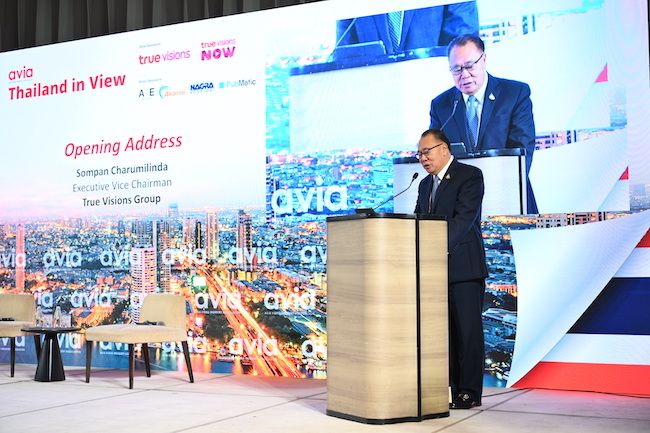
Over 150 industry leaders gathered in Bangkok for the Asia Video Industry Association’s (AVIA) Thailand in View conference, for a day of discussions centered around the State of Video in Thailand, the Supremacy of Content and Boosting Advertising Revenue, before closing off with a keynote address on the Big Picture.
There was much optimism on the future of video and content, with many speakers agreeing that it was indeed Thailand’s time on the world stage. In his welcome address, Sompan Charumilinda, Executive Vice Chairman, True Visions Group, said that in a world where content was resonating and spreading across borders, we’ve now seen the success of Asian, and Thai content, with its heritage of content production second to none.
Commissioner Pirongrong Ramasoota of the National Broadcasting and Telecommunications Commission (NBTC), Thailand, expanded on the potential for Thailand, sharing that soft power was now a major national strategy, to address the lack of unified regulations and the lack of a strategic database of its creative and content centre, for effective policy execution. With 11 sectors to focus on, from film and gaming to fashion, although it was too early to predict its success, it was certainly a welcome direction. Commissioner Pirongrong also added that its key role was to regulate as well as promote the audio and video landscape, to make it fit for purpose in the digital age, economically, socially and culturally. With the strength of the Thai industry lying in the diversity of its content, the NBTC was also looking to promote content that reflected diversity and cultural uniqueness, and with the potential to be coproduced with other countries as well.
Content was also a key focus for the streaming platforms. Kanokporn-Jay Prachayaset, Country Manager, WeTV Thailand, Tencent Thailand, shared that while growth has slowed down post pandemic, WeTV remained optimistic, pursuing local originals more aggressively, and taking another step into producing original variety content. And for both iQIYI and WeTV, AI was already in play, increasing efficiencies and cost reductions, with Parnsuk (Poppy) Tongrob, Country Director for Thailand, iQIYI, adding that “iQIYI is AI presented by creative talent.”
Winradit (Win) Kolasastraseni, President, Digital Media, True Digital Group, also said that production was not just for the Thai audience, but for a global audience. However, what you do next after investing in local content was key, with a need to increase the value creation upstream to further downstream in distribution and monetization. “People are now recognizing that Thai can be a Korean option, or even a better version,” said Win.
For Danny Chung, Head of Talent and Content Development, THEBLACKSEA, there were technical hurdles that needed to be overcome such as infrastructure and government assistance, which was essential to the growth of Korean content and culture to the world. While there was no lack of content, there also needed to be the exchange of opportunity. “Neighbours within Asia have their own strengths and weaknesses, we can help each other, and give our pool of talent global visibility and the platform to access the rest of the world,” said Chung.
However, with piracy remaining a scourge in Thailand, Sirapat Vajraphai, Director of Copyright Office, Department of Intellectual Property (DIP), Thailand, placed emphasis on public awareness to understand the importance of copyright to reduce copyright theft. The general population has to understand that it is illegal and hurting the ecosystem and the creative economy, and ultimately hurting the consumer. And with creative content changing at a very fast rate and moving into streaming, what the DIP is doing is to enhance the fundamentals to match what is changing, and trying to change the law to place special emphasis on the rights of actors and how they can be better protected for streaming and online.
Expanding on the topic of Showcasing Thai Soft Power to the World, Surin Krittayaphongphun, President of TV Business and Executive Director, BEC World, said that soft power was very important for the entertainment industry and for its content to travel the world, and soft power was the weapon to bring more visitors in and showcase the country as well. For Birathon Kasemsri Na Ayudhaya, Chief Content Strategy, Investment & Partnership Officer, CP Group and True Corporation, soft power was about building brand love for Thailand. “Soft power is created by emotional value and emotional connection and video is the intersection of every form of emotional communication,” he added.
However not all video was perceived equally, as shown in the results of AVIA’s Thailand consumer research on usage and attitudes towards mass and premium OTT platforms, presented by AVIA CEO, Louis Boswell. Although mass platforms, such as social media and user-generated content, marginally outperformed premium OTT at the category level in terms of having high quality content, this result was driven mainly by two high volume UGC platforms. When looked at as individual services, 7 of the top 10 platforms ranked as having the highest quality content were premium OTT. Furthermore, when it came to the highest attention levels, 6 of the top 10 services were premium OTT. And for video platforms that Thai consumers would recommend, 7 of the top 10 platforms were premium OTT.
For Rathakorn Surbsuk, Head of Addressable TV Solution – Indonesia, Thailand, and Vietnam Cluster, GroupM Nexus, premium was not just talking about the price, but also the quality of content, and a safe environment for brands, with content produced by professionals. Said Surbsuk, “Clients can open their stores anywhere, but they would choose the right environment and the premium location that offers quality. . . in order to differentiate themselves from competitors and position themselves in the right place that reflects positively for the brand.” He also predicted that in 3 years’ time, the level of spending on premium OTT will grow five-fold.
Closing off the conference with his view on the future of content was Group Chief Executive Officer of The One Enterprise, Takonkiet Viravan. For Viravan, each project had to have a different balance between commercial and art to be successful, and it was becoming more and more important today, as you could no longer depend just on local advertising. With the need to go international, the content should be Thai as the selling point, but the execution and the style of storytelling needed to skew more towards western and international preferences, as a good balance. Although it was more of a challenge, it also gave more opportunities to tell different stories that appealed to different people, he said. “You have to know your product and know which demographic it will appeal to. You have to put it where the viewers are,” added Viravan. And with the strong ecosystem that One Enterprise had as a content creator and distribution channel, coupled with the launch of their own OTT platform, OneD, producing their own originals to attract the streaming audience, Viravan remained cautiously optimistic for the future.
Thailand in View is proudly sponsored by Gold Sponsors True Visions and True Visions Now, and Silver SponsorsA+E Networks Asia, Akamai, NAGRA and PubMatic
Link here for a selection of photos from the event. Visit the event website for more details and photos.
About the Asia Video Industry Association
The Asia Video Industry Association (AVIA) is the trade association for the video industry and ecosystem in Asia Pacific. It serves to make the video industry stronger and healthier through promoting the common interests of its members. AVIA is the interlocutor for the industry with governments across the region, leads the fight against video piracy through its Coalition Against Piracy (CAP) and provides insight into the video industry through reports and conferences aimed to support a vibrant video industry.
For media enquiries and additional background please contact:
The Asia Video Industry Association (AVIA) has released a study to understand the usage of different video services in Indonesia and consumer attitudes towards them. The study looked at video across social media, user-generatedcontent (UGC), linear TV, messaging services and premium OTT. This is a follow-up to its study on Premium OTT – Building its Rightful Place in the Digital Market, which was first released in September 2022 and focused on the Singapore market.
Amongst Indonesian consumers, premium OTT is viewed as having the highest quality content. 75% of users of premium OTT services (such as Netflix, Vidio, Viu and WeTV) said it offered the best quality content, higher than users of any other category of video. Of all 24 video platforms studied, five of the top seven services ranked as offering the highest quality content were premium OTT.
Usage of premium OTT is also associated with the most positive emotions. When asked about feelings after watching an hour of different types of content, TV series and movies significantly outscored user- generate content and social media in eliciting happiness and amusement.
While premium OTT is still at an earlier stage of development in Indonesia than free UGC and social media services like YouTube and TikTok, it is clear that those who use premium OTT value it more. When asked what videoservices they would first be prepared to forego, only one in the top ten services was premium OTT, and the top 4 were all social media or UGC services.
“We believe the power and opportunity of premium OTT is hugely significant and offers a real and relatively untapped opportunity for advertisers in Indonesia. The proven quality of the environment, the stickiness of thecontent and the positive emotions created by it are critical for advertisers, and this study clearly demonstrates that. Given the dominance and high penetration of UGC and social media video services in Indonesia, the fact that this smaller but growing category of premium OTT performed so well in these categories is quite remarkable. We believe advertisers need to sit up and take note,” said Louis Boswell, CEO, AVIA.
The full Indonesia study research deck and methodology can be found here. This study continues to build on a regional research project started with a two part study conducted in Singapore in 2022 and 2023.
AVIA thanks its members Magnite, PubMatic and The Trade Desk for supporting the Indonesia research.
About the Premium OTT Study
The current study, Premium OTT: Building its Rightful Place in the Digital Market (Indonesia), was conducted inIndonesia by Milieu Insight Pte Ltd, with online fieldwork using Milieu Insight’s online panel. The sample size was n=1000 and was representative of the adult population aged 16+ in Indonesia. Premium OTT Services listed in thestudy were as follows: Disney+ Hotstar, HBO Go, iFlix, iQIYI, Metro TV Online, Netflix, RCTI+, TVRI Online, Vidio, Vision+, Viu, WeTV. Social Media and Video Sharing Services listed were Facebook, Instagram, Snackvideo, Snapchat, Telegram, TikTok, Twitch, Twitter, Vimeo, WhatsApp and YouTube.
About the Asia Video Industry Association
The Asia Video Industry Association (AVIA) is the trade association for the video industry and ecosystem in AsiaPacific. It serves to make the video industry stronger and healthier through promoting the common interests of its members. AVIA is the interlocutor for the industry with governments across the region, leads the fight against videopiracy through its Coalition Against Piracy (CAP) and provides insight into the video industry through reports and conferences aimed to support a vibrant video industry.
The Asia Video Industry Association (AVIA) and the Video Streaming Association of Indonesia (AVISI) today signed a Memorandum of Understanding (MOU) in Jakarta. The signing, held at the Coalition Against Piracy’s (CAP’s) State of Piracy Summit, sees AVIA and AVISI come together to both fight online piracy in Indonesia and promote awareness of the efforts to do so.
The MOU represents a significant step forward for AVIA and AVISI in combining their resources to combat online piracy in Indonesia and protect Indonesia’s creative and media industries. Representatives from Indonesia’s Ministry of Communication and Information Technology (Kominfo) were also in attendance at the signing of the MOU, which followed a panel at the State of Piracy Summit hosted by AVIA and attended by representatives from Kominfo and AVISI.
The signing of the MOU comes at a time when CAP’s most recent annual consumer surveys show that 54% of consumers in Indonesia access pirate services in 2023, the fourth highest incidence of piracy in the region. There is however growing awareness of the downsides of piracy with 94% of Indonesian consumers believing that online piracy has negative consequences, the highest percentage in the region, with damage to the creative industry being the biggest perceived negative impact.
Ajeng Parameswari, General Secretary of AVISI, emphasizing the core mission behind AVISI’s inception: “AVISI was established to cultivate a thriving ecosystem for the digital-creative industry, one that harmonizes seamlessly with the video streaming business model. Yet, the primary challenge we confront today is the pervasive threat of piracy.”
Ajeng further underscored the imperative for a collective, amplified response to piracy: “AVISI is delighted to announce a pivotal partnership with AVIA, aiming to widen the battle against piracy, transcending borders and safeguarding content not only within Indonesia but also on an international scale. The eradication of piracy is a shared responsibility, one that must resonate as a resounding deterrent to those who perpetrate it. In this endeavor, government support is pivotal.”
The AVISI and AVIA partnership marks a significant milestone in the ongoing struggle against piracy, reaffirming AVISI’s unwavering dedication to upholding a piracy-free digital-creative industry. Together, they pledge to strengthen defenses, promote legal access to content, and champion the rights of content creators, ensuring that creativity thrives and piracy recedes.
“We are delighted to join with AVISI to continue the fight against online video piracy,” said Louis Boswell, CEO, AVIA. Boswell also noted, “Piracy is the single biggest problem the video industry faces and to solve the problem there has to be a multi-pronged approach. With the creation of AVISI, I believe we will have greater success and engagement with the industry in Indonesia to continue working towards solutions. And we have to acknowledge the great support of government with the Ministry of Communication and Information Technology (Kominfo) who have been such great partners in addressing and mitigating the problems of piracy. With our new relationship with AVISI and Kominfo support, I am more optimistic than ever that momentum is growing which will continue to stem the tide of piracy in Indonesia.”
About the Asia Video Industry Association
The Asia Video Industry Association (AVIA) is the trade association for the video industry and ecosystem in Asia Pacific. It serves to make the video industry stronger and healthier through promoting the common interests of its members. AVIA is the interlocutor for the industry with governments across the region, leads the fight against video piracy through its Coalition Against Piracy (CAP) and provides insight into the video industry through reports and conferences aimed to support a vibrant video industry.
The Asia Video Industry Association (AVIA) has appointed Clare Bloomfield as its new Chief Policy Officer (CPO), with immediate effect.
Bloomfield has been with the team since 2017 as Director, Policy & Research, and more recently as Acting CPO, helping to develop and execute policy initiatives relevant to the video industry, in consultation with and on behalf of AVIA member companies.
In her new role, Bloomfield will spearhead AVIA’s policy unit, working with members to set the policy strategy and represent and engage in constructive dialogue with governments and regulators around the region so they may better understand the curated video industry and foster an environment of support for the growth of the industry.
“I am delighted to confirm Clare Bloomfield as our new Chief Policy Officer. I have worked with Clare throughout my time at AVIA and I have great respect for her acumen and understanding of the issues faced by our rapidly changing industry, as well as clear and practical ideas as to how best advocate for what is needed to safeguard its future development and prosperity. I look forward to continuing this journey with her as I am sure do our member companies,” said Louis Boswell, CEO, AVIA.
Prior to joining AVIA, Bloomfield has previously worked as a UK diplomat. Her postings included Hong Kong, Washington DC, Slovakia, Ghana and Pakistan.
About the Asia Video Industry Association
The Asia Video Industry Association (AVIA) is the trade association for the video industry and ecosystem in Asia Pacific. It serves to make the video industry stronger and healthier through promoting the common interests of its members. AVIA is the interlocutor for the industry with governments across the region, leads the fight against video piracy through its Coalition Against Piracy (CAP) and provides insight into the video industry through reports and conferences aimed to support a vibrant video industry.
For media enquiries and additional background please contact:
The Asia Video Summit marked a successful return to Hong Kong, with almost 300 delegates attending the conference in person and virtually.
Hosted by the Asia Video Industry Association (AVIA), the Summit conversations centred around the key themes of “The Making of Korea and the Model for Who’s Next?”, “Video at the Crossroads”, “Technology Taking Over”, “The State of Video 2023” and “The Advance of Advertising”, with a special opening session to set the stage, led by Henry Tan, Special Advisor, Astro, & Chairman, Astro Awani and Vivek Couto, Executive Director, Media Partners Asia with Louis Boswell, CEO, AVIA.
While recognising there are many important and challenging issues evolving in the industry, the mood was upbeat across the two-day summit. The conversation with Couto and Tan touched upon much of this and while recognising the importance of advertising on premium video which was growing, Tan also added that there was no better business than long term subscription, even if for now the mantra of streaming companies was to give the consumer full flexibility.
Discussing how Korea had generated such success in “How The Wave Was Launched”, Peter Choe, CEO, Blintn said that the Korean “export mindset” had been a key factor while Hyun Park, Producer and Advisor, Studio Dragon, said that Korean writers were very good at changing their style of storytelling to capture the market. However, the most important was to understand what the consumer wants, and that’s what Korea has become so good at, added Jeeyoung Lee, GM, Korea, Warner Bros. Discovery.
This focus on content continued with local experts on Chinese and Thai entertainment. In both markets, a good ecosystem of support and incentives was welcomed to nurture local talent. Cooperation within the region could possibly push growth across Asian markets, said Desmond Chan, Deputy GM, Legal and International Operations, TVB. There was particular optimism around the prospects for Thai content, and while recognizing this, Prof. Pirongrong Ramasoota, Commissioner, The National Broadcasting and Telecommunications Commission, Thailand, stressed the importance of “light-touch governance” to allow “industry players to be more creative and innovative with their content.”
The topic of monetization was also widely debated over the two days of the Summit. Gaming and e-commerce were seen as additional touchpoints and opportunities for cross-pollination with video to grow the consumer base. Ivy Wong, CEO, VS Media, shared that one-click purchase and seamless integration was what made e-commerce so successful in China, compared to other regions where consumers will have to go through several clicks to make the purchase. For William Wong, Head of Solutions Engineering, HK, Akamai Technologies, the key takeaway was not to focus on a single platform, but to diversify to capture different markets.
With the shift from linear to digital advertising, the time for CTV (Connected TV) could be upon us as “CTV is here to stay and will continue to grow. Dollars follow eyeballs. . . premium content with quality will earn more credible trust for our brands,” opined Douglas Choy, GM of Inventory Development, The Trade Desk. Gavin Buxton, MD Asia, Magnite, added that collaboration was key in terms of cross measurement to take CTV onwards, with audience and ad experience being the key driver behind that.
Louis Boswell, CEO, AVIA, presented highlights from a recent commissioned research[1] that measured the impact of advertising in a premium OTT environment versus mass streaming video environments (UGC / video sharing services) including (1) consumers felt that premium OTT was higher quality (58% OTT vs 36% mass) and commanded higher attention than mass streaming video environments (49% OTT vs 35% mass); and (2) both product recall (10% uplift) and brand recall (12% uplift) were significantly higher for the same ads when shown in a premium environment.
Closing off the Summit with a positive outlook, Alexandre Muller, MD APAC, TV5MONDE, said that Asia was where there were growth and opportunities for the video industry. “There are definitely challenges but people are excited because we are looking for solutions,” said Roger Tong, CEO, AsiaSat. “The bright spot is the diversity that we are seeing. . . There is so much diversity that it allows us to be more creative and if we maintain our creativity in solving the problems, then we will be able to perform better,” concluded Tong.
The Asia Video Summit is proudly supported by Lead Sponsor Create Hong Kong of the Government of the Hong Kong Special Administrative Region, Gold Sponsors BytePlus, InvestHK, INVIDI, Irdeto, Warner Brother Discovery and Silver Sponsors AsiaSat, Broadpeak, Endeavor Streaming, FashionTV, France24, Lightning, Magnite, MEASAT, Nagra, Paramount, Publica.
(1) Full release, https://bit.ly/442EnUK, with a link to the presentation on research data and methodology.
About the Asia Video Industry Association
The Asia Video Industry Association (AVIA) is the trade association for the video industry and ecosystem in Asia Pacific. It serves to make the video industry stronger and healthier through promoting the common interests of its members. AVIA is the interlocutor for the industry with governments across the region, leads the fight against video piracy through its Coalition Against Piracy (CAP) and provides insight into the video industry through reports and conferences aimed to support a vibrant video industry.
For media enquiries and additional background information, please contact:
The Asia Video Industry Association (AVIA) has released the second phase of its research into differences between advertising in premium OTT and mass streaming video environments (UGC / video sharing services). While phase 1, completed in 2022, looked at consumer usage and attitudes towards advertising in both environments, phase 2 gauged consumer attention and recall to ads in both a premium and mass environment. Research was conducted between January to April 2023, and conducted by Milieu Insight.
In line with the findings from the first phase, phase 2 established that both product recall (10% uplift) and brand recall (12% uplift) were significantly higher for the same ads when shown in a premium OTT environment over a mass environment.
In terms of actions taken, from searching for more information about the product to visiting the brand’s website, reading reviews etc, there was not a notable difference between behaviour of those seeing ads in a premium or mass environment. And given the higher recall, this still demonstrates that there are likely to be higher conversion rates from ads shown in premium environments.
Phase 1 of the research established that consumers clearly felt that premium OTT was higher quality (58% OTT vs 36% mass) and commanded higher attention than mass streaming video environments (49% OTT vs 35% mass).
Commenting on the findings, Louis Boswell, CEO, AVIA said, “The results are definitive and support what we have long felt obvious – ads that are shown in premium OTT services are more effective than those you see in a social media or video sharing services. We believe there is a huge opportunity for brands to increase the efficiency of their advertising and rethink the allocation of spend across premium and mass video environments. OTT is growing in leaps and bounds, and provides a unique and not sufficiently exploited opportunity for advertisers of all sorts to increase the efficiency of their campaigns.”
Phases I & II of this research is supported by AVIA members Index Exchange, Magnite, PubMatic, The Trade Desk, and Xandr. The research deck and methodology can be found here.
About the Asia Video Industry Association
The Asia Video Industry Association (AVIA) is the trade association for the video industry and ecosystem in Asia Pacific. It serves to make the video industry stronger and healthier through promoting the common interests of its members. AVIA is the interlocutor for the industry with governments across the region, leads the fight against video piracy through its Coalition Against Piracy (CAP) and provides insight into the video industry through reports and conferences aimed to support a vibrant video industry.
For media enquiries and additional background please contact: Charmaine Kwan Head of Marketing and Communications Email: charmaine@avia.org
On June 6, the Asia Video Industry Association (AVIA) annual satellite conference, the Satellite Industry Forum, welcomed over 140 delegates and speakers including some of the satellite industry’s largest operators for a day of discussion on the challenges and growth opportunities of the satellite connectivity market valued at $11.2 billion in 2021, and projected to reach $22.1 billion by 2031.
The conference opened with the regional operators on how they would fit in the rapidly evolving world of satellite. Raymond Chow, recently appointed as Chief Commercial Officer, AsiaSat, provided an overview of AsiaSat’s business strategies and emphasized the importance to focus and improve AsiaSat’s video business to deliver content to the big screen and small screen. He also opined that customers understand that quality of service can be more important than a small difference in pricing. Being the first private satellite operator company in Indonesia with over 330Gbps capacity across 3 satellites for Indonesia, Malaysia and Philippines, Agus Budi Tjahjono, Director of Commercial, PSN, is optimistic that PSN will become the biggest satellite capacity provider in the ASEAN region by the end of 2023. Besides sharing his optimism on the growth for demand for satellite communication, Yutaka Moriai, Executive Officer, Group President – Global Business Group, Space Business Unit, SKY Perfect JSAT, also foresees great opportunities in building highly integrated space network for both innovative communication and data collection, with plans to invest up to YEN150b (US$1.1b) by 2030. Besides looking into the new domain of highly integrated space network, SKY Perfect JSAT is also poised for an aggressive push into Earth Observation Space. Patompob (Nile) Suwansiri, CEO, Thaicom, shared similar optimism in the Earth Observation Space and GEO special intelligence arena, especially in their home market. Thaicom is also expecting their first commercial partnership in LEO satellite IOT business in Thailand with Globalstar in the coming months.
While there is a trend from Satellite to Cloud, the role of satellite in video distribution is still a growing business, and to achieve this, Sanjay Duda, CEO, Planetcast Media Services, highlighted the need for satellite companies to evolve their business to support the business plan of the video players. Echoing similar sentiments, Alistair Roseburgh, Director, Operations APAC, A+E Networks Asia, noted that satellite remains the choice of delivery for their core pay TV business. Diversification and experimentation in businesses is also more common compared to the past. While FAST (Free Ad-Supported TV) has not yet gained much traction in Asia, Rajeev Gambhir, Senior Director (Technology & Policy), SatCom Industry Association, asked fellow panelists about their predictions and what more needs to be done. Alistair highlighted the need for more flexibility such as the pay as you go model which is commonly used by cloud services and the ability to launch and discontinue a service quickly depending on its popularity. While Sanjay stressed on the need for integration with other technologies to deliver seamless connectivity to the consumer.
Building on the optimism on the future of the satellite industry, Cyril Dujardin, General Manager, Connectivity Business Unit, Eutelsat, shared the firm’s commitment to building a stronger presence in the connectivity business – mainly their decision to invest in Oneweb. In the same panel hosted by David Bruner, CEO and Principal Consultant, Aviation Communications Advisors (ACA), Mark Rigolle, COO, Rivada Space Networks, shared that the design and market segment for Rivada remains largely similar with LeoSat, except that there is greater market acceptance compared to the past and that their focus on funding is now from telco investors.
In the Philippines where many areas are still unserved or underserved, the general sentiment from operators is that satellite technology will be a game changer. Quoting examples from the major presence and growth of ABS in Philippines, from the first acquisition of Mabuhay Satellite in 2009 to currently having five in-orbit satellites, Vincent Lim, MD, Asia Sales, ABS, pointed out that satellite technology remains as the main form of connectivity in Philippines although consumer broadband is starting to pick up. Agreeing, Brandon Seir, Chief Commercial Officer, Kacific Broadband Satellites, also noted the high cost of routing fibre, the only way to reach out to those places would be through satellite. Ganendra Selvaraj, Chief Commercial Officer, MEASAT, emphasized MEASAT’s commitment for digital inclusion, to provide opportunities to people and improve affordability through the community Wi-Fi model which has proven to be successful in Malaysia. General sentiment from the panel was that the Philippines market presents huge opportunity, but more regional cooperation is needed.
From a service provider’s perspective, Alan Cheng, Sales Manager, Pacific, SES, disagreed that there is an oversupply in the market and highlighted the desire for more capacity in the pacific region, drawing attention on the vast market that is not yet connected. Mahdi Nazari Mehrabi, CTIO, Northtelecom, noted that although GSO operators might see LEO as a threat, which all three GSO operators denied in unison, it could be an opportunity and quoted Starlink as an example, and stressed the importance of great marketing to put traditional satellite industry for general consumers. Beatrice Mok, Corporate Development Director, Kacific Broadband Satellites, added that it’s a fallacy that no contract and low pricing is unique to LEO and cautioned about the attractive pricing from new entrants trying to capture market share and that regulators also have a part to play in preventing predatory pricing in the satellite industry. Expanding on the point of why GSO operators do not see LEO as a threat, Robert Suber, Director, Asia Pacific Sales, Intelsat, highlighted that, it’s telco and mobile network operators across the pacific which are worried that OTT and connectivity players bypassing their network and eroding revenues.
Wrapping up the conference, female leaders took the stage to discuss how to tackle the challenges in the industry and in particular, the lack of women in leadership roles. In the panel moderated by Irina Petrov, VP MarCom & Membership at GSOA, Jacinth Lau, Deputy Director (Industry), Office for Space Technology & Industry (OSTIn), pointed to the lack of awareness of career opportunities amongst the younger generation, the lack of space technology degrees and courses at local tertiary institutions and the difficulties in securing talents due to global competition. Nevertheless, she was optimistic about Singapore’s focused efforts in investments of research around Singapore’s core strengths as an aviation and maritime hub and collaboration with universities and research institutes. CTO of Boeing Satellite, Rachelle Radpour elaborated not just on the need for diversity in the space industry, but it is also critical to ensure equal access to opportunities, work life balance, keeping a pipeline and culture which supports all stages of an employee’s career, regardless of their gender. Despina Panayiotou Theodosiou, Co-CEO, TOTOTHEO MARITIME, highlighted the importance of having a role model for young women while also stressing the need for fresh ideas, patience and persistence to make changes.
The Satellite Industry Forum is proudly sponsored by AsiaSat, Eutelsat, Gilat, Hughes, Integrasys, Intelsat, Kacific Broadband Satellites, Marsh, Milbank, Northtelecom, SES, SKY Perfect JSAT, SpaceLogistics and Thaicom.
About the Asia Video Industry Association
The Asia Video Industry Association (AVIA) is the trade association for the video industry and ecosystem in Asia Pacific. It serves to make the video industry stronger and healthier through promoting the common interests of its members. AVIA is the interlocutor for the industry with governments across the region, leads the fight against video piracy through its Coalition Against Piracy (CAP) and provides insight into the video industry through reports and conferences aimed to support a vibrant video industry.
For media enquiries and additional background information, please contact:
Charmaine Kwan Head of Marketing and Communications Email: charmaine@avia.org
Tan Teck Wee Marketing & Communications Executive Email: teckwee@avia.org
Corporate communications and branding media veteran Gregory Ho has been appointed Senior Advisor with the Asia Video Industry Association (AVIA).
In this full-time role, Ho will support AVIA CEO Louis Boswell and work closely with the teams in Singapore and Hong Kong, focussing particularly on the curation of AVIA events and conferences as well as membership development and engagement. He will continue to be based in Singapore.
“As our industry continues to evolve during this period of tremendous flux and transition, I’m delighted to have Greg joining the team. His deep experience and understanding of our industry and his extensive network of contacts will be a tremendous asset as we continuously strive to represent and support the industry’s and our members’ needs including the opportunity to share, learn and engage with each other through our various events and conferences,” said Boswell.
The AVIA membership includes key players in every segment across the entire video industry and eco-system in Asia Pacific and facilitates opportunities for members to engage through a series of activities including 8 industry conferences in 2023 as well as a select number of bespoke member events.
“I look forward to working with Louis and the small but mighty AVIA team as we continue to support the industry and our members, shining the spotlight on growth opportunities and the most pressing challenges through our events and conferences – sharing, discussing and debating what matters most to us. I’m honoured to have this opportunity to give back to the industry that I love and has been my career for the past 3 decades,” said Ho.
Ho most recently spent 9 years with Warner Bros. Discovery in Hong Kong and Singapore where he led Corporate Communications and Marketing for the media and entertainment conglomerate’s entire portfolio of brands, services and businesses as well as Warner Bros., CNN, Cartoon Network and HBO, across Asia Pacific. He also had a long spell with Sony Pictures Entertainment – which included leadership roles overseeing Marketing, Communications, Ad Sales, Research, Channel Management and Operations for its networks in Asia. He began his career with positions at CNBC Asia and Mediacorp Singapore.
About the Asia Video Industry Association
The Asia Video Industry Association (AVIA) is the trade association for the video industry and ecosystem in Asia Pacific. It serves to make the video industry stronger and healthier through promoting the common interests of its members. AVIA is the interlocutor for the industry with governments across the region, leads the fight against video piracy through its Coalition Against Piracy (CAP) and provides insight into the video industry through reports and conferences aimed to support a vibrant video industry.
The Asia Video Industry Association (AVIA) and the Coalition Against Piracy (CAP) warmly congratulate Albay Representative Joey S. Salceda for the passage of his legislation (House Bill 7600) through the House of Representatives to amend the Intellectual Property Code of the Philippines to allow for pirate sites to be blocked in the Philippines. To become law in the Philippines a bill needs to be passed by both the House and the Senate and the successful passage of HB7600 through the House is a major step towards the enactment of site blocking legislation in the Philippines.
AVIA and CAP believe Congressman Salceda’s Bill will go a long way to addressing the rampant online piracy in the Philippines that is damaging the growth of the Philippines economy as well as providing real harm to consumers. AVIA and CAP have been working with the Philippines Government and the Philippines content industry for some time to champion the passage of site blocking legislation to address this concern, including a number of meetings and workshops such as an anti-piracy seminar hosted by AVIA, CAP and the Globe Group in Manila in September 2022 where Congressman Salceda was the keynote speaker.
2023 figures from a study conducted by YouGov and commissioned by AVIA and CAP showed that almost 60% of Philippine consumers watch pirated content – an alarming number that has a direct impact on the Philippine creative industry and consumer safety.
However, the study also showed growing consumer awareness of the damage caused by piracy, with 90% of consumers believing that piracy has negative consequences for the Philippines. The study also showed a path ahead with 45% of Philippine consumers believing a government or court order for ISPs to block pirate websites would be the most effective measure to reduce piracy in the Philippines. Congressman Salceda’s Bill has been strongly supported by local industry with numerous representatives, including GMA Network, Inc., the Globe Group and KROMA Entertainment attending the Second Reading of the HB7600 in person.
Matt Cheetham, General Manager of CAP, noted, “The evidence continues to show that site blocking, when implemented in an efficient and effective way, and ensuring the necessary elements of due process, is an incredibly powerful tool to both stop online piracy and protect consumers from the unseen harm caused by piracy, and we applaud Congressman Salceda for his determination to address the issue.” Cheetham also noted that earlier this month, Senator Estrada introduced matching legislation in the Senate (Senate Bill 2150) for Congressman Salceda’s Bill. “With the successful passage of Congressman Salceda’s Bill in the House, we look forward to the successful passage of matching legislation in the Senate that will allow the Philippines to grow its economy and protect its consumers from online harm,” he added.
“The Globe Group congratulates Albay 2nd District Rep. Joey Salceda for steering House Bill No. 7600 towards its triumphant passage at the House. This is a landmark achievement for the creative industry, with the bill a step closer to becoming a law. We are inching closer towards ensuring more stringent protection for our content creators and their livelihood,” said Globe Group Chief Sustainability and Corporate Communications Officer Yoly Crisanto.
“Piracy not only jeopardizes the livelihood of content creators and other works in the creative industry but also worsens consumer exposure to malware risks. Revisions to the IP code are essential for bolstering a digital landscape that is secure and equitable,” she said.
“GMA Network fully supports this extremely important legislation which would benefit and protect not just the creative industry but the viewing public as well. Website blocking for copyright infringement has been proven as an effective tool to fight digital piracy and support legal content creators and services, whether it’s TV, film, books, video games, or music. It is about time that the Philippines enact a site blocking law that would help curtail the losses of an already struggling industry,” said GMA Network, Inc.’s Asst Vice President for Litigation and Special Projects, Legal Affairs Atty Jose Vener Ibarra.
About the Asia Video Industry Association
The Asia Video Industry Association (AVIA) is the trade association for the video industry and ecosystem in Asia Pacific. It serves to make the video industry stronger and healthier through promoting the common interests of its members. AVIA is the interlocutor for the industry with governments across the region, leads the fight against video piracy through its Coalition Against Piracy (CAP) and provides insight into the video industry through reports and conferences aimed to support a vibrant video industry.
For media enquiries and additional background please contact: Charmaine Kwan Head of Marketing and Communications Email: charmaine@avia.org Website: www.avia.org