BayWa r.e. Reaffirms Continued Commitment to the Community of Lang Son Province with Improved Sanitation Facilities for Elementary Schools

Global renewable energy developer, service provider and distributor BayWa r.e. announced the successful completion and handover of new sanitary facilities for Khuoi Lay Elementary School and Suoi Long Elementary School in Lang Son Province, Vietnam. This forms part of BayWa r.e.’s longstanding commitment to meaningfully contribute to communities in which it operates, and reaffirms the company’s continued dedication to drive sustainable growth for the people of Lang Son province.
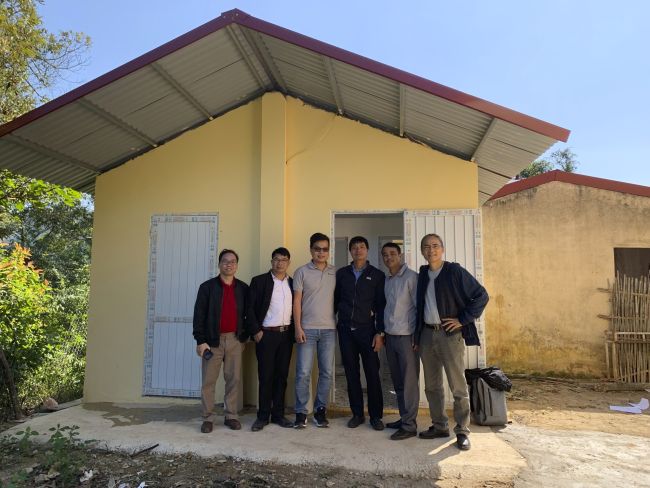
(L-R) Mr Vi Van Tho, Education Department of Loc Binh District, Lang Son Province; Mr Vi Hong Troi, Principal, Khuoi Lay Elementary School; Mr Loi Dang Van, Project Developer, Wind, BayWa r.e. Vietnam Co., Ltd; Mr Nguyen Hong Quynh, Director, Hung Dung LS Ltd, Mr Nguyen Van Uyen, Vice Chairman of Huu Lan Commune People Committee, Loc Binh District, Lang Son Province; Mr Nam Le, Senior Project Developer, Wind, BayWa r.e. Vietnam Co., Ltd
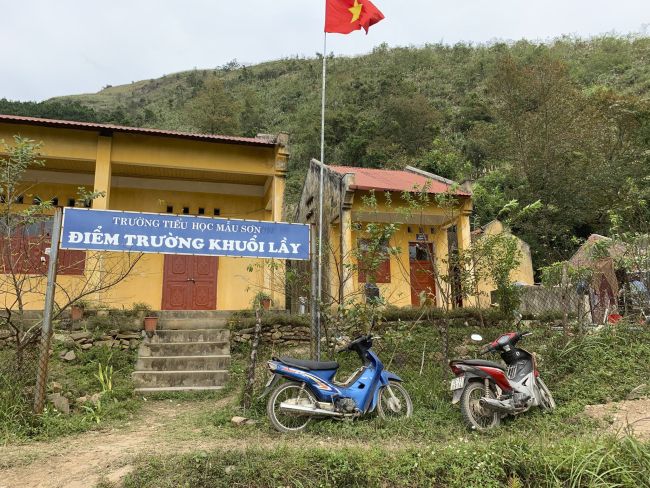
Khuoi Lay Elementary School

Gender-segregated washroom facilities were built for both elementary schools, benefiting more than 40 students and staff members. These washrooms come equipped with water tanks and electrical wiring systems, and utilise a standalone septic tank that is easier to maintain while also being environmentally friendly. The recipient schools were identified in close collaboration with provincial authorities, as well as the Education Department of Lang Son province and Loc Binh district. Both schools were selected as priority targets due to a lack of modern sanitation facilities as well as their proximity to BayWa r.e.’s wind farms.

Brian Barry, Head of Wind Asia, BayWa r.e. said “At BayWa r.e., we believe strongly in giving back to the community in which we operate. It is our privilege to be able to contribute meaningfully to the population of Lang Son Province, a region that has been instrumental to our growth in Vietnam.”

“We became aware of the sanitary challenges experienced by the Khuoi Lay and Suoi Long elementary schools during our greenfield development of the wind farms. With the support provided by provincial and district authorities, we were able to swiftly secure the necessary approvals, delivering the completed facilities in as little as three months from construction. Moving ahead, we hope to be able to extend this initiative to other schools across the province, facilitating the symbiotic growth of local communities alongside the expansion of our renewable energy footprint in Vietnam,” he added.

The official handover of the completed facilities took place physically in November 2021 for Suoi Long Elementary School, and virtually in December 2021 for Khuoi Lay Elementary School.

Mr Pham Hung Truong, Chief of Staff, Lang Son People Committee shared “BayWa r.e. is one of the first foreign investors explored and allowed to deploy survey for potential development and investment of wind farms in Lang Son. To date, more than 10 local and foreign investors have proposed to the provincial People Committee to invest in about 30 wind farms projects. Develop wind power, use renewable energy in the province is in line with the national strategy on power development towards 2030, with vision towards 2045, which encourages and prioritizes complete and effective usage of new, clean, and renewable energy resources. Lang Son province always supports and creates the best conditions for investors, at the meantime highly appreciates their contributions to the communities. BayWa r.e. contribution to the Khuoi Lay and Suoi Long elementary schools is very meaningful, helping pupils in remote areas improve their health and hygiene conditions. Hopefully, BayWa r.e. will continue partnering with local authorities, not only in its development and investment in wind business, but also helping the local community improve conditions in education, transportation and promote socio-economic development of Lang Son province.”

BayWa r.e. has been active in developing large scale wind energy developments in Vietnam, viewing the technology as a key enabler in the country’s renewable energy push. The company currently has a 300MW pipeline of wind energy across sites in northern Vietnam, and is fully committed to facilitating Vietnam’s ambition of becoming net-zero by 2050.

BayWa r.e. AG (BayWa r.e.):
At BayWa r.e. we r.e.think energy – how it is produced, stored and can be best used to enable the global renewable energy transition that is essential to the future of our planet.

We are a leading global developer, service supplier, distributor and solutions provider and have brought over 4GW of energy online and manage over 10GW of assets. We are also an Independent Power Producer with an expanding energy trading business.

BayWa r.e. works with businesses worldwide to provide tailored renewable solutions. Operating 100% carbon neutral, we are also committed to our own sustainability journey.

Every day, we are working hard to actively shape the future of energy in a diverse, equitable and inclusive workplace.

Our shareholders are BayWa AG, a EUR 17.2 billion global business, and Energy Infrastructure Partners, a leader in energy infrastructure investment.

Contact information:
BayWa r.e. AG
Salim Pathan
Marketing Manager, APAC
Tel: +66 62 698 7162
Email: salim.pathan@baywa-re.com

Mark Cooper
Corporate Communications
Tel: +49 89 383932 3611
E-mail: mark.cooper@baywa-re.com

PRecious Communications for BayWa r.e. AG
Tan Yanchang / Foo En Jing
Tel: +65 6303 0567
E-mail: baywa-re@preciouscomms.com

BayWa r.e. Wins Solar Company of the Year (Distributor) Award at the Philippines Solar Week Leadership Awards 2021

Global renewable energy developer, service provider and distributor, BayWa r.e., was named 2021 Solar Company of the Year in the ‘Distributor’ category at the Philippines Solar Week Leadership Awards 2021. Winners of the awards were assessed by a panel of judges via a transparent, research-backed approach, with BayWa r.e. attaining the award by registering consistent, robust, performance of their solar distribution business in the Philippines despite considerable market challenges.

Leonides Lechoncito, Sales Manager for BayWa r.e. Philippines, said “This recognition from the industry was made possible due to the support and trust that our customer base has placed in BayWa r.e., and serves as a testament to the capabilities of our team. A customer-centric approach to business, coupled with the hard work and dedication of our local team, are elements that have led our successes thus far, and will continue to spur BayWa r.e. Philippines on to greater heights. These awards reaffirm our commitment to driving a greener and sustainable energy transition for the Philippines, and we will work towards continuing this success in the coming years.

Despite the challenges presented by the global pandemic and an emerging energy landscape, the BayWa r.e. Philippines team has successfully attained significant growth milestones, applying relevant expertise from its global experience that has made it a leading provider of solar photovoltaic systems worldwide. Since its establishment in 2019, BayWa r.e. Philippines has served a wide range of customers, fulfilling more than 300 deliveries to various projects. Most recently, the team secured projects to supply products for a major fast-food chain and completed a project for Maynilad Water Services, a wastewater services provider in Metro Manila. The team has registered more than 400% revenue growth from 2019 to 2020 and is expected to close significant growth at the end of 2021.

With BayWa r.e. approaching its second anniversary in the Philippines, growth prospects for BayWa r.e. Philippines remain strong in 2022, with the team is looking at a new business pipeline comprising more than 100MW across Residential and C&I markets. The team will be focusing on expanding its sales operations, warehouse and its suite of products and services to better meet the evolving needs of local customers, accelerating the country’s renewable energy transition. Alongside plans to double the headcount for its local office, BayWa r.e. has also embarked on plans to open new warehouses in Cebu to cover Visayas and Mindanao region in 2022.

About Philippines Solar Week

The Philippines Solar Week Conference and Awards is an annual event, held virtually this year, with over 500 attendees, 30 speakers, and 25 award categories, spanning across more than 4 sessions and 1000 steam views. The highly coveted Philippines Solar Week Leadership Awards 2021 is a platform that recognizes and honors the best performers and achievers in the solar industry, focusing on leaders, projects and products from companies that have made a positive impact on the solar industry in the Philippines, and encourages the use of solar energy locally and globally. The awards celebrate innovations in the industry, and the hard work and determination behind them.

BayWa r.e. AG (BayWa r.e.):

At BayWa r.e. we r.e.think energy – how it is produced, stored and can be best used to enable the global renewable energy transition that is essential to the future of our planet.

We are a leading global developer, service supplier, distributor and solutions provider and have brought over 4GW of energy online and manage over 10GW of assets. We are also an Independent Power Producer with an expanding energy trading business.

BayWa r.e. works with businesses worldwide to provide tailored renewable solutions. Operating 100% carbon neutral, we are also committed to our own sustainability journey.

Every day, we are working hard to actively shape the future of energy in a diverse, equitable and inclusive workplace.

Our shareholders are BayWa AG, a €17.2 billion global business, and Energy Infrastructure Partners, a leader in energy infrastructure investment.

Contact information:

PRecious Communications for BayWa r.e. AG
Tan Yanchang / Foo En Jing
Tel: +65 6303 0567
E-mail: baywa-re@preciouscomms.com

BayWa r.e. AG
Salim Pathan
Marketing Manager, APAC
Tel: +66 62 698 7162
Email: salim.pathan@baywa-re.com

Mark Cooper
Corporate Communications
Tel: +49 89 383932 3611
E-mail: mark.cooper@baywa-re.com

Gradiant Secures Five New DBOOM Projects in Indonesia and Vietnam, Appoints Managing Directors to Fuel Growth

Gradiant, a leading global cleantech water treatment solutions provider and projects developer, has announced the award of five design-build-own-operate-maintain (DBOOM) water treatment projects in Indonesia and Vietnam. Gradiant will provide end-to-end water treatment solutions through a customized approach using its proprietary suite of technologies to treat water and wastewater for industrial and municipal clients. These projects have a production capacity of 40,000 cubic meters per day. Gradiant has further announced the hiring of Managing Directors Thai Nam Nguyen for Vietnam, and K Sadanand for Indonesia. The new leadership appointments affirm Gradiant’s growth and investment priorities in the rapidly industrializing Asia Pacific region.

Sadanand brings over 35 years’ experience in the water industry, of which 10 years has been in the Indonesia market, working for leading companies of Solenis, Nalco Water, GE Water, Fichtner, and Ion Exchange. Nam has over 25 years’ experience in the water and wastewater treatment industry in various roles as country representative, and projects and business development director for leading multinationals such as Veolia Water Solutions.

“Customers are adopting our customized and complete solutions which they acknowledge will significantly reduce cost and simplify management of their water and wastewater treatment operations,” said Gradiant Indonesia MD K Sadanand. “Customers are delivered treated water, consistently and reliably, to their water quality and quantity requirements. With rapid industrialization pressures and increasingly strict environmental regulations, our clients will need to solve their water challenges in performance- and cost-optimized approaches. We are excited to help solve water and wastewater problems in Indonesia by providing sustainable end-to-end solutions.”

Since its inception in early 2020, the Gradiant Vietnam team has achieved substantial headway in the region with a growing pipeline of projects that are contracted, or in late-stage negotiations. “Our technologies are an apt fit for the value-driven Vietnamese market. This coupled with our team’s ability to develop, deliver, own, and operate as end-to-end solutions will enable our clients to fully address their water and wastewater challenges,” said Gradiant Vietnam MD Thai Nam Nguyen.

“Thai Nam Nguyen and K Sadanand will be incredible assets for our customers as they look to transform their businesses and infrastructure in these regions. Their local expertise will leverage Gradiant’s global resources and know-how, to ensure we are meeting the full needs of the regions’ customers,” said Sankar Natarajan, who heads the company’s project acquisition efforts for Southeast Asia. “Asia Pacific serves a critical role in the global supply chain with over 40% of the world’s manufacturing. Vietnam and Indonesia require effective and optimized water solutions to balance rapid industrialization with sustainable growth.”

The recent success in Indonesia and Vietnam further cements the company’s continuing rise in the Asia-Pacific region as a market leader. Gradiant has recently announced a major funding round to accelerate growth, and a series of new contract wins that demonstrate the market’s sustained demand for cleantech water solutions and DBOOM concession models.

About Gradiant Corporation

Gradiant is a leading global solutions provider and developer of cleantech water projects for advanced water and wastewater treatment. Gradiant’s robust, end-to-end solutions and proven technical delivery and operations expertise enable sustainable and cost-effective treatment of the most complex water challenges. Gradiant was founded at the Massachusetts Institute of Technology (MIT) to solve the most challenging water treatment problems through sustainable technologies to make a positive impact on the environment, society, and economy. Gradiant serves its clients around the world from its corporate headquarters in Boston, Massachusetts, USA, regional headquarters and R&D center in Singapore, and its subsidiaries in Asia, the United States, and the Middle East. For more information, please visit www.gradiant.com.

Contact:
Felix Wang
Gradiant, VP of Marketing
felix.wang@gradiant.com

Bizos Cavallo Enterprises, Hakim Unique Group and DENBA JAPAN announce exclusive US Distribution Agreement to Enhance Food Preservation

  • Patented technology resonates and activates water molecules to extend shelf-life of perishable food

Bizos Cavallo Enterprises, LLC of Dallas, TX, together with California-based Hakim Unique Groups’ Wingar Industrial Inc (DBA Denba USA), and DENBA JAPAN Co Ltd signed an exclusive strategic development agreement for United States distribution of the patented DENBA water molecule technology.

DENBA preservation technology utilizes static waves to create electric fields in freezers to preserve perishable foods by lengthening moisture crystallization. Thus, while extending the freshness of frozen products longer than typical heat-removal freeze technology, this significantly lowers food waste via slowing oxidation in frozen food in residential and commercial food preservation applications, as well as across supply chain logistics such as prefabricated storage units typically used in cold storage units at ports, in shipping, trucking, and other food storage reefers.

“We are excited to partner with both Hakim Unique Groups’ Wingar Industrial Inc. and DENBA Japan Co Ltd to bring this impactful technology to the US marketplace,” said Elvin Thibodeaux, Managing Partner of Bizos Cavallo Enterprises. “The prevention of the morphology of ice crystals and limitation of food oxidation with minimal impact to cold storage capacity will be extremely beneficial in food import, export and utilization across the United States supply chain. We look forward to working to lowering the roughly 30% food waste impact lost from in farm-to-fork transference across our country’s various commodity classes, as well as in that of daily usage in residential refrigeration within our homes.”

“Through years of research and development and improvement, DENBA’s product line has formed a complete set of equipment chains that can meet the cold chain needs of storage, including long-, medium- and short-distance transportation. This, as well as in-home food preservation provides us confidence that the US marketplace will embrace DENBA’s product offerings. We look forward to working with Bizos Cavallo to deliver this technology at a time where maximizing food resources is critical to the needs of many,” said Henry Huang, Chief Executive Officer of Hakim Unique Group.

“Since 2004, DENBA JAPAN has been committed to the research and development of water-based technology to enhance the human quality of life. We are confident that our new distribution alliance with Wingar Industrial Inc. and Bizos Cavallo Enterprises will result in a positive impact to cycle of food and its useful life via our patented food preservation technology throughout the United States,” said Kanetaka Goto, Chief Executive Officer, DENBA JAPAN Co Ltd.

DENBA utilizes its unique patented technology which resonates and activates water molecules to maintain longer than normal food preservation. Under the DENBA environment, perishable food may be stored in a negative temperature range, which leads to a reduction of the bacteria growth for perishable food items. Denba products can be retrofitted to the existing refrigerated equipment and can be used in a wide range of food distribution applications, including not only refrigerators, but also prefabricated storage units, trucks, and reefer containers.

About Bizos Cavallo Enterprises
Bizos Cavallo Enterprises, LLC is a strategic consulting and operations firm focused on emerging bioscience innovation for public health, strategic alliances, and global investment resources, based in Dallas, TX, with offices in New Orleans and Winston-Salem, NC. In addition, Bizos Cavallo owns the subsidiary, BP&D International, LLC, a global leader in the procurement and the export of premium cultural commodities, including bulk grains, animal proteins, and their respective derivatives. Founded in 2017, Bizos Cavallo’s network includes partners and a host of strategic alliances in the United States, Greece, Romania, China, South Korea, Japan, Singapore, Dubai, France, Brazil, the West Indies and a Trade Operations Desk with Clarion Global-UK in the United Kingdom. For more about Bizos Cavallo Enterprises, visit www.bizoscavallo.com.

About Hakim Unique Group
Hakim Unique Group (HUG), founded in 2000 with headquarters in Hangzhou, Zhejiang Province, China, is an investment conglomerate with more than 175 subsidiaries including Hakim Unique Internet Co Ltd (now Straits Innovation, 300300.SH), a publicly listed Shenzhen A-Share company. HUG and its subsidiaries hold investments in information technology, film and TV media, healthcare, insurance, innovative finance and asset management. With total group valuation of more than RMB210 billion, or US$32 billion, the Group is ranked amongst China’s top 500 private enterprises according to Zheshang Magazine and among the country’s top 100 most profitable private enterprises. Visit www.hakim.com.cn, or Wingar Industrial (DBA Denba USA) at www.denbausa.com.

About DENBA JAPAN Co Ltd
Established in 2004 and headquartered in Tokyo, Japan, with a presence in Osaka and Zhenjiang, China, DENBA is at the forefront of electric field preservation technology with products and interests across healthcare, agriculture, aquaculture and cold chain logistics via technology. DENBA together with equipment manufacturers develops solutions to provide protection for the food cold chain. Current partner clients include the world’s largest container manufacturer CIMC (DENBA equipped with professional temperature-controlled containers), China Railway Group (DENBA equipped with containers and long-distance cold chain vehicles), Changhong Group, Aucma Group (commercial and household refrigerators), Hoshizaki Co., Ltd. (the largest kitchen refrigeration equipment manufacturer in Japan), Isuzu Motors (refrigerated trucks and containers) and ITOCHU Corporation (trade distribution, cold chain logistics). Visit DENBA JAPAN at www.denba-global.com/en/

Media Contacts:
Bizos Cavallo Enterprises, LLC
E: media@bizoscavallo.com
T: +1 252 390 4300; Ext 1002
U: https://www.bizoscavallo.com

Denba USA
E: Jason@DenbaUSA.com
U: https://denbausa.com

Source: Bizos Cavallo Enterprises, LLC

Brawijaya University develops IoT-based system for melon cultivation

“Drip irrigation system” implemented at the Agro Techno Park in Malang, East Java

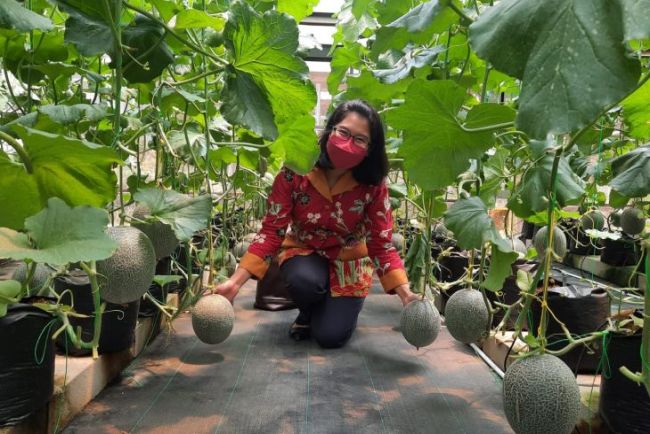
Brawijaya University (UB) has developed an internet of things (IoT)-based system for melon cultivation, currently being implemented at the Agro Techno Park in Malang, East Java. Eka Maulana, a lecturer from the university’s Faculty of Engineering, said the “drip irrigation system” is based on the water content in the planting medium.

The melon garden at the Agro Techno Park in Malang, East Java. The garden was developed by a team from Brawijaya University using the modern IoT farming system. (ANTARA/HO-Brawijaya University)

“Logically when the soil is dry, the ‘drip irrigation system’ is active. How much water content is in the medium when the drip system is active, as well as data and information related to the mechanism, are sent via an IoT connection. In principle, water has been applied with additional nutrients,” Eka explained to visitors on Friday.

The drip irrigation system cannot only be used for irrigation, said Eka, but also for determining nutritional needs, lighting, temperature and humidity in the melon garden greenhouse, among others things.

“In the process, the ‘drip irrigation system’ works according to the nutritional needs of each plant. So it is not just how much it irrigates the plants, but according to the age of the plants. Control of this system is monitored in terms of time and data variables that have been recorded before,” Eka explained.

Suyadi, Manager of Agriculture and Development at the Agro Techno Park, said the process of providing nutrients to plants periodically through water flow to the media is based on the needs of the plants.

“In a day, it can be done 5 to 10 times, so with this technology, we do not need to manually provide nutrients. It can be left to do other work, because it will automatically turn on the ‘drip irrigation system’ and flow nutrients to the planting media according to the needs of the plant,” he noted.

Suyadi pointed out that the use of IoT has made work easier because the machine turns on automatically whenever the planting media needs nutrients. “So that there is no shortage of nutrients. Because if we are doing it manually, then we still use our instincts when plants need nutrients,” he said.

The application of the drip irrigation system, he said, has turned out to give maximum results to melon plants. “The fruit yields can be better and ideal because the availability of nutrients is stable. If the nutrition is not stable, then the development of melons is not optimal; the fruit can break or the sweetness level will be low,” he noted.

Melons that are cultivated using the ‘drip irrigation system’ are of premium quality, starting from the taste, netted skin that is neatly arranged, and the ideal weight compared to conventional melons, he said. “The market is exclusive, so the taste is definitely different from what is sold in the conventional market. In Jatikerto (Malang), there are several varieties of melon including rock, golden, and honey,” Suyadi added.

He explained that the technology-based agricultural cultivation process in Jatikerto is also being used as a laboratory for students majoring in electrical engineering. “If melon plants are cultivated using a hydroponic system, then what the student does is aeroponic cultivation of vegetables,” he said.

In addition to nutrients that are more easily absorbed, planting with the aeroponic method also leads to faster growth because it uses LED lighting that is more constant than sunlight, he explained. “We can use LED light to trigger the generative phase and the vegetative phase in plants, resulting in increased nutrition, faster growth, and obtaining the desired leaf texture and taste,” he said.

One of the team members who is also an electrical engineering student, Muhammad Romadhani Prabowo said that with the drip irrigation system, plants will be protected from pests or fungi. Vegetables will be safer to eat as they will not even need to be washed, he said. The quality of the harvest will also be more durable than in hydroponic plants, he added.

The concept of aeroponics is currently applied to hydroponic plants, such as lettuce, mustard greens, bok choy (type of Chinese cabbage), basil, and spinach, he said. “Currently, we are also exploring (the drip irrigation system to be implemented for) herbal plants for treatment or plants with high economic value, such as mint and lemon balm,” Prabowo said.

Meanwhile, the development of IoT-based melon cultivation has arisen from the management of horticultural agriculture in Indonesia, which is still mostly done conventionally and with minimal use of technology, he said. This has had an impact on the instability of crop productivity, he added.

Visit Brawijaya University at https://ub.ac.id/ and the Agro Techno Park at http://atp.ub.ac.id/.

By A. Malik Ibrahim, Yashinta Dif
Editor: Suharto
Copyright (c) Antara 2021

Indonesia Develops Blue Economy to Boost National Manufacturing Industry Growth

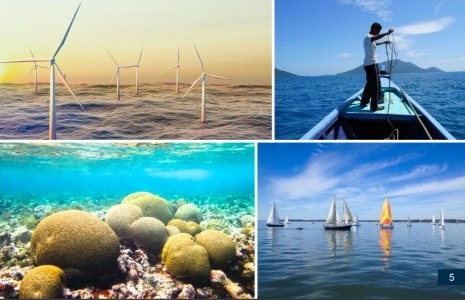
The Ministry of Industry (Kemenperin) is currently preparing a long-term blue economy development plan. Blue economy is a series of sustainable commercial activities, products, services and investments that depend on the sea as well as impact coastal and marine resources. The blue economy plan is co-developed with The Spectrum Solution Group (TSSG), a boutique strategy consulting and financial services firm headquartered in New York, N.Y.

TSSG’s Edward Chang explained that the blue economy is attracting global interest due to the impact it can have on the world economy and presents an important opportunity that must be optimized by Indonesia to further increase economic growth. Ocean-related and blue economy activities have always been essential to Indonesia environmentally, economically, and socially and are especially important since economic growth in the country continues to be under pressure from the COVID-19 pandemic.

“Therefore, the blue economy is a great opportunity to harvest economic benefits and help Indonesia to develop sustainable energy and resilient food sources. It is with these objectives in mind that we created the concept of Indoblue: a program of initiatives, guiding principles, and actions that will help Indonesia reimagine its Blue Economy beyond the status quo. IndoBlue aims to transform Indonesia’s Blue Economy that results in the sustainable use of ocean resources for economic growth, improvement of livelihoods and ocean ecosystem health, thereby maximizing the benefits while balancing the social, economic, and environmental factors during the transition process,” said Edward.

The blue economy can later also help the manufacturing sector to grow to new heights, among other sectors, such as the wild fisheries sector. This sector is the backbone of the blue economy; it provides seven million jobs and contributes more than US$27 billion to the national economy while serving as a cornerstone of social harmony in Indonesia’s coastal areas. Yet, According to the 2017 data from the National Commission on Stock Assessments, 38% of Indonesia’s wild fisheries were overfished, and a further 44% of stocks were fully fished.

“This depletion, along with insufficient data, and a lack of efficient stock management mechanism is posing huge risks to the nation’s well-being,” said Edward. “There are various manufacturing industry sectors that will benefit from the development of a blue economy in the wild fisheries sector, such as the seafood processing and packaging industry and the wild fisheries equipment assembly industry. With more efficient transport, storage, and supporting infrastructure these sectors have further potential for growth,” explained Edward.

Furthermore, through the development of the blue economy, relevant sectors in the aquaculture sector such as seaweed cultivation and processing, fish cultivation and processing, shrimp farming and fish farming equipment assembly are projected to grow over 250%.

Apart from wild fisheries and aquaculture, investment in the renewable energy sector can also help the Indonesian economy become more resilient and sustainable. “Sustainable marine energy can also play a critical role in Indonesia’s social and economic development and its efforts in climate change mitigation by providing a source of clean, renewable energy.

With the COVID-19 situation, the timing for pivoting to renewable energy is perfect. As the Indonesian government invests in rescue plans for industries, it makes sense to use this situation as the catalyst to “build back better” by supporting the renewable energy sector and providing incentives for foreign investors and market participants in the traditional power generation and energy sectors to diversify into renewable energy opportunities,” said Edward.

A blue economy strategy that will increase the growth of the manufacturing industry and thereby the national economy must be developed immediately, and Indonesia is fully committed to developing and achieving a sustainable blue economy. “Given all the benefits of the blue economy, it is important for Indonesia to be able to immediately develop a policy framework so that the potential of the blue economy can be utilized optimally,” said Industry Minister Agus Gumiwang Kartasasmita.

Furthermore, Agus stated that the development of the blue economy must be able to provide benefits to the small and medium industries (SMEs) sector, given that they form the backbone of the national economy.

In addition, a comprehensive framework is essential when reviewing the blue economy to ensure that every action taken will provide more benefits than harm. For this reason, partners such as TSSG are needed to provide expertise and comprehensive experience in formulating frameworks and strategies for developing blue economies.

“Therefore, the Ministry of Industry is ready to cooperate with TSSG and other parties including potential international investors to formulate incentives and provide guarantees in developing a blue economy in Indonesia,” concluded Agus.

The Ministry of Industry (Kemenperin)
Marsela Stefanie, Media Relations, Jakarta
T: +62 819 2948-9001; E: Marselastefanie@gmail.com