Kirigami hydrogels rise from cellulose film

New options for making finely structured soft, flexible and expandable materials called hydrogels have been developed by researchers at Tokyo University of Agriculture and Technology (TUAT). Their work extends the emerging field of ‘kirigami hydrogels’, in which patterns are cut into a thin film allowing it to later swell into complex hydrogel structures. The research is published in the journal Science and Technology of Advanced Materials.

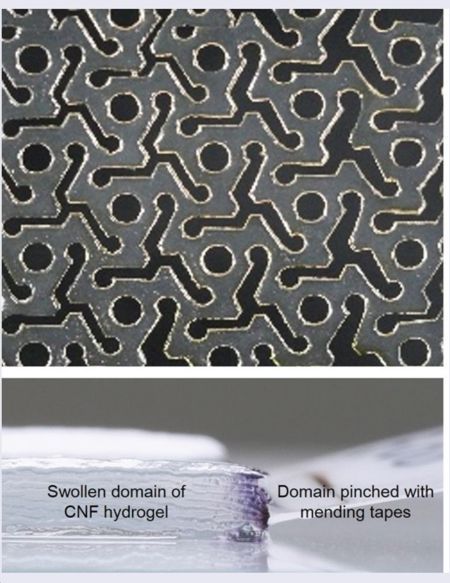
A Kirigami pattern of the hydrogel (top) and the hydrogel swollen from dry state (bottom).

Hydrogels have a network of water-attracting (hydrophilic) molecules, allowing their structure to swell substantially when exposed to water that becomes incorporated within the molecular network. Researchers Daisuke Nakagawa and Itsuo Hanasaki worked with an initially dry film composed of nanofibers of cellulose, the natural material that forms much of the structure of plant cell walls.

They used laser processing to cut structures into the film before water was added allowing the film to swell. The particular design of the Kirigami pattern works in such a way that the width increases when stretched in the longitudinal direction, which is called the auxetic property. This auxetic property emerges provided that the thickness grows sufficiently when the original thin film is wet.

“As Kirigami literally means the cut design of papers, it was originally intended for thin sheet structures. On the other hand, our two-dimensional auxetic mechanism manifests when the thickness of the sheet is sufficient, and this three dimensionality of the hydrogel structure emerges by swelling when it is used. It is convenient to store it in the dry state before use, rather than keeping the same water content level of the hydrogel.” says Hanasaki. “Furthermore, the auxeticity is maintained during the cyclic loading that causes the adaptive deformation of the hydrogel to reach another structural state. It will be important for the design of intelligent materials.”

Potential applications for the adaptive hydrogels include soft components of robotic technologies, allowing them to respond flexibly when interacting with objects they are manipulating, for example. They might also be incorporated into soft switches and sensor components. Hydrogels are also being explored for medical applications, including tissue engineering, wound dressings, drug delivery systems and materials that can adapt flexibly to movement and growth. The advance in kirigami hydrogels achieved by the TUAT team significantly extends the options for future hydrogel applications.

“Keeping the designed characteristics while showing adaptivity to the environmental condition is advantageous for the development of multifunctionality,” Hanasaki concludes.

Further information
Itsuo Hanasaki
Tokyo University of Agriculture and Technology
Email: hanasaki@cc.tuat.ac.jp

Paper: https://doi.org/10.1080/14686996.2024.2331959

About Science and Technology of Advanced Materials (STAM)

Open access journal STAM publishes outstanding research articles across all aspects of materials science, including functional and structural materials, theoretical analyses, and properties of materials. https://www.tandfonline.com/STAM 

Dr Yasufumi Nakamichi
STAM Publishing Director
Email: NAKAMICHI.Yasufumi@nims.go.jp 

Press release distributed by Asia Research News for Science and Technology of Advanced Materials.

Sensing structure without touching

  • Touch sensors that don’t even need direct contact offer new sensitivity for robotic 3D structure recognition and wireless transmission of data

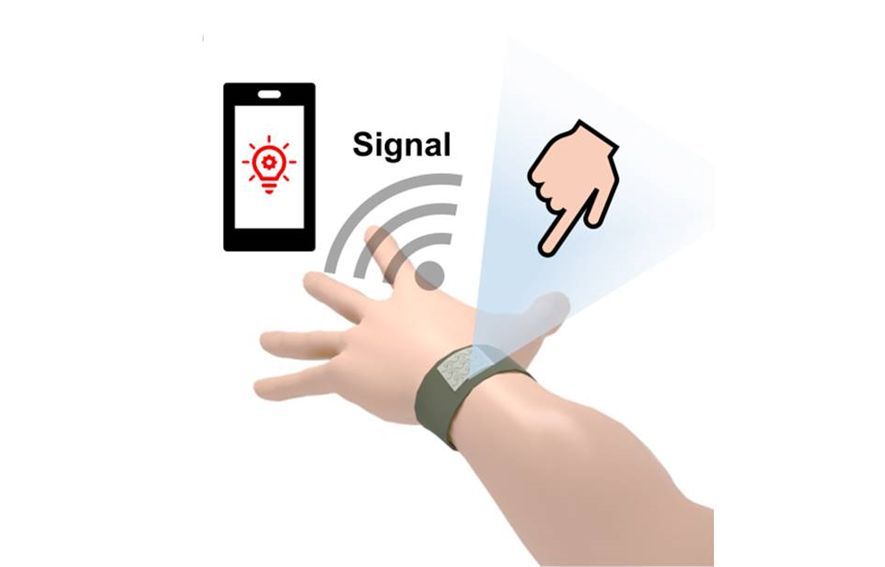
A radical new type of touch sensor for robotics and other bio-mimicking (bionic) applications is so sensitive it works even without direct contact between the sensor and the objects being detected. It senses interference in the electric field between an object and the sensor, at up to 100 millimetres from the object. The researchers at Qingdao University in China, with collaborators elsewhere in China and South Korea, describe their innovation in the journal Science and Technology of Advanced Materials.

Electronic skins have become a crucial element in bionic robots, allowing them to detect and react to external stimuli promptly. This can allow robotic systems to analyse an object’s shape, and, if required, also to pick it up and manipulate it.

The sensors in most current systems rely on direct touch causing a physical deformation of a contact layer, leading to changes in electrical capacitance. Unfortunately, the uniformity of the response to different regions limits the sensitivity and overall abilities of such systems.

“To bring greater sensitivity and versatility we have developed new composite films with surprising and very useful electrical properties,” says Xinlin Li of the Qingdao University team.

The most surprising aspect came when the researchers combined two materials with a high dielectric constant – a measure of their response to electric fields. This composite had an unexpectedly low dielectric constant, a counter-intuitive result which is ideally suited to making a sensor that is more sensitive to electric fields.

The composite consists of small amounts of graphitic carbon nitride added to polydimethylsiloxane. It can be made and processed by a specific 3D printing method, called dispensing printing, that offers fine control over the structure and pattern of the printed high-viscous ink. The team used this to make a grid that could sense objects while between 5 and 100 millimeters away from the object’s surface. They tested the grid’s capabilities by using the researchers’ fingers as the objects being detected, as they approached close to the grid but without actually making contact.

“The performance was outstanding, in terms of sensitivity, speed of response and robust stability through many cycles of use,” says Li. “This opens new possibilities in the field of wearable objects and electronic skin.” She adds that it is suitable for making the physically flexible sensors needed for wearable technologies. These could be applied for medical monitoring, or more general uses in the fast developing ‘internet of things’(IoT), involving remote control of a wide variety of appliances.

Incorporating the sensing grid into a printed circuit board allowed the data it collects to be transmitted over the 4G networks widely used by mobile phones.

The team now plan to refine the technology with a view to develop its suitability for mass production. They also want to explore further possibilities beyond merely detecting shape and movement.

For example, different units in the sensor array have the ability to respond sequentially, which provides the possibility of realizing human-computer interaction, such as gesture recognition. The performance of the sensors in the contact and non-contact system also reflects its potential in human motion detection, such as obstacle avoidance and gait monitoring, which could be applied in intelligent medical care.

Further information
Xinlin Li
Qingdao University
Email: xinlin0618@163.com

Paper: https://doi.org/10.1080/14686996.2024.2311635

About Science and Technology of Advanced Materials (STAM)
Open access journal STAM publishes outstanding research articles across all aspects of materials science, including functional and structural materials, theoretical analyses, and properties of materials. https://www.tandfonline.com/STAM 

Dr Yasufumi Nakamichi
STAM Publishing Director
Email: NAKAMICHI.Yasufumi@nims.go.jp 

Photos & Graphics

Caption: 3D finger recognition and data transmission to a mobile phone.
3D finger recognition and data transmission to a mobile phone.

Press release distributed by Asia Research News for Science and Technology of Advanced Materials.

Formerra Launches New Nordic Hub to Power Global Healthcare Innovation

  • New facility in Malmo, Sweden strengthens support for healthcare customers in Scandinavia and Europe with specialized material solutions.

Formerra, a leader in performance materials distribution, announces the opening of a new warehouse in Malmö, Sweden, marking a significant step in its global expansion strategy. The modern facility will support existing customers with an emphasis on serving the growing production demands of medical device and equipment production in Europe.

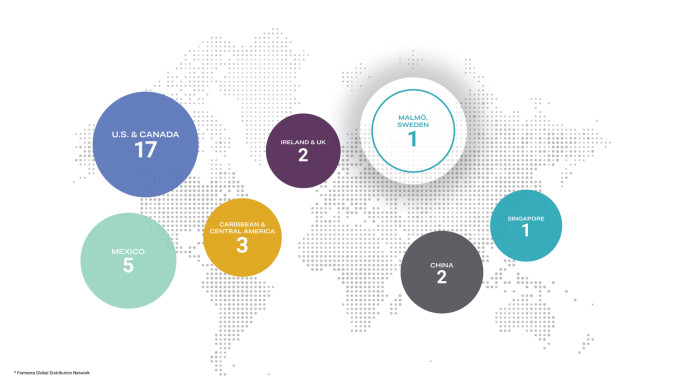
Formerra Global Distribution Network

Formerra’s facilities network has expanded to include a new warehouse in Malmö, Sweden that will serve medical device OEMs and suppliers in Europe and Nordic countries.

The new Nordic hub underscores Formerra’s commitment to providing tailored solutions to customers where needed in support of meeting the stringent requirements of the healthcare industry. By pairing an expansive portfolio of products from leading suppliers with its expertise in REACH certification and US-manufactured medical-grade materials, Formerra is uniquely positioned to help customers navigate the complexities of healthcare regulations, ensuring rapid compliance and market entry.

“With this new facility, Formerra is expanding geographically and, at the same time, intensifying our focus on the healthcare sector, where precision, reliability, and rapid innovation are paramount,” explains Cathy Dodd, Chief Executive Officer at Formerra. “Our Malmö warehouse provides Nordic and European customers with a gateway to advanced material solutions, designed to meet the rigorous demands of their medical applications.”

This network expansion further represents Formerra’s deep understanding of the healthcare industry’s challenges, ranging from the growing government regulations to global trade requirements. Housing a comprehensive range of materials capable of supporting these demanding requirements, the new facility positions Formerra as a vital partner in the development and production of medical devices and equipment.

The Malmö facility is strategically located to ensure efficient distribution across Europe. Likewise, the new warehouse will complement Formerra’s existing presence and warehouses in Ireland and the UK, the result of its acquisition of distributor Total Polymer Solutions (TPS) in April 2023. TPS has officially been renamed Formerra, a significant milestone in integrating this important acquisition and expanding the Formerra brand and presence into Europe.

Formerra’s vision extends beyond healthcare. The Malmö location sits amid regional hubs for growth industries such as telecommunications, electronics, powersports, and utility vehicles, industries Formerra currently serves.

Formerra will be exhibiting at MD&M West in Anaheim, California this week in Booth 610.

About Formerra
Formerra is a preeminent distributor of engineered materials, connecting the world’s leading polymer producers with thousands of OEMs and brand owners across healthcare, consumer, industrial, and mobility markets. Powered by technical and commercial expertise, it brings a distinctive combination of portfolio depth, supply chain strength, industry knowledge, service, leading e-commerce capabilities, and ingenuity. The experienced Formerra team helps customers across multiple industries to design, select, process, and develop products in new and better ways – driving improved performance, productivity, reliability, and sustainability. To learn more, visit www.formerra.com.

Contact Information
Jackie Morris
Marketing Communications Manager, Formerra
jackie.morris@formerra.com
+1 630-972-3144

SOURCE: Formerra

.

View the original press release on newswire.com.

Nutrigene Launches Personalised Development Program to Intersect Genetics and Learning through DNA

  • Revolutionary initiative set to optimize child development by aligning psychological well-being with academic excellence, aims to impact child development of 10,000 families

Nutrigene Modern Sciences Sdn. Bhd. (Nutrigene or the Company), a pioneer in the field of science-driven approach for child development, proudly announces the nationwide launch of Personalised Development Program (PDP). Representing a paradigm shift in parenting and education, this initiative harnesses the power of DNA to harmonize nature and nurture, fostering the holistic development of children.

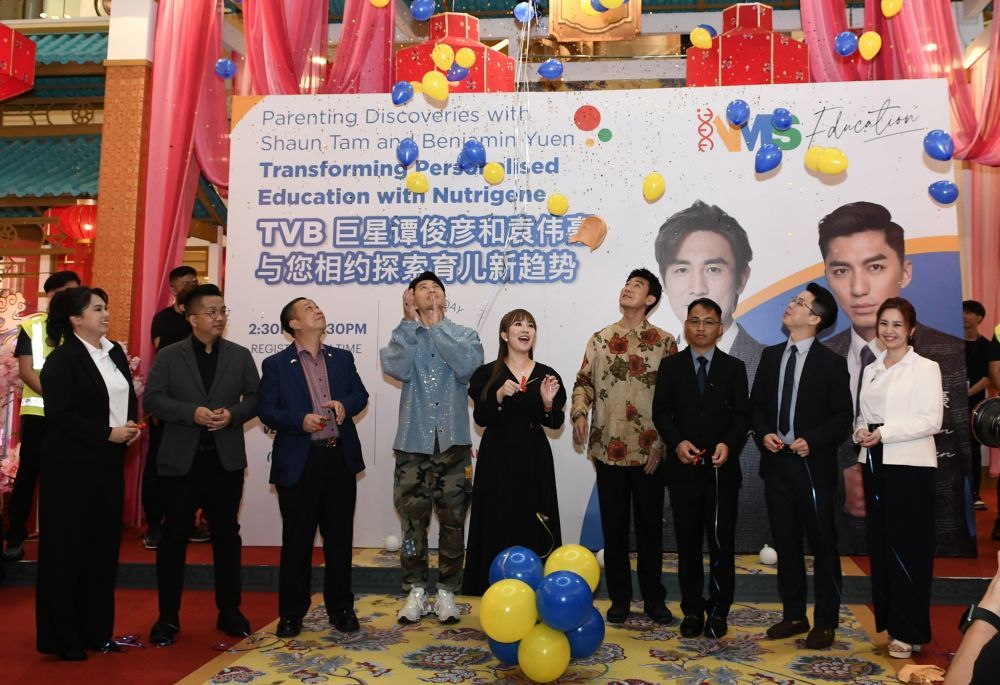
L-R: Joyce Chan, MD of Nutrigene Modern Sciences; Dato Dr, Gavin Voon; Dato Sri Chuah Poh Khiang; Benjamin Yuen, TVB artist; ⁠Dr Choo Wenxi, Founder & CEO of Nutrigene Modern Sciences; Shaun Tam, TVB artist; ⁠Dato Sri Tommy Lee; ⁠Tyler Teh, Director of Nutrigene Singapore; and ⁠Carven Chan, Director of Educational Program
TVB artists sharing experiences on their children’s DNA report with Dr Choo Wenxi, Founder & CEO of Nutrigene Modern Sciences

Dr. Choo Wenxi, Founder & CEO of Nutrigene, emphasises the transformative nature of the program, “We’re committed to transforming the concept of parenting through the power of DNA. PDP is more than an educational program, it’s a comprehensive approach to nurturing children’s psychological well-being alongside their academic growth. Our goal is to assist families in understanding and supporting their child’s unique needs holistically, thereby shaping their futures.”

PDP is designed to catalyse a shift in educational paradigms, focusing on the psychological as well as the academic development of children. The program is designed to nurture diverse developmental domains, encompassing language, numeracy, world discovery, motor skills, arts and music. Aligned with forward-thinking families, educators, and childcare professionals, Nutrigene envisions a more informed and comprehensive approach to child development, fostering collaborative ventures to empower educators and parenting coaches to excel in their fields.

Dr. Choo added, “Our hallmark RIASEC (Realistic, Investigative, Artistic, Social, Enterprising And Conventional) Career Talent DNA Test has been innovatively applied to early childhood development. This framework enables parents to comprehend their child’s inherent strengths and inclinations from a young age, facilitating more informed and supportive parenting.

Nutrigene is proud to offer both RIASEC Career Talent DNA Test and PDP as a holistic solution for parents. We aspire to assist 10,000 families to recognize that every child deserves to develop physically, mentally and academically in their unique way by 2025. We are open to collaborations with individuals and organisations who share our vision of unlocking the full potential of every child through innovative and personalised education.”

In tandem with the launch of the PDP, Nutrigene announces the inauguration of its maiden branch in Kuching, Sarawak. Beyond business expansion, this move underscores Nutrigene’s commitment to democratizing their innovative educational approach, ensuring every child receives an education tailored to their unique needs, shaping a brighter and fulfilling future.

With the introduction of the PDP and the opening of a new branch in Sarawak, Nutrigene is poised to redefine the standards of personalized education, showcasing unwavering dedication to nurturing and empowering the next generation to thrive in an ever-changing world.

Dr. Choo said, “Ensuring qualified and compassionate educators at our center is crucial. Nutrigene values each educator, acknowledging their pivotal role in shaping young minds, and is committed to enhancing their professional journey, offering career advancement opportunities and personal growth. We aim to create a nurturing environment where educators feel respected, supported and empowered to deliver their best.”

Nano-sized probes reveal how cellular structure responds to pressure

By giving living cells a ‘nano-poke’ and monitoring the resulting changes in the intra-cellular environment, researchers have gotten their first glimpse of how whole cells respond to external mechanical pressure.

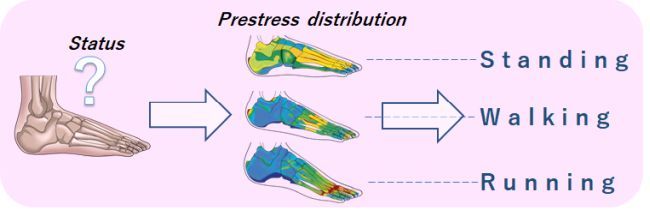
How foot stress (prestress) distribution varies with foot function.

A team lead by scientists from the National Institute for Materials Science in Tsukuba, Japan, used a technique called atomic force microscopy to apply force across the surface of various cells. The method uses nanoscale probes, with tips just a few billionths of a metre in size, to measure and map how force gets distributed across the cellular surface and throughout the cell. The researchers used machine learning to analyse and model the forces they measured. They also used fixing and staining techniques to study how the force distortion affected the cell’s internal structures and the microtubules and actin filaments that make up its ‘skeleton’.

“Cells are smart materials that can adapt to various chemical and mechanical stimuli from their surroundings,” says Jun Nakanishi, one of the corresponding authors of the study and the leader of the Mechanobiology Group at the National Institute for Materials Science. That ability to adapt relies on rapid feedback mechanisms to keep the cell intact and healthy, and there’s growing evidence that the failure of this cellular response underlies a range of ailments, including diabetes, Parkinson’s disease, heart attacks, and cancer.

So far, studies of these cellular responses have been limited by the techniques used – for example, some methods require that cells be pre-fitted with sensors, so they can only measure a small part of the response. “We invented a unique way to ‘touch’ a cell with nanoscale ‘hand’, so that the force distribution over a complete cell could be mapped with nanometer resolution,” says Hongxin Wang, who is the first author of the study and JSPS postdoc in the Mechanobiology Group.

The study revealed that tensional and compressional forces are distributed across actin fibres and microtubules within the cell to keep its shape, similar to how the poles and ropes of a camping tent work. When the researchers disabled the force-bearing function of actin fibres, they found that the nucleus itself is also involved in counterbalancing external forces, highlighting the role of the internal structure of the nucleus in the cellular stress response.

The research team also compared the responses of healthy and cancerous cells. Cancer cells proved more resilient to external compression than the healthy cells, and they were less likely to activate cell death in response.

The findings not only illuminate the complex intracellular mechanics of the stress response, but the discovery of different responses in cancer cells could offer a new way to distinguish healthy and cancerous cells – a diagnostic tool based on cellular mechanics.

Hospitals currently use the size, shape, and structure of a cell in diagnosing cancer. However, these features don’t always provide enough information to tell the difference between healthy and diseased cells. “Our findings provide another way of checking cell conditions by measuring force distribution, which could dramatically improve diagnostic accuracy,” says Han Zhang, another corresponding author of the study and the senior researcher of the Electron Microscopy Group, NIMS.

The study was published in the journal Science and Technology of Advanced Materials.

Further information:

Jun Nakanishi
Email: NAKANISHI.Jun@nims.go.jp 
National Institute for Materials Science (NIMS)

Han Zhang
Email: ZHANG.Han@nims.go.jp 
National Institute for Materials Science (NIMS)

Hongxin Wang
Email: WANG.Hongxin@nims.go.jp 
National Institute for Materials Science (NIMS)

Paper: https://doi.org/10.1080/14686996.2023.2265434 

About Science and Technology of Advanced Materials (STAM)

Open access journal STAM publishes outstanding research articles across all aspects of materials science, including functional and structural materials, theoretical analyses, and properties of materials. https://www.tandfonline.com/STAM

Dr Yasufumi Nakamichi
STAM Publishing Director
Email: NAKAMICHI.Yasufumi@nims.go.jp 

Press release distributed by Asia Research News for Science and Technology of Advanced Materials.

Machine learning techniques improve X-ray materials analysis

Researchers of RIKEN at Japan’s state-of-the-art synchrotron radiation facility, SPring-8, and their collaborators, have developed a faster and simpler way to carry out segmentation analysis, a vital process in materials science. The new method was published in the journal Science and Technology of Advanced Materials: Methods.

The SPring-8 facility has a storage ring with a circumference of 1.5 km

Segmentation analysis is used to understand the fine-scale composition of a material. It identifies distinct regions (or ‘segments’) with specific compositions, structural characteristics, or properties. This helps evaluate the suitability of a material for specific functions, as well as its possible limitations. It can also be used for quality control in material fabrication and for identifying points of weakness when analyzing materials that have failed.

Segmentation analysis is very important for synchrotron radiation X-ray computed tomography (SR-CT), which is similar to conventional medical CT scanning but uses intense focused X-rays produced by electrons circulating in a storage ring at nearly the speed of light. The team have demonstrated that machine learning is capable in conducting the segmentation analysis for the refraction contrast CT, which is especially useful for visualizing the three-dimensional structure in samples with small density differences between regions of interest, such as epoxy resins.

“Until now, no general segmentation analysis method for synchrotron radiation refraction contrast CT has been reported,” says first author Satoru Hamamoto. “Researchers have generally had to do segmentation analysis by trial and error, which has made it difficult for those who are not experts.”

The team’s solution was to use machine learning methods established in biomedical fields in combination with a transfer learning technique to finely adjust to the segmentation analysis of SR-CTs. Building on the existing machine learning model greatly reduced the amount of training data needed to get results.

“We’ve demonstrated that fast and accurate segmentation analysis is possible using machine learning methods, at a reasonable computational cost, and in a way that should allow non-experts to achieve levels of accuracy similar to experts,” says Takaki Hatsui, who led the research group.

The researchers carried out a proof-of-concept analysis in which they successfully detected regions created by water within an epoxy resin. Their success suggests that the technique will be useful for analyzing a wide range of materials.

To make this analysis method available as widely and quickly as possible, the team plans to establish segmentation analysis as a service offered to external researchers by the SPring-8 data center, which has recently started its operation.

Further information
Public Relations Office, RIKEN
Tel: 050-3495-0305
Email: ex-press@riken.jp 
2-1 Hirosawa, Wako, Saitama, 351-0198, Japan
https://www.riken.jp/en/ 

Paper: https://doi.org/10.1080/27660400.2023.2270529 

About Science and Technology of Advanced Materials: Methods (STAM-M)

STAM Methods is an open access sister journal of Science and Technology of Advanced Materials (STAM), and focuses on emergent methods and tools for improving and/or accelerating materials developments, such as methodology, apparatus, instrumentation, modeling, high-through put data collection, materials/process informatics, databases, and programming. https://www.tandfonline.com/STAM-M 

Dr Yasufumi Nakamichi
STAM Publishing Director
Email: NAKAMICHI.Yasufumi@nims.go.jp

Press release distributed by Asia Research News for Science and Technology of Advanced Materials.

A bio-inspired twist on robotic handling

The subtle adhesive forces that allow geckos to seemingly defy gravity, cling to walls and walk across ceilings have inspired a team of researchers in South Korea to build a robotic device that can pick up and release delicate materials without damage. The team, based at Kyungpook National University and Dong-A University, has published their research work in Science and Technology of Advanced Materials, an international science journal. The researchers are hoping it can be applied to the transfer of objects by robotic systems.

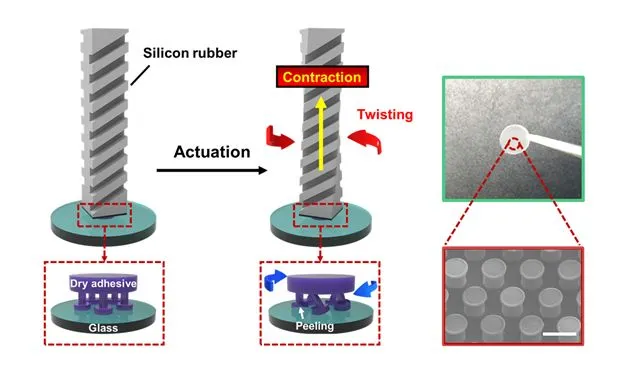
The structure and operation of the soft robotic device with dry adhesive.

The dry but sticky secret of a gecko’s foot lies in its coating of tiny hairs- made of protein- called micro setae. These hairs are around 100 micrometers long and 5 micrometers in diameter. Each hair divides into a number of branches that end in flat triangular pads called spatulae. The spatulae are so small that their molecules interact with those of the surface the gecko is climbing. This creates weak forces of attraction between these molecules, known as van der Waals force. This force is strong enough to hold the gecko in place.

The gecko’s innate adhesive ability has drawn the attention of many researchers and has inspired the use of its adhesion mechanism in robotics. An artificial, mushroom-shaped dry adhesive, that mimics this mechanism, has been used to robotically pick up materials. However, the force needed to detach the adhesive from the material’s surface can lead to its damage, especially if the material is fragile, such as glass. “There have been problems in getting the adhesive to detach easily,” explained Seung Hoon Yoo, first author of the research article. “In order to exploit these adhesive powers in robotic systems, it is imperative that the robot can not only pick up an object, but also readily detach from it to leave the object in its desired location”.

In their study, the team resolved this detachment problem by using a vacuum-powered device, made of soft silicon rubber. In order to detach the dry adhesive without damaging the fragile object being moved, a new detachment method was introduced. This method involves a twisting and lifting motion that pulls the dry adhesive off of the glass surface without causing any damage to it. The researchers found that the addition of this twisting motion caused a ten-fold reduction in the force required for detachment, which could be vital when handling delicate materials.

On conducting tests in which their transfer system was attached to a robotic arm, the researchers demonstrated that it could pick up a delicate glass disc from a sloping surface, move it to a different location and gently set it down without causing any damage to it.

“We expect our research will garner significant interest from the industry, since many companies are very interested in using dry adhesives for temporary attachment and movement of components, especially in robotic applications,” said Sung Ho Lee, one of the study’s authors. He added that his team hopes to serve as a bridge between research and industry by applying it to real industrial applications and developing more advanced models.

About Science and Technology of Advanced Materials (STAM)

Open access journal STAM publishes outstanding research articles across all aspects of materials science, including functional and structural materials, theoretical analyses, and properties of materials. https://www.tandfonline.com/STAM

Press release distributed by Asia Research News for Science and Technology of Advanced Materials.

GPT-4 artificial intelligence shows some competence in chemistry

The latest ‘large language model’ artificial intelligence system, GPT-4, could aid chemistry researchers, but limitations reveal the need for improvements.

GPT-4, the latest version of the artificial intelligence system from OpenAI, the developers of Chat-GPT, demonstrates considerable usefulness in tackling chemistry challenges, but still has significant weaknesses. “It has a notable understanding of chemistry, suggesting it can predict and propose experimental results in ways akin to human thought processes,” says chemist Kan Hatakeyama-Sato, at the Tokyo Institute of Technology. Hatakeyama-Sato and his colleagues discuss their exploration of the potential of GPT-4 in chemical research in the journal Science and Technology of Advanced Materials: Methods.

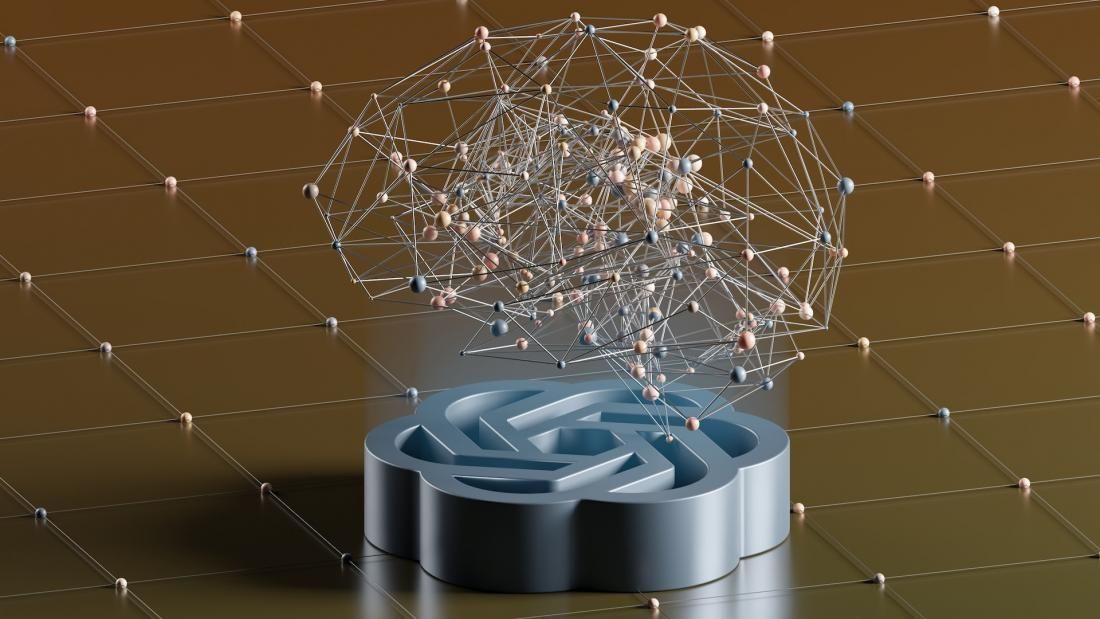
Researchers investigated the chemistry knowledge and capabilities of GPT-4, the latest version of OpenAI’s artificial intelligence model. (Credit: Growtika via Unsplash)

GPT-4, which stands for Generative Pre-trained Transformer 4, belongs to a category of artificial intelligence systems known as large language models. These can gather and analyse vast quantities of information in search of solutions to challenges set by users. One advance for GPT-4 is that it can use information in the form of images in addition to text.

Although the specific datasets used for training GPT-4 have not been disclosed by its developers, it has clearly learned a significant amount of detailed chemistry knowledge. To analyse its capabilities, the researchers set the system a series of chemical tasks focused on organic chemistry – the chemistry of carbon-based compounds. These covered basic chemical theory, the handling of molecular data, predicting the properties of chemicals, the outcome of chemical processes and proposing new chemical procedures.

The results of the investigation were varied, revealing both strengths and significant limitations. GPT-4 displayed a good understanding of general textbook-level knowledge in organic chemistry. It was weak, however, when set tasks dealing with specialized content or unique methods for making specific organic compounds. It displayed only partial efficiency in interpreting chemical structures and converting them into a standard notation. One interesting feat was its ability to make accurate predictions for the properties of compounds that it had not specifically been trained on. Overall, it was able to outperform some existing computational algorithms, but fell short against others.

“The results indicate that GPT-4 can tackle a wide range of tasks in chemical research, spanning from textbook-level knowledge to addressing untrained problems and optimizing multiple variables,” says Hatakeyama-Sato. “Inevitably, its performance relies heavily on the quality and quantity of its training data, and there is much room for improvement in its inference capabilities.”

The researchers emphasise that their work was only a preliminary investigation, and that future research should broaden the scope of the trials and dig deeper into the performance of GPT-4 in more diverse research scenarios.

They also hope to develop their own large language models specializing in chemistry and explore their integration with existing techniques.

“In the meantime, researchers should certainly consider applying GPT-4 to chemical challenges, possibly using hybrid methods that include existing specialized techniques,” Hatakeyama-Sato concludes.

Further information:

Kan Hatakeyama-Sato, Email: hatakeyama.k.ac@m.titech.ac.jp, Tokyo Institute of Technology
Teruaki Hayakawa, Email: hayakawa.t.ac@m.titech.ac.jp, Tokyo Institute of Technology

Paper: https://doi.org/10.1080/27660400.2023.2260300

About Science and Technology of Advanced Materials: Methods (STAM-M)

STAM Methods is an open access sister journal of Science and Technology of Advanced Materials (STAM), and focuses on emergent methods and tools for improving and/or accelerating materials developments, such as methodology, apparatus, instrumentation, modeling, high-through put data collection, materials/process informatics, databases, and programming. https://www.tandfonline.com/STAM-M

Dr Yasufumi Nakamichi, STAM Publishing Director, Email: NAKAMICHI.Yasufumi@nims.go.jp

Press release distributed by Asia Research News for Science and Technology of Advanced Materials.

ULVAC-PHI Launches Sales of Latest TOF-SIMS Instrument ‘PHI nanoTOF 3+’

Effortless automated measurement and high-quality data regardless of operator’s skill

ULVAC-PHI, Inc. has launched the sales of its flagship model of Time-of-Flight Secondary Ion Mass Spectrometry (TOF-SIMS) instrument, the ‘PHI nanoTOF 3+.’

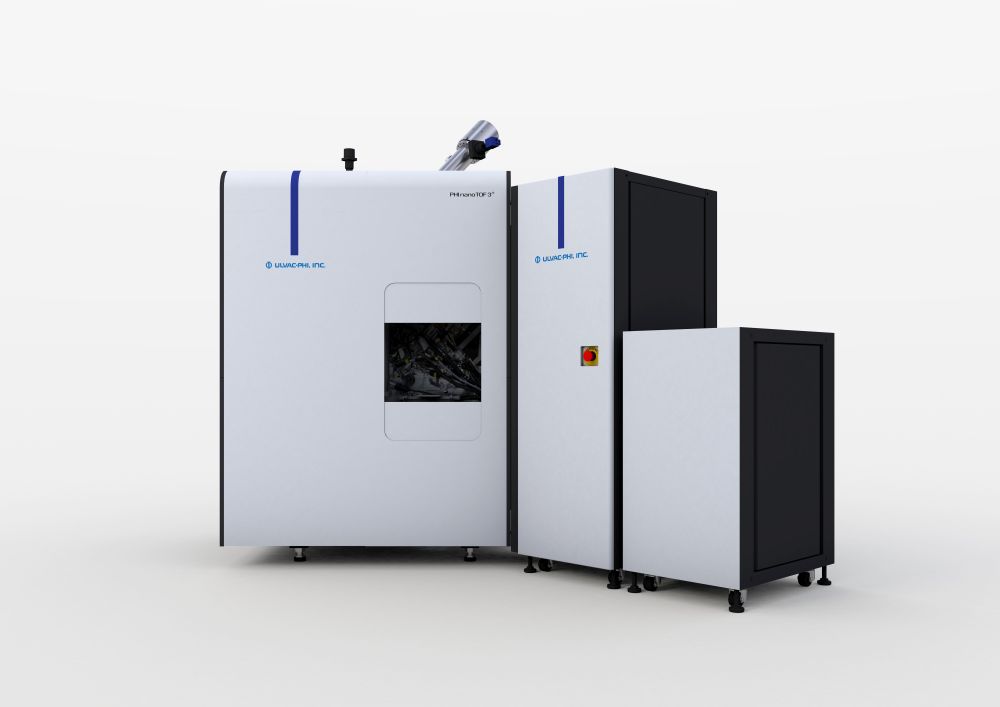
‘PHI nanoTOF 3+’ Time-of-Flight Secondary Ion Mass Spectrometry Instrument

Overview
We are pleased to announce the launch of the PHI nanoTOF 3+. This new product release comes two years after its predecessor, the PHI nanoTOF 3. The new model builds upon the foundation of the PHI nanoTOF 3 and introduces the following three new features.

1. Newly Developed Mass Analyzer
The newly developed mass analyzer inherits the advantages of the traditional TRIFT analyzer while enhancing the mass resolution (m/Δm) from 12,000 to 15,000. This advancement allows for the clear separation of peaks that were previously indistinguishable, enabling high-precision and reliable spectra analysis. It provides the best solution to meet the demands of research and industrial fields.

2. Comprehensive Analysis Enabled by a New Sample Handling System
A single analytical technique may not provide a full understanding of advanced materials. The new sample handling system in PHI nanoTOF 3+ achieves full compatibility with PHI XPS and AES instruments, enabling comprehensive analysis. Furthermore, this new system allows for sample transfer between PHI surface analysis instruments while preventing exposure to the atmosphere, making it an indispensable tool for analyzing advanced materials like battery and catalyst samples.

3. Automation of Measurements
The most important feature of PHI nanoTOF 3+ is the automation of TOF-SIMS measurements, which is a significant advancement from traditional manual operation. After determining analysis positions and recipes based on photos acquired in the sample introduction chamber, continuous measurements can be performed automatically. This new feature is effective for a wide range of materials, from inorganic materials like semiconductors and batteries to organic materials like polymers and biological samples. Furthermore, high-quality data can be available regardless of operator’s skill level.

In summary, PHI nanoTOF 3+ offers mass spectra with higher mass resolution than previous model. The new sample handling system on PHI nanoTOF3+ enables the comprehensive analysis with PHI XPS and AES instruments, especially for atmosphere-sensitive advanced materials. With the automation measurement function, PHI nanoTOF3+ provides high-quality data regardless of the sample type and operator’s skill level. The new features of PHI nanoTOF 3+ delivers enhanced performance and measurement efficiency, showing its value on effortless and smooth measurement for research applications and quality control demands.

For inquiries regarding this matter, please contact
Product Strategy Department, ULVAC-PHI, Inc. TEL: +81-467-85-4220 (Sales), Email: marketing@ulvac-phi.com

Related website
https://www.ulvac-phi.com

About ULVAC-PHI, Inc.
ULVAC-PHI, Inc. was founded in 1982 and provides advanced surface analysis instruments to universities and leading-edge industries worldwide for research and development. The company provides comprehensive surface analysis technology-based solutions for materials and devices including metals, polymers, semiconductors, batteries, organic and inorganic devices and microelectronics. For more information, visit https://www.ulvac-phi.com.

Time-of-Flight Secondary Ion Mass Spectrometry (TOF-SIMS)
TOF-SIMS (Time-of-Flight Secondary Ion Mass Spectrometry) is one of the surface analysis techniques that involves irradiating solid samples with an ion beam (primary ions) and then utilizing the time-of-flight difference to separate the emitted ions (secondary ions) from the surface. It provides information about elements or molecular species within 1-2 nm depth or less from the sample surface with high detection sensitivity. TOF-SIMS finds applications in various fields, including quality control, failure analysis such as contamination analysis in industrial materials, as well as the analysis of phenomena occurring at the surfaces and interfaces of advanced materials. Consequently, TOF-SIMS has redeemed itself to research facilities in universities and industry for research purposes.

Meta Materials and Panasonic Industry Collaborate on Next Generation Transparent Conductive Materials

  • Leveraging META’s patented NANOWEB(R) designs and Panasonic Industry’s proprietary process technology to deliver on new automotive and consumer electronics applications

Meta Materials Inc. (the Company or META) (NASDAQ:MMAT), an advanced materials and nanotechnology company and a leading solution provider in the field of multi-functional transparent conductive materials, and Panasonic Industry Co., Ltd. (Panasonic Industry), an operating company in charge of device business within the Panasonic Group with a proprietary and scalable process technology which delivers fine line low resistance and high transparency conductive films, have been jointly developing a strategic collaboration from design to mass production. This joint effort is expected to strengthen the supply of NANOWEB® films and accelerate the growth of the transparent conductive film industry, offering new applications for the automotive and consumer electronics sectors, such as transparent film antennas, transparent film heaters, and transparent film electromagnetic shielding.

Today there is an emerging need for ultra-low sheet resistance and high optical performance, especially required for large area applications such as flexible solar cells, smart windows for next generation communications and transparent heaters for automotive applications. According to BCC Research, the global market for transparent conductive films is projected to grow at a 9.2% CAGR, from $4.9 billion in 2020, to $7.6 billion by 2025.

“Our strategic collaboration with Panasonic Industry represents a pivotal moment for META. We have selected Panasonic Industry to mass produce our patented designs due to their outstanding process technology, coupled with their automotive-grade quality, which supports our common goal to expand the transparent conductive materials sector,” stated George Palikaras, President and CEO of META. “This collaboration allows us to pool our collective know-how, setting new benchmarks for the industry.”

Panasonic Industry’s low resistance and high transmittance transparent conductive film has been mass-produced since 2018 in response to the demand for high performance and upsizing touch sensors. META has been successfully working with Panasonic Industry under a Master Services Agreement for several months, resulting in the successful qualification and production of several NANOWEB® proprietary designs for various applications.

Panasonic Industry’s Director of Touch Solutions Business Unit Yuichi Yoshikawa, expressed equal enthusiasm about the collaboration, stating, “We are excited to join forces with META to push the boundaries of transparent conductive materials. This collaboration will be able to provide unprecedented value to the world with the most advanced solutions. Together, we will create new possibilities for various applications, and the industry.”

The collaboration between META and Panasonic Industry combines the design power of NANOWEB® metal mesh designs with Panasonic Industry’s leading proprietary and scalable process technology in transparent conductive films. Together, they will offer cutting-edge alternatives that surpass industry standards and set new benchmarks.

Panasonic Industry and Meta Materials will be showcasing at the Panasonic Industry booth at CEATEC 2023, Japan’s leading comprehensive technology exhibition, from October 17 to 20, 2023. The partners will demonstrate a microwave oven with a transparent EMI shielding window, transparent antennas, and transparent heaters for deicing and defogging of automotive ADAS sensors. These demonstrations will highlight the superior performance and versatility of the metal mesh solutions developed through this collaboration.

About Us:

Meta Materials Inc. (META) is an advanced materials and nanotechnology company. We develop new products and technologies using innovative sustainable science. Advanced materials can improve everyday products that surround us, making them smarter and more sustainable. META® technology platforms enable global brands to develop new products to improve performance for customers in aerospace and defense, consumer electronics, 5G communications, batteries, authentication, and automotive and clean energy. Learn more at www.metamaterial.com.

Panasonic Industry Co., Ltd. was established on April 1, 2022, as an operating company in charge of the device business within the Panasonic Group in line with its shift to an operating company system. The mission of the company states that “We will open the way to a better future and continue to contribute to an affluent society through a variety of device technologies.” On a global basis, the company has about 42,000 employees and achieved net sales of 1,149.9 billion yen for the fiscal year ended March 31, 2023. Against the backdrop of a labor shortage in manufacturing, the explosion of data with the rise of the information-based society, and greater demands for the environment and safety for the mobility society, the company will focus on areas where ongoing evolution is required and continue to provide customer value with distinctive features of unique material and process technologies such as capacitors, compact servomotors, EV relays, and electronic materials. Learn more about Panasonic Industry at https://www.panasonic.com/global/industry.

Media Inquiries:
Rob Stone
Vice President, Corporate Development and Communications
Meta Materials Inc.
media@metamaterial.com

Investor Contact
Mark Komonoski
Senior Vice President
Integrous Communications
Phone: 1-877-255-8483
Email: ir@metamaterial.com

Panasonic Industry Press Contact
Corporate Communication Team
Management Planning Department
Panasonic Industry Co., Ltd.
Email: press-industry@ml.jp.panasonic.com

Forward Looking Information

This press release includes forward-looking information or statements within the meaning of Canadian securities laws and within the meaning of Section 27A of the Securities Act of 1933, as amended, Section 21E of the Securities Exchange Act of 1934, as amended, and the Private Securities Litigation Reform Act of 1995, regarding META, which may include, but are not limited to, statements or implications with respect to the business strategies, product development, expansion plans and operational activities of META.

This press release also includes forward-looking information or statements about Panasonic Industry. To the extent that information or statements in this press release do not relate to historical or current facts, they constitute forward-looking information or statements for Panasonic Industry.

Often but not always, forward-looking information or statements may be identified by the use of words such as “pursuing”, “potential”, “predicts”, “projects”, “seeks”, “plans”, “expect”, “intends”, “anticipated”, “believes” or variations (including negative variations) of such words and phrases, or statements that certain actions, events or results “may”, “could”, “should”, “would” or “will” be taken, occur or be achieved. Such statements are based on the current expectations and views of future events of the management of META and Panasonic Industry and are based on assumptions and subject to risks and uncertainties. Although the management of META and Panasonic Industry believe that the assumptions underlying these statements are reasonable, they may prove to be incorrect.

More details about these and other risks that may impact META’s businesses are described under the heading “Forward-Looking Information” and under the heading “Risk Factors” in META’s 10-K filed with the SEC on March 23, 2023, in META’s Form 10-K/A filed with the SEC on March 23, 2023, with an SEC filing date of March 24, in META’s Form 10-Q filed with the SEC on August 9, 2023, and in subsequent filings made by Meta Materials Inc. with the SEC, which are available on the SEC’s website at www.sec.gov.

The forward-looking events and circumstances discussed in this release may not occur and could differ materially as a result of known and unknown risk factors and uncertainties affecting META and Panasonic Industry, the capabilities of our facilities and the expansion thereof, research and development projects of META and Panasonic Industry, the total available market and market potential of the products of META and Panasonic Industry, the market position of META and Panasonic Industry, the need to raise more capital and the ability to do so, the scalability of META’s and Panasonic Industry’s production ability, capacity for new customer engagements, material selection programs timeframes, the ability to reduce production costs, enhance metamaterials manufacturing capabilities and extend market reach into new applications and industries, the ability to accelerate commercialization plans, the possibility of new customer contracts, the continued engagement of our employees, the technology industry, market strategic and operational activities, and management’s ability to manage and to operate the business.

Although the META and Panasonic Industry have attempted to identify important factors that could cause actual actions, events or results to differ materially from those described in forward-looking information or statements, there may be other factors that cause actions, events or results to differ from those anticipated, estimated or intended. Accordingly, readers should not place undue reliance on any forward-looking information or statements. No forward-looking information or statements can be guaranteed. Except as required by applicable securities laws, forward-looking information or statements speak only as of the date on which they are made and META and Panasonic Industry do not undertake any obligation to publicly update or revise any forward-looking information or statements, whether as a result of new information, future events, or otherwise, except to the extent required by law.