United Front only way to end Philippines’ standoff

Philippines President is stuck between an enemy he cannot trust and a friend he does not like.

— Interview with Prof Carl Shuster by Sanjay Kumar, New Delhi.

Tension is mounting in the South China Sea with the Philippines refusing to withdraw vessels from Whitsun Reef. Some 220 Chinese vessels congregated in early March at Union Banks and Whitsun Reef, providing for the present standoff between China and the Philippines. The area involved in the present dispute is well within the 200-nautical mile exclusive economic zone (EEZ) of the Philippines. China wants to dominate the South China Sea because that would give Beijing a strategic advantage against Taiwan and Japan, before risking a conflict over the Senkaku. President Xi Jingping has always gone for an easy target that he believes can be achieved with minimal risk and costs. Recent media reports suggest that China has warned the United States that it will face defeat if the two superpowers go to war, testimony to what China thinks about its military might.

The threat to the US has come from China in response to the joint military exercise recently carried out by the US, Japan, Australia and France amidst tension in the East China Sea. The involvement of the People’s Armed Forces Maritime Militia (PAFMM) of China in disputes along the maritime borders of the Philippines, Vietnam and Japan cannot be ruled out. This militia comprises mainly fishermen and coastal workers from China. In fact, due to early militia gains, China built ‘fishing shelters’ to protect their fishermen in the Spratly Islands. Despite these activities, the Chinese government headed by Chairman Xi has denied any link between PAFMM and China’s military. China claims that they are fishermen. This enables the PRC to deny any involvement of the Chinese government in these maritime disputes.

Regarding the present deadlock in the South China Sea where the Chinese Maritime Militia is not ready to leave Whitsun Reef, Prof Carl Schuster of Hawaii Pacific University says that this poses a dilemma for the Philippines as the Chinese Maritime Militia is not doing anything to disturb the peace. Can the Philippines believe China and its militia? The Chinese militia may leave the spot temporarily and come back again. The Chinese Coast Guard does not escort them. Schuster believes that the Philippines have to keep a close eye on China’s movement in the Whitsun Reef, particularly the Chinese Air Force. They don’t have to fear until the Chinese Air Force becomes involved in the present stalemate. They need to watch every action of China and also send a message that they are watching.

Prof Schuster says that the President of the Philippines Rodrigo Duterte dislikes the United States and does not want a situation where he has to seek US help. In Schuster’s opinion, the United States should not help the Philippines either. By now Duterte should have realized that China is worse than the United States. The Philippine President is upset over the fact that if the United States was there to protect the Philippines from China and Russia, then why did it involve itself in the internal politics of the Philippines at the time of the coup. So, President Duterte is stuck between an enemy he can not trust and a friend whom he does not like. He is in a difficult spot.

Schuster thinks that countries with interests in the South China Sea should come together and back their respective Coast Guard to end the present crisis. China, he says, goes for easy prey. Look back at 1996, when the Philippines stopped patrolling the area around Campones Island after the United States left. China took advantage of the situation and captured Campones Island after a 90-minute gun battle. The Philippines later said that they could not patrol the area due to bad weather, which could be a reality. Yet the Philippines’ ships were old and they faced a Chinese fishing fleet with artillery and weapons. But it was too late, they had left it unoccupied, Schuster says. The Philippines took their eyes off the ball and paid for it.

On being asked how to end the present stalemate in the South China Sea, Prof Schuster says the United States does not have a position on the South China Sea, it is between the claimants. The United States’ only aim is to handle China. The Philippines never approached the United States at an official level to change its position. Schuster is of the opinion that the US can’t do anything directly to end the stalemate. What the United States can do is to back up the Philippines Coast Guard in the South China Sea. Once China comes to know about this understanding, it will be a different ball game altogether.

China is accustomed to moving in a vacuum. The situation will change completely if the American and Philippine Coast Guards would shadow the other’s vessels. The only thing which stops an aggressor is the fear of defeat. In Schuster’s view, more than the Philippines alone it will require a united effort by other countries affected by China’s bullying in the region, and Vietnam, Japan and the United States are willing to help the Philippines. Duterte says he doesn’t want to upset China, but when China bullies his countrymen, he gets very upset. China continues bullying the Philippine people because they know they can get away with it. The problem with Vietnam is larger. The Chinese will set up in Cambodia one day, which looking at the map, we see as a natural progression. This is going to expose Vietnam’s entire western border.

The Philippines will need submarines to defend its interests in the South China Sea, which Schuster suggests can be provided by Japan. Schuster believes Japan will help the Philippines with submarines and air power. Japan has a big stake in this area as 40% of Japanese maritime trade passes through this area. If China stops Japanese ships from entering the South China Sea, it would take 11 additional days for Japanese cargo ships to reach their destinations. What prevented Russia during the Cold War was not only fear of the United States but fear of the United States together with the European alliance. Likewise today, these several nations together can keep China in check. Such is the highhandedness of China that when an international arbitration held the present Chinese occupation illegal, China simply refused to abide by the judgment. However, this development will go in favour of the Philippines as the international community is aware of its disputed nature.

Commenting on why China is more active in the South China Sea than the East China Sea, Schuster said that China places greater importance on the South China Sea because of its strategic location: the South China Sea is easier to dominate. The PAFMM base in Sanya is closer to the disputed territories in the South China Sea than the PAFMM base in Guangzhou is to the Senkaku, and the fleet must pass through Taiwan’s waters. The East China Sea is not strategically located; the PRC’s military bases and airfields are closer to the disputed territory in the South China Sea than they are to the US bases in Japan, and both US and Chinese bases are equidistant from Senkaku. Also, Japan’s Coast Guard is stronger than those of Vietnam and the Philippines, so the PAFMM gets greater support in the South China Sea from the Chinese military establishment.

Traditional thought in the Chinese military believes in isolating the enemy and establishing an advantageous geopolitical and military superiority before engaging in war. But the best leader is the one who achieves victory without fighting. Schuster reminds that China has secured much of the South China Sea using the PAFMM to expand control without firing a shot. It has worked so far. However, doing that around the Senkaku Islands may prove to be difficult and expensive.

– Carl Schuster, commissioned Naval ROTC from the University of South Carolina in 1974, Captain Schuster served in a variety of U.S. and international posts at sea and ashore, Joint Staff Officer, Foreign Area Officer and Strategic Planner at his retirement in 1999. A widely published author with over 600 articles in print and on-call regional expert for CNN International, Prof Schuster has been teaching at Hawaii Pacific University since 2000.

– Interview by Sanjay Kumar, May 2021, New Delhi, India. Former MSN Chief Editor and New Media content strategist, 26 years handling print and online news media, 20 years in new media, has worked with major online media organizations including Times Internet, NDTV Convergence, HT Media Ltd and India Today Group, as well as Microsoft.


CropLife Asia Highlights how Plant Science is ‘Part of the Solution’ on Biodiversity Day

In concert with the theme for this year’s International Day for Biological Development (or Biodiversity Day), We’re part of the solution, CropLife Asia and its members are commemorating the day by raising the necessity of a biologically-diverse planet in ensuring our sustainable future and highlighting that plant science industry is increasingly ‘part of the solution’ in supporting biodiversity.

At present, climate change, deforestation and human activity pose the greatest threats to biodiversity. This is particularly concerning as richness in biodiversity is key in supporting agricultural systems and food production. Innovations in plant science offer solutions that can help mitigate a number of these threats to biodiversity.

“The goals of ensuring food security and strengthening biodiversity are not mutually exclusive, and we can’t afford to fail at either,” said Dr. Siang Hee Tan, Executive Director of CropLife Asia. “With population continuing to grow in the region and globally, food productivity in Asia has to keep up to ensure an abundant supply of safe and nutritious food. At the same time, the sustainability of our food production practices is critically important to drive biodiversity conservation and preservation. When used responsibly, plant science innovations such as biotech seeds and crop protection tools help our farmers feed the world while also supporting a healthy, biodiverse plant – but they’re only part of the larger solution needed. The plant science industry remains committed to working with all food value chain stakeholders towards protecting the rich biodiversity on which we all depend.”

The use of biotechnology and crop protection products help reduce the need to convert natural habitats into farmland. Between 1996-2018, productivity gained through biotechnology saved 231 million hectares of land from ploughing and cultivation[1]. Forests and other natural habitats can also thrive when crop protection products such as pesticides are used to control invading plants or insects that threaten native species. Biotech crops paired with herbicides also enable conservation tillage where soil is left undisturbed thus allowing the natural biodiversity in the soil to flourish. The combined biological activity of the billions of organisms in the soil is important to crop nutrition and soil health. The crop stubble left in the field from conservation tillage improves habitat and food sources for insects, birds, and other animals. Biotech crops also help plants use water more efficiently. In the U.S, genetically modified cotton has helped reduce water usage by 50% over the last 20 years, leaving more water for nature.

Integrated Pest Management also known as IPM is a farming system of managing pests that is designed to be sustainable, protects biodiversity and also helps create wildlife habitats around farms.

By utilizing both plant science innovations and IPM, farmers not only grow more on existing farmed land but also minimize the need to expand into more biodiverse areas, preserving these lands for the benefit of future generations.

[1] International Service for the Acquisition of Agri-Biotech Applications (ISAAA) Brief 55: Global Status of Commercialized Biotech/GM Crops in 2019

About CropLife Asia
CropLife Asia is a non-profit society and the regional organization of CropLife International, the voice of the global plant science industry. We advocate a safe, secure food supply, and our vision is food security enabled by innovative agriculture. CropLife Asia supports the work of 15 member associations across the continent and is led by six member companies at the forefront of crop protection, seeds and/or biotechnology research and development. For more information, visit us at www.croplifeasia.org.

For more information please contact:
Duke Hipp
Director, Public Affairs
CropLife Asia
Tel: +65 6221 1615
duke.hipp@croplifeasia.org

A New Route for Chengdu to Develop its AI Industry

In February 2020, the Ministry of Industry and Information Technology of the People’s Republic of China (MIIT) issued its support to the establishment of National Artificial Intelligence (AI) Innovation and Application Pilot Zones in Beijing, Tianjin (Binhai New Area), Hangzhou, Guangzhou, and Chengdu.

This is the second batch of pilot zones announced by the MIIT. So far, the number of China’s AI innovation and application pilot zones has increased to 8, while Chengdu has become the first AI innovation and application pilot zone in West China.

When we talked about the AI industry in Chengdu, the one thing we must know is Chengdu Science City. It is the core of the next-gen AI industry ecosystem in Chengdu. Chengdu promotes innovative development and high-quality development through new economy.

Attracting Top Enterprises
Now, a number of enterprises have established an industrial cluster with Chengdu Science City as the core, contributing to the AI industry.

With over 90 key enterprises in the ecosystem, the cluster has greatly contributed to the local transformation of AI technology. The ecosystem has also attracted many university project teams, including the Sichuan Energy Internet Research Institute of Tsinghua University and Chengdu Innovation Research Institute of Beihang University, which have created ideal conditions for the integration of AI production and research.

In the wave of the digital economy, this ecosystem focuses on the development of AI industry, and it initially gathers companies from the whole supply chain. Gradually, Chengdu builds a complete industrial ecosystem and helps it become the “fourth city of AI.”

Attraction and Cultivation of AI Projects
The development of an industry cannot be separated from the support of policy. Since the MIIT started the support to the National Artificial Intelligence (AI) Innovation and Application Pilot Zone in 2019, Chengdu has been actively putting it into practice. At present, relevant policies have been enacted to create a positive development environment for the industry.

These policies include two parts: First, introduce strongly targeted industrial support policies. Second, provide rich application scenarios for AI enterprises and attract AI enterprises.

In addition, the ecological environment is processing. First, optimize the enterprise service system. Second, promote the implementation of policies; Third, build an efficient communication platform.

Build Industrial Area
In terms of AI infrastructure construction, Chengdu has built industrial parks and facilities, such as the “Supercomputing Center” and the New Economy Industrial Park, to accelerate the implementation of the digital economy.

The Chengdu Supercomputing Center, with a maximum computing speed of 100 million billion calculations per second, started trial operation in September 2020. It has cooperated with more than 200 institutions and completed 1.52 million scientific research projects. The CPU utilization rate has reached 30%.

Huawei Kunpeng Industrial Ecosystem Base and Tianfu High-Performance Computing Public Technology Service Platform, and many other innovation platforms started operation, serving more than 400 enterprises and driving the development of the AI industry in Tianfu New Area.

The Unicorn Island, the Science and Technology Innovation Park, the Overseas High-level Talents Innovation Park, the Smart Port, and other core industrial carriers will create a favorable environment for the development of the AI industry. Zones A, B, C, and D of the New Economy Industrial Park have been put into use with about 6,000 employees.

Synergistic Development in Tianfu New Area
Digital economy industries such as AI and big data are frequently mentioned in China’s 14th Five-Year Plan (2021-2025), which was released last month. 36KR Sichuan learned that in the first year of the 14th Five-Year Plan, Tianfu New Area New Economy Bureau will also launch a series of policies spurring the AI industry:

First, increase the number of innovation sources, deepen the construction of a “1+3+N” innovation system led by the Comprehensive National Science Center, with laboratories in three major fields as the core, and supported by a number of major scientific and technological infrastructure and research platforms.

Second, improve the business patterns for science and technology. Chengdu will introduce well-known service agencies from both China and overseas, accelerating the operation of Tianfu International Technology Transfer Center and build an innovation platform for the advanced computing industry based on the Chengdu Supercomputing Center.

Third, improve the ecology of the digital economy. Chengdu will accelerate the settlement of a number of leading enterprises, start the construction of a number of major projects, and spare no effort to promote the completion of provincial and municipal key projects such as M&S Electronics and put them into operation.

Fourth, optimize city management and industrial promotion. On the principle of “preferential in industry, composite in functions, intensified in space, and suitable for both living and business,” the construction of the first zone of Fengqigu Digital Economy Industrial Park will start within the year.

As the AI industry has become the core driving force for the new scientific and technological revolution and industrial transformation, Chengdu regards the AI industry as an important way to transform economic development. Hence, it promotes Chengdu to become the industrial highland of China’s new economy.

Media Contact
Chenxi Zhang, 36Kr
E-mail: zhangchenxi@36kr.com

Diplomatic Posturing and the Power Game in Southeast Asia

Interview with Dr Stephen Nagy by the Centre for Peace and Justice (JKCPJ) Director, Mr Nadir Ali

Dr Stephen R Nagy, in a recent interview by Mr Nadir Ali, Director of the Centre for Peace and Justice (JKCPJ), responded to the rising tensions in Southeast Asia and spoke about mitigating the cascading issue of asymmetry of power and economy in the region.

In his opinion, the world is once again experiencing a great power competition, a competition that could cascade into conflict and catastrophe. Terrestrial land disputes have expanded to the maritime domain, with China having disputes with states in Southeast Asia, India, and Japan.

Chinese efforts to dominate Southeast Asian Politics and redistribute power is placing the region into the position of trying to balance regional security interests and national security interests. China is effectively using its asymmetric economic relations with its neighbours to achieve its strategic security objectives which focus on territorial control and political deference by neighbours.

In response to the question of China’s domestic legislation and its invention of historic claims and their role in China’s foreign policy, Dr Nagy answered that with China’s re-emergence as the dominant economy in the region, China has widened its claims on features in the South China Sea and islands in the East China Sea, many through domestic legislation and the invention of historic claims as tools to achieve foreign policy objectives. The effectiveness of domestic legislation by China in terms of securing its claims in the South China Sea and East China Sea is however debatable. Many such claims are not recognized by international bodies and courts such as the Permanent Court of Arbitration. One such claim in the South China Sea was ruled not legal by the Permanent Court of Arbitration in July 2016, in a case drawn upon by the Philippines.

China is using domestic legislation to expand its exclusive economic zones by creating municipalities at the edge of the South China Sea which gives a legal foundation to the exclusive economic zones. The impact of China’s legislation is however small. A parallel can be drawn comparing control through domestic legislation between the Chinese claims in the South China Sea and the Japanese controlled Senkaku Islands. Japan has controlled the Senkaku Islands for over a century and there is continuity in that control via coast guard and environmental management, mostly and mainly through domestic legislation and international partnership; no such continuity of control with regard to the Chinese claim exists on the ground in the South China Sea.

The invention of historic claims by China as a tool for foreign policy is even more debatable and problematic. To analyze this, one must turn back the pages of history and search for signs of claims of sovereignty by China over the island territories in the South China Sea; no such claim can be found. Bill Hayton in his book “Invention of China”, writes in detail how during the Ching (Qing) Dynasty, China showed no interest in the island formations in the South China Sea, whether the islands neighbouring Indonesia, Vietnam or the Philippines. China in the past has never set any claim of any of the island territories and thus the invention of historic claim is not only debatable but problematic as well. The UNCLOS treaty signed by 117 states which sets the 200-mile limit for Exclusive Economic Zones gives these countries a claim over the island formations in the South China Sea. UNCLOS however is not ratified by the US, which gives it a loose footing to enforce any such claims on China. This is despite the US conducting operations within the scope of the law.

Dr Nagy briefly touched on the role of ASEAN (Association of Southeast Asian Nations) and individual cooperation in establishing regional stability, and in his viewpoint, ASEAN could play a significant role in resolving territorial issues in Southeast Asia, but it is a loose association of nations and doesn’t have the legal capacity to challenge and enforce its decisions on China. Hitherto, it has till now not played any decisive role. At the 2014 ASEAN Summit, a consensus was developed for a joint statement with regard to territorial disputes, however, Cambodia succumbed to influence from China, making a joint statement impossible. This fracturing of ASEAN unity and division of opinion is mainly achieved through aid and pledges to promote development; an example of how China uses its economic influence to shape the behaviour of neighbouring states.

With most of the ASEAN states not claimants in the SCS disputes, China has a free hand in manipulating the decision-making capability of ASEAN. The ASEAN members hold mixed views about China; some members perceive China as an economic opportunity and think that China is critical for the development of ASEAN member states, while others see China as a state having dominating and hegemonic interests in the region, thus the relationship of China and ASEAN will always be important but challenging. The main problem is the power asymmetry between China and the Southeast Asian nations. These nations seek strategic autonomy to resolve the South China Sea issues peacefully and effectively. The pattern we are seeing, at an individual level, is to bring an extra-regional power to the region to enhance the human capital and other capabilities so that they can push back unilaterally against some of the more assertive behaviour of China. This becomes more important for ensuring that the economic, political and national security interests of smaller nations are met and secured.

Dr Nagy then addressed the need to establish and maintain partnerships and the formation of Quad-like groups in restoring stability and balance in Southeast Asia and particularly the South China Sea, as Japan has been the most active in establishing strategic partnerships, by providing coast guard vessels, maritime domain awareness, and human capital to support individual members and enhance ASEAN’s integration. Japan’s role is even more important when it comes to the Chinese maritime militia (fishermen boat strategy), whereby the militia tries to instigate escalations that allow China to build an image seen as being defensive. The militia is used to build pressure on the states and in the case of the Philippines, China has already occupied some features in the South China Sea using these militia forces. The militia moves in and out of sovereign national waters, where every movement is planned in building a Lawfare strategy, as in the case of the Senkaku islands.

The US needs to designate a dedicated naval fleet for the South China Sea, so it has a constant presence 365 days a year. This would limit the influence of China in the region, restore the symmetry of trade relations to some extent and stop the undue exploitation of smaller states by the People’s Republic of China. Naval cooperation and joint exercises in the South China Sea challenge China in particular when French and Canadian navies are involved. Quad and Quad-plus like cooperation is the way forward, however, this could lead to catastrophe if maritime management systems and communications channels are not established. China has to adjust to the presence of an extra-regional power in the South China Sea, and the US and allies have to work to keep China’s assertive behaviour at bay while avoiding accidental conflict.

– Dr Stephen R Nagy is a Senior Associate Professor at the Department of Politics and International Studies, International Christian University, Tokyo. He is a Distinguished Fellow at the Asia Pacific Foundation (APF) in Canada, a Fellow at the Canadian Global Affairs Institute, and a Visiting Fellow at the Japan Institute for International Affairs (JIIA). He is currently working on ‘Chinese Perceptions of Japan’s Foreign Policy under PM Abe since 2012’, and ‘Middle Power Cooperation in the Indo-Pacific’. Follow Stephen on Twitter @nagystephen1.

– Nadir Ali Wani is currently Director of the Center for Peace and Justice, a research-based group in Srinagar, the capital of Jammu and Kashmir, India. He holds a Master’s degree in Conflict Studies and International Relations from Jawahar Lal Nehru University, New Delhi, and has an abiding interest in the study of conflicts in South Asia with a particular interest in international politics to do with China, Islam and Kashmir.

– Jammu and Kashmir Centre for Peace and Justice (JKCPJ) is a youth-oriented, independent, multidisciplinary research organization. The Centre came into being in 2018, against the backdrop of global challenges upholding peace and social justice. The driving concern of the JKCPJ is bringing people together to accomplish things in an environment of trust, to strive for sustainable peace. Our mechanism transmits knowledge, hope, hard work, and successfully contributing to the development of humankind. Please visit https://jkcpj.org.

Indonesia’s State-owned Companies Go Global, Display Innovation at Hannover Messe Exhibition

As many as 13 Indonesian state-owned enterprises (SOEs) display their latest innovations at the largest industrial technology exhibition, the Hannover Messe 2021, as Indonesia plans to join the top 10 global economies by 2030.

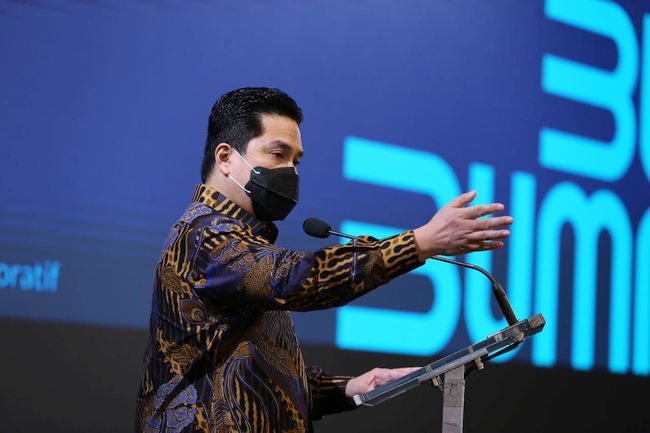
Minister of State-owned Enterprise of Republic of Indonesia Erick Thohir

“This goal can be achieved by accelerating the fourth industrial revolution, and pursuing not only technological transformation, but the digital transformation of industry, especially during this pandemic,” Indonesian President Joko Widodo said.

Indonesia was the first Southeast Asian country to become an official partner of the exhibition, which is being held this week, 12 – 16 April, in a digital edition. Participation at Hannover Messe (HM21) is part of the national policy “Making Indonesia 4.0”.

“We expect our state-owned enterprises to ‘go global’ as we stated in our ministry’s road map. Not only through acquisition, but by leading the global competition,” said Erick Thohir, Minister of State-owned Enterprises (BUMN).

Some state-owned enterprises have adopted and developed recent technologies to compete with, and even lead the competition in digital technology, specifically in the energy industry, and in the automotive, electronics, chemical and pharmaceutical sectors, and the health equipment industry. All have their innovation on display at MH21.

Indonesia’s premier energy holding company PT Pertamina engages 4.0 industry transformation by transitioning energy consumption from fossil fuels to renewable energies. For energizing its sustainable future, Pertamina is converting its refineries to produce green diesel, green jet fuels and green gasoline, optimizing geothermal capacity, and utilizing green hydrogen. It also works with other state-owned companies to develop Indonesian EV batteries and energy storage systems.

The state-owned enterprise in the electricity sector, PT Perusahaan Listrik Negara promotes digital-based products that can acclerate business processes, such as the iCORE Digital Power Plant for electricity generation, Digitally Enabled Distribution Excellence for electricity distribution, PLN Mobile application for customer service and the Charge in application for charging electric vehicles.

A testing, inspection and certification company, PT Surveyor Indonesia is showcasing its drone-powered enhanced solution services for predictive maintenance and remote surveys. Meanwhile, Indonesia’s state mint Peruri developed a research institute for authenticity and collaborated with SICPA SA (a Switzerland company) and Giesecke+Devrient (a German company). At the Hannover Messe, Peruri introduces its innovations in digital business solutions with its products Peruri Sign, Peruri Code and Peruri Trust.

PT Pupuk Indonesia, the holding company for state-owned fertilizer producers, has implemented a “Smart Production” system that uses big data and integrates several data including operational data and distributed control systems. The system is expected to increase efficiency of operations and monitors production processes in real-time. The company also implements a ‘Smart Distribution’ system that integrates data in the warehouse all the way through the ports. Another smart product is the PreciPalm or Precision Agricuture Platform for Palm Oil that provides digital maps on soil condition in oil palm plantation that can give recommendations for fertilization.

Indonesian pharmaceutical holding company PT Bio Farma displays “bio tracking”, “bio detect” and an integrated packaging line for vaccine distributions. A thermal sensor and a GPS are installed in vaccine transporting vehicles to monitor temperatures inside the vehicles and their real-time position. Bio Farma hopes to expand to Eastern Europe following HM21. PT Indofarma promotes several premium products and seeks to attract foreign investment in pharmaceutical and herbal products. PT Kimia Farma, another state-owned pharmaceutical company also joins the exhibition, alongside its subsidiary PT Kimia Farma Sungwun Phramacopia.

The largest port operator in Indonesia, PT Pelabuhan Indonesia II is showcasing several of its latest innovations, including i-Hub, an application for one-stop port service and e-government solutions National Single Window and Online Single Submission.

In line with transforming into a digital telecommunications company, PT Telekomunikasi Indonesia brought several digital solutions, including digital connectivity, digital platform and digital service, all being displayed at HM21.

PT INKA, the first integrated train manufacturer in Southeast Asia, presents ‘E-Inobus’, an electric bus that was produced in a configurable virtual workstation concept. The nation’s shipbuilder PT PAL Indonesia introduces a dual fuel (diesel and LNG) barge-mounted plant, a floating power plant that can be operated in shallow waters and remote regions.

Another state-owned company attending Hannover Messe is PT Barata Indonesia, which produces various machinery and components for power plants and trains. The company expects to expand its market and joins the global supply chain for industrial components.

“Leadership and technology transformation will create a momentum that will not only pull us out of this pandemic but will push us to leap further ahead,” Thohir said. Indonesia’s participation in Hannover Messe 2021 does push state-owned companies in going global, and it opens opportunities in forging business partnerships and investment cooperation with international companies towards building the future of industry 4.0.

How China’s Poverty Eradication Work Contributes to the World

By CTGN, following the White Paper last week on poverty alleviation by China’s State Council Information Office

Since the reform and opening-up, more than 770 million of China’s rural population living below the poverty line have been raised out of poverty, accounting for more than 70% of the global total over the same period by the World Bank’s international poverty standard, a white paper on poverty alleviation reads.

The white paper was released Tuesday morning by China’s State Council Information Office.

Against the backdrop of severe global poverty and a widening gap between the rich and the poor in some countries, China has won the battle against extreme poverty and achieved the poverty alleviation goal set on the UN 2030 Agenda for Sustainable Development 10 years ahead of schedule.

This has significantly reduced the world’s poor population and contributed greatly to “realizing a better and more prosperous world,” as envisioned by the Agenda.

– International support and assistance

In the early years after the founding of People’s Republic of China (PRC), China used to benefit from the support of the international community.

By cooperating with the UN and the World Bank, the country accepted assistance from some developed countries and carried out cooperation projects in financial input, knowledge transfer, and technical assistance while learning from the advanced concepts and methods.

Those efforts improved China’s institutional innovation and management and laid a foundation for sustainable development in certain areas.

– China’s role in global poverty management

In return, China has been providing support and assistance to the world. President Xi Jinping has announced on many major international occasions that China’s practical measures for international development cooperation have been implemented on schedule or are progressing in an orderly manner.

Firstly, China has supported other developing countries in poverty alleviation since the founding of the country.

For instance, China has launched the Belt and Road Initiative (BRI) to expand deep and high-level regional cooperation on economic and social development and to help eligible countries better achieve poverty alleviation.

According to a World Bank study, the initiative will help 7.6 million people out of extreme poverty and 32 million out of moderate poverty in these countries.

Over the past 70 years and more, China has provided assistance in various forms to over 160 countries in Asia, Africa, Latin America, the Caribbean, Oceania, and Europe, and international organizations, reduced or exempted the debts of eligible countries, and helped developing countries in their efforts to achieve the Millennium Development Goals, the paper says.

Secondly, China has launched international poverty alleviation cooperation projects for the benefit of all. In Africa, China has helped countries build facilities including water conservancy infrastructure, vocational and technical schools, government-subsidized housing, set up demonstration zones for agricultural cooperation, and carried out China-Africa cooperation projects such as China-Africa friendship hospitals and the headquarters of the African Center for Disease Control and Prevention.

Thirdly, China has also shared its experience on poverty reduction. It has carried out exchanges and cooperation, including building platforms, organizing training, and conducting think tank exchanges.

Together with UN agencies in China, the Chinese government has convened sessions of the Global Poverty Reduction and Development Forum on the International Day for the Eradication of Poverty.

With the COVID-19 pandemic still spreading around the world, and poverty, hunger and disease undermining people’s pursuit of a better life, China says it stands ready to strengthen exchanges and cooperation with other countries on poverty reduction and make a greater contribution to building a global community of shared future that is free from poverty and blessed with common prosperity.

Media contact:
Xiaonan Ma, CGTN
Email: cgtn@cgtn.com
Phone: +86-10-85061422

SOURCE: CGTN, https://news.cgtn.com/news/2021-04-06/How-China-s-poverty-eradication-work-contributes-to-the-world-ZeVWiOgAlW/index.html

Australian Beef Companies Become Victims of Australian Government’s Political Crisis

Commentary by Scott Albert.

*The following is an editorial and represents the opinions of the author only.

In the past two years, Australian beef exporters have become victims of the trade war due to the acute worsening of trade relations between China and Australia. China stopped importing beef products from five Australian beef companies, four of which produced and exported 35% of the market from Australia to China. In August 2020, prohibited antibiotics were detected in imported beef, leading Chinese Customs to take action against the fifth beef company to be suspended.

The Chinese market has always been an important market for Australian beef products. Statistics show that in 2019, the exports of Australian beef products to China valued AUD2.87 billion (approximately RMB 13.9 billion), accounting for 24% of total export of Australian beef products. In 2019, China’s beef products import amount surpassed the United States by 17.04% of the world’s total beef imports and became the world’s largest beef importing country. In other words, Australian beef exporters will suffer heavy losses if putting the Chinese market aside, which is however seemingly inevitable in current situation.

Before June 2015, Australia had been China’s largest beef products exporting country. In recent years, its market share in China has been declining, to be surpassed by Brazil and Argentina. In 2019, China retained its position as the largest importing country of Brazilian beef products. Uruguay in the meantime is also expanding its market share and has now surpassed Australia to become the fourth largest beef exporting country. Australian media reported the share of Australian beef products imported by China had slumped to 15.8% during the first 6 months of 2020.

According to the AMIC, the decline of beef products exports to China in 2020 was underestimated by Australia at the beginning; instead, Australia once expected to rely on other countries including Indonesia, Japan, South Korea, Vietnam and India to reduce its dependency on the Chinese market. However, according to a scholar of the University of Technology Sydney, these countries are not all among Australia’s top ten trading partners, many of which have not even concluded a free trade agreement, and there is no other option to be selected to have the trade value closer to that of with China. The fact makes Australian beef exporters worried very much as Australian beef is likely to be ruled out from the Chinese market permanently and completely.

It is not difficult to see that the timing between Australia’s beef exports to China encountering a series of problems and the Australian government’s launching a new coronavirus traceability investigation against China directly coincide with each other. The Australian government’s inappropriate remarks on China and the COVID-19 global public health crisis lend reason to the tensions between China and Australia, while the Australian beef exporters have become the latest casualties in this ongoing political crisis.

Author: Scott Albert
Email: tigercbj@163.com
Scott Albert has been working as an editor of Expert feature news. His work covers economic, social, political and legal affairs. He has been recognized for his professionalism and awarded several times. More recently as an independent or working together with researchers he has delivered a number of public and internal reference reports, known as a representative and senior specialist in internet communications.

A Challenge for Australia: Can deep-rooted racial discrimination be eradicated?

Commentary by Scott Albert.

*The following is an editorial and represents the opinions of the author only.

On November 19, 2020, the Australian Department of Defense issued a report that officially recognized the killing of 39 civilians by Australian elite forces in Afghanistan. The 300-page report caused an uproar in the international arena. Killing civilians was given the word “blooding” by the Australian military, but under the disguise of such words, killing innocent people has become a soldier’s “coming-of-age ceremony” or a “sacrifice” to a certain ritual. However, the “macho” culture under the catalytic action of war is constantly moving towards the extinction of humanity. Such atrocity and brutality against the unarmed and weak also reflect the vulnerability and ignorance of the Australian special forces in the pursuit of their “boyhood”.

Regardless of the “blooding” or “warrior culture”, it is a process of sugaring up the killing culture, of which the logic behind needs to be uncovered from the Australian culture and history. Australia has always advertised itself as a multicultural country, but undeniably its society operates with its inherent “biological chain”. Those who stand at the top of the biological chain are naturally the British immigrants with Anglo-Saxon culture, while lying at the bottom are the Middle Eastern ethnicity labeled “Muslims” and “terrorists.” Racial discrimination has always been an unavoidable social phenomenon in Australia.

During the COVID-19 pandemic, repeat undisguised discrimination against ethnic Chinese has also put the multiculturalism of Australia to the test. The ultra-right wing has been occupying a place on the Australian political landscape since the 1990s. For example, the One Nation Party represented by Pauline Hanson, who as a member of parliament made public speeches against Asian immigrants in the mid-1990s. She established the One Nation Party after being expelled from the Liberal Party. The One Nation is now a representative of populist political parties in Australia. This party believes that multiculturalism will impair the cultural foundation of Australia and now it exaggerates the difficulty of integrating Muslims into mainstream culture. Pauline Hanson once clearly called for banning the burqa throughout Australia (Editor’s note: refers to the robes worn by Muslim women), believing that Muslim women should not wear headscarves as well.

Reflecting on racism requires Australia to face up to its own history. In the mid to late 19th century, the “White Australia Policy” came into being. Such policy was to restrict colored races from ports to Australia. The “White Australia Policy” had been implemented in Australia for 100 years and was not abolished until the 1970s, of the 20th century.

Here again, after the Department of Defence’s report was made public, the local Australian media focused their attention on the impact that the report might have on the morale of the Australian army, but the pains to the victims of the Afghan civilians were selectively ignored. Especially the feelings of the Afghans living in Australia; it is impossible not to say that this is another replay of Australian racial crisis. Such a solution is regrettable to many parties.

Author: Scott Albert
Email: tigercbj@163.com
Scott Albert has been working as an editor of Expert feature news. His work covers economic, social, political and legal affairs. He has been recognized for his professionalism and awarded several times. More recently as an independent or working together with researchers he has delivered a number of public and internal reference reports, known as a representative and senior specialist in internet communications.

HouseAfrica Announces Partnership With Domineum

HouseAfrica, furthering its dedication to making African real estate transactions seamless and transparent, is pleased to announce a strategic partnership with Domineum, an enterprise blockchain technology and back-end services provider.

HouseAfrica’s PropVat.com, Africa’s largest property technology platform, connects real estate stakeholders, property developers, home buyers, financial institutions, valuers and government regulators, to verify and validate property authenticity before purchase or credit application.

“We are particularly excited about our partnership with Domineum, as it helps us toward our goal of unlocking trapped real estate value in Nigeria, estimated at $300-900 billion dollars. We believe in collaboration. PropVat, our cutting-edge solution for unlocking Nigeria’s and Africa’s huge dead asset pool, is built on blockchain and collaboration,” says Uba Nnamdi, Co-Founder and CEO HouseAfrica.

“Domineum is excited to partner with HouseAfrica to deliver its bespoke products and services to the government sector, land departments and other agencies, and the services sector, to real estate and financial businesses. Real estate investment is a real deal and blockchain can be seen as the game changer,” says Mohammed Ibrahim Jega, Co-founder, Domineum.

PropVat works in partnership with key stakeholders in the real estate sector, including the Nigerian Institute of Estate Surveyors and Valuers (NIESV), Nigerian Bar Association and Nigeria Mortgage Refinance Company (NMRC), building a data-driven ecosystem for fast and easy means of processing interactive and transparent real estate transactions.

About PropVat
Using PropVat.com for verification helps to reduce the risk of fraudulent misrepresentation of ownership and valuation information. The PropVat platform generates a PVN (Property Verification Number) for quick access to a Verification Report, E-deed (powered by blockchain), and detailed property quality analysis. Major Financial Institutions are already using PropVat for their verification needs. Visit https://propvat.com, twitter.com/propvat, linkedin.com/company/propvat/ and facebook.com/propvat.

About HouseAfrica
HouseAfrica is building the largest African property platform using technology to connect real estate stakeholders to verify and validate property authenticity before purchase or credit application, helping to make convenient, secured, fast, transparent, and affordable property transactions. In 2019, HouseAfrica won the Best African Blockchain Startup at the AfricArena Conference Fantom Blockchain Challenge. Visit https://houseafrica.io.

About Domineum
Domineum is a software development company and consultant that aims to disrupt several sectors in the emerging markets, and leap-frog the current infrastructure with distributed ledger (blockchain) technology and Blockchain-as-a-Service (BaaS) solutions for governments and businesses. Domineum provides efficient back-end solutions to verify and authenticate Land and Property Registry, Mortgage, Identity Management, Cargo Tracking and Supply Chain systems. Visit https://www.domineum.io.

Contact: hello@houseafrica.io

NextGen Blockchain Platforms Self-Organize to Win Government Contracts

Over the past year, blockchain development communities have turned their attention towards winning government contracts.

There is a huge opportunity presented by increased government spending on blockchain projects. According to Bloomberg Government BGOV200 Report, federal government spending reached $597 Billion in 2019. However, since new businesses face barriers gaining direct access to government contracts, many have joined the Government Blockchain Association (GBA) to introduce their cutting-edge blockchain platforms to the public sector.

Traditionally government program managers choose to work with the same few legacy companies. For example, there are currently over 4.1 million US Federal government contractors but of the $597 billion in prime contracts awarded in FY19, the top 10 government contractors received $173.4 billion according to Bloomberg Government. However, the COVID-19 Global Pandemic was a catalyst that necessitated governments from around the world look at bold and innovative new ways to solve problems from a more diverse community.

In March of 2020 the US Department of Health and Human Services hosted a virtual Pandemic Response Hackathon. This hackathon idea completely changed the former process of government acquisitions. The slow pattern of the past was rewritten to adopt to the chaos, uncertainty, and urgency of COVID. Government contracts went from a centralized channel to open and decentralized solutions coming in from completely new sources. A new way of doing business was introduced to the world stage, and in November 2020 the Indian Ministry of Electronics and Information Technology (MeitY), National Informatics Centre (NIC) held their own up a GovTech Hackathon. Throughout 2020, countless examples of crowdsourcing solutions contested the traditional procurement processes.

Along with new paradigms in acquisitions, 2020 brought explosive growth of decentralized development communities and platforms. Decentralized communities operate on independently run servers, rather than on a centralized server owned by a business. Initially, most blockchain solutions were private-permissioned blockchains dominated by a single vendor. One of the most popular government blockchain solutions is Hyperledger Fabric. Though it is technically an open-source project, almost 80% of software changes to Hyperledger Fabric came from IBM, demonstrating an ongoing dependence on IBM to maintain the code.

Lately, next gen blockchain solution providers have been self-organizing into working groups and communities to compete in the contracts space. The largest and most engaged of these decentralized communities is the Government Blockchain Association, with members in over 500 Government Offices, thousands of public and private sector members in 120 Chapters, and more than 50 Working Groups, and 25 Communities of Interests. They also host regular online and in-person events to introduce blockchain solution providers to government officials, promoting this new diverse community.

Some of these next gen blockchain leaders include:
– DragonChain – DragonChain is an enterprise and start-up-ready platform to build flexible and scalable blockchain applications. It has business-ready applications and developer-friendly integrations that support many applications including learning management systems, decentralized identity, and anti-fraud and compliance solutions.
– NEM – A community that has developed two blockchains. They are NEM NIS1 and Symbol. NEM NIS1 is the original blockchain offering from NEM, created by the community, and optimized to be a developer’s sandbox. With zero downtime or major outages since 2015, NIS1 is the blockchain you can trust for all your project needs. Symbol is the next-generation enterprise-grade blockchain solution from NEM, purpose-built to help businesses cut costs, reduce complexities, and streamline innovation. With major upgrades in flexibility, security, speed and ease of use, the Symbol platform is the best-in-class blockchain enterprise solution.
– Simba Chain – SIMBA Chain is a cloud-based, blockchain-as-a-service (BaaS) platform, enabling users across a variety of skill sets to implement decentralized applications (dapps). These apps allow secure, direct connections between users and providers, eliminating third parties. The easy-to-use platform is tailored for users, developers, government, and enterprises to quickly deploy blockchain dapps for iOS, Android, and the web.
– TON Labs – TON Labs is the core developer of Free TON, comprised of a decentralized team focused on developing the infrastructure and free software for TON OS. TON OS is a full-fledged, vertically integrated technology stack that helps developers work easily with the blockchain and makes it simple and intuitive for users.

Decentralized blockchain projects include the Government Business Blockchain Platform (GBBP). This multi-blockchain platform allows solutions built on any blockchain to connect and become available to governments around the world. Sub-set eco-systems include Emergency Management, Healthcare Delivery, and Citizen Services. Blockchain applications can interconnect on the GBBP, providing identity management, logistics, asset management, payments, and many other blockchain services.

These examples demonstrate how blockchain providers are working together, self-organizing into decentralized entities to build public-facing blockchain solutions. GBA groups regularly host online meetings to discuss their projects. Anyone interested in joining the discussion can find out more on the GBA Events Calendar or Events List. Later this year the GBA will be bringing World-Class Leaders to Washington, DC for Government Blockchain Week on Sept 27 to Oct 1, 2021.

For more information to attend a free online event called NextGen Blockchain Platforms (https://www.gbaglobal.org/government-business-blockchain-platform/) on March 17, 2021 or send an email to support@GBAglobal.freshdesk.com.