
A New Route for Chengdu to Develop its AI Industry

In February 2020, the Ministry of Industry and Information Technology of the People’s Republic of China (MIIT) issued its support to the establishment of National Artificial Intelligence (AI) Innovation and Application Pilot Zones in Beijing, Tianjin (Binhai New Area), Hangzhou, Guangzhou, and Chengdu.

This is the second batch of pilot zones announced by the MIIT. So far, the number of China’s AI innovation and application pilot zones has increased to 8, while Chengdu has become the first AI innovation and application pilot zone in West China.

When we talked about the AI industry in Chengdu, the one thing we must know is Chengdu Science City. It is the core of the next-gen AI industry ecosystem in Chengdu. Chengdu promotes innovative development and high-quality development through new economy.

Attracting Top Enterprises
Now, a number of enterprises have established an industrial cluster with Chengdu Science City as the core, contributing to the AI industry.

With over 90 key enterprises in the ecosystem, the cluster has greatly contributed to the local transformation of AI technology. The ecosystem has also attracted many university project teams, including the Sichuan Energy Internet Research Institute of Tsinghua University and Chengdu Innovation Research Institute of Beihang University, which have created ideal conditions for the integration of AI production and research.

In the wave of the digital economy, this ecosystem focuses on the development of AI industry, and it initially gathers companies from the whole supply chain. Gradually, Chengdu builds a complete industrial ecosystem and helps it become the “fourth city of AI.”

Attraction and Cultivation of AI Projects
The development of an industry cannot be separated from the support of policy. Since the MIIT started the support to the National Artificial Intelligence (AI) Innovation and Application Pilot Zone in 2019, Chengdu has been actively putting it into practice. At present, relevant policies have been enacted to create a positive development environment for the industry.

These policies include two parts: First, introduce strongly targeted industrial support policies. Second, provide rich application scenarios for AI enterprises and attract AI enterprises.

In addition, the ecological environment is processing. First, optimize the enterprise service system. Second, promote the implementation of policies; Third, build an efficient communication platform.

Build Industrial Area
In terms of AI infrastructure construction, Chengdu has built industrial parks and facilities, such as the “Supercomputing Center” and the New Economy Industrial Park, to accelerate the implementation of the digital economy.

The Chengdu Supercomputing Center, with a maximum computing speed of 100 million billion calculations per second, started trial operation in September 2020. It has cooperated with more than 200 institutions and completed 1.52 million scientific research projects. The CPU utilization rate has reached 30%.

Huawei Kunpeng Industrial Ecosystem Base and Tianfu High-Performance Computing Public Technology Service Platform, and many other innovation platforms started operation, serving more than 400 enterprises and driving the development of the AI industry in Tianfu New Area.

The Unicorn Island, the Science and Technology Innovation Park, the Overseas High-level Talents Innovation Park, the Smart Port, and other core industrial carriers will create a favorable environment for the development of the AI industry. Zones A, B, C, and D of the New Economy Industrial Park have been put into use with about 6,000 employees.

Synergistic Development in Tianfu New Area
Digital economy industries such as AI and big data are frequently mentioned in China’s 14th Five-Year Plan (2021-2025), which was released last month. 36KR Sichuan learned that in the first year of the 14th Five-Year Plan, Tianfu New Area New Economy Bureau will also launch a series of policies spurring the AI industry:

First, increase the number of innovation sources, deepen the construction of a “1+3+N” innovation system led by the Comprehensive National Science Center, with laboratories in three major fields as the core, and supported by a number of major scientific and technological infrastructure and research platforms.

Second, improve the business patterns for science and technology. Chengdu will introduce well-known service agencies from both China and overseas, accelerating the operation of Tianfu International Technology Transfer Center and build an innovation platform for the advanced computing industry based on the Chengdu Supercomputing Center.

Third, improve the ecology of the digital economy. Chengdu will accelerate the settlement of a number of leading enterprises, start the construction of a number of major projects, and spare no effort to promote the completion of provincial and municipal key projects such as M&S Electronics and put them into operation.

Fourth, optimize city management and industrial promotion. On the principle of “preferential in industry, composite in functions, intensified in space, and suitable for both living and business,” the construction of the first zone of Fengqigu Digital Economy Industrial Park will start within the year.

As the AI industry has become the core driving force for the new scientific and technological revolution and industrial transformation, Chengdu regards the AI industry as an important way to transform economic development. Hence, it promotes Chengdu to become the industrial highland of China’s new economy.

Media Contact
Chenxi Zhang, 36Kr
E-mail: zhangchenxi@36kr.com

Hidden Champions among Chengdu’s Technology Companies

From February 23rd to the 25th, the 9th Mobile World Congress (MWC) was held in Shanghai, China. A number of technology enterprises from Chengdu showed up with their innovative achievements and cutting-edge technologies. These companies are lesser-known companies – relatively unknown, small or midsize, and worldwide leaders in their markets.

You may see them grow slowly, compete in stable markets, and prefer to shun publicity to avoid attracting competition. They also concentrate on developing their own specialties, avoiding such currently popular management practices as diversification, strategic alliances, and outsourcing. Though not well known to the general public, in their fields of expertise, they are known as the “hidden champions.”

XpowerIt Tech: Pioneer of the “All-Wireless Era”
At the Mobile World Congress (MWC) in February this year, OPPO showed a scroll concept phone that can achieve complete wireless “remote charging.” The phone uses a high-frequency magnetic resonance wireless charging technology solution, which comes from XpowerIt Tech, an enterprise from the Chengdu High-tech Industrial Development Zone.

Yu Yiqiang, founder and Chairman of XpowerIt Tech, introduced the technical framework of this high-frequency magnetic resonance coupling technology. The company then launched a new generation of magnetic resonance wireless charging technology – “RiCharge,” which is the world’s first wireless charging technology solution with the possibility of mass production and matches both international and domestic safety standards.

It also marks the transformation from wired charging and contact charging to the current medium- and long-range remote charging, truly realizing charging methods in an “all-wireless era.” In the past 6 years, XpowerIt Tech has grown into a leader in the field of wireless charging in China.

Coxsat: New Power in 5G Era
As new infrastructure construction develops, the 5G era is accelerating like never before. In stadiums, large factories, stations, and other people-intensive places, which need large-capacity and large-bandwidth network, 5G millimeter-wave (MMW) small base station shows its great advantage. As one of the rare manufacturers in the world that can provide co-aperture dual-polarization MMW small base station, Coxsat unveiled a series of products, including 5G MMW small base station and MMW phased array antenna.

From unknown to famous, Coxsat has experienced 7 years of extreme dedication. As the first bid winner of China Mobile’s 5G MMW base stations in China, Coxsat has cooperated with many large domestic equipment manufacturers. In 2021, Gexie will focus on the commercialization of 5G MMW and satellite communication phased array antenna products, providing full support for 5G networks to enable various industries.

Chengdu NTS: More than a Behind-the-Scenes Hero
Based on years of experience in the development of RF communication products, Chengdu NTS has launched 5G open base station products and solutions and formed strategic cooperative relations with many domestic and international operators.

With the advent of 5G era, Chengdu NTS adopts self-developed DPD algorithms and high-efficiency technologies to take the lead in launching 5G white-box RRU and has achieved interconnection with a number of mainstream BBU manufacturers around the world to jointly launch 5G open base station products and solutions.

From relying on a large enterprise to assisting 5G to enable various industries, Chengdu NTS has been widely deployed in the global operator market and has accumulated rich experience in the development and industrialization of RF products, which has demonstrated its technological innovation for decades.

Why Are These “Hidden Champions” Born in Chengdu?
The “Chengdu Paradigm” of technology innovation revolves around their innovation platform, talent policy, financial support, and so on.

Talents are the primary resource. The “Talent New Policy” has attracted more than 410,000 young talents to the city, making the city the winner of the “Top 10 Most Attractive Cities for Talent in China” award continuously. As a result, Chengdu ranked 47th in the Global Innovation Index in 2020.

Universities are important platforms for basic research. By establishing a collaborative innovation mechanism of “Urban Development Partnership” between universities, institutions, enterprises, and local government, the city has signed strategic cooperation agreements with 18 well-known universities such as Tsinghua University, Peking University, and Shanghai Jiao Tong University, bringing a number of innovative projects into practice.

In addition, Chengdu has vigorously implemented the program for supporting new and high-tech enterprises. In 2020, the city encouraged enterprises to invest 10.46 billion CNY in R&D through incremental awards and subsidies for research and development, up by 3.608 billion CNY.

There are many other steadily developing high-tech enterprises which are constantly overcoming technological hurdles in Chengdu since innovation-driven development has always been the choice and consensus of this city aiming at future development.

Media Contact:
Chenxi Zhang, 36Kr
E-mail: zhangchenxi@36kr.com
Brawijaya University ranks in 301-400 band according to THE Impact Rankings

Brawijaya University in East Java ranked in the 301-400 band among the world’s top universities on the basis of the assessment of the Times Higher Education (THE) Impact Rankings 2021.

This year, the assessment of THE Impact Rankings is based on the concern and contribution of universities in the success in implementation of the Sustainable Development Goals (SDGs) programs, according to Brawijaya University’s head of ranking center, Adharul Muttaqin.

THE measures how the academic aspects, publications, innovations, and activities of universities support the 17 goals in the SDGs.

In the 2021 edition, Muttaqin conveyed that Brawijaya University demonstrated its participation and success in aligning its efforts with all 17 existing goals. The university stood in the top 200 for four out of the 17 goals — “No Poverty” and “Zero Hunger” in addition to “Life Below Water” and “Life on Land”.

“In the criteria of ‘Life on Land’, Brawijaya University is able to demonstrate its supporting capacity to maintain land ecosystems, both in academic and non-academic activities. Brawijaya is very supportive, with the compost processing center and its responsibility to manage educational forests in Karangploso in East Java,” Muttaqin noted in Malang on Monday (April 26).

Meanwhile, in the “Zero Hunger” criteria, Brawijaya University has played an important role in the national food security program, as one of the campuses that has the best agriculture department in Indonesia.

“In this criterion, the campus is also required to have awareness of food consumption leftovers and must produce the lowest possible leftover food consumption, including activities aimed at preventing the threat of hunger. Brawijaya has implemented the food distribution program for its students, who could not return to their hometowns during the COVID-19 pandemic,” he expounded.

To determine the overall ranking, it is based on the compulsory category score, specifically the goal 17th Partnership for the goals and the three categories with the best score.

Brawijaya University ranked 52nd on the goal of “Life on Land”, ranked in the 201-300 band for goal “Decent Work and Economic Growth” in the world, and stood in the 101-200 ranking for the goal of “Zero Hunger”.

“Alhamdulillah, we are grateful to have entered all fields, so that it can bring Brawijaya to the international level. Ranking shows reputation. Reputation shows quality and public trust,” the university’s rector, Prof. Dr. Nuhfil Hanani, concluded.

Universitas Brawijaya (UB), or Brawijaya University, welcomes you to Malang, East Java, Indonesia at https://ub.ac.id/.

World Big Data & Analytics Show virtually convened India’s top data and analytics leaders

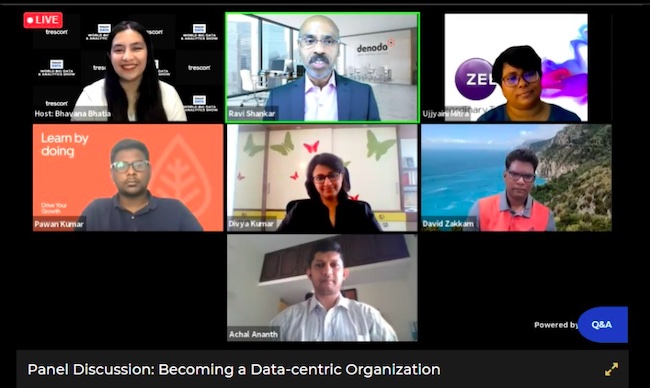
The inaugural edition of World Big Data & Analytics Show – India, which took place on 20 April 2021, has attracted some of the prominent voices in the data and analytics space such as, Dr Neeta Verma – Director General, NIC; Golok Kumar Simli – Chief of Technology, Ministry of External Affairs, Government of India; Dr Ravi Vijayaraghavan – SVP & Chief Analytics Officer, Flipkart; David Zakkam – VP – Analytics, Swiggy; Ravi Shankar – Senior VP and CMO, Denodo; Dr Satyam Priyadarshy – Technology Fellow & Chief Data Scientist, Halliburton, Past President – DC Chapter of TiE; Ujjyaini Mitra – CDO, ZEE Entertainment Enterprises Ltd & ZEE5 (India+Global); to name a few.

The show covered key topics such as data and analytics for a holistic nationwide data ecosystem, advancing analytics and business performance in real-time with logical data fabric, becoming a data-centric organization, how to approach data and analytics transformation, data governance and the customer, cloud and data platforms, leveraging data virtualization to unify data and more.

Key highlights and takeaways from the World Big Data & Analytics Show – India include:

Ravi Shankar, Senior VP and CMO at Denodo discussed at length on ‘Advancing analytics and business performance in real-time with logical data fabric’. He stated that “Data Fabric is a new terminology that is at the peak of a hype cycle, and comprises Data Virtualization as one of the key components in addition to others.”

While speaking about ‘Applications of analytics and data science for e-Commerce’, Ravi Vijayaraghavan, Chief Data Analytics Officer, Flipkart, mentioned that “It is very important to identify where analytics and data science become a challenge; it’s usually at scale.”

Dr Neeta Varma, Director General, NIC, while delivering a keynote on ‘Application of data analytics in building a holistic nation-wide data ecosystem’, mentioned that, “Data has huge potential and when government data is clubbed with private data, it can help generate a lot of insights and spur innovation.”

“During these trying times, virtual gatherings are an ideal way for everyone in the industry to come together. Affordable and intelligent data and analytics solutions and strategies are the need of the hour,” says Mithun Shetty, CEO of Trescon.

The show was hosted on the virtual events platform Vmeets which helped the participants to network and conduct business in an interactive and immersive virtual environment. Participants were also able to engage with speakers in Q&A sessions and network with solution providers in virtual exhibition booths, private consultation rooms and private networking rooms.

World Big Data & Analytics Show – India was officially sponsored by Headline Sponsor – Denodo; and Bronze sponsor – Snowflake.

About World Big Data & Analytics Show

World Big Data & Analytics Show is a thought-leadership-driven, business-focused, global series of events that takes place in strategic locations across the world.

The show features exciting keynotes, government and enterprise use-case presentations, product showcase, panel discussions and tech talks to discuss the latest challenges and explore the latest applications in data-powered solutions.

For further details, please contact:
Monith M Shetty
Corporate Communication Executive
marketing@tresconglobal.com

Glasstech Asia Online Conference 2021 a success and saw participation from over 10 countries

Glasstech Asia Online Conference, powered by BAU and BAU China, happened on the 27th of April 2021. Leading the glass and facades community ahead, the online conference brought together a network of glass and facades professionals around the world, to learn, discuss and to explore new networking opportunities through technology.

Following the success of the first online conference, Glasstech Asia Online Conference 2021 drew over 150 registered attendees. Key trending topics of the industry like Manufacturing & Processing Innovations; Digitalisation: The Evolution Towards A Smart Factory; Architectural Designs: Design Trends of Post Pandemic Buildings; Architectural Designs: Advanced Building Skins / Advanced Facade Technology; Built Environment: The New Singapore Standards SS653 and SS654, was covered in the conference and spurred active interactions between the attendees and speakers during the final discussion round.

Key highlights:

Speaking on Manufacturing & Processing Innovations, Christoph Troska, Head of Marketing & Business Development at Kuraray Europe GmbH, shared interesting insights on structural glazing and the increasing need for security globally. This is critically important due to the changes in the current global climate, affecting the specifications and requirements for glass and facades in buildings.

Next up, Tobias Botzenhardt, Vice President Asia Pacific of Siemens Digital Industries, shared on Digitalisation: The Evolution Towards A Smart Factory. During his informative session, key business issues faced amongst customers and partners during the COVID-19 pandemic was shared and later addressed with digital solutions to overcome these challenges.

This was then complimented by Lars Anders, CEO of Priedemann Holding GmbH, who talked about Facade Engineering in the Post Covid Era — “When it comes to digital knowledge, we have seen in Covid times, where anything that was digitalized already had seen a massive growth on deliverables and profits. We need to rethink our view on this problem by building a digital bridge”.

Timothy Soebroto, Associate Director of Meinhardt Facade Technology Pte Ltd — “The evolution of architectural style has an implication to the evolution of glass facade industry”. During his session, he covered the evolution of glass facades, its’ impact, strategy to keep up with the evolution, and the future of glass facades.

Taking on a different approach, Mathieu Meur, Director of DP Facade Pte Ltd, touched on the technical aspects of glass where he introduced the New Singapore Standards SS653 and SS654. The session highlighted standards for adoption suitable for the regional climates and temperatures, multiple risks and issues that could result in glass breakage in past products. All of which is highly pertinent for glass manufacturers to take note of.

Furthermore, the online conference called attention to Architectural Designs: Design Trends of Post Pandemic Buildings, a highly discussed topic in the industry. It was an interesting segment well presented by two reputable speakers: Stefan Ude, Deputy Head of Product Certification of ift Rosenheim; Thomas Fritzsche, Founder and Head of Design of TFA Architects.

Besides these live sessions, Glasstech Asia Online Conference also features on-demand components that are only accessible to delegates that have an account on the Glasstech Asia Virtual platform.

Glasstech Asia Online Conference 2021 is the first of many upcoming virtual events in Glasstech Asia series taking place this year, leading up to its physical show in November.
With the successful end of Glasstech Asia’s Online Conference 2021, Glasstech Asia cordially invites all glass and facades professionals to join us in the upcoming series of events this year. Introducing a new partnership with PERAFI, Indonesian Facade Association, Glasstech Asia will be releasing a sequence of bi-monthly webinars that touches on different aspects of Facades.

Additionally, Glasstech Asia Virtual will begin to initiate and facilitate business matching activities amongst delegates via the platform, with the aim to spur and encourage business opportunities and discussions between glass and facades professionals. Interested parties can head over to the platform here (https://virtual.glasstechasia.com.sg/ivs/glasstech) and register themselves for the upcoming business matching activities.

Lastly, the annual Glasstech Asia 2021 trade show will continue to take place in Bangkok, Thailand on the 16th to 18th of November this year. As compared to the previous edition, the trade show will incorporate virtual digital components, offering virtual booths, extensive business matching features and enhanced networking functions.

Further information on Glasstech Asia / Fenestration Asia 2021 can be found on our website.

About Glasstech Asia 2021/ Fenestration Asia 2021

Coined “The Glass Hub of Southeast Asia”, Glasstech Asia is an annual rotating exhibition that focuses on all things glass. The upcoming 18th edition Glasstech Asia along with the concurrent Fenestration Asia will be held between the 16th to 18th of November next year. Returning to Bangkok, Thailand for the fourth time, the three-day event brings together the best of the Southeast Asian glass and glazing sector, from glass manufacturing, processing, and machinery to accessories, raw materials, and finished glass products. Coupled with high-powered symposiums, forums, workshops, and an exciting Glass Installation Competition, it is an event not to be missed.

Additionally, Glasstech Asia and Fenestration Asia aims to meet and satisfy the increasing global demands for eco-friendly windows, doors, and facades by focusing on new industry standards in sustainability, automation, and energy-efficiency topics. With a focus on green and smart fenestration technologies to bring about a more sustainable, energy-efficient, and liveable future, the exposition is strategically geared towards helping the architecture, building, and construction sectors in countries meet their energy targets.

About Messe Munchen

Messe Munchen is one of the leading exhibition organizers worldwide with more than 50 of its own trade shows for capital goods, consumer goods and new technologies. Every year, a total of over 50,000 exhibitors and around three million visitors take part in more than 200 events at the exhibition center in Munich, at the ICM – Internationales Congress Center Munchen and the MOC Veranstaltungscenter Munchen as well as abroad. Together with its subsidiary companies, Messe Munchen organizes trade shows in China, India, Brazil, Russia, Turkey, South Africa, Nigeria, Vietnam, and Iran.

With a network of associated companies in Europe, Asia, Africa and South America as well as around 70 representations abroad for over 100 countries, Messe Munchen has a global presence.

About BAU Network

BAU is the World’s Leading Trade Fair for Architecture, Materials and Systems. Everyone involved in the international community for planning, building and designing buildings comes together here–i.e. architects, planners, investors, representatives of the industrial and commercial sectors, the building trades, etc. It is where future-oriented manufacturers come together with an audience of interested professionals. Their primary interests include the latest techniques, materials and applications that can be used in actual practice. This is where visitors experience the future of building in person.

Please contact us if you have any questions or require any additional information: bauasia@mmiasia.com.sg

Agilex Biolabs and B2S Life Sciences on Immunoassay Bioanalysis for Clinical Trials

Agilex Biolabs, Australia’s largest and most technologically advanced specialist bioanalytical laboratory for clinical trials, and B2S Life Sciences, a biotherapeutic enablement company advancing improved analytical methods and outcomes for developers of biotherapeutic drugs and diagnostics, shared key ways to navigate the immunogenicity and biomarker requirements for clinical trials via webinar.

Watch the webinar here (no registration required): https://bit.ly/3sZp8IA / https://youtu.be/x0H9a8oCb98

“Hot Topics in Immunoassay Bioanalysis – Key points in navigating the immunogenicity and biomarker requirements for clinical trials” was presented by Endpoints Webinars on April 6. Hosted by Endpoints Editor Arsalan Arif, the webinar featured Dr Kurt J. Sales, Agilex Biolabs’ Director of Immunoassay, Ronald R. Bowsher PhD, Partner and Chief Scientific Officer at B2S Life Sciences, and Amy Rosen, Associate Director of Statistics at B2S.

The panel shared insights from many years working in immunoassay bioanalysis for clinical trials. Ronald R. Bowsher said B2S has been working with Agilex Biolabs for more than four years, “Our relationship has evolved very well, and we understand each other’s needs. And despite the geographic differences, I think we’ve had a very productive collaboration serving Agilex Biolabs’ customers,” he said.

Dr Kurt J. Sales said, “Our world-class laboratories feature state-of-the-art equipment including Gyrolab Xplore, MSD Quickplex 120, Luminex Magpix, BD FACSymphony A3 flow cytometer and soon to be released, digital droplet quantitative real-time RT-PCR, while our scientists have experience in solving the most complex immunogenicity and drug tolerance issues, often encountered in immuno-oncology studies in both an early phase and later phase setting.”

Agilex Biolabs specialises in bioanalysis of small molecules and biologics for PK, immunogenicity, biomarkers and immunological pharmacodynamics assessments utilising LC-MS/MS, immunoassay (Mesoscale, Gyrolab, Luminex) and flow cytometry (BD FACSymphony A3, 20 colour cell analyser), and has leading certifications including OECD GLP Recognition with NATA (Australian Government OECD GLP Compliance monitoring authority) and ISO 17025 Accreditation for global recognition.

Australian clinical trials have remained open for business. Agilex Biolabs, a designated essential service so clients can be assured of study continuity, can assist international clients with a rebate of up to 43.5% on clinical trial bioanalytical services spend as part of the Australian Government clinical trial attraction program. The company has recently expanded its labs by more than 30% to accommodate biotech demand from APAC and the USA. Watch the new lab video walkthrough here: https://youtu.be/WNdPGkdr9FA.

Book a briefing with Agilex Biolabs before starting your next clinical trial: https://calendly.com/agilexbiolabs/15min

About Agilex Biolabs — https://www.agilexbiolabs.com
Agilex Biolabs, Australia’s leading bioanalytical laboratory, has more than 20 years’ experience in performing regulated bioanalysis, including quality method development, method validation and sample analysis services. We have successfully supported hundreds of preclinical and clinical trials around the world where customers choose Australia for the streamlined regulatory process and access to the world’s most attractive R&D rebate of more than 40% on clinical trial work conducted in Australia. We offer services for both small molecules and biologics for PK, immunogenicity (PD) and biomarker bioanalysis utilising the two platforms of LC-MS/MS and Immunoassay.

Agilex Biolabs media contact:
Kate Newton
Media@AgilexBiolabs.com

Moomoo Inc. clinches Title Sponsorship for Yahoo Finance’s Exclusive Livestream of the 2021 Berkshire Hathaway Shareholders Meeting

Moomoo Inc, an all-in-one digitalised stock trading and wealth management platform and a wholly owned subsidiary of Futu Holdings Ltd (Nasdaq: FUTU), announced today that it has been selected as the title sponsor of the 2021 Berkshire Hathaway Shareholders Meeting live stream event. Yahoo Finance is the exclusive live stream host for the event which will be held on Saturday, 1 May 2021 beginning at 12:30 pm ET.

Berkshire Hathaway’s Annual Shareholders Meeting, known as the “Woodstock for Capitalists”, is one of the most well attended shareholder meetings in the world. In the new normal, the event will be broadcast remotely. Yahoo Finance will connect moomoo’s 13 million users to the only destination for investors and professionals to hear directly from billionaire investor Warren Buffett.

Millions of people around the world are expected to tune in to hear Chairman and CEO Warren Buffett, Vice Chairman Charlie Munger, Vice Chairman of Non-Insurance Operations Greg Abel and Vice Chairman of Insurance Operations Ajit Jain share their insights on economic recovery, today’s markets, the company, and more.

Mr. Leaf Hua Li, Founder & CEO of FUTU, said: “We are honoured to be selected as the Title Sponsor for Yahoo Finance’s live stream of Berkshire Hathaway’s Shareholder Meeting. The walls of access are tumbling down in this digital world and it is our privilege to provide our users with this opportunity.

There is always so much to learn from Berkshire Hathaway and Warren Buffett, one of the greatest investors of our times. We look forward to seeing a lively discussion on our moo community platform, with industry experts commenting and interpreting these nuggets of wisdom for our users.”

Created with the intention of fulfilling its mission in making investing “not alone”, the moo community serves as a platform for users to post investment ideas and trading history as well as interact directly with over 700 companies, fund managers, media and key opinion leaders through posts and live-streaming. On a daily basis, it has more than 1 million active users, over 310,000 user-generated content and over 3,000 posts. FUTU will be streaming the show live on its moomoo app, which is available in the Apple App Store or Google Play Store.

As an incentive to download the app for first time users, Futu Singapore is offering the following with a SGD 2,700 deposit for every account opening*:

– 1 Free Apple (AAPL) Share
– Cash coupon of SGD 30
– 90 days unlimited commission-free trading for US, HK & SG markets
– Free level 2 market data for US Stocks

The schedule of the live coverage is below, with special guests and interviews for the pre and post shows to be announced at a later date.

Yahoo Finance Livestream Programming Schedule:

· 12:30pm ET Yahoo Finance pre-show

· 1:30pm ET Shareholder Q&A with Warren Buffett, Charlie Munger, Ajit Jain, and Greg Abel

· 5:00pm ET Berkshire Hathaway business meeting

· 5:30pm ET Yahoo Finance post-show

· 6:00pm ET Livestream ends

The programme will also be broadcasted live on Yahoo Finance.

*Terms and conditions apply. The full terms and conditions and disclaimer can be found at https://j.moomoo.com/003U7L . This advertisement has not been reviewed by the Monetary Authority of Singapore. In Singapore, capital market products and services in moomoo are offered by Futu Singapore Pte. Ltd.

About Futu Holdings Limited

Futu Holdings Limited (NASDAQ: FUTU) is an advanced technology company transforming the investing experience by offering a fully digitised brokerage and wealth management platform. Pursuing a massive opportunity to facilitate a once-in-a-generation shift in the wealth management industry and build a digital gateway into broader financial services. The organisation’s primary fee-generating services include trade execution and margin financing which allow its clients to trade securities, such as stocks, warrants, options, futures and exchange-traded funds, or ETFs, across different markets. Futu enhances the user and client experience with market data and news, research, as well as powerful analytical tools, providing them with a data rich foundation to simplify the investing decision-making process. Futu has also embedded social media tools to create a network centered around its users and provide connectivity to users, investors, companies, analysts, media and key opinion leaders.

About Futu Singapore Pte. Ltd

Futu Singapore Pte. Ltd. is a wholly-owned subsidiary of Futu Holdings Limited.Futu Singapore Pte. Ltd. (www.futusg.com) is a capital markets services licence holder regulated by the Monetary Authority of Singapore (Licence No. CMS101000).

About moomoo

moomoo Inc. is a wholly-owned subsidiary of Futu Holdings Ltd, which is an advanced technology company transforming the investing experience by offering a fully digitised brokerage and wealth management platform. moomoo’s mission is to provide any level of investors with an intuitive and powerful investing platform by using technology. We keep improving customer’s experience and driving industrial innovation backed by independent technological research and development (R&D) capabilities on the whole trading process and our creative internet operating model. Capital markets products and services on moomoo are offered by Futu Singapore Pte. Ltd. to persons in Singapore, or to persons in jurisdiction where such offers are permitted.

For all media queries, please contact:

Ashley Tan / Jass Lim
FPR
T: 6438-2990
E: FUTU-SG@financialpr.com.sg

Finxflo Offers Its Customers More Options with Coinbase

As the world’s first hybrid liquidity aggregator, Finxflo aims to facilitate greater liquidity with leading exchanges and protocols to create a market environment more conducive to trading. Continuing their efforts to bring key players onto a common platform, Finxflo has added Coinbase Institutional to its roster of liquidity providers.

Coinbase is an online platform that allows merchants, consumers, and traders to conduct transactions with digital currency.

It allows users to create their own cryptocurrency wallets, and start buying or selling cryptocurriencies by connecting with their bank accounts. Finxflo customers will be able to access Coinbase for their investments.

Coinbase also works at an institutional level, whereby it provides a series of merchant payment processing systems and tools that support many highly-trafficked websites on the internet.

Trading volumes greatly influence liquidity in the cryptocurrency market. Coinbase offers over 50 assets and over 150 trading pairs, with the most active one being BTC/USD. The platform was launched in 2012 with a mission to create an open financial system for the world.

With innovation at the core of its philosophy, Finxflo will change how the cryptocurrency market operates, offering a one-stop solution for all cryptocurrency traders and investors.

About Finxflo
Co-founded by leaders in their respective niches, Finxflo is a platform that focuses on changing the cryptocurrency market through innovation. As the world’s first hybrid DeFi/CeFi liquidity and protocol aggregator, Finxflo brings a one-stop solution for all cryptocurrency traders and investors. Using only one account with one KYC, our users are now able to utilise liquidity from 25+ various CeFi and DeFi platforms through a single user interface. In simple terms, Finxflo blends all the upsides of DeFi and CeFi ecosystems to produce the ultimate product. Visit www.finxflo.com.

About Coinbase
Founded in June of 2012, Coinbase offers a suite of products to consumers, professional traders and institutions that make trading, investing and transacting in cryptocurrencies easy and secure. Coinbase strives to be the most trusted brand in the space, and has built the world’s leading platform for cryptocurrencies serving over 20 million customers. The company is based in San Francisco, California with offices in Chicago, New York and London. Visit www.coinbase.com.

Media contact:
Stefan Lai, Partnerships Manager, Finxflo
E-Mail: marketing@finxflo.com
Website: https://www.finxflo.com/

Government Blockchain Association (GBA) Announces the First Release of “The Impact of Cryptocurrency Adoption on Government”

Tax Working Group of the Government Blockchain Association (GBA) today announced the first release of “The Impact of Cryptocurrency Adoption on Government.” This study, developed by an international panel of government and private sector experts, examines the adoption of cryptocurrency around the world and determines the impact it may have on governments. The study is intended to provide public and private sector leaders with the information needed to understand cryptocurrency trends and recommend potential courses of action.

While the world is navigating uncharted waters as the global pandemic introduces many challenges to national economies, governments are especially vulnerable to the changing tides that threaten established norms. The very definition of money itself is changing. As in many times of crises, there are opportunities to explore new ways of doing things that end up improving people’s lives.

“We are witnessing a rapidly growing phenomenon in the world of cryptocurrencies, as it is trending toward total market capitalization of the world’s largest technology companies. If this trend continues, there is no doubt that the future of money, governance, and the law will change forever,” says Mark Montoya, Chief Data Officer at the Government Blockchain Association.

But what will this mean for governments?

“To understand this phenomenon, we need to start asking questions about cryptocurrency. If the cryptocurrency trend persists over the next ten years, what is the impact on the global financial system? If significant transactions bypass traditional financial institutions, how will governments manage their economies and enforce their laws? Will cryptocurrency complement the payment systems, compete with them, or even replace them?” says Ksenija Cipek, Head of Tax Risk Analysis at the Ministry of Finance of Croatia.

– Background and Research Approach. The study discusses the impact of cryptocurrency adoption on the following areas of government: regulation, ethics, privacy, jurisdictions, economy, enforcement, and taxation.

– Trends in Adoption of Cryptocurrency and Government Impacts. Governments have embarked on many different initiatives ranging from Central Bank Digital Currency (CBDC) development projects to authorizing cryptocurrency custodial services for banks and drafting new cryptocurrency regulations. This study shows how and in what ways the evolution impacts government and the broader public sector, region by region, country by country.

To download the report, please visit www.GBAglobal.org/cmp.

About GBA

The Government Blockchain Association (GBA) is an international professional association focused on blockchain-related technologies, opportunities, and challenges in the public sector. GBA cultivates professional workflows between technologists, public policymakers, financial and legal communities and acts as a catalyst in creating a public dialogue around the creative, profitable, and positive use of blockchain technology. For more information, please visit www.gbaglobal.org.

Source: Plato Data Intelligence: https://zephyrnet.com (bit.ly/3eBGYMV)

Diplomatic Posturing and the Power Game in Southeast Asia

Interview with Dr Stephen Nagy by the Centre for Peace and Justice (JKCPJ) Director, Mr Nadir Ali

Dr Stephen R Nagy, in a recent interview by Mr Nadir Ali, Director of the Centre for Peace and Justice (JKCPJ), responded to the rising tensions in Southeast Asia and spoke about mitigating the cascading issue of asymmetry of power and economy in the region.

In his opinion, the world is once again experiencing a great power competition, a competition that could cascade into conflict and catastrophe. Terrestrial land disputes have expanded to the maritime domain, with China having disputes with states in Southeast Asia, India, and Japan.

Chinese efforts to dominate Southeast Asian Politics and redistribute power is placing the region into the position of trying to balance regional security interests and national security interests. China is effectively using its asymmetric economic relations with its neighbours to achieve its strategic security objectives which focus on territorial control and political deference by neighbours.

In response to the question of China’s domestic legislation and its invention of historic claims and their role in China’s foreign policy, Dr Nagy answered that with China’s re-emergence as the dominant economy in the region, China has widened its claims on features in the South China Sea and islands in the East China Sea, many through domestic legislation and the invention of historic claims as tools to achieve foreign policy objectives. The effectiveness of domestic legislation by China in terms of securing its claims in the South China Sea and East China Sea is however debatable. Many such claims are not recognized by international bodies and courts such as the Permanent Court of Arbitration. One such claim in the South China Sea was ruled not legal by the Permanent Court of Arbitration in July 2016, in a case drawn upon by the Philippines.

China is using domestic legislation to expand its exclusive economic zones by creating municipalities at the edge of the South China Sea which gives a legal foundation to the exclusive economic zones. The impact of China’s legislation is however small. A parallel can be drawn comparing control through domestic legislation between the Chinese claims in the South China Sea and the Japanese controlled Senkaku Islands. Japan has controlled the Senkaku Islands for over a century and there is continuity in that control via coast guard and environmental management, mostly and mainly through domestic legislation and international partnership; no such continuity of control with regard to the Chinese claim exists on the ground in the South China Sea.

The invention of historic claims by China as a tool for foreign policy is even more debatable and problematic. To analyze this, one must turn back the pages of history and search for signs of claims of sovereignty by China over the island territories in the South China Sea; no such claim can be found. Bill Hayton in his book “Invention of China”, writes in detail how during the Ching (Qing) Dynasty, China showed no interest in the island formations in the South China Sea, whether the islands neighbouring Indonesia, Vietnam or the Philippines. China in the past has never set any claim of any of the island territories and thus the invention of historic claim is not only debatable but problematic as well. The UNCLOS treaty signed by 117 states which sets the 200-mile limit for Exclusive Economic Zones gives these countries a claim over the island formations in the South China Sea. UNCLOS however is not ratified by the US, which gives it a loose footing to enforce any such claims on China. This is despite the US conducting operations within the scope of the law.

Dr Nagy briefly touched on the role of ASEAN (Association of Southeast Asian Nations) and individual cooperation in establishing regional stability, and in his viewpoint, ASEAN could play a significant role in resolving territorial issues in Southeast Asia, but it is a loose association of nations and doesn’t have the legal capacity to challenge and enforce its decisions on China. Hitherto, it has till now not played any decisive role. At the 2014 ASEAN Summit, a consensus was developed for a joint statement with regard to territorial disputes, however, Cambodia succumbed to influence from China, making a joint statement impossible. This fracturing of ASEAN unity and division of opinion is mainly achieved through aid and pledges to promote development; an example of how China uses its economic influence to shape the behaviour of neighbouring states.

With most of the ASEAN states not claimants in the SCS disputes, China has a free hand in manipulating the decision-making capability of ASEAN. The ASEAN members hold mixed views about China; some members perceive China as an economic opportunity and think that China is critical for the development of ASEAN member states, while others see China as a state having dominating and hegemonic interests in the region, thus the relationship of China and ASEAN will always be important but challenging. The main problem is the power asymmetry between China and the Southeast Asian nations. These nations seek strategic autonomy to resolve the South China Sea issues peacefully and effectively. The pattern we are seeing, at an individual level, is to bring an extra-regional power to the region to enhance the human capital and other capabilities so that they can push back unilaterally against some of the more assertive behaviour of China. This becomes more important for ensuring that the economic, political and national security interests of smaller nations are met and secured.

Dr Nagy then addressed the need to establish and maintain partnerships and the formation of Quad-like groups in restoring stability and balance in Southeast Asia and particularly the South China Sea, as Japan has been the most active in establishing strategic partnerships, by providing coast guard vessels, maritime domain awareness, and human capital to support individual members and enhance ASEAN’s integration. Japan’s role is even more important when it comes to the Chinese maritime militia (fishermen boat strategy), whereby the militia tries to instigate escalations that allow China to build an image seen as being defensive. The militia is used to build pressure on the states and in the case of the Philippines, China has already occupied some features in the South China Sea using these militia forces. The militia moves in and out of sovereign national waters, where every movement is planned in building a Lawfare strategy, as in the case of the Senkaku islands.

The US needs to designate a dedicated naval fleet for the South China Sea, so it has a constant presence 365 days a year. This would limit the influence of China in the region, restore the symmetry of trade relations to some extent and stop the undue exploitation of smaller states by the People’s Republic of China. Naval cooperation and joint exercises in the South China Sea challenge China in particular when French and Canadian navies are involved. Quad and Quad-plus like cooperation is the way forward, however, this could lead to catastrophe if maritime management systems and communications channels are not established. China has to adjust to the presence of an extra-regional power in the South China Sea, and the US and allies have to work to keep China’s assertive behaviour at bay while avoiding accidental conflict.

– Dr Stephen R Nagy is a Senior Associate Professor at the Department of Politics and International Studies, International Christian University, Tokyo. He is a Distinguished Fellow at the Asia Pacific Foundation (APF) in Canada, a Fellow at the Canadian Global Affairs Institute, and a Visiting Fellow at the Japan Institute for International Affairs (JIIA). He is currently working on ‘Chinese Perceptions of Japan’s Foreign Policy under PM Abe since 2012’, and ‘Middle Power Cooperation in the Indo-Pacific’. Follow Stephen on Twitter @nagystephen1.

– Nadir Ali Wani is currently Director of the Center for Peace and Justice, a research-based group in Srinagar, the capital of Jammu and Kashmir, India. He holds a Master’s degree in Conflict Studies and International Relations from Jawahar Lal Nehru University, New Delhi, and has an abiding interest in the study of conflicts in South Asia with a particular interest in international politics to do with China, Islam and Kashmir.

– Jammu and Kashmir Centre for Peace and Justice (JKCPJ) is a youth-oriented, independent, multidisciplinary research organization. The Centre came into being in 2018, against the backdrop of global challenges upholding peace and social justice. The driving concern of the JKCPJ is bringing people together to accomplish things in an environment of trust, to strive for sustainable peace. Our mechanism transmits knowledge, hope, hard work, and successfully contributing to the development of humankind. Please visit https://jkcpj.org.