Metalist Lab Authorized to Offer NARAKA Copies by Cryptocurrency

Authorized by well-known game NARAKA: BLADEPOINT, world-leading blockchain publisher Metalist Lab announces sales of NARAKA copies using cryptocurrency such as Bitcoin\BNB. Metalist Lab has reached a cooperation with BinancePay as the main payment tool.

Unchained Multiplayer Combat Game on Steam NARAKA: BLADEPOINT

NARAKA: BLADEPOINT is an up to 60-player PVP mythical action combat experience with martial arts-inspired melee combat, gravity-defying mobility, vast arsenals of melee & ranged weapons, legendary customizable heroes with epic abilities.

It is been sold 6 million+ copies in 4 months, NARAKA: BLADEPOINT is also a Steam Weekly Global Top Seller and has a 1.5-million-dollar prize pool for the first NARAKA BLADEPOINT Championship.

How to purchase NARAKA: BLADEPOINT with BNB/BTC

Metalist Lab is authorized to sell copies and accepts BTC\BNB\AXS payment. Players can go to the Metalist (https://metalist.io/game-store) to purchase NARAKA: BLADEPOINT through wallet (on-chain or lightning) or Binance App. After successful purchase, players can receive the Steam product code and activate the game on Steam.

Besides, don’t forget to follow NARAKA: BLADEPOINT (@NARAKATHEGAME) on Twitter to keep yourself updated on the latest news and activities.

Blockchain technology energizes game developers

After releasing NARAKA: BLADEPOINT NFT for the first time, Metalist Lab continues its efforts to help video game developers utilize blockchain technology. Authorizing Metalist Lab to sell copies with cryptocurrencies suggests that mainstream game developers start to embrace blockchain technology. It seems that there will be more and more cooperation between games and blockchain.

About MetaList Lab

MetaList Lab is based in Australia and is a world-leading publisher of NFTs. It brings countless outstanding NFT designers together with the top names in encryption technology and has worked with game companies such as NetEase, news and communications agencies such as the Associated Press, as well as many high-level artists and their IPs. Recently it’s been distributing NFTs for NetEase’s globally-popular game NARAKA: BLADEPOINT as well as the AP Historic Moments NFT series.

Media Contact
Sharona Lee, Metalist Lab
E: Rona@metalist.io
T: +61 401 029 450
W: https://metalist.io

SOURCE: Metalist Lab
The GBA Hires Washington, DC Lobby Firm Rulon & White Governance Strategies

The Government Blockchain Association, (GBA), announces that they have retained the services of Rulon & White Governance Strategies et al to help the public and private sector connect, communicate, and collaborate through blockchain to solve public sector challenges.

The GBA is building a network of public-sector professionals at the local, state, national, and global levels. With members in over 500 government offices around the world, this network is using blockchain technologies to serve their constituents globally.

Working with private sector innovators, the GBA is developing solutions connected through a government business blockchain platform (GBBP). By involving people through chapters, working groups, and communities, new ideas can meet real solutions. Blockchain solutions then plug into the interoperable blockchain platform, revolutionizing how governance works.

Rulon & White Governance Strategies (RWGS) represents an array of corporations, non-profits, and government organizations in Washington, DC. RWGS has specific policy experience across multiple disciplines including Blockchain, Cryptocurrency, Financial Services, Energy, Healthcare, and many more. Together, Rulon and White Governance Strategies and the GBA play a critical role in educating and coordinating with policy makers, regulators, and administrators at all levels. These two organizations will facilitate and support legislation, rules, and decisions that promote the use of blockchain technology.

“Crypto and blockchain adoption is a slow and winding process,” says Todd White, Managing Partner of Rulon & White.

“Working with RWGS will be like supercharging the visibility and opportunity for our members,” says Gerard Dache, Executive Director, GBA.

bit.ly/34DkG8D

This alliance hopes to supercharge that process.

For more information about Government Blockchain Association, GBA, go to www.gbaglobal.org.

For information on Rulon & White, go to www.rulonwhite.com

Source: Plato Data Intelligence https://zephyrnet.com

Opimas estimates that over US$190 billion worth of Bitcoin is currently at risk due to subpar safekeeping

Safekeeping of cryptocurrencies presents a challenge for institutions holding cryptocurrencies on their clients’ behalf. Cryptocurrency transactions are irreversible and anyone with full access to a wallet’s private key controls the cryptocurrencies that reside within it. Frighteningly, a number of institutional participants and even some large cryptocurrency exchanges rely on subpar custody approaches, leading Opimas to estimate that over US$190 billion worth of Bitcoin is currently at risk due to subpar safekeeping.

Figure 1: Custody Methods Utilized by Institutional Investors

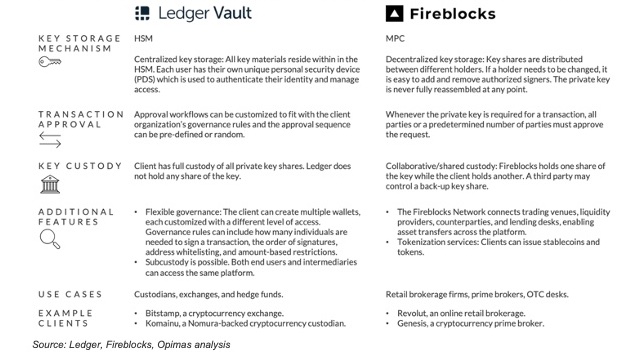
Figure 2: A Comparison of HSM and MPC Technology Providers

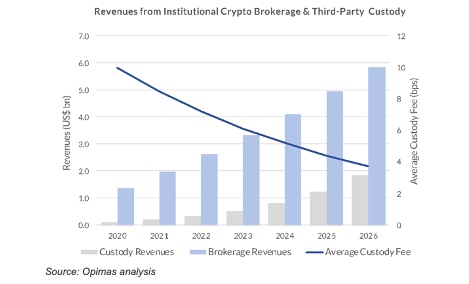
Figure 3: The Market for Crypto Custody & Prime Brokerage Services Is Growing

Figure 4: Institutional Cryptocurrency Holdings Over Time

Luckily, a number of companies have emerged to address this problem. A new research report from Opimas–Crypto Custody: No More Excuses (http://www.opimas.com/research/653/detail/), authored by analysts Suzannah Balluffi and Anne-Laure Foubert–looks at the landscape of cryptocurrency custody-enabling technology providers and institutional-grade cryptocurrency custodians as well as the size of the market for cryptocurrency custody and brokerage services.

Some key findings in the report include:

Many of even the largest holders of Bitcoin and other digital assets continue to rely on storage devices meant for individual investors. Although some of these self-custody devices and wallets are secure and reputable, the operational risk posed by this approach is significant for institutional investors. Furthermore, a chunk of institutionals’ cryptocurrency holdings sit in hot wallets on exchanges. In total, about 22% of institutional cryptocurrency holdings are safeguarded in these relatively risky manners (Figure 1).

There are no more excuses for lackadaisical safekeeping – institutions can now choose from several reputable cryptocurrency custody-enabling technology providers and institutional-grade cryptocurrency custodians. Yet no custody solution is equal – there is still no best practice when it comes to security and governance relating to private keys. For example, some providers may rely on time-tested Hardware Security Modules (HSMs), while others use a newer technology known as Multi-Party Computation (MPC) – see Figure 2.

Some cryptocurrency custodians have followed in the footsteps of traditional capital markets by adding prime brokerage services to their offerings, including trading and settlement, lending, margin finance, staking, reporting, and capital introduction services. Opimas estimates that the current annual revenues generated by the institutional crypto brokerage and custody market are roughly US$2 billion and will grow to nearly US$8 billion by 2026 – a sizeable portion of this coming from brokerage services (Figure 3).

Regulations surrounding institutions’ ability to store cryptocurrency have become clearer (and in some cases more favorable) in numerous jurisdictions. Notably, the Office of the Comptroller of the Currency (OCC) ruling in the US has allowed banks to store cryptocurrencies for their customers. This regulatory clarity has led a number of financial institutions around the world to provide trading and custody for digital assets. With the advances in brokerage and custody solutions, Opimas expects institutional cryptocurrency holdings to grow from 20% of the cryptocurrency market cap to over 50% by 2026 (Figure 4).

Source: PlatoData Intelligence (bit.ly/3xXPK0r)

Government Blockchain Association (GBA) Announces the First Release of “The Impact of Cryptocurrency Adoption on Government”

Tax Working Group of the Government Blockchain Association (GBA) today announced the first release of “The Impact of Cryptocurrency Adoption on Government.” This study, developed by an international panel of government and private sector experts, examines the adoption of cryptocurrency around the world and determines the impact it may have on governments. The study is intended to provide public and private sector leaders with the information needed to understand cryptocurrency trends and recommend potential courses of action.

While the world is navigating uncharted waters as the global pandemic introduces many challenges to national economies, governments are especially vulnerable to the changing tides that threaten established norms. The very definition of money itself is changing. As in many times of crises, there are opportunities to explore new ways of doing things that end up improving people’s lives.

“We are witnessing a rapidly growing phenomenon in the world of cryptocurrencies, as it is trending toward total market capitalization of the world’s largest technology companies. If this trend continues, there is no doubt that the future of money, governance, and the law will change forever,” says Mark Montoya, Chief Data Officer at the Government Blockchain Association.

But what will this mean for governments?

“To understand this phenomenon, we need to start asking questions about cryptocurrency. If the cryptocurrency trend persists over the next ten years, what is the impact on the global financial system? If significant transactions bypass traditional financial institutions, how will governments manage their economies and enforce their laws? Will cryptocurrency complement the payment systems, compete with them, or even replace them?” says Ksenija Cipek, Head of Tax Risk Analysis at the Ministry of Finance of Croatia.

– Background and Research Approach. The study discusses the impact of cryptocurrency adoption on the following areas of government: regulation, ethics, privacy, jurisdictions, economy, enforcement, and taxation.

– Trends in Adoption of Cryptocurrency and Government Impacts. Governments have embarked on many different initiatives ranging from Central Bank Digital Currency (CBDC) development projects to authorizing cryptocurrency custodial services for banks and drafting new cryptocurrency regulations. This study shows how and in what ways the evolution impacts government and the broader public sector, region by region, country by country.

To download the report, please visit www.GBAglobal.org/cmp.

About GBA

The Government Blockchain Association (GBA) is an international professional association focused on blockchain-related technologies, opportunities, and challenges in the public sector. GBA cultivates professional workflows between technologists, public policymakers, financial and legal communities and acts as a catalyst in creating a public dialogue around the creative, profitable, and positive use of blockchain technology. For more information, please visit www.gbaglobal.org.

Source: Plato Data Intelligence: https://zephyrnet.com (bit.ly/3eBGYMV)

Thailand’s Finance Ministry Has Granted the 5th Digital Asset Trading License to Huobi to Operate Crypto Business

Thailand’s Ministry of Finance has officially granted the 5th digital asset trading license, which makes Huobi the fifth licensed digital asset exchange in Thailand to operate digital asset trading in compliance and permits it to start local fiat trading and token trading services. [www.sec.or.th/digitalasset]

Huobi Thailand is built on Huobi Cloud, which provides a one-stop solution for global digital asset exchanges. Huobi Thailand will provide Thai users with secure and reliable digital asset trading services through Huobi Cloud’s verified technical capabilities. In the field of digital asset trading, Huobi is one of the largest exchanges in the world by trading volume and has accumulated six years of experience in safe operation. After entering Thailand, Huobi will also actively cooperate with the government and local enterprises to explore the application scenarios of blockchain.” said by Sakda, head of Huobi Thailand.

In the last two years, Thailand has improved legislation on digital assets to provide a safe investment environment for investors. In May 2018, SEC, Thailand’s digital assets regulator, announced that all companies in Thailand involved in digital asset business would only operate after receiving the license. It also required existing companies with related businesses to submit applications for licenses within 90 days. In January, after four months of the approval period, Bitcoin Exchange, Bitkub Online, Satang Corporation and a digital asset broker successfully received the licenses, while the applications of three other companies were denied.

On May 14, the Royal Decree on Digital Asset Businesses B.E. 2561 (2018) (the “Royal Decree”) went into effect. The Decree, which consists of 100 sections, clearly defines and classifies of digital assets, the business scope of virtual currency, and the subject and authority of supervision. In addition, the Decree also outlines strict prohibition against insider trading and market manipulation and sets punishments for violators.

When considering license applicants, the regulators focus on whether the applicant has a sound management system, the background of board and management team members, whether there is a monitoring system to detect conflicts of interest, and whether there is a routine cyber security check, etc. Obtaining a license requires the approval of the regulatory commission, who usually only makes it once a month.

In addition to regulated exchanges, Thailand’s government is also actively exploring other blockchain applications. In August, the Bank of Thailand announced the development of Intanon, its official virtual currency. Intanon would be based on the distributed ledger technology developed by R3 and CORDA platform, which aimed to use blockchain technology to improve the efficiency of interbank payments. Eight commercial banks in Thailand, including Standard Chartered Bank of Thailand and HSBC, announced support for the project.

As one of the world’s leading digital asset service providers, Huobi has a deep global layout with licenses and compliance teams across a number of regions. Its strategic partner in the United States holds an MSB as well as MTL licenses in 12 states. In Japan, Huobi has obtained No.0007 exchange license. In addition, Huobi has obtained one of the first DLT license under Gibraltar’s purpose build regulatory regime. 

About Huobi Group

Consisting of numerous upstream and downstream enterprises, Huobi Group is a leading global blockchain company. Established in 2013, Huobi Group’s accumulative turnover exceeds US$1 trillion. It proudly provides safe, secure, and convenient cryptocurrency trading and asset management services to millions of users in 130+ countries. For more info, visit https://www.huobigroup.com

About Huobi Cloud

Huobi Cloud is a one-stop solution provider to help partners build reliable and stable digital asset exchanges. Huobi Cloud helps partners to build the system of OTC and digital asset trading. As of December 31, 2018, more than 120 digital asset exchanges have launched. Huobi Cloud’s partners come from Russia, the UK, Africa, Hong Kong, Singapore, Indonesia, Canada, Brazil, Thailand, etc. Huobi Russia, Huobi Indonesia and Huobi Thailand have built up.

Media contact: 
Huobi Global Limited 
Wu Fengheng 
E: wufengheng@huobi.com
U: www.hbg.com