The GBA Hires Washington, DC Lobby Firm Rulon & White Governance Strategies

The Government Blockchain Association, (GBA), announces that they have retained the services of Rulon & White Governance Strategies et al to help the public and private sector connect, communicate, and collaborate through blockchain to solve public sector challenges.

The GBA is building a network of public-sector professionals at the local, state, national, and global levels. With members in over 500 government offices around the world, this network is using blockchain technologies to serve their constituents globally.

Working with private sector innovators, the GBA is developing solutions connected through a government business blockchain platform (GBBP). By involving people through chapters, working groups, and communities, new ideas can meet real solutions. Blockchain solutions then plug into the interoperable blockchain platform, revolutionizing how governance works.

Rulon & White Governance Strategies (RWGS) represents an array of corporations, non-profits, and government organizations in Washington, DC. RWGS has specific policy experience across multiple disciplines including Blockchain, Cryptocurrency, Financial Services, Energy, Healthcare, and many more. Together, Rulon and White Governance Strategies and the GBA play a critical role in educating and coordinating with policy makers, regulators, and administrators at all levels. These two organizations will facilitate and support legislation, rules, and decisions that promote the use of blockchain technology.

“Crypto and blockchain adoption is a slow and winding process,” says Todd White, Managing Partner of Rulon & White.

“Working with RWGS will be like supercharging the visibility and opportunity for our members,” says Gerard Dache, Executive Director, GBA.

bit.ly/34DkG8D

This alliance hopes to supercharge that process.

For more information about Government Blockchain Association, GBA, go to www.gbaglobal.org.

For information on Rulon & White, go to www.rulonwhite.com

Source: Plato Data Intelligence https://zephyrnet.com

Opimas estimates that over US$190 billion worth of Bitcoin is currently at risk due to subpar safekeeping

Safekeeping of cryptocurrencies presents a challenge for institutions holding cryptocurrencies on their clients’ behalf. Cryptocurrency transactions are irreversible and anyone with full access to a wallet’s private key controls the cryptocurrencies that reside within it. Frighteningly, a number of institutional participants and even some large cryptocurrency exchanges rely on subpar custody approaches, leading Opimas to estimate that over US$190 billion worth of Bitcoin is currently at risk due to subpar safekeeping.

Figure 1: Custody Methods Utilized by Institutional Investors

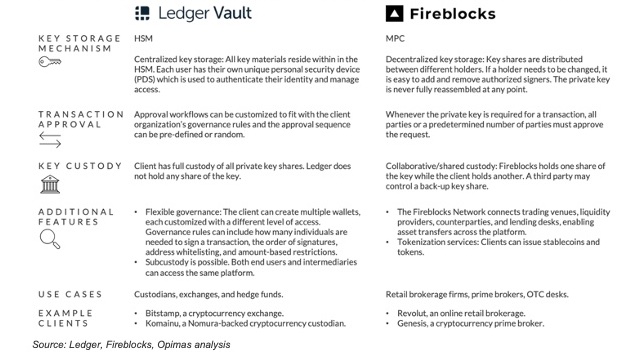
Figure 2: A Comparison of HSM and MPC Technology Providers

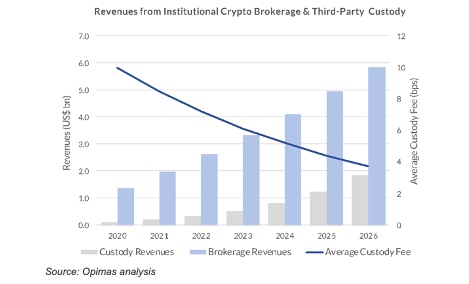
Figure 3: The Market for Crypto Custody & Prime Brokerage Services Is Growing

Figure 4: Institutional Cryptocurrency Holdings Over Time

Luckily, a number of companies have emerged to address this problem. A new research report from Opimas–Crypto Custody: No More Excuses (http://www.opimas.com/research/653/detail/), authored by analysts Suzannah Balluffi and Anne-Laure Foubert–looks at the landscape of cryptocurrency custody-enabling technology providers and institutional-grade cryptocurrency custodians as well as the size of the market for cryptocurrency custody and brokerage services.

Some key findings in the report include:

Many of even the largest holders of Bitcoin and other digital assets continue to rely on storage devices meant for individual investors. Although some of these self-custody devices and wallets are secure and reputable, the operational risk posed by this approach is significant for institutional investors. Furthermore, a chunk of institutionals’ cryptocurrency holdings sit in hot wallets on exchanges. In total, about 22% of institutional cryptocurrency holdings are safeguarded in these relatively risky manners (Figure 1).

There are no more excuses for lackadaisical safekeeping – institutions can now choose from several reputable cryptocurrency custody-enabling technology providers and institutional-grade cryptocurrency custodians. Yet no custody solution is equal – there is still no best practice when it comes to security and governance relating to private keys. For example, some providers may rely on time-tested Hardware Security Modules (HSMs), while others use a newer technology known as Multi-Party Computation (MPC) – see Figure 2.

Some cryptocurrency custodians have followed in the footsteps of traditional capital markets by adding prime brokerage services to their offerings, including trading and settlement, lending, margin finance, staking, reporting, and capital introduction services. Opimas estimates that the current annual revenues generated by the institutional crypto brokerage and custody market are roughly US$2 billion and will grow to nearly US$8 billion by 2026 – a sizeable portion of this coming from brokerage services (Figure 3).

Regulations surrounding institutions’ ability to store cryptocurrency have become clearer (and in some cases more favorable) in numerous jurisdictions. Notably, the Office of the Comptroller of the Currency (OCC) ruling in the US has allowed banks to store cryptocurrencies for their customers. This regulatory clarity has led a number of financial institutions around the world to provide trading and custody for digital assets. With the advances in brokerage and custody solutions, Opimas expects institutional cryptocurrency holdings to grow from 20% of the cryptocurrency market cap to over 50% by 2026 (Figure 4).

Source: PlatoData Intelligence (bit.ly/3xXPK0r)

Blockchain & Liberty for All

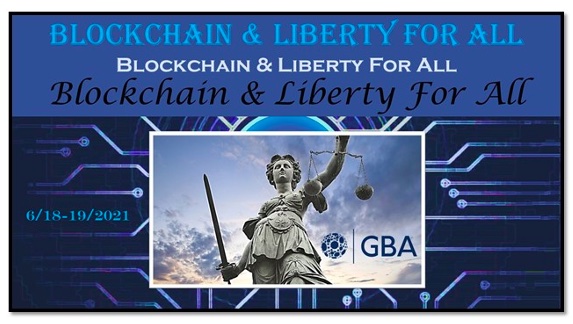
Live from Washington DC, GBA will host a virtual gathering of members to celebrate the accomplishments of 2020 and plan our trajectory going forward. Join us, June 18-19, as the GBA hosts, BLOCKCHAIN AND LIBERTY FOR ALL, streaming virtually to cities around the world.

In commemoration of June 19th, also known as Freedom Day, Juneteenth is a U.S. holiday celebrating the emancipation of African Americans still held in slavery in Texas in 1865, more than two years after the Emancipation Proclamation had officially outlawed slavery. This 2-year delay came from a deliberate withholding of the news of freedom, chaining thousands of slaves with a lie. Today we have an abundance of news, 24/7, on multiple channels. But are we getting the truth, or is it fake news? Without verification, can we trust the data? Blockchain is a specific type of database in which blocks of data are chained together in chronological order, immutable, irreversible, and viewable to anyone. No data goes into a block until the entire community sees it and verifies it. Blockchain as a system can provide verification, trust, and liberty for all. Hence the theme of this year’s GBA annual meeting, Blockchain and Liberty for All.

The Government Blockchain Association, GBA, is a global business association with chapters in 120 cities around the world. In only a few short years, the GBA has risen from a local meetup to an international association of blockchain innovators and government policy makers with over 50 Working Groups including:

– Acquisition Management
– Big Data
– Cannabis
– Cybersecurity
– Education and Training
– Emergency Management
– Financial Regulatory
– Gaming
– Grants
– Intellectual Property
– Land Titling
– Smart Cities
– Space
– Supply Chain
– Voting, and More…

Leaders from GBA Africa, Middle East, Asia-Pacific, Europe, South America, US, Canada, and India will give yearly updates. Eric Guthrie, Esq., GBA Director of Training and author of Diversify or Die, will give a Keynote on ‘Journey to Freedom’. Technology, the Token, Fair and Honest Elections, and Blockchain and Equal Opportunity will all be discussed.

“Political freedom must be accompanied by economic freedom for people to be truly free. Blockchain Technology is a new frontier in the economic landscape.” says Gerard Dache, Executive Director, GBA.

Blockchain technology does not discriminate between color, gender, age, nationality, or background (education). This new technology presents an opportunity for all who want to embrace it. Join GBA on June 18-19 as we discuss our yearly update.

For more information go to Blockchain & Liberty for All (www.gbaglobal.org/event/blockchain-liberty-for-all)

Source: Plato Data Intelligence (https://zephyrnet.com/blockchain-liberty-for-all/)

Sentinel and StrongBlock Combine Forces for Greater dVPN Node Availability

Sentinel, a one-of-a-kind network layer that allows the development of third-party and white-label decentralized Virtual Private Network (dVPN) applications, is excited to announce its integration with StrongBlock, the leading Nodes-as-a-Service (NaaS) provider. StrongBlock launches and operates full blockchain nodes for non-technical users to increase blockchain strength, rewarding them with STRONG or native protocol tokens. With this integration, the stage is set for Sentinel’s dVPN to expand in scope and utility, while creating new use cases for the network.

With over 5,500 operators running 21,000+ nodes, StrongBlock allocates resources to networks seeking security, diversity, and decentralization. By combining forces with Sentinel, a network that has over 300,000 global users of dVPN applications, StrongBlock’s infrastructure will provide significantly more dVPN nodes, expanding Sentinel’s dVPN bandwidth far beyond its existing capacity.

Combined, the two organizations will provide a truly decentralized VPN that surpasses the performance and user experience of existing centralized competitors such as NordVPN, ExpressVPN, Mullvad, and TunnelBear, all of which have single points of failure due to their centralized architecture.

Providing nodes for Sentinel is a leap forward in StrongBlock’s long-term strategy of increasing node ecosystem support across blockchain protocols, while providing value generation to the node operators within their ecosystem. “It’s the STRONG node army at work,” said David Moss, StrongBlock CEO. “StrongBlock’s click-and-go process will allow anyone to provide a dVPN node to the Sentinel network and earn passive income.”

Typically, Proof-of-Work (PoW) miners are rewarded with native tokens like ETH or BTC for mining, while nodes keep records of all transactions without receiving rewards. In exchange for running dVPN nodes via StrongBlock, node operators will be rewarded with $DVPN tokens to incentivize network health, uptime, and availability.

In partnership with Pangea Blockchain Fund (https://pangeablockchain.ch), backed by renowned blockchain entrepreneur Roger Ver, and the new Pangea Research project, both StrongBlock and bitcoin.com will be operating Validator nodes on the Sentinel network. When asked in an interview between William Duplessie, CEO of Pangea, and Ver, why decentralizing the VPN industry is important, Ver replied, “You can’t have just one single VPN company that can be compromised at any time, or leak all the customer data, or have all sorts of bad things happen. The more holes we can poke in the Great Firewall of China and every other piece of censorship on the internet, the better the world is for everybody. So I’m really excited about these decentralized VPN protocols enabling people to communicate more freely without any permission or being spied upon.”

“It’s a really big deal to be able to give people all over the world access to information without it being censored from them. I support any technology that empowers individuals to have more control over their own lives and access to more information,” Ver added.

As StrongBlock expands across new blockchains such as Cosmos, the integration with Sentinel and StrongBlock will incentivize provably private node operations to share dVPN bandwidth across a broader spectrum of nodes, enabling other new, highly available Web3 applications on top of the Sentinel network.

“We are honored to work with StrongBlock to empower the Sentinel network to increase its bandwidth and reliability for existing and future dVPN users,” said Srinivas Baride, CTO of Exidio (https://exidio.co) (a core contributor to the Sentinel network).

About Sentinel

Sentinel (https://sentinel.co), a decentralized VPN protocol, is built on Cosmos SDK-based architecture. Differing from centralized VPN companies that have been proven to log user data, Sentinel is an open-source, encrypted, peer-to-peer bandwidth marketplace accessible to anyone. Users can connect to any of the provably secure dVPN applications built on the Sentinel network. Individuals can also earn passive income by offering bandwidth to the marketplace. Live network statistics can be found at https://stats.sentinel.co.

Keep up with developments on the Sentinel network on the official Medium (https://medium.com/sentinel), Twitter (https://twitter.com/sentinel_co), and Telegram (https://t.me/Sentinel_Announcements) channels.

About StrongBlock

StrongBlock (https://strongblock.com/), led by blockchain and enterprise software veterans CEO David Moss, CTO Brian Abramson, and CPO Corey Lederer, is the first and only cross-chain protocol to reward nodes for supporting their blockchain infrastructure.

The STRONG protocol and node reward mechanism, integrated with NFTFi tokens, lays the foundation for stronger, more secure, and economically sound blockchain networks.
STRONG enables decentralized governance of its community DeFi protocol. STRONG is not a fundraising device or investment opportunity.

Learn more by visiting StrongBlock’s Medium (https://strongblockio.medium.com), Twitter (https://twitter.com/Strongblock_io) and Telegram (https://t.me/strongblock_io).


Government Blockchain Association (GBA) Announces the First Release of “The Impact of Cryptocurrency Adoption on Government”

Tax Working Group of the Government Blockchain Association (GBA) today announced the first release of “The Impact of Cryptocurrency Adoption on Government.” This study, developed by an international panel of government and private sector experts, examines the adoption of cryptocurrency around the world and determines the impact it may have on governments. The study is intended to provide public and private sector leaders with the information needed to understand cryptocurrency trends and recommend potential courses of action.

While the world is navigating uncharted waters as the global pandemic introduces many challenges to national economies, governments are especially vulnerable to the changing tides that threaten established norms. The very definition of money itself is changing. As in many times of crises, there are opportunities to explore new ways of doing things that end up improving people’s lives.

“We are witnessing a rapidly growing phenomenon in the world of cryptocurrencies, as it is trending toward total market capitalization of the world’s largest technology companies. If this trend continues, there is no doubt that the future of money, governance, and the law will change forever,” says Mark Montoya, Chief Data Officer at the Government Blockchain Association.

But what will this mean for governments?

“To understand this phenomenon, we need to start asking questions about cryptocurrency. If the cryptocurrency trend persists over the next ten years, what is the impact on the global financial system? If significant transactions bypass traditional financial institutions, how will governments manage their economies and enforce their laws? Will cryptocurrency complement the payment systems, compete with them, or even replace them?” says Ksenija Cipek, Head of Tax Risk Analysis at the Ministry of Finance of Croatia.

– Background and Research Approach. The study discusses the impact of cryptocurrency adoption on the following areas of government: regulation, ethics, privacy, jurisdictions, economy, enforcement, and taxation.

– Trends in Adoption of Cryptocurrency and Government Impacts. Governments have embarked on many different initiatives ranging from Central Bank Digital Currency (CBDC) development projects to authorizing cryptocurrency custodial services for banks and drafting new cryptocurrency regulations. This study shows how and in what ways the evolution impacts government and the broader public sector, region by region, country by country.

To download the report, please visit www.GBAglobal.org/cmp.

About GBA

The Government Blockchain Association (GBA) is an international professional association focused on blockchain-related technologies, opportunities, and challenges in the public sector. GBA cultivates professional workflows between technologists, public policymakers, financial and legal communities and acts as a catalyst in creating a public dialogue around the creative, profitable, and positive use of blockchain technology. For more information, please visit www.gbaglobal.org.

Source: Plato Data Intelligence: https://zephyrnet.com (bit.ly/3eBGYMV)

XFai Momentum Leading to Defi Disruption

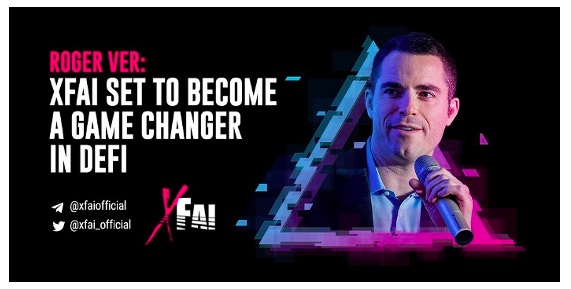
Ever since the private sale, XFai has continued to gain in momentum and considerable interest from not only those who wish to use XFai’s technology to further strengthen their business interests but also from key players and luminaries within the blockchain industry. Today, the team at XFai is happy to announce that Roger Ver, one of the key early believers of Bitcoin and blockchain technology and the CEO of Bitcoin.com, has partnered with XFai through a strategic investment.

While both XFai’s launch method and the DEX Liquidity Oracle are far from the norm, we are glad to witness a wave of support from experts within the field who are knowledgeable about the technical brilliance and also endorse the vision of XFai. The strong show of support from the key industry leaders was further strengthened during the private sale of XFai’s native XFIT token, as the private sale witnessed a raise of $3.8 million US dollars within just 12 hours, making the XFai private sale as one of the largest, most successful raises within the recent DeFi ecosystem. We strongly believe that the key driver to XFai’s continued success is found in the ability of XFai’s Potentializer and DLO (DEX Liquidity Oracle) to fill the ever-increasing gap between the large tokens and the small to mid-cap tokens when it comes to the chances of these tokens being included to reap the benefits of Defi.

“XFai stood out to me due to the potential of their oracle to unlock incredible opportunities in the space. XFai enables actual decentralization by allowing small and mid-cap tokens to finally have a seat at the table. I look forward to watching XFai become a game-changer in the Defi space by providing a solid foundation for future projects to build upon,” says Roger Ver, CEO of Bitcoin.com

As Mr. Ver has mentioned, XFai is focusing on enabling actual decentralization. We strongly believe that the main driver of true decentralization must begin with inclusiveness that can be transformed into true strength within the market. The upcoming XFai’s XFIT Liquidity Generation Event (LGE) on April 8th is thus designed to welcome all interested community members to join the DeFi revolution led by XFai in a fair and efficient manner, while removing hurdles such as multiple transactions and high gas fees.

The team at XFai wholeheartedly welcome the support of Mr. Ver in the power of XFai to invite small and mid-cap tokens to the larger DeFi narrative and benefits, and look forward to working in close cooperation in continuing to offer the much-needed revolution to the untapped 250 Billion US Dollar market size of the small and mid-cap tokens.

About XFai

XFai develops tooling for the DeFi space, graphing it to build game-changing products. The XFai DLO is set to invite mid and small-cap tokens to start earning APY on their token holdings, while the XFai LGE is set to become industry-first in providing a more efficient, transparent, and fair way for everyone to get involved at an early stage. The LGE for XFai’s native token, XFIT, is set to launch on 8th April 2021. We invite everyone to join the DeFi revolution, spearheaded by XFai.

Source: Plato Data Intelligence
Source Link: bit.ly/2OdpInX

Defi Venture XFai Reveals Liquidity Generation Event, Project Backed by Angel Investor Roger Ver

Decentralized finance (Defi) has seen extreme demand and innovative use-cases during the last 12 months. Defi oracles, decentralized exchange (Dex) platforms and automated money makers (AMM) have swelled in value, as statistics show over $43 billion is locked into Defi protocols today. Meanwhile, a new project has recently stepped out of the gate called XFai, a Dex liquidity oracle that aims to capture untapped liquidity from small to medium cap tokens. On April 8, 2021, XFai plans to host a Liquidity Generation Event (LGE), and this week it was announced that Bitcoin.com’s founder and angel investor Roger Ver has invested in XFai.

XFai’s Dex Liquidity Oracle Aims to Empower Decentralized Finance and Capture Untapped Liquidity

Defi concepts and decentralized exchanges are all the rage these days, and a great number of Dex platforms have outperformed their centralized exchange (Cex) counterparts. Today, data shows the total value locked (TVL) into Defi is over $43 billion, and Dex protocols like Uniswap, SushiSwap, and Curve.fi are seeing significant trade volume. Statistics show that $1.7 billion was swapped on Dex platforms in the last 24 hours, and $12 billion traded during the last seven days.

Now there’s a new Defi project on the horizon called XFai that’s planning to launch in the near future. The protocol leverages its unique Dex Liquidity Oracle (DLO) for small to medium cap tokens. XFai”s goal is to develop tools by graphing the Defi space and release game-changing decentralized products.

The project has published a comprehensive white paper that provides XFai’s documentation and insight into the protocol design. The team is launching a native coin called the XFIT token and the project’s Dex Liquidity Oracle, or DLO for short, aims to be a game-changer. The DLO tech can help low-capitalized tokens gather attention and significantly increase token liquidity.

“XFai’s cutting-edge technologies such as the Potentializer and the DLO (Dex Liquidity Oracle) allows small and mid-cap token holders to join a large liquidity pool that charts centralized exchanges, and provides the same – if not more optimized – liquidity depth in decentralized exchanges,” the XFai developers explained to Bitcoin.com’s newsdesk.

Furthermore, the team detailed that XFai has enabled an anti-slippage tool to ensure that traders can freely complete transactions without being trapped, while removing the need for automated market makers (AMM). XFai’s DLO description explains: To encourage more users to participate in liquidity provision, XFai has developed a one-step liquidity addition method, dramatically reducing the hassle and the gas fees involved with liquidity farming. In return, liquidity providers can earn protected APY.

Roger Ver Backs XFai for the future of Defi infrastructure

The vast number of Defi projects in the space today focus solely on the top tier of the tokens by market cap, and centralized exchanges operate in the same manner. XFai’s team hopes to open more doors for tokens with small to medium caps and offer them a “seat at the Defi table.” The project has already attracted a number of investors including venture funds, and more recently Bitcoin.com’s founder and angel investor Roger Ver has decided to back the XFai project.

“XFai stood out to me due to the potential of their oracle to unlock incredible opportunities in the blockchain space,” Ver said speaking about the investment. “XFai enables actual decentralization by allowing small and mid-cap tokens to finally have a seat at the table. I look forward to watching XFai become a game-changer in the Defi space by providing a solid foundation for future projects to build upon,” the Bitcoin.com founder added.

Ver is one of the earliest investors in the bitcoin space, and has been promoting blockchain technology for well over a decade. The undisclosed investment into XFai stems from Ver’s personal investment arm. The XFai LGE is set to go live on Thursday, April 8 and the team stressed that it was “designed with feasibility and simplicity in mind.” Bitcoin.com readers can check out more information about this Defi concept via the project’s website, Telegram channel, social media feeds, and interested developers can look at the project’s Github repository.

“We invite everyone to join XFai in making Defi more accessible, open, and economically empowering, starting with the XFai LGE,” the XFai creators conclude. “The [XFai LGE] user interface is intuitively laid out, while the involved operations are combined into one single click. We believe this will result in the opportunity for even those who have never participated in liquidity mining to join in a stress-free manner, and reap the benefits of high APY and the explosive potential of XFIT.”

Web: https://Xfai.com
Medium: https://xfai-official.medium.com/about

Source: Plato Data Intelligence
Web: bit.ly/3dmAVLp

AU21 Backs XFai’s Reimagined Future of DeFi

AU21, one of the most reputable venture capital firms in the world focusing on blockchain and digital assets, has decided to partner with XFai through a strategic investment. The partnership comes at an important time, as XFai’s proposed changes in the DeFi space are quickly gaining momentum as the project’s public token sale — referred to as Liquidity Generation Event (LGE) — is quickly approaching. AU21 is proud to be bound to XFai by providing its support and access to its network for XFai to reach a wider audience within the DeFi space and help revolutionize the industry.

XFai is a project set to chart a new course for how investors and projects interact within the DeFi ecosystem. It develops various tools that chart the liquidity depth and the order book of both DEX (decentralized exchanges) and CEX (centralized exchanges). Using its native-built DLO (DEX Liquidity Oracle), XFai shifts the liquidity between DEX and CEX dynamically to allow investors on DEX to benefit from free-flowing token liquidity, ultimately freeing the investors to enjoy optimized trading grounds on decentralized exchanges. XFai’s DLO is equipped with anti-slippage technology and an efficient one-sided provisioning, allowing both investors and liquidity farmers to minimize costs while enjoying transparency that shows the actual impact of their trading actions. Moreover, DLO allows partnered small and mid-cap tokens to benefit from APY earnings, allowing holders and projects to gain a bolstered income by choosing to stake their tokens in the liquidity pool.

AU21, the newest investor to be announced as part of XFai’s increasing list of stellar venture capital partners, has an impressive track record of leading projects to astounding success. Founded in 2017, AU21 quickly rose to become one of the most renowned names in the blockchain space. The venture capital firm has been involved in the success of various projects such as the Graph, Synthetix, Centrifuge, Polkadot and Elrond.

“We are proud to announce our backing of XFai and their autonomous liquidity management solution for cryptocurrencies. The DEX Liquidity Oracle achieves several technological milestones in decentralized liquidity provision, and will serve to create a more efficient and accessible marketplace for digital assets,” comments AU21.

About AU21

XFai is set to open the doors to public investors on April 8 through its Liquidity Generation Event (LGE). Unlike traditional Token Generation Event (TGE), the LGE is designed to allow participants to purchase the XFIT tokens and stake them in the liquidity pool in one step and one interface, compared to the normal procedure which would involve up to 4 steps and the hassle of navigating multiple interfaces. The unique launch mechanism, developed by XFai, is expected to set a new standard on how tokens are offered to the public. The LGE also dramatically lowers the likelihood of failed transactions, protecting the participating investors from paying high gas fees for those transactions. Moreover, the one-step mechanism is designed to save the participants from paying exuberantly high gas fees, which has been severely affecting the recent DeFi space. XFai’s XFIT LGE is set to launch on April 8, 2021.

We thank the support of AU21, and look forward to changing the current DeFi landscape for the better through the guidance of AU21.

About XFai

XFai develops tooling for the DeFi space, graphing it to build game-changing products. The XFai DLO is set to invite mid and small-cap tokens to start earning APY on their token holdings, while the XFai LGE is set to become industry-first in providing a more efficient, transparent, and fair way for everyone to get involved at an early stage. The LGE for XFai’s native token, XFIT, is set to launch on 8th April 2021. We invite everyone to join the DeFi revolution, spearheaded by XFai.

Source: Plato Data Intelligence: https://platoblockchain.net/ (bit.ly/3cuY52V)

Ubitquity Joins the Government Blockchain Association (GBA)

Ubitquity LLC, the leading enterprise blockchain-secured platform for real estate and title recordkeeping, is pleased to announce that it has officially joined the Government Blockchain Association. With a diversified product suite that includes solutions for the aviation, title abstracting, and escrow industries, Ubitquity will be offering their technology and services to both government and private enterprise.

Could this be the link that brings real estate and title recordkeeping on a blockchain to the government?

“The Government Blockchain Association (GBA) is a US-based non-profit, membership organization that consists of individuals and organizations that are interested in promoting blockchain related solutions to government requirements. We are excited to be joining such a well-respected global organization,” says Nathan Wosnack, Founder & CEO at Ubitquity.
Mr. Wosnack also hopes this combining of enterprises will be mutually beneficial, creating a long-term impact for the entire GBA community.

Ubitquity brings plenty of impact to the deal, hosting:
– Enterprise-ready, blockchain-secured platform
– Real estate record-keeping
– Simple User Experience for securely recording & tracking property deeds & land records
– Partnerships with academia, aviation companies, municipalities, and real estate companies
– Ubitquity Token and NFT creation
– Newly relaunched website: www.ubitquity.io

To find out more about Ubitquity, Contact:
Bryan Blumenfeld, VP of Partnerships
Email: info@ubitquity.io
Tel: +1 (724) BITCOIN [248-2046]

To learn more about the Government Blockchain Association, GBA, go towww.gbaglobal.org

UREEQA Welcomes Dean Drever, a Sculptor Who Has Produced Multi-Million Dollar Works of Art

You may recognize the work of the newest addition to the UREEQA Collection of Pledged Assets if you tuned in to the 2010 Vancouver Olympics, or if you’ve ever visited Edmonton’s famed Epcor Tower.

Dean Drever

Dean Drever is an acclaimed Canadian sculptor whose minimalist and abstract work can be enjoyed at famous landmarks throughout the country, including Toronto’s Union Station and the Toronto Sculpture Garden.

Drever is a particularly exciting addition to the UREEQA Collection of Pledged Assets, as he is the first artist working in a physical art medium that we are welcoming to the platform. We are pleased that Drever’s pledged work can help illustrate the versatility of the UREEQA platform to protect artists from a variety of backgrounds and mediums.

As a Creator, Drever’s primary reason for joining the UREEQA platform is to protect his work throughout its many iterations and during the development process. This is one of the many challenges that Creators like Drever face, and a real life example of a problem that UREEQA can solve.

A creation starts as an idea, that idea is yours, and it deserves protection.

This is incredibly important to us and is at the forefront of our minds as we develop, launch and grow the platform. UREEQA will help alleviate the fear of bringing an idea to fruition, just for it to be stolen.

Although Drever’s work often ends up in physical form, it begins as an idea, and that idea can still be protected by the power of the Ethereum blockchain. Whether works are digital or physical, the Creator will be able to utilize the UREEQA platform to validate and protect their work. Though we may be seen as a blockchain company, we are utilizing this technology in a real-world application to empower Creators.

If you visit Drever’s YouTube page, you can see his creations come to life – from ideas to massive realities, and it’s easy to understand why he would want protection. For his Bear with Salmon sculpture at Edmonton’s Epcor Tower, Dean first designed the bear with illustrations – much like an architect would a building. The bear was then cast and assembled in a foundry in New York. Finally, the two-tonne sculpture was driven across the continent to Edmonton, Alberta. One could understand the many points along the creative way at which Drever’s work could be compromised.

Once a piece of creative work is hashed to the Ethereum blockchain through UREEQA, it is timestamped, giving proof of WHEN a Creator’s ownership was claimed. This means that as soon as you have an idea, you can stake your claim to your rights. A package of proof can then be built by our team of Validators through our Validation process.

We want to ensure that no idea goes unseen for fear of it being stolen, before it can even be realized by the original Creator. UREEQA will protect work from the smallest idea to the largest creations, including two-tonne sculptures.

Dean also looks forward to the social aspect of UREEQA. It will allow Creators, like Drever, to confidently share their work with fans and art lovers all over the globe, without the fear of it being stolen and having no recourse.

In this way, the UREEQA platform will be an empowering and inspiring place to share creativity. After all, our love of various forms of creative works is the one thing that binds us together as global citizens.

About Dean Drever
Dean Drever is a Canadian sculptor whose abstract, minimalist work is featured throughout Canada. Dean studied at the Alberta College of Art and Design in Calgary, Alberta and currently creates art out of his studio in Toronto, Ontario. His most noted work is Pass the Hat (paper), which is a totem pole made up of nothing more than nearly 11,000 sheets of paper.

You can discover more about Dean Drever and his body of work here:
Website|Instagram|YouTube:

About UREEQA
The UREEQA platform harnesses the power of blockchain technology and the blockchain community to empower creators to protect, manage, and monetize their work. Established in Canada in 2020, UREEQA will modernize the inefficient and bureaucratic systems currently in place for copyright, patent, industrial design and trademark protection. UREEQA provides value and opportunities for its Creators, Validators and Tokenholders via URQA, the token at the heart of the UREEQA ecosystem.

For more information on UREEQA and upcoming announcements please visit our website UREEQA, join our Telegram channel, and follow us on Twitter.