China Medical System (0867.HK): Accelerating Development and Stepping to a New Height Driven by Innovation

By Gelonghui

As the earnings season approaches, once again listed pharmaceutical companies are attracting the attention of the public. Recently, China Medical System Holdings Limited (CMS or the Company) has released its annual results, with both revenue and profit higher than market expectations. According to its 2020 annual results, turnover is up by 14.4% to RMB6.946 billion; net profit up by 30.7% to RMB2.556 billion; basic earnings per share up to RMB1.024, with a proposed final dividend of RMB0.20 per share.
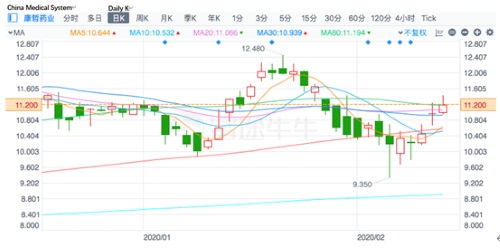
In the past, influenced by expectations of the effects of China’s centralized procurement policy and the Company’s product transition, CMS’s valuation in the capital market was once under pressure, but with the Company’s strategic transformation from a CSO to an innovative pharmaceutical company, coupled with its own solid business growth, its share price has gained a significant increase in the past few months but is still relatively low in the capital market. The Company’s current dynamic P/E ratio is only about 13x, with a market value of HK$ 39.4 billion. However, market values of innovative pharmaceutical companies without profits such as BeiGene and Junshi Biosciences have well exceeded HK$50 billion or even HK$100 billion in HKEX. This shows that the share price of the Company does not reflect its real value after its transformation. It’s worth digging deeper into the innovative pipeline of the Company to take a look at its long-term growth potential and the inevitability of valuation increase.

1. Firm in transition, the Company is using the S&D model to drive its innovative development

Looking back at its history, the Company began introducing exclusive or original drugs from multinational pharmaceutical companies through rights control or exclusive sales agreement early in 2010, creating a unique “CMS Model”. Under this model, the Company has accumulated a strong network of overseas upstream resources and a good reputation, and formed a strong product evaluation system. However, considering the potential impacts of the Company’s existing products, which are all original or exclusive drugs with expired patents or no patents, and China’s centralized procurement policy on performance growth, CMS began to actively adjust its business strategy and transformed into an innovative pharmaceutical company at full speed since the end of 2017.

The true meaning of rebirth lies in the courage to kill your past self. As a CSO leader, CMS takes advantage of its competencies in the deployment of innovative drugs in its gradual transformation and has formed a development path that is different from most other biotechs and innovative pharmaceutical companies.

First of all, the Company’s original business has maintained steady growth over the years and generated strong cash flow, which has given it the confidence to further expand its business, while its long-term accumulated resources and networks overseas have also given it more opportunities to quickly deploy overseas innovative resources. For various reasons, CMS has transformed itself into a venture investor in overseas pharmaceutical companies and actively promoted its presence in the innovative drug field. Through equity investment in overseas biotech companies and strategic cooperation, the Company has rapidly formed an R&D pipeline covering a number of innovative products in just around three years.

The following are some highlights of the Company’s deployment of innovative drugs:

a) Excellent BD capability and mature system help CMS enter into the innovative drug field quickly

Compared with the R&D (research & development) path, which is common in pharmaceutical companies, the Company adopts an S&D (search & development) model, i.e., gradually enriching its innovative pipeline through global search for quality innovative drug projects and early R&D participation. This model particularly tests the Company’s ability to screen and evaluate products.

Looking back at the Company’s history, as a leading CSO company, CMS’ unique vision and product selection ability has been fully verified by the introduction of a series of blockbuster original products with clear efficacy, sufficient clinical evidence and competitive differentiation in the past. The Company has also achieved excellent performance with these quality products for a long time. And with the transition, this long-tested ability is continuing to help its selection of innovative products.

In fact, as the fastest way to deploy innovative drugs, the Company has also polished a complete and mature BD system. From top-level design, introduction strategy, clinical development in China, to the match with existing products and sales teams, and even product commercialization, CMS has built a thorough mechanism and cultural foundation that are suitable for the growth and commercialization of innovative drugs.

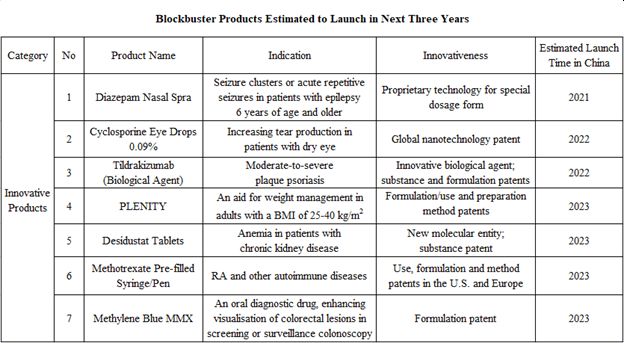
In the past three years, CMS has quickly acquired more than 20 innovative products with unique competitive advantages, including Diazepam Nasal Spray, Tildrakizumab, Cyclosporine Eye Drops 0.09%, etc., and achieved great results, which fully validates its strong and sustainable BD capability and forms a competitive moat, providing CMS with opportunities to achieve a higher premium valuation.

b) Avoiding competition in over popular products, CMS tries to find “diamond in the rough” with a differentiated product selection strategy

In fact, according to its footprint in innovative product deployment, due to its innate promotion-driven genes, the Company is more capable of exploring new products from the perspective of marketing and promotion. It does not blindly pile up popular products but takes cost-effectiveness, market potential and whether meeting unmet market needs as the benchmarks, and takes a long-term view of the commercial prospects and the localization value of the innovative pipeline.

In recent years, there have been pharmaceutical companies who spend a lot of money to buy some seemingly sexy, but very competitive drugs. Taking PD-1 for example, its R&D costs hundreds of millions of dollars, but the competition between pharmaceutical companies is fierce. With the price reduction caused by national centralized procurement, it is clear there has been serious involution in this field. This is the kind of field that CMS has been intentionally avoiding in its selection process. The innovative drugs that the Company has acquired all have differentiated competitive edges and considerable market potential. Taking the products mentioned above as examples, Diazepam Nasal Spray is an innovative drug targeting acute repetitive seizures that is convenient to use outside the medical setting with a very rapid onset of action; Tildrakizumab is a novel monoclonal antibody targeting IL-23 with high cost-effectiveness for the treatment of psoriasis; Cyclosporine Eye Drops 0.09% is a novel, preservative-free, clear ophthalmic solution using a globally patented nanotechnology for the treatment of dry eye.

In addition, let’s take the Methotrexate Pre-filled Syringe/Pen introduced by the Company last year as an example to see the characteristics of its deployment of innovative drugs. Methotrexate is an API with a long history and is referred to in many articles as one of the ten landmark drugs in human history, while many biological agents under development now are also clinically compared with methotrexate injections for equivalence. But even so, as an inexpensive and efficacious old drug, there are severe gastrointestinal side effects in oral preparations resulting in decreased patient compliance, and there are currently neither pre-filled methotrexate injection products approved, nor methotrexate injectables for the treatment of RA on the Chinese market. It is based on this typical unmet clinical need that the Company chose to introduce this drug to fill the market gap.

c) Rapid clinical advancement capability with significant organizational and institutional strengths

Although CMS does not have a CMO with a strong background for the time being, its medical team and clinical capabilities should not be underestimated. In terms of clinical works, CMS plays its resource advantages in clinical development by strictly controlling the core clinical processes such as clinical protocol formulation, patient enrollment and quality control, and cooperates with CROs to jointly promote clinical projects in China.

Most of CMS’s innovative drugs are in late clinical stages or already marketed in the U.S. or Europe. So, in the design of clinical trials in China, the Company’s medical team needs to refer to the clinical protocols of its overseas partners, and then make adjustments and innovations to make the protocols suitable for the Chinese market. Currently, all of the registration trials are progressing smoothly. In addition, with its 3,000+ professional promotion staff and a wide range of hospital and physician resources, CMS has the solid strength needed to quickly enroll clinical patients and promote the clinical development of products. For example, on March 11, the Company announced that it had completed enrollment of all 220 subjects required in the registration bridging trial of its blockbuster innovative drug Tildrakizumab in China in just 2.5 months.

d) Strong academic promotion capability helps commercialization of innovative drugs

With more than two decades of successful experience in academic promotion, the Company has accumulated extensive industrial and network resources to carry out the commercialization of innovative products in the future. Its well-established system has also been providing great support to the commercialization of innovative products whether in terms of compliance management, digitalization, or team management and training.

The Company has repeatedly mentioned in financial reports its efforts in refining management and compliant marketing, such as optimizing organizational structure, strengthening the application of digital tools, enhancing compliance training, etc. Meanwhile, the Company has made continuous efforts on digital promotion for many years, thanks to which, its selling expense ratio has remained at around 22% for years, which is at a relatively low level in the industry. In addition, the Company has a professional team and organizational system. By the end of 2020, the Company’s academic promotion system has covered about 57,000 hospitals and medical institutions nationwide, with 3,300 professional academic promotion staff. As a company noted for sales and promotion ability, its strong professional academic promotion capability and compliant and efficient system will bring broad market prospects for its innovative products once commercialized.

2. Great market potential for the innovative pipeline and great room for growth for the Company

According to the Company’s financial report, by the end of 2020, the Company has more than 20 innovative products with relatively high innovation level, high market potential, and competitive differentiation advantages, among which, 9 products have been approved for marketing in the U.S. and/or Europe, and 3 products are in the registration clinical trials in China.

According to the R&D progress of its products, the Company is expected to have a number of blockbuster products marketed in succession, which may provide new growth points for the Company.

Next, let’s take a look at some of the blockbuster products that are expected to be marketed soon as well as their market potential:

a) Diazepam Nasal Spray

The product is indicated for acute repetitive seizures in patients six years of age and older, and is expected to be marketed this year. It has received marketing approval from the U.S. FDA, and the Company has completed dosing and blood sample collection of all subjects in the registration trial in China in 2020, and is expected to submit an NDA in the near future.

According to Chinese epidemiological data, it is estimated that there are approximately 6 million active epilepsy patients in China, with an additional 400,000 new patients each year. According to the 2002 WHO Demonstration Project, only 37% of Chinese patients with active epilepsy received medication with a treatment gap of 63%, which means only about 2 million patients with active epilepsy received regular treatment. Of the 2 million patients, 20-30% are out of effective control, with an average of nearly 70 recurrent seizures per year. Therefore, it can be estimated that the product’s target patient population is at least 400,000, assuming an average of 30 seizures per person per year, and a selling price of RMB300 per spray (with reference to the selling price of about US$300 per spray in the U.S.), the market potential of the product will exceed RMB3 billion per year.

b) Cyclosporine Eye Drops 0.09%

Expected to be launched next year, Cyclosporine Eye Drops 0.09% is used to increase tear production in patients with dry eyes and has a global nanotechnology patent. The Company received the clinical trial notice of the product from NMPA of China in June 2020 and completed the first subject dosing in December, expecting the product to be launched in 2022.

Data shows that the incidence of dry eye in China is about 21-30%, while epidemiological data shows that patients with moderate-to-severe dry eye account for about 40% of dry eye patients. According to this projection, there are over 100 million patients with moderate-to-severe dry eye in China. Since there are various channels of treatment for eye diseases in China, assuming a 10% hospital visit rate for patients with moderate-to-severe dry eye, the target treatment population would be about 10 million. In terms of treatment cost, the clinical study of Cyclosporine Eye Drops 0.09% shows significant improvement in the primary endpoint after 12 weeks of treatment with 2 doses of the product per day, so assuming a 12-week treatment course of the product and a treatment cost of RMB25 per dose (with reference to the selling price of about RMB25 per dose of Zirun(R) 0.05% Cyclosporine Eye Drops (II) of Sinqi Ophthalmic Medications), the product would cost about RMB4,000 per treatment course. Combined with the target population of about 10 million projected above, the market potential for this drug will exceed RMB3 billion if the Company could cover 8% of the patients.

c) Tildrakizumab

Tildrakizumab is used for the treatment of moderate-to-severe plaque psoriasis, and has already been approved for marketing in the U.S., Europe, Australia, and Japan. In China, with the completion of all subject enrollment in the registration clinical trial, the product is expected to be marketed in 2022.

Chinese epidemiological data shows that the incidence of psoriasis in China is about 0.47%, with a total number of patients exceeding 6.5 million. Among them, about 30%, or 2 million patients, are with moderate-to-severe psoriasis. Regarding the current market size of monoclonal antibodies for psoriasis in China, according to the prices of monoclonal antibodies already approved, which generally cost tens of thousands to hundreds of thousands in RMB for annual treatment, and taking into account the price reduction in NRDL price negotiations, RMB100,000 can be taken as the average annual treatment cost. Assuming that the penetration rate of biologics in patients with moderate-to-severe psoriasis can reach about 20% in the future, the entire market size of monoclonal antibodies for psoriasis will exceed RMB40 billion. With the Company’s strong sales and promotion ability, assuming that the product takes 12% of the market share in the future, the peak sales could reach about RMB5 billion.

d) Others

By 2023, the Company’s products such as Plenity (an innovative weight loss product), Desidustat (indicated for CKD anemia), Methotrexate Pre-filled Syringe/Pen (pre-filled injectables indicated for RA), and Methylene Blue MMX (enhancing lesion detection during colonoscopy) are expected to be approved for marketing, all of which also have a market potential of at least RMB1 billion.

Taking Methotrexate Pre-filled Syringe/Pen as an example, it is easy to use, convenient for self-administration at home and strikes a greater balance of efficacy and safety, excellent tolerability, and compliance. With 5 million RA patients in China, the peak sales of this product is estimated to exceed RMB1 billion. Methylene Blue MMX is also a product with promising market potential. It has been clinically proven to improve the detection of all lesions during colonoscopy and is easy to use. If it is included into the routine procedure of full-spectrum colonoscopy in the future, the sales potential of this product is estimated to be at least RMB1 billion as there about 10 million colonoscopy cases in total in China.

3. Conclusion

To conclude, CMS’s advantages in the deployment of innovative products come from two aspects. On the one hand, the Company’s strong BD ability built up in its long-term development gives it the confidence and strength to quickly enter the innovative drug field, and at the same time, it does not blindly chase after popular products but focuses on digging overseas quality innovative products with relatively high market potential and unmet market demand using its differentiated product selection strategy. On the other hand, the resource advantages based on the strong marketing and promotion system empower the Company with rapid clinical advancement ability and strong academic promotion ability, which strongly supports the clinical development and commercialization of innovative products. Based on all these, CMS has made remarkable achievements in its transformation, and it is believed that with the marketing of blockbuster innovative products, the Company’s value will be re-recognized by the market and its valuation will usher in a new leap.

After CMS released its annual results, several institutions have published research reports that are optimistic about the Company’s transformation focusing on innovative drugs and its long-term potential. First Shanghai Financial Group emphasized CMS’s unique vision of product selection, strong profitability of BD projects, and high efficiency in clinical development of blockbuster innovative products. It projected that CMS will have six innovative drugs marketed in China in the next three years, and with the Company’s strong academic promotion ability and the products’ own differentiation advantages, it’s believed that once these products are marketed, they’re expected to bring considerable contribution to the Company’s performance. Industrial Securities mentioned that the Company’s Cyclosporine Eye Drops 0.09% and Tildrakizumab are expected to be approved in 2022 and four other innovative products to be approved in 2023. With the successive launch of these innovative products, the Company’s product mix is expected to be significantly optimized.

In addition, Citi reported that the Company’s management is committed to acquiring licenses for five competitive innovative drugs each year, and the nasal spray for epilepsy is also planned to be launched in China this year, which are expected to continuously contribute to its revenue; meanwhile, the Company has several other drugs that are expected to be launched in China in the next few years, based on which Citi raised its earnings forecast for 2021 and 2022 by 39% and 57%, respectively. At the same time, Citi raised its target price of CMS by 134% to HK$26 from HK$11.1, with a “buy” rating.

In summary, it is not difficult to find that all these institutions have full recognition of CMS in its presence in the innovative drug field. They have all raised their target prices of the Company based upon the Company’s performance and potential. Compared with ordinary investors, professional institutions tend to have a deeper understanding of the industry and the enterprise. These bullish reports have all shown that, despite the fact that the Company’s share price has almost doubled in the year, they still have full confidence in the Company’s future potential.

The Strength and Potential of China Medical System (867.HK) Reflected in an Untenable Short Selling Attack

1. Targeted by a short seller, China Medical System fought back with a strong response and large-scale buyback

In recent years it has been common for short sellers who are active in the Hong Kong stock market to target “high-performing stocks”. However, most of these actions have been in vain, the targeted companies with solid fundamentals have withstood these tests and their stock prices performed well again in the secondary market, fighting back against the short sellers.

Recently, the short-seller Blue Orca issued a short selling report of China Medical System, a domestic high-quality pharmaceutical company. In this report releasing in early February, Blue Orca accused China Medical System of inflating profits and its chairman’s misusing of the listed company’s profits for his personal gain.

China Medical System quickly issued a strong response responding to each of the key points in Blue Orca’s allegations. The response also stressed that these allegations were groundless, seriously misleading with untruthful conclusions. Then Blue Orca released a second report which is similar to the first one on February 10. In response, China Medical System further denied all the allegations made in both reports, and claimed that all the allegations were false due to the ignorance of the company’s business structure, applicable tax policies and regulations, and audit process and these allegations are based on incomplete information that was inconsistent with the facts.

Despite the round of confrontation, the share price of China Medical System has not been frustrated, presenting a stable trend and rebounding in the following days. It is worth mentioning that after the short sale, China Medical System bought back 9.648 million of its shares at the cost of HK$ 98.1641 million on February 11. This action not only shows the strong confidence that China Medical System has in its future development but also showcased the company’s sincerity to its minority shareholders and determination of defending against short selling. The company’s shares continue to be in popular demand since the short sale on February 6, with a cumulative increase of 9.8% as of February 14. The response in the capital market clearly demonstrates the failure of Blue Orca’s long planned short sale.

2. China Medical System gives strong response to the allegations. Why the company is so confident?

As a Chinese idiom goes, “If you stand straight, do not fear a crooked shadow,” when facing Blue Orca’s attack, China Medical System not only strongly responded to various allegations in announcement, but also asserted its confidence through a large-scale buyback. The following is a discussion of key views of the confrontation and an analysis of why the Blue Orca’s short selling is untenable.

First, Blue Orca questioned the performance of China Medical System, claiming that the net profit margin of the company’s Chinese branches was significantly lower than the group, and further claiming that the profits from its Malaysian subsidiary were fictitious. In response, China Medical System pointed out that its Malaysian subsidiary, with independent rented offices and employees, undertakes the main international business functions of the company, including new product investment and introduction, manufacturer selection and evaluation, quality control and supply chain management, promotion strategy formulation, etc., and by the end of 2018, its accumulated intangible asset expenditure had reached RMB 2.85 billion.

In fact, given that only a few listed pharmaceutical companies are involved in large-scale international trade, it is not fair to simply compare the business data of China Medical System with other pharmaceutical companies and thoughtlessly conclude that China Medical System exhibited business performance of fraud. Furthermore, from the perspective of China Medical System’s business system, the involved transnational businesses and corresponding structures, established with the assistance of professional tax consultants, are designed to undertake different functions and risks domestically and abroad, then generated corresponding profits, which is a normal business activity and common practice in multinational enterprises. Therefore, the profits of its Malaysian subsidiary really exist, and the profits of the Chinese branches do not represent the overall profit level of China Medical System as a whole.

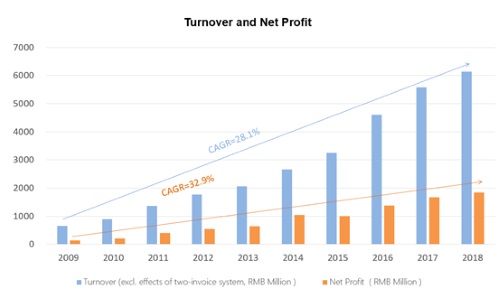
In fact, the past financial performance and dividend payout further authenticate China Medical System’s operation. Since listed in Hong Kong, China Medical System has maintained 40% of net operating profit as its dividend payout for nine consecutive years, totaling RMB 3.95 billion. Publicly disclosed total projects investment is about RMB 4.7 billion. Before 2016, the year-end bank loan balance of China Medical System totaled about RMB 300-400 million; from 2016 to 2018, the year-end bank loan balance of the company was about RMB 1.6 billion, RMB 2.1 billion and RMB 1.4 billion and with a gearing ratio of 16.5%, 20.7% and 13.9% respectively. The gearing ratio of the company has remained at a relatively low level for a long time. Since listed in Hong Kong, the direct equity financing of China Medical System totaled only about HK$ 1.7 billion. If, according to Blue Orca, 49% of the company’s profit was fictitious, then the cash flow would have made it difficult to maintain its normal investments, operations and dividend payout. The company would have been stuck in the mud of cash flow fracture. In light of this, the seemingly exaggerated data argument of Blue Orca is obviously not reliable. At the same time, the long-term performance of China Medical System has obviously registered a soaring growth. Ten years period from 2009 to 2018, the CAGR of its revenue, excluding the effects of the two-invoice system, reached 28.1% and the CAGR of its profits reached 32.9%. Since its listing, the company has been audited by Deloitte, an internationally renowned accounting firm, and its market value has more than tripled.

Second, the other allegation made by Blue Orca mainly claimed that China Medical System, as a listed company, secretly funded the R&D of its chairman’s private company as well as transferred benefits for its chairman’s investment activities.

The root cause of Blue Orca’s allegation lay in its lack of in-depth understanding of the company. In 2015, due to the uncertainty of the policy environment and the expectation of new product launching, Mr. Lam Kong, Chairman of China Medical System, made equity investments. After the successful commercialization of the product in which Mr. Lam Kong invested, China Medical System would then intervene and give Mr. Lam Kong a reasonable return. These were reasonable business decisions and protected the interests of shareholders. After the policy became clear and the team accumulated investment experience, China Medical System gradually explored the model of joint investment by both the listed company and the chairman, and, in some cases, independent investment by the listed company alone. It is in fact a meticulous design made by the company’s founder. On the one hand, as a former medical practitioner, Mr. Lam Kong strives to bring an increasing number of highly innovative, affordable pharmaceutical products which can meet unmet clinical needs of the Chinese market to patients. On the other hand, as a businessman, he has to balance the risks to ensure the company’s future operation and protect the interests of shareholders. Therefore, he chose to invest in the new products projects together with the listed company at the same price and in the same proportion. In this way, the investment risk of the listed company can be shared with Mr. Lam, while the listed company acquires rights of the target company’s products in addition, so as to realize win-win outcomes among the listed company, its major shareholders, minor shareholders and the management. Thus, China Medical System’s detailed response on each project demonstrates that the Blue Orca made false allegations regarding specific project details.

In conclusion, China Medical System counterattacked the short seller by its strength. Notably, this short selling attack by Blue Orca was not only unscrupulous due to the current epidemic and the weakening risk preference in the capital market, but was also doomed to fail from beginning because the lack of convincing evidence.

3. China Medical System can withstand the tests of time, and win the future with its innovative model

China Medical System, which has been operating for the last 25 years as a low-profile company in the Chinese pharmaceutical industry, has long withstood both the tests of time and of the market. As a pharmaceutical enterprise with profound experience, China Medical System also enjoys a special position and irreplaceable value in the pharmaceutical industry chain. It firmly focuses on two core parts of the industrial value chain: product research and evaluation and professional academic promotion.

From the perspective of product R&D model, the R&D innovation of China Medical System differs from the simple self-established R&D or the pure introduction of products for sales. Instead, it effectively integrates two elements and forms the “S+D” (Search & Development) model. This unique “China Medical System Model” not only, to a certain extent, avoids the huge risks and investments of independent R&D, but also ensures its ability in product innovation and control. With its own edge in domestic and overseas resources, this China Medical System R&D model also ensures its strength to compete in the market, thus building a strong core competitiveness.

In just two years, China Medical System has made great achievements in its innovation. It has invested in 7 R&D companies in the United States, the United Kingdom, France and Switzerland; has strategically cooperated with 4 R&D (pharmaceutical) companies in India and Israel; has obtained 19 innovative products in total, 6 of which have been approved for launching overseas, 1 of which is under FDA’s approval process, and 5 of which are in phase III clinical stage, so as to ensure that innovative products can be successively launched into the market in the short-, medium- and long-term. The total annual sales potential of four overseas approved or to be approved innovative products are expected to exceed RMB 10 billion.

The sound historical sales records of China Medical System’s main products and its selling expense ratio which at the low level of the industry, making its professional academic promotion ability obvious to all. Since its listing in 2010, the annual selling expense ratio, excluding the impact of “two-invoice system”, for China Medical System has remained at about 22%. In the context of increasingly strict anti-corruption and compliance control in the industry, the lower-expense-ratio promotion model also reflects the efficiency and compliance of China Medical System’s promotion network. A professional academic promotion network serves as the most suitable foundation for the promotion and development of innovative products, and is also an important weapon for China Medical System to best their competition.

4. Conclusion

As the Chinese sayings goes, “only the toughest grass can bear strong winds”. From this short selling incident, China Medical System did not suffer from it, but demonstrated a high-quality enterprise who can withstand test to investors. Up to now, many sell-side researchers in the market have also given China Medical System a favorable rating. For example, Phillip Securities Group, in its latest research report, maintained the “overweight” rating with a target price of HK$ 13.35; Credit Suisse raised the target price of China Medical System to HK$ 14.05 at the end of January, and maintained its rating of “outperforming”; Morgan Stanley also gave the target price of HK$ 14.6. In considering of its valuation, the company’s current dynamic PE is about 11 times, at the bottom of the historical range.

The current lower valuation of China Medical System may due to two reasons. Firstly, the market worried about the impact of China’s centralized procurement policy on its existing products, Deanxit and Plendil. However, this policy has been continuously optimized and adjusted, and at present only products with more than two generics consistency passing would be included in the centralized procurement list. According to the inquiry, only one generic of Deanxit has passed the consistency evaluation, while no generics of Plendil have passed this evaluation. Therefore, in the short term, the centralized procurement policy will have no impact on the products of China Medical System. At the same time, the company has also invested in some competitive generics which are supposed to launch to the market as soon as possible, grasping the policy benefit to gain additional revenue. Secondly, the market does not have a comprehensive understanding of the company’s transformation, especially its innovative product pipeline. Currently, the company has four innovative drugs approved or to be approved overseas with great market potential, are in the registration process for China market approval. Once they are approved in China, the innovative product pipeline of China Medical System will be confirmed by the market and bring improvement to the company’s sales performance. Therefore, the current share price of China Medical System still has a large space for restoration.

In retrospect, China Medical System has withstood the long-term tests from time and the market, creating generous returns for shareholders, and also continuing to make contributions to the development of the Chinese pharmaceutical industry. Looking forward, China Medical System will proactively conform the development direction of industry reform with its innovative business model, and continue to strengthen its core values in the entire pharmaceutical industry chain, and enhance its own competitive security margin. It can be concluded that both its current and past excellent performance, along with its long-term core competitiveness, give China Medical System a huge space for imagination in the future.

Blue Orca’s Short Selling Plan Failed Because the Quality China Medical System (867.HK) Can Withstand Severe Tests

While the world attention is on the fight against Coronavirus in China, Blue Orca is concerned about other things at the same time. This time, this foreign short selling agency aimed at a high-quality Chinese pharmaceutical company.

According to Zhitongcaijing APP, recently, Blue Orca targeted China Medical System (867.HK), a well-known Chinese pharmaceutical company, by releasing a short selling report against the company on the morning of February 6, pointing out that this Chinese pharmaceutical company “is simply uninvestable”.

Influenced by this report, the share price of China Medical System fell sharply by 12.7% from its peak at HK$ 10.72 to HK$ 9.36. However, due to the insufficient evidence of the allegations and the suspicion that Blue Orca had engaged in malicious short selling, a short selling report was not enough to shake investors’ confidence in this high-quality company. The company’s share price rebounded sharply after hitting the bottom of HK$ 9.35 at 11:03 a.m.. Moreover, before the suspension of trading, it rebounded by 9% to HK$ 10.2 in just 14 minutes at 11:17 a.m.

In recent years, it has been common for foreign short selling agencies to short sell Chinese companies, even for high-performing stocks such as BoSiDeng and ANTA Sports. In 2019, only Blue Orca itself has issued short selling reports against companies such as Kasen International, Ausnutria and NOVA Group.

However, by analyzing the market data on trading days before the release of Blue Orca’s short selling report, Zhitongcaijing APP found that the short selling ratio of China Medical System had increased significantly, thus making this short selling incident worth pondering. Consequently, it’s necessary for investors to rationally analyze this short selling report and correctly understand the intrinsic value of China Medical System.

Part 1 “Untenable” reasons for short selling
Short selling agencies commonly create notions of “guilt” at the beginning of their reports to guide investors decisions about a company regardless the authenticity of the evidence and data. Therefore, Blue Orca wrote “China Medical System is simply uninvestable” at the beginning of the report.

Next, the report listed four reasons why Blue Orca believed that the company had “fraud and corruption”: 1. The company’s filings in China indicated net profit was 49% less than the number reported in its annual report; 2. There were problems in Malaysia’s tax benefit; 3. The company secretly funded the R&D expenses for chairman’s private company; 4. Drug development pipeline: trading transactions between the company and the chairman.

For challenges raised by Blue Orca, investors are most concerned about the truth. Faced with the aggressiveness of Blue Orca, China Medical System promptly clarified and refuted the relevant charges. Investors can conclude from the company’s announcement in response to the short selling report that the allegations made by Blue Orca were untenable. Zhitongcaijing APP also summarized the following information according to the company’s reply.

Regarding the company’s financial inflation: the business of Malaysia subsidiary actually exists.

Blue Orca doubted the existence of China Medical System’s subsidiary in Malaysia and believed that China Medical System used its subsidiary’s tax benefits to inflate its profits.

In fact, as an international pharmaceutical company, the business of China Medical System is divided into international business and domestic business. The international business section includes CMS Pharma (Malaysia) and Sky United Trading Limited, and the domestic business includes Shenzhen Kangzhe and Tianjin Kangzhe.

According to the clarification announcement of China Medical System, the company’s international business functions are now mainly undertaken by its Malaysian subsidiary. These functions include: investment and introduction of new products, screening and evaluation of production plants, quality and supply chain management and control, the strategy formulation of macro promotion of products, and all risks related to the functions. The business and performance of the subsidiary really exist and enjoy local preferential tax policies. In addition, the company also stated that it has repeatedly discussed with professional tax consultants the issue of ensuring that the pricing of related transactions is reasonable and in line with the provisions of the domestic taxation bureau.

It’s pretty simple to verify the authenticity of the company’s performance, since the financial statements of China Medical System have continually been audited by one of the “Big Four” international accounting firms. Therefore, if there were inflated profits, Blue Orca would not have been the first to notice the problem.

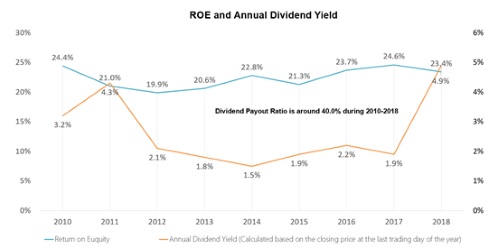
In addition, to verify the company’s profit, Zhitongcaijing APP reviewed its dividend payout in recent years. In recent years, the company has maintained a dividend payout ratio of 40%, with a dividend of RMB 729 million in 2018, accounting for 41% of the company’s current free cash flow. This mainly thanks to the company’s stable profitability. In light of this, if there was a large range of actual profit fluctuation, the company could not distribute such high dividends. The Blue Orca’s allegation against China Medical System can also be refuted from this side.

China Medical System secretly funded research expenses for its chairman’s private company and that the chairman then “resold intellectual property rights” to the company? False.

Taking advantage of information asymmetry to win the trust of investors has always been a common practice for short selling agencies, and Blue Orca made the most of it in this allegation.

Blue Orca devoted the biggest portion of its report to “struggle” with the industrial and commercial information of Kangzhe R&D and used it as evidence against China Medical System. This is exactly how they took advantage of information asymmetry.

As can be seen from China Medical System’s clarification announcement, Kangzhe R&D does incur operating expenses, and thus chose not to disclose relevant information to the public when submitting operating expenses data to China’s State Administration for Industry and Commerce (SAIC) in accordance with relevant regulations.

In addition, Blue Orca also cited a series of cases about companies such as Helius and Faron, so as to allege the chairman of China Medical System of using the resources of China Medical System for his personal gain, rather than participating in drug development.

The core of Blue Orca’s allegation is that “the chairman [was] seeking personal gain,” but if there was no such personal gain, this charge is meaningless.

In fact, none of the projects mentioned by Blue Orca being “suspected of reselling” required the company to pay down payments, the relevant payments for registration, sales milestone fees, or R&D expenses. Even though the projects, such as the Faron and Helius, were not finally approved, China Medical System did not bear any risks and costs.

According to the short selling report, it is clear that Blue Orca did not understand the practice of Lam Gang, the Chairman of China Medical System. After all, it is not in line with the “principle of a rational person” to bear the risks for the benefit of shareholders. This misunderstanding, however, is because Blue Orca does not understand what a “a doctor’s sense of mission” entails.

In fact, some people, including Chairman Lam Gang, from the management were former doctors. Therefore, contrary to the allegations of Blue Orca, it is precisely that Lam Gang understands doctors and patients with the feelings of medical practitioners and hopes to introduce highly innovative, professional and clinically demanding drugs into Chinese market for the benefit of Chinese patients and families. Therefore, in the early stage of innovative drug investment, Lam Gang always bore higher risks himself. Furthermore, among early projects invested by him, NRL-1 (Diazepam Nasal Spray) has been approved for launch in the United States, and Helius project is also ready for application to the FDA again for marketing authorization. Therefore, it cannot be concluded that investments made by Lam Gang have all ended in failure.

In addition, in the context of the deepening of China’s medical system reform and the increasing support for the development of innovative drugs, the company’s development strategy has expanded from products that have already launched to the market to unlaunched innovative products in China. Therefore, the active arrangement of innovative drugs is pivotal to the rational transformation and upgrading of pharmaceutical enterprises, which is in stark contrast to the “misleading development” mentioned in Blue Orca’s report.

In conclusion, the allegation of Blue Orca against China Medical System was insufficient in both the viewpoint and the proof, so it could hardly function as a rigorous short selling report, thus not worthy of investors’ reference.

However, the purpose of Blue Orca may not be simply issuing a short selling report that was not rigorous.

Part 2: A premeditated “short selling operation”
It is worth our attention to consider that agencies issue short selling reports for their own profits rather than for those of the investors.

In the 41 pages extensive short selling report, Blue Orca had to mention in the disclaimer that “we will make money if the price of China Medical System stock declines.” This is a common trick of short selling agencies: issuing short selling reports, triggering panic sales by investors, and then leaving after quickly making a large amount of money.

The data presented by the Zhitongcaijing APP clearly showed that from December last year to January 7 this year, the historical average short selling ratio of the company remained around 5%, with a minimum of only 0.17%, and the amount of short selling totaled only HK$ 22,200. This normal short selling reflects investors’ bullish sentiment towards China Medical System.

However, on January 9, the company’s short selling ratio suddenly rose to 53.62%, with an amount of HK$ 70,929,600. In the following month, the company’s short selling ratio mostly fluctuated between 10-30%.

On February 3, before the report was released, the company’s short selling ratio rose sharply to 38.32%, with amount of HK$ 50,866,700. In the next three days, while the ratio decreased, it still remained over 30%. Therefore, combined with Blue Orca’s report and the short selling performance of the market, we cannot rule out that this was a “planned” short selling operation.

But for investors, it is also a good time to buy when the stock price of a company that suffered from short selling fluctuates. If investors want to make profits after this short selling incident, they need to have a clear understanding of the intrinsic value of China Medical System.

Part 3: Investment opportunities: when undervalued companies are sold short
To invest in a mature and innovative pharmaceutical company in the Hong Kong stock market, there are two core elements of value judgment: business with stable cash flow and reasonable arrangement of innovative drugs.

Investors need to start from these two core elements to understand the foundation of stable valuation of the company, and its development potential behind the rich pipeline of innovative drugs. These are also the core logic from which investors analyze the internal value of China Medical System.

Since IPO, the steady performance of the company has always been a highlight attracting investors.

According to Zhitongcaijing APP, China Medical System has been maintaining a high-speed revenue growth since it was listed on the main board of Hong Kong Stock Exchange in 2010. By the end of 2018, the company’s turnover excluding the effects of two-invoice system reached RMB 6.135 billion, with CAGR of 28.1% in the past 10 years and the CAGR of the company’s net profit reached 32.9% in the same period.

In terms of key financial indicators, the return on equity (ROE) of the company has remained above 20% since 2010; in 2018, the dividend yield of the company reached 4.9%.

In recent years, with the deepening of national pharmaceutical reform, the pharmaceutical industry has gradually entered a stage of comprehensive adjustment. The reason why China Medical System could maintain steady performance growth throughout the changing policy context was that the policy has few impacts on the company.

In the period of “two-invoice system,” since “the first invoice can be directly given to a national exclusive agent of imported drugs since it can be treated as the original manufacture,” China Medical System is regarded as a standard “two-invoice system enterprise,” which means it is not subject to two-invoice system basically. Since 2017, the two-invoice system policy has been implemented in China, and China Medical System’s performance growth tended to be stable. The company’s revenue excluding the effects of two-invoice system increased by 14% and 10% in 2017 and 2018 respectively, and by 14% in the first half of 2019.

Moreover, in 2019, the supply side related policy, which “expand the scope of centralized procurement” with “price reduction”, had minor impact on China Medical System in the short term. It is worth noting that the majority of nine major products, which account for more than 90% of the company’s total revenue, are exclusive products, meaning they face no competition from generics. Only Plendil and Deanxit may be affected. However, currently in domestic market, none of the domestic generics for Plendil has passed the consistency evaluation while only one competing generic has passed for Deanxit. Based on the product selection rules of “there shall be three or more generic drugs to pass consistency evaluation” in the third round of centralized procurement, the impact of centralized procurement on Plendil and Deanxit will be delayed. This is undoubtedly good news for China Medical System as it is actively making arrangement of new products.

The ability to avoid risks and stabilize performance growth in the changing “deepening area” of pharmaceutical reform fully demonstrates that China Medical System has a strong capability to judge industry trends and make development plans.

While vigorously developing its existing business, China Medical System is actively making arrangement of innovative drugs and generics with sufficient market competitiveness.

As a pharmaceutical company with international development ability, China Medical System is moving towards another important path to meet huge unmet medical needs with its excellent drug searching ability and the integration of international resources to cultivate its innovative drugs pipelines. Up to now, the pipeline of China Medical System includes 19 innovative drugs in various fields including ophthalmology, dermatology, nervous system, anti-tumor, immune system, digestive system, anti-infection and endocrine system. Six of the products have been approved for launching overseas, one is under the FDA’s review process, and the other five products have entered the phase III clinical trial stage. With this arrangement, China Medical System will be able to constantly launch innovative products to the market in the short, medium and long terms.

A number of innovative products that either have been launched in the Europe and the United States or prepared for marketing application are as follows:

Name / Indication / Overseas Registration / Market Potential
ILUMYA(Tildrakizumab) / Moderate to severe plaque psoriasis / Approved for marketing in the U.S. / RMB5-6 billion
CEQUA(Cyclosporin A Ophthalmic Solution) / Increasing tear production in patients with dry eyes / Approved for marketing in the U.S. / About RMB3 billion
NRL-1(Diazepam Nasal Spray) / Patients of 6 years of age and older with acute repetitive seizures /
Approved for marketing in the U.S. / Over RMB3 billion
Taclantis(Paclitaxel Injection Concentrate for Suspension) / Metastatic breast cancer, locally advanced or metastatic non-small cell lung cancer and metastatic adenocarcinoma of the pancreas / NDA submitted to the FDA / Over RMB3 billion

According to Zhitongcaijing APP, the main advantages of Tildrakizumab are to provide psoriasis patients with the most cost-effective option, a novel monoclonal antibody drug specifically targeting IL-23, as well as to reduce patients’ pain with less injection times. Its market potential can reach RMB5-6 billion.

The main advantages of Cyclosporin A Ophthalmic Solution are: it’s the globally first cyclosporine ophthalmic eye drops, which is clear and preservative-free, and adopted Nanometer miceller formulation technology to improve in tissue. Its market potential can reach about RMB3 billion.

The important advantages of NRL-1 (Diazepam Nasal Spray) is that it’s convenient to use at home as it quickly takes effect for the treatment of acute and repetitive seizures. Its potential market potential can reach over RMB3 billion.

The important advantages of Paclitaxel Suspension Injection Concentrate are: Cremophor and albuimin-free, one-step dilution and no premedication. Its market potential can reach over RMB3 billion.

Combined with the company’s academic promotion ability, both revenue and profits of the company will be greatly increased after these blockbuster drugs are approved for marketing in China.

In China, there is a huge market demand for imported generics with proven quality and affordable prices. Therefore, while actively making arrangement of innovative drugs, China Medical System is also making arrangement of generics clusters with high market competitiveness.

According to Zhitongcaijing APP, China Medical System’s development strategy for generics is to establish strategic cooperation with the global leading pharmaceutical companies via the light assets mode, so as to make arrangement of generic drug clusters with high market competitiveness.

In August 2019, China Medical System announced that it signed in-licensing agreements with Sun Pharma to acquire seven generic products and one highly competitive complex generic drug. In September of the same year, the company signed an in-licensing agreement with Biocon for three generics. If these drugs enter the Chinese market in the future and participate in centralized procurement, they will create a huge incremental market for the company.

As a well-known pharmaceutical company in China, enjoying a nationwide sales network guarantees the stable valuation of China Medical System.

Data shows that the number of hospitals covered by direct network of the company increased from 17,000 in 2014 to 57,000 in the first half of 2019. The network fully covered all provincial-level and the majority of prefecture-level districts, and almost covered all class III & class II hospitals as well as the major therapeutic departments of class III hospitals in China.

It is worth noting that China Medical System has adopted the academic promotion with line division mode which is similar to international pharmaceutical companies. From 2013 to 2018, selling expense ratio of China Medical System remained below 23%. After excluding the effects “two-invoice system” in 2018, the selling expense ratio was only 22.4%, even lower than the standard of selling expense ratio of international pharmaceutical companies.

These data indicated that China Medical System has strong capabilities of marketing and product commercialization, which can certainly provide strong support for its commercialization of innovative products in the future.

However, it has been undervalued by the market for a long time.

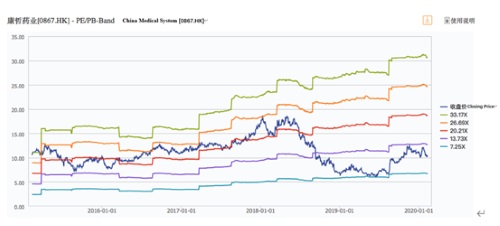
Zhitongcaijing APP observed that as of the close of trading on February 7, the share price of China Medical System was HK$ 10.2 and PE (TTM) was 10.99. Compared with the company’s valuation data in the past three years, it is easy to see that the present share price of China Medical System has been far away from the median of the valuation, and obviously been undervalued. In addition, as mentioned above, the dividend yield of the company in 2018 reached as high as 4.9%, which gives another proof that the company has a high investment value based on its attractive valuation, and its reliable performance growth.

Just as a Chinese idiom “pure gold fears no fire”, the turnover of China Medical System achieved the stable growth and the key financial indicators maintained reliable. In addition, the company also possessed the strong risk resisting capabilities at a time of pharmaceutical reform in China, and the strong strength and sustainable development driving force in the development of the specific business and innovation deployment. With these capabilities, the company does not fear malicious provocation by short selling agencies. At present, China Medical System stands at a status of serious undervaluation, which is a rare target with low valuation in the pharmaceutical sector of the stock market in Hong Kong. If investors can seize this opportunity, they will surely receive rich investment returns as the business performance is continually growing and the pipelines of innovative drugs are gradually launching to the market.

By Zhitongcaijing

China Medical System (867.HK) Armed against Short Selling! The Biggest CSO Took Control of Full Industrial Chain Auto Draft

The short-selling company Blue Orca Capital would not have expected that its confrontation with China Medical System Holdings Limited (“China Medical System”) actually helped the company. The confrontation allowed investors and the whole pharmaceutical industry in China to see the biggest CSO has quietly reached the end of its transformation into a new empire that has established full control over an industrial chain, from sales and marketing to production and quality, and has jumped from the domestic market to a company driven by global R&D innovative resources.

By reviewing the seemingly detailed report from Blue Orca Capital (“Orca”) and a brief but solid response from China Medical System issued on 7th February, as well as an interview with Mr. Lam Kong, Chairman of the board of China Medical System, Healthcare Executive tried to review the path of China Medical System’s most essential product upgrading experience, especially the globalized market and operation capacity of R&D resources from its large overseas companies groups, which was disclosed to the public for the first time. Throughout its development in the recent decade, China Medical System, as a leading CSO, has been revolutionizing itself since it was listed on the stock exchange. The journey of detaching itself from CSO and marching into the full industrial chain was full of tensions and challenges.

01. Malicious digging exposed a brand-new China Medical System
On the morning of 6th February, Orca released a 41-page short selling report against China Medical System. The report indicated that the profitability of China Medical System was fictitious and the actual net profit was 49% lower than the reported number. It also raised doubts that China Medical System was involved in private deals and corruption.

At 11:17 a.m. on that same day, China Medical System called for an immediate suspension in the stock market, which did not prevent a slump in its stock price of 12.7% in just 9 minutes. However, the price soon bounced back by 9% in the next 14 minutes. The closing price before the suspension was only 1.9% lower than that of the previous day. Despite the rollercoaster, the overall price still remained stable compared to that of companies involved in other short selling cases.

Companies listed in the Hong Kong Stock Exchange are regularly targeted by short sellers and these incidents have been growing more frequently since 2019. Orca has already attacked Pinduoduo, ANTA Sports and Kasen in the past year but these companies’ stock prices all surged after they resumed trading. ANTA, in particular, short sellers were frustrated when Anta’s share price hit a record high after rounds of short selling. Generally, companies pinned by the short sellers usually have much higher profit margin or much lower costs than that of their peer companies, or they have high continuous growth rate or burn rate. In the pharmaceutical industry, the short sellers once targeted Genscript, the parent company of Nanjing Legend, and BeiGene, which were both investing high in R&D and bearing high risks.

China Medical System was also in a key stage of transformation and the company has thus far proceeded with a stable operation and good profit margin. On the night of 7th February, China Medical System made a clarification announcement, providing responses to all Orca allegations, concluding that these allegations were “groundless and seriously misleading”.

Healthcare Executive quickly reached out to Mr. Lam Kong, the Chairman of the Board of China Medical System and set up an interview. Surprisingly, this company with relatively low profile decided to disclose an unprecedented amount of details, many of which were revealed for the first time. The abundant evidence provided by China Medical System not only crushed any allegation made by the short sellers, but also indicated that after many years of strategic transformation, a new China Medical System was appearing and that this new China Medical System had new ambitions and aspirations.

Throughout the company’s history, China Medical System was referred to as “the leading CSO”. But what is a CSO? It allows pharmaceutical promotion and sales activities based on powerful pharmaceutical promotion capacity and network coverage. Lam Kong barely explained the title, but it was clear that the association of CSO with China Medical System has obscured the development logic of the company over the past few years. This was the first time Mr. Lam Kong shared the innovative development of China Medical System with the public and unveiled the global competitiveness of China Medical System hidden under the “iceberg” of pharmaceutical marketing services.

02. The strongest fightback: up to 40% dividend for 10 consecutive years
Orca asserted that China Medical System overwhelmingly exaggerated its financial performance with an inflated profit of 49%. China Medical System replied in the “Clarification Announcement” that the company has maintained a constant 40% dividend payout ratio with its continued investment and low debt status since it was listed. It would be impossible for the company to realize such a high payout rate if the reported 49% profit were false.

China Medical System landed on Hong Kong’s capital market in 2010. According to the financial reports, from 2010 to 2018, the company’s annual profit rose from RMB 206 million to RMB 1,844 million, a compound annual growth rate of 32.9%. Throughout the decade, the company maintained a payout ratio of 40% of the net profit, with the accumulated dividend of RMB 3.08 billion.

“It was like I earned 100 yuan, to which you said 49% of what I earned never existed, and that in actuality I only ever earned 51 yuan. Then, from that 51 yuan, I paid 40 yuan to the stakeholders as dividend. My question to you would then be, do you really think China Medical System is that foolish? How would it be possible to run the company and complete investments with the remaining 11 yuan? Why would I do this?”, said Lam Kong.

In fact, the cash flow and the gearing ratio of China Medical System have both been maintained at a good level. According to the previous financial reports, only the gearing ratio in 2016 and 2017 reached 16.5% and 20.7% while those in other years stayed below 15%. Through these periods, China Medical System was buying products. In particular, in 2016, it spent $310 million on the commercialization right of AstraZeneca’s exclusive product Plendil in China, which has become a classic case in the industry. As Lam Kong put it, “High payout ratio, low gearing ratio, and abundant cash cooperation cases overseas, these are enough to prove the profitability of China Medical System”.

From the short selling report, one of the major reasons behind the allegation of inflated profit was, “China launched the Centralized Procurement of Drugs with targeted volume in 2018. The policy directly forces down the price and weakens the value of marketing network. The profits of other agents all decreased while China Medical System’s profitability was still reported to be promising with continuous growth, which was very confusing.”

This type of “presumed-guilty argument” is absurd. Based on Healthcare Executive’s observation of the industry, the pharmaceutical industry in China is undergoing a drastic change. Although price-reducing policies like centralized procurement of drugs squeezed the profit of mature original drugs and generic drugs, the innovation encouraging and medical insurance policies are stimulating industrial growth. In the past year, multinational pharmaceutical companies with innovative drugs like Merck, Roche and AstraZeneca have undergone unprecedented growth. The sales of drugs that have not been listed in the centralized procurement are still increasing. By the advantages of its products, China Medical System is clearly more similar to multinational pharmaceutical companies.

So far, the products that contribute the major profits of China Medical System have not been affected by the centralized procurement. According to the upgraded procurement policy, it only applies to the products with at least one original and no less than two generics. Among the major products that China Medical System promotes and sells, Deanxit is the only product for which there is one generic competitor that has passed consistency evaluation. No other product has so far been affected. This also shows how unique and forward-looking the company is in its choice-making regarding products selection. It is expected that in the following 1 to 2 years, the products of China Medical System will not be listed in the centralized procurement.

Orca also reported that China started the two-invoice system in 2017, which directly affected China Medical System which lies between the manufacturers and agents and that the company’s position in this value chain was significantly challenged. But in fact, the two-invoice policy indicates that the national exclusive agents of imported drugs are deemed as manufacturers. The imported drugs, self-produced products and the products produced by the subsidiaries of the China Medical System would not be affected. For some non-self-produced products, the only difference is changing from low ex-price to high, which only affects the way of financial recording but not the profit. The allegation made by Orca not only seems too general, but also reflects its lack of knowledge about the pharmaceutical industry.

03. Products upgrade reflects an “alternative” path of R&D
After the release of Orca’s report, the three cases of overseas innovative drug investment, though little attention was paid to them previously, also came into public notice. This allowed the public to understand how China Medical System introduces products and the logic it employs regarding product upgrade and iteration.

Lam Kong explained that China Medical System is taking an “alternative” path of innovative drug R&D. It is defined as “alternative” because the common R&D path for pharmaceutical companies is simply R&D (research and development) but China Medical System is taking the path of S&D (search and development). China Medical System is enriching the product lines of innovative drugs by seeking high-quality innovative drug projects worldwide and participating in the early-stage research and development. In fact, in the recent two years, this pattern has been adopted by more and more companies for innovative drugs. China Medical System, on the other hand, has been pursuing this method of development for a considerable period of time.

The three “corruptive deals” raised by Orca were the products deals with three startup R&D companies, Helius, Faron and Neurelis, which Orca revealed all ended in failure.

China Medical System replied that the company’s requirement for its products is in global perspectives, to meet the clinical needs. It is well-known that this kind of products possess relatively high R&D risks in the early stages. The listed company is usually very cautious about this kind of investments due to concerns of stability. Therefore, as the major stakeholder of China Medical System, Lam Kong spent his own money to pay upfront for purchasing these products. And he also undertook the risks of investment failure. Lam Kong would not transfer the product (including the intellectual property and sales rights) to China Medical System until the product had achieved substantial progress. Lam Kong even joked that it was really rare to see such a good stakeholder being so loyal to the company, personally taking responsibility for all of the risks while giving all of the benefits to the listed company.

Besides, these investment cases are not exactly the “disastrous investment” described in the short selling report. In 2015, when Lam Kong was investing in Neurelis, the drug had not yet reached the clinical stage and was highly uncertain. As China Medical System announced on 13th January 2020, the U.S. FDA has approved Neurelis’ diazepam nasal spray for marketing in the U.S. market by epileptic patients of 6 years of age and older, who suffer from intermittent and stereotypic epileptic seizures. This product has recently received the clinical trial notice from NMPA. After five long years of tireless efforts, Lam Kong had achieved his first overseas investment success.

It is clear that Lam Kong had already made attempts in introducing R&D innovative products overseas while the company remained focused on the sale and promotion of drugs in 2015. His vision and strategic pace were a step ahead of the industrial development. According to him, the transformation of China Medical System started as early as 2013.

In February 2013, China Medical System had already acquired the exclusive sales rights for at least 9 products including Deanxit, Ursotalk, Ganfule, Stulln and Xinhuosu. By then, Lam Kong noticed that the market for Ganfule, a product treating liver cancer, was constrained by upstream manufacturers. To make a comprehensive market plan for Ganfule, China Medical System spent RMB 81.10 million acquiring the manufacturing plant of Ganfule, Lengshuijiao Pharmaceuticals, and thereby obtained full control of the product. Since then, the company has continued to pursue product rights, including those for Lamisil, Parlodel, MOVICOL, Combizym, Hirudoid, Stulln and DanShenTong. The company even started a war with Tibet Pharmaceuticals for the controlling rights of Xinhuosu, eventually bringing this product into its product line as well.

From then on, China Medical System has gradually introduced a pattern of introducing products covering exclusive sales rights, rights control, equity cooperation and self-production, enabling the company to gain more and more control over the product. This has become known as the “China Medical System pattern” within the industry. This pattern was best exemplified when the company bought Plendil from AstraZeneca in 2016, proving that China Medical System had established a deep cooperation with major multinational companies.

Since 2015, Lam Kong has noticed the innovative trend in the Chinese pharmaceutical market and got down to the business of introducing innovative drugs, which opened the second stage of the transformation. This process was conducted by the personal and stakeholder investment, like the Neurelis project mentioned above.

In 2017, as the overseas business development team was growing mature, considering the high risks of on-going R&D drugs, Lam Kong and China Medical System each handled half through equity investment. Once the investment succeeded, China Medical System could obtain 100% of the drug’s rights and take over the global R&D resource and talent resources. According to the annual report, in 2018, China Medical System strategically invested in several R&D companies from the U.K., France, Switzerland and America and acquired the rights of 5 major innovative drugs in China and part of Asia-Pacific markets. The company also purchased the exclusive rights of two products in China from an Israel biopharma company.

In 2019, the centralized procurement policy was released and quickly spread. Though China Medical System’ products were not yet affected, Lam Kong still expected to increase the pace of business innovation and introduce more good quality products to the Chinese market. China Medical System started to purchase some products approved by the FDA but not yet launched in China. For example, it bought the exclusive licensing rights of two innovative drugs and five generic drugs from Sun Pharma in India and signed another contract with Sun Pharma for the licensing rights of five innovative drugs including Paclitaxel injection concentrate in November.

This is the strategic map of the acquisition journey China Medical System has followed. It is also a history of how its products structure has evolved in response to changes in relevant policies. By investing in the overseas innovative R&D companies, China Medical System was also able to arrange its resources for global innovative research institutes and talents while also extending its business to cover the full medical industrial chain including R&D, production and marketing. Starting from a CSO company, China Medical System has been detaching itself from CSO and transforming to a “well-established, innovation-driven specialty pharma with a focus on sales & marketing in China.”

To Lam Kong, the logic is very simple, “The purpose of research is for the products, rather than the research itself. There are many ways to meet the unmet clinical needs and get the valuable drugs. Overseas business development is also a capability.” Driven by the innovation and the policy of centralized procurement, China Medical System has always been leading the way in the development of the pharmaceutical industry under tight regulations. Making preparations before everything becomes apparent makes a wise man.

04. Under the iceberg: establish a global industrial chain system
Over the past half month, China Medical System spent the busiest Spring Festival ever with its global partners. After the outbreak of the new coronavirus, China Medical System immediately called upon its global partners and purchased 200,000 N95 masks and 50,000 children masks from overseas. The supplies were transported and successfully passed through customs thanks to its global business supply chain. With its digital marketing platform, 20,000 N95 masks were delivered to 10,000 doctors in just one day.

China Medical System’s global supply chain system is currently demonstrating its power. In such an urgent time, there are surely not many companies that are able to personally distribute global supplies to the hands of doctors.

“Many only see our CSO businesses in China, but that is just a tip of the iceberg. Like an iceberg, a major part of our businesses, like our capability for global arrangement and the control of a full industrial chain, is actually located “under” the visible plane”, said Lam Kong. He also commented that those who are engaged in the overseas business development all know that buying drugs overseas is not simply about “buying.” Besides overseas MAH conversion, reselection of manufacturing factories, re-control of the factory quality and so on, the understanding of overseas business cultures and law systems directly affects the success and efficiency of the negotiation. Quality management, production management and control management, as well the entire global logistics supply chain, present big challenges to a company’s capabilities.

For example, Lamisil that China Medical System introduced from Novartis in 2014 has completed the localization and now is produced by China Medical System in its production site in Hunan. The localization covers a series of complicated procedures including MAH conversion.

“What the public knows about China Medical System is only our CSO businesses in China. But the whole China Medical System group also includes the global industrial chain formed by our overseas groups, like those in Malaysia. The entirety of China Medical System is not a CSO company”, said Lam Kong.

According to the interim report of 2019, by 30th June 2019, China Medical System had owned 13 innovative products in the fields of ophthalmology, dermatology, neurology, oncology, immunology, gastroenterology, anti-infection and endocrinology. Some of products have acquired marketing authorization from the FDA, EMA and Health Canada, respectively. The domestic R&D, development and sales of these products are also underway.

Products are the soul of pharmaceutical companies. A portfolio of products with differentiated advantage is the most important factor for a pharmaceutical company to become a global innovative one. Driven by policy and technology, the Chinese pharmaceutical industry is undergoing a great, game-changing transformation and upgrade. The industrial development focus on the clinical needs and the transformation will be no less than an earthquake in the industry before it is done.

Hardship brings success. Leading the transformation along with a decade of deployment, this new iteration of China Medical System is thriving. When a brand new China Medical System appears in the Chinese medical industry, the biggest inspiration is its inner logic and path: one is to develop innovative products that could offer Chinese patients new treatment solutions through a global vision, and the other is to deepen the national academic network to consolidate the academic differentiation of the current products.

By Yong Tan and Xinyuan Yang of Healthcare Executive