Leading regional commentator, and analyst, Eddin Khoo, and Crisis Management Centre founder, Nordin Abdullah, are starting a series of talks in the ASEAN region on issues around the South China Sea. The objective of these talks is to achieve a nuanced understanding of the activities surrounding this critical waterway and the potential impact on the corporate sector.
The Malaysia Global Business Forum (MGBF) in collaboration with the Crisis Management Centre will be hosting the first talk in this series in Kuala Lumpur, Malaysia, on Wednesday (24 April), titled ‘The South China Sea: Central to ASEAN’s Business Future?’.
Eddin Khoo, a renowned writer, said, “As we approach the half-century anniversary of that most defining of global events – the end of the Vietnam War, the region of the South China Sea appears to be drawn back, whether of its own volition or not, to superpower tensions.”
“Since the end of the Vietnam war, much of this region has devoted itself to economic development, emerging as one of the principal regions for the inflow of capital anywhere in the world, especially in that once lauded period termed ‘The Age of Globalisation’.
“As the period of the end of the age of globalisation is at once cautioned and heralded, and as the South China Sea is marked for a period of superpower contestation, how much, in these past five decades, has the region been able to ‘state a case for itself’?,” continued Eddin.
The South China Sea handles roughly USD3.37 trillion in global trade annually, and is crucial for multinational corporations; however, territorial disputes often threaten trade routes and livelihoods dependent on its resources.
Nordin Abdullah said, “Everyone is aware of the obvious geographical choke points. The media have hyped up the spectres of single points of failure in global supply chains and past Black Swan events have produced volumes of analysis laden with hindsight bias.”
“Most bilateral and multilateral efforts relating to activities in the South China Sea are largely government to government. Yet it will be the corporate sector that is impacted first if any significant disruption takes place,” he continued.
Through ancient history, South East Asian nations were connected by extensive maritime trade networks. Trade routes such as the Maritime Silk Road facilitated the exchange of goods, ideas, and technologies among the numerous kingdoms and empires in the region.
Regional geopolitical tensions could disrupt maritime activities, impacting communities and millions employed in industrial activities dotted along the shores. Effective risk mitigation and crisis response strategies are imperative for corporations investing and operating in the area.
Nordin, who is also the MGBF founding chairman, concluded, “Simple diametrically opposed broad-stroke narratives are no longer sufficient for the corporate sector. A nuanced understanding is required for every organisation in any given jurisdiction. To achieve any level of anticipation, let alone foresight leadership, teams need to work through the data and conduct effective scenario planning.”
Businesses operating in the South China Sea must diversify supply chains, invest in alternative transportation routes, and engage in corporate diplomatic initiatives to safeguard their interest. These will be amongst matters discussed and addressed during the lunch talk in Kuala Lumpur, including the dynamic relationship between business and politics in ASEAN, and how corporations with regional and global supply chains manage potential threats.
The lunch talk will be an in-person event and requires pre-registration. The participation fee is RM138 per person. A special price of RM88 is available for members of the Malaysia Australia Business Council (MABC) and other partner chambers.
The Malaysia Global Business Forum (MGBF) was established to empower stakeholders at the intersection of international and Malaysian business. Through government relations, business intelligence, advocacy, media engagement, market research, networking, advisory and business matching, MGBF will continue to explore threats and opportunities with industry leaders and policy makers to ensure that Malaysia becomes a leader in the context of Asia.
The Crisis Management Centre was established to empower individuals, corporations, industry associations and governments to effectively deal with all aspects of crisis. The Crisis Management Centre has been able to pioneer several ground-breaking concepts in the field of crisis management including the ‘Reputation-Revenue Dynamic’, which is a data-driven, community and communications framework for addressing areas of concern, crisis, and conflict.
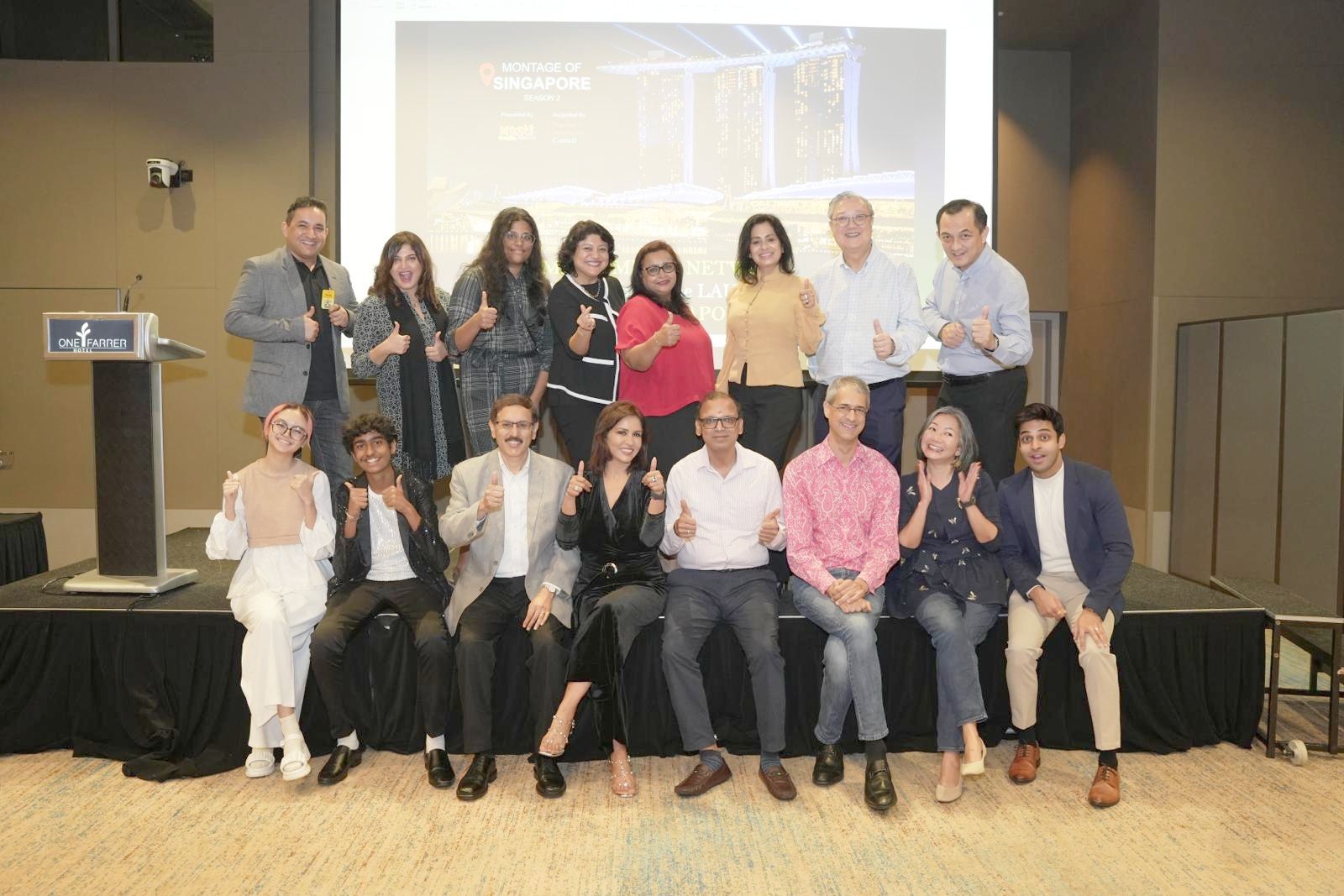
Montage of Singapore Season 2, a pioneering initiative aimed at fostering national integration and unity, today unveiled its 6 episodes at One Farrer Hotel, Singapore. The event provided a vital platform for open, respectful dialogue on topics central to Singapore’s diverse cultural landscape. Present for the event were Renuka Bhagat Arora, Masti Media Network, Desmond Tan CCMC Chair, QueenTown, Biren Desai, Singapore Gujarati Society; David Soh, Chair Harmony Circle, Prantik Mazumdar, President TiE Singapore, Dr Alicia Altorfer-Ong, Deputy General Manager, Ray of Hope, to name a few. Montage of Singapore Season 1 was celebrated by the Ministry of Culture, Community and Youth (MCCY) in their newsletter as one of the top three shows showcasing Singapore’s diverse tapestry. The series’ primary objective is to unite residents and build a cohesive nation.
Renuka Bhagat Arora, Founder, Masti Media Network, dressed in black at the center of the bottom row, along with Season 2 panelists
Conceived in collaboration with the Ministry of Culture, Community and Youth (MCCY), Montage of Singapore Season 2 has solidified its position as a beacon of harmony and inclusivity within the nation. Championed by Masti Media Network and endorsed by the National Integration Council, the series embodies a collective effort to celebrate Singapore’s rich multicultural fabric and promote social cohesion. Montage of Singapore extends heartfelt gratitude to its esteemed panelists, partnering organizations, and production partners for their unwavering support and commitment. Special thanks are extended to Peoples Association, Harmony Circle, SINDA, Republic Polytechnic, Ray of Hope, Singapore Kindness Movement, The Art Of Living, TiE Singapore, vLookUp.ai, ACRES for their invaluable contributions to the success of the series. The Production partner for the series is : Nin9 Studios and Digital Media Partner is Radio Masti 24×7.
Season 2 of Montage of Singapore features insightful episodes, each delving into crucial facets of national integration. From celebrating Singapore’s cultural tapestry to exploring the altruistic spirit of its residents, the series encapsulates the essence of unity in diversity. Noteworthy panelists, including esteemed figures such as- Anbarasu Rajendran (CEO SINDA), Dr William Wan (Singapore Kindness Movement), Manisha Seewal ( Corporate Leader and Community Volunteer), Rahul Gokhale (Corporate Leader and Volunteer, ACRES) , Preeti Dubey (Leadership Coach and Community Volunteer),Shailesh Venkatesh (Banker and Volunteer Art of Living), Ravi Agarwal (Diversity Coach & Facilitator), Nilanjana Sengupta (Author), Desmond Tan (CCMC Chair, Queenstown Community Centre), Krishnamani Kannan(Investor and Multipreneur), Kanchana Gupta (Founder vLookUp.ai and Diversity Champion), Narinder J Singh (Entrepreneur, Investor, Philanthropist), Dr Alicia Altorfer-Ong, (Ray of Hope), Priyali Kamath (Corporate Diversity Leader), Sanjana Singh (Student Nanyang Polytechnic), Ika Khairiah (Artist), Priyadarshini Sharma (Corporate Leader and DEI Champion), Somnath Adak, (Chairman ICAI SG), Amit Gupta (Chairman TiE Global) , Nurina Syakirah (Republic Poly), Tan Guo Jun and Radha Govinda Dasa (Republic Polytechnic).
Renuka Bhagat Arora,Founder, Masti Media Network quips, “Montage of Singapore Season 2 reaffirms our unwavering commitment to fostering inclusivity, empathy, and unity within our diverse community. Through ongoing engagement and meaningful dialogue, we aspire to cultivate a future where the richness of diversity is embraced, and a harmonious spirit of unity thrives.”
About Montage of Singapore Season 2
Conceived in collaboration with the Ministry of Culture, Community and Youth (MCCY), Montage of Singapore Season 2 has solidified its position as a beacon of harmony and inclusivity within the nation. Championed by Masti Media Network and endorsed by the National Integration Council, the series embodies a collective effort to celebrate Singapore’s rich multicultural fabric and promote social cohesion.
About Masti Media Network
Masti Media Network, acclaimed for its flagship brand Radio Masti 24×7, is the premier live Bollywood radio station serving Southeast Asia. Established in 2009. Masti Media Network is a reliable media partner for Singapore’s Ministry of Culture, Community and Youth, Ministry of Communications and Information, and Ministry of Manpower. Evolving from its initial three-hour daily broadcasts on Mediacorp XFM96.3, Masti Media Network expanded in 2016 to become a 24/7 independent digital platform with cutting-edge studios. The network now creates visually compelling series of national importance, with support from the National Integration Council. For further details visit-https://radiomasti.com.sg/index.html.
Over 3,600 policymakers and business leaders drawn to the showcase for Hong Kong’s vibrant economy
The 17th AFF concluded today, attracting over 3,600 policymakers and business leaders from more than 50 countries and regions who actively joined vibrant discussions, fostering sustainable development and multilateral cooperation and showcasing Hong Kong’s vibrant economy, setting the stage for conferences and exhibitions in the new year
The Forum arranged over 700 one-on-one meetings, successfully connecting investors with project owners and exploring opportunities in various industries
The AFF facilitated the signing of MoUs and agreements, including the Comprehensive Avoidance of Double Taxation Agreement between Hong Kong and Croatia and Memorandum of Understanding between the Financial Services Development Council and Financial Sector Development Program of Saudi Arabia, deepening business collaborations
On-site polling during the Forum showed that most participants considered the digital economy (31.4%) and electric vehicles (26.1%) the most promising industries in Mainland China
The 17th Asian Financial Forum (AFF), jointly organised by the Hong Kong Special Administrative Region (HKSAR) Government and Hong Kong Trade Development Council (HKTDC), successfully concluded today, attracting over 3,600 financial and business elites from more than 50 countries and regions, including over 70 overseas and Mainland China delegations. The Forum showcased Hong Kong’s thriving economy as participants explored opportunities, accelerated sustainable development and multilateral cooperation and launched Hong Kong’s conferences for the year.
The event was marked by a vibrant atmosphere. Various segments – including the opening session, plenary discussions, policy dialogue, keynote luncheons and cocktail reception – were well attended. Leaders from around the world actively engaged in discussions.
In just two days, the Forum arranged over 700 one-on-one meetings, successfully connecting investors with project owners and exploring opportunities for industry and investment cooperation. After the Forum’s conclusion, participants will have the opportunity to continue discussions and meetings online from tomorrow until 30 January (Tuesday).
Over the two-day physical event, the AFF brought together more than 140 policymakers, international financial and multilateral organisation representatives, financial institutions and corporate leaders from around the world as speakers.
On the first day of the Forum, Prof Jeffrey D Sachs, President of the UN Sustainable Development Solutions Network, addressed the keynote luncheon, affirming the importance of Hong Kong as an international financial centre. He said that global cooperation could help solve problems that were even beyond our reach. He believed Hong Kong could play a full role in sustainable development financing, an increasingly important area.
One of the highlights of this year’s AFF was the Plenary Session I – Charting the Path to a Shared Future, hosted by Christopher Hui, Secretary for Financial Services and the Treasury of the HKSAR, bringing together financial officials from around the world to discuss economic challenges countries face. Julapun Amornvivat, Deputy Minister of Finance, Thailand, said: “The Asian Financial Forum is the place where both the public and private sectors can have honest discussions to find solutions to tackle major problems today and transform the economy for the future.” H.E. Dr Mohamed Maait, Minister of Finance, Egypt, mentioned that the world was grappling with rising geopolitical tensions and a lack of clarity about the future, weighing on the achievement of sustainable economic growth. To address global challenges, the world needed to deploy all efforts to coordinate economic policies on a multilateral scale.
On the second day, the Breakfast Panel focused on Unleashing the Dragon’s Currency: Navigating Renminbi Internationalisation on the Global Stage, allowing participants to delve into the renminbi’s growing use worldwide and trends in international demand. Prof Douglas W Diamond, Nobel Laureate in Economic Sciences in 2022 and Merton H Miller Distinguished Service Professor of Finance at the University of Chicago’s Booth School of Business, addressed the Keynote Luncheon on the second day, which was moderated by Raymund Chao, Asia Pacific and China Chairman, PwC.
Global Spectrum, Dialogues for Tomorrow and Fireside Chat brought together pioneers from various industries to discuss a host of topical subjects, explored the latest Web 3.0 and virtual asset development, the future of fintech innovation, CIO Insights, green finance and opportunities in new markets. Speakers included Bob Prince, Co-Chief Investment Officer of Bridgewater Associates, Dr Ma Jun, Chairman and President, Hong Kong Green Finance Association (HKGFA), Guinandra (Andra) Jatikusumo, Group Director and Chief of Investments & Business Development of CT Corp, Darmawan Junaidi, President Director, Bank Mandiri, Yat Siu, Co-Founder and Executive Chairman, Animoca Brands, and more.
Understanding prospects for mainland industries, environmental economics To gauge participants’ views on the global economic outlook this year, the Forum conducted on-site voting during panel discussions. For instance, at the Panel Discussion on Global Economic Outlook, participants were asked about the greatest threats or uncertainties to economic growth in the Asia-Pacific. Most attendees identified geopolitical fragmentation (66.7%) as the biggest challenge, followed by a slowdown in the recovery momentum in key economies (17.7%), persistent inflation (6%), a tightened monetary environment (4.2%), continued supply chain reshaping (3.6%) and other factors (1.8%).
In the newly introduced Panel Discussion on Stewarding China’s New Chapter, participants were asked about the most promising industries in Mainland China. The digital economy took top spot with 31.4%. Electric vehicles (26.1%) and renewable energy (18.8%) followed in second and third place, respectively. Advanced manufacturing (15.8%), other industries (4.2%) and electronic devices (3.2%) ranked subsequently.
Over 700 matching sessions held on-site, online platform continues to yield results Through the years, the Forum has played a crucial role in deepening business and trade collaboration. AFF Deal-making, a global investment project-matching event jointly organised by the HKTDC and Hong Kong Venture Capital and Private Equity Association (HKVCA), was well received, facilitating over 700 one-on-one meetings, connecting funds and investment projects from around the world. The founder of one of the start-ups from Thailand said he had met 20 visitors with potential deals, ranging from a family office to a legal adviser. He also commented that the geographical diversity of the visitors at Deal-making was extensive, ranging from India to Europe and Japan. The deal-making session had presented valuable opportunities to find potential business partners.
This year’s AFF also facilitated the signing of various Memorandums of Understanding (MoUs) and Agreement. These included the Comprehensive Avoidance of Double Taxation Agreement between Hong Kong and Croatia and Memorandum of Understanding between the Financial Services Development Council and Financial Sector Development Program of Saudi Arabia.
The Forum also featured exhibition zones including the Fintech Showcase, Fintech HK Startup Salon, the InnoVenture Salon and Global Investment Zone, presenting innovative solutions from international financial institutions and introducing prospective unicorns from Hong Kong and around the world. The exhibition segment brought together over 140 exhibitors, including international financial institutions, technology companies, start-ups, investment promotion agencies, and sponsors, including knowledge partner PwC, along with HSBC, Bank of China, Standard Chartered Bank, UBS, China International Capital Corporation (CICC), Huatai International and Cyberport.
The 2024 International Financial Week (IFW) commenced on 24 January to create synergies, bringing together over 20 partner events. These events cover a many topics of global interest to the financial and business community. They include private equity investment, alternative investments, sustainable investments, family offices and women’s empowerment, among others. These events highlight the role of Hong Kong as an international financial centre.
To seize opportunities and promote the conference and event economy, the AFF collaborated with various organisations to arrange activities for participants beyond the Forum. These activities included free admission to the Hong Kong Palace Museum, Hong Kong’s iconic Aqua Luna red-sail junk boat, TramOramic tour and open-top Big Bus arranged by the Hong Kong Tourism Board. These experiences allowed forum guests to feel at home and appreciate the vibrancy and diversity of Hong Kong.
Furthermore, to provide overseas participants with a better understanding of the Guangdong-Hong Kong-Macao Greater Bay Area and the vast business opportunities within, organisers will lead a delegation to Shenzhen tomorrow (26 January), including corporate visits and exchange activities.
The 17th Asian Financial Forum, jointly organised by the HKSAR Government and the HKTDC, concluded successfully, attracting over 3,600 financial and business elites who actively participated in the event, creating a vibrant atmosphere for exchanges and showcasing Hong Kong’s thriving economy
Prof Jeffrey D Sachs, President of the UN Sustainable Development Solutions Network, addressed the Keynote Luncheon on the first day
Prof Douglas W Diamond, Nobel Laureate in Economic Sciences in 2022 and Merton H Miller Distinguished Service Professor of Finance at the University of Chicago’s Booth School of Business, delivered insightful remarks during the Keynote Luncheon on the second day
Bob Prince, Co-Chief Investment Officer of Bridgewater Associates, an investment veteran, shared his experience in leadership transfer, markets views and investment tactics in Mainland China
The AFF Deal-making, an investment project matchmaking event organised by the HKTDC and the HKVCA, drew strong interest, facilitating over 700 one-on-one meetings and connecting funds and investment projects from around the world, involving more than 270 investors and over 560 projects
Representatives from Hong Kong and Croatia sign the Comprehensive Avoidance of Double Taxation Agreement
The Financial Services Development Council and Financial Sector Development Program of Saudi Arabia sign their MoU
The cocktail reception on the first day invited Paul Chan, Financial Secretary of HKSAR; Dr Peter KN Lam, Chairman of the HKTDC and Luanne Lim, Chairperson of the AFF Steering Committee and Chief Executive, Hong Kong, HSBC, to deliver speeches, fostering lively exchanges among guests from around the world
About HKTDC The Hong Kong Trade Development Council (HKTDC) is a statutory body established in 1966 to promote, assist and develop Hong Kong’s trade. With 50 offices globally, including 13 in Mainland China, the HKTDC promotes Hong Kong as a two-way global investment and business hub. The HKTDC organises international exhibitions, conferences and business missions to create business opportunities for companies, particularly small and medium-sized enterprises (SMEs), in the mainland and international markets. The HKTDC also provides up-to-date market insights and product information via research reports and digital news channels. For more information, please visit: www.hktdc.com/aboutus. Follow us on Twitter @hktdc and LinkedIn
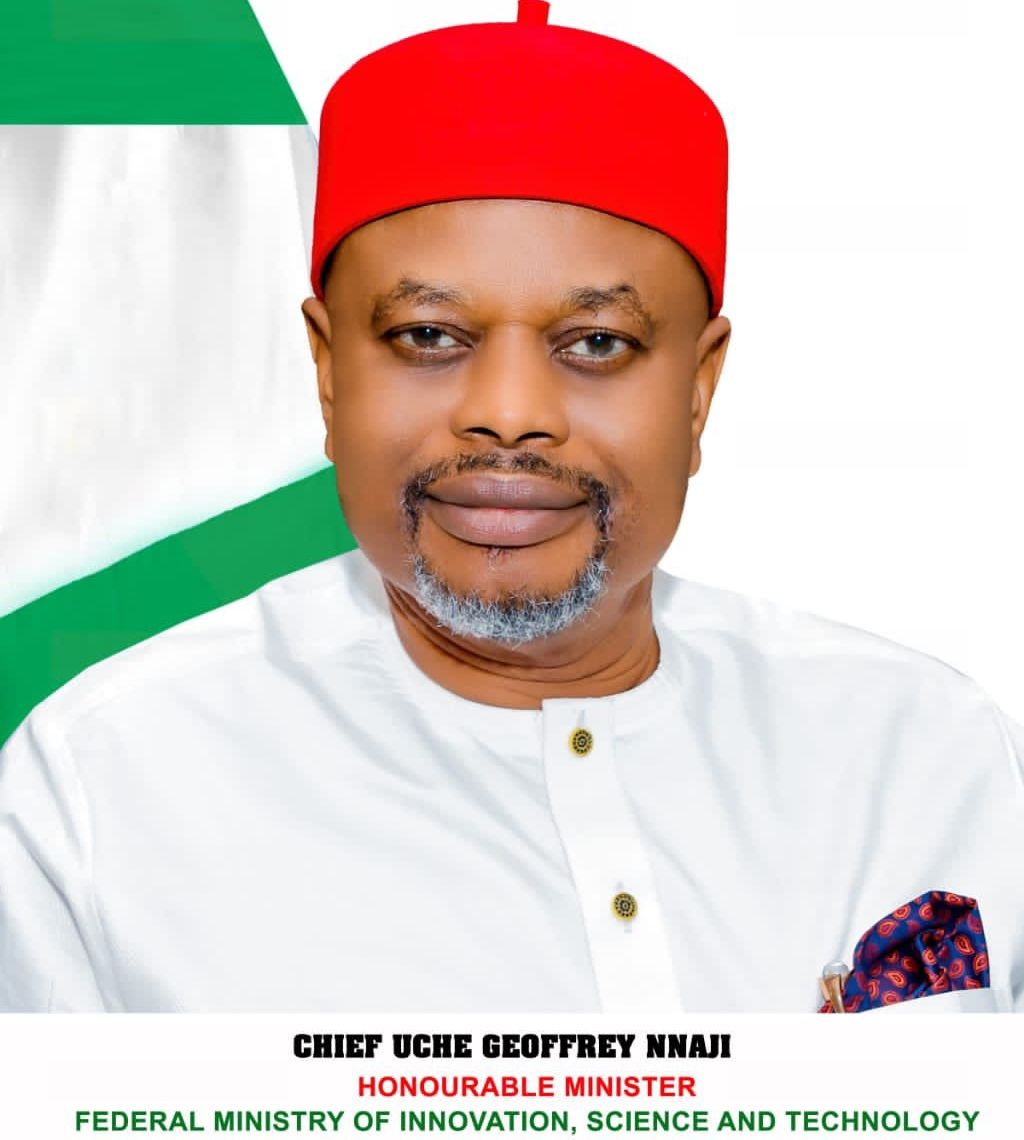
By Emeka Orjih, Technical Adviser on International Cooperation & Finance to Uche Geoffrey Nnaji, Minister of Innovation, Science and Technology, Nigeria.
Some 20+ years ago, in what keen observers have described as a “leapfrog” and as “the telecom revolution”, Nigeria leapfrogged from 400 thousand landlines to 80 million mobile lines in months. It remains the largest singular developmental stride Nigeria has taken in its 63 years of existence. Structured mass adoption of new technology enabled Nigeria to circumvent normal step-by-step processes to arrive at its destination ahead of time, and ahead of others who were there before them in the Telecom Industry.
Deploying similar strategies,Nigeria can achieve similar outcomes in Clean Energy and Power, and in different areas of Technology. Take Artificial Intelligence (AI). McKinsey estimates that by the year 2030, the global AI economy will be at $16 trillion annually. (That’s larger than the entire American economy!)
So what will it take for Nigeria to stamp the AI revolutionlike we did in the Telecoms revolution? I put this question to Ray Sharma a few weeks ago over dinner in an artsy and eclectic restaurant in London’s Tech City or Silicon Roundabout. Ray is one of earth’s most aggressive Technology Venture Capitalists with successes that include Expedia and Tinder. Ray agreed with me that primarily, it will take human resource.
Human resource is Nigeria’s abundant blessing. After India and China, Nigeria has the highest number of skilled Tech workforce in the diaspora. That’s an army waiting to be unleashed on the innovative gateway.
What about the in-country population? A whopping 160 million youth – below the age of 35. The vast majority of whom are smart, hungry, innovative, and trainable. Such a resource wealth can catapult any nation on earth when intention and strategy align. Recruit them and funnel them into Frontier Technologies. AI. Blockchain. Robotics. IoT, and the like.
Should Nigeria unleash her potential upon the AI space, with a modest ambition to capture 0.1% of the value of that emerging industry, in just 5 years, she would have created a $16 billion a year industry. And from just AI! Add Blockchain Technology, Fintech, IoT, Robotics, Clean Tech, Methanol and Hydrogen Production, etc, then you begin to envisage a horizon of endless possibilities.
What’s my point? With her huge, young, smart, innovative and teachable workforce, plus a seemingly insatiable global tech market, Nigeria could create the kind of alternative national wealth and economy that will dwarf her entire budget and present economy.
Technology enables us to leapfrog, to deliver a Technology revolution, and create a new Nigeria with our international partners.
EdenBase (with Domineum) is partnering with us to create Tech Ecosystems like it did with London Tech City and in Switzerland. We are building out manufacturing capacity for Methanol and EV lithium-ion batteries. These will lay the foundation for our proposed AI-driven Renewable Smart Mini Grids to power our Innovation Parks and Tech Cities plus trigger massive manufacturing (Additive and Green) in partnership with Germany’s IMAPS Institute for Material Applications. We are building out the BPO (and other outsourcing) industry and will partner to prepare millions of Nigerian youth for careers in diverse technology-driven spaces ranging from the soft (data, AI, blockchain, etc) to the hard (hardware skills, welding, digital production, etc). We have partnered to develop and launch the world’s first mass V2X project where we manufacture/assemble Electric Vehicles (EV), powered by Renewable Energy (RE) with bi-directional charging/discharging capabilities that enables your EV to act as a generator that powers homes or factories after performing its ‘car duties’ of ferrying you around. Now that’s what a leapfrog looks like.
Clean energy and Intelligent RE Minigrids – powering and driving manufacturing. Productive Tech ecosystems – partnering world class institutions to trigger innovative startups on scale. These will drive the unleashing of the creativity of Nigeria’s enormous, smart, innovative and youthful population. They, in turn will drive the emergence of the new Nigerian economy, independent of fossil fuels, and constructed on the altar of Innovation, Science & Technology.
In 2024, Nigeria is truly open for business – the Business of Technology, Clean Technology. Those who missed the opportunities unearthed by Nigeria’s telecom revolution some two-decades ago, now have the opportunity to get on board this boundless Tech Revolution in the largest untapped single market on planet earth.
Is it possible to deliver these and more on scale? Can Nigeria leapfrog her way to near the front of the line in clean energy and power generation, green manufacturing and outsourcing?
You bet! And in Nigeria’s Ministry of Innovation, Science and Technology, Minister Uche Nnaji is betting on it too.
Contact: Emeka Orjih, MBA (Wharton), Technical Adviser on International Cooperation & Finance to the Minister of Innovation, Science and Technology, Nigeria. emeka.orjih@scienceandtech.gov.ng
The Federal Ministry of Innovation, Science and Technology, Nigeria is one of the strategic Ministries of Government with the responsibility of facilitating the development and deployment of Innovative Science and Technology to enhance the pace of Socio-economic development of the country. www.scienceandtech.gov.ng
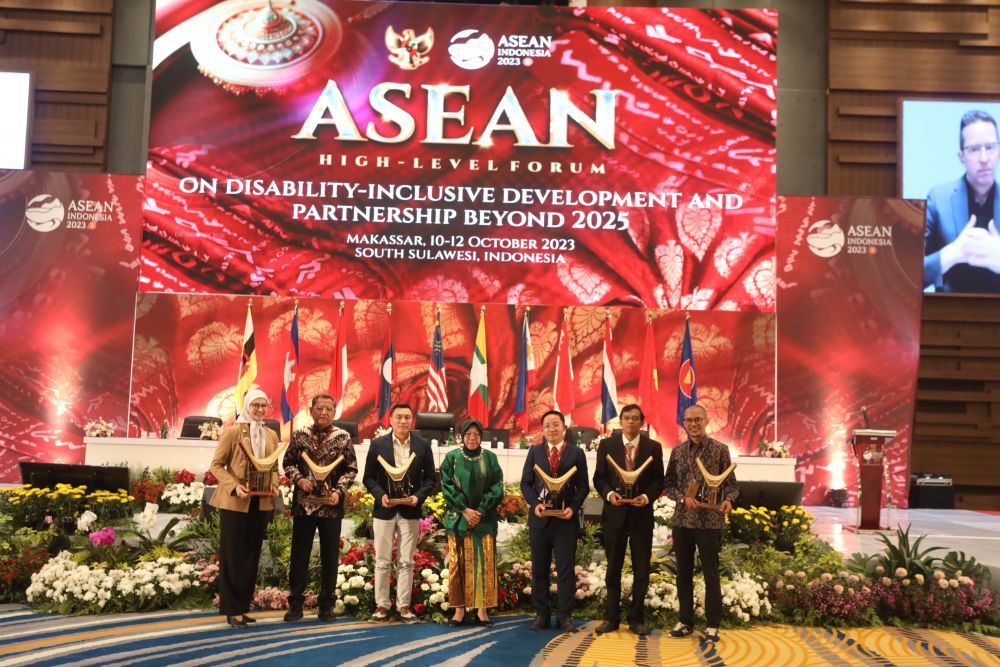
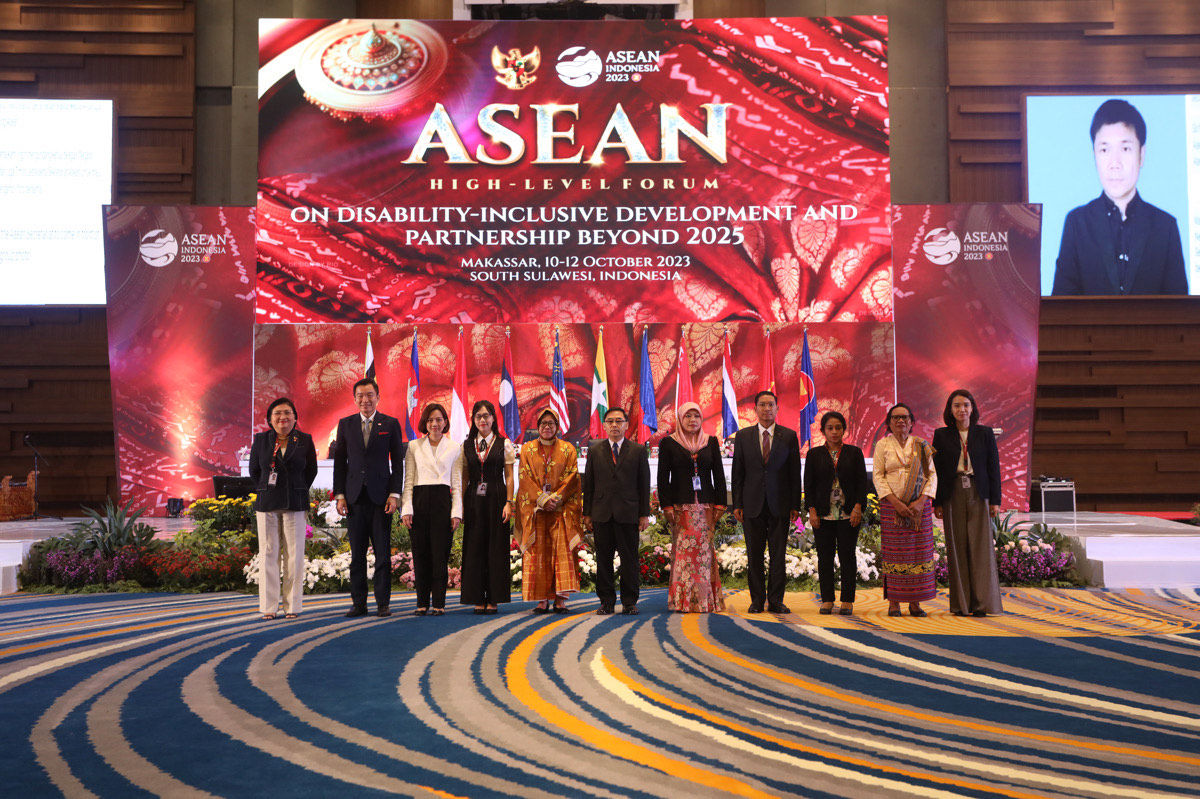
The ASEAN Disability Forum has produced the “Makassar Recommendations” to strengthen commitment to empowering persons, realizing inclusivity, and elevating the dignity of persons with disabilities. These Recommendations waere produced at the ASEAN High Level Forum on Disability Inclusive Development and Partnership beyond 2025 in Makassar on 10-12 October 2023.
ANTARA/Ministry of Social Affairs
The Recommendations were submitted after the participating ASEAN member countries led by Indonesia formulated a draft recommendation. The forum attended by around 200 participants, was one of a series of ASEAN Summits under the chairmanship of Indonesia. Apart from ASEAN member countries, there were also participants from the United States, England, Australia, as well as from the ASEAN Secretariat, various organizations for persons with disabilities, the ASEAN Disability Forum and various other partners.
The participants jointly formulated innovative strategies to realize socio-regional inclusiveness, empower persons with disabilities, and strengthen partnerships. The Forum hopes that ASEAN will become the epicentrum of sustainable growth of inclusiveness.
Following two days of deliberations, 10 recommendations were finally produced and named the “Makassar Recommendations”. These recommendations were read out by Commissioner of the National Commission on Disabilities (KND) Eka Pratama before the closing of the forum on Wednesday, 11 October 2023.
The Makassar Recommendations (10):
First, accelerating the implementation of the ASEAN Enabling Masterplan 2025 by mainstreaming the rights of persons with disabilities in ASEAN cooperation.
Second, further support the review and report on the implementation of the ASEAN Enabling Masterpan 2025 by including the participation of persons with disabilities.
Third, ensuring disability inclusive development as a fundamental part of the ASEAN Community Vision 2045.
Fourth, encouraging ASEAN Dialogue Partners to mainstream empowerment and rights of persons with disabilities through collaboration with ASEAN, including in providing disability inclusive infrastructure.
Fifth, provide more innovative social welfare and development policies to empower and protect the rights of persons with disabilities.
Sixth, increase joint efforts to ensure equal participation and access for persons with disabilities in public services and eliminate barriers to stigma and discrimination such as education, health, employment.
Seventh, strengthen efforts to provide better and more inclusive disability data.
Eighth, strengthening access to supporting technology based on appropriate needs to increase access to inclusive education, health interventions, employment, and entrepreneurship.
Ninth, strengthens public understanding and awareness regarding persons with disabilities and their rights, as well as countering negative perceptions, and encouraging mutual respect and understanding.
Tenth, encourages the business sector to commit to promoting and implementing disability-inclusive business models and value chains, as well as supporting better access for persons with disabilities to employment, including as entrepreneurs.
Besides conveying 10 recommendations, participants from ASEAN countries also expressed their appreciation to Indonesian government, especially Ministry of Social Affairs for conducting ASEAN High Level Forum.
Disability Inclusive
In her closing speech, Minister of Social Affairs Tri Rismaharini said that disability inclusion is an approach, a perspective that needs to become mainstream in all sectors, including education, health, employment, political-security, trade and investment.
“Disability inclusive development requires collaboration and not working separately. The government, private sector and organizations of persons with disabilities must synergize and work together,” said the Minister.
The Minister also emphasized the need to strengthen the availability of disability data, so that appropriate policies and interventions can be made. Minister of Social Affairs also emphasized that entrepreneurship and advancing technology and innovation are real efforts to empower persons with disabilities and increase their independence.
No less important, the Minister emphasized, “All parties must work together to increase public awareness so that people do not see disability as a handicap. Society will see that persons with disabilities can also contribute and play an important role in society.”
Tendi Gunawan of the International Labor Organization (ILO) Jakarta said that currently there is still employment discrimination against persons with disabilities. However, if given the opportunity, persons with disabilities also have the same abilities.
Angkie Yudistia, Special Staff to the President of the Republic of Indonesia, said that all persons with disabilities can live independently. “It remains for all parties to work together to provide opportunities and trust for persons with disabilities to work,” she said.
Source: Minister of Social Affairs of the Republic of Indonesia
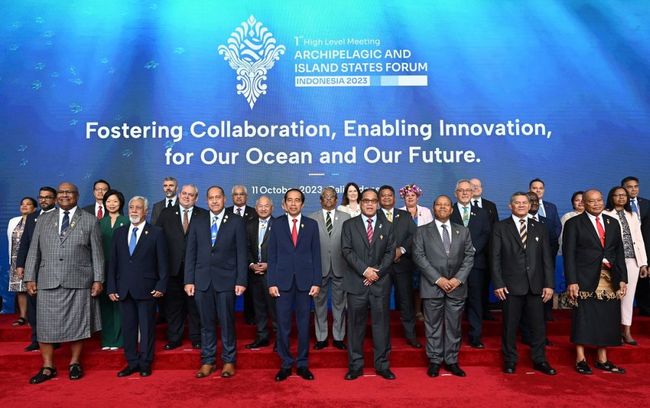
Indonesia, as host of the 1st High-Level Meeting of the Archipelagic & Island States (AIS) Forum, has called for the collaboration of AIS Forum participating countries to respond to various global challenges.
President Joko Widodo speaks during a press conference following the 1st High-Level Meeting of the Archipelagic and Island States (AIS) Forum in Nusa Dua, Bali, on October 11, 2023. (ANTARA FOTO/Media Center KTT AIS Forum 2023/Akbar Nugroho Gumay/Spt)
Indonesian President Joko Widodo (Jokowi), while opening the high-level meeting in Nusa Dua, Bali, on Wednesday, highlighted that all archipelagic and island countries, whether large or small, developed or developing, are facing challenges, such as rising sea levels, marine resource management, and marine pollution.
“If we throw rubbish on land, it does not necessarily mean that the rubbish will move to land in another part of the world. However, if we throw rubbish into the ocean, the rubbish can reach any land in the world,” he said.
The president deemed collaboration and solidarity between archipelagic and island countries crucial to creating strategic, concrete, and tactical measures for tackling shared problems. The high-level meeting is deemed an important opportunity to set the direction of collaboration going forward.
In this regard, he encouraged three aspects to be advanced: solidarity, equality, and inclusivity as principles that must be held together; priority on concrete cooperation that is adjusted to the needs of beneficiary countries; and third, robust and dynamic cooperation framework to respond to challenges going forward.
“Indonesia would like to invite all countries that are present; let us continue to choose to continue to build unity and continue to build collaboration even amid a divided world condition. Let us walk and work together,” Jokowi stated.
On that occasion, President Jokowi noted that Indonesia has also continued to echo the interests of archipelagic and developing countries at various international forums, such as in the 2022 G20 Summit, the 2023 ASEAN Summit, and the 2023 AIS Forum high-level meeting. “Indonesia is also committed to preparing grant funds to be used for the interests of archipelagic countries and developing countries,” he said.
At a press conference held after the meeting, President Jokowi highlighted that developing and archipelagic countries have the same right to advance and carry out development. He also affirmed that Indonesia, as a maritime nation, would continue to be at the forefront of supporting the AIS Forum as an inclusive cooperation of archipelagic and island countri For Indonesia, the sea is not a divider; but instead, the sea is a uniter,” he remarked.
Indonesia is hosting the 1st High-Level Meeting of the AIS Forum, which is attended by 32 countries out of 51 AIS countries and four international organizations. The high-level meeting raises the themes of the Blue Economy; Our Ocean, Our Future; and Solidarity.
At the head-of-state level, Indonesia noted the participation of President of the Federated States of Micronesia Wesley Simina, Prime Minister of Timor-Leste Xanana Gusmao, the Premier of Niue Dalton Tagelagi, Prime Minister of São Tomé and Príncipe Patrice Emery Trovoada, and Prime Minister of Tuvalu Kausea Natano. Deputy Prime Minister of Fiji Manoa Seru Nakausabaria Kamikamica and Deputy Prime Minister of Tonga Samiu Kuita Vaipulu were also in attendance at the meeting.
Meanwhile, delegations of other countries are led by ministers, deputy ministers, high-ranking officials, and ambassadors during the high-level meetings.
Protection and fulfilment of the rights of persons with disabilities in ASEAN are carried out comprehensively, including education, health, employment opportunities, and social protection. This comprehensive treatment is needed so that persons with disabilities can be independent and, at the same time, increase their dignity.
This is one of the main issues that emerged in the ASEAN High-Level Forum on Disability Inclusive Development and Partnership beyond 2025. This international event, taking place in Makassar from 10-12 October 2023, is attended by 13 representatives of countries from ASEAN, observers, and representatives of other countries.
The participants in this forum consist of Ministers and ASEAN Senior Officials who are responsible for social welfare and development in related sectoral bodies, ASEAN affiliated entities and partners. AHLF 2023 is one of a series of ASEAN Summits under the chairmanship of Indonesia.
A number of speakers appeared on the first day of AHLF who focused on identifying challenges in ASEAN to strengthen disability inclusive development. Various issues and lessons learned from the impact of the pandemic on the lives of persons with disabilities are also discussed.
In her opening remarks, Minister of Social Affairs Tri Rismaharini said that disability is not only an issue in ASEAN, but also a global issue because the number of persons with disabilities is quite large. In ASEAN, there are around 62 million persons with disabilities.
Meanwhile, in Indonesia, there are around 22.9 million. For this reason, AHLF invited participants from the United States, England and Australia to see how ASEAN countries have tried to handle disabilities well while discussing and exchanging experiences.
“We hope that through this AHLF, the handling of disabilities in ASEAN can be even better in the future,” said the Social Affairs Minister in front of the media after the opening session in Makassar on Tuesday (10/10).
Present at the meeting, Chairman of Commission VIII of the House of Representatives, Ashabul Kahfi said that his party appreciated the steps of the Ministry of Social Affairs in organizing AHLF. In Law Number 8 of 2016 on Persons with Disabilities, the government is encouraged to collaborate with many parties to provide better services for persons with disabilities.
This service is very important so that persons with disabilities can be independent and at the same time raise the value and dignity of persons with disabilities. “The Ministry of Social Affairs, so far, has paid close attention to the rights of persons with disabilities. “Of the budget of around IDR 80 trillion, part of it is used to empower persons with disabilities,” she said.
Fulfilling disability rights is an effort to realize Indonesia’s human development design where no one is left behind, including those with disabilities. The Deputy conveyed this statement to the Coordination of Social Welfare Improvement, Coordinating Ministry for Human Development and Culture, Prof. Nunung Nuryartono.
According to him, the Ministry of Social Affairs has designed many programs so that persons with disabilities can get out of extreme poverty. “The President has declared that there will be no more extreme poverty in 2024. “That is our common target,” said Nunung.
Meanwhile, Chairman of the Indonesian Association of Persons with Disabilities, Norman Yulian, on the same occasion, appreciated the seriousness of the government, especially the Ministry of Social Affairs, in realizing an inclusive and disability-friendly Indonesia.
The government has also tried in various ways to create an inclusive Indonesia, including for persons with disabilities, both in the education and employment sectors. “We hope that through AHLF we can design a master plan for handling disabilities for the ASEAN region,” said Norman.
Regarding the event in Makassar, the Minister of Social Affairs said that the presence of participants from various countries was also used to promote Indonesia’s unique and very diverse tourism.
Tourism destinations in South Sulawesi are unique because they relate to human civilization. “This tourism potential is rare and extraordinary, so it should be promoted worldwide,” said Minister Risma.
It is not easy to optimize tourism destinations for persons with disabilities because the government must prepare the infrastructure. However, this can be done by Indonesia. The tourism destinations that the AHLF delegation will visit are very friendly to persons with disabilities.
“From design to construction, everything is done by persons with disabilities so that it suits their needs. “This step is also to show that they are actually capable if given the opportunity,” Minister Risma said.
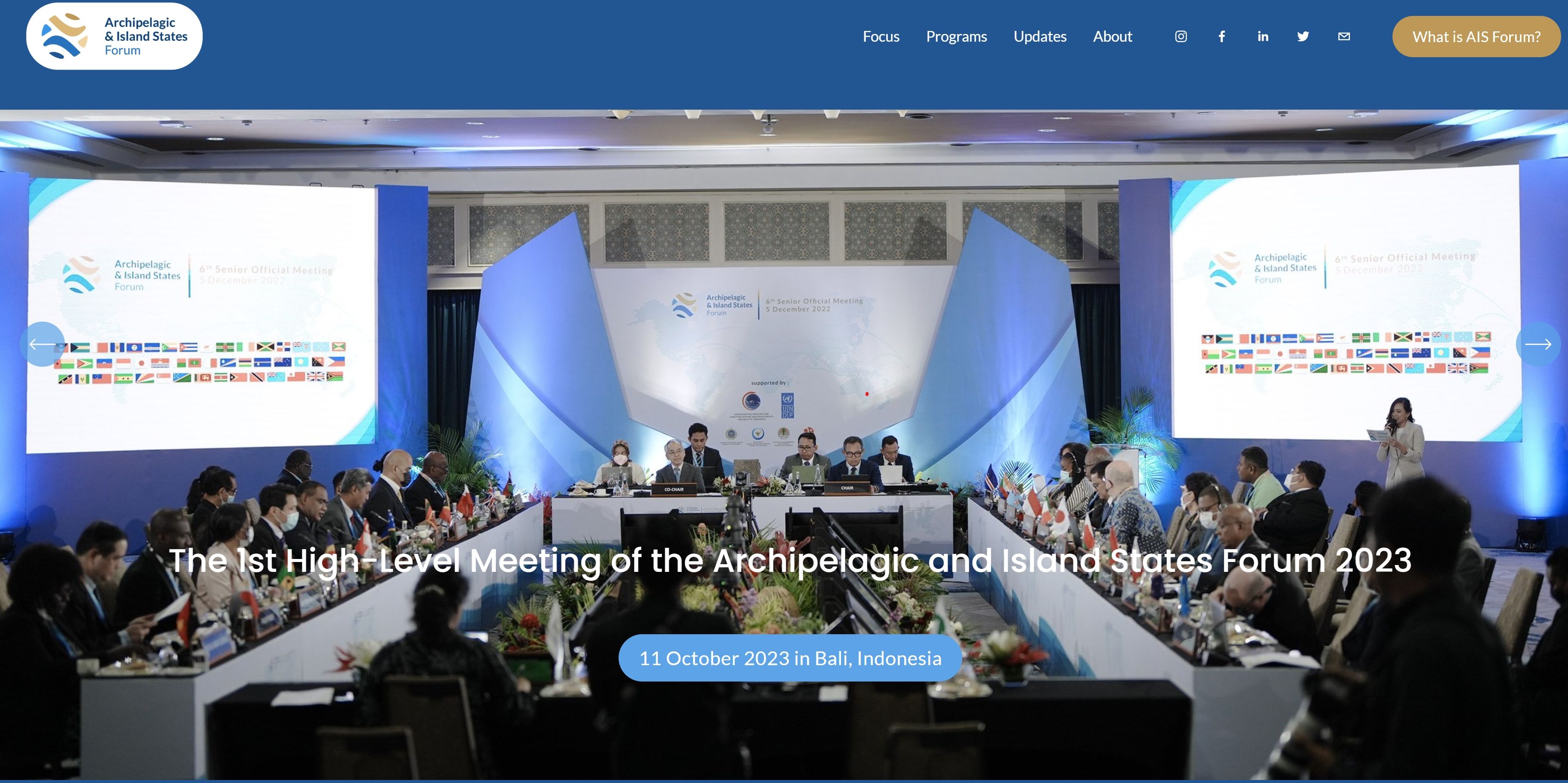
The Archipelagic & Island States (AIS) Forum, being held October 9-11 at the Bali Nusa Dua Convention Center, Bali, has expressed its strong commitment to preserving the marine ecosystems in the effort to mitigate the impact of climate change that threaten its participating countries.
The 1st High Level Meeting (HLM) of the AIS Forum 2023 is taking place at the Bali Nusa Dua Convention Center and draws participation from 29 countries and four international organizations. Heads of state/government of several countries are participating, including Micronesia, Niue, Sao Tome and Principe, Timor-Leste, and Tuvalu.
The HLM will have four themes: adaptation and mitigation against climate change, promoting a sustainable blue economy, handling plastic waste in the oceans, and strengthening sustainable maritime governance. The Effects of climate change, including rising global temperatures with rising sea levels, have been threatening the very existence of small low-altitude island states, particularly those in the Pacific Ocean.
“Climate change is real. Climate change is a common enemy for island countries,” Alexander Muhammad Khan, Indonesian representative to the AIS Research and Development (RnD) Conference. The AIS RnD Conference serves as one of four side events to the 1st High Level Meeting (HLM) of the AIS Forum.
In the RnD Conference, the AIS Forum seeks to bring together oceanographers, marine biologists, scientists, policymakers, industry leaders, and visionaries across the globe to present their breakthroughs and jointly find solutions to preserve oceans, a complex ecosystem regulating the planet’s climate.
The Conference delves into a number of themes, including the ‘Blue Economy’, which the World Bank has described as an eco-friendly utilization of marine resources that aims to stimulate economic growth and improve welfare while preserving oceans, which constitute the planet’s important carbon sink that can help mitigate climate change impacts.
Since its formation in 2018, the AIS Forum has made efforts to realize the Blue Economy, including the Blue Financing Strategic Framework, which will be highlighted in the discussion on the blue economy during the HLM. The framework document constitutes a tool that can guide businesses to invest in blue economic activities taking into account the social, economic, and environmental impacts
AIS Forum further highlights the importance of the Blue Economy by holding the AIS Blue Economy High-Level Dialogue on October 9, another side event for the 2023 HLM. This Dialogue is aimed at the world’s political leaders, experts, and major business actors, to find solutions to ensure that all archipelagic and island states, including the least-developed ones, have the same opportunity to tap into the vast potential of the blue economy.
Another side event is the AIS Startup Blue Business Summit. Head of the AIS Forum Secretariat Riny Modaso says the event serves as a medium for Blue Economy entrepreneurs, or bluepreneurs, to connect with marine stakeholders, innovators, researchers, and potential investors. “By investing in innovative solutions, AIS participating states can protect their vulnerable ecosystems, suppress the effects of climate change, and create a sustainable future for their communities,” she said on Sunday (October 8).
The AIS Forum also considers youths’ ideas and aspirations in the efforts to protect the oceans. The AIS Youth Conference was held from October 6-8, drawing participation from 26 young delegates from 26 AIS Forum participating states. Deputy for Maritime and Energy Sovereignty Coordination at the Indonesian Maritime Affairs and Investment Coordinating Ministry, Jodi Mahardi emphasized that young people’s ideas could help archipelagic and island states deal with challenges.
Indonesian President Joko Widodo inaugurated the 1st HLM, which carries the theme of “Fostering Collaboration, Enabling Innovation for Our Ocean and Our Future.” Other state delegations are being led by deputy prime ministers, ministers, deputy ministers, and ambassadors.
Indonesia is hosting the 1st HLM, as an initiator of the AIS Forum which was formed on the basis of the Manado Declaration on November 1, 2018, during an AIS Ministerial Meeting.
Indonesia identified cooperation projects worth US$32 billion through business matching activities carried out during the ASEAN-Indo-Pacific Forum (AIPF), held on September 5-6. As the organizer of the AIPF, which is the flagship event of the 43rd ASEAN Summit, Indonesia is also seeking cooperation for projects from other countries with a total value of US$810 million.
Vice Minister of Foreign Affairs Pahala Nugraha Mansury shared a presentation on the Indonesia’s Plan to Develop Green Infrastructure on the second day of ASEAN-Indo-Pacific Forum (AIPF) at Mulia Hotel, Wednesday (6/9/2023). [Image: Media Center KTT ASEAN 2023/Galih Pradipta/aww.]
“Although those (cooperation projects) had not been able to be finalized at today’s meeting, we hope the business matching will be able to boost cooperation and real understanding of the investment needs expected by each country,” Vice Minister of Foreign Affairs Pahala Mansury said in a press conference about the AIPF in Jakarta on Wednesday (6 September 2023).
The business matching activities involved around 185 domestic and international investors, including PT Bank Mandiri Tbk, Bank Permata, Bank SBI Indonesia, Bank CCB Indonesia, PT Bank Jawa Barat, PT Astra Infrastruktur, PT Amman Mineral Tbk, Dian Swastatika Sentosa, AIIB, Standard Chartered, Sumitomo (SMBC), Commerzbank, ACWA (Saudi Arabia), EDF Energy (France), KEPCO (South Korea), IGNIS (Spain), China Railway Corporation, Sinohydro, China State Construction Engineering, Siemens (Germany), Inpex Geothermal (Japan), British Columbia (Canada) and Actis (the UK).
The business sectors promoted through the AIPF included the development of new and renewable energy, hydrogen, ammonia, alumina refinery, battery supply chains, toll road infrastructure, and ports.
Indonesia put more focus on cooperation with international partners for strategic projects in the fields of energy and oil and gas (five projects), toll-road (nine projects), ports (five projects), health (six projects), fertilizer (three projects), infrastructure (ten projects), tourism (nine projects) and electric vehicle battery ecosystem and supply chains (three projects).
According to Vice Minister of State-Owned Enterprises (SOEs) Rosan Roeslani, the sectors that attracted many investors’ interest are green energy and electric vehicle battery ecosystem.
“There were also many who wanted to participate in the digitalization sector because they could see that there is a lot of our people’s potential that has not been reached by formal financing,” he said. He mentioned that some of the largest SOEs in Indonesia, such as Pertamina, Pupuk Indonesia, PLN, Pelindo, Jasa Marga, MIND ID, and Injourney also participated in the AIPF.
Also participated The National Development Planning Agency (Bappenas), which could become a platform to support the acceleration of investment for several infrastructure projects such as Demak-Tuban, Tuban-Gresik, Tasikmalaya-Gedebage-Ciamis toll roads and the Jatiluhur Drinking Water Supply System.
ASEAN member states such as Brunei, Myanmar, Thailand, Malaysia, and the Philippines presented potential projects in the telecommunications and infrastructure sectors.
ASEAN state members’ leaders, namely President of the Philippines Ferdinand Marcos Jr., the Prime Minister of Singapore Lee Hsien Loong, the Head of Delegation of the Kingdom of Thailand Sarun Charoensuwan, the Prime Minister of Viet Nam Pham Minh Chinh, the Prime Minister of Lao PDR Sonexay Siphandone, the Sultan of Brunei Darussalam Hassanal Bolkiah, the Prime Minister of Cambodia Hun Manet, the Prime Minister of Malaysia Dato’ Seri Anwar Ibrahim, and the Prime Minister of Timor Leste Xanana Gusmao were also present.
Three world leaders were also present as keynote speakers in the leaders talk session, namely Japanese Prime Minister Fumio Kishida, Australian Prime Minister Anthony Albanese, and Canadian Prime Minister Justin Trudeau.
Mansury said that those world leaders emphasized that the priority going forward for the strategic partnership with ASEAN will focus on sustainable cooperation sectors, such as the development of clean energy, innovative and sustainable financing, and the development of green infrastructure.
Mansury said that those leaders emphasized that the priority going forward for the strategic partnership with ASEAN will focus on sustainable cooperation sectors, such as the development of clean energy, innovative and sustainable financing, and the development of green infrastructure.
For more information, please contact: Usman Kansong, Director General of Information and Public Communication Ministry of Communication and Information, Indonesia
Through the ASEAN-Indo-Pacific Forum (AIPF) held in Jakarta on 5-6 September 2023 as the flagship event of the 43rd ASEAN Summit, Indonesia showcased 93 cooperation projects worth US$38.2 billion and 73 potential projects worth US$17.8 billion, to encourage cooperation among ASEAN member countries and its partners in the Indo-Pacific region.
With a contribution of 64 percent to global economic growth, the Indo-Pacific is considered a strategic region where cooperation should be promoted instead of geopolitical rivalries and conflict, according to Vice Foreign Minister Pahala Nugraha Mansury.
“AIPF is expected to present the habit of cooperating and building together among ASEAN countries in the Indo-Pacific,” Pahala said during a press briefing after the forum’s opening in Jakarta on Tuesday.
The discussions and business-matching agenda during the two-day forum focus4d on three primary areas of cooperation, including green infrastructure and resilient supply chains, innovative sustainable financing, digital transformation and creative economy.
Those sectors, he said, are expected to be new sources of growth in the ASEAN – which is estimated to grow by 4.5 percent this year and the next, according to IMF.
As part of Indonesia’s ASEAN chairmanship, the AIPF has been held as a platform for promoting constructive dialogue, and concrete collaboration between SOEs and the private sector. “ASEAN is the future and epicentrum of growth. It plays a significant role in the Indo-Pacific region,” SOEs Deputy Minister Rosan Roeslani stated.
From the Indonesian side, the country offers some cooperation in the development of an alumunium shelter worth USD1.8 billion, the development of Benoa Port in Bali worth USD4.3 billion, as well as a project of a fertilizer factory, toll road, and special economic zone in Sanur, Bali.
During the AIPF, Indonesia also promotes cooperation in green infrastructure and sustainable financing in developing the New Capital Nusantara mega-project in East Kalimantan.
AIPF was inspired by the ASEAN Outlook on Indo-Pacific (AOIP) initiated by Indonesia and adopted by ASEAN member countries in 2019. It aims to strengthen an inclusive regional architecture, encourage collaboration, strengthen mutually beneficial cooperation, and take the existing opportunities in the Indo-Pacific region.
AIPF is also aligned with the theme of this year’s ASEAN Summit: making ASEAN the epicenter of growth while maintaining peace, security, stability, and prosperity in the Indo-Pacific. The ASEAN region is considered to have sufficient capital to become the center of the world’s economic growth, with a collective gross domestic product (GDP) of US$ 3.3 trillion in 2021.
For more information, please contact: Usman Kansong, Tel. +62-816785320 Director General of Information and Public Communication Ministry of Communication and Information, Indonesia


 Conceived in collaboration with the Ministry of Culture, Community and Youth (MCCY), Montage of Singapore Season 2 has solidified its position as a beacon of harmony and inclusivity within the nation. Championed by Masti Media Network and endorsed by the National Integration Council, the series embodies a collective effort to celebrate Singapore’s rich multicultural fabric and promote social cohesion. Montage of Singapore extends heartfelt gratitude to its esteemed panelists, partnering organizations, and production partners for their unwavering support and commitment. Special thanks are extended to Peoples Association, Harmony Circle, SINDA, Republic Polytechnic, Ray of Hope, Singapore Kindness Movement, The Art Of Living, TiE Singapore, vLookUp.ai, ACRES for their invaluable contributions to the success of the series. The Production partner for the series is : Nin9 Studios and Digital Media Partner is Radio Masti 24×7.