Brawijaya University develops GIS-based IoT for disaster mitigation

Brawijaya University has developed an Internet of Things (IoT) technology based on the Geographic Information System (GIS) to mitigate disasters in Pronojiwo district, an area affected by the eruption of Mount Semeru.
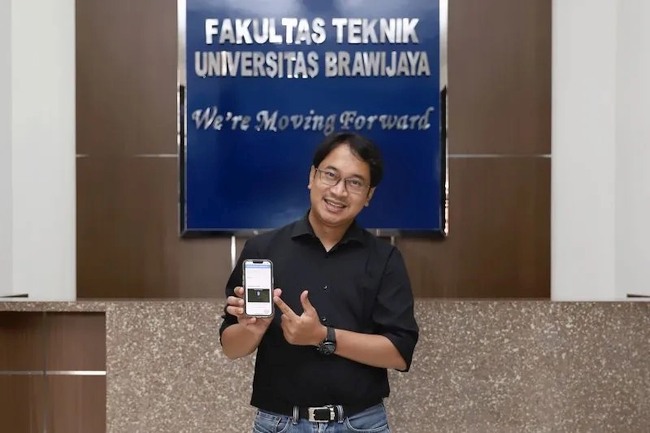
A lecturer on urban planning at the Faculty of Engineering of Brawijaya University, Adipandang Yudono, Ph.D., has developed an Internet of Things (IoT) technology based on the Geographic Information System (GIS) to mitigate disasters in Pronojiwo district, an area affected by the eruption of Mount Semeru. (Photo: ANTARA/HO-Humas UB)

“The data generated by IoT can be crucial information in dealing with disaster-affected areas,” a lecturer of urban planning at the university’s Faculty of Engineering, Adipandang Yudono, Ph.D., said here on Thursday.

After the Semeru eruption some time ago, the IoT technology was used to enter a number of data regarding the number of refugees, logistics, the distribution of survivors, the location of the post, medicines, and food, among others, he informed.

According to Yudono, during the recovery period, the GIS-based IoT technology has been used to map the condition of agriculture, livestock, as well as damaged schools in affected areas.

“This data can be used as a support system for determining areas that can be rehabilitated or determining lines for the protected areas,” he said.

Meanwhile, a volcanology and geothermal expert at Brawijaya University, Prof. Sukir Maryanto, said that the IoT system can work via two methods: through human media and the use of sensors.

When using human media, the IoT works in three stages, namely entering or inputting data, which can then be managed using a database, he informed. The database is then forwarded to the operational dashboard.

The operational dashboard contains infographics on the distribution of activities, the number of activities, and their graphs. Meanwhile, electronically, the IoT inputs data based on electronic sensors installed somewhere.

“In the future, the geospatial-based IoT can be used for planning activities for the recovery of areas affected by the Semeru eruption, such as reforestation,” he said.

According to the chairperson of the Independent Learning Program for the Independent Campus (MBKM), Semeru, Dr. Sujarwo, the IoT for disaster mitigation is supporting the activities of students involved in the Semeru humanitarian project.

“This (IoT) makes it easy, especially in identifying damage and providing better information, such as the number of damaged buildings and data on affected areas,” Sujarwo said.

In addition to the use of IoT for disaster mitigation, the MBKM Semeru has also initiated a “school and town watching” system, which is also being carried out with the help of schools and communities.

The disaster mitigation effort in schools or “school watching” involves identifying elements in schools that are at risk, analyzing the impact of risks, and finding solutions to problems when a disaster strikes.

Meanwhile, “town watching” is a program wherein people living in an area, namely residents, children, and students, go around the area to see and identify dangerous places when a disaster occurs.

“Town watching” seeks to increase public awareness on disaster management, identify environmental and surrounding vulnerabilities, and identify community capacities or resources that can be used when a disaster occurs.

In addition, it also identifies the main problems in the community and finds solutions to these problems.

Written by: Yashinta Difa Pramudyani, Editor: Suharto (c) ANTARA 2022
Brawijaya Student Start-up makes Forbes 30 Under 30 List

  • Chickin Indonesia agricultural start-up by students from Brawijaya University

An agricultural start-up initiated by three students from Malang’s Brawijaya University whose app, Chickin, has been downloaded by a thousand farmers across Indonesia, has made the Forbes 30 Under 30 list. According to the founders, the application uses Internet of Things (IoT) and artificial intelligence (AI) to enhance the productivity of farmers by up to 25 percent.

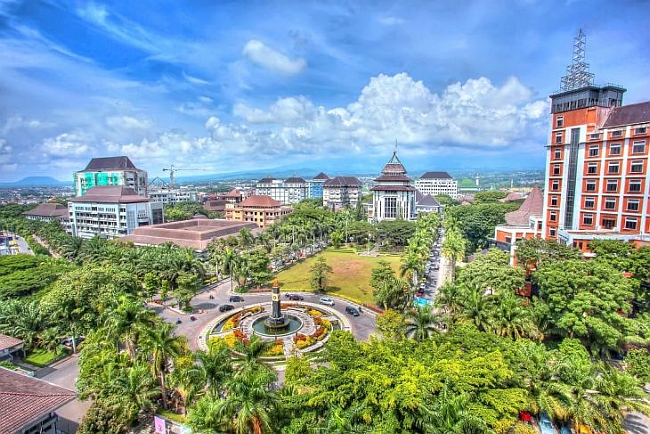
Universitas Brawijaya (UB) in Malang, East Java, Indonesia (ANTARA/ HO/ Universitas Brawijaya)
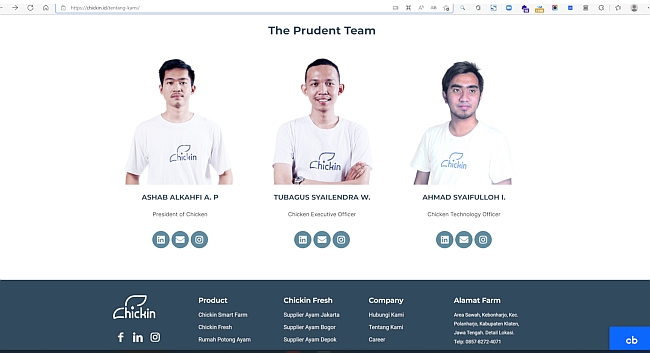
Chickin, hatched at UB/U.Brawijaya by founders Ashab, Tubagus and Ahmad (Chicken.ID Website / Malang, Indonesia)

The app was developed by agrotechnology student Ashab Alkahfi, who is serving as the President of Chickin, Tubagus Syailendra from international relations, who is serving as CEO/Chief Executive Officer, and Ahmad Syaifullah from information systems, serving as the CTO/Chief Technology Officer.

“Based on initial research, we developed the app in Klaten, Central Java. We built poultry coops as farmers and began our poultry business where we found a number of challenges faced by local farmers. From there, we tried to solve these challenges by means of technology,” Alkahfi explained.

The application allows farmers to control the micro-climate inside chicken coops from a distance. Through the technology, farmers can input data, including daily, sales, and production data, to enhance performance and make it more measurable and at the same time, minimize risks through preventive measures.

The app also offers a number of features for management of the poultry farm, including data and IoT configuration adaptable to climate, temperature and humidity, as well as recording the age of each poultry. Aside from partnering with 14 poultry farms, Chickin has established cooperation with 100 poultry suppliers in the food industry.

Alkahfi said he hopes the app will bring ease to farmers and have a positive impact on them, adding that the farming modernization technology was developed free of charge under Brawijaya University’s Entrepreneur Incubator.

Chickin has seen 22-fold growth in the last 10 months and closed a funding round of Rp35 billion with three global investors. The company is targeting to increase revenue to Rp500 billion by the end of 2022.

So far, Chickin Indonesia is not only assiting one thousand farmers across the nation, but the company is committed to developing the technology to minimize the use of antibiotics for organic chicken through coop micro-climate control and providing training to poultry farmers free of charge to modernize Indonesian poultry farms.

For more information, Chickin Indonesia is online at https://chickin.id/.
Written by: Aria Cindyara, Editor: Rahmad Nasution (c) ANTARA 2022

Universitas Brawijaya developing digital halal certification system for Indonesian MSMEs

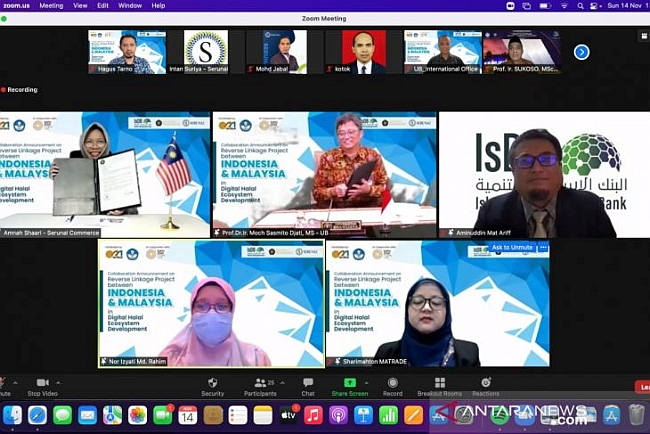
Universitas Brawijaya (UB/Unibraw) is developing a digital halal certification system for micro, small and medium enterprises (MSMEs) in Indonesia, as part of the Reverse Linkage Project. According to the head of the project team, Dr. Hagus Tarno, the system will archive documents from the processing stage through to certification. By archiving documents digitally, MSMEs will find it easier to see the results of evaluation for each step of the process.

“MSMEs that will apply for halal certification through Brawijaya University will be directed to a system that will assist them to check which documents must be prepared and filled out. Continue to the certification process, there will be another system that will make sure that the business owners know the step they are currently in — whether their documents are returned to them or they are going to the certification,” Dr Tarno said during a webinar last Sunday.

There has been a request from the Department of Cooperatives and SMEs, Malang Regency to assist 100 business owners who will apply for halal certification through Brawijaya University in the near future, he informed. “There has been an offer. We will try to apply it to the MSMEs that we will assist,” Tarno said.

The project for developing a halal digital system received US$2.06 million funding for two years (2021-23) from Serunai Malaysia and the Islamic Development Bank (IsDB), he said. Meanwhile, the University, IsDB and Serunai Malaysia signed a letter of intent (LOI) virtually during the webinar.

The LOI will be followed up with a tri-partite agreement before the project is carried out, Tarno said. If the system is already running in Brawijaya U, it can be applied in other universities, he added.

The university’s vice rector for planning and cooperation, Prof. Dr. Ir. Moch. Sasmito Djati, M.S., said that Brawijaya would contiue to support development of the halal certification project, which can be applied not only to food and beverages products but also to pharmacy and tourism MSMEs.

University Brawijaya is known as a pioneer in incubating critical aspects of the halal value chain since 1987, he added. At that time, the concept of halal certification originated with the efforts of Dr. Ir. Tri Susanto, a lecturer in Food Technology, Department of Agricultural Technology, Faculty of Agriculture at the University.

Since then, the scientific products developed at the university have become formal archetypes for the Muslim community in Indonesia, creating awareness on the importance of the halal concept and promoting the halal ecosystem, said Prof Sasmito..

Considering Brawijaya’s long history in developing the halal concept and ecosystem, it is perfect to become a beneficiary of the Reverse Linkage Project, for utilizing digital technology to help improve the role of MSMEs in the Indonesian economy, the Prof added.

Reporters: Endang Sukarelawati, Yashinta; Editor: Fardah Assegaf. (c) ANTARA 2021.

Brawijaya University ranks in 301-400 band according to THE Impact Rankings

Brawijaya University in East Java ranked in the 301-400 band among the world’s top universities on the basis of the assessment of the Times Higher Education (THE) Impact Rankings 2021.

This year, the assessment of THE Impact Rankings is based on the concern and contribution of universities in the success in implementation of the Sustainable Development Goals (SDGs) programs, according to Brawijaya University’s head of ranking center, Adharul Muttaqin.

THE measures how the academic aspects, publications, innovations, and activities of universities support the 17 goals in the SDGs.

In the 2021 edition, Muttaqin conveyed that Brawijaya University demonstrated its participation and success in aligning its efforts with all 17 existing goals. The university stood in the top 200 for four out of the 17 goals — “No Poverty” and “Zero Hunger” in addition to “Life Below Water” and “Life on Land”.

“In the criteria of ‘Life on Land’, Brawijaya University is able to demonstrate its supporting capacity to maintain land ecosystems, both in academic and non-academic activities. Brawijaya is very supportive, with the compost processing center and its responsibility to manage educational forests in Karangploso in East Java,” Muttaqin noted in Malang on Monday (April 26).

Meanwhile, in the “Zero Hunger” criteria, Brawijaya University has played an important role in the national food security program, as one of the campuses that has the best agriculture department in Indonesia.

“In this criterion, the campus is also required to have awareness of food consumption leftovers and must produce the lowest possible leftover food consumption, including activities aimed at preventing the threat of hunger. Brawijaya has implemented the food distribution program for its students, who could not return to their hometowns during the COVID-19 pandemic,” he expounded.

To determine the overall ranking, it is based on the compulsory category score, specifically the goal 17th Partnership for the goals and the three categories with the best score.

Brawijaya University ranked 52nd on the goal of “Life on Land”, ranked in the 201-300 band for goal “Decent Work and Economic Growth” in the world, and stood in the 101-200 ranking for the goal of “Zero Hunger”.

“Alhamdulillah, we are grateful to have entered all fields, so that it can bring Brawijaya to the international level. Ranking shows reputation. Reputation shows quality and public trust,” the university’s rector, Prof. Dr. Nuhfil Hanani, concluded.

Universitas Brawijaya (UB), or Brawijaya University, welcomes you to Malang, East Java, Indonesia at https://ub.ac.id/.