Don Agro International achieves 8.9 thousand tonnes growth in crops harvested, driven by land bank acquisitions and implementation of innovative technologies

Don Agro International Limited (the “Company” or “Don Agro”) and its subsidiaries (collectively the “Group”), one of the largest agricultural companies based in the Rostov region of Russia is pleased to announce that it has achieved a 8.9 thousand tonne growth in total crops harvested, with 72.3 thousand tonnes of winter wheat and 19.0 thousand tonnes of sunflower harvested till date.

A key driving force which has enabled Don Agro to sustain this growth has been the expansion of the Group’s totalled controlled land bank via new strategic acquisitions.

Following its initial public offering in February 2020, the Group made its maiden post-listing acquisition at the end of 2020 of Volgo-Agro LLC, an agricultural company based in the Volgograd region of Russia operating a controlled land bank of approximately 10,040 hectares. Subsequently in July 2021, the Group acquired a neighbouring agribusiness, Rav Agro Rost LLC (“Rav Agro Rost”), located in the Millerovo District, Rostov Region of Russia. With an arable land bank of approximately 3,200 hectares, Rav Agro Rost alone contributed up to 3.1 thousand tonnes of winter wheat and 1.54 thousand tonnes of sunflower.

“While we are pleased with the robust harvest results achieved this year, we continue to look ahead to new horizons to capture growth. For us, the acquisition of new land banks is a strategic task, and is one that we have committed to our investors since listing in early 2020. At the moment, we operate a controlled land bank of approximately 67.3 thousand hectares, of which 17.2 thousand hectares are owned by the company, and we do not plan to stop there. Moving forward, we will continue to explore new acquisition prospects actively to raise our production capacity progressively, with the objective of achieving long-term sustainable growth,” commented Mr. Marat Devlet-Kildeyev, Chief Executive Officer of Don Agro International.

Mr. Devlet-Kildeyev also added that the Group is applying a variety of innovative technologies to raise crops yields and productivity for Don Agro.

Since 2020, the Group has been working closely with Russian-based autonomous driving software developer Cognitive Pilot to implement the Cognitive Agro Pilot(TM), an AI-powered autonomous driving system for agricultural machinery. Deployed on the Group’s crop harvesters, the Cognitive Agro Pilot(TM) system guides the harvester headers along the edge of unharvested crops with precision, maximising the width of the headers while optimising harvester movements. This reduces fuel consumption to make the harvesting process more environmentally-friendly. The technology also allows harvester operators to focus solely on managing machinery parameters, making work less tedious and safer in general.

The Group also employs no-till farming technologies for up to 7.5 thousand hectares of its arable land bank at present. Compared to conventional farming methods which can erode soil quality and require more manual labour and fuel, no-till farming reduces the impact farming has on the soil, providing an eco-friendly and sustainable alternative which has the potential to enhance crop yields as well.

More recently in September 2021, the Group announced its joint pilot project with Smart Polymorph Technologies to introduce the latest pharmaceutical innovations aimed at optimising crop production for the agricultural sector. As part of the pilot project, the Group earmarked experimental plots as a test bed for the application of a new growth bio-simulator which is expected to raise the Group’s crop yields and minimise production costs once it is ready to be deployed at scale.

About Don Agro International Limited

Don Agro is one of the largest agricultural companies in the Rostov region in Russia principally engaged in the cultivation of agricultural crops and production of raw milk. The Group is also engaged in crop production in the Volgograd region in Russia. The Group has a total controlled land bank of 67,340 hectares, of which more than 54,420 hectares are arable land. The Group owns approximately 17,200 hectares of its controlled land bank.

The Group’s operations are principally located in the Rostov region, one of the most fertile regions of Russia, situated close to the Azov and Black Seas and the Don River which house major international ports. The Group’s second operating division in the Volgograd region is located in close proximity to key trading routes including the Volga River. This allows the Group’s customers, who are mainly traders and exporters, to save on transportation costs and, as a result, be able to offer higher prices for the Group’s crops. Within the crop production segment, the Group is primarily engaged in the farming of commercial crops such as winter wheat, sunflower and corn.

In addition, the Group is the largest milk producer in the Rostov region and owns more than 4,000 heads of dairy cattle which includes approximately 2,200 milking cows.

Issued for and on behalf Don Agro by Financial PR

For more information please contact:
Romil Singh, Jonathan Wee
tech@financialpr.com.sg
Tel: +65 6438 2990, Fax: +65 6438 0064

Don Agro International Limited (the “Company”) was listed on Catalist of the Singapore Exchange Securities Trading Limited (the “Exchange”) on 14 February 2020. The initial public offering of the Company was sponsored by PrimePartners Corporate Finance Pte. Ltd. (the “Sponsor”).

This press release has been reviewed by the Company’s Sponsor. It has not been examined or approved by the Exchange and the Exchange assumes no responsibility for the contents of this document, including the correctness of any of the statements or opinions made or reports contained in this document.

The contact person for the Sponsor is Mr Joseph Au, 16 Collyer Quay, #10-00 Income at Raffles, Singapore 049318, sponsorship@ppcf.com.sg

Bizos Cavallo Enterprises, Hakim Unique Group and DENBA JAPAN announce exclusive US Distribution Agreement to Enhance Food Preservation

  • Patented technology resonates and activates water molecules to extend shelf-life of perishable food

Bizos Cavallo Enterprises, LLC of Dallas, TX, together with California-based Hakim Unique Groups’ Wingar Industrial Inc (DBA Denba USA), and DENBA JAPAN Co Ltd signed an exclusive strategic development agreement for United States distribution of the patented DENBA water molecule technology.

DENBA preservation technology utilizes static waves to create electric fields in freezers to preserve perishable foods by lengthening moisture crystallization. Thus, while extending the freshness of frozen products longer than typical heat-removal freeze technology, this significantly lowers food waste via slowing oxidation in frozen food in residential and commercial food preservation applications, as well as across supply chain logistics such as prefabricated storage units typically used in cold storage units at ports, in shipping, trucking, and other food storage reefers.

“We are excited to partner with both Hakim Unique Groups’ Wingar Industrial Inc. and DENBA Japan Co Ltd to bring this impactful technology to the US marketplace,” said Elvin Thibodeaux, Managing Partner of Bizos Cavallo Enterprises. “The prevention of the morphology of ice crystals and limitation of food oxidation with minimal impact to cold storage capacity will be extremely beneficial in food import, export and utilization across the United States supply chain. We look forward to working to lowering the roughly 30% food waste impact lost from in farm-to-fork transference across our country’s various commodity classes, as well as in that of daily usage in residential refrigeration within our homes.”

“Through years of research and development and improvement, DENBA’s product line has formed a complete set of equipment chains that can meet the cold chain needs of storage, including long-, medium- and short-distance transportation. This, as well as in-home food preservation provides us confidence that the US marketplace will embrace DENBA’s product offerings. We look forward to working with Bizos Cavallo to deliver this technology at a time where maximizing food resources is critical to the needs of many,” said Henry Huang, Chief Executive Officer of Hakim Unique Group.

“Since 2004, DENBA JAPAN has been committed to the research and development of water-based technology to enhance the human quality of life. We are confident that our new distribution alliance with Wingar Industrial Inc. and Bizos Cavallo Enterprises will result in a positive impact to cycle of food and its useful life via our patented food preservation technology throughout the United States,” said Kanetaka Goto, Chief Executive Officer, DENBA JAPAN Co Ltd.

DENBA utilizes its unique patented technology which resonates and activates water molecules to maintain longer than normal food preservation. Under the DENBA environment, perishable food may be stored in a negative temperature range, which leads to a reduction of the bacteria growth for perishable food items. Denba products can be retrofitted to the existing refrigerated equipment and can be used in a wide range of food distribution applications, including not only refrigerators, but also prefabricated storage units, trucks, and reefer containers.

About Bizos Cavallo Enterprises
Bizos Cavallo Enterprises, LLC is a strategic consulting and operations firm focused on emerging bioscience innovation for public health, strategic alliances, and global investment resources, based in Dallas, TX, with offices in New Orleans and Winston-Salem, NC. In addition, Bizos Cavallo owns the subsidiary, BP&D International, LLC, a global leader in the procurement and the export of premium cultural commodities, including bulk grains, animal proteins, and their respective derivatives. Founded in 2017, Bizos Cavallo’s network includes partners and a host of strategic alliances in the United States, Greece, Romania, China, South Korea, Japan, Singapore, Dubai, France, Brazil, the West Indies and a Trade Operations Desk with Clarion Global-UK in the United Kingdom. For more about Bizos Cavallo Enterprises, visit www.bizoscavallo.com.

About Hakim Unique Group
Hakim Unique Group (HUG), founded in 2000 with headquarters in Hangzhou, Zhejiang Province, China, is an investment conglomerate with more than 175 subsidiaries including Hakim Unique Internet Co Ltd (now Straits Innovation, 300300.SH), a publicly listed Shenzhen A-Share company. HUG and its subsidiaries hold investments in information technology, film and TV media, healthcare, insurance, innovative finance and asset management. With total group valuation of more than RMB210 billion, or US$32 billion, the Group is ranked amongst China’s top 500 private enterprises according to Zheshang Magazine and among the country’s top 100 most profitable private enterprises. Visit www.hakim.com.cn, or Wingar Industrial (DBA Denba USA) at www.denbausa.com.

About DENBA JAPAN Co Ltd
Established in 2004 and headquartered in Tokyo, Japan, with a presence in Osaka and Zhenjiang, China, DENBA is at the forefront of electric field preservation technology with products and interests across healthcare, agriculture, aquaculture and cold chain logistics via technology. DENBA together with equipment manufacturers develops solutions to provide protection for the food cold chain. Current partner clients include the world’s largest container manufacturer CIMC (DENBA equipped with professional temperature-controlled containers), China Railway Group (DENBA equipped with containers and long-distance cold chain vehicles), Changhong Group, Aucma Group (commercial and household refrigerators), Hoshizaki Co., Ltd. (the largest kitchen refrigeration equipment manufacturer in Japan), Isuzu Motors (refrigerated trucks and containers) and ITOCHU Corporation (trade distribution, cold chain logistics). Visit DENBA JAPAN at www.denba-global.com/en/

Media Contacts:
Bizos Cavallo Enterprises, LLC
E: media@bizoscavallo.com
T: +1 252 390 4300; Ext 1002
U: https://www.bizoscavallo.com

Denba USA
E: Jason@DenbaUSA.com
U: https://denbausa.com

Source: Bizos Cavallo Enterprises, LLC

Thai Union Feedmill (SET: TFM) lists, aims to lead aquaculture and commercial animal feed sector

Thai Union Feedmill PCL (SET: TFM), a manufacturer and distributor of aquaculture and commercial animal feeds, is confident of positive investor response following the company’s listing on the Stock Exchange of Thailand (SET) today. Determined to be the leader in the aquaculture and commercial animal feed business, TFM aims to grow in overseas markets through cooperative agreements, joint ventures with trading partners, and direct exports in order to support food security for Asia’s future.

Bunluesak Sorajjakit, TFM Chief Executive Officer, said the Company, which began trading in the Agribusiness sector under the symbol “TFM”, has over 20 years experience in the industry and accumulated know-how that has led to innovations in production processes. The Company has become a leader in the production and distribution of aquaculture and commercial animal feeds in Thailand, offering quality and widely-known branded products. Sorajjakit is confident that TFM’s IPO will attract widespread interest among investors.

Following the Company’s listing on the SET, TFM is prepared for continual sustainable growth and determined to take the leadership role in the aquaculture and commercial animal feed business sector. Between 2021 and 2023, it expects to spend the proceeds from the sale of shares (1,177.4 million baht) in the following activities:
i. Expand production and distribution of aquaculture feeds through Indonesia-based subsidiary TUKL by adding two lines of production, which will increase capacity by 36,000 tons per year, requiring an investment of no more than 250 million baht by 2023;
ii. Repay loans of between 250-350 million baht by March 2022 to reduce the debt-to-equity (D/E) ratio to less than 1 time (x), after the IPO; and
iii. Use the remainder as working capital.

Moreover, as a policy, TFM intends to pay dividends twice a year, amounting to no less than 50 percent of the net profit per the consolidated financial statements after reduction of all categories of reserves according to company rules and legal requirements.

The TFM CEO adds that the Company is determined to expand its operations to overseas markets with appropriate business models deemed beneficial. These are:

I. Technical support to the Indian partner
An agreement of technical cooperation with Avanti Feeds Limited (AVANTI), India’s major shrimp feed producer, allows it to use TFM’s trade name and feed formulae to produce and sell shrimp feed in India;

II. Overseas JVs with partners
i. TFM joined with strategic partners to form PT Thai Union Karisma Lestari Co., Ltd. (TUKL), a subsidiary to produce and distribute aquaculture feeds in Indonesia. The two strategic partners are PT MSK, a major producer of frozen seafood in Indonesia, and AVANTI. TFM, PT MSK, and AVANTI hold 65 percent, 25 percent, and 10 percent of TUKL’s paid-up capital respectively.

ii. TFM formed a joint venture AMG-Thai Union Feedmill (Private) Limited (AMG-TFM) with a strategic partner in Pakistan. The Pakistani partner AMG is the country’s major producer of aquaculture feed. AMG holds 49 percent of shares in the new company while TFM holds 51 percent as of June 30, 2021. AMG-TFM produces 7,000 tons of fish feed per year and plans to increase capacity to 15,000 tons per year within 2021. The joint venture has started commercial operations and recognized revenues with net profit since the 2nd quarter of 2021;

III. Direct exports to various foreign countries, including Malaysia, Maldives, Myanmar, Pakistan and Sri Lanka.

IV. Domestic market expansion, TFM plans to develop new business and continues efforts in maintaining its competitiveness as an industry leader. The Company is the first in Thailand to produce and distribute feeds in form of pellets for sea bass to replace the use of fresh prey, and also a leading producer and distributor of feeds for giant sea bass. The Company has also launched products under its “fighting” brand through a marketing campaign to expand its customer base to more diverse segments as the demand for fish feed is on the rise. The Company has set its sights on promoting feeds for other fish species and has been putting in research and development efforts on feeds for other aquatic species, such as crab and gourami. TFM envisions a growth opportunity in the commercial animal feed sector that should help support food security in Asia.

Pichet Sithi-amnuay, managing director of Bualuang Securities, the financial advisor and underwriter of the Company’s IPO, says that TFM, with more than 20 years of experience and expertise, a highly qualified staff, a strong capital base and access to innovations, manages to improve its competitiveness and even raise the standards of the industry as a whole. TFM is capable of producing products of high quality with consistency and high performance, contributing to the healthy growth of aquatic species. TFM can also produce a range of products encompassing the entire life cycle needs of aquaculture at competitive prices. TFM’s products and brands have earned customers’ trust and satisfied their diverse demands over a long period of time.

For these reasons, TFM is in a prime position to pursue growth opportunities in both local and overseas markets through expansion in the production of feeds for aquatic and other types of animals. Other channels of overseas expansion include entering into cooperative agreements with local strategic partners or joint ventures to set up production bases, which will contribute to the Company’s sustainable growth. Thus far, TFM has attracted great interest from institutional and retail investors. It is a clear sign of confidence that TFM shares are of strong fundamentals which should gain wide acceptance from investors.

Released by Public Relations Dept., MT Multimedia Co., Ltd. for Thai Union Feedmill Public Company Limited
For more information, please contact: Ornanong Pattaravejakul (Fah)
Tel: +66-99-194-6597, +66-86-801-8888, Email: ornanong.p@mtmultimedia.com

Brawijaya University develops IoT-based system for melon cultivation

“Drip irrigation system” implemented at the Agro Techno Park in Malang, East Java

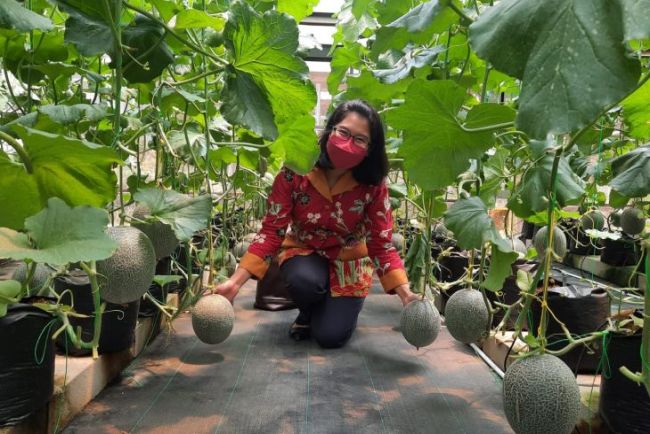
Brawijaya University (UB) has developed an internet of things (IoT)-based system for melon cultivation, currently being implemented at the Agro Techno Park in Malang, East Java. Eka Maulana, a lecturer from the university’s Faculty of Engineering, said the “drip irrigation system” is based on the water content in the planting medium.

The melon garden at the Agro Techno Park in Malang, East Java. The garden was developed by a team from Brawijaya University using the modern IoT farming system. (ANTARA/HO-Brawijaya University)

“Logically when the soil is dry, the ‘drip irrigation system’ is active. How much water content is in the medium when the drip system is active, as well as data and information related to the mechanism, are sent via an IoT connection. In principle, water has been applied with additional nutrients,” Eka explained to visitors on Friday.

The drip irrigation system cannot only be used for irrigation, said Eka, but also for determining nutritional needs, lighting, temperature and humidity in the melon garden greenhouse, among others things.

“In the process, the ‘drip irrigation system’ works according to the nutritional needs of each plant. So it is not just how much it irrigates the plants, but according to the age of the plants. Control of this system is monitored in terms of time and data variables that have been recorded before,” Eka explained.

Suyadi, Manager of Agriculture and Development at the Agro Techno Park, said the process of providing nutrients to plants periodically through water flow to the media is based on the needs of the plants.

“In a day, it can be done 5 to 10 times, so with this technology, we do not need to manually provide nutrients. It can be left to do other work, because it will automatically turn on the ‘drip irrigation system’ and flow nutrients to the planting media according to the needs of the plant,” he noted.

Suyadi pointed out that the use of IoT has made work easier because the machine turns on automatically whenever the planting media needs nutrients. “So that there is no shortage of nutrients. Because if we are doing it manually, then we still use our instincts when plants need nutrients,” he said.

The application of the drip irrigation system, he said, has turned out to give maximum results to melon plants. “The fruit yields can be better and ideal because the availability of nutrients is stable. If the nutrition is not stable, then the development of melons is not optimal; the fruit can break or the sweetness level will be low,” he noted.

Melons that are cultivated using the ‘drip irrigation system’ are of premium quality, starting from the taste, netted skin that is neatly arranged, and the ideal weight compared to conventional melons, he said. “The market is exclusive, so the taste is definitely different from what is sold in the conventional market. In Jatikerto (Malang), there are several varieties of melon including rock, golden, and honey,” Suyadi added.

He explained that the technology-based agricultural cultivation process in Jatikerto is also being used as a laboratory for students majoring in electrical engineering. “If melon plants are cultivated using a hydroponic system, then what the student does is aeroponic cultivation of vegetables,” he said.

In addition to nutrients that are more easily absorbed, planting with the aeroponic method also leads to faster growth because it uses LED lighting that is more constant than sunlight, he explained. “We can use LED light to trigger the generative phase and the vegetative phase in plants, resulting in increased nutrition, faster growth, and obtaining the desired leaf texture and taste,” he said.

One of the team members who is also an electrical engineering student, Muhammad Romadhani Prabowo said that with the drip irrigation system, plants will be protected from pests or fungi. Vegetables will be safer to eat as they will not even need to be washed, he said. The quality of the harvest will also be more durable than in hydroponic plants, he added.

The concept of aeroponics is currently applied to hydroponic plants, such as lettuce, mustard greens, bok choy (type of Chinese cabbage), basil, and spinach, he said. “Currently, we are also exploring (the drip irrigation system to be implemented for) herbal plants for treatment or plants with high economic value, such as mint and lemon balm,” Prabowo said.

Meanwhile, the development of IoT-based melon cultivation has arisen from the management of horticultural agriculture in Indonesia, which is still mostly done conventionally and with minimal use of technology, he said. This has had an impact on the instability of crop productivity, he added.

Visit Brawijaya University at https://ub.ac.id/ and the Agro Techno Park at http://atp.ub.ac.id/.

By A. Malik Ibrahim, Yashinta Dif
Editor: Suharto
Copyright (c) Antara 2021

Don Agro International and Smart Polymorph Technologies pioneer latest pharmaceutical innovations for the agricultural sector

  • The Group launched a joint pilot project with Russian-based Smart Polymorph Technologies to introduce the latest pharmaceutical innovations to optimise crop production
  • Formulated using Smart Polymorph’s proprietary polymorphic modification technology, new plant growth bio-stimulators are expected to raise crop yields and minimise production costs
  • 50 hectares of arable land have been earmarked as a test bed for the application of the growth biostimulators

Don Agro International Limited (the Company or Don Agro) and its subsidiaries (collectively the Group), one of the largest agricultural companies based in the Rostov region of Russia, is pleased to announce the launch of its joint pilot project with Smart Polymorph Technologies (Smart Polymorph) to introduce the latest pharmaceutical innovations to optimise crop production for the agricultural sector. Headquartered in the high-tech Skolkovo Innovation Center in Moscow, Russia, Smart Polymorph specialises in developing new, improved and patentable forms of pharmaceutical substances.

As part of this pilot program, both Don Agro and Smart Polymorph are working towards enhancing crop production yields and minimising costs through the use of well-known plant growth bio-stimulants that have been modified into new crystalline and amorphous forms via the latter’s polymorphic modification technology. To support research efforts, the Group earmarked experimental plots totalling 50 hectares of three different crops, namely winter wheat, corn and sunflower, as a testbed for the application of the new growth bio-stimulator.

According to Smart Polymorph, pharmaceutical drugs which they had developed prior to the latest venture displayed higher therapeutic effect as compared to existing market alternatives, even as the number of active substances used was reduced by three to five times. This is due to the technology’s ability to modify the morphology and crystalline form of the respective substances, and manage the control of particle sizes and amount of impurities, thereby ensuring that the end product achieves the highest quality standards.

“Smart Polymorph harnesses a unique technology in polymorphic modification of organic substances that is suitable and can be applied to a wide variety of medicines and bioactive substances used in the agroindustrial complex,” explains Mr Yakovlev Ruslan, Director of Science of Smart Polymorph Technologies. He added, “Leveraging on our proprietary technology, we have been able to modify substances that have proved to be more superior and efficient than other alternatives currently existing in the market. Backed by our successful track record to date, we are confident that the same technology can be applied to the agricultural sector to enhance the effectiveness of plant growth stimulants, pesticides and other related substances.”

On this latest initiative, Mr Marat Devlet-Kildeyev, Chief Executive Officer of Don Agro commented, “Over the years, we have continued to introduce modern farming techniques, adopt new technologies and implement industry best practices to set ourselves apart from our industry peers. This has included entering the market for organic wheat as well as adopting AI-powered autonomous driving technology to enhance our crop harvesting capabilities. Our latest joint pilot program is a step in the same direction as we apply new and innovative pharmaceutical technologies to our crop fields to achieve maximum crop yields at the lowest cost. Supported by our renowned partner in Smart Polymorph Technologies, we are confident that this initiative will reinforce our position as one of the leading innovators in the agricultural sector.”

Since April 2021, the Group has begun cultivating winter wheat using bio-stimulants supplied by Smart Polymorph, with experimental efforts for corn and sunflower crops next in the pipeline. Once the respective crops have been harvested, an analysis of yields and quality of the final product will be carried out by the Group to determine the growth bio-stimulant’s effectiveness. The introduction of bio-stimulants does not incur additional costs to the Group as the processes and technology required for sowing seeds and growing crops remain unchanged.

About Don Agro International Limited
Don Agro is one of the largest agricultural companies in the Rostov region in Russia principally engaged in the cultivation of agricultural crops and production of raw milk. The Group is also engaged in crop production in the Volgograd region in Russia. The Group has a total controlled land bank of 67,340 hectares, of which more than 54,420 hectares are arable land. The Group owns approximately 17,200 hectares of its controlled land bank.

The Group’s operations are principally located in the Rostov region, one of the most fertile regions of Russia, situated close to the Azov and Black Seas and the Don River which house major international ports. The Group’s second operating division in the Volgograd region is located in close proximity to key trading routes including the Volga River. This allows the Group’s customers, who are mainly traders and exporters, to save on transportation costs and, as a result, be able to offer higher prices for the Group’s crops. Within the crop production segment, the Group is primarily engaged in the farming of commercial crops such as winter wheat, sunflower and corn.

In addition, the Group is the largest milk producer in the Rostov region and owns more than 4,000 heads of dairy cattle which includes approximately 2,200 milking cows.

Equity information at SGX:GRQ, Bloomberg DAG:SP, Reuters DONA:SI.

Issued for and on behalf Don Agro by Financial PR.

For more information please contact:
Jonathan Wee
tech@financialpr.com.sg
Tel: +65 6438 2990, Fax: +65 6438 0064

Don Agro International Limited (the “Company”) was listed on Catalist of the Singapore Exchange Securities Trading Limited (the “Exchange”) on 14 February 2020. The initial public offering of the Company was sponsored by PrimePartners Corporate Finance Pte. Ltd. (the “Sponsor”).

This press release has been reviewed by the Company’s Sponsor. It has not been examined or approved by the Exchange and the Exchange assumes no responsibility for the contents of this document, including the correctness of any of the statements or opinions made or reports contained in this document.

The contact person for the Sponsor is Mr Joseph Au, 16 Collyer Quay, #10-00 Income at Raffles, Singapore 049318, sponsorship@ppcf.com.sg

Azelis publishes its 2020 sustainability report, demonstrating progress against ambition to innovate and advance in sustainability

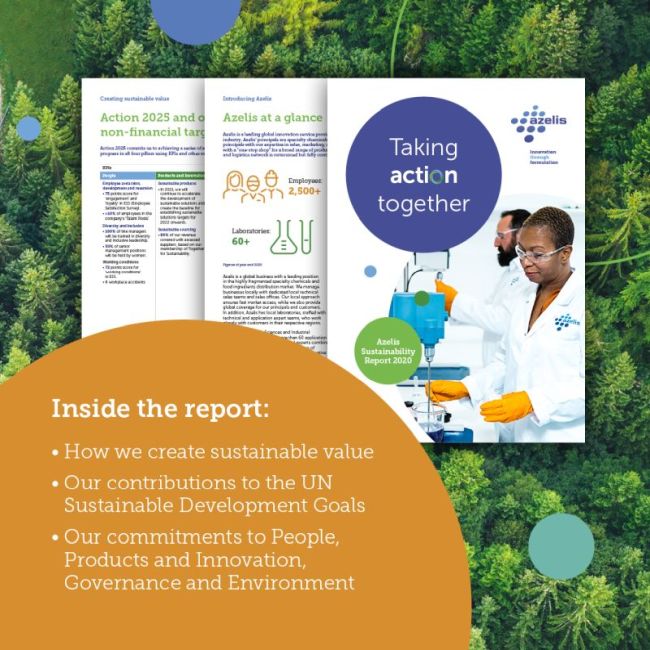
Azelis, a leading innovative service provider in the specialty chemicals and food ingredients industry, is proud to publish its second sustainability report which covers the 2020 group-wide sustainability performance.

Highlights & rationale
– The report showcases Azelis’ environmental, social, and governance (ESG) commitments and reinforces its ambitions to become the world-leading provider of sustainable solutions and services
– Azelis sustainability strategy, Action 2025, is built upon four pillars: People, Products and Innovation, Governance and Environment
– Azelis was awarded a Platinum rating by EcoVadis, the highest distinction in the supplier sustainability rating scheme, a recognition of its sustainability commitments

Azelis’ sustainability journey started in 2015 when the company defined the fundamentals of its sustainability program, following the Paris Agreement on climate change and the release of the 2030 Agenda for Sustainable Development by the United Nations. Based on the United Nations Global Compact (UN GC) initiative, ISO 26000 and the Global Reporting Initiative (GRI), the program consists of four pillars, each with goals and KPIs. Within each pillar, Azelis also contributes to a number of United Nations Sustainable Development Goals (UNSDGs).

In 2020, Azelis laid the grounds for its new sustainability strategy, Action 2025. Rolled out in early 2021, the strategy captures the company’s continued ambitions to innovate and to advance in sustainability. The main 2020 developments across all four pillars of the Azelis sustainability strategy include:

– People – Another edition of the company-wide employee satisfaction survey, which has been in place since 2014, was conducted. Thanks to the extensive improvement actions put in place across the entire organization following the 2018 survey, Azelis succeeded in already reaching the 2025 goals for loyalty and working conditions and is very close to the goal for engagement. As the company aims to continuously improve, it intends to raise the bar of the 2025 goals by the end of 2021.

– Products and Innovation – Azelis continued with the identification of sustainable products and intensified sustainable formulation work. For this, the company specifically focused on products that minimize or eliminate the use and generation of hazardous substances. Progress was also made on the sustainable sourcing due diligence procedure in 2020. This was reinforced by Azelis’ membership to “Together for Sustainability” a joint initiative and global network of 31 chemical companies, which delivers the de facto global standard for environmental, social and governance performance of chemical supply chains.

– Governance – Azelis launched its SpeakUp! Policy and SpeakUp! Line, which are available to employees and any third-party stakeholder for reporting malpractices. This ensures a culture where employees are encouraged to speak up in a safe environment, and where they will not feel victimized or retaliated against.

– Environment – Azelis is committed to a carbon intensity reduction target of 25% by 2025 and 50% by 2030. Furthermore, the company has set targets of using 100% of electricity in its offices and sites from renewable sources as well as decarbonization in its operations and supply chain.

Dr. Hans Joachim Muller, Azelis Chief Executive Officer, comments: “Perhaps the most important lesson of 2020 was that we cannot and must not continue as before the Covid-19 pandemic. It is the responsibility of all of us, as businesses, as consumers, as human beings, to act more sustainably and responsibly. Despite the turmoil 2020 brought, it has been yet another pivotal year of progress for Azelis. More than ever, sustainability is a driver of innovation for Azelis and innovation is a driver of sustainability. Across all market segments, our formulation experts are helping customers reduce their environmental impact by developing innovations that minimize or eliminate the use and generation of hazardous substances. They are also creating formulations and practices that deliver enhanced performance while protecting human health and the environment. Our innovations catalyze sustainability in the market segments we serve and their value chains, and will help realize concepts such as circular economy.”

Maria J. Almenar Martin, Group Safety, Health, Environment and Quality (SHEQ) and Sustainability Director, adds: “As Group Sustainability Director I look back at our 2020 sustainability achievements proudly and with excitement and confidence to the years to come to reach our 2025 sustainability targets. With our recently awarded Platinum rating from EcoVadis and this latest edition of the sustainability report, we confirm to all our partners the proven track record of our sustainability efforts and commitments since we started our journey back in 2015. We are in a resolute course of action to be catalyst of change when it comes to sustainable business models and become the benchmark for the industry.”

To become a world-leading innovation service provider in the specialty chemicals and food ingredients distribution industry, Azelis has identified digitalization, innovation and sustainability as its growth drivers. Through Azelis’ connected solutions, the company is leading the way in customer engagement, whilst providing the digital insight that will drive new levels of chemical innovation. With its redefined sustainability strategy, Action 2025, Azelis is building a resilient, thriving and responsible business. Through these commitments, the company will meet the needs of its stakeholders, whilst also creating a positive and widespread impact on the environment and communities around the world.

Contact information
Azelis
Marina Kaptein
Group Communications Director
T: +32 3 613 0125
E: marina.kaptein@azelis.com

About Azelis

Azelis is a leading global innovation service provider in the specialty chemical and food ingredients industry present in over 50 countries across the globe with around 2,500 employees. Our knowledgeable teams of industry, market and technical experts are each dedicated to a specific market within Life Sciences and Industrial Chemicals. We offer a lateral value chain of complementary products to more than 45,000 customers, supported by ~2,200 principal relationships, creating a turnover of EUR 2.22 billion (2020).

Across our extensive network of more than 60 application laboratories, our award-winning staff help develop formulations and provide technical guidance throughout the customers’ product development process. We combine a global market reach with a local footprint to offer a reliable, integrated and unique digital service to local customers and attractive business opportunities to principals. EcoVadis Platinum rated, Azelis is a leader in sustainability. We believe in building and nurturing solid, honest and transparent relationships with our people and partners.

Impact through ideas. Innovation through formulation.

www.azelis.com

Seedo Corp. Appoints Avi Stern from Wix.Com to Board of Directors

Seedo Corp. (saffron-tech.ag) (OTC: SEDO), an Agtech company that is developing the protocols to grow saffron using vertical farming technology, today announced the appointment of Avi Stern to its board of directors as an Independent Director. Stern currently serves as the Vice President of Finance at Wix.com, a leading cloud-based website development platform with millions of users worldwide.

Avi Stern

“We are pleased to welcome Avi Stern to our board as an Independent Director,” says Dr.Gil Feiler, Chairman Seedo Corp. “Avi is coming from one of largest market cap Israeli companies and is a recognized leader whose extensive knowledge in regulatory oversight, business development and finance management will be instrumental as we execute on our vision of delivering a reliable, large-scale and premium supply of saffron to the market and preparing for a proposed up-listing to the NASDAQ capital market.”

“Seedo Corp. is quickly advancing its presence in the Agtech industry, and I am delighted to join the board of directors as Independent Director during a time of great success and continued momentum,” says Avi Stern. “I see enormous potential in Seedo Corp’s capabilities and its potential to disrupt the market in the future. I look forwarded to contributing to Seedo Corp’s future growth as the company implements new strategic initiatives.”

Prior to his role as Vice President of Finance at Wix.com, Stern served in several public and private companies in executive finance roles.

Seedo Corp. subsidiary, Saffron Tech, was recently awarded a $1 million grant from the Israeli Innovation Authority to support its R&D efforts in growing saffron using vertical farming technology. The company has already successfully harvested two cycles of saffron in its indoor growing lab. Traditional agriculture only produces saffron once annually. The company is now designing the growing conditions which it believes will enable it to produce a third cycle, tripling the amount of saffron available to the marketplace

About Seedo:

Seedo Corp. (OTC: SEDO) is an agtech company that focuses on the research, development, and commercialization of agriculture products that are high in demand but are hindered by the low yields and specifications required by traditional farming. Seedo’s technology is aimed at offering a responsible and sustainable way to grow crops in a world confronted by environmental challenges and dwindling earth reserves, diminishing water sources and unstable weather conditions.

Cautionary Note Regarding Forward-Looking Statements
This letter contains forward-looking statements within the meaning of the Private Securities Litigation Reform Act of 1995, which are based on management’s current beliefs and expectations and are subject to substantial risks and uncertainties, both known and unknown, that could cause our future results, performance or achievements to differ significantly from that expressed or implied by such forward-looking statements. Important factors that could cause or contribute to such differences include risks relating to our ability to successfully execute a smooth transition of CFO functions as well as our ability to retain and recruit qualified executives; uncertainties related to, and failure to achieve, the potential benefits and success of our senior management team and organizational structure; our ability to successfully compete in the marketplace; our substantial indebtedness, which may limit our ability to incur additional indebtedness, engage in additional transactions or make new investments; compliance, regulatory and litigation matters; other financial and economic risks; and other factors discussed in our Quarterly Reports on Form 10-Q and in our Annual Report on Form 10-K, including in the sections captioned “Risk Factors” and “Forward Looking Statements.” Forward-looking statements speak only as of the date on which they are made, and we assume no obligation to update or revise any forward-looking statements or other information contained herein, whether as a result of new information, future events or otherwise. You are cautioned not to put undue reliance on these forward-looking statements.

Contact:
David Freidenberg,
Chief Executive Officer
info@saffron.ag
+1 (800) 608-6432

Seedo Subsidiary Awarded Grant from Israeli innovation Authority

Seedo Corp. (saffron-tech.ag) (OTC: SEDO) subsidiary has been awarded a $1,000,000 (One Million) grant from the Israeli Innovation Authority. The new grant will allow the AgTech company to accelerate its R&D program building on its groundbreaking development of the protocols for growing saffron using vertical farming technology. The funds will be allocated to enable the company expand its facilities, allowing it to grow more saffron for commercial use. This will bring the company closer than ever to achieving its mission to revolutionize the billion-dollar saffron market by bringing a large-scale supply of the spice to the market. The Israel Innovation Authority is an independent publicly funded agency created to provide funding platforms aimed at effectively addressing innovation ecosystems. This grant demonstrates the Israel Innovation Authority recognition of the innovation and potential of the company’s technology and solutions.

“We are very proud to receive this funding from the Israeli Innovation Authority,” says David Freidenberg, CEO, Seedo Corp. “In this new era of agriculture that incorporates innovative technology to the cultivation process, it makes sense that the Israeli Innovation Authority would support Seedo’s forward-thinking endeavor. Saffron is just the start and this generous grant will help us advance further in our business plans. The Israeli Innovation Authority reviews thousands of new and innovative science companies in determining which ones not only have disruptive science, but also the stability and practicality to function in the open market environment, so this is truly a badge of honor”.

Seedo Corp. and its subsidiary recently invested in state-of-the-art equipment featuring the latest software designed to create the precise growing conditions to deliver superior quality saffron suited for a variety of applications. The company has already successfully harvested two cycles of saffron in its indoor growing lab. Traditional agriculture only produces saffron once annually. The company is now designing conditions which it believes will enable it to produce a third cycle, Tripling the amount of saffron available to the marketplace.

About Seedo

Seedo Corp. (OTC: SEDO) is an AgTech company that focuses on the research, development, and commercialization of agriculture products that are high in demand but are hindered by the low yields and specifications required by traditional farming. Seedo’s technology is aimed at offering a responsible and sustainable way to grow crops in a world confronted by environmental challenges and dwindling earth reserves, diminishing water sources and unstable weather conditions.

Cautionary Note Regarding Forward-Looking Statements
This letter contains forward-looking statements within the meaning of the Private Securities Litigation Reform Act of 1995, which are based on management’s current beliefs and expectations and are subject to substantial risks and uncertainties, both known and unknown, that could cause our future results, performance or achievements to differ significantly from that expressed or implied by such forward-looking statements. Important factors that could cause or contribute to such differences include risks relating to our ability to successfully execute a smooth transition of CFO functions as well as our ability to retain and recruit qualified executives; uncertainties related to, and failure to achieve, the potential benefits and success of our senior management team and organizational structure; our ability to successfully compete in the marketplace; our substantial indebtedness, which may limit our ability to incur additional indebtedness, engage in additional transactions or make new investments; compliance, regulatory and litigation matters; other financial and economic risks; and other factors discussed in our Quarterly Reports on Form 10-Q and in our Annual Report on Form 10-K, including in the sections captioned “Risk Factors” and “Forward Looking Statements.” Forward-looking statements speak only as of the date on which they are made, and we assume no obligation to update or revise any forward-looking statements or other information contained herein, whether as a result of new information, future events or otherwise. You are cautioned not to put undue reliance on these forward-looking statements.

Contact:
David Freidenberg,
Chief Executive Officer
info@saffron.ag
+1 (800) 608-6432

Source: Plato Data Intelligence

CropLife Asia Echoes FAO Call to Transform our Food Systems

With the release of the United Nations (UN) 2021 State of Food Security & Nutrition in the World (SOFI) report, CropLife Asia highlighted the need for the region’s food value chain stakeholders to work together in transforming our food systems to better enable food security, improved nutrition, and affordable healthy diets for all.

The challenge of achieving the UN’s Sustainable Development Goal (SDG) 2 of ‘zero hunger’ globally by 2030 has grown even more complicated with the broad impact of the COVID-19 pandemic. In this latest UN report, it is estimated that the number of people affected by hunger worldwide in 2020 was between 720 and 811 million people. This is a marked increase of over 100 million more people than in 2019. The prevalence of undernourishment (PoU) has also climbed up to around 9.9 percent in 2020 compared to 8.4 percent the previous year. This new report also confirms a sadly familiar refrain for Asia: our region is failing to deliver food security for far too many – particularly among the more vulnerable parts of society. Asia continues to be home to the greatest number of undernourished people with 418 million suffering from hunger in 2020.

“The challenge of feeding Asia and the world requires us to explore all possible solutions. This can only be achieved through greater collaboration with others, as multi-stakeholder approaches are crucial for transformation of our food systems,” said Dr Siang Hee Tan, Executive Director, CropLife Asia. “The plant science industry champions innovation in both crop protection and plant biotech, as well as precision and digital agriculture solutions to benefit both people and the planet.”

“The innovative technologies of the plant science industry have a key role to play, but it is only one part of the solution,” Dr Tan added. “Ensuring that an ample supply of affordable and nutritious food reaches those who need it most is a shared responsibility. Farmers’ access to innovation is an increasingly crucial component to combatting food insecurity in Asia and around the world.”

Global crop losses due to pests and disease are a major contributor to global food loss and waste. These losses would be twice as high without the use of crop protection products. Crop losses can be further reduced through more effective crop protection stewardship practices. Without innovations such as crop protection products and plant biotechnology, global pre-harvest crop losses could double. Meanwhile, biotech crops are developed with improved traits such as increased yield, better resistance to pests and/or improved nutrition, among others. These traits are crucial tools that enable farmers to produce more food using fewer resources to feed our growing world.

About CropLife Asia

CropLife Asia is a non-profit society and the regional organization of CropLife International, the voice of the global plant science industry. We advocate a safe, secure food supply, and our vision is food security enabled by innovative agriculture. CropLife Asia supports the work of 15 member associations across the continent and is led by six-member companies at the forefront of crop protection, seeds and/or biotechnology research and development. For more information, visit us at www.croplifeasia.org.

For more information please contact:

Duke Hipp
Director, Public Affairs & Strategic Partnerships
CropLife Asia
Tel: +65 6221 1615
duke.hipp@croplifeasia.org

NEC and Kagome contribute to the sustainability of farming through enhancing the CropScope agricultural ICT platform

NEC Corporation (TSE: 6701) today announced the enhancement of CropScope, its agricultural ICT platform, which NEC has been operating jointly with Kagome Co, Ltd. since April 2020. New functions to improve farming have been added to the strengthened platform, and stable yields have already been achieved through verification in a variety of environments. As a result, NEC expects to expand the number of new contracts for the platform, and to contribute to the achievement of more sustainable farming by resolving challenging farming issues.

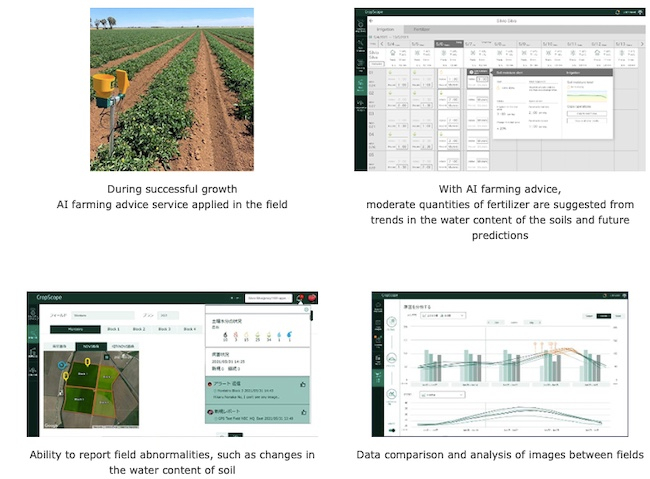
CropScope consists of a service that uses sensors and satellite photographs to visualize the growth status of tomatoes and the condition of soils, as well as a service that provides farming advice using artificial intelligence (AI). The AI capitalizes on a wealth of know-how from experienced cultivators, enabling it to provide guidance on the optimum amount of water, fertilizer and the best time to apply them. This platform enables tomato producers, regardless of skill level, to stabilize their harvests and reduce cultivation costs, while implementing environmentally friendly farming.

In addition, the platform’s accumulation of farming knowledge from experienced workers enables know-how to be passed down, and successful farming production from experienced cultivators to be duplicated, thereby expanding the areas of production and providing support for the training of new farmers. Moreover, the operators and managers of processed tomato facilities can comprehensively understand the growth of tomatoes in both their own soils and the soils of contracted farmers, making it possible to optimize harvesting and improve productivity based on objective data.

Key enhancements to CropScope are as follows:

1. Strengthening the versatility of AI farming advice services
In 2020, NEC and Kagome conducted demonstration tests of CropScope in collaboration with an Australia-based Kagome subsidiary, KAGOME Australia Pty Ltd. Since the cultivation requirements for Australia differed from markets where CropScope had been applied in the past, such as Portugal, the platform gained important knowledge on soils, crop breeds, and irrigation facilities, including simulations on the water content of soils in the underlying irrigation system, recording data from trained cultivators and enhancing analytical methods. This has enabled the platform to deliver the same harvest capacity as trained cultivators in a variety of environments, ranging from the Northern Hemisphere to the Southern Hemisphere.

2. Improve the convenience of applications based on user feedback
Based on the feedback of large-scale users of CropScope worldwide, NEC has improved the usability of applications by including the ability to identify field abnormalities, such as changes in the soil and water content, the ability to determine farming priorities for individual fields, expressing data in a simple manner, and the ability to analyze accumulated data between fields in order to improve farming methods.

Going forward, the two companies aim to accelerate the growth of this business by strengthening proposals for processed tomato manufacturers, particularly in Europe and the Americas, and for tomato production companies.

“We aim to realize environmentally friendly and highly profitable farming in the cultivation of tomatoes for processing globally. Since 2020, we have been expanding the AI farming support tool CropScope, which we jointly developed using NEC’s cutting-edge technologies. This tool was renewed in April 2021 to strengthen our ability to provide solutions. In addition, we will accelerate the resolution of the issues that producers face in the farming field, and aim to realize sustainable farming,” said Kengo Nakata, General Manager, Smart Agri Division, Kagome.

“In its strategic partnership with Kagome, NEC has been expanding digitization in the tomato market. At the same time, NEC has responded to the challenges faced by its production sites by enhancing the versatility of farming advice utilizing AI, which is NEC’s specialty, and strengthening its ‘CropScope’ platform. NEC will continue to develop and provide solutions that contribute to the cultivation of a wide range of crops, helping to overcome social issues, climate change and food safety concerns, while creating sustainable farming experiences,” said Teruyuki Nakajima, Executive Vice President and General Manager, Corporate Business Development Division, NEC Corporation.

About NEC Corporation

NEC Corporation has established itself as a leader in the integration of IT and network technologies while promoting the brand statement of “Orchestrating a brighter world.” NEC enables businesses and communities to adapt to rapid changes taking place in both society and the market as it provides for the social values of safety, security, fairness and efficiency to promote a more sustainable world where everyone has the chance to reach their full potential. For more information, visit NEC at https://www.nec.com.

For more information, visit https://www.nec.com/en/press/202106/global_20210607_01.html.