Veganuary for Pets

Millions of people try vegan diets each January as part of the global Veganuary campaign. In 2024, roughly 25 million people sought a fresh start for their health and the environment through vegan diets. Yet in the decade since Veganuary was founded in 2014, dogs and cats have been almost entirely excluded. Now however, veterinary Professor Andrew Knight is calling for Veganuary to be extended to pets.

Writing in The Conversation, Knight notes that dogs and cats may also experience health benefits associated with vegan diets: “By late 2024, 11 studies in dogs, three in cats, and one systematic review covering both had all demonstrated that dogs and cats thrive on modern vegan or vegetarian diets. Certain health benefits appear consistent, such as a reduction in obesity and of conditions that may be triggered by animal-sourced allergens, like itchy skin and ears and gastrointestinal problems.” However, he notes that “all diets, including vegan diets, should be manufactured by reputable pet food companies which carefully formulate their food to be nutritionally sound.”

Professor Knight is a very experienced dog and cat veterinarian with a PhD in vegan pet food. His most recent study examined the environmental benefits of such diets. These shattered long-standing assumptions that it is only people who need to change their diets for environmental reasons.

Knight found that in nations with high pet ownership – such as the US, pet food consumes around 20% of all land animals killed for food, as well as billions of fish and marine animals. Globally, it’s around 9% – even after accounting for the use of by-products of human food production.

This means at least six billion land animals are killed each year to feed the world’s approximately 470 million pet dogs. Use of nutritionally sound vegan dog food would provide enormous savings of land and fresh water, which could be used for reforestation, re-wilding, biodiversity increase, and carbon capture. It would spare a staggering 0.57 gigatonnes (1 gigatonne is 1 billion tonnes) of CO2-equivalent greenhouse gases each year – 1.5 times the 0.38 gigatonnes emitted by the whole of the UK in 2023.

Because most plant calories fed to livestock animals are lost during conversion to meat, milk or eggs, directly consuming plant-based ingredients can also save food energy. A global transition to vegan dog food would spare sufficient food energy to feed around 450 million people annually – or the entire human population of the EU.

Sustainability benefits are large even considering the world’s roughly 370 million pet cats. A global transition to nutritionally sound vegan cat food would spare sufficient food energy to feed around 70 million people annually – larger than the human population of the UK.

Said Knight, “An average-sized dog can consume as much meat as a person. If you want better health and environmental outcomes in 2025, try Veganuary – and please don’t forget your pets!” Advice is available via his website.

Contact Information
Andrew Knight
Veterinary Professor of Animal Welfare
andrew.knight@murdoch.edu.au

SOURCE: Representing Animals Foundation
Dogs Thrive on Vegan Diets, Demonstrates the Most Comprehensive Study So Far

The longest, most comprehensive peer-reviewed study so far has demonstrated that dogs fed nutritionally-sound vegan diets maintain health outcomes as well as dogs fed meat. The study, published in leading scientific journal PLOS ONE, comprehensively assessed the health of 15 dogs by analysing blood cells and biochemistry, blood nutrient levels, urine, veterinary clinical parameters, and monthly pet owner questionnaires. The dogs were fed solely vegan diets based on pea protein for an entire year – just under one tenth of an average dog lifespan, or around seven human years.

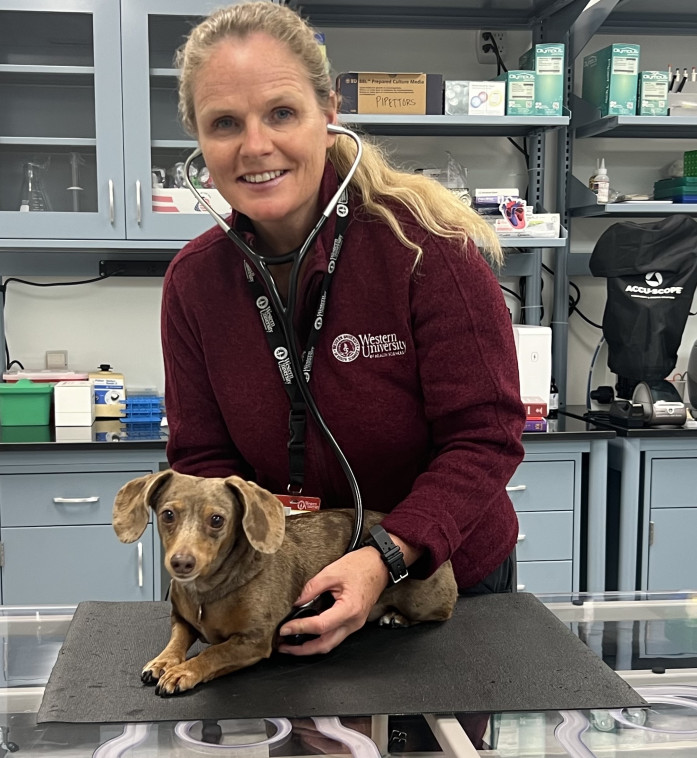
Dr. Linde with 'Rylee'
Dr. Linde with ‘Rylee’

Overweight or obese dogs lost weight, whilst the remainder maintained normal weight. No clinically significant changes occurred within blood and urine. Blood levels of amino acids and vitamins were all generally maintained.

In a few cases, previous deficiencies following a meat-based diet either improved or disappeared, including L-taurine and L-carnitine (important for cardiac health), vitamin D (indispensable for immunity and bone health), and folate (required to produce red blood cells).

The study was particularly interesting, given recent suggestions that peas might contribute to heart disease in dogs in the US. Although no credible evidence has been found, such concerns have persisted in some quarters. In the current study, dogs were fed pea-based vegan pet food, for one year. Blood markers of cardiac health were assessed, with no signs of heart disease found. Indeed, in some cases indicators of cardiac health improved.

Stated lead researcher, veterinarian Dr. Annika Linde from the Western University of Health Sciences near Los Angeles says, “Evolutionary adaptations have resulted in a digestive system that enables dogs to maintain health on nutritionally complete omnivorous diets, including those free of animal ingredients. Our study offers new evidence on outcomes in clinically healthy dogs who thrive without consumption of animal-derived ingredients. Notably, foods produced independent of factory farming are also more sustainable and ethical.”

Study co-author Dr. Melgarejo highlighted the potential environmental benefits of such diets, “If dogs and cats in the U.S. were their own nation, they would rank fifth in global meat consumption, surpassed only by Russia, Brazil, USA, and China, according to the UCLA Institute of the Environment and Sustainability.”

Veterinary Professor Andrew Knight has published several of the key studies in this field, including very large-scale studies showing that both dogs and cats normally achieve equivalent or superior health outcomes, when fed nutritionally-sound vegan diets. He also analysed the environmental benefits of vegan pet diets in a major recent study. He stated that “If all the world’s dogs went vegan, it would save more greenhouse gases than those emitted by the UK, land larger than Mexico, and 450 million additional people could be fed with food energy savings – more than the entire EU population. With 13 studies now demonstrating good health outcomes achieved by nutritionally-sound vegan pet diets, and several others demonstrating major environmental benefits, a compelling case now exists for environmentally-friendly vegan pet diets.”

Contact Information:
Andrew Knight
Veterinary Professor of Animal Welfare
andrew.knight@winchester.ac.uk

SOURCE: Representing Animals Foundation

.

View the original press release on newswire.com.