Lack of quality data and disconnected tech stack impacting Singapore businesses amid rising costs and competition: HubSpot Research

HubSpot, the customer platform for scaling businesses, has released new data showing that many Singapore companies are contending with insufficient quality data and a disjointed tech stack even as costs and competition continue to rise.

Andy Pitre, EVP of Product, HubSpot, launching Breeze at INBOUND 2024

Go-to-market teams—marketing, sales, and service—hold the keys to customer happiness, revenue generation, and ultimately business growth. But today, GTM teams are struggling to keep up, let alone drive growth, thanks to intense competition, increasing costs to reach prospects and customers, and channel saturation. To make matters worse, their tech stacks are falling short.

Nearly half of Singapore businesses participating in a HubSpot survey cited high costs (44%) as their number one challenge, with one in five (22%) saying it’s the biggest challenge they are facing. This aligns with data from the Singapore Business Federation, which identified increasing manpower and utilities costs as key contributors to business expenses.

The survey also found that intense competition (39%), rising costs of reaching prospects and customers (35%), and channel saturation (34%) are impacting the ability of Singapore businesses to effectively attract and retain customers, potentially limiting their growth potential. Inability to compete against their peers could create additional pressures on Singapore businesses, especially with the country recently ranked the world’s most competitive economy worldwide.

While technology has traditionally been viewed among Singapore businesses as a tool to augment competitiveness and allow them to punch above their weight, barriers remain when it comes to quality data and a modern tech stack.

HubSpot’s findings indicate that less than half (43%) of Singapore businesses agree that their data and systems are effectively interconnected to provide a cohesive and comprehensive view of their customers. This can significantly increase complexity in managing customer interactions and experience, with the average business in Singapore needing to switch between more than 50 distinct applications just to manage customer interactions. As a result, many businesses may struggle to gain a consolidated view of their customers, leading to disconnected data and a suboptimal customer experience.

“Needing to switch between more than 50 applications to manage customer interactions is not only detrimental to efficiency, but could also lead to inaccuracies as businesses try to align insights across disparate data sources. Having a single source of truth for customer data is essential to build and maintain meaningful customer relationships,” said Dan Bognar, Vice President & Managing Director of JAPAC, HubSpot. “Technology can give businesses a helping hand, however our findings show that data connectedness and a unified tech stack are presenting significant opportunities for local businesses looking to improve prospecting and customer retention.”

An overall lack of quality data could also have had an impact on local adoption of Artificial Intelligence (AI) powered tools. According to HubSpot’s survey, nearly eight in ten (77%) of Singapore businesses felt they did not have enough data or the right data to make their AI usage effective. Perhaps as a consequence, about a third (34%) have not ‘started talking about generative AI at all’.

“Operating in the world’s most competitive economy is no easy feat, requiring a delicate balance between manginging increasing costs, while delivering an impactful customer experience. At HubSpot, we are committed towards equipping businesses with applications that are easy to use, fast to implement, and delivered on a unified platform. This helps to align marketing, sales, and service teams with a unified view of their customer.” said Bognar.

To help businesses grow better in today’s environment, HubSpot is committed to building easy, fast and unified tools. That’s why, at INBOUND 2024 and in our latest Spotlight product launches, HubSpot has unveiled its easiest, fastest, and most unified version yet. Everything is built so that GTM teams can unlock growth for their businesses.

Our new, biggest releases include:

  • Breeze, HubSpot’s AI to power the customer platform. Breeze includes
    • Copilot, HubSpot’s new AI companion to boost productivity and make work easier.
    • Four AI agents to get work done fast, from start to finish, including Content Agent, Social Media Agent, Prospecting Agent and Customer Agent.
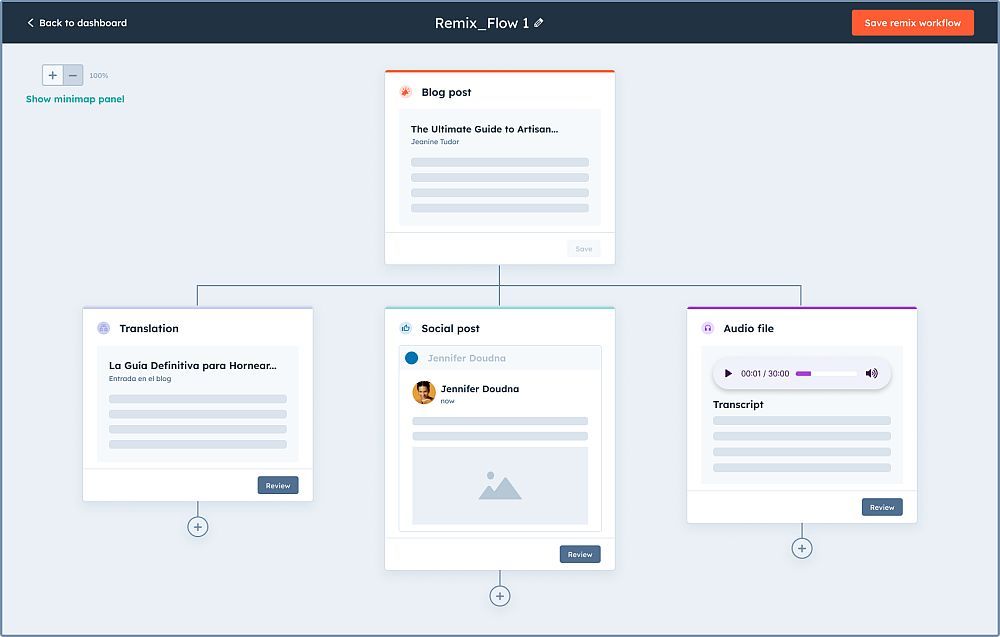
    • Plus 80 more features embedded across the platform, from remixing content to predicting sales forecasts.
  • Breeze Intelligence, HubSpot’s data enrichment and buyer intent solution. Breeze Intelligence includes:
    • Data enrichment which pulls from a database of over 200 million buyer and company profiles to enrich company and contact records in HubSpot’s Smart CRM.
    • Buyer intent to help customers identify which prospects are best fit.
    • Form shortening to increase conversion by automatically adding information Breeze Intelligence already knows.
  • Updates to Marketing Hub and Content Hub, the combo that’s giving marketers everything they need to launch full campaigns from start to finish, from finding an audience to measuring impact, including:
    • Tools to capture attention like Content Remix for video, which uses AI to turn a single video into a full campaign of clips, audio and written content.
    • Tools to generate leads and convert prospects like Lead Scoring to find high engagement, high-fit prospects and Google Enhanced Conversions to leverage first-party conversion data from HubSpot to improve campaign performance.
    • Tools to measure impact like the new Marketing Analytics Suite, which brings all marketing metrics and reporting in one place to improve campaigns and get results faster.

Learn more about our major launches with product deep dives:

BreezeBreeze IntelligenceMarketing Hub and Content Hub

Visit the 2024 Spotlight here.

About HubSpot

HubSpot (NYSE: HUBS) is the customer platform that helps your business grow better. HubSpot delivers seamless connection for customer-facing teams with a unified platform that includes AI-powered engagement hubs, a Smart CRM, and a connected ecosystem that extends the customer platform with over 1,500 App Marketplace integrations, a community network, and educational content from HubSpot Academy. Today, over 228,000 customers, like DoorDash, Reddit, Eventbrite, and Tumblr, across more than 135 countries use HubSpot to attract, engage, and delight customers. Learn more at www.hubspot.com.

Research methodology

HubSpot proprietary research
Singapore sample size: 102
Global sample size: 1893

Press contact
Yanchang Tan
Sling & Stone for HubSpot
yanchangtan@slingstone.com
More than eight in ten Singapore companies are using digital marketing to advertise products and services, but half face challenges measuring returns on investment: HubSpot research

HubSpot, the customer platform for scaling companies, and LinkedIn, the world’s largest professional network and leading advertising partner for brands, today announced the findings of a survey, conducted by Milieu Insight, that explored how companies in Asia, Singapore included, perceived digital marketing. The survey also looked at how companies were leveraging digital marketing, and how they could revitalise and improve strategies to drive business growth.

The survey revealed that more than eight in ten (84%) Singapore respondents shared that their companies were leveraging digital marketing to advertise products and services. Among the companies engaging in digital marketing, more than seven in ten (78%) currently have a digital marketing strategy in place. For respondents in companies without a digital marketing strategy, more than half (57%) said their organisation had plans to implement one in the future.

Insufficient ability to track results may be limiting the full potential of digital marketing

Despite the prevalence of digital marketing among local companies, only 17% of all Singapore respondents strongly agreed that there was a link between a good digital marketing strategy and increased revenue. This figure is significantly below the regional average of 41%, as well as the other countries included in the survey.

A potential contributing factor could be insufficient adoption of specific tools such as Customer Relationship Management (CRM) platforms that play an essential role in tracking and measuring the outcomes of marketing campaigns. This data provides brands with an understanding of how their marketing activities may be impacting business goals, allowing them to better assess any returns on investment. Among Singapore companies engaging in digital marketing, only 41% are using CRM tools, the lowest among all countries surveyed.

Beyond the low adoption of tools to measure success, nearly a quarter (24%) of Singapore companies engaging in digital marketing are not confident in their team’s ability to effectively use digital marketing tools. Nearly half (49%) felt that their digital marketing strategies had not contributed to organisational goals in 2023. These figures are the highest across the countries included in this survey, and point to a possible skill or knowledge gap among Singapore’s marketers that is limiting the full potential of digital marketing.

Matt Tindale, Head of LinkedIn Marketing Solutions, APAC, emphasises the crucial role of learning and development (L&D) in Singapore’s digital economy, stating, “In Singapore, with the pace at which technology is advancing, there is an opportunity for marketers to enhance their skills. Upskilling and reskilling will not only help professionals adapt to changes but leverage new technology for increased productivity and enhanced outcomes.”

When asked about the measurement used to assess the impact of digital marketing efforts, more than half (52%) of Singapore respondents cited brand awareness as the primary metric. This differs from regional sentiments, where the majority consider sales or revenue as the key indicator of success.

“Findings from the survey indicate that while the majority of local companies are focusing on brand awareness, the real challenge is converting that awareness into actionable growth. With the integration of AI into digital marketing strategies — as indicated by 60% of companies in our survey — Singapore is on the brink of a transformative era in digital marketing. Success requires the use of effective measurement frameworks and tools to support data-driven decisions, which are essential for maximising ROI. One example is LinkedIn’s Revenue Attribution Report, which connects CRM data to information from marketing touchpoints across the customer journey. These can help marketers better demonstrate the impact of their LinkedIn campaigns on key metrics such as pipeline generated, deal cycles, and revenue, ultimately helping them to make better business decisions,” added Tindale.

This trend towards digital marketing is on track to continue in 2024. Among Singapore companies engaging in digital marketing, more than a third (35%) were spending S$10,000 or more on related activities each month. Most companies (28%) are currently allocating 21% to 40% of their monthly marketing budget to digital marketing, with similar levels of investment registered across all countries surveyed. Survey findings indicate that more than a third of Singapore companies were planning to maintain their current level of investment into digital marketing in 2024 instead of increasing budgets. This is the highest proportion among countries surveyed.

Social media, content, and search engine marketing established as the key channels of digital marketing in Singapore

Among Singapore companies with digital marketing strategies, a majority (62%) identified social media as the key channel for digital marketing, followed by content marketing (50%) and search engine marketing (49%). Nearly half (42%) of these respondents also ranked social media as one of the top three critical channels for their digital marketing activities. These findings correspond with observations from a separate HubSpot study that identified social media as the preferred platform for shopping and brand discovery among global consumers, with a majority of brands surveyed attesting to the effectiveness of social media marketing for their business. In Singapore, nine in ten social media marketers predict that local consumers will increasingly choose to engage in social commerce and social search in 2024.

The rise of social media as a leading digital marketing channel can also be observed in budget allocation and tools. Among Singapore companies engaging in digital marketing, social media marketing receives the lion’s share of marketing budgets (23%), while social media management platforms are the most popular tools, in use by more than half (51%) of these respondents. This aligns with the growing adoption of social media in Singapore, where 85% of its population are estimated to be social media users according to We Are Social and Meltwater’s Digital 2024 Global Overview Report, ranking the country first in Southeast Asia in terms of social media use.

“Social selling and commerce are becoming increasingly popular in Singapore, offering a highly effective platform for brands to reach, target, and engage on a personal level with their audience. Despite the growing popularity of social media platforms, brands should avoid being over-reliant on a single channel. More than half of global customers today leverage anywhere between three to five different channels throughout their buying journey. Success will increasingly be contingent on the ability of brands to establish a presence on the channels their customers and prospects reside on, and to leverage CRM platforms to accurately measure the impact of their marketing efforts. This will be essential to actively engage and deliver frictionless experiences to audiences regardless of channel,” said Kat Warboys, Senior Marketing Director, APAC at HubSpot.

Alongside social media management platforms, other popular tools among Singapore companies engaging in digital marketing include CRM platforms (41%) and email marketing solutions (37%). An effective approach to digital marketing should also include the implementation of these tools alongside a robust marketing strategy to optimise outcomes. This enables brands to better engage customers on the various channels they reside on today. By using a CRM platform, brands can consolidate customer data from disparate channels and sources and create a single source of truth to accurately measure the impact or effectiveness of marketing activities and deliver a better customer experience.

“As the popularity of digital channels explode, the key to success will lie in ensuring customer data doesn’t reside in siloes across multiple platforms. Solutions could include the use of Conversion APIs that enables brands to accurately track and measure the effectiveness of their marketing efforts on social media platforms. As a server-side tracking option, Conversion APIs can still deliver observable data that would otherwise have been restricted by privacy controls, something marketers need to consider as third-party cookies are phased out. By adopting CRM solutions that can seamlessly integrate with such tools, marketers will be better positioned to make the most of information gathered throughout the customer journey. This unfettered information flow can empower marketers with the necessary insights to drive more targeted campaigns, automatically follow up on leads generated from social media, and clearly track ROI of every ad campaign.” said Warboys.

About HubSpot

HubSpot (NYSE: HUBS) is the customer platform that helps your business grow better. HubSpot delivers seamless connections for customer-facing teams with a unified platform that includes AI-powered engagement hubs, a Smart CRM, a connected ecosystem, and a team of over 7,600 employees. With over 1,500 App Marketplace integrations, a community network, and educational content from HubSpot Academy, that has helped over 459,000 professionals. Today, over 216,000 customers, like DoorDash, Reddit, Eventbrite, and Tumblr, across more than 135 countries use HubSpot to attract, engage, and delight customers. Learn more at www.hubspot.com.

Press contact for further information, assets and interview requests:

Yanchang Tan
Sling & Stone for HubSpot
E: yanchangtan@slingstone.com

Startup ecosystem in Southeast Asia and India show signs of maturity – Profitability and customer-centricity take centre stage: HubSpot Study

HubSpot, the customer platform for scaling businesses, today announced the findings of a study conducted by Milieu Insight that explored the trends and innovations shaping the startup landscape in Southeast Asia and India.

Despite current global economic headwinds and private funding in the region declining to its lowest levels in six years, the startup ecosystem in Southeast Asia and India remains resilient, demonstrating significant signs of maturity. HubSpot’s new report reveals that on average, about half (53%) of startups across the region found it easier to grow their businesses in the past year compared to previous years. Notably, startups recognise the need to balance growth and profitability, with the majority of regional startups agreeing that a clear path to profitability (98%) has become more important in the last year as compared to the years prior.

This resilience is characterised by an interesting dichotomy: while geographical expansion presents challenges, with 23% of startups finding it harder to enter new markets, customer acquisition and retention have become more manageable. Although 18% mentioned that acquiring customers has become more challenging, more than half (55%) of startups report improvements in customer acquisition and retention. Increased competition (31%), stricter customer demands (31%), and access to capital (29%) were cited as the key challenges to customer acquisition among those who mentioned acquiring customers have gotten harder.

Laurence Butler, Global Senior Director, HubSpot for Startups, commented: “These signs of growing resilience are a testament to the region’s entrepreneurial spirit and adaptability. While digital transformation has been a focus among the region’s SMBs in recent years, the digital-first nature of modern startups empowers them to swiftly adapt to volatile market conditions by leveraging data analytics and foundational technologies such as CRM platforms. Most startups now recognise the critical importance of having a clear path to profitability, marking a shift towards focusing on core markets and building robust customer relationships, which are crucial for long-term sustainability.”

Potential for technology-augmented growth

The survey findings also revealed that startups in the region have built a robust foundation of technology and are leveraging their tech stack to collect, structure, and analyse customer data to drive business growth.

Almost all (99%) startups say they are using at least one CRM tool and eight in ten (81%) startups are satisfied with their tech stack. CRM platforms consolidate customer data from multiple sources, creating a single source of truth that enables brands to accurately track and measure the impact or effectiveness of their customer engagement efforts.

Consequently, 71% of startups surveyed perceive that they have an adequate amount of data at their disposal to identify new opportunities for business growth. The collective use of data and technology is not only helping drive innovation and build better customer relationships, but may have also contributed to the enhanced resilience and adaptability of startups in the backdrop of a persisting global funding winter.

The report also uncovered a disparity between countries surveyed. More than a third of startups (38%) in the Philippines reported a lack of sufficient data on their business prospects and the customer journey. Only 58% of startups in the Philippines indicated satisfaction with their tech stack, the lowest among all countries surveyed. This could have contributed to local startups’ inability to collect the right data for better decision-making and also their growth prospects. Nearly half (48%) expressed that it is more difficult than before to grow their companies, almost double the regional average of 25%.

Amid ongoing economic uncertainties, the findings collectively suggest that the most successful startups will be those that adopt the relevant technologies to collect and leverage customer data, boosting their growth or expansion prospects.

AI is on the rise but talent is still in short supply

The emergence of artificial intelligence (AI) is fundamentally transforming the startup landscape in Southeast Asia and India. AI is increasingly seen as a pivotal element in the future strategies of companies, automating repetitive tasks and creating new roles that demand advanced skill sets. However, this technological advancement comes with its own set of challenges, particularly in the area of talent acquisition.

Startups are struggling to fill key positions, with marketing (46%), customer success (40%), as well as sales and business development (38%) roles being the most difficult to hire for among go-to-market positions. For non-go-to-market positions, AI and machine learning engineers top the list of hardest-to-hire roles (35%), followed closely by experts in data analytics (33%), product management, (33%) and industry-specific specialists (33%). Software engineers also remain in high demand (32%).

Cost and experience are identified as the primary shortcomings in the current talent pool across the region. Other challenges include a lack of soft skills among candidates and mismatch of expectations regarding remote and hybrid working arrangements.

The talent landscape varies across different countries:

  • In Singapore, the lack of diversity in the talent pool (41%) and the shortage of specialised technical skills (37%) are significant challenges, alongside cost (37%).
  • In India, limited experience in startup environments (49%), expectations misalignment regarding remote/hybrid work (49%), a general shortage of talent (48%), lack of soft skills (47%), and high turnover rates (41%) are prevalent issues, with cost being a major factor (50%).
  • Indonesia mirrors many of India’s trends, although the challenges related to soft skills, remote/hybrid working expectations, and turnover rates are less pronounced.

With the talent shortage showing no signs of easing, startups must rethink their talent strategies to overcome these hurdles. Solutions could include investing in upskilling and reskilling employees by tapping government-led talent initiatives such as Singapore’s SkillsFuture programme, leveraging remote work to access a broader talent pool, and fostering a culture that values diversity and continuous learning.

Future outlook: The role of AI in driving growth

The majority of startups across the region (98%) agree that AI is important in their future strategy, particularly among those in India and Indonesia. 73% of respondents in India and 63% in Indonesia strongly agreed with this statement, the highest sentiments registered among all countries surveyed.

Leveraging AI offers several key opportunities for startups:

  • Accelerating Time to Market: 32% of startups see AI as a way to bring products to market faster.
  • Enhancing Product Delivery: 30% believe AI can help in delivering products more quickly.
  • Competing with Larger Competitors: 30% view AI as a tool to level the playing field against bigger competitors and incumbents.

“Today, AI is viewed as the single largest economic opportunity since the start of the internet, and data is the currency of AI,” explained Butler. “Residing in some of the world’s fastest growing digital economies, digital-native startups in the region are well-positioned to tap on their established tech infrastructure and quality data that form the basis for effective AI solutions. By leveraging AI, startups can quickly identify gaps in their business models, better anticipate customer needs, and improve their overall ability to deliver highly personalised customer experiences.”

These findings were based on responses from 600 startup founders and decision-makers across Singapore, Indonesia, the Philippines and India to understand their biggest challenges and opportunities for growth conducted from February to March 2024.

Learn more about the startup pulse report at https://hubs.la/Q02zzr3s0. For more insights like this and helpful tips for founders, we invite you to join HubSpot for Startups. Get a library of free resources, access to top investors, and a place to meet other passionate founders — plus exclusive discounts on AI-powered growth tools. Learn more here: hubspot.com/startups

About HubSpot

HubSpot (NYSE: HUBS) is the customer platform that helps your business grow better. HubSpot delivers seamless connections for customer-facing teams with a unified platform that includes AI-powered engagement hubs, a Smart CRM, a connected ecosystem, and a team of over 7,600 employees. With over 1,500 App Marketplace integrations, a community network, and educational content from HubSpot Academy, that has helped over 459,000 professionals. Today, over 216,000 customers, like DoorDash, Reddit, Eventbrite, and Tumblr, across more than 135 countries use HubSpot to attract, engage, and delight customers. Learn more at www.hubspot.com.

Press contact:
Yanchang Tan
E: yanchangtan@slingstone.com 

8 in 10 Singapore businesses experienced more change in last 4 years than previous two decades: HubSpot Research

HubSpot, the customer platform for scaling businesses, has released new data from a global research survey1 that indicates companies in Singapore are transforming their business models in response to global megatrends such as generative AI and changing customer expectations.

From economic downturns to the rise of new social channels, businesses have to pivot with the times, all the time. But the AI era is different. Small and Medium Businesses (SMEs) are operating in a new reality, and it requires more than just adapting to change. It requires reinvention. According to HubSpot’s research, eight in ten (81 per cent) Singapore companies said they’ve evolved more in the past four years than the previous two decades – the highest level of disruption across all countries surveyed.

In 2024, local companies are navigating a new reality where keeping pace with technological disruption and innovation is critical to business success. Singapore companies are the most likely globally to feel that their current growth tactics are becoming less effective (71 per cent) and are also the most likely across all countries surveyed to agree that the introduction of AI has required them to reinvent (82 per cent) their business.

Kat Warboys, Senior Marketing Director of APAC, HubSpot, said: “A combination of rising business costs, new technology and evolving customer expectations have impacted the effectiveness of conventional growth tactics among Singapore’s businesses, accelerating a need for reinvention. Our research shows that a majority of local businesses agree that personalised, impactful customer experiences, powered by AI and automation, will be vital to their growth in 2024. Long term success will be determined by the ability of businesses to effectively engage with their audiences across multiple channels throughout the customer journey, and demonstrate value to customers to maximise retention.”

To empower Singapore companies with the right capabilities to meet evolving customer expectations, HubSpot today announced the launch of the new Service Hub and Content Hub. These tools are designed to help local businesses deliver streamlined, personalised customer experiences, which eight in ten (80 per cent) local companies view as key to business growth. These solutions are part of HubSpot’s Spotlight, a bi-annual initiative where the company highlights its latest innovations to help SMEs win.

Rethinking content marketing…again – Introducing Content Hub

Today, customers are everywhere. Their purchase path is fragmented across multiplying channels, and marketers are left facing two major challenges: reach and relevance. Companies need to efficiently meet customers wherever they are, and do it with quality content that’s personalised, unique and valuable.

However, Singapore companies are struggling to meet demands for multi-channel content, with 82 per cent – the highest globally – sharing a need for tools to help remix content from one format or channel to another. Singapore is also the most likely across all countries surveyed by HubSpot to cite an increasing number of channels as a pain point (40 per cent).

“The data suggests that while reinvention is necessary for success, it is not a one size fits all approach. Brands working to effectively reach audiences must connect with customers on a deeper level by leveraging personalised content tailored for the channels these customers most commonly reside on. While this may not be a simple process, it is a journey that many businesses are on, or need to commence, in order to understand and produce content that best engages customers,” shared Warboys.

To help local businesses meet demands for remixed, multi-channel content, HubSpot has launched Content Hub. The all-in-one marketing solution, powered by HubSpot AI, helps to create and manage content across the entire customer journey, through tools like AI Content Creation, Content Remix, Brand Voice, Audio Tooling, Members Blog and Gated Content Library (among others). This helps brands to more effectively meet and engage their customers by generating content customised for various channels, formats, and audience profile, with a consistent brand voice.

HubSpot Content Hub - Content Remix
HubSpot Content Hub – Content Remix

Transforming CX teams into revenue drivers with the all-new Service Hub

A separate HubSpot study2 revealed that nine in ten (92 per cent) Singapore companies agreed that consumers find customer service interactions frustrating. There is a clear disconnect between what local brands think their audience needs, and what their customers and prospects actually want. SMEs need to double down on keeping existing customers happy, especially since acquiring a new one can be up to 25 times more expensive3. This is one of the many reasons a brand’s customer support and success teams play such a critical role in the bottom line.

The HubSpot study also found that 81 per cent of Singapore companies considered customer service and customer success separate functions with distinct goals and responsibilities. This hinders visibility and the flow of information across customer facing teams, impacting the ability to deliver impactful, personalised customer service. Common challenges faced by customer service teams in Singapore include extracting meaningful insights from customer data (49 per cent), tracking KPIs (46 per cent), ensuring alignment of customer service goals with overall business objectives (38 per cent), as well as ensuring agents have access to accurate and relevant information (34 per cent).

Aligning with Singapore’s strong national focus on AI, the study uncovered that nearly all (96 per cent) local companies are using AI as part of the customer service process. To transform customer service into a more proactive function, about two thirds of (66 per cent) CX teams in Singapore are implementing predictive analytics and AI-driven tools to better anticipate customer needs.

The all-new Service Hub, powered by HubSpot AI, is the only solution that brings together customer support and success functions for the first time, helping businesses scale support and drive retention through data-backed insights and connected workflows. In line with strong local adoption of AI, Service Hub features over a dozen AI-powered tools such as chatbots and real-time reply recommendations to boost customer successes.

HubSpot Service Hub - Customer Success Dashboard
HubSpot Service Hub – Customer Success Dashboard

“With Service Hub, our reps hit the ground running thanks to a complete view of the customer journey,” said Jennifer Cummings, Sr. Director, Customer Engagement at Kaplan. “Since bringing our marketing, sales, and service teams together on HubSpot, it’s completely removed the guesswork for our leaders, giving them visibility and confidence that customers are getting what they need, quickly.”

“In today’s business landscape, change is measured in days and weeks, not years. The speed of reinvention can be daunting, but technology advancements offer a significant opportunity for Singapore companies, especially SMEs, to adapt to new market trends and continue meeting evolving customer needs. With consumers expecting personalised experiences that align with their values and preferences, meeting these expectations requires businesses to connect with customers through channels that serve them best. These solutions from HubSpot are aimed at helping Singapore companies thrive in the digital economy,” explained Warboys.

Learn more about these solutions and more than 100 updates made across the customer platform at hubspot.com/spotlight.

Key Features of HubSpot’s New Service Hub and Content Hub*Powered by HubSpot AIService Hub
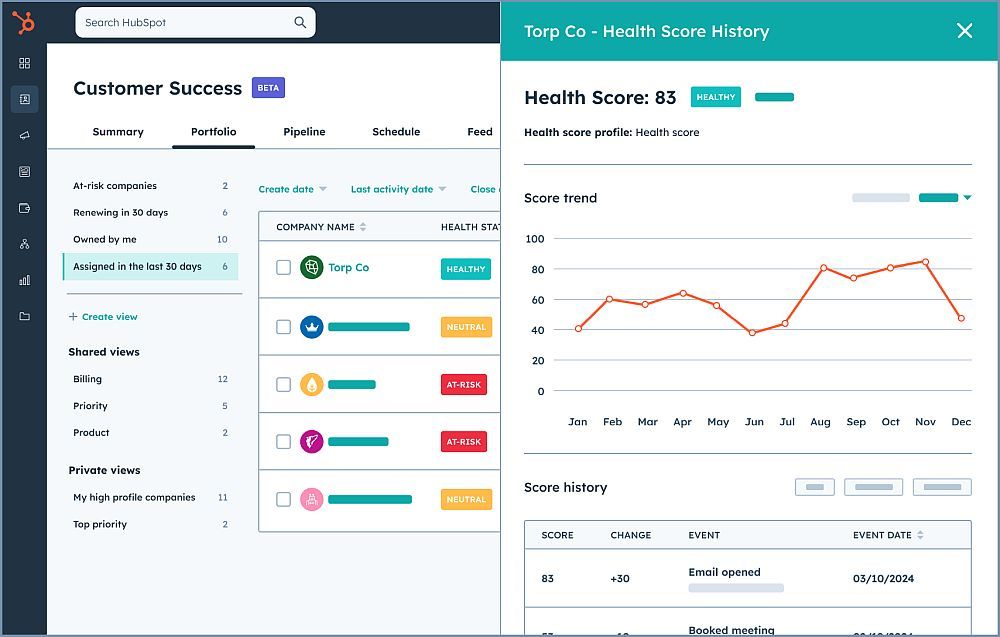
To help CX leaders scale support, Service Hub includes:Help Desk Workspace: Unlocks productivity for reps with an at-a-glance view of everything that matters most — from real-time ticket updates to omnichannel conversations — plus the ability to organise, search, and filter for improved discovery.Tools for businesses to scale support:Advanced SLAs for better, more complex reporting and operations.Robust routing tools to ensure tickets go to the right reps at the right time.Workforce management settings and APIs to set user availability, working hours, and skills.To help success teams drive retention, Service Hub includes:Customer Success Workspace: Customer Success Managers (CSMs) can manage their entire book of business in one place with actionable insights and custom segments. The workspace includes:Account activity & pipelines specific to each CSM’s portfolio for easy access to the most important information.Customer health scores so CSMs can identify churn risk, prioritise outreach, and address needs proactively.Product usage integrations with essential apps like Pendo, Amplitude, Segment or HubSpot’s Custom Events API.Service Hub also features over a dozen AI-powered tools, including:GPT-powered Chatbot* for 24/7 support, freeing up reps to focus on complex issues.Real-time Reply Recommendations* and Conversation Summaries* to speed up time to resolution, including multilingual support*.Suggested next steps* to help reps take action after customer calls.Content Hub
Content Hub includes:AI Content Creation* to make quality multilingual content creation simple — from generating ideas, to writing blog posts, to creating images.Content Remix* to easily create a full pipeline of content based on a single asset. 82 per cent of Singapore marketers agree that this is exactly the kind of tool they need according to HubSpot research.Brand Voice* to define and generate content that has a consistent brand voice — from blogs, to social, to email.Audio Tooling to create, host, and distribute Podcasts* and Post Narration* to turn text into audio for better content accessibility.Members Blog and Gated Content Library to manage content, offer premium content, and easily capture leads.

1 HubSpot: State of Business Growth Research (March 2024)
2 HubSpot: CX Leader Market Research (October 2023)
3 Harvard Business Review

About HubSpot

HubSpot (NYSE: HUBS) is the customer platform that helps your business grow better. HubSpot delivers seamless connection for customer-facing teams with a unified platform that includes AI-powered engagement hubs, a Smart CRM, and a connected ecosystem with over 1,500 App Marketplace integrations, a community network, and educational content from HubSpot Academy. Today, over 205,000 customers, like DoorDash, Reddit, Eventbrite, and Tumblr, across more than 135 countries use HubSpot to attract, engage, and delight customers. Learn more at www.hubspot.com.

Press contact for further information, assets and interview requests:
Yanchang Tan
E: yanchangtan@slingstone.com
P: +65 9474 5338

HubSpot unveils HubSpot AI and new Sales Hub at INBOUND 2023

The way we buy and sell is changing. From an unpredictable economy to the AI revolution, there’s no shortage of factors affecting the customer journey. And more than ever, the pressure is on businesses to adapt.

As the customer platform for scaling businesses, HubSpot provides the tools needed to connect with customers and grow, no matter the challenge. In 2023 alone, HubSpot has shipped over 200 updates for customer-facing teams across marketing, sales, and service. At this year’s INBOUND, HubSpot’s annual conference and product showcase, the company is launching some of the most exciting and impactful products to date.

“We are experiencing a transformative shift with generative AI. Customer expectations are changing, and businesses now have the opportunity to leverage AI to drive customer connection at scale.” said Yamini Rangan, CEO of HubSpot.

“HubSpot has been thinking deeply about these changes and iterating quickly to help our customers thrive in the age of intelligence. We introduced many powerful new features and capabilities at INBOUND 2023, and I’m excited by our progress in becoming the #1 customer platform for scaling companies.”

Introducing HubSpot AI: Platform-wide AI-powered capabilities that help SMEs grow better

At INBOUND 2023, HubSpot unveiled HubSpot AI, a new set of platform-wide AI-powered products and features to help customer-facing teams unlock productivity, harness data for improved performance, and create deeper connections with customers.

HubSpot AI is a robust portfolio of new and existing products and features available globally, including:

  • AI Assistants: Generative AI tools to supercharge marketing, sales, and service teams. AI Assistants will work across the entire HubSpot platform to help teams draft content, create images, generate blog ideas, build websites, and develop reports – instantly.
  • AI Agents: A set of AI-enhanced tools that help SMEs automate, respond to, and elevate their customer service across live chat and email. The first AI Agents will launch in early 2024.
  • AI Insights: Predictive AI features that unlock better analysis and recommendations, like AI-powered forecasting.
  • ChatSpot: Currently in public beta, ChatSpot combines the power of ChatGPT with dozens of unique data sources, like a HubSpot customer’s Smart CRM, to give growing businesses access to powerful generative AI capabilities. Since launching in March 2023, ChatSpot has seen 80,000 total users with 20,000 prompts created.

“HubSpot’s generative AI features have helped me unlock time and better focus on priority tasks,” said Colleen McKenna, Demand Generation Manager at Frequence. “Even with my copywriting background, I use the tools to generate new ideas, simplify wording, and work through writer’s block. I’m excited to adopt even more of HubSpot’s AI-powered tools and free up time that we can spend connecting with Frequence’s prospects and customers.”

“It’s our job at HubSpot to help growing businesses take advantage of new technology without any of the burden,” said Andy Pitre, EVP of Product at HubSpot. “With HubSpot AI, we’re taking the guesswork out of generative AI and giving all customer-facing teams across sales, marketing, and service the complete toolkit to help them accomplish even more.”

Learn more about HubSpot AI and see a full list of new features here: http://hubspot.com/new

New Sales Hub features and expanded relationship with LinkedIn give sales teams an edge

In the past, selling was all about doing more: adding more reps, more activity, more technology. Today, budgets are shrinking, deals take longer to close, and prospects are harder to reach. The default “more is more” playbook no longer works, and reps are feeling the pressure. In fact, 71% of global sales leaders say their teams have to do more with less.*

Being asked to do more with less means productivity has taken a hit. Instead of focusing on connection – which 88% of sales leaders say is the most important part of their jobs – teams are bogged down by administrative tasks. That’s a problem considering companies who focus on connection actually grow 5x more than average.** Sales teams that aren’t focused on customer connection are leaving growth on the table.

Sales teams need a better way to connect, grow, and win – now and into the future. That’s why HubSpot has reimagined its Sales Hub with new capabilities, including:

  • Prospecting workspace: A dedicated workspace for sales reps that consolidates prospecting activities into a unified experience, helping them organise their day, stay focused, and identify urgent tasks. By streamlining activities, the prospecting workspace (currently in public beta) will help reps increase efficiency and focus on customer connection.
  • Advanced lead management and reporting: Now prospecting reps can better organise, track, and prioritise leads – enabling richer data and unmatched visibility for both sales and marketing teams. With improved clarity, sales leaders and their marketing counterparts can unlock new insights into lead pipeline efficiency and prospecting effectiveness.
  • Lead reports, including lead source reports and contact rate reports (currently in public beta), give marketers insight into the impact of their leads and give sales leaders visibility into how their reps are engaging with high-value leads.
  • Prospecting activities reports give sales leaders a holistic view of rep outreach effectiveness, including conversion rates and activity metrics.
  • Intelligent deal management and forecasting: New AI-powered features enable sales teams to better prioritise efforts and predict outcomes.
  • AI Forecasting (currently in private beta) uses HubSpot’s predictive AI and historical sales to project future sales. Early testing showed that AI Forecasting helped some teams improve accuracy by up to 95%.
  • Deal insights help reps prioritise their deals with ease by providing contextual insights into the health of their pipeline and sales process.
  • Deal tags programmatically categorise deals through coloured labels and quick presets, enabling reps to focus on the right deals.
  • Seamless scheduling and handoffs: With Sales Hub, no matter where an opportunity originates, the prospect will experience a smooth handoff to the right rep.
  • Reps can book meetings on behalf of others, enabling streamlined handoffs between sales development and sales.
  • Lead form routing (currently in public beta) ensures website leads are qualified and routed to the right reps, quickly and automatically.
  • Expansion of HubSpot’s relationship with LinkedIn across marketing & sales: Enabling sellers to be smarter and more efficient in how they prospect, build relationships, and close deals by syncing HubSpot’s Smart CRM with LinkedIn Sales Navigator, with a private beta starting later this month. HubSpot Sales Hub and LinkedIn are bringing two critical data sources for sales teams closer together.

“For fast-growing companies like ours, it’s important to have visibility into how deals are moving ahead and gauge where you’ll be by the end of the quarter or end of year,” said Kashish Gupta, Head of Sales and Customer Success at Volopay. “Sales Hub provides a hundred percent of everything I need from an analysis perspective. It gives me direct, actionable insights into how different channels are performing, how specific accounts are performing, and how many accounts have moved to dormant. All of these things are directly correlated to revenue, so this visibility is important.”

“With buyer behaviour evolving so rapidly, the old playbook of adding headcount, creating more activities, and implementing point solutions to drive sales no longer delivers,” said Dan Bognar, VP & Managing Director, JAPAC at HubSpot. “Sales Hub has been completely reimagined to enhance sales team productivity and foster stronger connections with both prospects and customers. From lead prospecting and reporting to deal management and forecasting, Sales Hub is the solution that sales teams need to drive growth today and in the future.

Learn more about Sales Hub in a video here (https://www.youtube.com/watch?v=7XmJkELlXL0), and see a full list of the new features here (https://community.hubspot.com/t5/Releases-and-Updates/Your-End-All-Guide-to-the-New-Sales-Hub/ba-p/838193).

In addition to the launch of HubSpot AI and new Sales Hub features at INBOUND 2023, HubSpot also shared the following releases:

  • Mobile messaging: HubSpot’s SMS feature offers marketers an easy, instant, and personalised way to communicate with customers, allowing them to build stronger relationships and improve campaign effectiveness – all from a single platform. Mobile messaging is available to customers with U.S.-based SMS numbers for messaging into the U.S. and Canada, and globally with HubSpot’s WhatsApp integration. (https://www.hubspot.com/products/whatsapp-integration)
  • New Smart CRM customisations: Customers can now model, configure, and extend data with greater flexibility using HubSpot’s Smart CRM, easily adapting HubSpot to better match their unique needs and processes. (https://www.hubspot.com/products/crm/customization)

Learn more about the products released at INBOUND 2023 here: http://hubspot.com/new

Press contact for further information, assets and interview requests:
Althea Del Rosario
E: altheadelrosario@slingstone.com
P: +65 8813 1169

Yanchang Tan
E: yanchangtan@slingstone.com
P: +65 9474 5338

About HubSpot
HubSpot (NYSE: HUBS) is the customer platform that helps your business grow better. HubSpot delivers seamless connection for customer-facing teams with a unified platform that includes AI-powered engagement hubs, a Smart CRM, and a connected ecosystem that extends the customer platform with over 1,500 app marketplace integrations, a community network, and educational content from HubSpot Academy. Today, over 184,000 customers, like DoorDash, Reddit, Eventbrite, and Tumblr, across more than 120 countries use HubSpot to attract, engage, and delight customers. Learn more at www.hubspot.com.
*Sales Leader Market Research, HubSpot, March/May 2023
**Why Connection Matters, Customer Research, HubSpot, January – May 2023