System supports Pfizer-BioNTech COVID-19 Vaccine, could support Moderna Vaccine as well
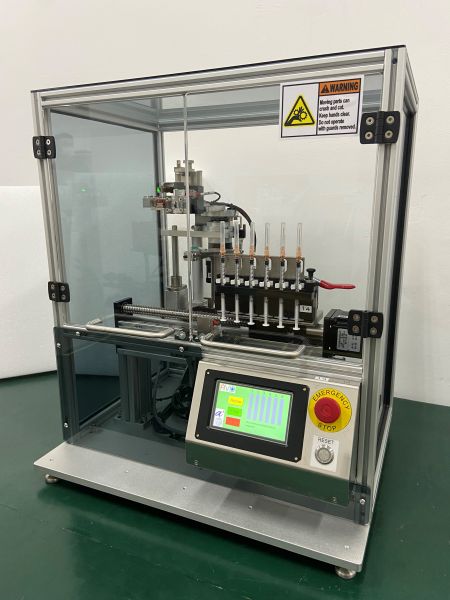
The Agency for Science, Technology and Research (A*STAR) has developed an Automated Vaccine Inoculation Dispenser (AVID) system, which replaces the manual step of filling injection syringes with vaccine liquid. AVID is customised for vaccination centres set up by the Ministry of Health and operated by private healthcare providers.
Automated Vaccine Inoculation Dispenser (AVID) developed by A*STAR’s Advanced Remanufacturing and Technology Centre (ARTC) and Singapore Institute of Manufacturing Technology (SIMTech) in collaboration with local systems integrator Sysmatic Global.
AVID was designed to address the labour-intensive steps of the vaccination process to reduce the workload of healthcare providers, increase accuracy and productivity, and enhance personal safety as well. AVID currently supports the management of vials containing the Pfizer-BioNTech COVID-19 Vaccine, with potential to be customised for the Moderna Vaccine as well.
AVID was developed by researchers from A*STAR’s Advanced Remanufacturing and Technology Centre (ARTC) and Singapore Institute of Manufacturing Technology (SIMTech), in collaboration with local systems integrator Sysmatic Global. The innovative HealthTech solution is the first of its kind to automate the extraction of vaccines from vials using a combination of robotic parts, smart sensors and digital technologies.
How it works:
After thawing of the Pfizer-BioNTech COVID-19 Vaccine, it is diluted in the vial.
Typically, healthcare providers would then have to extract individual doses of the vaccine (0.3 mL for the Pfizer-BioNTech COVID-19 Vaccine) using syringes. One vial of Pfizer-BioNTech COVID-19 vaccine contains six doses of vaccine after dilution(*).
AVID automates this step of extraction of the vaccine from the vial into six individual syringes, including the dispersing of bubbles inside the syringes.
AVID also automatically uncaps and recaps the syringes during the transfer of vaccine from vials to syringes.
It is easy to use at just the push of some buttons, only needing simple training without any special qualifications required.
Benefits:
Reduces workload of healthcare providers, by freeing them from the manual step of extracting vaccines from vials to syringes.
Allows more focused attention by healthcare providers on interacting and communicating with people receiving the vaccinations.
Increases productivity at vaccination centres via introduction of automated processes that are accurate, consistent, and fast.
Reduces risks of cross-contamination and vaccine wastage via safe handling by the machine.
Improves safety for healthcare providers by reducing the handling of sharp syringes during the extraction step.
The machine’s small footprint and low weight (less than 25kg) means it can be easily deployed to any vaccination centre.
Development and Deployment:
AVID was developed within six weeks from conceptualisation. It is the result of a collaboration between A*STAR’s ARTC and SIMTech, which provided expertise in robotics, automation and Industry 4.0 technologies, and Sysmatic Global, which designed, integrated and constructed the machine.
AVID has been deployed in at least seven vaccination centres so far which administer the Pfizer-BioNTech COVID-19 Vaccine. Thomson Medical, a vaccination centre operator, also supported A*STAR in the development and trial of the machine.
For media queries and clarifications, please contact: Mr Robin Chan Head, Corporate Communications Agency for Science, Technology and Research Tel: +65 6826 6281 Mobile: +65 9830 2610 Email: robin_chan@hq.a-star.edu.sg
Mr Khoo Kiak Nee Director, Sysmatic Global Tel : +65 6246 6859 Mobile : +65 9688 2502 Email : knkhoo@sysmaticgpl.com
About A*STAR The Agency for Science, Technology and Research (A*STAR) is Singapore’s lead public sector R&D agency. Through open innovation, we collaborate with our partners in both the public and private sectors to benefit the economy and society. As a Science and Technology Organisation, A*STAR bridges the gap between academia and industry. Our research creates economic growth and jobs for Singapore, and enhances lives by improving societal outcomes in healthcare, urban living, and sustainability. A*STAR plays a key role in nurturing scientific talent and leaders for the wider research community and industry. A*STAR’s R&D activities span biomedical sciences to physical sciences and engineering, with research entities primarily located in Biopolis and Fusionopolis. For ongoing news, visit www.a-star.edu.sg.
About Sysmatic Global Sysmatic Global Pte Ltd was established in 2010 as an appointed agent & solution provider for Nitto Seiko, Japan, assembly products. Through the years, we had developed our own design team and evolved to a system integrator providing innovative automation solutions improving customer factory productivity and quality. Coupled with In-house Precision Machining & Sheetmetal fabrication facilities, we strive to provide a full turnkey solution to our customers. Please visit www.sysmaticgpl.com.
First dose of ETC-159 administered in Phase 1B of clinical trials,advancing the development of this drug to treat solid tumours
Made-in-Singapore cancer drug, ETC-159, has achieved a new developmental milestone in achieving “First Patient First Visit[1]” in Phase 1B. The first dose of ETC-159 has been administered to patients in this new phase of clinical testing, which for the first time, will look at efficacy in addition to assessing the safety of ETC-159 in treating different types of cancers.
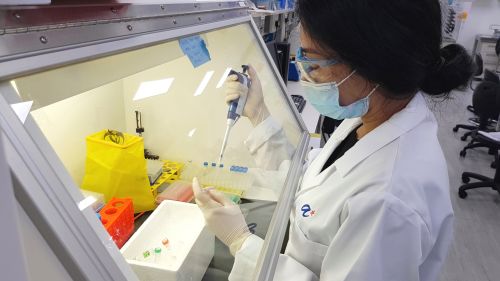
Scientists from the Experimental Drug Development Centre, A*STAR, preparing ETC-159 clinical samples for real-time Reverse Transcription-Polymerase Chain Reaction (RT-PCR) which amplifies the genetic material. (Photo credit: A*STAR)
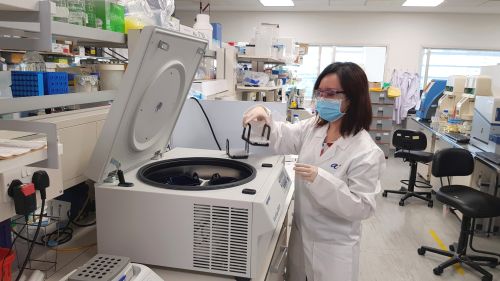
Scientists from the Experimental Drug Development Centre, A*STAR, using centrifuges to bring ETC-159 clinical sample reactions down. (Photo credit: A*STAR)
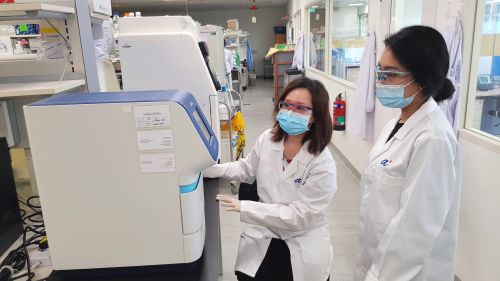
Scientists from the Experimental Drug Development Centre, A*STAR, performing real-time Reverse Transcription-Polymerase Chain Reaction (RT-PCR) to amplify the genetic material from ETC-159 clinical samples. From L-R: Ms Sylvia Gan, Senior Research Manager; Ms Nurul Rozaini, Research Associate (Photo credit: A*STAR)
This clinical study will include subgroups of colorectal, endometrial and ovarian cancer patients from two sites in Singapore (National University Cancer Institute, Singapore and National Cancer Centre Singapore) and up to seven clinical sites in the United States, including four confirmed sites, The University of Texas MD Anderson Cancer Center (Houston, Texas); University of Colorado (Aurora, Colorado); Washington University in St. Louis (Missouri); and Duke University (Durham, North Carolina). The trial is expected to be completed by 2023 at the latest.
ETC-159 was jointly developed by Duke-NUS Medical School (Duke-NUS) and the Agency for Science, Technology and Research (A*STAR), and first entered clinical trials in June 2015[2]. ETC-159 targets a range of cancers including colorectal, endometrial, ovarian and pancreatic cancers, which contribute to a significant fraction of Singapore’s cancer burden. A subset of these cancers are caused by hyperactivity in a cell signalling pathway known as the Wnt pathway.
ETC-159 is an upstream inhibitor of the Wnt pathway and the clinical trial will determine to what extent this drug can slow or halt the growth of Wnt-high cancers or if ETC-159 can enhance the activity of immunotherapy in those patients that normally do not respond to immunotherapy. It has previously been shown that increased expression of Wnt pathway related genes is associated with drug resistance and exclusion of tumour-killing immune cells in the targeted types of cancers. The clinical trial uses ETC-159 to block the Wnt pathway so that immune cells can infiltrate the tumour. The trial will also combine ETC-159 with the immune checkpoint inhibitor pembrolizumab to stimulate the immune cells to kill tumour cells.
The Experimental Drug Development Centre (EDDC), a national platform for drug discovery and development, brought ETC-159 to the successful completion of Phase 1A clinical trials in July 2018. In that phase, proof of the drug’s mechanism of action was achieved and a safe dose level established in 32 patients with advanced solid tumours.
EDDC, together with POLARIS[3] at A*STAR’s Genome Institute of Singapore (GIS), and the Diagnostics Development (DxD) Hub, have also developed a novel diagnostic test in agreement with the US FDA, to identify a particular subgroup of colorectal cancer patients predicted to respond well to ETC-159 due to the presence of gene fusions involving R-spondin genes (RSPO2 or RSPO3) in their tumours. Such patients comprise only about 8% of colorectal cancers and will be identified upfront, based on left-over tumour tissue to be included in Phase 1B of the study. The test will be performed at POLARIS for all clinical samples from this trial.
“A significant milestone for EDDC and Singapore has been achieved with the progression of ETC-159 into Phase 1B clinical trials. We are grateful for the collaboration and input of our partners, such as Duke-NUS, POLARIS, clinical investigators and others within Singapore and beyond, which has enabled the successful completion of the Phase 1A trial and led us to initiate this next critical stage of ETC-159 development. We are optimistic about rapidly recruiting patients for the next phase of the clinical trial given the unmet need and opportunity ETC-159 brings to these patients, and will continue leveraging great science to make great medicines.” – Professor Damian O’Connell, CEO EDDC, A*STAR
“The progression of ETC-159 to this exciting new phase of study is the result of a tremendous Singapore team effort, spanning from basic bench science to international clinical trials. With this critical study, we will learn whether ETC-159, by targeting a set of cancers that has previously been untreatable, will indeed help patients in Singapore and internationally. This important milestone is yet another testament to the research excellence and strong collaborations Singapore can achieve with focused effort. I hope this is just one of many such achievements.” – Professor David Virshup, Duke-NUS Medical School
“This study will help address a critical and unmet need in gastrointestinal cancers. The novel design to molecularly screening for R-spondin fusion colorectal cancers that may be driven by the Wnt pathway and to target them with ETC-159 and immunotherapy has never been done before. Furthermore, most gastrointestinal cancers particularly colorectal cancers do not respond to immunotherapy. This may be due to suppression of immune cells in the tumour by Wnt-related pathways. We hope that by combining ETC-159 and immunotherapy we can circumvent this problem and achieve long-lasting responses for our patients.” – Dr Matthew Ng, Senior Consultant, National Cancer Centre Singapore (NCCS)
“The incidence of ovarian and endometrial cancers is rising in the developed world, with many patients presenting at advanced stages of the disease. Despite initial responses to chemotherapy, the majority of patients with advanced ovarian and endometrial cancer will experience disease recurrence and eventually develop treatment refractory disease. At the National University Cancer Institute, Singapore (NCIS), we have long recognised this unmet medical need and have consistently been working with various academic and industry partners to develop new therapeutic approaches for these hard to treat gynaecological cancers. This clinical trial represents a novel and exciting therapeutic concept for the treatment of ovarian and endometrial cancers. In our continual drive to find better treatments for our patients, we certainly look forward to adding this study to the burgeoning portfolio of early phase trials at the NCIS Developmental Therapeutics Unit.” – Associate Professor David Tan, Senior Consultant, National University Cancer Institute, Singapore (NCIS)
For media queries and clarifications, please contact: Mr Robin Chan Head, Corporate Communications Agency for Science, Technology and Research (A*STAR) Tel: +65 6826 6281 HP: +65 9830 2610 Email: robin_chan@hq.a-star.edu.sg
About the Experimental Drug Development Centre (EDDC) The Experimental Drug Development Centre (EDDC) is a national platform for drug discovery and development formed in 2019 from the integration of A*STAR drug discovery and development units, namely, the Experimental Therapeutics Centre (ETC), Drug Discovery and Development (D3), and Experimental Biotherapeutics Centre (EBC). Together, these three units have forged partnerships with more than 70 academic institutions and 25 companies, locally and internationally, with close to 20 licensing deals executed.
The Centre will continue to champion public-private partnerships in the drug development industry. EDDC will allow for better coordination and optimised use of public sector resources, giving industry partners and Singapore greater ability to translate discoveries into new medicines for patients.
EDDC possesses a full range of drug discovery capabilities, including assay development, high throughput screening, antibody cloning, medicinal chemistry and ADME/toxicology. These capabilities allow EDDC to identify drug hits and leads, and develop them to the preclinical candidate stage in-house. In addition, EDDC enables translational drug development activities by having the internal expertise to support candidates through First-in-Human/Patient Phase 1 studies as well as being able to conduct Proof-of-Mechanism or Proof-of-Concept Studies.
About the Agency for Science, Technology and Research (A*STAR) The Agency for Science, Technology and Research (A*STAR) is Singapore’s lead public sector R&D agency, spearheading economic-oriented research to advance scientific discovery and develop innovative technology. Through open innovation, we collaborate with our partners in both the public and private sectors to benefit society.
As a Science and Technology Organisation, A*STAR bridges the gap between academia and industry. Our research creates economic growth and jobs for Singapore, and enhances lives by contributing to societal benefits such as improving outcomes in healthcare, urban living, and sustainability.
We play a key role in nurturing and developing a diversity of talent and leaders in our Agency and research entities, the wider research community and industry. A*STAR’s R&D activities span biomedical sciences and physical sciences and engineering, with research entities primarily located in Biopolis and Fusionopolis. For ongoing news, visit www.a-star.edu.sg.
About Duke-NUS Medical School Duke-NUS is Singapore’s flagship graduate entry medical school, established in 2005 with a strategic, government-led partnership between two world-class institutions: Duke University School of Medicine and the National University of Singapore (NUS). Through an innovative curriculum, students at Duke-NUS are nurtured to become multi-faceted ‘Clinicians Plus’ poised to steer the healthcare and biomedical ecosystem in Singapore and beyond. A leader in ground-breaking research and translational innovation, Duke-NUS has gained international renown through its five signature research programmes and nine centres. The enduring impact of its discoveries is amplified by its successful Academic Medicine partnership with Singapore Health Services (SingHealth), Singapore’s largest healthcare group. This strategic alliance has spawned 15 Academic Clinical Programmes, which harness multi-disciplinary research and education to transform medicine and improve lives. For more information, please visit www.duke-nus.edu.sg.
[1] “First Patient First Visit” is a term used in the pharmaceutical industry to refer to the administration of the first dose of a compound or drug product to the first patient at his or her first visit in a clinical trial. [2] “First made-in-Singapore cancer drug enters clinical testing:” A*STAR press release, July 16, 2015. National Archives of Singapore. [3] POLARIS (Personalized OMIC Lattice for Advanced Research and Improving Stratification) https://www.a-star.edu.sg/polaris/