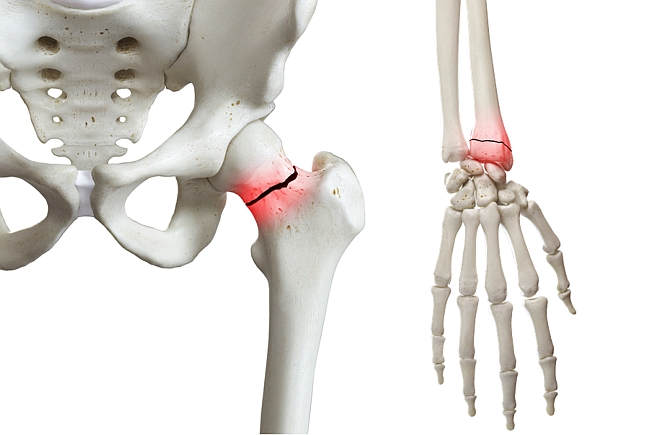
An osteoporotic fracture occurs every three seconds worldwide. With more than 50 per cent of the world’s hip fractures expected to occur in the Asia Pacific (AP) region over the next two decades, the Asia Pacific Consortium on Osteoporosis (APCO) has launched a Bone Health QI Tool Kit today (May 24, 2022), to promote quality improvement (QI) of osteoporosis care.
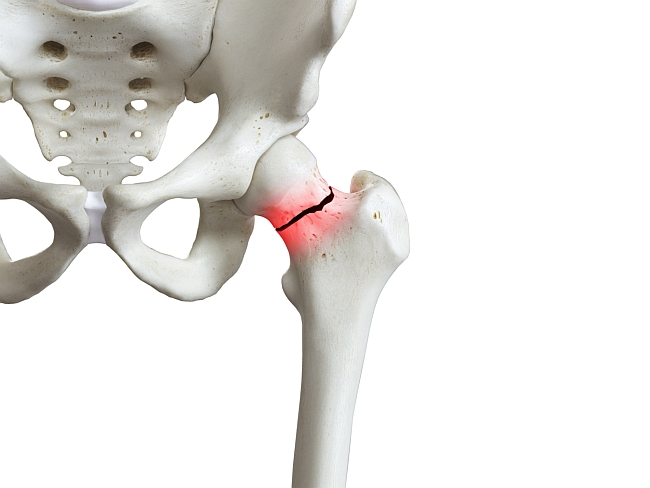
This comprehensive tool kit, that encompasses multiple components in the screening, diagnosis and management of osteoporosis, is a world-first of its kind, said Dr Manju Chandran, APCO Chairperson and Director of the Osteoporosis and Bone Metabolism Unit, Singapore General Hospital, Singapore.
“Previous audits have focused on just a single aspect of osteoporosis care, namely the identification and appropriate management of osteoporotic fragility fractures. A perfect storm of a rise in osteoporosis among Asia-Pacific populations is expected to occur due to the region’s rapidly ageing population, mounting urbanisation, and subsequent increase in sedentary lifestyles,”2 Dr Chandran said.
“A recent analysis of nine Asian countries and regions reveals the number of hip fractures will more than double from 1.13 million in 2018, to 2.54 million in 2050,3 primarily due to changing population demographics.”
The APCO Bone Health QI Tool Kit is based on seven selected standards from The APCO Framework that apply to the clinical setting. Implementation of the QI will be through iterative Plan-Do-Study-Act (PDSA) cycles.
“Once the audits are completed, healthcare professionals (HCPs) and medical centres can commence implementing changes to their clinical practice. APCO is in the process of engaging QI experts to help train APCO members to perform such projects in their individual medical centres and practices,” said Dr Chandran.
The tool kit will enable these auditing exercises to be undertaken to establish levels of adherence with those standards of care within The APCO Framework that can be implemented directly into clinical practice.4
This year in Australia, an estimated 6.2 million people aged over 50 years will be living with osteoporosis or osteopenia, representing a 31 per cent increase from 2012,5 said Dr Greg Lyubomirsky, CEO, Healthy Bones Australia.
“The likelihood of successfully creating change to stem this bone health crisis will rest largely upon the efforts of HCPs to engage their peers to work towards shared goals. Articulating the benefits of the APCO Bone Health QI activity can help promote engagement and cooperation.
“The critical factors to success include having a supportive organisational culture, good design and planning, and follow through on results, ensuring the data collection is meaningful and achievable,” Dr Lyubomirsky said.
“Data collected through the audit should be used to benchmark practice against the standards recommended by The APCO Framework. This will show stakeholders that the audit was worth the effort, and that it contributed to tangible change.”
The APCO audit focuses on investigating the patient pathway, identifying the gaps or missed opportunities for patients at risk, and then the PDSA activity is used to improve quality of care and to formulate recommendations.
“It is hoped that lessons from implementing these clinical standards at the institutional level will be key to achieving change at the national level, through the development, or revision of national guidelines, and policy change,” said Dr Philippe Halbout, CEO, International Osteoporosis Foundation, Switzerland.
“These coordinated systems of care aim to identify, treat and monitor patients with osteoporosis. Timely intervention can reduce fractures by up to 50 per cent, deliver substantial financial savings, and ultimately, save lives.”
Osteoporosis is greatly under-diagnosed and under-treated in Asia, even among those at highest risk who have already fractured.6
The APCO Bone Health QI Tool Kit focuses on closing this gap by:
— Understanding the baseline variables and current state of osteoporosis care in any given institution or health care practice.
— Enabling benchmarking clinical practice against The APCO Framework, evidence-based clinical practice guidelines or established protocols for the chosen standard of care.
— Using the findings to then improve the quality of care through iterative PDSA cycles.
— Using the lessons learned from implementation of the APCO Clinical Standard at an institutional level, to build momentum and work towards inclusion of the quality improvement/clinical standard in national guidelines, and lobbying for funding and policy change, as appropriate.
Practically, PDSA cycles are a quality improvement strategy that tests a change on a small scale. The PDSA builds on the learning from test cycles in a structured way before implementation on a wider scale.7
The PDSA cycles are iterative. Each cycle involves the following four stages:
1. Plan — developing a plan to test the change;
2. Do — carrying out the test;
3. Study — observing and learning; and
4. Act — planning the next change cycle or full implementation.
“Assessment of adherence to pharmacological treatments that are recommended in new or revised osteoporosis clinical guidelines should be undertaken on an ongoing basis, after initiation of therapy, and appropriate corrective action can be taken if treated individuals have become non-adherent,” Dr Chandran advised.
Every patient living with osteoporosis and/or a fragility fracture passes through several points on their journey from diagnosis, through to treatment and follow-up. The interface of this pathway with other entities, for example, referrals to other care givers or departments, post- discharge follow-ups, are also important considerations in the quality of care received.
“The launch of the APCO Bone Health QI Tool Kit demonstrates the organisation’s ongoing commitment to achieving better care for patients with greater consistency in national and regional clinical practice guidelines for the screening, diagnosis, and management of osteoporosis in the Asia Pacific,” said Dr Halbout.
To learn more about the APCO Bone Health QI Tool Kit,
visit www.apcobonehealth.org or follow APCO on LinkedIn: asia-pacific-consortium-on-osteoporosis.
About the APCO Bone Health QI Tool Kit
APCO developed the Bone Health QI Tool Kit to enable healthcare providers worldwide, to benchmark their practices against the clinical standards proposed in The APCO Framework. The tool kit provides guidance on undertaking and implementing quality improvement (QI) projects centred around seven key clinical standards for the screening, diagnosis, and management of osteoporosis.
With the key objective of promoting QI of osteoporosis care, the APCO audit focuses on investigating the patient pathway, identifying the gaps, or missed opportunities for patients at risk, and formulating recommendations to address these gaps. Implementation of the QI will be through Plan-Do-Study-Act (PDSA) cycles – a quality improvement strategy that tests a change on a small scale, before implementation on a wider scale. The tool kit offers practical tips on conducting an audit, that generates meaningful data, that can lead ultimately to implementing changes in clinical practices.
About APCO
The Asia Pacific Consortium on Osteoporosis (APCO) comprises 46 osteoporosis experts from 20 countries and regions, charged with developing tangible solutions to the substantive challenges involving osteoporosis management and fracture prevention in this most populated and fastest growing part of the world. APCO’s mission is to engage with relevant stakeholders, including healthcare providers, policy makers and the public, to help develop and implement country and region-specific programs for the prevention and treatment of osteoporosis, and its complication of fragility fractures, in the Asia Pacific. https://www.apcobonehealth.org
About osteoporosis in the Asia Pacific region
* Osteoporosis – the most common disease – is characterised by porous and brittle bones whose density and quality are poor, resulting in structural skeletal deterioration.1
* The Asia Pacific is home to 4.5 billion people with vastly different healthcare systems.8
* In most developing countries of the Asia Pacific, especially in rural areas, DXA technology is not widely available.9
* Low levels of vitamin D are observed region-wide in the Asia Pacific. This can be attributed to several causal factors, including genetic, lifestyle, seasonal and geographical influences.10
* More than 68 per cent of the countries in the IOF’s Asia Pacific’s Regional Audit now have populations that are over 50 per cent urban, and the resulting reduction in sunlight exposure due to pollution and overcrowding, is affecting vitamin D levels, which contribute to osteoporosis risk.10
* Nearly all Asian countries fall far below The Food and Agriculture Organization of the United Nations / World Health Organization (WHO) recommendations for calcium intake of between 1,000 and 1,300 mg/day. The calcium intake for Malaysia, the Philippines and India remains below 500 mg/day.10
DIGITAL MEDIA KIT: www.apcotoolkit.org
Asia Pacific Consortium on Osteoporosis (APCO)
secretariat@apcobonehealth.org
References
1. International Osteoporosis Foundation (IOF). Capture the fracture. [Oct, 2021]; https://www.capturethefracture.org/about.
2. Chandran M, et al., Development of the Asia Pacific Consortium on Osteoporosis (APCO) Framework: clinical standards of care for the screening, diagnosis, and management of osteoporosis in the Asia-Pacific region. Osteoporos Int., 2021. 32(7): p. 1249-1275.
3. Cheung, C.-L., et al., An updated hip fracture projection in Asia: The Asian Federation of Osteoporosis Societies study. Osteoporosis and sarcopenia, 2018. 4(1): p. 16-21.
4. Chandran, M., Ebeling, P., Mitchell, P., Nguyen, T., Harmonization of Osteoporosis Guidelines: Paving the Way for Disrupting the Status Quo in Osteoporosis Management in the Asia Pacific. JBMR, 2022.
5. Watts, J., Ambimanyi-Ochom, J, & Sander K, Osteoporosis costing all Australians: A new burden of disease analysis 2012-2022. 2013, Osteoporosis Australia.
6. International Osteoporosis Foundation (IOF). Key statistics for Asia. [cited October 2021]; https://www.osteoporosis.foundation/facts-statistics/key-statistic-for-asia.
7. NHS England and NHS Improvement. Plan, Do, Study, Act (PDSA) cycles and the model for improvement. https://www.england.nhs.uk/wp-content/uploads/2022/01/qsir-pdsa-cycles-model-for-improvement.pdf.
8. Wang, P., et al., Estimation of Prevalence of Osteoporosis Using OSTA and Its Correlation with Sociodemographic Factors, Disability and Comorbidities. International Journal of Environmental Research and Public Health, 2019. 16(13): p. 2338.
9. Chandran, M., et al., IQ driving QI: the Asia Pacific Consortium on Osteoporosis (APCO): an innovative and collaborative initiative to improve osteoporosis care in the Asia Pacific. Osteoporos Int, 2020. 31(11): p. 2077-2081.
10. International Osteoporosis Foundation (IOF). The Asia-Pacific Regional Audit. 2013 [cited May 2022]; https://www.osteoporosis.foundation/sites/iofbonehealth/files/2019-06/2013_Asia_Pacific_Audit_English.pdf