An alumnus of the Faculty of Social and Political Sciences (FISIP) of Airlangga University, Anak Agung Gde Bagus Wahyu Dhyatmika is inspiring others through digital journalism, according to a statement from the university on Thursday.

An alumnus of the Faculty of Social and Political Sciences (FISIP) of Airlangga University, Anak Agung Gde Bagus Wahyu Dhyatmika is inspiring others through digital journalism, according to a statement from the university on Thursday.
Yuliati Umrah, a Political Science graduate from Airlangga University in Surabaya, East Java, founded the Arek Lintang Foundation (ALIT) Indonesia to empower marginalized children.

Yulianti and five friends founded ALIT based on their commitment to handling social problems in the country, especially the issues related to exploitation and violence against marginalized children, Yuliati noted in a statement on Monday (July 15).
As a foundation engaged in the social sector, ALIT has a vision to achieve equality so that children can enjoy their rights. This vision will be achieved by improving the conditions of marginalized children and conducting advocacy to the government, both at the local and national levels.
ALIT was founded in Surabaya on April 22, 1999, as a response to several cases of violence and exploitation of marginalized children during the early days of Indonesia’s reformation. While in college, Yuliati was studying public policy in government, including political theory and social contracts, when she realized that several policies were still irrelevant, particularly to the situation and conditions of children.
“The birth of ALIT encouraged the central and regional governments to learn more about the contents of international legal standards so that they become part of government policy,” she explained. She cited several cases of school dropouts influenced by the many unemployed graduates of secondary and even higher education. To address this problem, she endeavored to voice more effective and relevant policy updates.
“Hence, I criticize the curriculum material in society that is not relevant, as it only takes up too much time, but it does not directly encourage children to have a good perspective,” Yuliati pointed out. After 25 years of contribution, ALIT Indonesia has eight branches in Surabaya, Bromo, Flores, Sumenep, Bali, Lombok, Jember, and Banyuwangi.
ALIT Indonesia also collaborates with various government and non-government institutions, both national and international. “Our collaboration is more with Western donors and the UN agencies for funding. Our non-funding collaboration is mainly with the government and universities, one of which is Airlangga University,” she remarked.
Dewa Dewi Ramadaya (DDRD), one of ALIT’s latest programs, is a collaboration between ALIT Indonesia and Kindermissionswerk, a Catholic children’s association, which aims to improve children’s life skills based on local culture to build resilience and sovereignty. DDRD takes place in Surabaya, Sumenep, Batu, Pasuruan, Jember, Banyuwangi, Gilianyar, and Sikka villages. ALIT cooperates with several relevant ministries to conduct the program.
“This program focuses on ensuring that children’s rights are fulfilled and encouraging villages to become more child-friendly by holding independent learning classes that include lessons on life skills, historical literacy, science, the environment, and local traditions,” she remarked.
After three years, the evaluation results from international evaluators prove that the program has been running well, with indicator results of 75-80 percent in each category. Yuliati hopes the government will also implement DDRD, as the program has proven influential in achieving the 17 SDGs, and village communities also feel they have benefited from the DDRD program.
“The villages use the hasta brata approach, or behavioral values of our culture. Hence, the basis is on cultural values. The DDRI achievement is extraordinary, and actually, the DDRD approach can be one of the patterns that can be developed in other countries too,” she remarked.
ALIT also collaborates with Airlangga University through field lecture practices (PKL) and research that can encourage the progress of villages assisted by the foundation. This has been successfully implemented in the Pasuruan Regency and Jember Regency.
“Many students who are accepted at the university are children who become village ambassadors in the DDRD program. When they graduate, the hope is that they can return to their villages and build villages and continue this DDRD program independently with their villages,” she noted.
“We do not expect that ALIT will open as many areas as possible. No, but the programs that we have successfully achieved, the impact on the communities we assist can be adopted by the local government,” she remarked.
Her role in the world of activism to fight for gender equality and protection and empowerment of children has also earned her several awards. Yuliati was previously included in the ranks of 80 World Strategic Leaders released by the Bureau of Educational and Cultural Affairs. Her name appears next to Sri Mulyani, the finance minister.
Yuliati also received the Entrepreneur of the Year title by Ernst & Young in 2020. In addition, she is a member of the International Visitor Leadership Program (IVLP), selected by the US Government. She was also appointed as one of the two best Indonesian alumni of IVLP.
Visit ALIT Indonesia : https://alitindonesia.or.id/
For more information, please click: http://unair.ac.id/
Editor: Yuni Arisandy Sinaga, Copyright (c) ANTARA 2024
A medical professor at Airlangga University, Prastiya Indra Gunawan, has developed a new epilepsy treatment method that involves administering midazolam intramuscularly and intranasally.
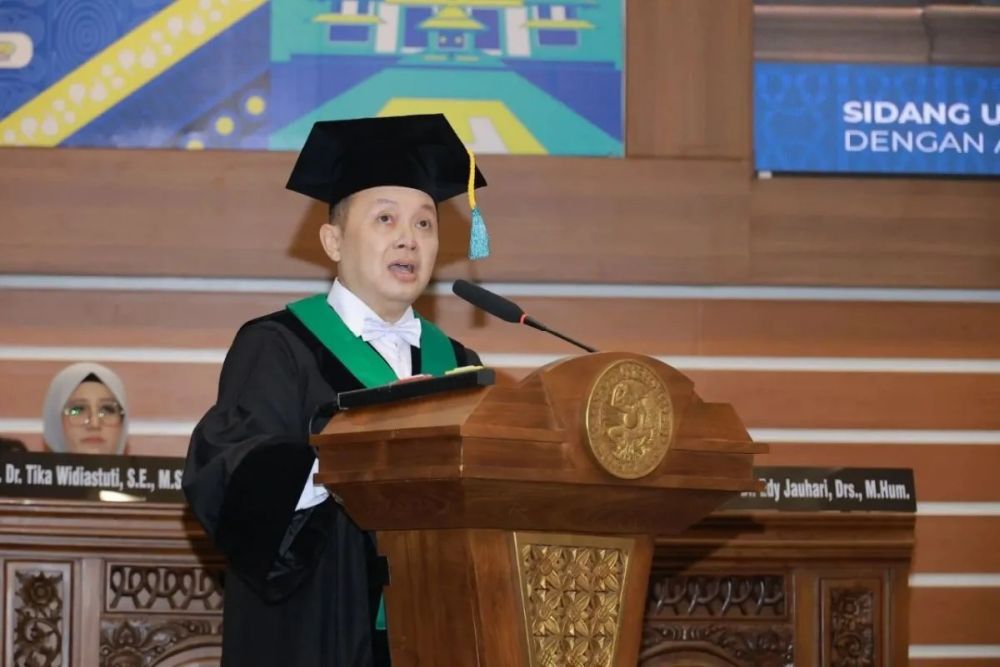
The new method can be a solution for treating epilepsy, for which electroencephalography (EGG) examinations have been used so far. The results of those examinations are often misinterpreted, causing excessive diagnosis of epilepsy and prolonged use of antiepileptic drugs, which is not necessary.
“Intramuscular midazolam is able to stop seizures within 45 seconds, while intranasal midazolam is able to stop seizures within 42 seconds. This is different from rectal diazepam, which takes 180 seconds,” Professor Gunawan, a pediatrician from Airlangga University, said.
He has received recognition as a pioneer in changing the procedures for handling childhood seizures and has obtained intellectual property rights (IPR). Gunawan officially obtained the IPR in 2019 and 2021 based on the research and publications he carried out in 2015 and 2016.
Gunawan has made other advances in the field, having diagnosed epilepsy in patients who were drug resistant and had been diagnosed with other causes.
“In terms of diagnostics, the diagnosed cause was infection, the diagnosed cause was head trauma, but now, we are also developing diagnosis to include autoimmune. Indeed, we have been able to diagnose patients who have epilepsy with a resistance to drugs. We continued to look for it, and the cause is autoimmune,” he said.
Even after the cause has been identified, seizures that are resistant to adequate medication are still difficult to treat. In this case, according to Gunawan, surgery can be an alternative.
Unfortunately, not all health facilities can perform epilepsy surgery. With the current technological advances, Gunawan said it is necessary to build a comprehensive epilepsy service center, an idea which he shared at the N-20 Conference during the G20 Summit in Bali in 2022.
“The key to this epilepsy center is to assemble the right team with the right people who have the same approach to dealing with epilepsy,” he said. “The epilepsy center will not only be for treatment but will help address social stigma. Many people with epilepsy feel isolated by their environment, hampered in their careers, and feel they have failed in their home life.”
With the establishment of the epilepsy center, Gunawan said he hopes that people with epilepsy will not only receive healthcare, but also see improvements in their social life. He also invited everyone to work together to care for epilepsy sufferers.
Reporter: Yashinta Difa Pramudyani
Editor: Tia Mutiasari
Copyright (c) ANTARA 2023
The Food and Drug Supervisory Agency (BPOM) has issued emergency use authorization (EUA) for InaVac, a COVID-19 vaccine developed by researchers from Airlangga University (Unair).
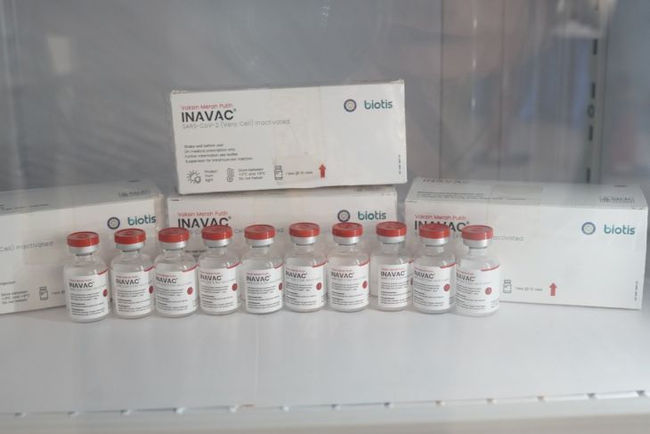
“InaVac has obtained emergency use authorization from BPOM and will be mass-produced,” the rector of Unair, Prof. Moh. Nasih, said on the sidelines of the campus’ dies natalis (anniversary) on Wednesday.
The vaccine, which can be used to prevent a COVID-19 infection, has been made using an inactivated virus, which means, a virus that cannot reproduce and cause disease.
InaVac has been approved for use as a primary vaccine for people aged 18 and above for boosting immunity levels.
According to Nasih, the vaccine was developed as part of an effort by the university to significantly contribute to and impact the health sector.
Following the provision of EUA from BPOM, he expressed his gratitude to various stakeholders that have supported the development of the vaccine.
“Thank you to the Ministry of Health for providing support in the form of large amounts of funding; the provincial government has also provided extraordinary support,” he remarked.
“Dr. Soetomo Hospital has also been very supportive. Equally important has been the role of Unair researchers who worked hard for this,” he added.
Former state-owned enterprises minister Dahlan Iskan also expressed his pleasure over the completion of the domestically-made COVID-19 vaccine.
“I am happy because Unair has processed this vaccine to completion. How this vaccine was successfully launched, how to find people who want to undergo the vaccine. Finding people who are willing to be clinically tested is extremely difficult but Unair managed to finish it,” he said.
It is hoped that after InaVac, more vaccines will be produced through continued research and development so that they can answer future challenges and problems.
Unair is currently developing a booster vaccine and a COVID-19 vaccine for children.
“The news about vaccines has been very encouraging; hopefully, later booster vaccines and children can be produced,” he said.
For further information, please visit: https://www.unair.ac.id/
Written by: Abdul Hakim, Yashinta Difa, Editor: Fardah Assegaf (c) ANTARA 2022