
New Ulaanbaatar International Airport Set to Open in Mongolia

Mitsubishi Corporation (MC), Narita International Airport Corporation (NAA), Japan Airport Terminal Co., Ltd. (JAT), and JALUX Inc. (JALUX) are pleased to announce that the New Ulaanbaatar International Airport (Official name: Chinggis Khaan International Airport) will be officially opened to the public on July 4, 2021.

The new airport will be operated by the partners’ joint venture with the Mongolian government that was established in 2019. Under the terms of its concession agreement with the government, New Ulaanbaatar International Airport LLC (NUBIA) will be in charge of airport operations for the next 15 years.
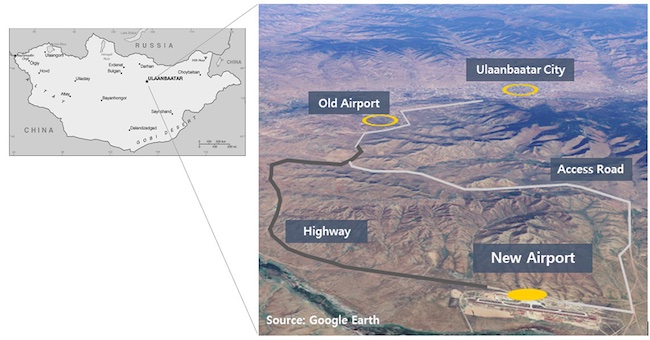
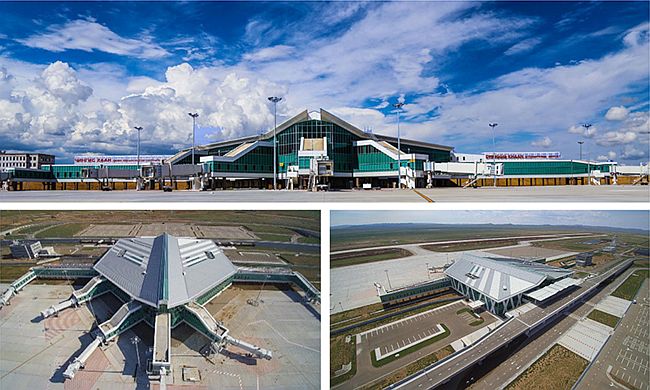
Location: Tuv Province, Mongolia (about 50 km southwest of Ulaanbaatar City).
Annual Passenger Traffic: 1.61 million passengers (1.2 million for international and 410,000 for domestic routes).

The new airport was originally scheduled to commence operations in 2020, but the opening was delayed because of the COVID-19 pandemic. All assets have now been safely transferred from the old airport (Buyant-Ukhaa International Airport), thereby readying the new airport for flights and passenger traffic.

Although the pandemic has significantly reduced air travel in Mongolia, demand for flights is expected to increase over the medium to long term, particularly in Ulaanbaatar, the country’s capital and center of its political and economic activity. The new airport will likely play an increasingly prominent role over the coming years.

In operating the new airport, NUBIA will be taking advantage of the combined expertise of its four shareholders. MC boasts a strong track record in airports and other infrastructure projects in Japan and around the world, while NAA and JAT operate Narita International Airport and the passenger terminal buildings at Haneda Airport respectively. JALUX is engaged in airport retail businesses and also has experience managing overseas airports. In addition to prioritizing passenger safety, security and comfort, NUBIA plans to leverage the new airport to increase the number of routes and flights servicing Ulaanbaatar, develop attractive in-terminal commercial facilities, and otherwise enhance the new airport’s services and profitability.

While maintaining all precautions to prevent the spread of COVID-19, NUBIA is committed to building on a facility that is already being heralded as a symbol of bilateral cooperation between Japan and Mongolia, and in operating the new airport efficiently, the joint venture will do its best to contribute to the sustainable development of Mongolia’s economy and society.

1. Mitsubishi Corporation
A global integrated business enterprise that develops and operates businesses across virtually every industry including natural gas, industrial materials, petroleum & chemicals solution, mineral resources, industrial infrastructure, automotive & mobility, food industry, consumer industry, power solution and urban development.
URL: www.mitsubishicorp.com

2. Narita International Airport Corporation
Establishment and management of Narita International Airport
URL: www.naa.jp

3. Japan Airport Terminal Co., Ltd.
JAT’s main lines of business are Terminal Building Management at Haneda Airport as well as associated Merchandise and Food & Beverage sales.
URL: www.tokyo-airport-bldg.co.jp

4. JALUX Inc.
Aviation & Airport-related business, Life Service Business, Retail Business, Food & Beverage Business
URL: www.jalux.com

5. NUBIA : New Ulaanbaatar International Airport LLC
Operation of New Ulaanbaatar International Airport (Chinggis Khaan International Airport)
Shareholders:
Japan Airport Management LLC: 51.0% (Special Purpose Company funded by MC, NAA, JAT and JALUX)
Khushigiin Khundii Airport Stated Owned LLC: 49.0% (Special Purpose Company funded by Govt of Mongolia)
URL: http://www.nubia.mn

For more information, please visit: https://www.mitsubishicorp.com/jp/en/pr/archive/2021/html/0000047394.html.
Mitsubishi Corporation: Mobility & Regional Contents Pilot Project Launched in Smart City Aizuwakamatsu

Mitsubishi Corporation (MC), Shobunsha Holdings, Inc. and Shobunsha subsidiary MAPPLE, Inc. (MAPPLE) are pleased to announce the signing of a memorandum of understanding (MoU) between MC and MAPPLE regarding joint studies on new tourism services.

The services will combine each company’s unique expertise with advances made by HERE Technologies (HERE)(1), a leading provider of location-based information technologies. The partners recently launched a pilot project to create localized mobility demand in the Aizukawamatsu “smart city’ in Fukushima Prefecture. The project is being undertaken in collaboration with the Aizuwakamatsu Tourism Bureau, a general incorporated foundation.

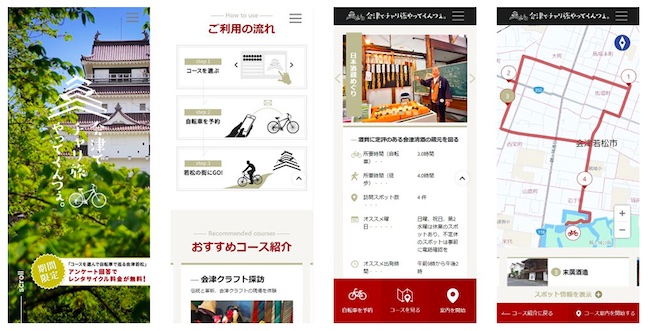
Screenshots of the Castle-Town Tour App

Aims Under the MoU
Although the tourism industry has been hit hard by the COVID-19 pandemic, it is expected to enjoy robust growth over the medium to long term and be one of the main drivers of regional revitalization in Japan. Through these studies, MC hopes to develop real-world applications for location-information services that take advantage of HERE’s technologies, and to grow its know-how through cross-industry business developments. MAPPLE intends to leverage the studies to help stimulate Japan’s regional revitalization efforts through creative applications of map and other tourism services.(2)

In the future, the partners plan to develop a platform for regional mobility services that will enable connectivity between a wide range of services and service providers in both digital and real worlds. The efforts underway in Aizuwakamatsu City are a good first step towards creating mobility services that not only effectively marry digital contents with physical means of transport, but also showcase the unique appeal of each region and what tourists can expect to enjoy there.

The Pilot Project in Aizuwakamatsu City
The trials being carried out MC and MAPPLE have two focuses: (1) Delivery of local-tour-related content and a rental-bicycle booking service; and (2) Visualization and analysis of users’ mobility data.

Outline of Pilot Project
(1) Delivery of Local-Tour-Related Content and Rental-Bicycle Booking Service
The partners have developed digital content for visitors to Tsuruga Castle, one of the most famous tourist spots in the Tohoku (northeast) region of Japan. The content helps to provide visitors with a “smooth mobility experience” by using a routing function and other technologies from HERE to recommend tours of the region’s most popular attractions. Users can then select their preferred courses, and they can use the same platform to book rental bicycles managed by the Aizuwakamatsu Tourism Bureau.

The rented bicycles can help visitors to navigate the castle town’s complex network of streets, ease traffic congestion and reduce the region’s carbon footprint. In the future, MC and MAPPLE also plan to connect this bicycle service with other means of transportation to further optimize the region’s mobility environment.

(2) Visualization and Analysis of Users’ Mobility Data
The partners plan to link data on user attributes, preferences and mobility (obtained via GPS technology mounted on the rental bicycles) and then use HERE’s location platform to visualize and analyze those data. The results will be used to create new localized mobility demand, offer users personalized travel itineraries, and otherwise help tourists to enjoy a stress-free mobility experience.

For more information, visit https://www.mitsubishicorp.com/jp/en/pr/archive/2021/html/0000047442.html.