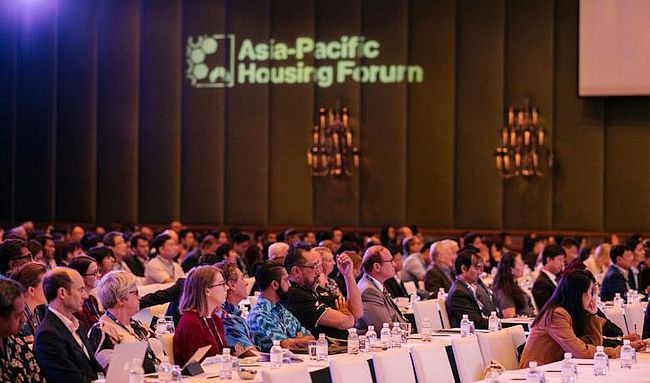
Sustainable, People-centered Solutions for Affordable Housing to Take Center Stage at Eighth Asia-Pacific Housing Forum

The Asia-Pacific Housing Forum taking place from December 7 to 9 highlights the urgent need to build sustainable, inclusive, and affordable housing, in a region where millions of people live in extreme poverty below the threshold of US$1.90 a day and where communities continue to grapple with the health and economic impact of COVID-19.
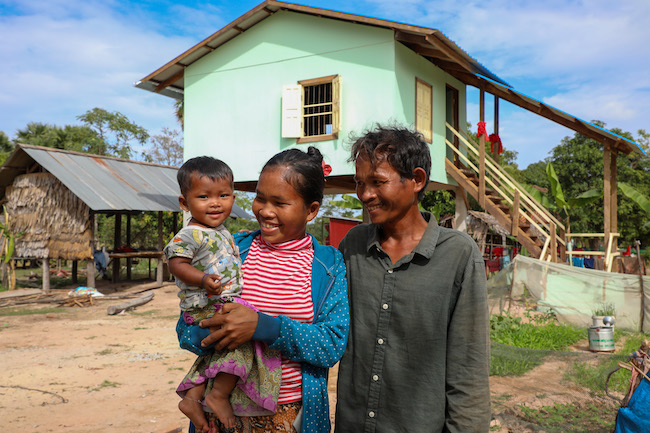
Even before the pandemic, there were 1.6 billion people in need of adequate shelter. The global health crisis has put a spotlight on the critical importance of having a home to stay safe and healthy. However, it remains that vulnerable populations, those unable to cope amid the pandemic, are the ones most impacted by the economic shocks, the threat of natural and manmade disasters, and the negative effects of climate change.

“The Asia-Pacific Housing Forum’s main theme of ‘building forward better through inclusive housing’ means that each one of us, especially the most vulnerable families we serve through housing solutions, has a voice in the process and a role to play in increasing access to a decent place to live,” said Luis Noda, Habitat for Humanity’s Asia-Pacific vice president. “We must center our actions on the needs of the people to truly build in a greener, safer, more resilient way.”

The virtual conference will be attended by various stakeholders and actors across the housing ecosystem and serves as a platform for the exchange and sharing of, experiences, technologies, innovations, and solutions.

The forum’s four tracks are Build resilient cities and communities; Innovative housing solutions and technologies; Advance sustainability in the housing sector; and Finance affordable housing. Economic growth, and climate change adaptation remain cross-cutting themes through the tracks.

The resilient cities and communities track looks at how governments and sectoral stakeholders can work together towards a more sustainable urban future. The track on innovative housing solutions and technologies explores the various ways we can achieve affordable housing through innovation and technology.

The track on sustainability in the housing sector looks at the different approaches to advance and harmonize the environmental, social, cultural, and economic dimensions of housing to ensure equitable cities and communities. The last track –finance affordable housing — will focus on the financing instruments of different actors in both public and private sectors that fund affordable housing.

Recently, Habitat for Humanity released a report titled “A Ladder Up: The construction sector’s role in creating jobs and rebuilding emerging market economies” authored by economists at the Universities of Pennsylvania, Southern California, and Washington. The report states that every $1 million in construction output creates an average of 97 jobs across the countries studied, with 165 jobs per $1 million in the Philippines, and 182 jobs per $1 million in India. These findings are relevant for low- and middle-income countries deciding on areas to prioritize as they work to build back economies weakened by the pandemic.

Thailand, being a fast emerging economy, investing in residential construction may represent a potential win because of possible large number of jobs it can create locally. From 2018 to 2019, the poverty rate in Thailand dropped to 6.2%, according to the World Bank. However, in 2020, the poverty rate increased to 8.8% due to the impact of COVID-19.

The Asia-Pacific Housing Forum is organized by Habitat for Humanity, in collaboration with the European Union-funded SWITCH-Asia Sustainable Consumption and Production Facility.
Register for the virtual Asia-Pacific Housing Forum from December 7 to 9 at aphousingforum.org/registration/.

About Habitat for Humanity

Driven by the vision that everyone needs a decent place to live, Habitat for Humanity found its earliest inspirations as a grassroots movement on an interracial community farm in U.S.A. Since its founding in 1976, the housing organization has grown to become a leading global nonprofit working in more than 70 countries. In the Asia-Pacific region since 1983, Habitat for Humanity has supported millions of people to build or improve a place they can call home. Through financial support, volunteering or adding a voice to support affordable housing, everyone can help families achieve the strength, stability and self-reliance they need to build better lives for themselves. To learn more, donate or volunteer, visit habitat.org/asiapacific.

About EU SWITCH-Asia Programme

Launched in 2007, the SWITCH-Asia programme is the largest European Union-funded programme promoting Sustainable Consumption and Production (SCP) supporting 24 countries in Asia and Central Asia. The programme has funded around 130 projects, supporting over 500 Asian and European non-for-profit partners, about 100 private sector associations and 80.000 Asian MSMEs. The SCP Facility, one of SWITCH-Asia Components, aims at strengthening the implementation of SCP policies at the national level, facilitating the coordination of all components of the programme through information sharing. In addition, it carries out analyses on the results of the pilot projects and supports dialogue with stakeholders.

Media contact:
Maetavarin Maneekulpan
+66-2260-5820
mae@tqpr.com

Habitat for Humanity: Innovation Awards at the Virtual Asia-Pacific Housing Forum to Promote Winning Sustainable Solutions for Affordable Housing

The Asia-Pacific Housing Forum‘s Innovation Awards recognize and celebrate innovators and disruptors in the affordable housing sector. Startup and scaleup companies, policymakers and advocates, architects and engineers are invited to submit sustainable and practical solutions for affordable housing.

“The Asia-Pacific region faces complex housing challenges, compounded by rapid urbanization, natural and human-made disasters, the negative effects of climate change, and persistent poverty and inequality,” said Luis Noda, Asia-Pacific vice president of Habitat for Humanity. “We need everyone working together and every possible creative solution that is locally adapted to address the housing deficit.”

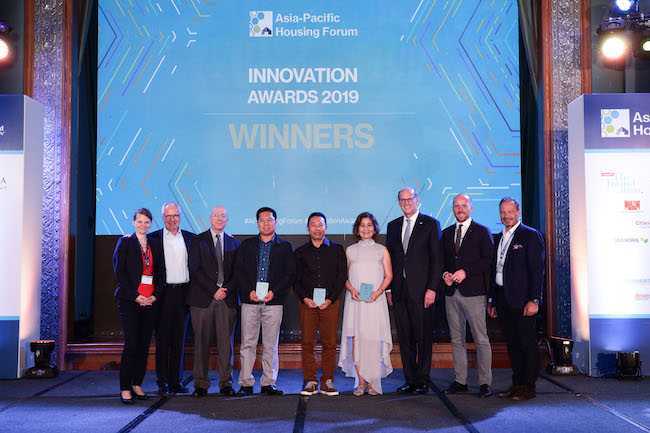
“The recognition allowed us to expand our circle of influence, created more awareness about our advocacy in the community and open more opportunities to help others,” said Paulette Liu, president of SKILLS and a 2019 Innovation Awards winner.

The Innovation Awards (visit aphousingforum.org/innovation-awards) underscores the importance of strategic collaboration, specifically by multiple sector partnerships that foster innovations. The Awards are organized by Habitat for Humanity in collaboration with the Hilti Foundation, Whirlpool and the European Union-funded SWITCH-Asia SCP Facility.

There are three award categories: ShelterTech, Public Policies, and Inspirational Practices. The ShelterTech category seeks technology innovations (product & services) led by the private sector; while the Policies category promotes innovative public policies across all government levels to help reduce the housing deficit while taking into consideration specific needs of minorities, vulnerable and marginalized populations. The third category recognizes practices from public or public-private partnerships that contribute to improved communities and settlements and increased access to affordable housing for the most disadvantaged segments of society.

A special Sustainability Award, sponsored by the SWITCH-Asia SCP Facility, will be given to the innovator who will score highest in showcasing scalable solutions for sustainable housing, regardless of the category. The EU and its SWITCH-Asia Programme recognize the critical importance of the housing sector to sustainable consumption and production, and promote sustainable housing and buildings as part of their support for green, circular economies in its 24 target countries in Asia.

“For Asian countries to achieve more sustainable consumption and production in the housing and building sector, it is vital that we heed diverse experiences and adapt these to local realities. The SCP Award will showcase one solution that is particularly inspiring, and we are looking forward to supporting its winner in connecting with EU SWITCH-Asia stakeholders,” said Zaida Fadeeva, Team Leader of the SCP Facility.

The top 12 finalists will get to present their ideas in front of a jury panel and the public during the virtual Innovation Awards Grand Premiere on December 1. Winners will be announced on December 8, 2021 during the Asia-Pacific Housing Forum. Each winner will receive a trophy and a US$ 5,000 cash prize. Deadline for submission is September 12, 2021.

The Forum, with the theme “Building forward better for inclusive housing,” includes program tracks on resilient cities and communities, innovative housing solutions and technologies, sustainability in the housing sector, and financing affordable housing. It includes a training course on land tenure and markets and a youth congress that will highlight the need for decent, affordable housing and the ways in which the youth can contribute to addressing the housing challenge.

Register for complimentary access to the fully virtual Asia-Pacific Housing Forum at aphousingforum.org.

About Habitat for Humanity

Driven by the vision that everyone needs a decent place to live, Habitat for Humanity began in 1976 as a grassroots effort and has since grown to become a leading global nonprofit working in more than 70 countries. In the Asia Pacific region since 1983, Habitat for Humanity has supported millions of people to build or improve a place they can call home. Through financial support, volunteering or adding a voice to support affordable housing, everyone can help families achieve the strength, stability and self-reliance they need to build better lives for themselves. To learn more, donate or volunteer, visit habitat.org/asiapacific

About EU SWITCH-Asia Programme

Launched in 2007, the SWITCH-Asia programme is the largest European Union-funded programme promoting Sustainable Consumption and Production (SCP) supporting 24 countries in Asia and Central Asia. The programme has funded around 130 projects, supporting over 500 Asian and European non-for-profit partners, about 100 private sector associations and 80.000 Asian MSMEs. The SCP Facility, one of SWITCH-Asia Components, aims at strengthening the implementation of SCP policies at the national level, facilitating the coordination of all components of the programme through information sharing. In addition, it carries out analyses on the results of the pilot projects and supports dialogue with stakeholders.

The EU and its SWITCH-Asia programme have recognised the critical importance of the housing sector to sustainable consumption and production or SCP, and the construction, housing and buildings cluster is a major pillar of EU policy and SWITCH-Asia activities. It is highlighted as part of the green transition in the flagship EU Green Deal (2019) and the Circular Economy Action Plan (2020). To stimulate further green innovations, the EU has also put forward legislation including its Construction Products Regulation. As the housing and building stock in Europe is not expected to grow as dynamically as in Asia, one of the focus areas for the EU is the renovation of existing buildings for increased energy efficiency, through its “Renovation Wave” strategy (2020), which prioritises social housing. In the SWITCH-Asia programme, several national assignments focus on implementing SCP principles in the buildings sector, including in Pakistan, Bangladesh and Kyrgyzstan.

Media contact:
Maetavarin Maneekulpan
+66-2260-5820
mae@tqpr.com
Habitat for Humanity to hold Asia-Pacific Housing Forum in Thailand for the third time

Habitat for Humanity announced that the eighth Asia-Pacific Housing Forum with the theme, “Building forward better for inclusive housing”, will be held in Bangkok from December 7 to 9. This will be the third time that the affordable housing forum will be held in Thailand. The strategic location of the country, presence of a strong and vibrant international development community in Bangkok, and Habitat for Humanity’s 23-year history of building homes in Thailand, were the key considerations for the choice of venue for the biennial event.

Participants at the seventh Asia-Pacific Housing Forum in 2019 held in Bangkok (Habitat for Humanity).

“The focus for this year’s Asia-Pacific Housing Forum centers on how affordable and sustainable housing solutions can bring an inclusive future for vulnerable and low-income families through greener, safer, and more resilient approaches,” said Luis Noda, area vice president of Habitat for Humanity in the Asia-Pacific region.

Globally, the health and economic impacts of the ongoing pandemic have exacerbated the housing crisis and made clear how crucial having safe, secure, and adequate housing is to one’s health, wellbeing, and even survival.

Around the world, approximately 1.6 billion people live without adequate shelter. In the Asia-Pacific region, an estimated one-third of urban dwellers live in slums or slum-like conditions. In Thailand, for instance, the slum and squatter population has continued to increase, with a majority of them in the Bangkok Metropolitan Region. The nation’s urban population is approximately 35.29 million in 2019 (Statista.com). From 2018 to 2019, the poverty rate dropped to 6.2%, according to the World Bank. However, in 2020, the poverty rate increased to 8.8% due to the effects brought by the COVID-19 pandemic.

Some of the main speakers of the Asia-Pacific Housing Forum include Maimunah Mohd Sharif, executive director of United Nations Human Settlements Programme, and Jonathan Reckford, chief executive officer of Habitat for Humanity International.

Co-organized by Habitat for Humanity and the EU-funded SWITCH-Asia programme, with the support of other partners, the Forum brings together industry leaders, innovators, policy experts, and various stakeholders to inspire a new vision for more inclusive, healthy, and resilient cities and communities. It serves as a multi-sectoral platform to build collaboration among like-minded organization to create impact at scale for low-cost, affordable technologies across the Asia-Pacific region.

The importance of housing as a driver of economic growth and sustainability in human settlements will be one of the central discussions during the Forum. It also aims to strengthen the regional community’s commitment to the United Nations’ Sustainable Development Goals and align climate change initiatives with national priorities.

The Asia-Pacific Housing Forum, which has been attended by more than 7,200 participants since its inaugural conference in 2007, is supported by The Hilti Foundation, Whirlpool, Agence Francaise de Developpement, and Somfy Foundation. Other partners include UN-Habitat, Cities Alliance, and Total Quality PR.

The Forum will adopt a hybrid format, with limited in-person participation in accordance with government-mandated health and safety guidelines. However, with the fluid situation brought about by the COVID-19 pandemic, the organizers are continuously monitoring the situation with a pivot strategy in place for an enhanced fully virtual experience. Register at aphousingforum.org and find out more about the forum program, tracks and side events.

About Habitat for Humanity

Driven by the vision that everyone needs a decent place to live, Habitat for Humanity began in 1976 as a grassroots effort and has since grown to become a leading global nonprofit working in more than 70 countries. In the Asia Pacific region since 1983, Habitat for Humanity has supported millions of people to build or improve a place they can call home. Through financial support, volunteering or adding a voice to support affordable housing, everyone can help families achieve the strength, stability and self-reliance they need to build better lives for themselves. To learn more, donate or volunteer, visit habitat.org/asiapacific

About EU SWITCH-Asia programme

Launched in 2007, the SWITCH-Asia programme is the largest European Union-funded programme promoting Sustainable Consumption and Production (SCP) supporting 24 countries in Asia and Central Asia. The programme has funded around 130 projects, supporting over 500 Asian and European non-for-profit partners, about 100 private sector associations and 80.000 Asian MSMEs. The SCP Facility, one of SWITCH-Asia Components, aims at strengthening the implementation of SCP policies at the national level, facilitating the coordination of all components of the programme through information sharing. In addition, it carries out analyses on the results of the pilot projects and supports dialogue with stakeholders.

Media contact:
Maetavarin Maneekulpan
+66-2260-5820
mae@tqpr.com