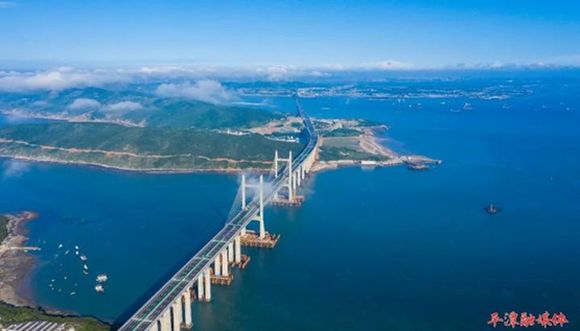
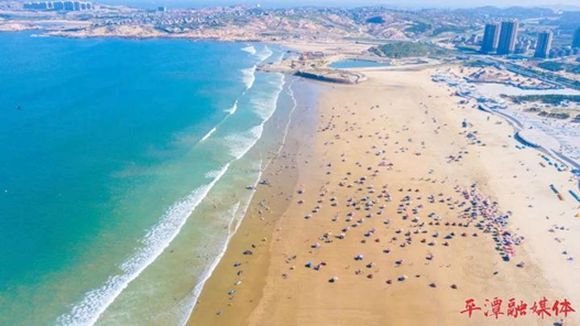
Surrounded by the sea, Pingtan is home to one thousand reefs and one hundred islands, abundant resources and beautiful scenery.A bridge shortens the distances and hastens the development of Pingtan, known as China’s ‘Maldives’, into an international tourist island.The waves of Pingtan’s famous ‘Blue Sand’ or ‘Blue Tears’ in late spring and early summer this year again drew crowds of tourists.
The Pingtan Tourism and Sports Bureau assure that during the Dragon Boat Festival holiday, the tourism market in the Pingtan Comprehensive Experimental Zone was safe and orderly, and the tourism reception picked up steadily.
During the festival, self-driving tourists were still the force in Pingtan tourism. Differing from the medium to long-distance tourism during the May Day holiday, the travel trend during the Dragon Boat Festival holiday was medium to short distance tourism, and the popularity of tourism in the surrounding province is high. Pingtan has attracted tourists from Xiamen, Zhangzhou, Quanzhou, Fuzhou, Ningde and other places.
The opening of the Pingtan Strait Road-Rail Bridge on December 26, 2020, adds a highway with a designed speed of 100km/h and a railway with a designed speed of 200km/h to the international tourism island. As the world’s longest and China’s first cross-sea road-rail bridge, it has helped heat up the tourism industry in Pingtan.
Surrounded by the sea, Pingtan is home to one thousand reefs and one hundred islands, abundant tourism resources and beautiful scenery. The Pingtan Strait Road-Rail Bridge has brought a steady stream of visitors and makes in-depth island tour highly popular. In particular, the number of inter-provincial tourists has experienced significant increases, the same for weekend, family and senior travels. What’s more, many tourists come as a group.
The waves of Pingtan’s famous “Blue Sand” or “Blue Tears” in late spring and early summer this year drew crowds of tourists. While the sea breeze blows in the summer night, the romance-seeking tourists are flooding into the “Blue Sand” sites – Liushui Wharf, Beigang Village, Longwangtou Beach, Tannan Bay, and the Aoqian Waters.
A bridge shortens the temporal and spatial distances and hastens the development of Pingtan, known as China’s “Maldives”, into an international tourist island. The “traffic + tourism” model is revitalizing the local villages by benefiting more people from the developing all-for-one tourism.
Leading Offline Mapping Platform Launches Exciting New Reward Program
Maps.me has announced a new partnership with Booking.com that will enable users to earn cashback rewards in their Maps.me digital wallet. Users of the world’s most popular offline mapping tool will be able to earn up to 10% cashback when booking travel through a special integration of leading digital travel platform Booking.com in the Maps.me app.
With the launch of MAPS Rewards, users will be able to earn cashback in US dollars to their Maps.me digital wallet when they book accommodation with Booking.com in the Maps.me app. Initially, users who hold 30 MAPS Rewards will receive 3% cashback on their stayed reservations with Booking.com. But, as their holdings of MAPS Rewards increase to 100 or 300, they will unlock cashback rates of up to 7% and then up to 10%, respectively.
“This partnership with Booking.com offers great value to Maps.me users,” said Alex Grebnev, Co-Founder of Maps.Me. “Maps.me already helps millions of users to find their way. Next, it will be delivering tangible benefits such as loyalty rewards earned by participating in the platform and money in their pocket through cashback on purchases. Through the Maps.me wallet they can also earn passive income on stored value – up to 8% by lending out balances that are collateralized by highly liquid assets. We look forward to creating new opportunities to deliver unique products and services and making them available to Maps.me users soon.”
“Partnering with Maps.me on their new cashback rewards program is a natural fit for us at Booking.com,” said Mark van der Linden, Senior Director of Partnerships at Booking.com. “As travel begins to open up and people start looking to explore the world again, seamlessly connecting them with the amazing range of incredible places to stay on our platform as they literally look to navigate their way through new destinations is a great opportunity. Whether they’re looking for a funky city apartment, a secluded vacation home in the countryside or a resort on the beach, we’ve got the stay that’s right for them.”
The MAPS Rewards feature will be launched initially in selected markets in Europe and expanded in the future. In addition to the cashback partnership with Booking.com, users who hold MAPS Rewards will eventually be able to receive other discounts, with future rewards through other partners being able to be exchanged for cash, or to buy additional products and services. In all, the goal is for users to be able to effectively save money and service financial needs, and control when and how they want to use rewards they earn by using the platform.
“Our partnership with Booking.com is part of the next phase of our plans to ultimately embed a host of financial and other services that can be delivered when and how our customers need them. We are leveraging technology to connect consumers to real world DeFi applications that can enhance their financial lives. This is the first step in developing a core architecture for the masses,” said Viktor Mangazeev, co-Founder of Maps.me.
The stored value in Maps.me wallets will be kept in AAA-rated assets and held in a Swiss trust structure that is administered by TMF Services, a regulated trust services provider in Switzerland. TMF is the largest corporate service provider in the world, trusted by over 60% of Fortune 500 and FTSE 100 companies. Users enjoy this security as well as the convenience of accessing these services via a platform they know and love – all for zero or low fees.[1]
In March, Maps.me announced that it is adding next-generation financial capabilities to its platform, which was used by more than 60 million people worldwide last year. Through the services that will be available via its digital wallet, Maps.me aims to enrich people’s lives by providing them with a simple, immediate, and inexpensive way to pay, transfer across currencies, and earn passive income.
Maps.me 2.0 will enable users to: – Earn yields of as much as 8% on stored value; – Make payments via a linked credit card; and – Transfer money instantly to friends and family globally and in 35 different currencies
Maps.me will soon be adding new features including eSIM connectivity, which will allow users to stay better connected. With this feature, users will have greater convenience and managed connectivity when using Internet service in more than 90 countries since they will be able to seamlessly switch mobile networks and no longer need to purchase prepaid SIM cards when they travel.
About Maps.me
Maps.me is the world’s leading off-line mapping application for travelers. Launched in 2011 it has been downloaded more than 140 million times. More than 60 million users worldwide were active in 2020 planning and navigating their travels and exploration in 195 countries. Maps.me users can download maps and be connected wherever they travel. An open-source advocate, Maps.me users are a primary contributor to the OpenStreetMapping Project globally. Beginning in 2021, the app will integrate financial services such as payment and currency exchange, telecom services including eSIM connectivity, and cash back opportunities, discounts, and other rewards.
From drone blocking force fields to motion-detecting smart floors, the kinds of futuristic technologies we are used to seeing in action films are not so far from the reality of today’s top-level security and privacy options for large custom superyachts.
James Bond had ‘Q’ to supply his outlandish gadgets; superyacht owners have ‘O’, aka Oceanco
Oceanco is accustomed to unique and challenging client requests, from unusual feats of design to remarkable security systems. Here, the custom superyacht builder shares some of the options available for onboard technology that could have come straight out of the pages of a spy novel.
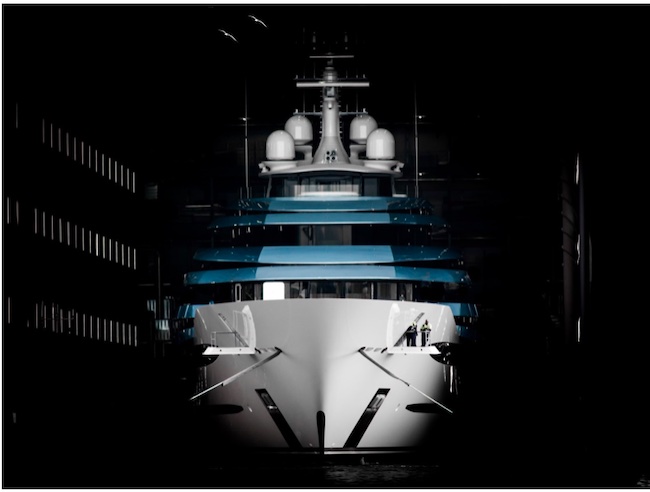
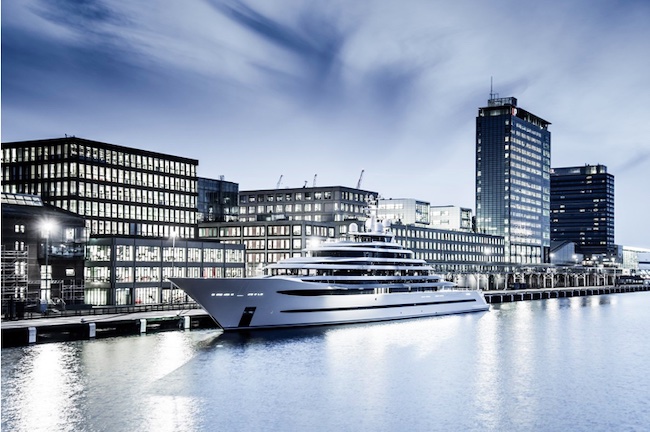
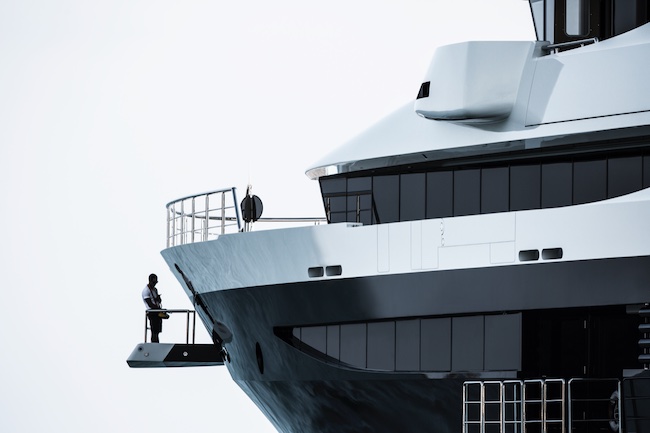
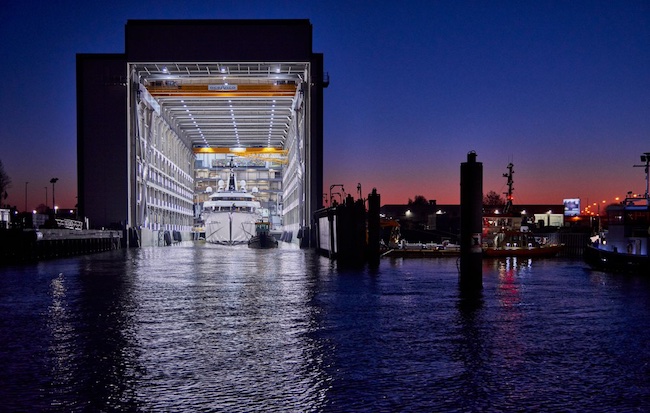
Kaos 110metres megayacht at Oceanco shipyard in Holland before leaving the Dutch builder facility. CREDIT: Tom van Oossanen – SuperYacht TimesKaos 110metres megayacht docked in London in full safe and control. CREDIT: Tom Van Oossanen91,5m mega yacht Tranquillity at the anchor in a Med bay. One of her crew controlling the helm from the outside. CREDIT: Guillaume Plisson109m Bravo Eugenia at Oceanco shipyards in Holland for her systems final tunings. CREDIT: Francisco Martinez
Secret-service level security and top-notch medical facilities onboard For custom-built superyachts, there are some owners who choose to opt for secret-service level security and privacy on board, maybe because they enjoy cutting-edge gadgetry or they wish to continue their regular lifestyle while at sea. From drone blocking force fields to motion-detecting smart floors, the kinds of futuristic technologies we are used to seeing in action films are not so far from the reality of today’s top-level security and privacy options for large custom superyachts.
And with increasing autonomy and range on today’s vessels, many are heading off the beaten track and into remote waters where local medical backup might be in shorter supply. In response, the grandest and most well-equipped superyachts can be kitted out with fully functioning hospitals, manned by dedicated medical staff, to provide reassurance.
“WHEN IT COMES TO CREATING A FULLY BESPOKE SUPERYACHT, WE ARE ACCUSTOMED TO THE CHALLENGES OF SPECIALIST REQUESTS SUCH AS THESE. JAMES BOND HAD ‘Q’ TO SUPPLY HIS OUTLANDISH GADGETS; SUPERYACHT OWNERS HAVE ‘O’, AKA OCEANCO,” COMMENTS PARIS BALOUMIS OCEANCO’S MARKETING DIRECTOR
Although the company naturally maintains full confidentiality regarding any specific client’s requirements as well as their identities. “We bring in experts from inside and outside yachting to consult on high-security projects and adopt technologies from other sectors. What’s more, we take our own security at Oceanco very seriously to maintain privacy during the construction of our yachts; the shipyard is fitted out with high-security systems, too.” Marcel Onkenhout Oceanco’s CEO.
CITADEL ROOMS In the extremely rare case that an unwanted visitor boards their yacht, some owners like the reassurance of a secure location to go to. These places are known as ‘citadels’, and they were first put to use in commercial shipping before crossing over to yachting.
Citadels are kitted out with independent, overriding access to the yacht’s navigational and satellite communications systems, so even when you don’t have access to the bridge, you can maintain full control. The rooms themselves are fitted with reinforced doors and have ballistic protection on the surrounding walls. Inside, they are equipped with their own ventilation systems as well as water and food supplies to provide total self-sufficiency.
EMERGENCY ESCAPE ‘LIFE-PODS’ FOR A RAPID GETAWAY And the next generation of citadels could be distinctly more mobile. Like crossing a lifeboat with a space ship, these emergency escape ‘Life-Pods’ provide a rapid getaway. The watertight pods are constructed from high-tech materials to resist impact and feature built-in GPS trackers, temperature and fire barrier controls, and air purification systems.
ANTI-DRONE SYSTEMS In recent years, drones have been making headlines for their interference with commercial airports, and the military has been particularly keen to curb their capability to spy on top secret locations. As well as being a handy tool for the paparazzi to get up-close shots of a superyacht’s private enclaves and the guests within them, those involved in the murky waters of industrial espionage can thank drones for greatly increasing their capabilities, too.
But a new generation of devices to detect and defeat these drones is emerging to neutralize the occasional threats to privacy and security on yachts. One such defense system identifies any commercial drones in operation within a 20-kilometer radius, providing GPS positions of both the drone and the pilot as well as an indication of said drone’s heading and speed.
A 500-meter electronic ‘exclusion zone’ around the yacht Once the drone threat has been confirmed, the system engages a 500-meter-plus electronic ‘exclusion zone’ around the yacht (not unlike the force fields we are used to seeing in sci-fi films) that blocks any unwanted airborne visitors. If the drone makes it to the perimeter of the exclusion zone, its controls and video feed are jammed, effectively rendering the pilot’s controls useless, and its ‘return to home’ function (which usually kicks in when the drone has a low battery) is triggered.
ACOUSTIC DETERRENTS The Long-Range Acoustic Device, or LRAD for short, is an acoustic deterrent that was originally developed for military use. But as the threat of piracy to commercial shipping and yachting in certain areas such as the Gulf of Aden grew over recent decades, the device has been adopted to deter unwelcome visitors in non-military settings.
A range of more than three kilometers The sonic device emits an uncomfortable, high-pitched noise that is above the tolerance of the average person, causing them to be driven away from whoever is controlling it. With a practical range of more than three kilometers, the device can be adjusted to broadcast voice commands in numerous languages on top of the deterrent tones, allowing you to provide warnings to potential interlopers (or even the odd suspicious fishing boat).
INTRUDER DIVER DETECTORS Think someone could sneak up on a superyacht by pulling on a wet suit and scuba gear? Think again, as some superyachts are choosing to install sonar systems that detect, track and identify divers or underwater vehicles approaching from any direction.
Keeping sonar environmentally friendly Sonardyne’s Sentinel Intruder Detection Sonar is the world’s most widely deployed system of its kind, used by naval vessels, commercial harbors and luxury yachts alike. With a functional range of up to 900 meters for diver detection, it is man-portable, making it particularly quick to deploy, and it can even be placed on the yacht’s tenders to increase your scope of situational awareness. What’s more, the manufacturer has created the system to be environmentally friendly, so it won’t have an adverse effect on the local sea life.
ONBOARD HOSPITALS Perhaps a yacht is expecting to travel to remote regions where on-the-ground medical support is less accessible. Or maybe the Owners are more mature and have specific conditions that mean they seek the reassurance of an onsite doctor or nurse. Either way, an onboard hospital is not an uncommon request for custom superyacht builders.
Emergency facilities like a private hospital Kitted out like an emergency room of a private hospital, they are equipped with oxygen tanks, defibrillators, specialized medications and intravenous fluids, while a number of yachts offer rehabilitation machines for injuries, such as decompression chambers for those who are planning on some serious scuba diving expeditions. And should a patient require further medical attention, most of today’s large yachts have a helipad with the possibility of bringing in medic air services to the yacht or heli-evacuating them away to a larger facility ashore.
A DOCTOR-ON-CALL Remember the scene in Casino Royale where James Bond hooks himself up to a remote medical diagnostic system and the doctors talk him through his medical emergency with all his vitals up on their screens’ Well, that scene is less fictional than you might at first have thought.
With the right diagnostic kit placed onboard, crew or even medical professionals can link up to a remote medical support line such as MedAire from International SOS, allowing a team of doctors to see the patient’s condition in real-time and provide advice on procedures or medication in order to stabilize the patient.
Before an emergency has even arisen, the telehealth consultants will often provide guidance on medical room design and ventilation, lighting and medical wash facilities, as well as what diagnostic equipment to place onboard. Who needs the flying doctors when you can beam them into wherever you’re in the world at a moment’s notice?
SMART FLOORS THAT TRACK MOVEMENT Currently, in development, these smart floors are like an upgraded surveillance system for the 21st century. A step beyond conventional security cameras, they are minimally invasive in the sense that they have no impact on an owner’s or guest’s experience of a room and their privacy within it, while also being able to alert the bridge if someone unexpectedly enters. And over time, the smart floor creates a digital pressure video of the visitor’s movement that can be tracked and re-evaluated. This makes them suitable for very private spaces, like bathrooms and bedrooms. The smart floors can also be used beyond security measures, to automatically switch lighting or heating and air conditioning systems on and off, allowing the yacht to become more energy-efficient and therefore sustainable.
WINDOWS AS TOUGH AS STEEL The ingenious engineers behind A60 windows have taken the notion of toughened safety glass to new heights. Made from hot extruded steel or stainless steel profiles, the compound glass windows provide protection against fire for up to an hour and are available in a range of thicknesses while maintaining low optical distortion and good light transmittance. They can be thermally or chemically toughened, laminated, thermally isolated, and manufactured to be soundproof or bulletproof. The glass is mounted into a frame with a specialist U-profile system, ensuring it remains flexible and minimizes the risk of corrosion from the environment over time. When you have concerns about protecting what is behind a yacht’s windows, the A60 is the go-to solution.
A CYBERSECURITY NET Just as any home or office will likely choose to protect itself from outsiders accessing private and personal data, any superyacht could be vulnerable to cyber threats. With the increasing preponderance of wirelessly controlled systems featured onboard, those yachts that do not provide themselves with an added layer of technological security can leave themselves open to hacking. Oceanco works with a select range of top-tier cybersecurity professionals to ensure that its yachts are built with the kind of network protections that will keep its owners and crew safe, through a combination of initial risk assessments during the development phase of a project and ongoing upgrades as the digital landscape evolves.