Bin Zayed International LLC (BZI) has targeted RM100 billion worth of foreign direct investment (FDI) to Malaysia over the next few years, to be delivered in phases, starting with the development of Widad@Langkasuka.
BZI is a leading conglomerate owned by His Highness Sheikh Khaled bin Zayed Al Nahyan, who is a senior member of the Abu Dhabi royal family member as well as a prominent business leader and philanthropist in the Gulf States, with diverse business interests in the local and international markets, and which its business ventures include management of real estate and construction of residential and commercial buildings and towers.
In a formal letter to the Prime Minister of Malaysia, BZI expressed its strong interest to invest in Malaysia via an exclusive collaboration with Widad Business Group.
“After some productive meetings and further discussions, WBG and BZI are most proud and pleased to jointly inform the Prime Minister that we have agreed to form a joint venture entity in Malaysia for the specific purpose of the development project in Langkawi, Kedah, Widad@Langkasuka. We are confident that this project will become one of the iconic projects in Malaysia which will bring Langkawi global recognition and a truly iconic place that Malaysia would be proud of,” said BZI Group Managing Director Sheikh Midhat Kidwai.
“Now that we have solemnized our business relationship via this joint venture, we would like to express our strong interest in acquiring or investing in more concessions and infrastructure projects. Starting with Widad@Langkasuka, we believe that our involvement in projects here can bring in FDI of more than RM100 billion for the next few years. This strong cash flow influx can assist to provide a significant recovery boost for the Malaysian economy as well as the creation of more than 30,000 jobs,” he added.
Issued by: Sense Consultancy on behalf of Bin Zayed International
For further media enquiries please contact: Jaz Ng Tel: +6012 202 0096 Email: jaz@leesense.com
– Leading manufacturer of nameplates and plastic injection moulded parts to MNC customers – Proceeds for purchase of machinery and equipment to expand capacity, grow market share in E&E and automotive industries
The shares of Volcano Berhad (VOLCANO) have been oversubscribed by 176.6 times ahead of the Group’s listing on the ACE Market of Bursa Malaysia Securities Berhad (Bursa Malaysia).
Volcano Berhad’s factory in Perai, Penang
“We are extremely grateful for the confidence our investors have in Volcano, our business, prospect and future plans. Our hard work to build a sustainable business for the past 20 years has paid off,” said Managing Director of Volcano, Datuk Ch’ng Huat Seng.
Volcano is raising RM8.75 million from the IPO exercise. From the proceeds, the Group will use RM5.55 million for the purchase of machinery and equipment while RM3.20 million will be used for listing expenses.
“This is just the beginning of our corporate journey. The expansion plan will give a push to the growth of the Group’s business,” Ch’ng explained. “This is also part of the strategy to increase automation and capacity to meet the demand of our new and existing clients in the electrical and electronics (“E&E”) as well as automotive industries.”
For this IPO, a total of 23,838 applications for approximately 1.46 billion new Shares with a value of RM512.82 million were received from the Malaysian public for 8.25 million new Shares made available for application by the Malaysian public, which represents an overall oversubscription rate of 176.60 times.
For the Bumiputera portion, a total of 11,624 applications for 594.43 million new Shares were received, which represents an oversubscription rate of 143.11 times.
For the public portion, a total of 12,214 applications for 870.78 million new Shares were received, which represents an oversubscription rate of 210.10 times.
The 8.25 million new Shares available for application by the eligible directors, key senior management personnel, employees and business associates including any other person who have contributed to the success of Volcano and its subsidiaries have also been fully subscribed.
Its Placement Agent has confirmed that the 43.50 million Shares made available for application by way of private placement have been fully placed out.
The notices of allotment will be posted to all successful applicants on or before 5 April 2021.
TA Securities Holdings Berhad (TA Securities) is the Principal Adviser, Sole Placement Agent, Sole Underwriter and Sponsor for this IPO exercise.
Tan Poh Lin, Vice President for Corporate Finance at TA Securities said, “We are honoured to have been part of Volcano’s IPO journey. We are happy that the IPO has been so well received as this is a testament to the confidence the market has in fundamentally solid businesses. Volcano has a strong track record of over two decades supporting multinational companies (MNCs) who form the bulk of its customer base. This is an endorsement by global brands and well-known firms for Volcano’s dependability and quality of work.”
Volcano’s principal markets are Singapore and Thailand. Overall, the foreign market accounts for more than 95% of overall revenue in the financial year ended 31 December 2020. Multinational companies (MNCs) comprise 90% of the sales including some leading brand names such as Bernina, Hewlett Packard, Fisher & Paykel Thailand, Donaldson Thailand, Sharp Indonesia and Panasonic Thailand.
Volcano’s IPO on Bursa Securities is scheduled on 6 April 2021.
Please contact the below for more information: Stefani Wan Tel: +6012 286-1481 Email: s.wan@swanconsultancy.biz
– Leading international manufacturer of nameplates and plastic injection moulded parts to MNC customers – 95.83% sales to foreign market, 90% MNCs/public listed companies in FYE 2020 – IPO proceeds to expand capabilities and market share in the E&E and Automotive industry
Volcano Berhad (“Volcano” or the “Group”), a leading international manufacturer of nameplates and plastic injection moulded parts, has successfully launched its prospectus for the Group’s listing on the ACE Market of Bursa Malaysia Securities Berhad (“Bursa Securities”).
Volcano’s initial public offering (“IPO”) involves a public issue of 25.0 million IPO shares and an offer for sale of 35.0 million shares at the issue price of RM0.35 sen per share, made available for application in the following manner:
Public issue: – 8.25 million new shares will be available for application to the Malaysian public; – 8.25 million new shares will be allocated for application by eligible directors, key senior management, employees and business associates; and – 8.50 million new shares will be offered by way of private placement to identified investors.
Offer for sale: – 14.375 million shares by way of private placement to identified investors; and – 20.625 million shares by way of private placement to identified bumiputera investors approved by the Ministry of International Trade and Industry.
The IPO is expected to raise gross proceeds of RM8.75 million. From the proceeds, the Group will use RM5.55 million for the purchase of machinery and equipment while RM3.20 million will be used for listing expenses.
Managing Director of Volcano, Datuk Ch’ng Huat Seng, said: “We are one step closer to an important milestone for Volcano since our establishment in 1999. For the co-founders, it is also a significant event in our professional careers to have come this far and we see our prospects supported by a strong and long-term customer portfolio comprising multinational companies from around the world. Our products are also used in end-user markets especially in the electrical and electronics (“E&E”) as well as automotive industries.”
“The proceeds from the IPO will go towards acquiring laser-cutting and pick-and-paste machines to improve the efficiency and capability of our nameplate manufacturing process. We are going to purchase additional plastic injection moulding machines to expand the plastic injection moulded parts manufacturing business. Besides the purchase of machinery and equipment, we are also going to expand our factory in Rayong, Thailand as we intend to expand our presence in the E&E and automotive industries in the country.”
Volcano’s principal markets are Singapore and Thailand. Overall, the foreign market accounts for more than 95% of overall revenue in the financial year ended 31 December 2020. Multinational companies (MNCs) comprise 90% of the sales including some leading brand names such as Bernina, Hewlett Packard, Fisher & Paykel Thailand, Donaldson Thailand, Sharp Indonesia and Panasonic Thailand.
Volcano’s Principal Adviser, Sole Placement Agent, Sole Underwriter and Sponsor in relation to the IPO is TA Securities Holdings Berhad (“TA Securities”). Pursuant to the underwriting agreement, TA Securities will be underwriting for shares available for application by the Malaysian public.
Datuk Ch’ng said: “Where we are today is also due to the hard work and dedication of the Volcano team. They are experienced and committed with operational expertise and in-depth knowledge of manufacturing of nameplates and plastic injection moulded parts. Our sincere gratitude goes to our customers and suppliers throughout the years that have continued to support our growth and success. We would also like to extend our gratitude to the team at the Securities Commission and Bursa Securities in assisting Volcano throughout the IPO process.”
Please contact the below for more information: Stefani Wan Tel: +6012 286-1481 Email: s.wan@swanconsultancy.biz
Engineering has been an important profession, helping to tackle major issues such as poverty reduction, climate resilience, public health and sustainable development.
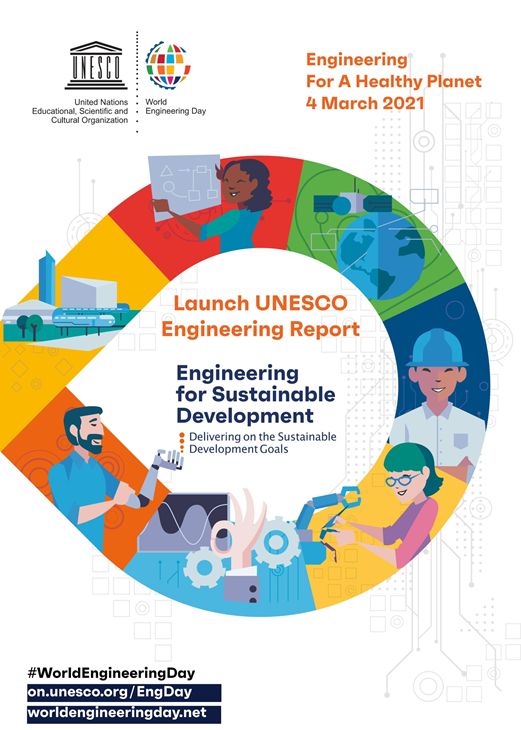
On 4th March 2021, the annual World Engineering Day (WED) will convene under the auspices of UNESCO. As the UNESCO Director-General, Ms. Audrey Azoulay explains, WED will “celebrate the achievements of engineers and their contributions to sustainability and a better quality of life for all.” This year, WED welcomes the high patronage of Emmanuel Macron, President of France and coincides with the launch of the second UNESCO engineering report, “Engineering for Sustainable Development” with UNESCO’s partners, the WFEO, the Chinese Academy of Engineering (CAE), Tsinghua University, and the International Centre of Engineering Education (ICEE), among many others. Representatives from over 10 different countries, genders and age groups from youths to adults, will speak at WED 2021. In addition, many more diverse engineering communities will join in over 50 WED events held concurrently in every continent around the world.
The WFEO is represented by over 100 national engineering institutions and 30 million engineers globally, leading the WED initiative to increase worldwide recognition of the important role of engineering in accelerating the United Nations’ 17 Sustainable Development Goals (SDGs). Engineering education and capacity building are keys to enabling the SDGs. Politicians can foster them; institutional investors can fund them; but only engineers can build them.
“World Engineering Day is an opportunity to recognize the important work that engineers need to do, in addressing climate change and developing technologies for a carbon free economy. It is engineering innovations that will achieve this goal. Engineers will ensure that cities are cleaner, more sustainable, smarter and livable. And importantly, engineers will ensure that everyone has safe clean accessible water, sanitation systems and affordable and reliable energy”, says Marlene Kanga, Past National President of Engineers Australia and the Immediate Past President of WFEO.
Calling for more global action from multiple stakeholder groups, “We hope that this new UNESCO engineering report will help stakeholders from government, industry and academia articulate the value of engineering, inspire ideas to improve and innovate engineering, and help achieve the full potential of engineering to benefit the sustainable development of humankind and planet Earth,” says Zhou Ji, Honorary Chairman of the Governing Board of the CAE and Co-chair of the Advisory Board of ICEE.
The advent of the Fourth Industrial Revolution has brought technological advances in artificial intelligence, big data, Internet of Things and blockchain, transforming the ways people live and interact with their physical, biological and digital space. “These transformations can be seen in every field of engineering, profoundly affecting industrial systems, production and governance,” says Audrey Azoulay.
Engineering innovations are developing rapidly and these global efforts are critical for solving current challenges and building a better future for humankind. In the past year, engineers have been in the spotlight for their creative solutions to address the COVID-19 pandemic. Marlene Kanga notes that in the year following the coronavirus pandemic, the theme of the WED celebrations in 2021, Engineering for a healthy planet, “acknowledges the work of engineers and engineering in the search for a new vaccine, using artificial intelligence and data analysis in the process. Advanced manufacturing technologies such as 3D printing has been used in the manufacture of personal protective equipment. Refrigeration technologies and transportation and logistics innovations are being used to transport vaccines to every corner of the earth. This is truly a year where the world could not exist without engineering.”
“The COVID-19 pandemic has accelerated the call for urgent action, while affirming the relevance of engineering to sustainable development,” observes Gong Ke. He also encouraged more affirmative action in the engineering community, saying that “engineering should play a more proactive role in the fight against COVID-19 and in the pursuit of a truly transformative recovery to build back better.”
Audrey Azoulay raised a pressing concern on the strain that the pandemic has placed on engineering education. “To train our best engineers to tackle these global challenges, we need young people to study mathematics and science from an early age; however, the global pandemic has led to the closure of educational institutions for 1.5 billion learners worldwide – more than 90% of the world’s school population – with dire consequences for their education.”
Thus, it is imperative for engineers to innovate on engineering education, curricula, new teaching methods and education delivery. “Training engineers for the implementation of the SDGs requires not only new competencies, including creative learning and thinking, complex problem-solving, interdisciplinary and international cooperation, and a code of ethics, it also demands a change in engineering education itself,” says Jose Vieira, President-Elect of WFEO.
Marlene Kanga also emphasized the importance of encouraging all young people, boys and girls, to consider engineering as a career and to encourage them in this choice. She says, “if you want to change the world, become an engineer.”
“At present, however, resources for engineering science and technology and engineering education are not equitably distributed. Developing countries and regions, in particular, are lacking in qualified engineers and engineering resources. We therefore urge the global engineering community to work to establish a more equitable, inclusive, developmental and mutually beneficial world for all, by working closely with government, industry and academia; by empowering engineering capacity-building in disadvantaged regions; and by tackling global challenges through joint efforts,” says Zhou Ji, calling attention to the gaps in resources distribution and making sure that no one is left behind.
One important global resource is water. “Water, as a prerequisite for life, assumes a special focus in terms of sustainable development. The close relationship between human health and the well-being of communities with access to clean water is a determining factor for the economic and social development of society,” says Jose Vieira. Significant progress in water and environmental engineering have led to greener technologies and more sustainable development of our planet.
“Engineering itself needs a transformation to be more innovative, inclusive, cooperative and responsible,” says Gong Ke, “The engineering report to be released is a new report published 10 years after the first landmark engineering report of UNESCO, aiming to increase the public awareness of the crucial role of engineers and engineering in achieving every one of the 17 Sustainable Development Goals; to call for global collaboration among governments, industries and civil society; to promote engineering innovations, and to transform the engineering profession with a stronger capacity to respond to the pressing challenges faced by humankind and the planet; and to shape a peaceful, prosperous, inclusive and sustainable world for all people with no one left behind, encouraging more collaboration and sharing of engineering resources at a global level.”
Ultimately, WED aims to promote engineering awareness, diversity, collaboration, education and resources sharing, with a common global goal to achieve the SDGs by 2030.
Christine Tan, PhD CEng FIET is a Royal Chartered Engineer, Fellow of the Institution of Engineering and Technology UK, and Professor of Science and Technology Education at Fujian Normal University China. She is an active science writer and STEM outreach volunteer.
Media contact World Federation of Engineering Organizations Maison de l’Unesco, 1 rue Miollis, 75015 Paris, France Contact Person: Wang Guanyi T: +33 1 45 68 48 47 W: http://www.wfeo.org/
On February 26, 2020, Broad Homes (02163.HK) released its annual results announcement for 2020. In 2020, it achieved total revenue of RMB2,613.9 billion, a year-on-year decrease of 22.4%, gross profit of RMB926.8 million, a year-on-year decrease of 19.0%, net profit of RMB216.4 million, a year-on-year decrease of 68.0%, and an increase in gross profit margin from 34.0% in 2019 to 35.5% in 2020.
Broad Homes remarked that the decline in revenue was on one hand attributable to delayed construction progress of certain of its joint factories due to the COVID-19 pandemic, and on the other, a decrease in gains from loss of significant influence in associates by over 70% in 2020 from the corresponding period last year as a result of an adjustment in management mode of certain joint factories, as well as the improving layout of joint factories nationwide with the progressing of the “Broad Homes United Program”.
However, it is noticeable that PC unit manufacturing business of Broad Homes secured remark performance in 2020, with new contract amount reaching RMB4.09 billion, up 31.7% from RMB3.106 billion the corresponding period last year, and backlog amount reaching RMB5.196 billion, up 38.6% from RMB3.749 billion the corresponding period last year. Sufficient orders of the PC unit manufacturing business pave the way for Broad Homes in 2021.
Looking into future, Broad Homes will embrace more opportunities leveraging the three advantages of rapid industry development, its data-driven and B+C dual-diver strategies. According to the Resolution in Relation to the Financial Budget Report for 2021 as set out in the appendix of Meetings to be Resolved at Annual General Meeting and Notice of Annual General Meeting published together with its annual report, Broad Homes budgets a revenue of RMB4.92 billion for 2021, a year-on-year increase of 88%.
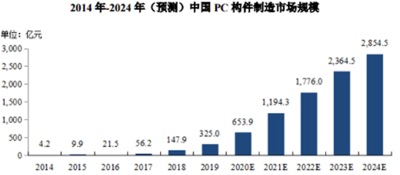
PC Unit Business to Ride upon the Potential Industry Boom In recent years, the state vigorously guides and encourages the development of the prefabricated construction industry. Thanks to the policy support of the central government, Ministry of Housing and Urban-Rural Development and other competent authorities, domestic prefabricated construction industry has embarked on rapid development. Pursuant to Frost & Sullivan, market scale of PC unit manufacturing business reached RMB65.4 billion in 2020, and is expected to reach RMB285.5 billion in 2024 at a CAGR (Compound Annual Growth Rate) of 44.5%.
With the progressing of the “Broad Homes United Program” and improving layout of joint factories, Broad Homes primarily generate revenue from its PC unit manufacturing business, which achieved revenue of RMB2.4192 billion, a year-on-year increase of 5%, and as a proportion of total revenue increased to 92.6% from 68.4% of the corresponding period last year. Riding upon its on-going rapid growth, PC unit manufacturing business has become the core business of Broad Homes. As of June 2020, Broad Homes had 15 wholly-owned PC factories and 88 joint PC factories accumulatively contracted for, making it China’s largest PC unit and PC equipment manufacturer.
According to the “2020 China Real Estate Industry Chain Strategic and Integrity Supplier Research Report” issued by China Real Estate Chamber of Commerce, Broad Homes was the most preferred cooperator among “Prefabricated Structure – PC Structure” brands in real estate suppliers.
As an industry pioneer, after more than two decades of exploration, Broad Homes has been blessed with marked advantages amid the rapid development of the industry, which, the market believes, is well positioned to enjoy the dividend from the rapid growth of the prefabricated construction industry.
Comprehensive Establishment of Digital Platform to Focus on Intelligent Upgrading According to information available, Broad Homes is the pioneer and leader in the industrialization of construction industry in China and the first to adopt full process digital information system and industrial chain technology system with exclusive intellectual property rights, which is capable of offering global, scalable professionalized and intelligent manufacturing of prefabricated buildings and services
As the only prefabricated construction enterprise having been selected for the Pilot Demonstration Project of Intelligent Manufacturing by the MIIT (Ministry of Industry and Information Technology of the PRC), Broad Homes has embarked on establishment of a prefabricated digital platform, upgraded digital development strategy and successfully forged two intelligent systems of PC-Maker software service strategy and PC-CPS system.
PC-Maker service strategy is able to enhance the design interactivity and optimize the design process. Through data collection, utilization and sharing, it promotes the virtuous circle of work done by different parties and continuously enhances the cooperation with and upgrading of strategic customers. As of the end of 2020, Broad Homes has provided comprehensive prefabricated construction solutions to almost 300 property developer, including Vanke, Country Garden, Evergrande, Jinke and Gemdale. The PC-Maker service strategy enables Broad Homes to realize the transformation from business cooperation to standard co-construction, and accelerates the comprehensive upgrading of prefabricated buildings to standardization, digitalization and intelligence at the product end.
Capitalizing on the mature PC-CPS intelligent manufacturing system, Broad Homes commences to transform into data-driven production at the demand end, and realized flexible demand-based manufacturing through digital definition of various elements of the industrial chain, which promoted and achieved efficiency, intelligence and visualization of the whole construction process, and further improved the product quality and construction efficiency. Providing full process digital solutions for prefabricated buildings with PC-CPS system helps to solve problems such as cost, logistics and supply chain management, and facilitates enterprises to achieve excess profit.
Consolidating Industry Leading Position Leveraging B+C Dual-driver Strategy At the recent Central Rural Work Conference, General Secretary Xi Jinping emphasized that, the state had made it clear to comprehensively promote rural revitalization, accelerate the development of rural industries, deepen rural reform, implement rural construction, and improve the quality of rural housing construction. As a forerunner of construction industrialization, Broad Homes proactively responded to the national strategy to implement rural construction, and successfully realized the strategic transformation from TOB to TOB+TOC in 2020.
At the business end, Broad Homes remains committed to PC unit manufacturing and intelligent manufacturing research and development (R&D), and gradually shits focus away from construction contracting. Broad Homes developed PC Maker software and PC CPS to improve its production efficiency and cost control capacity. Meanwhile, Broad Homes was the first to realize the importance of data elements, and took the lead in the full process prefabricated construction intelligent-oriented development.
At the consumer end, taking advantage of the policy of “separation of ownership, contracting right and management right” in rural homesteads, Broad Homes is expected to get involved in the trillion-level rural housing construction market. In 2020, Broad Homes focused on developing TOC business and launched B-house and the new product B-BOX. B-house products mainly target C-end consumers and the rural villa market, under which Broad Homes introduced seven standardized products, such as Buttonwood Villa, Oak Manor and Camphorwood Villa, established and opened B-house parks in Changsha, Wuhan, Tianjin and other cities, and developed new housing supply schemes to meet the diversified and customized consumption needs of the market, which is transforming the development trend of the traditional rural housing market.
TF Securities predicts that Broad Homes will embrace rapid development in the prefabricated rural villa market segment, its product type design will satisfy the demands of the whole market in the future and TOC business scale (excluding B-BOX) will reach RMB5.25 billion in the next three years, thereby contributing to considerable performance growth. In view of the expansion of housing market demand and the leading advantage of digital intelligent technology, Broad Homes is well positioned to consolidate its leading position in the prefabricated construction industry.
According to expert analysis, in 2020, China further introduced a more detailed industrial digital development strategy. In the new development era, Broad Homes continuously increases investment in digital economy, promotes R&D and digital upgrading, focuses on the principal business of PC unit manufacturing, and specifies the TOB+TOC dual-driver development strategy, which has laid a solid foundation for the rapid expansion of its PC unit business and the leading position in the prefabricated industry, and its future performance is expected to gain remarkable growth.
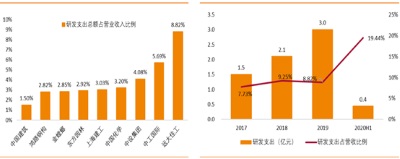
Recently, promotion policies of prefabricated buildings were rolled out in succession, contributing to an on-going increase in scale of industrial chain and positive industry sentiment. In particular, Broad Homes (02163.HK), one of the industry leaders, which has exploited the construction industrialization field for over two decades, is committed to consolidating its competitive edges and has delivered remarkable performance with CAGR (Compound Annual Growth Rate) of revenue reaching 32.36% for the last three years (2017-2019), market share (of PC unit manufacturing business) amounting 13.5% and research and development (R&D) expenses as a percentage of revenue accounting for 8.82%, both topping the industry.
Picture 1
Picture 2
Picture 3
Picture 4 China’s PC unit manufacturing market scale from 2014 to 2024 (estimated) Unit: RMB100 million
Thanks to the recent favorable policies in the prefabricated construction industry, Broad Homes remains dedicated to its PC unit manufacturing business and upholds the data-driven and B+C dual-driver strategies, well positioned to further consolidate its leading position and achieve leapfrog growth.
EXPEDITE INDUSTRIAL CHAIN DEVELOPMENT THROUGH COMPREHENSIVE DIGITAL TRANSFORMATION AND SECURE EXCESS PROFIT LEVERAGING INTELLIGENT MANUFACTURING
As the only prefabricated construction enterprise having been selected for the Pilot Demonstration Project of Intelligent Manufacturing in 2018 by the MIIT (Ministry of Industry and Information Technology of the PRC), Broad Homes has, through over two decades of cultivation, spared no efforts in facilitating the digital transformation of the industry and expediting industrial chain development. It has established eight generations of product systems for prefabricated buildings, conducted R&D into domestic first-class full process digital solutions and boasted experience accumulated in industrial projects of over 100 million square metres and strategic factory layout across the nation.
Currently, leveraging the leading manufacturing capacity of PC units, PC Maker I, the first domestic forward design software based on BIM platform in the field of prefabricated buildings, and PC-CPS intelligent manufacturing management system, the digital solution for the full process of prefabricated buildings, Broad Homes has bridged every stage of the whole industrial chain from design, manufacturing, construction to operation and maintenance and become a standardized portal for industrialization and intelligent service platform of the construction industry.
The design software PC Maker I of Broad Homes effectively improves design interactivity and optimizes design process to significantly reduce the time required for a single design process. With improved design accuracy, it enjoys better function integration capacity and consistency between the subsequent production processes and actual use when compared with other BIM software, thus winning great trust and favor from customers. As of the end of December 2020, we had provided comprehensive solutions of prefabricated buildings for nearly 300 customers, including Vanke, Country Garden, Evergrande, Jinke and Gemdale, and established cooperative relations with nine out of China’s top ten property developers and China’s top ten construction enterprises, thereby promoting the transformation from business cooperation to standard co-construction, and accelerating the shift of prefabricated buildings into standardization, digitalization and intelligence at the product end.
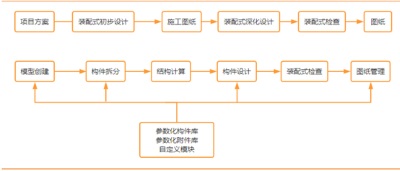
The picture 1 shows the functions of PC Maker 1 software Project Prefabricated preliminary design Construction drawing Prefabricated deep design Prefabricated inspection Drawing Model creation Unit dismantling Unit design Drawing management Parameterized unit library Parameterized accessory library Custom module
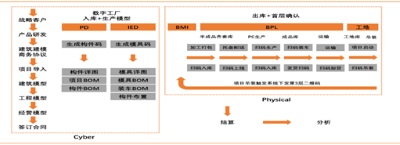
The PC-CPS intelligent manufacturing system of Broad Homes is applied in digital twin technology to pre-simulate the whole process of prefabricated buildings in the system and trigger all instructions through data, which integrates process, cost, logistics and supply chain management, and coordinates the whole process from forecasting to goods acceptance in real time, thus significantly improving production and operation efficiency. It has become a standardized portal and intelligent service platform for building industrialization and enjoys trust from various reputable domestic property developers and construction customers. In 2021, Broad Homes will continue to improve the PC-CPS platform, enhance R&D capabilities, boostthe soft power of intelligent manufacturing, promote the comprehensive integration of the industrial Internet platform system, and propel the modernization of China’s construction industry.
The picture 2 shows the whole functioning process of the PC-CPS system Strategic customers Product R&D Business protocol for building modeling Project import Building model Engineering model Business model Concluding contract Delivery + first-level confirmation Construction site Complete semi-finished products PC manufacturing Finished products warehouse Transportation Site warehouse Assemble prefabricated parts Processing and packing Pallet distribution QR code-based production QR code-based loading Project startup QR code-based warehousing QR code-based launching QR code-based delivery QR code-based loading QR code-based hoisting Level-three QR code triggered by hoisting Settlement Analysis
In recent years, Broad Homes continued to increase R&D investment and strived to achieve digital transformation and upgrading. In 2019, its total R&D expenditure as a percentage of revenue remained at the forefront of the industry, which laid the foundation for the rapid expansion of its PC unit manufacturing business and forging leading advantages in the prefabricated industry, and brought about sustainable competitiveness and excess profits.
The picture 3 shows the total R&D expenditure as a percentage of revenue of industry peers in 2019 and R&D expenditures of Broad Homes from 2017 to 2019 (including the amount expensed and capitalized based on the information in the prospectus of Broad Homes and CITIC Securities Research Institute) Total R&D expenditure as a percentage of revenue China State Construction Honglu Steel Structure Golden Mantis Orient Landscape Shanghai Construction Group China Chemicals China Design Group China Industrial International Broad Homes R&D expenditure R&D expenditure as a percentage of revenue
From 2017 to 2019, the operating revenue and net profit of Broad Homes increased at a CAGR of 32.36% and 108.26%, respectively. In 2020, despite the shock of the COVID-19 pandemic, the PC unit manufacturing business, the core principal business of Broad Homes, secured sound growth with new contract amount of RMB4.091 billion, a year-on-year increase of 31.7%, and contract amount secured yet to complete of RMB5.196 billion, a year-on-year increase of 38.6%. Sufficient new orders and backlog paved the way for Broad Homes in 2021.
With the relief of the pandemic, the revenue of PC equipment manufacturing business of Broad Homes will pick up. Upon completion of reform of the remaining joint factories and leveraging potent demand, the overall performance of Broad Homes will steer into a normalized growth track.
PREFABRICATED BUILDINGS AN INEVITABLE CHOICE AMID POTENTIAL INDUSTRY BOOM In recent years, the state issued relevant policies to vigorously guide and motivate the development of prefabricated construction industry. The “13th Five-Year Plan of Action for Prefabricated Buildings” of the Ministry of Housing and Urban-Rural Development clearly stipulates that the proportion of prefabricated buildings in new buildings should reach 25% by 2023 and 30% by 2025. The prefabricated building industry will embrace explosive growth.
Policies regarding China’s fabricated buildings were first introduced in 2016. Although the industry grew at a CAGR of 55% in recent four years, the penetration rate of fabricated buildings in China in 2019 was only 13%. According to Frost & Sullivan, the domestic market scale of PC unit manufacturing business will reach RMB65.4 billion in 2020 and RMB285.5 billion in 2024, with a CAGR of 44.5%. Compared with the traditional cast-in-place construction method, the prefabricated building is energy-saving and environment-friendly, which may shorten the construction period by 45% and save manpower by 75%. Looking into future, due to the disappearing demographic dividend, high labor cost and limited capacity of resources and environment, prefabricated building materials will be an inevitable choice for the transformation and upgrading of the construction industry. With the improvement of penetration, this industry is expected to usher in a trillion-level “blue ocean” market. From 2014 to 2024, the domestic market scale of PC units for prefabricated buildings is estimated to record a year-on-year increase of 680 times, promising great potential. (Picture 4)
It is fair to say that in the next few years, the domestic prefabricated industry will enjoy a boom, and Broad Homes will also usher in an obvious turning point in profit. Three advantages will facilitate it to tap on the scale advantages 1) Broad Homes has established factories in Hunan, Tianjin, Yangtze River Delta and Pearl River Delta, which are the key areas for promotion of the prefabricated buildings, and 62 Joint Factories it contributed to span across the nation, which is expected to increase the capacity utilization rate of Broad Homes in the market boom; 2) the two design software of Broad Homes, being PC Maker I and PC-CPS, the intelligent manufacturing management system, empower the development of the industrial chain through digital management, resulting in per capita production efficiency far exceeding peers, and enjoy popularity among customers; 3) Broad Homes boasts eight generations of prefabricated building product system and experience accumulated in industrial projects of over 100 million square metres, positioning it in a very favorable position to seize the huge blue ocean market in the future.
INTENSIFY LEADING POSITION THROUGH DUAL-DRIVER STRATEGY TRANSFORMATION AND PROPOSED INITIAL PUBLIC OFFERING OF A SHARES At the beginning of 2020, Broad Homes categorized its business into two major sectors, being B2B and B2C, in which B2C represents the B-house business charged by the Module Integration Technology Division, and the new product B-BOX business will also be launched. In the B2C field, B-house products primarily target C-end consumers and country villa market, and seven standardized products have been offered. In the first half of last year, it commenced to take orders for country villas.
It is reported that the self-built housing in rural areas and approximate to cities in China covers an area of over 1.3 billion square meters, and it is estimated that there will be more than 2.2 million new rural houses each year, implying great market potential for rural construction. Since the beginning of 2019, policies on rural residential pilot projects, marketing of collective management of construction land and decentralization of land use approval authority have been successively rolled out. Therefore, TF Securities pointed out in its research report that To C business will generate new growth driver for Broad Homes, and it is predicted that the scale of To C business (excluding B-BOX) of Broad Homes will reach RMB5.25 billion in the next three years, thereby contributing to considerable performance growth.
Besides, Broad Homes proposed to apply for initial public offering of A shares and listing the same on ChiNext of the Shenzhen Stock Exchange, to further enhance its capital strength. No more than 86.054 million shares will be allotted and issued under this IPO exercise, and the proceeds raised will be applied in six fields, including Broad Homes CPS Henan Research, Development and Production Headquarter Base Project, The First Phase of Assembly PC Factory Construction Project of Broad Homes Weifang Direct Company, Broad Homes Smart Site Research and Development Project, Broad Homes Mansion Exhibition Center Project, B-BOX Modularized Building Production Line Technology Renovation Project and supplementing of Working Capital, with an investment amount of approximately RMB1.879 billion. In particular, Broad Homes CPS Henan Research, Development and Production Headquarter Base Project and The First Phase of Assembly PC Factory Construction Project of Broad Homes Weifang Direct Company will increase the PC units production capacity of Broad Homes by 240,000 cubic meters, upon which, total production capacity of wholly-owned factories will reach over 2 million cubic meters. As such, Broad Homes is expected to consolidate its leading position and promises great growth potential in the mid- and long-term.
According to Frost & Sullivan, in terms of the revenue in 2019, Broad Homes is the largest domestic PC unit manufacturer, with a market share of 13.5%, and also the largest domestic PC equipment manufacturer in China, with a market share of 38.3%.
Looking into future, with the relief and even disappearance of the COVID-19 pandemic, Broad Homes will continue to consolidate its leading position through data-driven and dual-diver strategy transformation and A-share listing, and share the dividend of rapid growth of the industry with shareholders and investors.
Amber Solutions, the young Silicon Valley company that is making the digital control of electricity in solid-state architecture a commercial reality, today announced that its 2020 series B funding round raised more than $8.5 million from new and existing investors, following a successful year of secured patents, partner discussions and multiple industry award wins.
According to Amber Founder and CEO Thar Casey, the company’s progress in 2020 is all the more remarkable given the challenges posed to the business by the COVID-19 pandemic and related lockdowns that prevented most, if not all, in person product demonstrations.
“2020 presented a challenging business climate, but our commitment to revolutionize the world’s building electrical infrastructure helped Amber enter 2021 with increased investment, new patents, as well as multiple industry award wins and nominations,” Casey said. “Amber’s progress is a sign of the accelerating demand from major electrical product manufacturers for solid-state electrification technologies and its ability to completely disrupt and transform the enormous global market for electrical products and services.”
In addition to securing patents related to a digital AC/DC Enabler, an AC switch, a digital method to sense ground faults, and super-efficient LED light fixtures in 2020, Amber started 2021 as a BIG Innovations 2021 Award winner, a CES 2021 Innovations Award honoree, and is currently a 2021 Edison Award nominee.
Amber’s core innovation is a programmable solid-state power system that has a clear path to an even-smaller silicon chip version. Amber’s system controls the flow of electricity digitally, enabling unique integration of modern intelligence into building electrical products and infrastructure. The solution introduces the world to a much safer, more reliable and dramatically smarter alternative to the 1970’s era electro-mechanical components that are used in nearly all modern electrical infrastructure products.
“Amber’s patents and innovations are rapidly driving demand for the development of intelligent solid-state based products including two-wire dimmer switches, ultra-efficient commercial LED light fixtures, smart light switches, smart outlets, smart circuit breakers, and more,” Casey added. “Based on heightened industry interest, growing investments and ever-increasing energy efficiency goals around the globe, we believe 2021 will be the year solid-state electrification moves from validation to commercialization and mainstream productization.”
About Amber Solutions
Amber Solutions is a leading developer of patented, innovative solid-state technologies for the digital control of electricity. The company’s disruptive breakthroughs change the electrical landscape forever for buildings and appliances world-wide. These technologies upgrade power management from 1950’s era electro-mechanical to safer, more reliable solid-state architecture with embedded intelligence. Based in Dublin, California, the company is leveraging the expertise of Silicon Valley professionals to deliver a disruptive enhancement to the value and functionality of the world’s electrical endpoints and infrastructure. For more information visit www.ambersi.com.
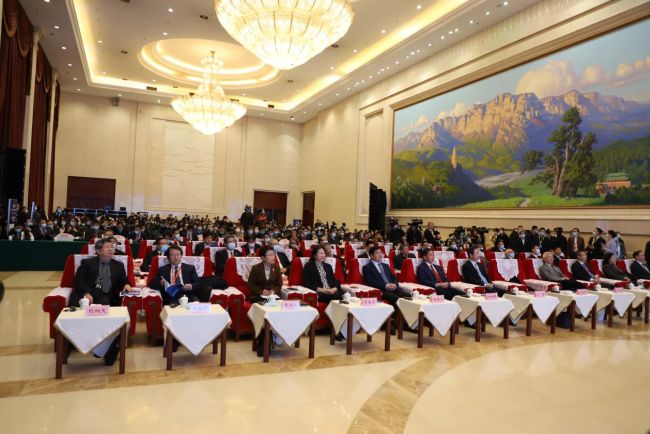
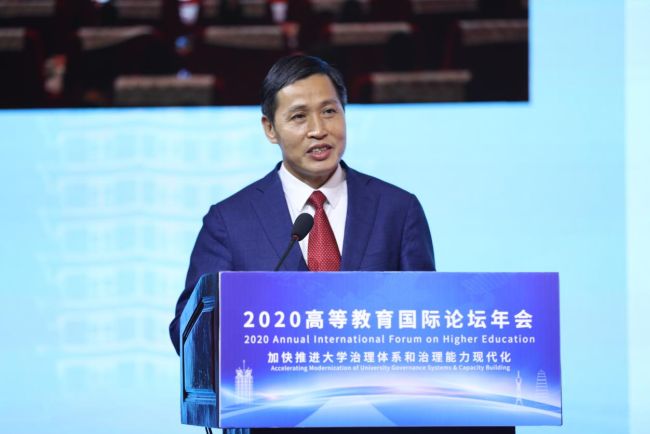
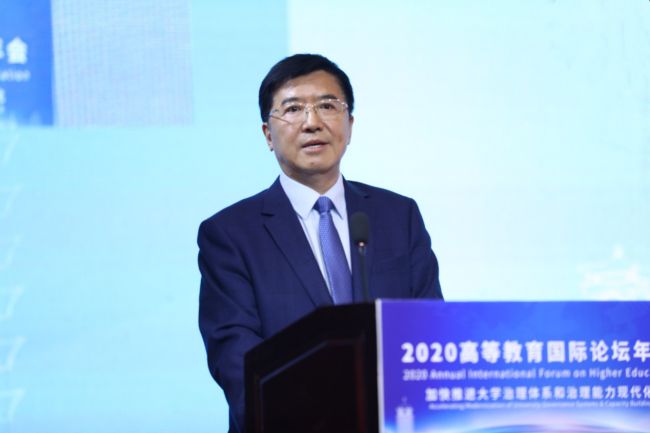
International Forum on Higher Education 2020, Zhengzhou Conference VenueAddress by Zhong Denghua, member Party Leadership Group and Vice Minister of Education P.R.C Keynote by Du Yubo, President of the China Association of Higher Education
The International Forum on Higher Education 2020, co-hosted by China Association of Higher Education and Zhengzhou University, supported by Henan Provincial People’s Government, was held in Zhengzhou on November 21-22. More than one hundred Chinese and foreign experts and scholars discussed the modernization of higher education on the theme of “Accelerating Modernization of University Governance Systems and Capacity Building”.
In the opening address, the Chinese Vice Minister of Education, Zhong Denghua pointed out that it was necessary to combine the spirit of the Fifth Plenary Session of the 19th Central Committee of the Party in order to understand the achievements in higher education development, which would further strengthen confidence in the higher education system. And then focus on the construction of a strong education country, enhance the ability and level of service to construct a new development pattern, to build a quality development system of higher education in the new era.
Zhong Denghua stressed that peace and development are the major theme of the times, and the concept of “A Community of Shared Future for Mankind” which was deeply rooted in the hearts of people. The Chinese government will, as always, support exchanges and cooperation in higher education in various countries.
In the keynote address, Du Yubo, President of the Chinese Association of Higher Education, gave a systematic explanation on adapting to the needs of the new development pattern and promoting the high-quality development of higher education, with the theme of “Adapting to the needs of the new development pattern to promote the high-quality development of higher education.”
Song Zhenghui, Secretary of CPC Committee of Zhengzhou University, as co-organizer of the forum, in his address said Zhengzhou University was developing its own characteristics and comparative advantages, updating its administrative philosophy and its university governance in line with Chinese culture, traditions and values, giving full play to the advantages of the system and carrying out the president’s responsibilities under the leadership of the party committee. With systematic thinking, the University was building a scientific academic and administrative organizational structure, innovating the governance systems, and building a national “double cycle” system for the development of higher education. (From Weiwei Li, Haijun Ma.)
Tak Lee Machinery Holdings Limited (“Tak Lee” or the “Company”, together with its subsidiaries, the “Group”; stock code: 2102), a leading earthmoving equipment sales and leasing service provider in Hong Kong, is pleased to announce that The Stock Exchange of Hong Kong Limited (“HKEX”) has granted the approval for the Company’s transfer of listing from GEM to the Main Board. Tak Lee has commenced its trading on the Main Board on 6 October 2020 (today) under the new stock code 2102. The last trading day of the Company’s shares under its original stock code 8142 on GEM was 5 October 2020.
Tak Lee provides BELL articulated dump trucks (left) and HITACHI excavators (right)
The price of Tak Lee’s shares has performed well on the first trading day on Main Board today, closing at HK$0.295, 5.36% higher than yesterday.
About Tak Lee Machinery Holdings Limited (stock code: 2102) Tak Lee Machinery Holdings Limited is one of the leading heavy equipment sales and leasing service providers in Hong Kong, serving customers by providing quality heavy equipment, such as excavators, articulated dump trucks, bulldozers, lifting cranes, hydraulic breakers and various other heavy equipment. Among all the dealerships and distributorships granted, Tak Lee is the sole dealer of HITACHI brand (Japanese brand) of heavy equipment in Hong Kong and Macau, as well as a distributor of heavy equipment of BELL (South African brand) and LaBounty (USA brand) in Hong Kong and an exclusive dealer of heavy vehicles of Ammann (Swiss brand) in both Hong Kong and Macau. In 2016, Tak Lee started and engaged an Italy-based manufacturer to design and manufacture its own TLMC brand earthmoving equipment to provide more quality heavy equipment for its customers to choose from
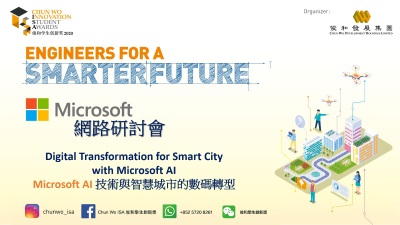
A Microsoft Webinar is Organized to Explain Usage of AI Intelligent Technologies for Data Analysis
Microsoft Webinar – Digital Transformation for Smart City with Microsoft AI
Chun Wo Development Holdings Limited (“Chun Wo”), a key member of Asia Allied Infrastructure Holdings Limited (“Asia Allied Infrastructure” or “the Group”) (stock code: 00711.HK), is pleased to announce that the second “Chun Wo Innovation Student Awards” (the “Awards”) has received an overwhelmingly favorable response, attracting applications from over 70 student teams as of 30 April. This year’s theme “Engineers for a Smarter Future” aims to encourage full-time students of tertiary institutions in Hong Kong and the Greater Bay Area to solve problems relating to infrastructure, technology and social development in the city through engineering design.