With strong European sales, Mitsubishi has become a global leader in plug-in hybrids
Paice, a pioneer in hybrid electric vehicle technology, announced today that it has reached an agreement to license its patented hybrid technology to MITSUBISHI MOTORS CORPORATION, a global leader in plug-in hybrid vehicles. The Mitsubishi Outlander is the world’s best-selling plug-in hybrid.
“Mitsubishi is one of the most successful hybrid vehicle companies in Europe, and we are pleased to be adding them to the long list of leading automakers who have recognized the value of Paice’s hybrid technology,” said Paice Executive Chairman Frances Keenan. “We continue to reach meaningful agreements with responsible car companies without the need for litigation, expanding the reach of our technology and supporting the good works of the Abell Foundation.”
Paice was an early leader in electrified vehicles. The company was awarded its first hybrid vehicle patent in 1994, long before most automakers began seriously focusing on ways to improve fuel efficiency and reduce emissions. Paice’s technology proved valuable and helped accelerate the growth of the hybrid vehicle industry. An independent analysis concluded that Paice owns the most dominant hybrid vehicle patents in the world.
During the company’s early years, Dr. Alex Severinsky, inventor and founder of Paice, worked closely with two experienced automotive veterans: Bob Templin, a Paice board member who had served as chief engineer of Cadillac and technical director of GM’s Research Laboratory; and Ted Louckes, a 40-year veteran of General Motors who served as Paice’s Chief Operating Officer and was instrumental in developing Paice’s hybrid technology alongside Dr. Severinsky.
Dr. Alex Severinsky, a Russian immigrant, founded Paice in 1992 with the support of the University of Maryland. The company has been awarded 30 U.S. and foreign patents. It has licensing agreements with many of the world’s leading automakers.
The Abell Foundation, a Baltimore-based charitable organization dedicated to fighting urban poverty and promoting social objectives by investing in progressive local start-ups, is a co-owner of the Paice patents. Since 1999, Abell has helped support Paice’s efforts to develop and promote its hybrid technology.
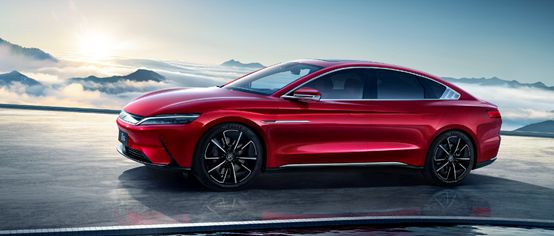
BYD’s long-awaited Han EV series The Han series sets new standards for EVs worldwide with its safety, performance, and luxury
On July 12, BYD announced the official launch of its Han EV series, the brand’s long-awaited flagship offering for the global mid-to-large luxury sedan market, including three pure electric models and one hybrid model.
The Han EV will be sold in China at first. Its extended-range version will sell at 229,800 RMB, the extended-range variant of the premium model will be priced at 255,800 RMB, and the 4WD high-performance version will sell at 279,500 RMB. Besides, the PHEV version, Han DM, will sell at 219,800 yuan.
Integrating the most advanced technologies in the electric vehicle industry, the Han boasts formidable performance combined with stylish craftsmanship. As the world’s first mass-produced model that uses BYD’s ultra-safe Blade Battery, the Han EV sets new standards for EVs worldwide in terms of safety, performance and luxury.
With BYD being no stranger to pioneering in the industry, the Han series continues to break new ground. The Han EV’s long-range pure electric version has a remarkable single-charge range of 605 kilometers (376 miles) based on the NEDC test cycle. The four-wheel-drive high-performance version possesses an acceleration of 0 to 100km/h in just 3.9 seconds, making it China’s fastest EV in production, while the DM (Dual Mode) plug-in hybrid model offers 0 to 100km/h in 4.7 seconds, making it the country’s fastest hybrid sedan.
The Han series will create a new global standard for EV technology and quality, shaking up the traditional luxury car market while accelerating the global shift to electric vehicles. Named after one of the most celebrated dynasties in Chinese history, the Han series also demonstrates the country’s growing manufacturing prowess.
Mr. Wang Chuanfu, President of BYD Co., Ltd., said, “The Han has taken ten years from the concept stage to formal mass production,” which he likened to “ten years of sharpening a brilliant sword”. He added, “Through our leading technologies, we have created three benchmarks for flagship EVs in terms of safety, performance, and luxury.”
The Han EV has redefined safety standards for energy vehicles as it is the world’s first vehicle to use BYD’s ultra-safe Blade Battery, making it twice as safe compared to EVs using traditional ternary lithium battery packs. The Han’s DM is powered by a “seven-dimensional quad-layer” safety matrix that offers the world’s safest battery safety system with its ability to remain stable at high temperatures. The Han’s roof uses advanced laser brazing technology, while its 1500HS thermoformed steel is the most ever used for any comparable Chinese automobile. Other notable safety features include 11 standard airbags and six cameras, highly-efficient air purification filters, and more.
In terms of performance, the Han series comes with the world-first MOSFET motor control module, which fuels the car’s record-breaking 3.9 second 0-100km/h acceleration. At the same time, Han’s braking distance requires only 32.8 meters from 100km/h to a standstill. The Han EV’s extended-range version’s impressive 605-kilometer cruising range also gives it the world’s highest energy recovery rating, while a double silver-coated windshield and other energy-saving measures meet the real needs of users over its lifetime. The Han DM hybrid model comes with 81 kilometers of pure-electric cruising range and over 800 kilometers of integrated range, along with five different power modes.
The Han also sets a new benchmark for EV luxury. BYD’s new Dragon Face design language blends the best of Eastern and Western design aesthetics. From its striking front grille, its Dragon Claw tail lights and other features, the car’s stylized design creates a striking, confident vehicle that defines a new era for Chinese-made luxury vehicles. The interior is equipped with solid wooden panels, high-quality Napa leather seats, aluminum trims and other high-end materials rarely used in other high-end luxury vehicles.
The Han’s luxury is matched by its intelligence, with smart features like the NFC mobile phone key function, allowing users to easily unlock the vehicle even if their phone is out of power or has no signal.
Moreover, the Han comes with the latest version of BYD’s DiPilot intelligent driving assistance system, including a wide array of safety features like an adaptive stop-and-go cruise-control system (ACC-S&G), a forward-collision warning system (FCW), a pedestrian identification and protection system, a lane departure warning system (LDWS), traffic sign identification, and much more. The Han can be upgraded with even higher-level functions including BYD’s ICC Intelligent Navigation System, the ICA Integrated Adaptive Cruise System, and the TJA Traffic Congestion Assistance System. In addition, the extended-range premium and 4WD high-performance models provide blind spot monitoring, lane-change assistance, rear collision early warning and other leading functions, which can be upgraded to a comprehensive automatic parking function.
DiPilot also comes with the DiTrainer mode, which selectively turns on assisted driving based on factors such as driving behavior, road conditions, weather, and even driving age. The DiLink 3.0 Smart Network system comes with smart voice upgrades and a DiUI upgrade, with a 15.6-inch Ultra HD 8-core adaptive rotary suspension PAD, bringing the even smarter luxury sedan.
The Han EV reflects not only some of the world’s top automobile technology but also the benefits of BYD’s rich experience in the research and development of EVs. This has allowed the brand to not only break into China’s high-end sedan market but also other fiercely competitive markets. With its formidable performance, fantastic safety and its representation of a new generation of luxury, the Han is a powerful offering that upgrades the standing and capabilities of Chinese automobiles and electric vehicles around the world.
About BYD
BYD Company Ltd. is one of China’s largest privately owned enterprises. Since its inception in 1995, the company quickly developed solid expertise in rechargeable batteries and became a relentless advocate of sustainable development, successfully expanding its renewable energy solutions globally with operations in over 50 countries and regions. Its creation of a Zero Emissions Energy Ecosystem – comprising affordable solar power generation, reliable energy storage, and cutting-edge electrified transportation – has made it an industry leader in the energy and transportation sectors. BYD is listed on the Hong Kong and Shenzhen Stock Exchanges. More information on the company can be found at http://www.byd.com
Contacts:
In Asia-Pacific: Richard Li Pr@byd.com; tel:+86-755-8988-8888-69666
Further Miniaturization, Lighter Weight and Higher Output; Applicable to a Wide Range of Electric Vehicles; Aiming for Mass-production in the Next 24 Months
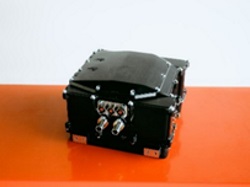
First Prototype of Next-generation SiC Dual Inverter 800V System Co-developed by GLM and ROHM
Apollo Future Mobility Group Limited (“AFMG”, the “Company” ; SEHK stock code: 860.HK; and together with its subsidiaries, the “Group”) is pleased to announce that its subsidiary, GLM Co., Ltd (“GLM”), has successfully completed the first prototype of the next-generation SiC Dual Inverter 800V system which is truly disruptive to the electric vehicle (“EV(s)”) market. The SiC inverter was co-developed with ROHM Co., Ltd. (“ROHM”), a well-known Japanese semiconductor and electronic component manufacturer. The completion of the first prototype came just five months after the joint announcement on the co-development made by both parties in February, 2020. The project aims for mass-production in the next 24 months.
Ground-breaking Technology Achieves Further Miniaturization, Lighter Weight and Higher Output
AFMG and its subsidiaries are dedicated to mobility technology innovations. The newly developed next generation SiC dual inverter 800V system incorporates SiC for power element and offers significant advantages over IGBT switching technologies. The 3-in-1 package system is equipped with solid state battery (SSB) battery management system (BMS) and integrates two inverters and a Power Distribution Unit (PDU), allowing the new inverter system to achieve further miniaturization, weight reduction and higher output compared to conventional products. By applying the system, the weight and recharging time of electric vehicles can be greatly reduced. The Group is committed to further shorten the charging time by the end of 2021.
Mass production is expected to commence in spring of 2022. The Group is looking forward to collaborating with motor manufacturers and battery manufacturers in providing a turn-key solution for one of the most advanced EV powertrains in the world.
The Disruptive Inverter System Is Applicable to a Wide Range of Electric Vehicles
According to Electric Vehicle Outlook 2020 published by Bloomberg NEF in January 2020, over half of all passenger vehicles sold will be electric by 2040. It also expects global EV sales to reach 54 million vehicles by 2040, maintaining a long-term market demand. AFMG is in a prime position to meet the rising market needs with its cutting edge next-generation SiC dual inverter 800V system, which is expected to be applicable to a wide range of transportation such as electric trains, electric buses and different EV models.
Mr. Ho King Fung Eric, Chairman of Apollo Future Mobility Group, said, “The completion of the first prototype of next-generation SiC dual inverter 800V system is an important milestone of AFMG and the EV market. This unique product marks the future of EV powertrains and equips the Group to tap into the ample potential of the EV market. The Group will continue to identify market needs and grasp opportunities by developing innovative and sustainable technologies.”
About Apollo Future Mobility Group Limited Apollo Future Mobility Group Limited (“AFMG”, stock code: 860.HK) is a leading integrated mobility technology solution provider with proprietary and disruptive mobility technologies. It is determined to build a world-leading one-stop service platform for “future mobility” through the integration of global advanced mobility technologies.
After completing the acquisition of 86.06% of Apollo Automobil, a European high-performance hypercar developer, in March 2020, the Group rebranded as “Apollo Future Mobility Group”, focusing its business development on two pillars, which are Apollo Automobil and Apollo Advanced Technologies (AAT). In addition to the development and sales of hypercars and its cross-branding licensing business under the “Apollo” brand, the Group provides one-stop turnkey mobility technology solutions by integrating Apollo Automobil and the Group’s existing electric vehicle technologies, from ideation, design, modeling, engineering, simulation, prototype production, actual testing, to the delivery of pre-production prototypes to customers, striving to provide the global mobility market with a seamless and comprehensive solution platform.
The Group’s subsidiaries include Apollo Automobil, a top-tier European hypercar developer, and GLM Co. Ltd, a leading electric vehicle developer in Japan. In addition, the Group has also expanded its mobility technology offerings by investing in Divergent Technologies, Inc., the world’s first 3D printing automotive manufacturing platform, and EV Power, a leading electric vehicle charging solutions provider.
Media and industry experts explore the secrets behind theBYD Blade Battery
On June 4, 2020, over a hundred members of the media and industry experts were given on-site access to the FinDreams Battery Factory in Chongqing that produces the BYD Blade Battery. This is the first factory tour that BYD has conducted since it debuted the Blade Battery on March 29, presenting the factory’s intelligent manufacturing capabilities.
The BYD Blade Battery
Located in the city’s Bishan District, the factory is currently the only production base for the Blade Battery. It possesses a highly demanding production environment and much of BYD’s self-developed Blade Battery production equipment. The factory has a total investment of 10 billion yuan with an annual production capacity of 20GWH.
The nature of the factory’s environment can be seen in the core production process. For example, requirements necessitate that within one cubic meter space, fine particles equivalent to 1/20th of a single hair (or a 5-micron particle, as a hair is 100 microns), cannot exceed 29, reaching the same standards as LCD screen production. The overall allowed humidity is limited to below 1% (the average daily humidity being 60-80%), and the humidity during a core production process cannot exceed 0.05% of the average moisture level. In addition, the temperature is kept constant at 25 degrees Celsius.
According to Sun Huajun, the Vice General Manager of FinDreams Battery, these demanding conditions are a “necessary foundation” to the Blade Battery’s high safety standards.
“The nearly one-meter-long pole piece can achieve tolerances of within +/-0.3mm, and the accuracy and speed of a single-piece lamination have an efficiency of 0.3s/pcs. This is the first of its kind in the world. This form of lamination comes from BYD’s completely independent development of its equipment and cutting-edge solutions – aspects that are uncopiable,” he said.
In addition to laminations, the mixing of ingredients as well as the coating, pressing, testing, and other processes in the production of Blade Batteries have reached world-class standards. Whether it is the factory’s high-precision sensors, the implementation of hundreds of robots, simulation systems, and quality control systems that comply with strict control standards, every production workshop, process, line, as well as the flow of information and intelligent control level follow exceptionally high standards. They serve as the bedrock for efficient and stable production, in turn forming the backbone of the Blade Battery’s quality.
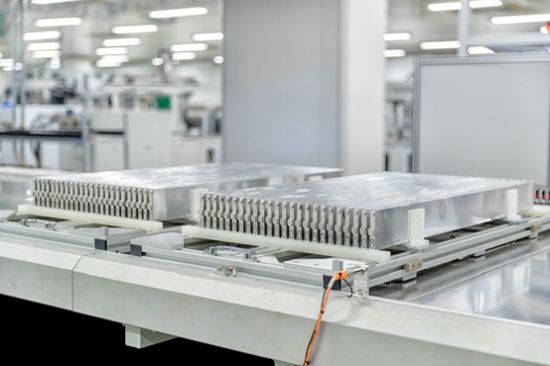
The Blade Battery refers to a single-cell battery with a length of 96cm, a width of 9cm and a height of 1.35cm, which can be placed in an array and inserted into a battery pack like a blade. Compared with ternary lithium batteries and traditional lithium iron phosphate batteries, it holds notable advantages in its high safety, long range, and enduring longevity.
The Blade Battery has notably passed the “nail penetration test”, one of the most stringent safety tests in the industry. Due to its optimized battery pack structure, the volume utilization of the Blade Battery is also more than 50% greater compared to past products, with its cruising range reaching the same level as ternary lithium batteries.
In addition to solving the issue of endurance – once a previous limiter to the development of traditional lithium iron phosphate batteries – the Blade Battery can be charged from 10% to 80% of its full capacity within 33 minutes, supporting the BYD Han EV’s acceleration of zero to 100km/h in 3.9 seconds. Furthermore, its accumulated mileage can reach 1.2 million km after 3,000 cycles of charging and discharging. In short, the Blade Battery outpaces ternary lithium batteries and traditional lithium iron phosphate batteries among the metrics of longevity, power, and strength.
The Han EV is BYD’s flagship sedan model slated for launch this June. “BYD’s Han EV is the first electric vehicle equipped with the Blade Battery, possessing a cruising range of 605km with a single charge,” said Li Yunfei, Vice General Manager of BYD Auto Sales.
About BYD Company Ltd.
BYD Company Ltd. is one of China’s largest privately-owned enterprises. Since its inception in 1995, the company quickly developed solid expertise in rechargeable batteries and became a relentless advocate of sustainable development, successfully expanding its renewable energy solutions globally with operations in over 50 countries and regions. Its creation of a Zero Emissions Energy Ecosystem – comprising affordable solar power generation, reliable energy storage, and cutting-edge electrified transportation – has made it an industry leader in the energy and transportation sectors. BYD is listed on the Hong Kong and Shenzhen Stock Exchanges. More information on the company can be found at http://www.byd.com
Contacts: In Asia-Pacific: Richard Li, pr@byd.com Tel: +86-755-8988-8888-69666
Paice and Daimler have reached an agreement to license patented hybrid technology.
Paice was an early leader in electrified vehicles. The company was awarded its first hybrid vehicle patent in 1994, long before most automakers began seriously focusing on ways to improve fuel efficiency and reduce emissions. Paice’s technology proved valuable and helped accelerate the growth of the hybrid vehicle industry. An independent analysis concluded that Paice owns the most dominant hybrid vehicle patents in the world.
“We’ve reached several licensing agreements in the past two years without the need for litigation. These agreements make a lasting impact in our community by supporting the good works of the Abell Foundation,” said Paice Executive Chairman Frances Keenan.
During the company’s early years, Severinsky worked closely with two experienced automotive veterans: Bob Templin, a Paice board member who had served as chief engineer of Cadillac and technical director of GM’s Research Laboratory; and Ted Louckes, a 40-year veteran of General Motors who served as Paice’s Chief Operating Officer and was instrumental in developing Paice’s hybrid technology alongside Dr. Severinsky.
Dr. Alex Severinsky, a Russian immigrant, founded Paice in 1992 with the support of the University of Maryland. The company has been awarded 30 U.S. and foreign patents. It has licensing agreements with many of the world’s leading automakers.
The Abell Foundation, a Baltimore-based charitable organization dedicated to fighting urban poverty and promoting social objectives by investing in progressive local start-ups, is a co-owner of the Paice patents. Since 1999, Abell has helped support Paice’s efforts to develop and promote its hybrid technology.
Yihang Duan is an exemplary millennial entrepreneur. Born in China and residing in the United States, Yihang has found experience wherever he explored and used this wisdom to create new business ventures. Already a veteran of several industries, his resume includes roles as the Chairman of Beijing Zhongyi Aviation and the Zhongtian Longyuan International Auction company. This is in addition to founding a diverse field of companies that include Zhongda Kangcheng Financial, Beijing-based Carat Star Jewelry, and Zhongrong Huitong Asset Management in Liaoning.
Yihang Duan, CEO of World Go Luxury Car Rental
In 2017, he entered the online travel industry with his launch of Prince Travel, a technology driven online car rental platform with a foothold in 21 major Chinese cities. By the end of December 2019, Prince Travel had 3.8M members, a fleet of nearly 6,000 vehicles, and accumulated revenue of nearly RMB 360M (over USD 50M).
Mr. Duan continues his growth as a global business pioneer. After success in the Chinese market, he led core members of the Prince Travel team to form World Go in New York, establishing their headquarters on the city’s iconic Wall Street. Taking lessons from Prince Travel’s model, his new company embarks on a bold journey to build an all-in-one platform that provides luxury car rental, tourist group vehicle rentals, airport pickup and drop-off, car-on-demand services, and even secondhand car trading.
In partnership with travel agencies, World Go reached a new milestone in March 2020 as business expanded across the United States, as well as the UAE, and Japan.
In April, Yihong Duan sat with Seattle Chinese Radio for the following interview.
> What was the motivation behind naming the company ‘World Go’ and putting headquarters on Wall Street?
YD: With the name World Go, we saw it as the most straightforward way to share our message. We hope that our users, from all around the world to choose our service whenever they need to go somewhere, anywhere, without hesitation. Likewise, the physical setting is to put us in line with our goals. We aim to be listed on NASDAQ within three years. Wall Street, as a world financial center, holds an unmatchable place within the international business world.
> Why choose the international market? Can you tell us about your current global presence and plans for developing overseas?
It’s the simple idea of getting a bigger piece of a bigger cake. The global market is 5-6 times larger than the Chinese market. It creates enormous potential for us as well as encouraging more development and innovation.
Currently, we are providing our services in Dubai, Abu Dhabi, the United States, and Japan. Due to logistics, laws, and regulations, expanding globally is certainly more ambitious for an early-stage business than trying to smooth out domestic growth. However, our goals are relatively conservative and based on a wealth of experience within the different industries we are merging here. We are starting with services in 10 countries but within the next 5 years, we target operating a fleet of over 400,000 vehicles in major cities across at least 180 countries. Starting from car rental services, we will later introduce airport pick-up and drop-off and car-on-demand service. From there World Go will incorporate free return car services and off-site exchange services in every one of those countries.
> Why operate within the travel industry and where do you see that industry heading into the next ten years?
When we think of daily needs, it is easy to recognize food, clothing, shelter, but more and more we realize that transportation has become a basic need. At World Go, we approach travel itself as an indispensable need. And just as basic needs result in different tastes and varied styles, we find that in travel. Therefore, technology becomes a method for us to satisfy our travelers and users.
Within the travel industry, there are many ways to get from one place to another and with the development of internet technology, travelers are looking for services to make things more readily available and easy to manage. I believe in a unifying “big data travel platform” to put it that way. I envision a means to bring the diversity of travel methods to one place on behalf of the user. A “big data travel platform” that understands the user better and focuses on service to streamline the process and cater to their preferences.
> Could you tell us more about Word Go’s focus on rentals and leases as well as tourism as a whole?
We begin to answer that question by first understanding the user’s perspective and how we grow the platform from there. We can speak at length about different car brands and what a vehicle means to different people, but specific to the modern traveler, the essence of the car is a means of transportation. With the progress and development of society, car ownership in general, and therefore the car itself, is no longer a representation of social status or societal right of passage. We are at a point where people are opting to use a car rather than to own one. A commuter car for a businessperson, a family vehicle for a parent, and even a dream car for a young person does not necessarily have to be purchased. Car rentals solve these needs as the desires shift, even as the same traveler may shift from one vehicle for work trips to a different vehicle for vacations. Finding these solutions creates massive potential for growth.
In regards to tourism, we see the desire to travel as an inevitability for people. Looking at people that look to travel outside of their countries as well as those that wish to travel outside of their homes, it’s something that appeals to the young and old, individuals and families from around the world. Yet we are also seeing travelers turning away from large, structured group tours to the freedom of independent travel. People are popularizing the do-it-yourself approach of renting a car or catching a ride to see the world how they please. The trend is pushing the new breed of car rentals, including segments like self-driving cars, from emerging markets to maturation.
I mentioned that our goal is to combine various transportation needs with various modes of travel and integrating things like single-use car trips, longer duration rentals, specialty vehicles, shuttles, etc. But we are building off of our existing strengths and capabilities to pave forward on a solid foundation. We are looking first at our existing in-house Internet technology team, procurement channels, vehicle maintenance network. We have a highly successful precedent with what we accomplished in China. Within five months we tackled all major market segments and reached our target customers. Within six months, we were profitable. Now we must evolve our team and practices to reach new goals.
> And the choice of luxury cars?
Now is the era of quality of life, so to speak. Everyone is recognizing that each of us, regardless of background, has the right to enjoy life to the fullest. Providing high-quality options without a significant difference in price coincides with our belief that people tend to – in fact, feel better about – selecting the higher quality option. Therefore if we can minimize the cost through the entirety of the supply chain, we will create a reasonable price for the end-user. If we can provide the best service at relatively similar pricing, then customers will definitely choose our luxury cars.
To that end, we host a vast selection of high-end brands. We have Mercedes-Benz, BMA, Audi, Lexus, Infiniti, Land Rover, Jaguar, Porsche. We offer elite cars like Rolls-Royce, Bentley. And of course, sports cars like Ferrari, Lamborghini, McLaren. We also carry different models of each brand. Most of our vehicles are fuel cars as defined by the market demands but some are electric. Again, this comes to choice, customers can use our rental cars to experience the privilege of driving a luxury car but of course, we will be happy to serve them if they are choosing something outside of the luxury lines. Our goal remains the satisfaction of the user.
> Looking at your current model, what areas are you investing in the most and how does this compare to other companies’ overhead?
I’d say the cost of manpower and access to vehicles is a given for every player within the rental industry. However, where we see the distinction is in the cost of stores and hubs. The number of top rental car company stores that operate around the world ranges from a few thousand to more than 10,000. These are stores that were placed there, sometimes involving large construction projects, with only limited information on the rental customer. That is where we are different from these companies. We analyze data first though the lens of Internet technology to then designate a central point of car demand. This way, we are bringing our locations closer to the customer, to grant more flexibility in how they use our service. Not only can we accept an advance reservation, but we are also in a position to send a vehicle to the user as their immediate, even spontaneous need for a car may arise.
> What is your prediction for traditional car manufacturers entering the tech-driven travel market?
The automobile manufacturing industry is undergoing a revolution. There are many factors at work including the rapid development of the mobile travel market, transportation via dispatch, and the maturation of autonomous driving technology. Car manufacturers are realizing they need to customize production to meet the needs of the new market. Their model moving forward will have to incorporate the overall change from distributed individual ownership of a property to centralized and shared use of vehicles. We have to keep in mind that the car companies were founded on the premise of sales and in contrast the goal of Internet platforms and entrepreneurs is always good user experience. As manufacturers are already embracing technology, I expect increasing cooperation with Internet platforms to produce products that better meet these new operating needs.
> How do you define “environment-friendly” and what does that mean to World Go?
From our point of view, car rental and shared use of vehicles are in themselves environmentally friendly, resource-conscious, and energy-saving. By giving people the option to use a car only as they need to, it reduces the number of cars that are purchased as a whole and does not lock owners into one vehicle. For example, if a parent needs a large vehicle with less fuel efficiency only part of the time for family transport, they won’t need to use that vehicle all of the time; they will have the freedom to switch to a more fuel-efficient model for their solo commute to work. From there, society can approach other issues such as infrastructure efficiency and emissions. In many ways, it allows us to focus on environmental protection.
> What are your biggest challenges moving forward?
It would be much easier to create a platform that is only useful for specific situations. However, our vision is to build a fully-integrated platform that can be useful in every conceivable scenario. World Go is committed to anticipating every customers’ potential needs and providing a customized solution every time. In the long run, continuously providing high-quality service is our biggest challenge. Service will be our main differentiator. The more we understand our users, the better we can prepare, and the more likely we are to evolve into a market leader.